
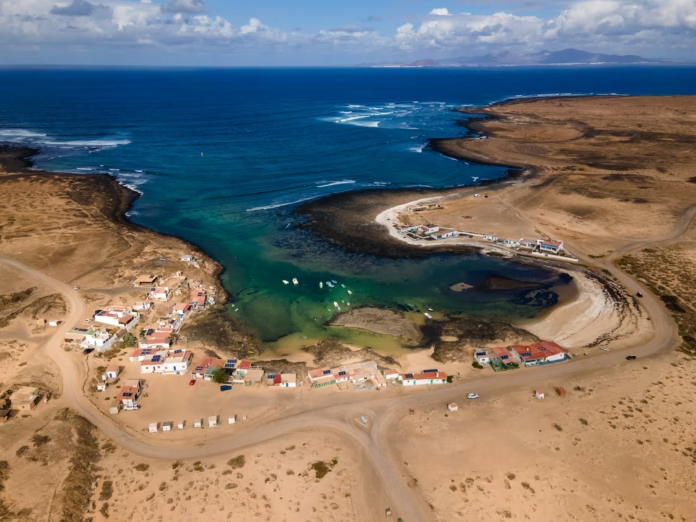
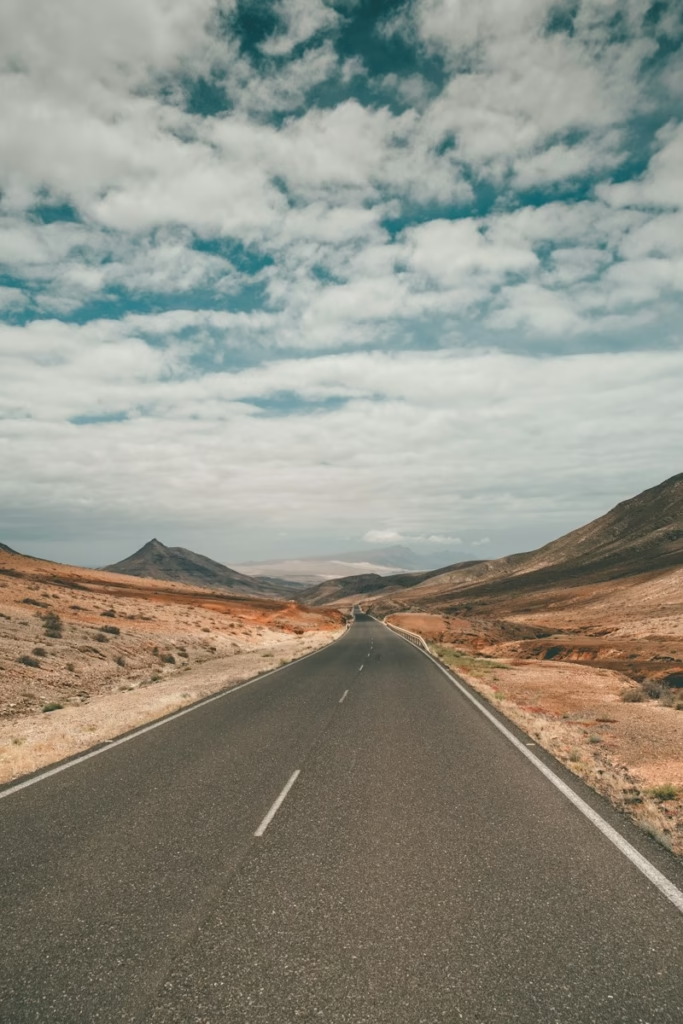
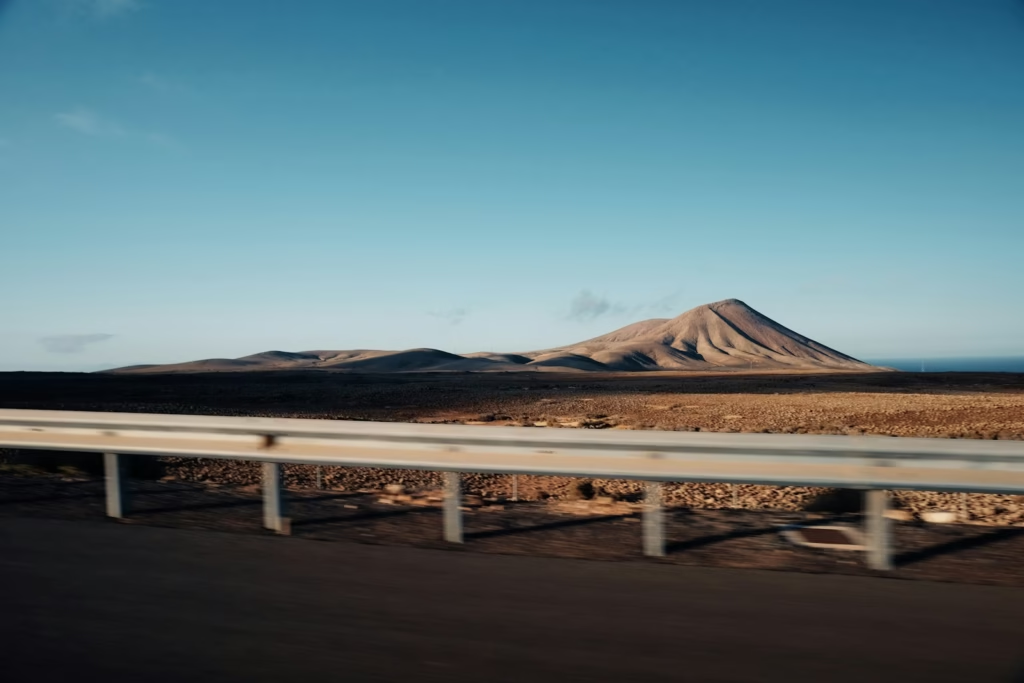
Fuerteventura is one of the Canary Islands where wind matters as much as gradient. The roads are generally open, dry and exposed, with long views across volcanic hills and desert-like interior landscapes. Climbs are rarely Alpine in length, but a steady trade wind can turn an apparently straightforward 90km ride into a far harder day than the elevation profile suggests.
For cyclists escaping a British winter, that combination is the attraction. Fuerteventura offers mild temperatures through the colder months, dependable daylight and enough paved road to support a full training week. Riders who bring gravel or mountain bikes can extend the trip onto the island’s extensive tracks, but a conventional road bike is enough for the main north-south and interior routes.
Fuerteventura cycling at a glance
- Best bases: Corralejo for the north, Caleta de Fuste for central access, Costa Calma or Morro Jable for the south
- Riding style: Exposed rolling roads, steady inland climbing and long wind-affected sections
- Bike: Road bike for paved routes, gravel or MTB for the extensive track network
- Tyres: 28-30mm road tyres are a practical default
- Best period: October to April for cooler long rides, although cycling is possible year-round
- Main challenge: Trade winds, sun exposure and sparse services on longer inland routes
- Signature road ride: The long north-south crossing between Puerto del Rosario, the interior and Morro Jable
- Ideal stay: Five to seven riding days
The wind should shape route planning before distance does
Fuerteventura’s prevailing trade winds are usually from the north or north-east and are particularly noticeable during spring and summer. They are not a minor weather detail. A route that feels comfortable with a tailwind can become a slow return if it is planned without considering the direction of the second half.
The practical approach is to check wind speed and direction each morning, then build the harder section into the earlier part of the ride while legs are fresh. Out-and-back coastal routes can be especially deceptive because there is little shelter and the effort difference between directions is obvious.
Crosswinds also affect bike handling. Deep-section wheels are not automatically a problem, but very light riders or anyone uncomfortable in gusts may prefer a shallower setup. The island rewards stable equipment more than marginal aerodynamic gains.
This is one reason the general Canary Islands cycling guide only tells part of the story. Tenerife and Gran Canaria are dominated by major climbing. Fuerteventura’s difficulty is more frequently created by exposure and sustained resistance.
Corralejo is the strongest northern base
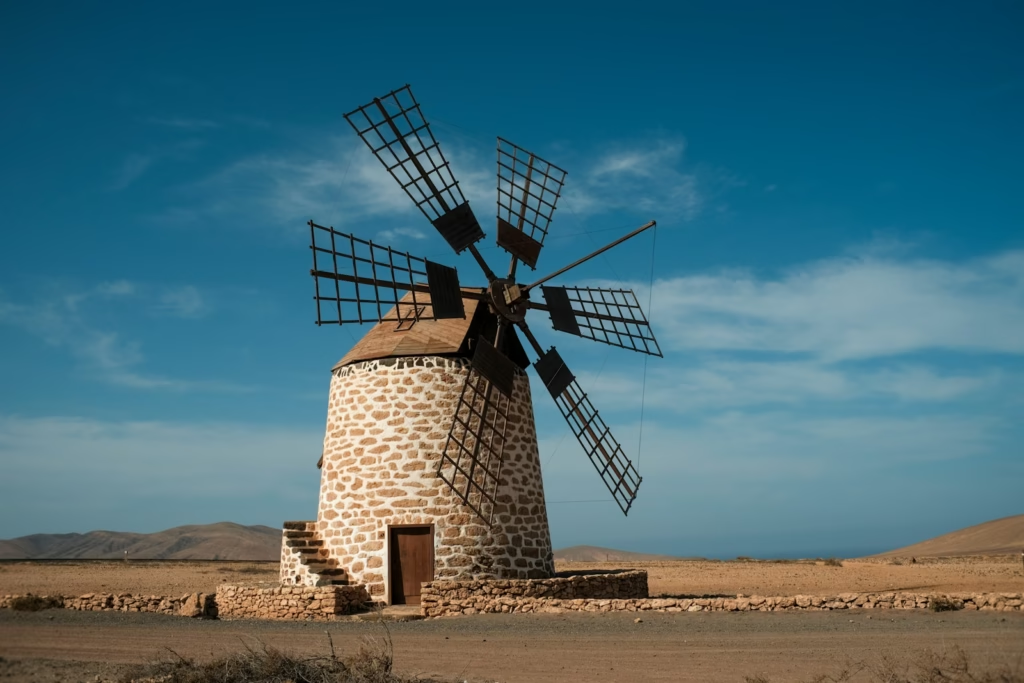
Corralejo gives easy access to the north of the island and works well for riders who want a mix of road riding and off-road options. The roads towards La Oliva, Villaverde and Tindaya move quickly away from the busiest resort areas and into the more open volcanic interior.
A northern loop can connect Corralejo with La Oliva before turning west or south through smaller settlements. The climbing is generally steady rather than extreme, but the road surface, sun and wind mean carrying enough water matters even when the distance is moderate.
The coast south of Corralejo is visually impressive but can be busier near the dunes and resort traffic. It is often better used as a short connection rather than the main training road. Inland roads provide more consistent riding and make it easier to build loops without repeated roundabouts or tourist traffic.
The central interior provides the best road-cycling terrain
Riders looking for the most varied paved routes should spend time around Betancuria, Pájara and the central hills. This is where Fuerteventura becomes more than a flat winter-sun destination. Roads climb through dry valleys and volcanic ridges, with repeated changes in direction and enough elevation to create proper training days.
The official long-distance road itinerary promoted by the island runs for roughly 146km from Puerto del Rosario towards Corralejo, then turns through Villaverde, La Oliva and Tindaya before continuing south via Vega de Río Palmas, Pájara, Cardón and La Pared to Morro Jable. It accumulates around 1,790 metres of climbing, which is substantial when combined with wind and sun exposure.
Few visitors need to ride the entire route in one day. Its real value is as a template. The northern and central sections can be broken into separate loops, while a one-way ride with support or transport can create a memorable island crossing without requiring a 290km return journey.
Betancuria itself sits in one of the more sheltered and attractive parts of the interior. Roads into and out of the old capital provide sustained climbing, technical descents and a very different landscape from the wide coastal resort corridors.
The south is quieter but demands better logistics
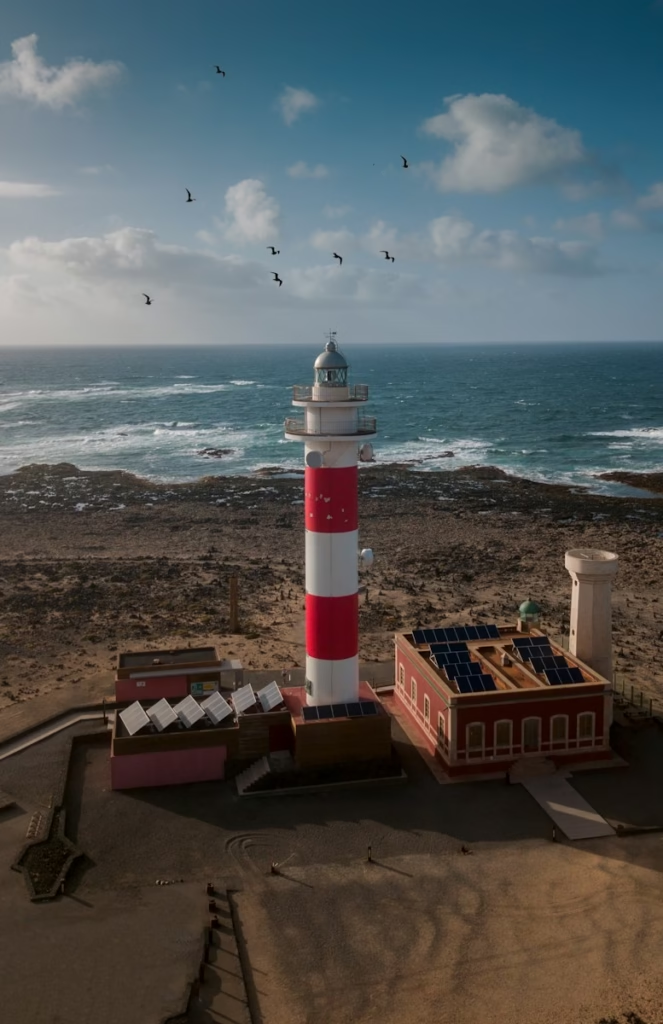
Costa Calma and Morro Jable are useful bases for riders who want quieter southern roads. The distances between settlements can be larger, however, and long loops need more careful planning around water and food.
La Pared provides an obvious western target from the resort belt, while riders comfortable with rough surfaces can extend towards Cofete and the Jandía peninsula on suitable bikes. Those tracks are not normal road-bike terrain and should not be treated as shortcuts simply because mapping software shows a through route.
The southern mountains are modest in absolute altitude but exposed. Wind can accelerate through gaps and descents can feel much cooler than the temperature at sea level suggests. A light layer is worth carrying on longer winter rides even when the forecast looks warm.
Gravel and mountain biking add a second holiday to the same island
Fuerteventura has a dense network of tracks linking the interior and coast, which makes it particularly attractive for riders who prefer mixed surfaces. The FudeNaS event is the clearest demonstration: its north-south route uses around 90 per cent tracks and paths and covers terrain that would be inappropriate on a conventional race bike.
There are also harder off-road routes in the south-west around Los Molinos, Ajuy, La Pared and Cofete. Surface conditions range from compact gravel to rough volcanic track, so tyre choice and repair equipment matter much more than on the paved roads.
A gravel bike with 40mm-plus tyres creates a useful middle ground. It can handle most of the smoother tracks while remaining efficient enough on road connectors. Riders focused entirely on asphalt do not need to compromise, though. There is enough paved riding for a full week without touching unsealed surfaces.
Winter is the obvious season for UK riders
Fuerteventura’s climate is mild year-round, with low rainfall and more dependable winter riding conditions than most of mainland Europe. The island receives long periods of sunshine and winter daylight remains sufficient for substantial road rides, making it a practical December-to-February training destination.
Summer is rideable but the trade winds are often stronger and the sun more punishing. Early starts become essential for long days, particularly inland where shade is limited. The island’s dry appearance should be taken literally when planning hydration.
Spring and autumn offer useful compromises, but there is no single short riding season. The decision is more about wind tolerance and temperature preference than road access. Unlike high mountain destinations, snow closure is not part of the normal planning equation.

A five-day road plan should vary exposure and distance
Use the first day for a moderate northern loop from Corralejo through La Oliva and Villaverde. Day two can be longer, heading deeper into the interior towards Tindaya or connecting with central roads if conditions are favourable.
Day three should target Betancuria and Pájara, which provides the strongest sustained road climbing. Keep day four shorter because accumulated wind exposure can be more tiring than the elevation numbers suggest. A coastal recovery spin or gravel ride works well.
For the final big day, use part of the official north-south road route or arrange a one-way island crossing with transport. Riders based in the south can reverse the structure and use Morro Jable, Costa Calma and La Pared as their core.
Bike hire is widely available in the main resort areas, which makes Fuerteventura realistic for a short fly-and-ride break rather than a trip that always requires a bike box. Riders booking a performance road bike should still check gearing, pedal availability and tyre setup in advance, because the island’s exposed roads reward a comfortable familiar position more than an aggressively low rental setup.
Carry more spares than the distance alone might suggest. Long stretches between towns mean a double puncture or mechanical problem can become a logistical issue quickly, particularly on quieter southern and interior roads. Two tubes or a tubeless repair kit, a proper pump and enough food to reach the next settlement are sensible even on a supported-feeling resort holiday.
Fuerteventura will not replace Tenerife for riders whose only goal is collecting giant climbs. It provides something different: reliable winter miles, open roads, enough elevation to train properly and wind that makes every route a little less predictable. For more warm-weather options, ProCyclingUK’s cycling travel hub collects destination guides across Europe and beyond.

