
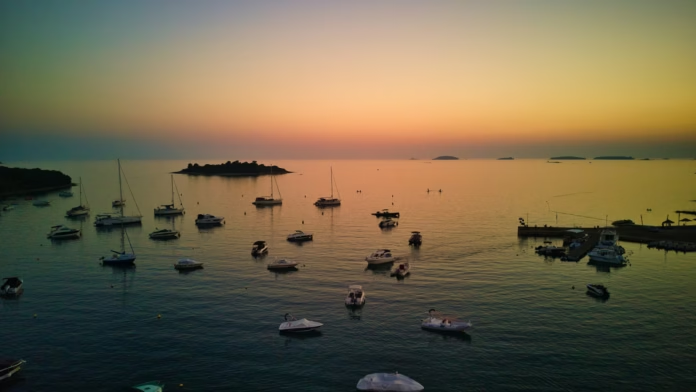
Istria is one of the easier parts of Croatia to turn into a dedicated cycling trip because the peninsula gives you several distinct types of riding without demanding a change of base every day. The western coast around Poreč and Rovinj is rolling rather than mountainous, the interior rises through vineyards and medieval hill towns, and the eastern side becomes sharper as the roads approach the Učka range.
It is also a region where road and gravel riding overlap naturally. The Parenzana, built on the trackbed of the old Trieste-Poreč narrow-gauge railway, is the best-known off-road line through northern Istria, while a dense network of minor asphalt roads makes it straightforward to build road loops around Motovun, Grožnjan, Buje, Pazin and the Mirna valley.
The main planning issue is traffic rather than gradient. Istria’s official cycling guidance specifically warns that coastal roads and some inland roads can become very busy in summer. A good cycling holiday therefore depends on choosing the right base, using quieter alternatives and riding early when the tourist season is at its busiest.
Cycling in Istria at a glance
Best bases: Poreč for the widest choice of routes and cycling services; Rovinj for coast-and-interior loops; Buje or Motovun for quieter hill-country riding; Labin for a more climbing-focused eastern base.
Best time to ride: April to June and September to October. July and August are hotter, busier and less comfortable on exposed roads.
Terrain: rolling coast, repeated short-to-medium inland climbs, hill-town ramps and longer climbing towards eastern Istria. Expect constant elevation change rather than Alpine-length ascents on most western routes.
Bike choice: a normal road bike is ideal for asphalt loops. A gravel bike is the more versatile option if the Parenzana and forest tracks are central to the trip.
Gearing: compact or semi-compact road gearing with at least a 30 or 32-tooth largest sprocket is sensible. Stronger riders may not need it on the coast, but the steep approaches to hill towns make easier gearing worthwhile.
Main caution: summer traffic. Avoid assuming every major coastal road is pleasant simply because it is direct.
Why Poreč works as the simplest first base
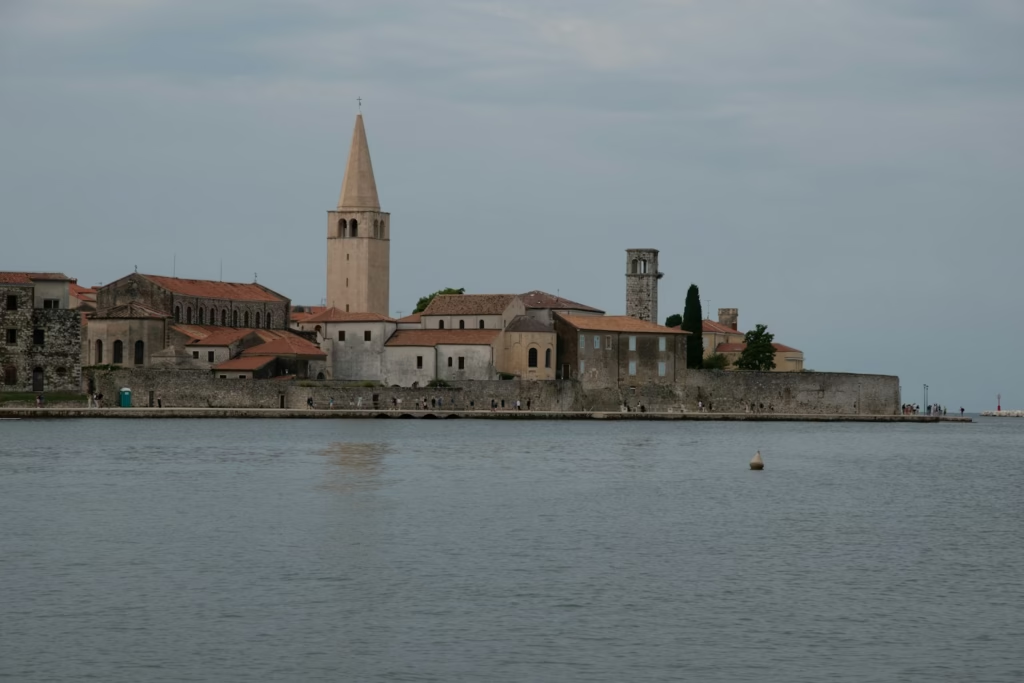
Poreč is the practical starting point for a first Istrian cycling trip. It sits on the western coast, has a large accommodation base and is surrounded by roads that let you choose between easy coastal mileage and longer inland loops. The professional Istrian Spring race regularly uses Poreč and nearby towns, while the mass-participation Istria300 starts and finishes there, evidence of how well the road network supports serious riding.
The official Adriatic-Ionian cycling route gives a useful measure of the terrain. Its Plovanija-to-Vrsar stage is 69.4km with 765 metres of climbing, passing Umag, Novigrad and Poreč before continuing south. That is typical of western Istria: rarely flat for long, but manageable enough to accumulate distance without every ride becoming a mountain day.
From Poreč, a road rider can head inland towards Višnjan, Vižinada and the Mirna valley, then choose whether to add the climb towards Motovun. Another option is to ride south through Funtana and Vrsar before turning inland around the Lim Bay. These roads make it easy to build 60-100km days with enough climbing to be interesting without committing to a single major ascent.
Poreč also works well for mixed groups. A rider wanting a hard training day can head inland while a partner looking for a shorter recreational route has plenty of coastal options. That flexibility is harder to find in more purely mountainous destinations.
The Parenzana and the hill towns of northern Istria
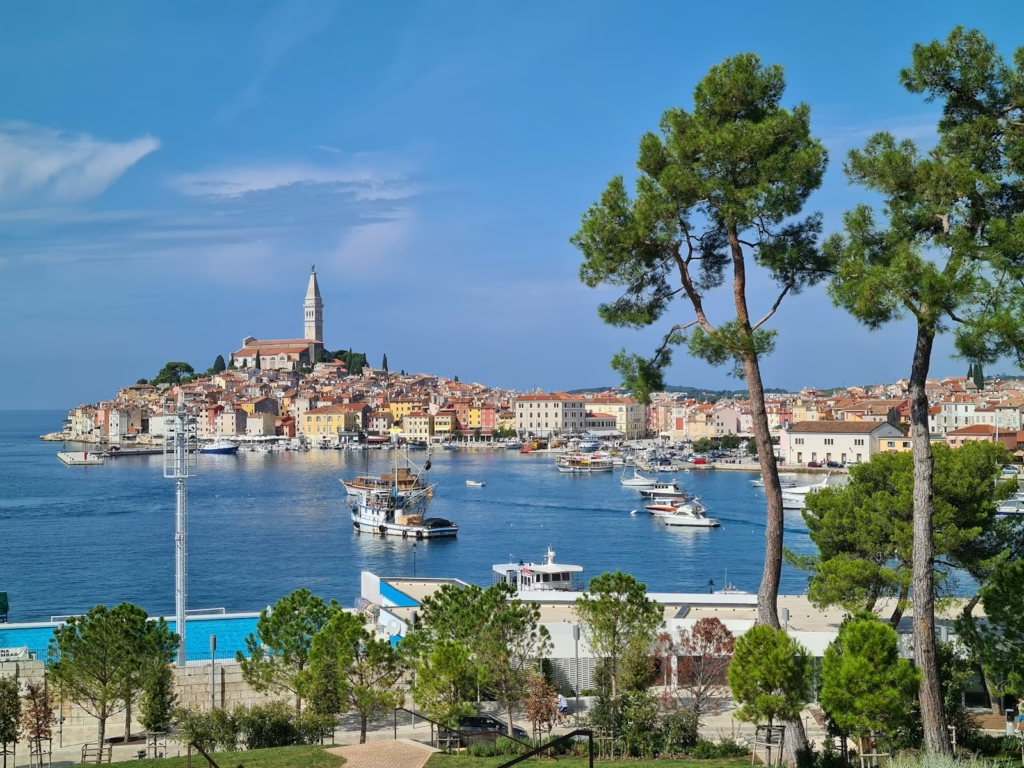
The Parenzana is the route that gives Istria much of its cycling identity. The former railway linked Trieste and Poreč from 1902 to 1935. Its old trackbed now forms a cycling route through vineyards, woodland, tunnels and hill-country settlements, with the Croatian section passing places such as Buje, Grožnjan, Oprtalj and Motovun.
A gravel bike is the obvious choice if you want to ride substantial sections of it. The railway origins keep the gradients relatively controlled, but the surface and seasonal condition make wider tyres more comfortable than a conventional road setup. It is possible to use parts of the Parenzana as connectors within a mixed-surface loop rather than treating it as an end-to-end expedition.
Road riders should not ignore the same area. The asphalt approaches to Grožnjan and Motovun deliver exactly the kind of climbing Istria does well: relatively short ascents that become steep enough near the towns to force a proper effort. The Mirna valley provides lower ground between them, so a loop can repeatedly drop into the valley and climb back towards settlements on the ridges.
Motovun is the obvious visual target, but Buje is arguably a more practical base if cycling is the priority. It gives quick access to the Parenzana and the north-western road network without requiring every ride to finish with the same steep climb back into a hill town.
Rovinj, Lim Bay and the quieter roads south
Rovinj is the alternative base for riders who want a stronger holiday feel without giving up good road access. The immediate area is less severe than the northern hill country. Official tourism material describes 15 cycling trails around Rovinj, Bale and Kanfanar, with most rated easier and four moderately difficult. For a road cyclist, the value is the network behind those signed routes rather than the need to follow them exactly.
The Lim Bay is the obvious landmark north of town. The Adriatic-Ionian route’s Vrsar-to-Pula stage covers 86.1km with 1,095 metres of climbing and passes the Lim area before heading through Dvigrad and Kanfanar towards Rovinj. That gives a good template for a substantial road day: coast, inland rolling roads, a historic settlement and enough elevation to make the ride count.
The official route deliberately avoids the extremely steep climb directly out of Lim Bay, using an inland bypass instead. That is a useful reminder that route-planning apps can create technically rideable but unpleasant shortcuts. In Istria, the best road is often the quieter, slightly longer option rather than the most direct line between two coastal points.
Eastern Istria gives stronger riders more climbing
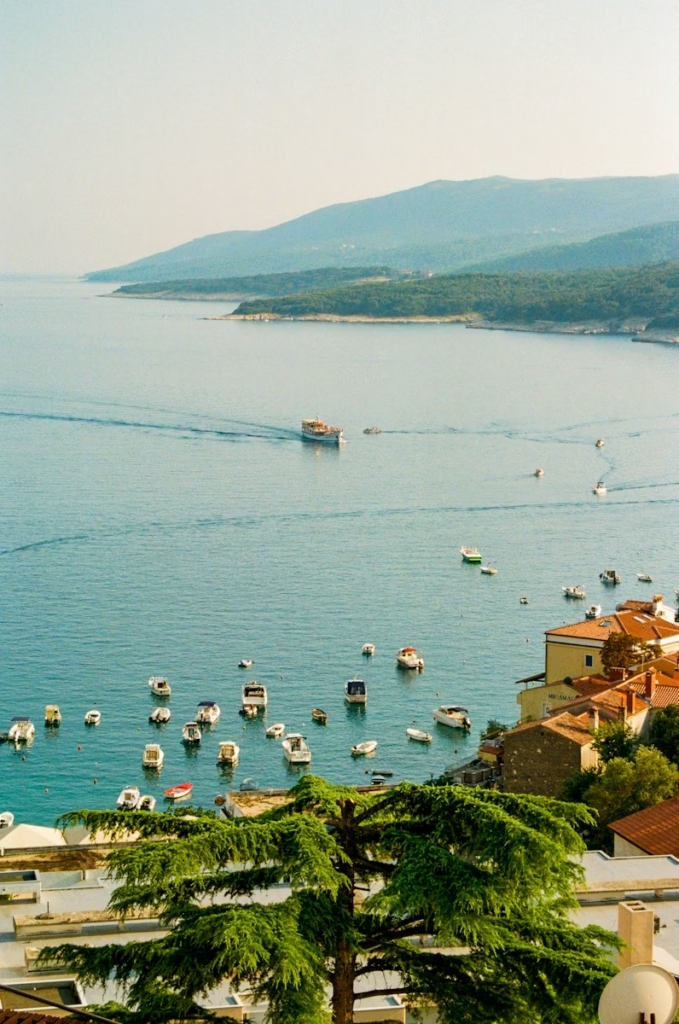
Riders wanting a harder trip should look east towards Labin and the roads beneath Učka. The landscape is more broken here, with the coast dropping sharply towards the Adriatic and inland roads repeatedly climbing back towards the plateau. Labin makes a useful base because you can create demanding loops without needing the long transfers that would be required from Poreč.
The Adriatic-Ionian route continues from Pula through Labin and on towards Brestova, showing how the eastern side can be incorporated into a longer point-to-point ride. For a conventional holiday, however, loops are easier logistically. A route can combine Labin, Rabac and inland villages, using the repeated climbs rather than chasing one headline summit.
If you want a true mountain day, the Učka area north-east of the peninsula extends the climbing possibilities beyond typical Istrian rollers. It is the place to go when 1,000 metres of ascent no longer feels like enough, but it is not necessary for a satisfying week. Western and central Istria can produce substantial elevation simply through repetition.
Traffic, surfaces and when to ride
Spring and early autumn are the obvious windows. Temperatures are better for long rides, accommodation is easier than at the height of the beach season and traffic is generally less intense. September has the additional advantage of warm sea temperatures if the trip is being shared with non-cycling days, while October can still offer excellent riding conditions around events such as Istria300.
July and August require more discipline. Istria’s official cycling safety material warns that traffic becomes very intense on coastal roads and some inland routes during summer, and it publishes safer alternatives to roads marked as hazardous. Start early, carry more fluid than you think you need and do not use a busy D-road simply because a mapping app considers it efficient.
Road surfaces on minor asphalt routes are generally suitable for a normal road bike, but conditions can vary after winter and on less-used inland lanes. For mixed riding, 35-45mm gravel tyres make the Parenzana and similar tracks far more comfortable. A road rider sticking to asphalt does not need specialist equipment beyond sensible gearing and puncture protection.
Food and water are easy to find around the main towns, but inland loops can create longer gaps between reliable stops. In hot weather, refill before leaving larger settlements. Hill towns make attractive café stops, but they also sit at the top of the climb, so it is worth carrying enough to reach them rather than assuming every village has an open shop.

How to build a three- or five-day Istria cycling trip
For three days, base yourself in Poreč. Use the first ride for a 60-80km coastal and inland loop towards Vrsar and the Lim area. Make day two the harder northern ride towards Vižinada, Motovun and Buje. On day three, either take a gravel bike onto the Parenzana or ride south towards Rovinj and Kanfanar.
With five days, split the trip. Three nights around Poreč or Rovinj give enough time for the western coast and hill towns, then move east to Labin for two more climbing-heavy days. That avoids spending the whole holiday driving across the peninsula while still showing how different eastern Istria feels.
Riders combining Croatia into a longer trip can pair Istria with the Dalmatian Coast around Split and Makarska. The contrast is useful: Istria is better for dense networks of rolling roads and mixed-surface exploration, while Dalmatia brings more exposed coastal riding and the much larger climbing backdrop of Biokovo.
Istria’s strength is choice rather than one famous road. You can ride 70km with moderate climbing from Poreč, spend a day on the Parenzana, chase steep ramps into medieval towns or move east for a much harder climbing loop. Plan around traffic and season rather than simply distance, and the peninsula works as a cycling destination for far longer than a single weekend.

