
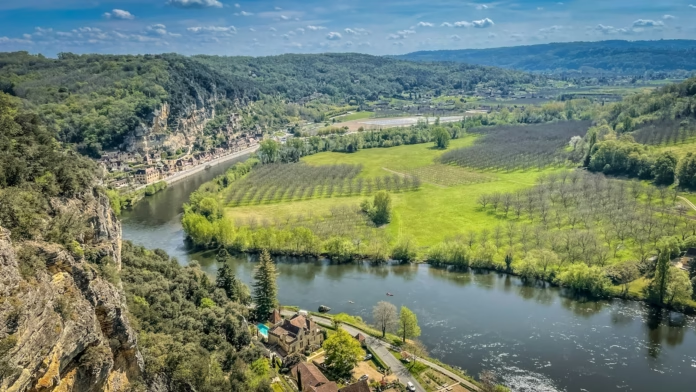
Dordogne and Lot sit in a useful middle ground for cyclists who want proper terrain without building an entire holiday around famous cols. The roads rise and fall almost constantly, but the climbing is usually measured in minutes rather than hours. Traffic thins quickly away from the larger towns, limestone valleys provide natural route corridors and the concentration of villages means a long ride can be broken up without turning every stop into a logistical exercise.
It is also a part of France where choosing the right base matters. Sarlat-la-Canéda gives access to the Dordogne and Vézère valleys, Souillac works well for rides towards Rocamadour and the northern Lot, while Cahors puts the Lot valley and the Causses du Quercy within easy reach. Riders looking at a wider French trip can use our Cycling in France guide alongside this regional guide.
What the riding is really like
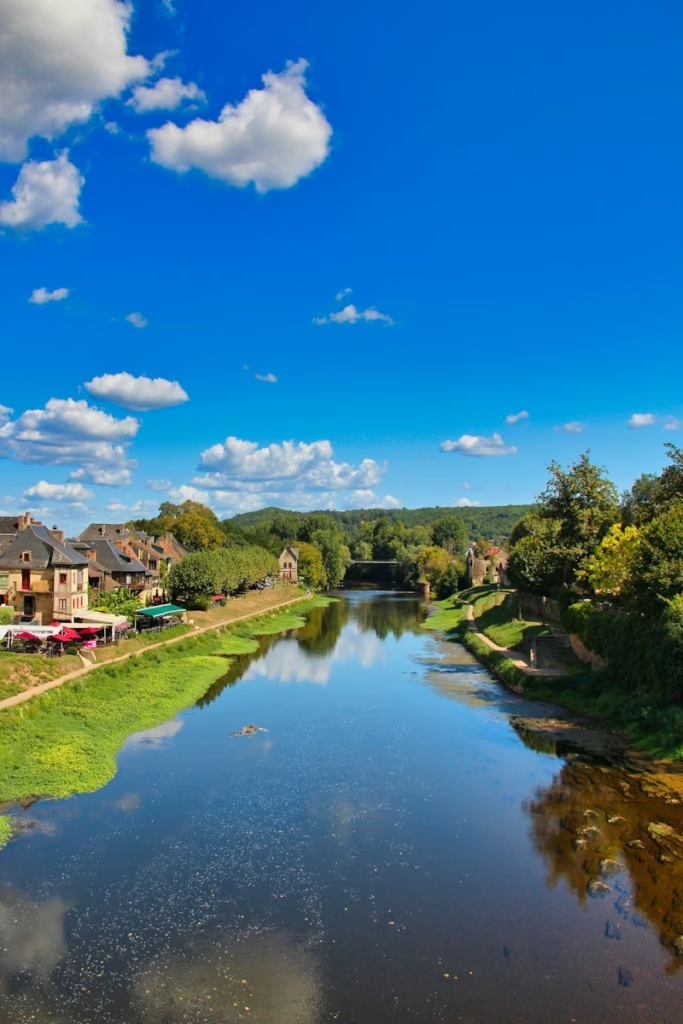
The defining feature is repetition. A route may never contain a climb that looks intimidating on paper, yet 80 or 100 kilometres can accumulate a substantial amount of climbing because the road repeatedly leaves one river valley, crosses a plateau and drops into the next. The gradients are generally more forgiving than the Alps or Pyrenees, although short ramps into hilltop villages can become unexpectedly sharp.
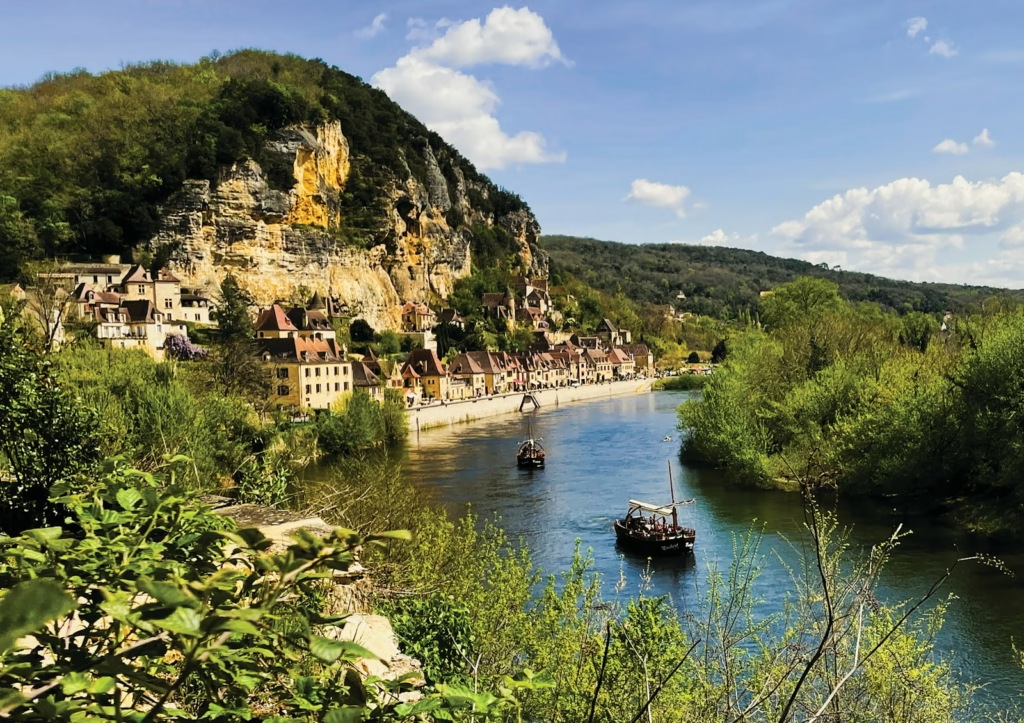
The Dordogne itself creates some of the easiest riding. Roads following the river can be gently rolling or close to flat, particularly around the established cycle routes and greenways. Move away from the water and the character changes quickly. The limestone landscape is cut by tributaries and dry valleys, so roads climb through woodland and farmland before opening onto the causse. The Lot around Cahors has a similar pattern, with the river twisting between steep slopes and vineyards.
This makes the region unusually flexible. A recovery day can follow a river or converted railway, while the following day can be built around repeated climbs to places such as Domme, Rocamadour or the villages above the Lot. Gravel riders have even more options because farm tracks, forest roads and unsealed links can be used to join otherwise separate road loops.
Sarlat and the Dordogne valley
Sarlat is the obvious base on the Dordogne side. The town sits north of the river rather than directly on it, which means most rides begin with some rolling terrain, but the reward is access to a dense network of minor roads around La Roque-Gageac, Beynac-et-Cazenac, Castelnaud and Domme. These are popular visitor destinations, so the quietest riding comes from using them as waypoints rather than spending the whole day on the principal connecting roads.
The Cazoulès-Sarlat greenway is particularly useful. Built largely on a former railway alignment, the surfaced route runs for roughly 25 kilometres towards the Souillac side of the valley. It is suitable for an easy spin, but it is also a practical traffic-free spine for a bigger loop. A rider can use the greenway in one direction, leave it for the smaller roads around the Dordogne and return through the hills.
For a harder day, cross the river and climb towards Domme before continuing south through the quieter lanes. Domme’s position above the Dordogne explains the work required to reach it, but the climb is short enough to include in a longer route. Linking several of these elevated villages produces a much more demanding ride than the individual climbs suggest.
The area also featured prominently in the 2026 Tour de France, with the race travelling from Périgueux to Bergerac. Our Tour de France stage 8 guide gives another look at the roads and geography farther west in the Dordogne département.
Souillac, Rocamadour and the Causses du Quercy
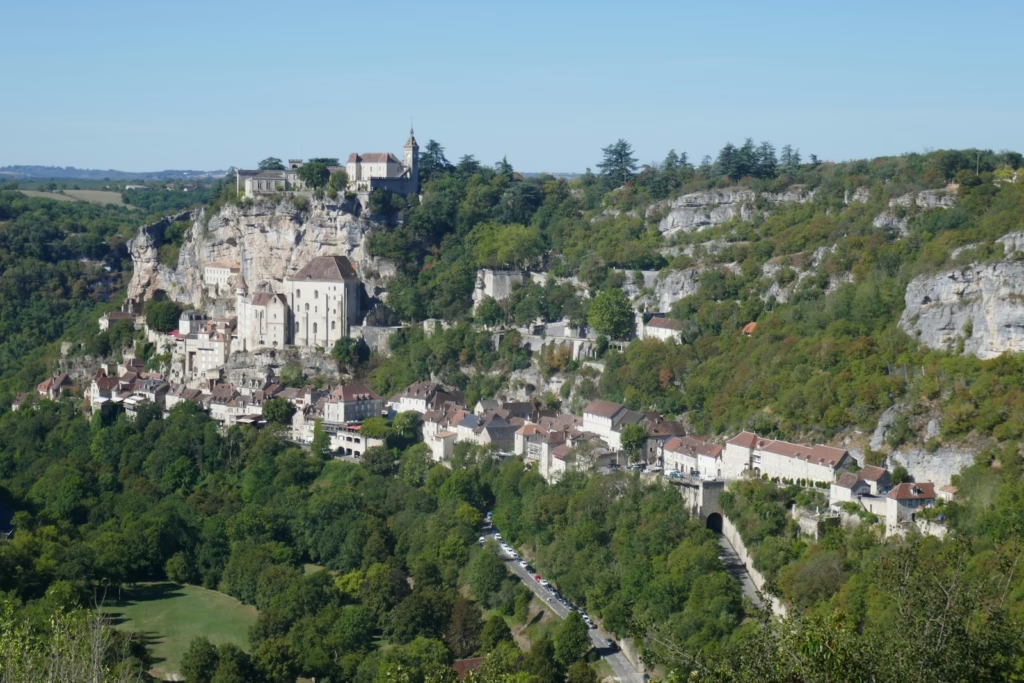
Souillac is a strong alternative for riders who want to split their time between Dordogne and Lot. It has rail access, bike services and a position close to both the river and the hills leading south towards Rocamadour. The riding becomes drier and more exposed as the route enters the Causses du Quercy, with limestone walls, scrub and open plateaux replacing some of the greener Dordogne scenery.
La Vagabonde, signed as the V87, provides a useful framework. The full route runs for about 500 kilometres from Montluçon to Montech, but two local stages are especially relevant: Beaulieu-sur-Dordogne to Rocamadour and Rocamadour to Cahors. The latter is around 65 kilometres and carries roughly 765 metres of climbing, crossing the causse before descending through the Vers valley towards the Lot.
That official route is a good introduction to the terrain rather than necessarily the final word on where to ride. Strong road cyclists can use its corridor and add loops through quieter surrounding villages. Rocamadour itself is worth approaching early in the day. The site attracts heavy visitor traffic, particularly in summer, and the narrow roads are far more enjoyable before coaches and cars become established.
Cahors and the Lot valley
Cahors changes the balance again. The Lot loops tightly around the city and continues west through vineyard country towards Puy-l’Évêque. Staying close to the river gives relatively gentle riding, while almost every turn away from it creates an opportunity to climb. The roads on the plateaux above the valley tend to be quieter, making them the better choice for riders who value uninterrupted kilometres over sightseeing stops.
A classic day can follow the Lot west before climbing away from the river and returning on parallel minor roads. Another option is to head north-east towards the Causses du Quercy and connect with the V87 corridor. The difference between valley and plateau is useful when planning consecutive days: one hard, rolling loop can be followed by a much easier river ride without needing to move accommodation.
Do not assume every signed cycle facility is a smooth road-bike path. The short Mercuès-Douelle greenway, for example, uses an old railway and is described locally as unsealed. A gravel bike or wider tyres make these links straightforward, but a rider on lightweight road tyres should check the surface before using a greenway as an essential part of a route.
Long-distance routes and traffic-free options
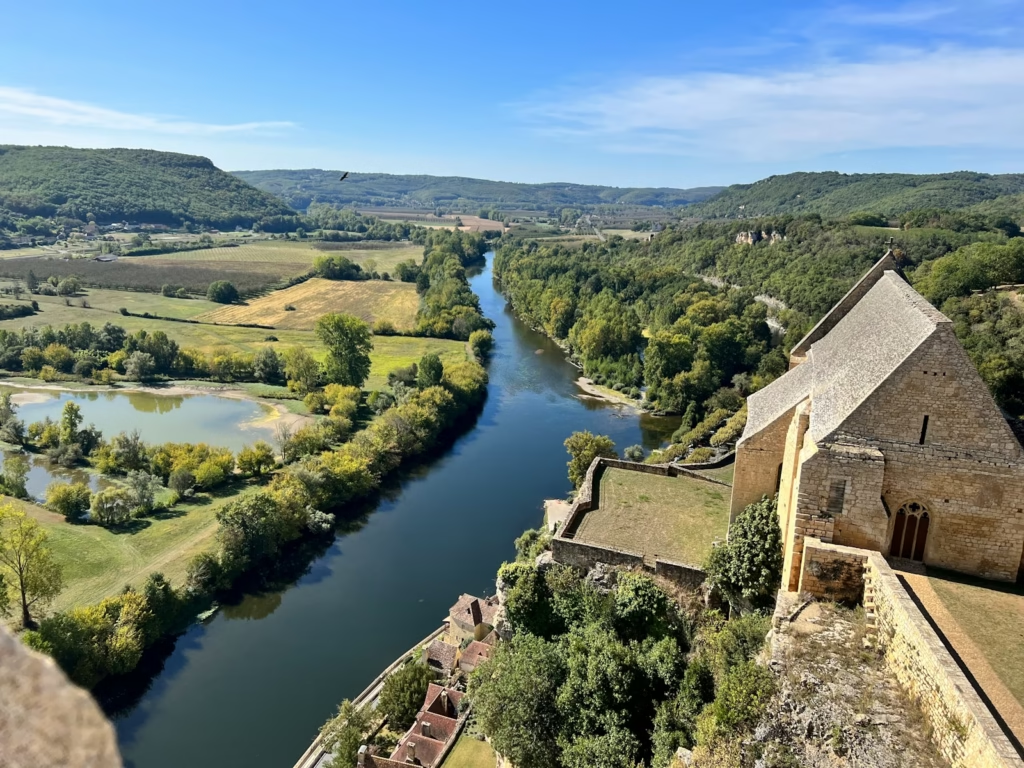
There is enough established infrastructure to build a multi-day trip without inventing routes from scratch. La Flow Vélo starts at Sarlat and runs about 400 kilometres west to the Atlantic, with a high proportion of dedicated cycle infrastructure. For a point-to-point holiday it offers a very different proposition from the hillier riding around Rocamadour and Cahors, and rail connections make a one-way itinerary more realistic.
La Vézère à Vélo is another useful option west of Sarlat. A flatter greenway section runs from Les Eyzies towards Saint-Chamassy, while the continuation towards Coly uses secondary roads and becomes hillier. It works particularly well for mixed groups because the easier section can be ridden independently while stronger riders extend the day into the surrounding hills.
The region’s developing network also includes shared low-traffic routes marketed locally as voies vertes pâles. These are not fully segregated greenways: motor vehicles can still be present. The distinction matters when planning for children or inexperienced riders. A route described as a greenway should not automatically be treated as traffic-free unless the specific section is confirmed as such.
When to go and what to bring
Late spring and early autumn are the easiest periods for a cycling-focused trip. May, June, September and early October generally give a better balance of daylight, temperature and traffic than the peak summer weeks. July and August can be hot, and the major visitor sites around Sarlat, Rocamadour and the Dordogne villages become much busier. Starting early is the simplest response if a summer trip is unavoidable.
Spring weather can be changeable and heavy rain matters on the descents. Many minor roads run through woodland, where damp patches, leaves and debris can remain after the main road has dried. Autumn brings similar issues later in the season. The climbs are rarely long enough to demand Alpine gearing, but compact or sub-compact ratios are still sensible because repeated short gradients become tiring late in a ride.
A normal road bike is ideal for an asphalt-focused trip. A gravel bike becomes the more versatile choice if the plan includes greenways, towpaths or forest connections. Carry two bottles in warm weather and do not rely on every village having an open shop outside the main tourist season. Basic spares are also worthwhile: the quieter roads are part of the attraction, but they can leave a rider some distance from a bike shop.
Building a week in Dordogne and Lot
For a first visit, splitting the week between Sarlat or Souillac and Cahors gives the broadest picture. Three or four nights around Sarlat provide access to the Dordogne villages, the Cazoulès greenway and the Vézère. Moving to Cahors then opens the Lot valley and the drier Causses du Quercy. Souillac can replace Sarlat for riders who prioritise Rocamadour and easier rail logistics.
-
 Photo Credit: Flavia Ossola
 -
 Photo Credit: AusCycling/Chris Auld


A sensible sequence is an introductory river ride, a harder village-and-plateau loop, an easier greenway day and then a longer point-to-point or V87 ride. After moving south, repeat the pattern around Cahors. That structure makes better use of the terrain than chasing a list of individual climbs. Dordogne and Lot work best when the valleys are treated as the foundations of each route and the hills are added according to how hard the day needs to be.
For riders who enjoy this kind of French trip, the contrast with a flatter itinerary is useful too. Our Loire Valley cycling guide covers a more continuous long-distance route, while Dordogne and Lot reward a base-and-loop approach with far more repeated climbing.

