
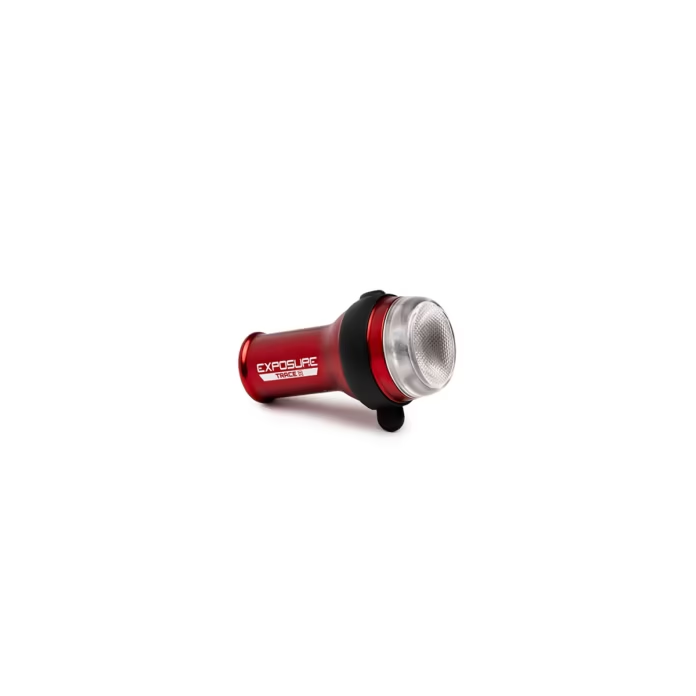
The Exposure TraceR has been one of the more recognisable compact rear lights for years, but the fourth generation is a much larger update than its familiar cylindrical shape suggests. The new TraceR 4 raises maximum output from 120 to 200 lumens, switches to USB-C, increases maximum runtime to 40 hours and improves weather protection to IP67, while Exposure still claims a weight of only 35g.
That combination gives the TraceR 4 a clear purpose. This is not a radar light, camera or connected safety device. It is a small, premium rear light designed to be bright enough for daytime road use without becoming another bulky item hanging from the seatpost. The standard £55 version reviewed here also avoids the extra complexity and £20 premium of Exposure’s TraceR 4 ReAKT.
The timing is useful too. BikeRadar has now examined the new generation directly, measuring its sample at 37g rather than the claimed 35g, and confirming the substantial output increase without a corresponding increase in size. That makes the TraceR 4 more than a routine USB-C refresh.
This article contains affiliate links. We may earn a commission from qualifying purchases at no extra cost to you.
Tweeks currently stocks the Exposure TraceR 4 for £55, matching Exposure’s UK retail price.
Exposure TraceR 4 specifications
| Maximum output | 200 lumens |
| Maximum runtime | Up to 40 hours |
| Claimed weight | 35g |
| Measured sample weight | 37g in BikeRadar testing, excluding bracket |
| Side visibility | 270° |
| Charging | USB-C |
| Charge time | Approximately 90 minutes |
| Weather resistance | IP67 |
| Body | CNC-machined 6063 aluminium |
| Mount | Seatpost bracket included |
| UK price | £55 |
A much brighter TraceR without becoming a bigger light
The headline change is the jump to 200 lumens. Exposure’s previous TraceR topped out at 120 lumens, so the fourth generation offers roughly two-thirds more maximum output. That matters most in daylight, where a rear light has to compete with bright ambient conditions rather than simply contrast against darkness.
Exposure uses its DayBright pulse pattern for that job. The manufacturer claims the pattern is visible from more than a kilometre away, but distance claims are difficult to translate directly into road safety. The more useful point is that 200 lumens puts the new TraceR comfortably into the range expected of a serious daytime rear light.
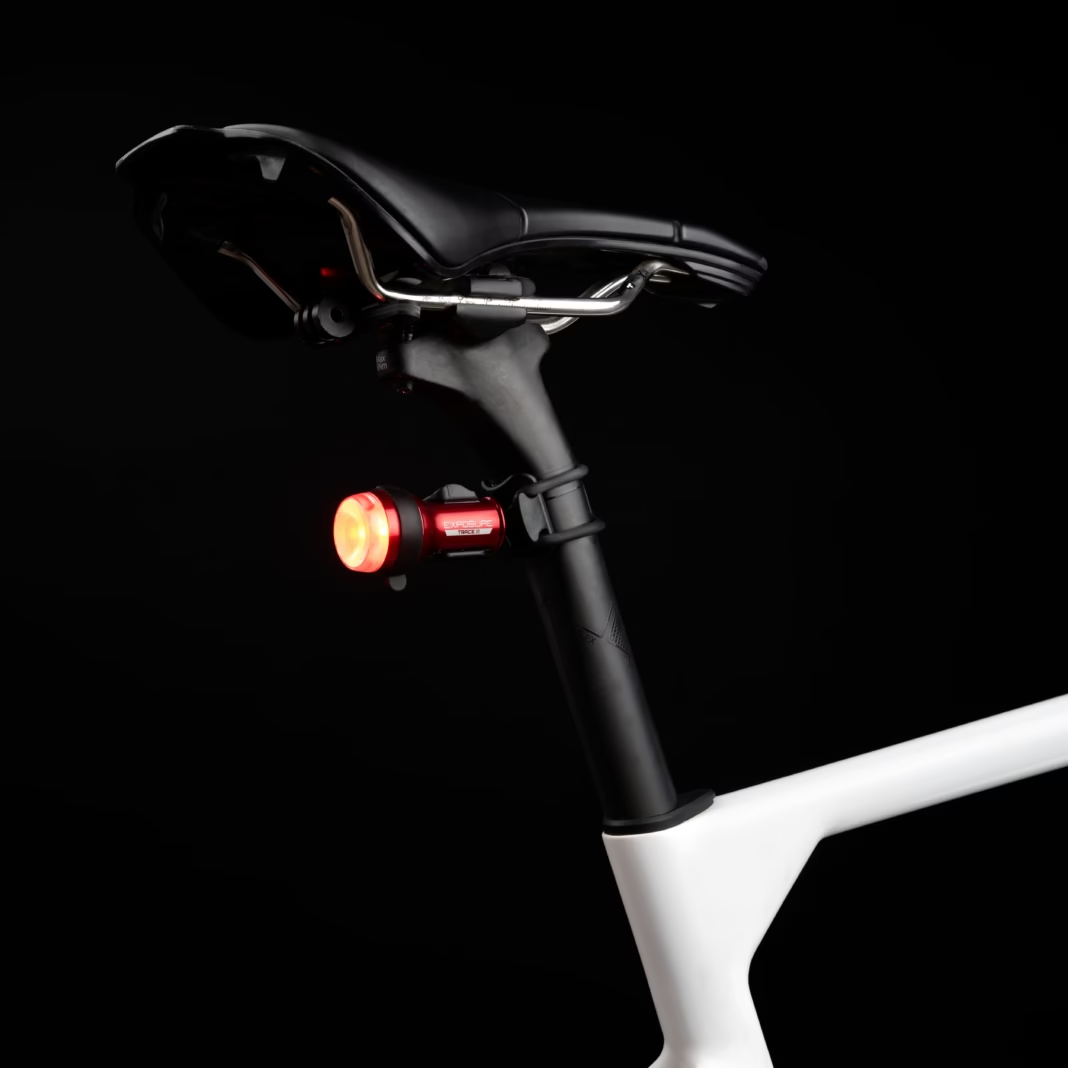
There is useful continuity behind the new numbers. Earlier independent TraceR testing consistently praised the light’s concentrated rear visibility, aluminium construction and simple operation. Those tests apply to previous generations rather than proving the performance of the TraceR 4, but they establish the strengths and weaknesses of the basic design Exposure has developed rather than discarded.
The fourth generation also addresses one previous limitation directly. Older testing found the TraceR much stronger directly behind than from an angle. Exposure now specifies a 270-degree visibility arc from the revised Commute Lens, making side visibility a more deliberate part of the design. That should matter at junctions and roundabouts, where approaching traffic is rarely positioned perfectly behind the bike.
USB-C is overdue, but welcome
USB-C is hardly exciting in isolation, but it removes one of the most dated aspects of older Exposure lights. The TraceR 4 now charges from the same increasingly standard cable used by current phones, GPS computers and other cycling electronics, with a claimed full charge taking around 90 minutes.
Maximum runtime has increased to 40 hours in the lower-output pulse setting. That figure should not be mistaken for 40 hours at 200 lumens, but it gives commuters and endurance riders useful flexibility. Riders using a brighter setting will recharge more frequently, while those primarily wanting a persistent rear marker can stretch intervals considerably.
Our guide to the best bike lights for UK commuting and dark lanes covers the wider question of matching light output and runtime to the type of riding you actually do.
Small size remains the TraceR’s strongest argument
Exposure claims 35g for the light itself. BikeRadar’s new sample came in at 37g, with the brackets for its Trace and TraceR set adding 19g in total. Either way, this remains an unusually small package for a 200-lumen rear light with a metal body.
That matters because rear lights are often left fitted to the bike. A large radar unit can be worthwhile for riders who value approaching-vehicle warnings, but not everyone needs that functionality on every journey. The TraceR 4 occupies the opposite end of the spectrum: compact, simple and easy to move between bikes.
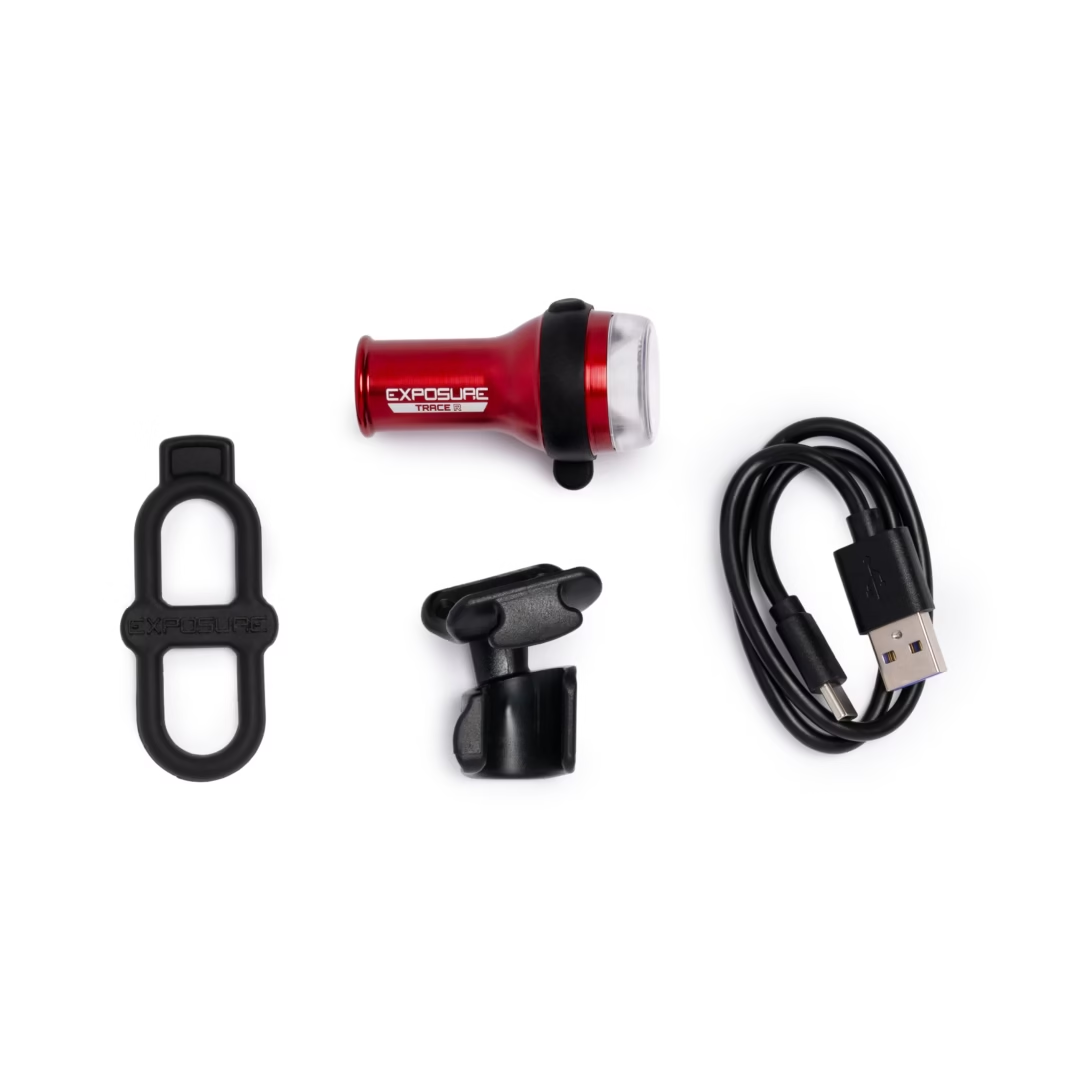
The supplied bracket is intended for a conventional seatpost. Exposure separately sells saddle-rail and aero-seatpost brackets, which is worth factoring into the cost if your bike cannot use the standard fitting. Previous TraceR reviews also noted that the basic mount could be knocked out of alignment even when it remained securely attached, so bracket choice still deserves attention.
Standard TraceR 4 or ReAKT?
The standard TraceR 4 costs £55, while the ReAKT version is £75. Both share the 200-lumen maximum output, 35g claimed weight, 40-hour maximum runtime, aluminium body and IP67 rating. The extra £20 buys Exposure’s reactive functions rather than a brighter basic light.
ReAKT increases output when it detects braking or brighter ambient light. Peloton mode works in the other direction, reducing output when it senses another rider following behind so the light is less intrusive in a group. Those functions are genuinely useful for club riders and riders who want brake-light behaviour, but they are not essential to the TraceR’s basic job.
For solo road riding and commuting, the standard version is arguably the cleaner proposition. Riders specifically interested in smart rear-light behaviour should also consider whether a full radar unit makes more sense. Our comparison of a radar rear light versus a normal rear light explains what the extra technology actually changes.
Where the TraceR 4 falls short
The most obvious criticism is price. £55 is substantial for a rear light that deliberately avoids radar, connectivity and brake sensing. Part of that price reflects the CNC-machined aluminium construction, UK manufacturing and Exposure’s serviceable approach, but riders interested purely in lumens per pound can find cheaper alternatives.
There is also a limit to what can currently be concluded about the fourth generation. It is new enough that long-term independent testing is still developing. BikeRadar’s first look confirms the physical specifications and provides an early measured weight, while road.cc has announced that a full review is forthcoming. The established TraceR has a strong independent record, but that should not be confused with years of evidence for this exact 2026 model.
Finally, 200 lumens is not automatically better in every situation. A very bright rear pulse can be unpleasant for riders sitting directly behind in a group, one reason Exposure reserves Peloton mode for the more expensive ReAKT model. Sensible mode selection remains important.
Who should buy the Exposure TraceR 4?
The TraceR 4 makes most sense for riders who want a premium conventional rear light rather than a miniature electronics platform. It is especially well suited to year-round road riders, commuters and anyone who values a small light that can remain on the bike without dominating the seatpost.
The IP67 rating, aluminium body and USB-C charging strengthen the case for regular winter use, while the 200-lumen DayBright output makes the fourth generation more convincing as a daytime light than its predecessor. If you already liked the TraceR format but were waiting for more output and modern charging, those are precisely the areas Exposure has changed.
Riders who want approaching-vehicle alerts should instead look at something such as the Lezyne Radar Drive Rear. Group riders attracted by automatic dimming and brake response should consider spending the extra £20 on the TraceR 4 ReAKT.
For everyone else, the standard TraceR 4 is £55 at Tweeks and keeps the proposition refreshingly simple.
Verdict
-
 Photo Credit: Getty


The TraceR 4 is a sensible modernisation of a rear light that already had a clear identity. Exposure has not chased radar, apps or elaborate controls. Instead, it has increased output substantially, broadened side visibility, adopted USB-C, improved weather resistance and extended maximum runtime while keeping the light around the same tiny weight.
At £55 it remains a premium conventional rear light, and the lack of long-term testing for this exact generation is worth recognising. Yet the underlying proposition is stronger than before. For riders who want a small, robust daytime rear light without paying for functions they do not need, the TraceR 4 now makes considerably more sense than the model it replaces. Check the current Exposure TraceR 4 price and availability at Tweeks.

