Planning a ride across South Korea
South Korea’s Four Rivers cycling network links long sections of dedicated riverside path with inland climbs and a national certification scheme. The cross-country route from the west coast near Incheon to Busan is a continuous journey, while the separate Four Rivers challenge also includes the Geumgang and Yeongsangang paths in the west and south-west. Those are different undertakings, and it is worth deciding which one you want before booking flights or accommodation.
The official cycling portal at bike.go.kr identifies the Ara, Hangang, Namhangang, Saejae and Nakdonggang paths as the backbone of the cross-country route. It also provides information on the river paths, certification booths and passport scheme. Riders can follow the routes without collecting stamps, but the network’s signs and landmarks are useful even for an ordinary touring holiday.
A route described as a cycle path should not be assumed to be entirely flat, free of pedestrians or immune to closure. Much of the riding is separated from motor traffic, but riverfront parks can be busy, and the central crossing includes a genuine climb. Planning for changing conditions is still essential.
Incheon, Seoul and the Hangang
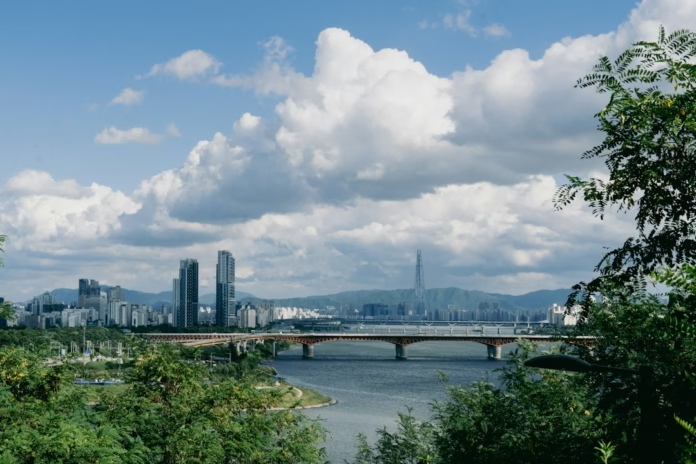
The Ara Bicycle Path starts near the west coast and runs inland for roughly 21km. It provides a straightforward opening to a longer tour, with waterside riding rather than an immediate mountain crossing. The Seoul section of the Hangang path adds about 56km and passes through a densely populated urban corridor.
Seoul’s river paths are a valuable piece of infrastructure, but they are shared spaces. Recreational cyclists, commuters and walkers can be numerous, particularly at weekends and around popular parks. Riding predictably and slowing through busy areas is more useful than treating the route as an uninterrupted training road.
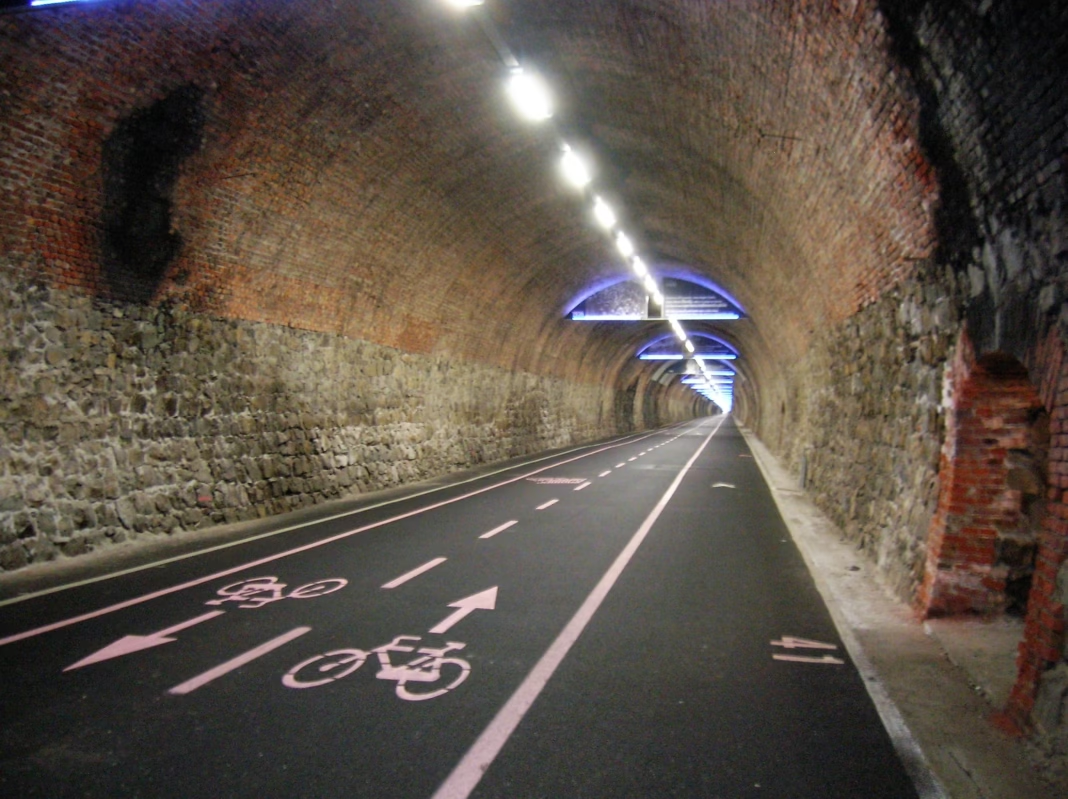
East of Seoul, the Namhangang Bicycle Path extends for approximately 132km. The route uses riverside corridors and sections of former railway, giving riders a chance to cover significant distances away from heavy traffic. The character gradually changes as the path moves towards the central hills and the Saejae crossing.
Crossing Saejae and following the Nakdonggang
The Saejae Bicycle Path is the demanding middle section of the coast-to-coast itinerary. Its roughly 100km includes the crossing via Iwharyeong between the Chungju and Sangju areas. On a loaded touring bicycle, this deserves the same preparation as any sustained road climb: low gears, enough water and a realistic estimate of the time needed.
The reward for crossing the central hills is access to the Nakdonggang system. The official Nakdonggang Bicycle Path is around 324km long and follows the river south towards Busan. It is long enough to divide into several comfortable touring days rather than attempting it as a single push.
There is a practical difference between reaching the end of the official river path and reaching accommodation in central Busan. Allow time for the final urban transfer and check the route before the last day. An evening arrival after a long ride is not the best moment to discover that a preferred bridge or path has a diversion.
Geumgang and Yeongsangang beyond the main crossing
The Geumgang Bicycle Path runs approximately 146km from the Daecheong Dam area towards the estuary. It is a regional journey in its own right rather than a simple extension of the Incheon-to-Busan line. The route suits riders who want a shorter multi-day trip with opportunities to stop in towns away from Seoul.
The Yeongsangang Bicycle Path is approximately 133km, linking the Damyang Dam area with the river’s lower reaches. It takes cyclists into the south-west of the country and through a landscape different from the central cross-country corridor. For a visitor with extra time, these routes can be separate touring trips rather than rushed additions to one itinerary.
Transfers between the four river systems need planning. Check whether trains or buses on the intended journey accept bicycles, whether reservations or packing are required and whether the rules differ by service. Riders hiring a bicycle should confirm collection and return locations before deciding on a one-way route.
The certification passport and navigation
South Korea’s cycling certification programme uses a passport stamped at designated centres and red booths. The official portal explains that completing all four named river routes qualifies riders for Four Rivers recognition, while the cross-country challenge has its own award. The same passport can be used across the national route categories.
The booths provide useful checkpoints, but they should not replace navigation. Download maps for offline use and check official updates for flood damage, maintenance or construction. River paths are particularly vulnerable to temporary disruption after heavy rainfall, and a detour can take riders onto roads they had not planned to use.
A certification-focused trip may require stopping at every designated booth, while a touring trip can be organised around scenery, accommodation and time available. Both approaches work. The important point is to decide in advance, because collecting a missed stamp later may involve a substantial return journey.
When to go and what to carry
Spring and autumn are generally the most comfortable seasons for long-distance cycling in South Korea. Summer can be hot and humid with heavy rain, while winter may bring freezing temperatures and ice. The central hill crossing is more exposed than the sheltered river sections, so forecasts should be checked before committing to a long day.
Daily distances should reflect luggage, terrain and sightseeing plans. A fit road cyclist might cover more than 100km, but 50 to 80km per day can be a more practical touring target when the itinerary includes stops and uncertain conditions. Choose overnight locations with food and accommodation options, not merely because they sit near an official route marker.
Carry lights, a repair kit, a charged phone, a power bank and enough food and water to bridge gaps between shops. Korea has extensive convenience-store coverage in populated areas, but some inland stretches are quieter. Be particularly cautious on shared paths where pedestrians, slower riders and children may be present.
International visitors should also resolve bicycle transport before arrival. Airline box requirements, public-transport bicycle rules and the distance between the airport and first overnight stop can affect the whole itinerary. A trip that begins with an organised transfer or a relaxed first day is usually easier than one that starts with a long ride immediately after a flight.
Choosing an itinerary
For a first long-distance visit, the west-coast-to-Busan line offers the clearest sense of travelling across the country. The Ara and Hangang sections provide an accessible start, Saejae brings the main climbing challenge and Nakdonggang supplies the extended southern journey.
Riders with only a few days can concentrate on Seoul and the Namhangang, returning by a transport service that accepts bicycles. Those seeking quieter regional touring can give Geumgang or Yeongsangang a trip of their own. The network is flexible enough to support each approach, provided the transfer and accommodation details are checked rather than assumed.