The Tour of Guangxi 2026 closes the men’s WorldTour season with one of the most open general classification fields of the year. Tom Pidcock arrives in China after finishing sixth at Il Lombardia, Jarno Widar has just won Tre Valli Varesine, Kévin Vauquelin comes in off a September stage-race victory, and defending champion Paul Double returns to the same Nongla climb where he won the race in 2025.
The route makes the final day unusually important. The Tour of Guangxi 2026 route ends with the 165.8km stage from Yizhou to the Nongla Scenic Area, where the final climb is around 3.1km at 6.3% with steeper ramps near 10%. In previous editions there was still another stage after Nongla. This year the summit finish decides the race on the spot.
There is still plenty that can go wrong before Stage 6. The middle of the race is harder than usual, with new hilly stages to Tian’e and Yizhou, while the 212.3km run to Bama should add fatigue even if it does not create major GC gaps. The best-positioned rider at Nongla will therefore need more than one sharp climbing effort. They also have to reach the final day without wasting time or energy.
The full Tour of Guangxi 2026 start list contains 154 riders across 22 teams, with Paul Double, Tom Pidcock, Juan Ayuso, Kévin Vauquelin, Léo Bisiaux, Jarno Widar, Jhonatan Narváez, Maxim Van Gils and Ilan Van Wilder among the main GC names.
Tom Pidcock starts as the rider to beat
Pidcock has the strongest combination of current form and course fit. He finished sixth at Il Lombardia on Saturday after staying with the main chasing group behind Paul Seixas, extending a run of strong late-season results that also included victory at GP Industria & Artigianato and podium-level performances across the Italian autumn.
Nongla suits him particularly well. It is not a long Alpine climb where a pure climber can ride tempo for 20 minutes. The decisive section is short, steep and explosive, with repeated accelerations likely once the road reaches the hardest ramps. Pidcock is at his best when the effort sits between a puncheur finish and a short mountain climb.
Pinarello-Q36.5 also bring enough climbing support to keep him protected through the week. Thomas Gloag, Damien Howson, Milan Vader and David de la Cruz give the team several riders capable of controlling the harder terrain before the final ascent.
Jarno Widar has the best late-season momentum
Widar is the most interesting challenger because his form has moved sharply upwards at exactly the right time. He won Tre Valli Varesine on 6 October, beating Pidcock and Matteo Jorgenson from a three-rider move, then finished 13th at Il Lombardia four days later.
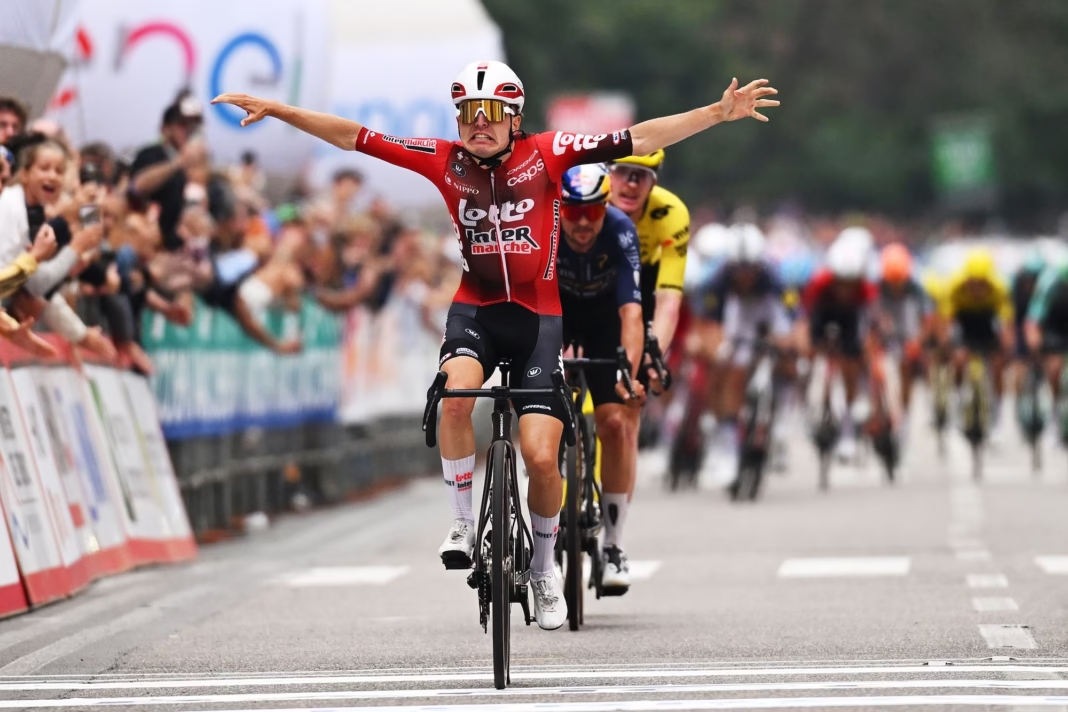 Photo Credit: Getty
His Vuelta a España also showed that he can handle a three-week race without losing his climbing speed, with fourth on Stage 13 and seventh on Stage 9 among his best days. Guangxi is a much shorter challenge, and the Nongla finish should reward the same combination of acceleration and climbing that he has shown all autumn.
Lotto-Intermarché do not have the depth of some rival GC teams, so Widar may have to manage more of the final climb himself. That matters less on a three-kilometre finish than it would on a long mountain stage. If he starts the final ascent in the right position, he has the speed to follow the first move and still attack again.
Kévin Vauquelin brings fresh stage-race form
Vauquelin is the strongest third choice because he has already shown late-season stage-race form. He won the Giro d’Abruzzo in September, taking the final stage and the overall, then finished 14th in the European Championships road race at the start of October.
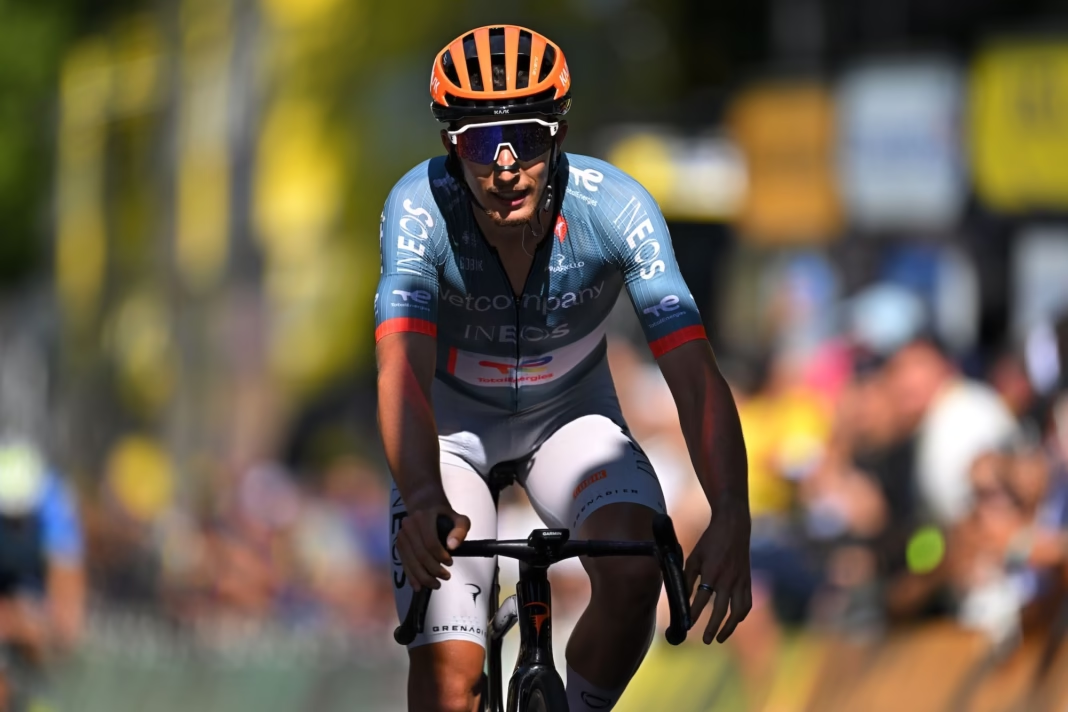
The Nongla finish should suit him better than the long mountains that exposed him at the Tour de France. Vauquelin is more effective when he can produce a hard five-to-ten-minute effort rather than settle into a long climbing rhythm, and the steep lower ramps at Nongla provide exactly that kind of test.
Netcompany INEOS also have Magnus Sheffield and Óscar Rodríguez in support, so Vauquelin should reach the final kilometres with options around him rather than needing to cover every move himself.
Paul Double knows exactly how to win on Nongla
Double cannot be pushed far down the list simply because stronger names have arrived. He won the 2025 Tour of Guangxi by attacking on Nongla, taking the stage by nine seconds and moving into the race lead. That experience matters because the climb is short enough for positioning and timing to decide as much as pure climbing ability.
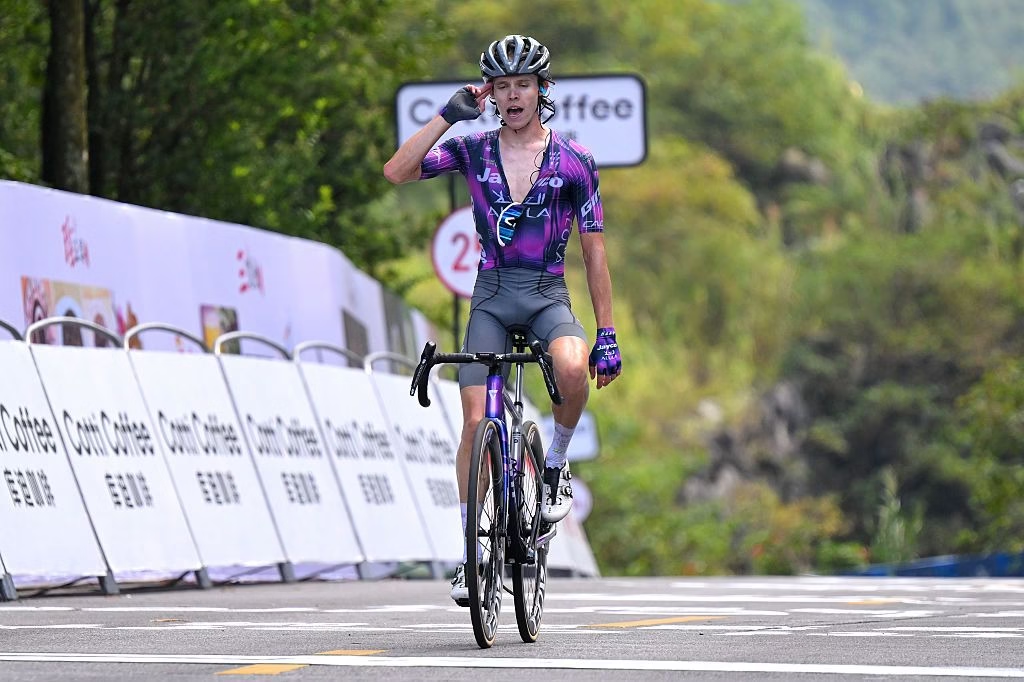
The difference this year is that Double faces a deeper field. In 2025 he only needed to get away from a relatively small group of GC rivals. Pidcock, Widar, Vauquelin, Bisiaux, Narváez and Ayuso all increase the number of riders capable of responding immediately when the first serious move comes.
Jayco-AlUla do, however, bring Luke Plapp and Alan Hatherly as useful support. That should allow Double to race defensively through the first five stages and save everything for the final climb.
Léo Bisiaux has the strongest Grand Tour result among the young climbers
Bisiaux finished 12th overall at the Vuelta a España and ninth in the European Championships road race, making him one of the more reliable climbing picks in the field despite being only 21.
His Vuelta included sixth in the opening Monaco time trial and top-10 finishes on two mountain stages, which suggests he has enough all-round strength to survive Guangxi’s harder middle stages without giving anything away before Nongla. Decathlon CMA CGM can also separate their objectives cleanly, using Olav Kooij for the sprints while Bisiaux focuses entirely on GC.
Jhonatan Narváez returns after third overall in 2025
Narváez already knows the podium route in Guangxi after finishing third overall last season. He also has a strong 2026 body of work, including three Giro d’Italia stage wins and victory on Stage 3 of the Tour de Suisse.
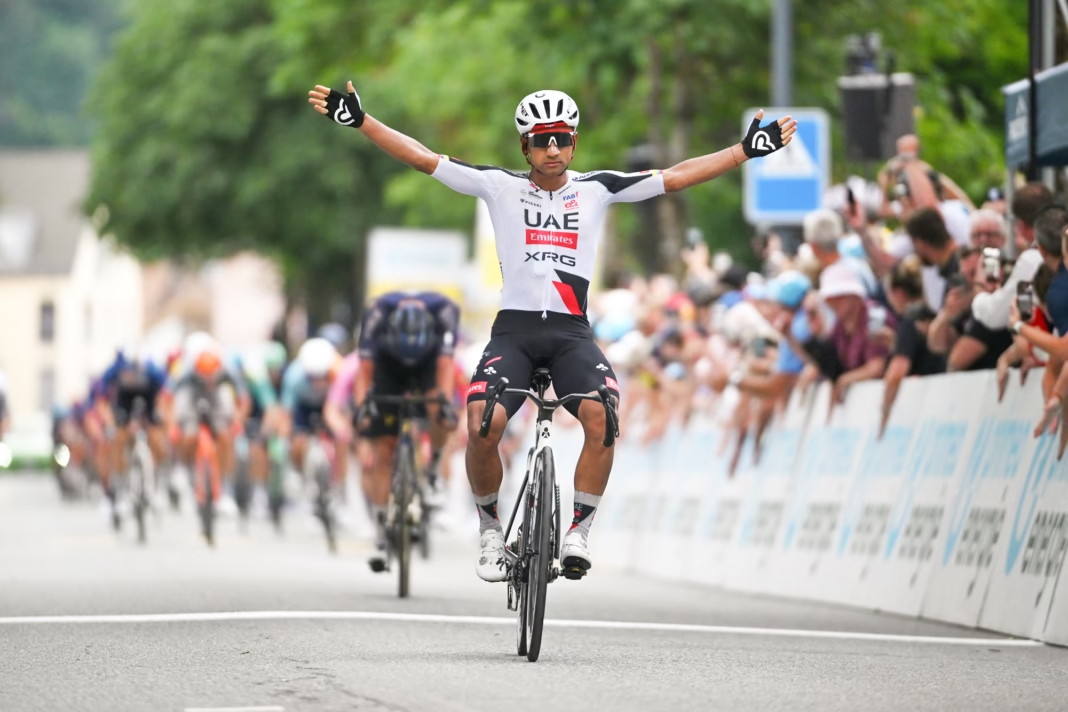
His strength is that he can collect time in more than one way. Narváez has the speed to take bonus seconds from reduced groups and the punch to stay close on Nongla. UAE Team Emirates-XRG also have Marc Soler as a second climbing option, which gives them room to attack before the final climb rather than waiting for a straight uphill contest.
Juan Ayuso has the ceiling but not the same late-season form
Ayuso is impossible to ignore on ability alone. He finished seventh at the Tour de France and has the climbing level to win a race like Guangxi if he reaches Nongla near his summer form.
The uncertainty is his autumn. He was 13th at the World Championships but only 73rd at Il Lombardia, and that makes him harder to place above riders who are currently producing stronger results. Lidl-Trek also have Lennard Kämna and Andrea Bagioli, so they are not dependent on Ayuso being at his best.
Ilan Van Wilder, Maxim Van Gils and Max Poole remain dangerous
Van Wilder arrives after fourth in the European Championships time trial, although his road form has been less convincing than his effort against the clock. The Guangxi route gives him a chance because there is no long mountain stage where he needs to match the pure climbers for half an hour.
Van Gils has the punch for Nongla and Daniel Felipe Martínez gives Red Bull-BORA-hansgrohe a second GC option, while Max Poole has finished inside the Guangxi top 20 before and is suited to the repeated rolling terrain. Luke Plapp, Afonso Eulálio, Rémy Rochas, Torstein Træen and Javier Romo are further names who can move into the top 10 if the new Stage 4 and Stage 5 routes create more separation than expected.
The sprint battle is much deeper than in 2025
Paul Magnier dominated the 2025 edition with five stage wins, but repeating that run looks far harder. Olav Kooij, Kaden Groves, Jordi Meeus, Juan Sebastián Molano, Max Kanter, Milan Fretin, Fabio Jakobsen and Arvid de Kleijn are all on the 2026 team-by-team guide.
The first three stages offer the clearest sprint opportunities, although the road to Jingxi and the long stage to Bama both contain enough climbing to remove some of the pure fast men. Stage 5 may provide another chance if the new route to Yizhou stays together.
For UK viewers, the latest broadcast information is in the Tour of Guangxi 2026 TV guide.
Tour of Guangxi 2026 Top 3 Prediction
1. Tom Pidcock
2. Jarno Widar
3. Kévin Vauquelin
Pidcock gets the edge because Nongla is almost designed for his current strengths: a short, explosive summit finish after a week where the GC riders should still be separated by seconds rather than minutes. Widar is the form challenger after Tre Valli and Lombardia, while Vauquelin’s September stage-race win makes him the strongest alternative from the riders who did not race deep into Lombardia.
Double is the obvious rider who can break that prediction. He has already won on this climb and needs no explanation of where the race is likely to be decided. The difference in 2026 is the number of riders capable of matching his first acceleration.