The 2026 Tour of Guangxi will close the men’s WorldTour season with six stages across southern China from 13-18 October, starting in Chongzuo and ending with the decisive climb to the Nongla Scenic Area.
This year’s route is a significant change from 2025. The coastal opener in Fangchenggang has disappeared, the race starts inland in Chongzuo, two new stages take the peloton deeper into the mountainous western part of Guangxi, and the familiar Nongla summit finish has been moved to the final day.
That last change is the most important. In recent editions the overall classification was normally shaped at Nongla before a later sprint stage. In 2026 there is nowhere to recover afterwards: the red jersey will be decided on the climb itself.
The latest published stage distances total 1,043km, with three stages likely to favour sprinters or fast all-rounders, two much less predictable hilly days through the karst interior and one clear summit-finish showdown. For the wider background to the race, see our beginner’s guide to the 2026 Tour of Guangxi.
Tour of Guangxi 2026 route at a glance
| Stage | Date | Route | Distance | Likely character |
|---|---|---|---|---|
| 1 | 13 October | Chongzuo – Chongzuo | 149.4km | Fast city opener |
| 2 | 14 October | Chongzuo – Jingxi | 179.7km | Hilly, sprint possible |
| 3 | 15 October | Jingxi – Bama | 212.3km | Longest stage, rolling finish |
| 4 | 16 October | Bama – Tian’e | 165.7km | New mountainous stage |
| 5 | 17 October | Jinchengjiang – Yizhou | 170.1km | New hilly transition stage |
| 6 | 18 October | Yizhou – Nongla | 165.8km | Queen stage, summit finish |
Why the 2026 route is different
The Tour of Guangxi has often been built around a simple pattern: several opportunities for sprinters, one decisive uphill finish and a final city stage. The 2026 edition moves away from that structure.
Chongzuo hosts the start for the first time, shifting the race away from the coast and immediately placing it among the limestone landscapes that define western Guangxi. From there the route heads through Jingxi and Bama before two completely new stages via Tian’e and Yizhou.
The organiser has deliberately pushed the route further into the karst interior, where the roads are more undulating and the changes in elevation are more frequent. The exact climb-by-climb breakdown for the two new stages had not been published by the end of September, but they are clearly intended to make the middle of the race harder to control than the equivalent days in 2025.
The final stage then returns to a known quantity. Nongla has repeatedly decided the race because its short final climb is steep enough to create real gaps but not long enough for a pure mountain specialist to wait patiently. Riders need positioning, acceleration and the ability to sustain a hard effort all the way to the line.
Stage 1: Chongzuo to Chongzuo – 149.4km
The 2026 race begins with a new Chongzuo city stage. It is the first time the Tour of Guangxi has opened away from the coast, replacing the Fangchenggang circuit that started the 2024 and 2025 editions.
The stage is designed as the first opportunity for the fast riders. Chongzuo sits close to the Vietnamese border and is surrounded by karst hills, but the city-stage format should keep the main difficulty manageable enough for sprint teams to control.
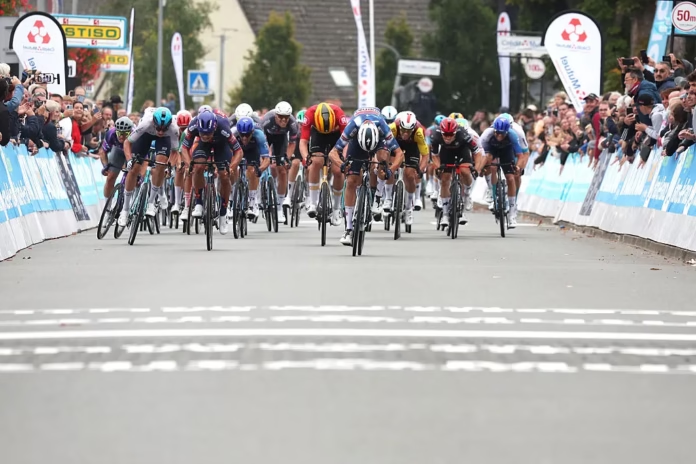
That does not necessarily make it straightforward. Opening stages at Guangxi have often been raced at very high speed, with teams trying to establish the first leader’s jersey while breakaway riders chase mountain and intermediate-sprint points. The final kilometres will also carry the usual risk of a nervous bunch arriving together before the lead-outs are fully settled.
Stage 2: Chongzuo to Jingxi – 179.7km
The second stage follows a corridor already familiar from recent editions, heading west from Chongzuo towards Jingxi and the finish at the border city’s ancient-town area.
This is not a flat sprinter’s stage in the conventional sense. The route moves steadily into more broken terrain, with a longer climbing section late enough in the day to put pressure on the heaviest sprinters before the race drops back towards Jingxi.
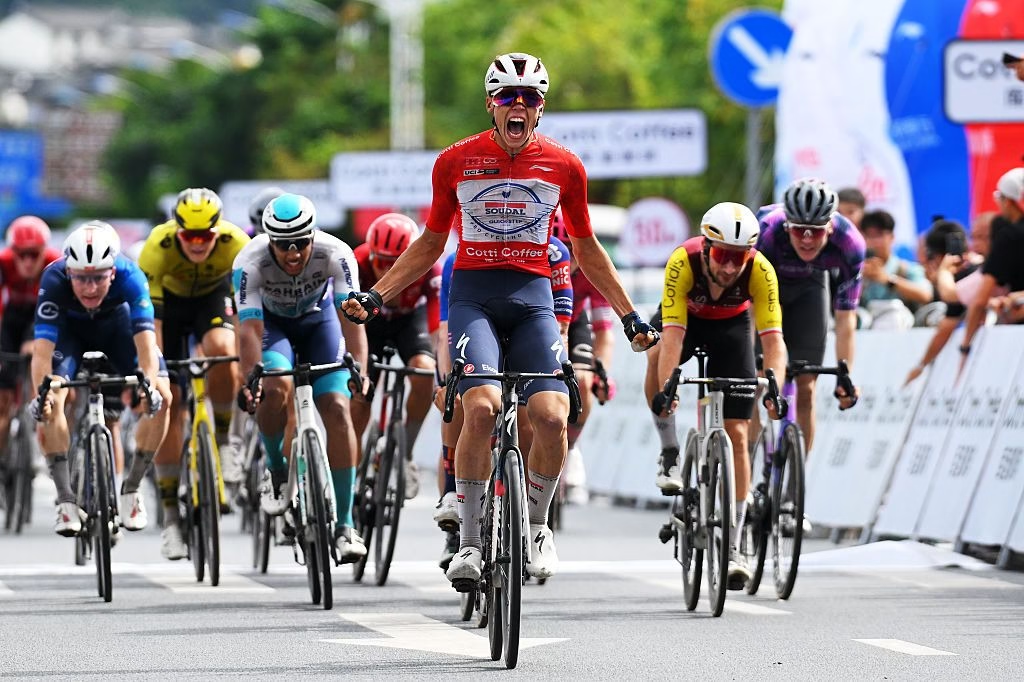
That shape has not always been enough to prevent a bunch finish. Paul Magnier won here in 2025 after the peloton survived the late climbing, and the same basic tactical question applies in 2026: can the punchier teams make the ascent hard enough to remove the pure sprinters, or will the race regroup in time for another fast finish?
The roads around Jingxi are also exposed enough for positioning to matter before the climb. If the pace is already high when the peloton reaches the final hour, this can become more selective than the headline distance suggests.
Stage 3: Jingxi to Bama – 212.3km
At 212.3km, stage 3 is the longest day of the 2026 Tour of Guangxi and another route retained in broad form from the previous two editions.
The first half allows the race to settle, but the approach towards Bama becomes progressively more demanding. Previous versions of this stage have stacked several classified climbs into the final 80km rather than relying on one major ascent, producing a race that wears riders down without necessarily creating large general-classification gaps.
That makes it a difficult day to categorise. Strong sprinters have survived to contest the finish in Bama before, but the length of the stage and repeated late climbs also give breakaway riders and puncheurs a realistic chance if the sprint teams are unwilling to commit.
For the GC contenders, the main objective is likely to be avoiding trouble. The decisive climb comes later in the week, but a split on stage 3 could be expensive because there is enough difficult terrain for a small gap to become hard to close.
Stage 4: Bama to Tian’e – 165.7km
Stage 4 is one of the two major additions to the 2026 route and takes the race north from Bama through Fengshan towards Tian’e.
This is where the new Tour of Guangxi becomes harder to read. The organiser has described the redesigned western route as more mountainous, with sharper changes in elevation and more technical roads through the karst landscape. Bama to Tian’e is at the centre of that change.
There is no summit finish, so the stage does not automatically become a GC showdown. Instead, it should reward teams willing to use the terrain before the final kilometres. Repeated climbs can reduce the bunch, make the chase more expensive and give a strong breakaway a better chance than on stages 1 or 2.
Until the detailed road book confirms the exact KOM points, the important distinction is that this is no longer the relatively familiar Bama-to-Jinchengjiang stage used in recent editions. It sends the race onto new roads through Fengshan and Tian’e, making local knowledge and reconnaissance more valuable than usual.
Stage 5: Jinchengjiang to Yizhou – 170.1km
The second new stage starts in Jinchengjiang and runs through Huanjiang and Luocheng before reaching Yizhou.
Again, the route is intended to expose the peloton to more of Guangxi’s interior rather than simply transferring riders towards the known Nongla climb. The roads through this part of Hechi are constantly changing direction and elevation, which should make the stage more tiring than a straightforward transition day.
With the queen stage only 24 hours away, team priorities will split. GC squads will want to conserve their leaders and avoid crashes, sprint teams may see one of their final opportunities of the season, and breakaway riders will know that the favourites are unlikely to spend heavily chasing every move.
That can create an awkward race to control. If a strong group gets clear early, there is enough terrain between Jinchengjiang and Yizhou to make the chase costly. If the bunch stays together, the finish should favour riders who can still sprint after a long day of repeated smaller climbs.
Stage 6: Yizhou to Nongla – 165.8km
The Tour of Guangxi saves its most important stage for last. Yizhou to the Nongla Scenic Area measures 165.8km and finishes on the climb that has repeatedly decided the overall race.
The first part of the stage is far less intimidating than the finish. The route leaves Yizhou and runs through Xincheng and Shanglin before approaching Mashan, with most of the general-classification action compressed into the closing kilometres.
Nongla is officially around 3.1km at 6.3%, but the average hides the difficulty. The lower slopes contain ramps around 10%, which immediately stretch the group and make it difficult for domestiques to keep a steady tempo for long.
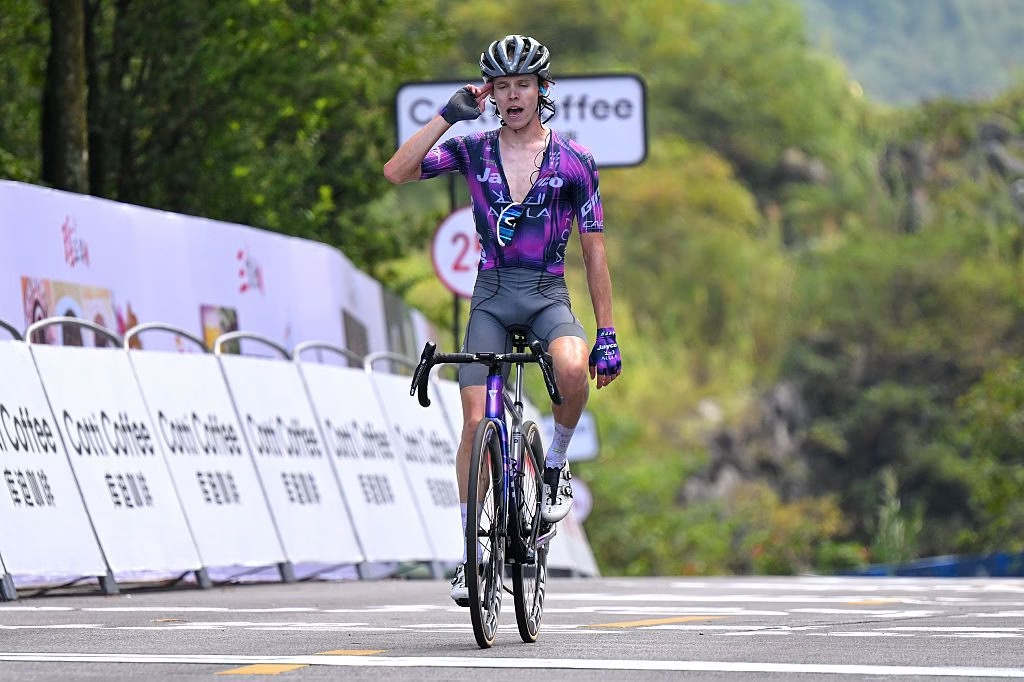
In 2025, Paul Double attacked on this climb, won the stage by nine seconds and moved into the race lead before securing the overall title the following day. In 2026 there is no following day. A similar move would decide the Tour of Guangxi on the spot.
The positioning battle before the climb will therefore be especially important. A three-kilometre ascent does not offer much time to recover from entering too far back, while the steep opening section encourages explosive attacks rather than a long, measured mountain effort.
It is a finish for climbers with acceleration, puncheurs who can sustain a hard three-to-eight-minute effort and GC riders who are comfortable racing aggressively. The margins are usually small, but the time bonuses and gaps on the road can turn a few seconds into the difference between first and fifth overall.
Where the 2026 Tour of Guangxi will be won
Nongla remains the obvious answer, but the redesigned middle of the race makes the route less one-dimensional than before.
Stages 2 and 3 can remove riders from contention through crashes, splits or poor positioning. Stages 4 and 5 are the bigger unknowns, with two new hilly routes capable of creating fatigue before the final climb. A rider who reaches Yizhou already under pressure may find that a three-kilometre summit finish is more than enough to expose it.
For the sprinters, the first three days offer the clearest opportunities, although stage 2 and especially stage 3 require more climbing than a conventional flat finish. Stage 5 may also return to a sprint if the new route proves controllable.
The overall contenders will spend most of the week trying not to waste energy before Nongla. With the queen stage now placed on 18 October, there is no need to defend the red jersey afterwards and no flat final day to reward a rider who has already taken time. The race can be won with one perfectly timed attack on the final climb.
The WorldTour season ends at Nongla
The Tour of Guangxi is the final men’s WorldTour race of 2026, beginning three days after Il Lombardia and finishing on 18 October. The race’s position in the calendar gives it an unusual mix of riders chasing one last result, sprinters looking for late-season wins and teams using the week to give younger riders WorldTour experience.
The race has been part of the WorldTour since its first edition in 2017, with a break during the pandemic years. Our history of the men’s Tour of Guangxi covers the previous winners and how the race has developed since its launch.
UK viewers can also find the latest broadcast details in our Tour of Guangxi 2026 TV guide.
-
 Photo Credit: quentinphotographiebe
 -
 Photo Credit: Getty