São Miguel is the largest island in the Azores and one of the most demanding places in Portugal to ride a road bike. Its volcanic interior rises sharply above the coast, the roads rarely stay level for long and weather can change noticeably between the seafront and the higher viewpoints. The climbs link crater lakes, farmland, small towns and exposed sections of Atlantic coastline.
For a cyclist planning several days on the island, the first decision is where to base yourself. Ponta Delgada has the widest choice of accommodation and transport links, while Ribeira Grande gives easier access to the north coast and the climb towards Lagoa do Fogo. Furnas and Nordeste are attractive alternatives for a quieter stay, but reaching other parts of the island from either requires more time and climbing.
A hire car can be useful for travelling between starting points, particularly if you want to ride the eastern and western ends of the island on separate days. It is possible to build substantial rides from one base, although the terrain makes a seemingly moderate distance far harder than the same mileage on the mainland. Allow more time than the map suggests, especially if the route crosses the high ground.
The riding: steep roads and volcanic geography
São Miguel’s defining feature for road cyclists is the way the roads move between sea level and volcanic uplands. There are relatively few extended flat sections. Even the main coastal roads climb in and out of valleys, while inland routes can gain several hundred metres before dropping back towards the sea. It is possible to build a demanding climbing ride without covering a particularly long distance.
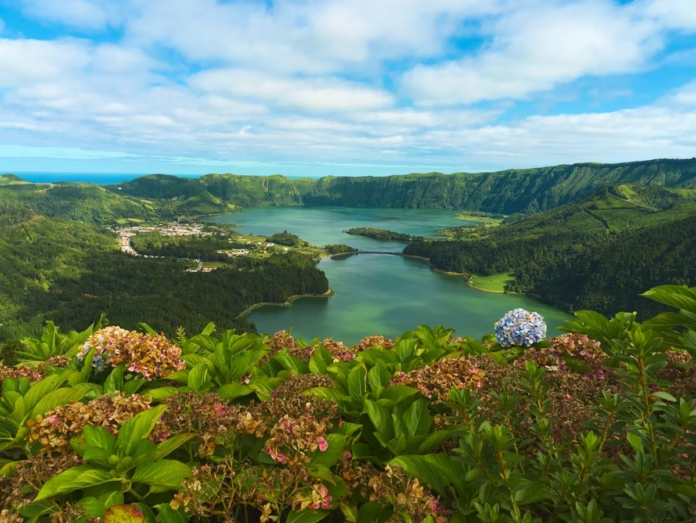
Volcanic craters and the ridges around them dominate the landscape. Sete Cidades occupies a large caldera in the west, Lagoa do Fogo sits high above the central part of the island, and Furnas is known for its geothermal landscape further east. Those places are familiar tourist destinations, but riding between them gives a clearer impression of how abruptly the terrain changes.
Road surfaces vary. The larger connecting roads are generally the practical choice for longer road-bike journeys, while smaller lanes can be narrow, steep or uneven. The official Azores cycling website distinguishes road routes from cross-country trails, an important difference when planning with a lightweight road bike. Do not assume that a scenic track shown on a map is suitable for narrow tyres.
The island is green because it receives plenty of rain. That matters on descents, where shaded corners may stay damp after the coast has dried. Cattle movements and agricultural traffic are also part of the rural road environment. On narrow sections, leave room to react rather than committing to a descent on the assumption that the road ahead is clear.
Sete Cidades: the western crater roads
Sete Cidades is an obvious place to ride because the crater, lakes and surrounding ridges create a natural climbing circuit. From Ponta Delgada, a rider can approach the western high ground through local roads and then descend towards the village beside Lagoa Azul. The views from the upper road are impressive in clear weather, but cloud can obscure the lakes completely.
The official Cumeeiras route is classified as a cross-country circuit beginning near Lagoa Azul and passing towards the ridge and Vista do Rei viewpoint. It is useful evidence of the area’s cycling potential, but it is explicitly an off-road route. Road riders should instead plan a suitable paved approach to the viewpoint and verify their chosen descent before setting off.
The ridge roads are exposed. Wind can be particularly noticeable near the viewpoints, while steep changes of gradient make pacing important. A rider who attacks the first ascent may discover that there is still plenty of climbing left after reaching the crater rim. For another European destination with repeated climbs, see our guide to cycling Luxembourg’s Ardennes. Keep enough energy for the return journey, especially when riding back to Ponta Delgada rather than finishing at the lakes.
Traffic can be concentrated near major viewpoints and parking areas. Early starts help reduce encounters with sightseeing vehicles, though the best time to ride also depends on visibility. A cloud-free afternoon can be preferable to a misty early morning, even if the roads are busier.
 Photo Credit: Joao / Unsplash
Lagoa do Fogo: the central climbing challenge
The climb towards Lagoa do Fogo is among the most compelling road-cycling objectives on São Miguel. The lake lies high in the island’s central volcanic landscape, and the approach roads provide sustained climbing with changing views of the coast. The official Azores cycling network provides a 48.8km Lagoa do Fogo road route with 1,349 metres of climbing, confirming that this is an established cycling objective.
The climb is best treated as a substantial effort rather than a casual detour. Gradients vary by approach and the higher sections are exposed to wind, rain and mist. Temperatures can feel much cooler at altitude than in Ponta Delgada or Ribeira Grande, so a lightweight jacket is worth carrying even when the ride starts in sunshine.
Be careful not to confuse the road climb with the separate walking route to the lake shore. The official Lagoa do Fogo walking trail passes through a protected nature reserve and is not a road-bike descent to the water. The viewpoint roads are the sensible objective for a conventional road ride; access arrangements and traffic restrictions should be checked locally before travelling.
From the top, descending towards Ribeira Grande or the southern coast creates different options for a loop. The choice depends on weather and the amount of climbing already completed. If visibility is poor, shortening the ride is often more enjoyable than pressing on simply to complete a pre-planned route.
 Photo Credit: Gherardo Sava / Unsplash
Furnas and the eastern half of the island
Furnas sits within a volcanic valley in the east-central part of São Miguel, surrounded by wooded slopes and a network of roads that connect it to the coast. It is a good destination for a longer ride because the approach involves repeated climbing and descending rather than one isolated ascent. The town provides an opportunity to stop for food and water before returning.
Lagoa das Furnas and the geothermal area are the obvious attractions, although riders should respect access signs and keep to roads open to bicycles. The area is popular with visitors, so a bicycle is often a pleasant way to approach it without trying to ride through the busiest pedestrian spaces.
Further east, the roads towards Nordeste become increasingly remote in feel. The coastal scenery is excellent, but there are fewer convenient shortcuts back to Ponta Delgada. Plan a realistic turnaround point, carry enough food and know where the next settlement lies. A mechanical problem late in a long eastern ride can be difficult to resolve without support.
For riders wanting a quieter day, beginning in Furnas or Ribeira Grande and exploring a smaller section of the east can be preferable to attempting an island-wide loop. The terrain rewards time spent on the roads, and there is little benefit in turning every ride into a race against the clock.
When to go and what weather to expect
São Miguel has a maritime climate, with relatively mild temperatures through much of the year, but rainfall, cloud and wind remain important considerations. Summer generally offers longer daylight hours and a better chance of settled conditions, though the island never becomes completely predictable. Spring and autumn can be rewarding for quieter roads, provided the itinerary allows flexibility.
Rather than assigning a fixed climb to a particular day, look at the local forecast each morning. A ridge hidden in cloud may be clearer the following day. The western crater and central uplands can experience different conditions from the coast at the same time, so a single temperature or rain symbol for Ponta Delgada tells only part of the story.
Carry a windproof or waterproof layer, working lights and sufficient food. Descending wet roads in cool air can become uncomfortable surprisingly quickly. Sunglasses are useful when the weather clears, but visibility and road grip should guide descending speed rather than the amount of sunshine at the start of the ride.
Daylight also affects route choice. A long eastern loop is more forgiving in summer than during the shorter days of winter. Even in good weather, allow time for viewpoints, navigation and occasional steep ramps that slow average speed well below what a distance-only estimate might suggest.
Bikes, transport and practical planning
Ponta Delgada is the island’s main arrival point and the most practical starting base for many visitors. Before booking a hire bike, check whether the operator offers a genuine road bike with suitable gearing rather than a mountain bike or general leisure cycle. Low gearing is valuable on São Miguel, where repeated steep sections can be tiring even for strong riders.
If travelling with your own bicycle, confirm airline baggage rules, pack the bike carefully and arrange transport from the airport that can accommodate the case. Accommodation with secure storage makes life easier. A small repair kit, spare tubes or plugs, pump and basic tools are worth bringing because a specialist shop may not be close to your route. Our Garmin Edge 550 review also looks at navigation performance for riders planning unfamiliar roads.
Navigation should be prepared in advance. Download an offline map and inspect the surface type on smaller roads, especially around Sete Cidades. The official Azores cycling route directory is a useful starting point, but some are mountain-bike or cross-country itineraries and should not be followed blindly on a road bike.
A sensible first ride is a shorter loop close to Ponta Delgada or Ribeira Grande, allowing you to assess road conditions and how the gradients feel. Save the bigger crater climbs and eastern excursions for subsequent days. That approach also leaves room to change plans when the weather moves in.
Building a three-day cycling itinerary
On the first day, ride west towards Sete Cidades and focus on the paved crater viewpoints. This gives a demanding introduction to the island without committing to the most remote roads. Choose a route that matches your climbing ability and leave enough time for the return, rather than relying on an optimistic average speed.
Use the second day for the Lagoa do Fogo climb, starting from whichever side offers the better forecast. It is the clearest opportunity for a sustained climbing effort, and the high ground deserves a separate day rather than being squeezed into an already long route. If cloud or strong wind develops, substitute a lower coastal ride.
The third day can explore Furnas and, for stronger riders with sufficient time, part of the road towards Nordeste. This is the day to prioritise distance management. There are attractive roads in every direction, but the return climbs can turn an ambitious plan into a very long afternoon.
São Miguel is best suited to riders comfortable with climbing, changing weather and roads that seldom remain level for long. It is less suitable for someone expecting flat, uninterrupted training roads. Treat the island as a series of demanding rides rather than one route to tick off, and it becomes much easier to appreciate the roads without rushing through them.