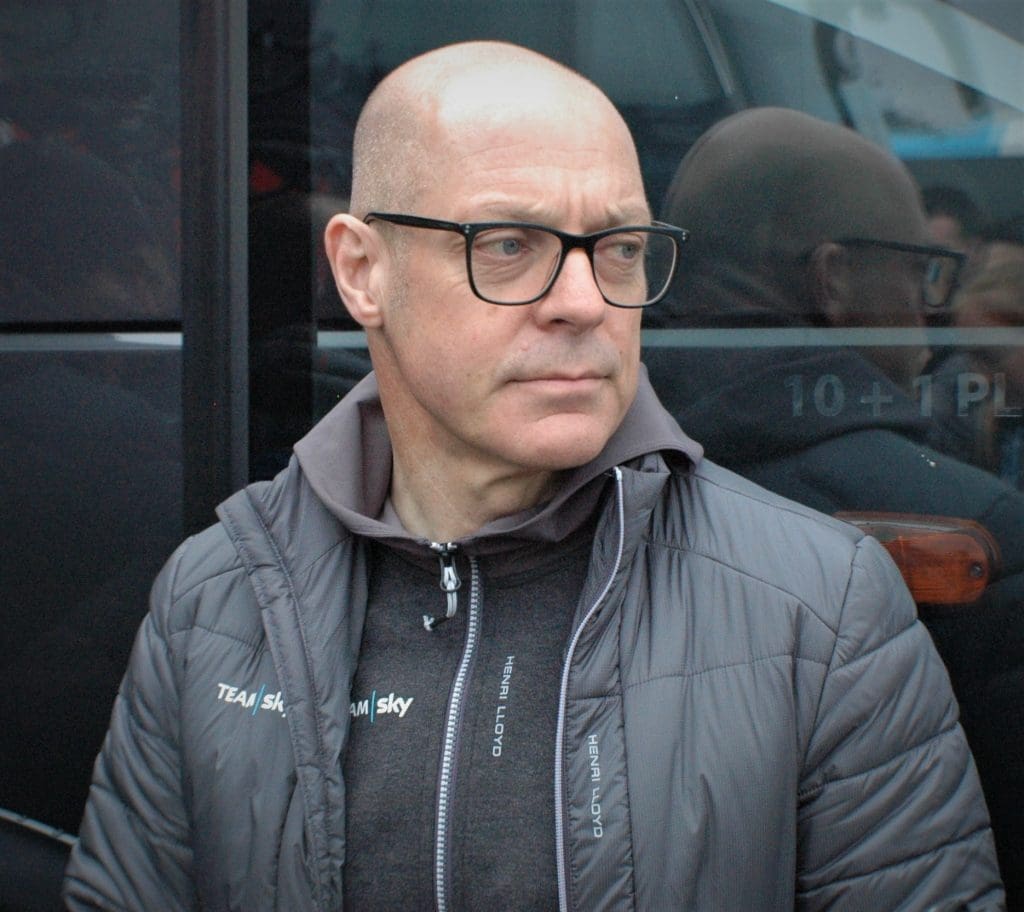
Dave Brailsford helped change the place of British cycling in world sport, first through the national track programme and then through Team Sky’s domination of Grand Tours. His record includes Olympic gold medals, the first British winner of the Tour de France and a professional road team that won seven Tours between 2012 and 2019. Yet the story is inseparable from the controversies surrounding the medical practices and management culture of the organisations he led.
Brailsford was neither the first person to professionalise British Cycling nor the only person responsible for its success. Lottery funding, specialist coaches, sports scientists and an exceptional generation of riders all mattered. His particular influence lay in bringing those elements into a single system, setting targets and making the organisation accountable for delivering them.
That approach produced results on a scale few could have predicted in the late 1990s. It also concentrated considerable power in the hands of a leader whose methods later attracted questions from athletes, journalists, medical regulators and Parliament. A balanced account of Brailsford’s career has to examine both sides rather than treat the medal table as a complete explanation.
From North Wales to British Cycling
Brailsford was born in Derby and grew up in Deiniolen, near the mountains of North Wales. As a young man he spent several years racing in France, an experience that gave him direct exposure to the demands of professional road cycling. He later studied sports science and psychology, followed by business education, before building his career in sports management.
He worked with British Cycling as a consultant from 1998, at a time when lottery investment was beginning to transform the resources available to Olympic sport. Peter Keen had already laid important foundations for the national programme, including a more systematic approach to training and athlete development. Brailsford succeeded Keen as performance director in 2003.
The distinction matters because the later success did not appear from nowhere. British Cycling already had talented riders, specialist staff and improved funding. Brailsford’s task was to develop that foundation into a programme capable of winning repeatedly, across several disciplines and Olympic cycles, rather than depending on occasional outstanding individuals.
His early work involved the less glamorous parts of elite performance: staffing, equipment, planning, logistics and the organisation of training. These were areas where small operational weaknesses could undermine excellent athletes. A rider could have the best preparation in the world and still lose time through a poorly managed journey, unsuitable equipment or an avoidable illness.
The Olympic transformation
The Athens Olympics in 2004 offered an early indication of the programme’s progress. Chris Hoy won the kilometre time-trial and Bradley Wiggins took gold in the individual pursuit. Those results were followed by a much broader breakthrough at Beijing in 2008, where Britain collected eight cycling gold medals, including Nicole Cooke’s road-race victory.
London 2012 established the programme as a dominant force in track cycling. British riders again won seven gold medals on the track, with Wiggins also winning the men’s road time-trial. The performances came from different athletes and events, suggesting that the system had developed strength beyond one or two stars.
The success depended on coaching expertise and technical development as much as management. Track racing rewards precision in pacing, equipment choice, aerodynamics and the execution of repeated high-intensity efforts. British Cycling’s staff worked on those details while also identifying and developing riders capable of handling the pressure of major championships.
Brailsford became closely associated with the phrase ‘marginal gains’, describing the idea that small improvements across many areas could combine into a meaningful competitive advantage. It was an effective way to explain a complex programme to the public. But it could also make the work of individual coaches, engineers, doctors and riders seem like components of a single managerial theory.
Maintaining that level of performance was difficult. Maintaining performance through the retirements of established champions required a pipeline of younger riders and a willingness to change. By the time Brailsford left his British Cycling performance-director role in 2014, the organisation had become a reference point for other national sports programmes.
Team Sky and the pursuit of the Tour de France
The next ambition was on the road. Team Sky launched for the 2010 season with the stated objective of producing a British Tour de France winner within five years. Brailsford became team principal, taking the organisational principles developed in the Olympic programme into a commercial team operating throughout the international racing calendar.
The transition was not immediate. Sky’s first Tour in 2010 did not deliver the anticipated breakthrough, and the team had to learn the different demands of a three-week race. Unlike a track programme built around a small number of major championship days, a Grand Tour requires riders to manage mountains, crosswinds, crashes, illness and fatigue across 21 stages.
Bradley Wiggins won the Tour de France in 2012, with Chris Froome finishing second. It was a defining result for British road cycling and came in the same summer as the London Olympics. Froome then became Sky’s leading Grand Tour rider, winning the Tour in 2013, 2015, 2016 and 2017. Geraint Thomas added another Tour victory in 2018.
The team was built around a disciplined style of racing. Strong domestiques controlled the pace before the decisive climbs, allowing the leader to conserve energy and limit unpredictable attacks. That approach was sometimes criticised as repetitive, but it reflected the resources and climbing depth Sky could bring to a race. Riders such as Richie Porte, Wout Poels and others performed demanding support roles that were central to the results.
Sky also won beyond the Tour. Froome took the 2017 Vuelta a España and the 2018 Giro d’Italia, while Egan Bernal won the 2019 Tour after the team’s transition to INEOS sponsorship. Tao Geoghegan Hart later won the 2020 Giro, and Bernal added the Giro in 2021. The breadth of those victories demonstrated that the organisation could develop and support different kinds of Grand Tour contender.
For all its success, the team’s size and methods changed the competitive landscape. Rivals had to decide whether to imitate Sky’s controlled climbing trains or attack before the final mountain. The tension between those approaches shaped much of the Tour de France racing during the 2010s.
The questions behind marginal gains
The reputation for meticulous preparation came under sustained scrutiny as questions emerged about therapeutic use exemptions, medical records and the conduct of team personnel. The 2016 disclosure of Bradley Wiggins’ therapeutic use exemptions prompted debate about the distinction between what anti-doping rules permitted and what the team’s public commitment to clean sport appeared to promise.
A 2018 parliamentary committee report was sharply critical of aspects of Team Sky and British Cycling’s medical practices. Team Sky disputed allegations made against it. Those findings were serious, but they should not be presented as equivalent to a doping conviction against Brailsford or the team’s Tour winners.
Former British Cycling and Team Sky doctor Richard Freeman was later found guilty by a medical tribunal of ordering testosterone with knowledge or belief that it was intended to improve an athlete’s performance. He was struck off the medical register and subsequently received a doping ban. Brailsford denied involvement in the testosterone order. The case nevertheless raised major questions about oversight and accountability in the system he had led.
British Cycling also faced criticism concerning athlete welfare and its internal culture. Investigations and reporting described complaints about the treatment of riders and the way concerns were handled. The issues were not identical to those involving medical governance, but together they challenged the idea that a successful performance system could be assessed solely through results.
Judging Brailsford’s legacy means examining performance alongside governance. A manager can oversee outstanding sporting results while still bearing responsibility for weaknesses in an organisation’s culture and controls. The successes deserve recognition, and the documented failures deserve equally careful examination.
From Sky to INEOS and other sports
INEOS took over sponsorship of Team Sky in 2019, and Brailsford remained a major figure in the organisation. As the company expanded its investments in professional sport, his responsibilities extended beyond cycling. In 2021 he was appointed director of sport across the wider INEOS group, while initially retaining leadership of the cycling team.
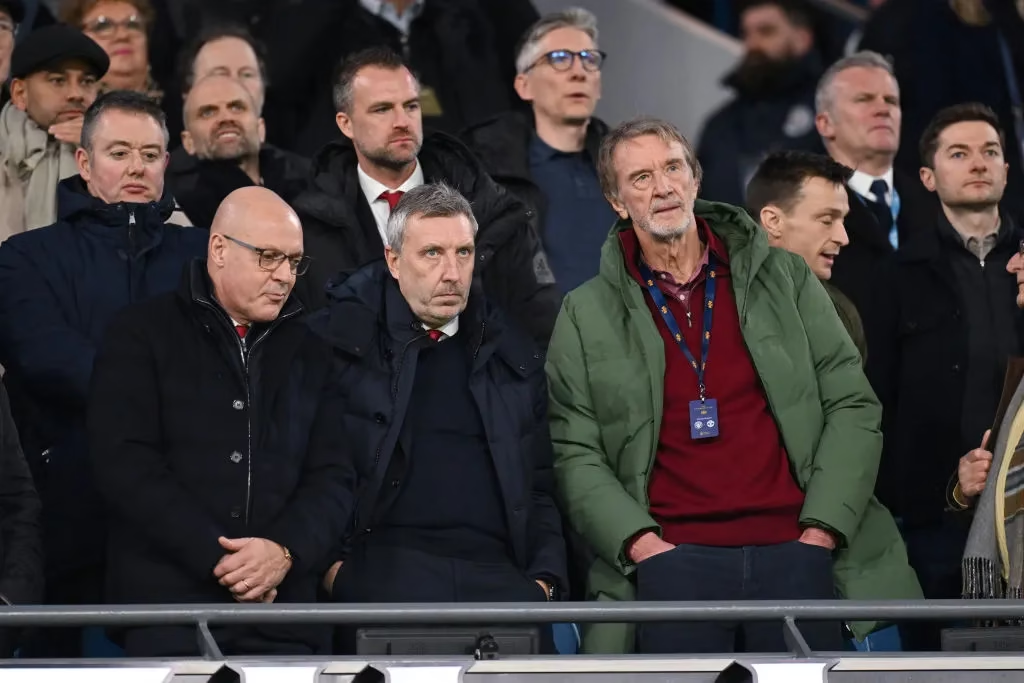
His involvement with Manchester United increased after Sir Jim Ratcliffe’s investment in the football club. Brailsford stepped back from the INEOS Grenadiers team-principal position in 2024 as he became involved in the club’s football operations. His influence at United later reduced, and a Companies House filing confirmed the termination of his role as a club director in April 2026.
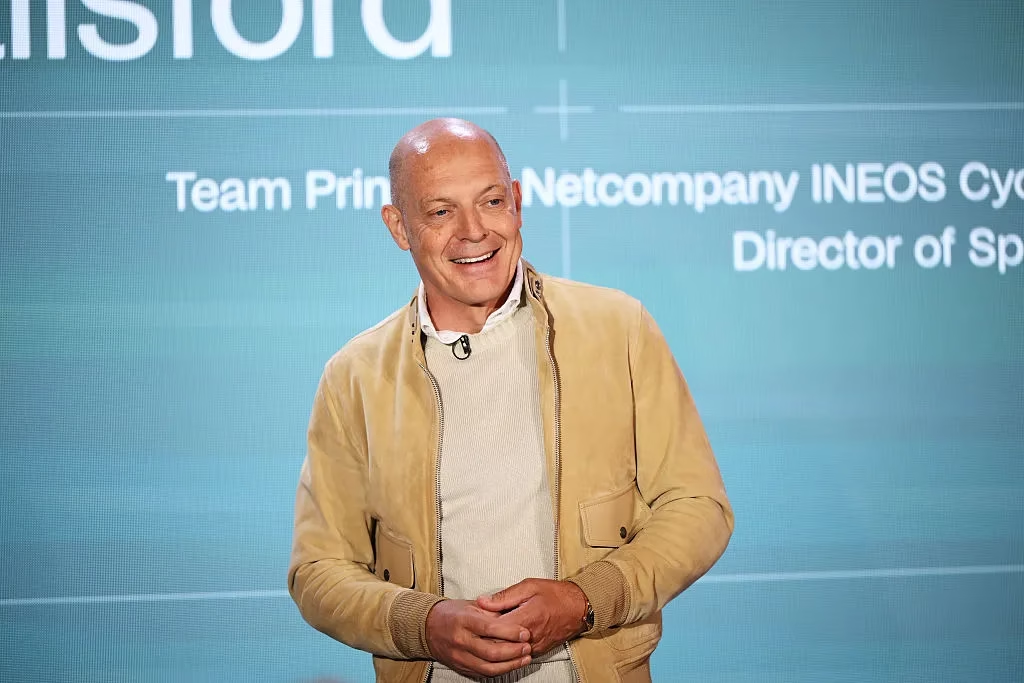
By mid-2026 Brailsford had become prominent again within the cycling operation, now racing as Netcompany-INEOS. The team confirmed his title as Team Principal and Director of Sport for INEOS, reflecting a return to a more direct leadership position at a time of commercial and management changes.
The context was very different from the Sky years. INEOS had lost its position as the dominant Grand Tour team, while rivals had developed new approaches to recruitment, training and racing. Returning to a familiar figure could provide continuity, but rebuilding performance would require more than recreating the methods that worked a decade earlier.
The appointment of former riders to senior roles also illustrated a changing structure. Geraint Thomas moved into a leadership position as director of racing, bringing experience from inside the team to its decision-making. The team must now combine that experience with changes to its recruitment and racing approach.
Assessing a complicated legacy
Brailsford’s impact is visible in the way elite cycling teams now organise performance. Nutrition, aerodynamics, equipment, training data and logistical preparation have become central to the sport’s daily operation. None of those fields was invented by one team, but British Cycling and Sky helped demonstrate what could be achieved by investing heavily in all of them at once.
The British victories of 2008 and 2012 changed the profile of cycling at home. Wiggins’ Tour win gave road racing a national audience that had previously been difficult to reach, while the Olympic track programme produced champions whose names became familiar far beyond the sport. Brailsford was a central organiser of that period, alongside the riders and specialists who delivered the performances.
His methods also contributed to debates that remain relevant today. How much authority should a performance director hold? What independent oversight is necessary when winning becomes the overriding measure of success? How can a team maintain high standards without creating an environment in which staff or athletes struggle to challenge decisions?
Those questions have become part of Brailsford’s history, rather than footnotes to it. His career contains some of the most important victories in modern British cycling and some of its most consequential controversies. Understanding both provides a fuller account of how the sport changed during his years in charge.