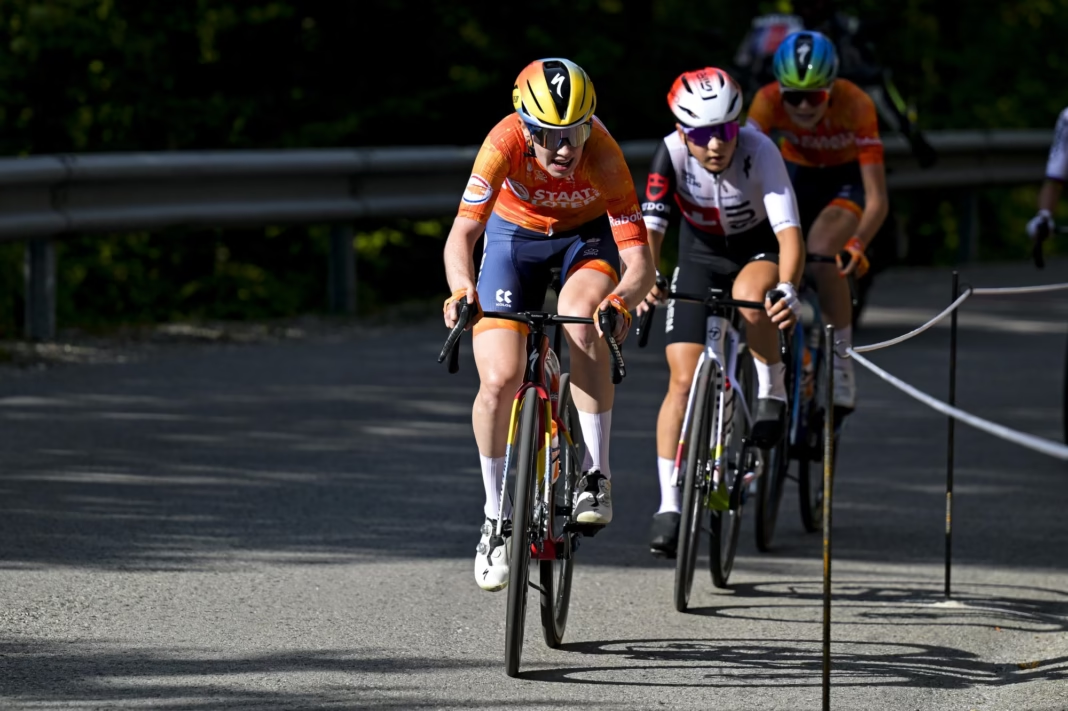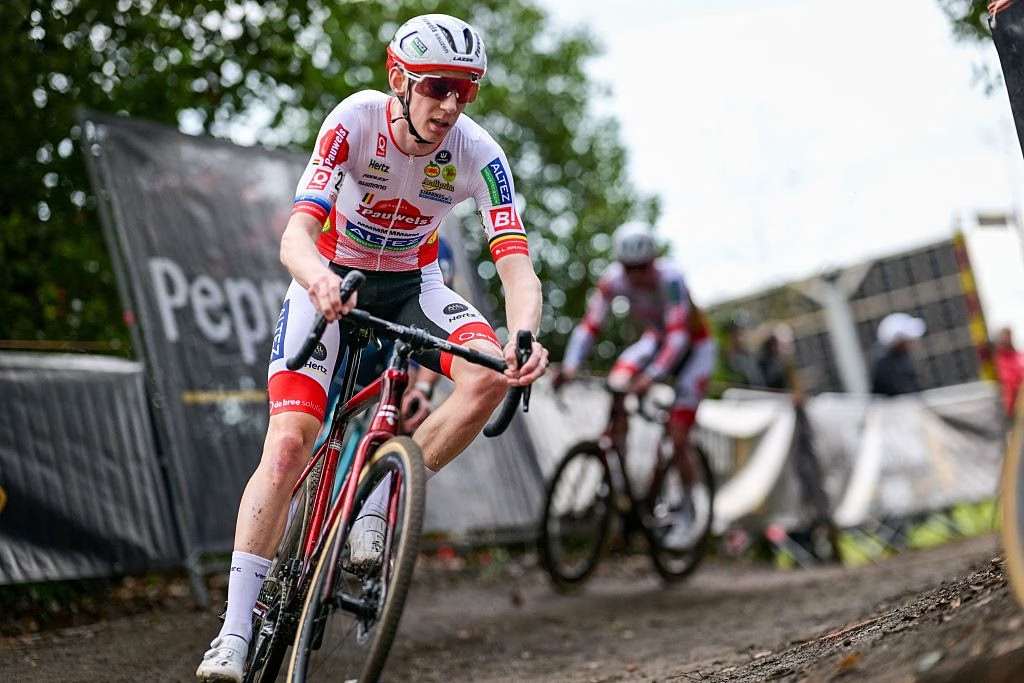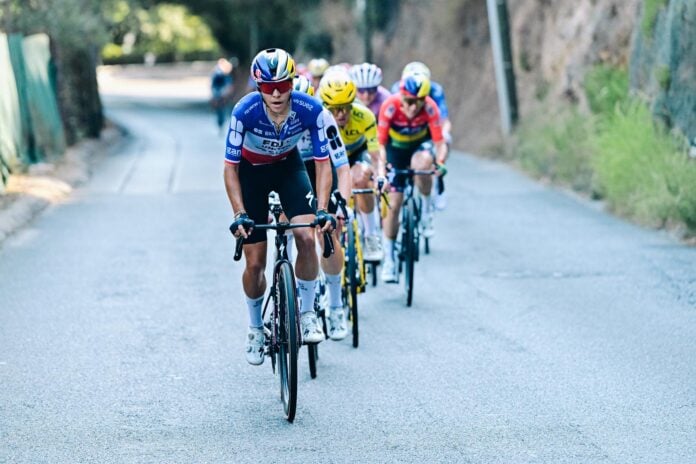
Women’s WorldTour races are not all getting longer at the same pace, and the longest event is not necessarily the hardest. In 2026, the Tour de France Femmes included a stage of 171.9 kilometres, while major one-day races ranged from the roughly 164-kilometre Tour of Flanders to the shorter but more punishing cobbled challenge of Paris-Roubaix Femmes.
The useful question is not simply which race has the largest number beside its name. It is how those kilometres are ridden, whether they come after several days of racing and how much climbing, wind and technical difficulty are packed into the route.
Why distance is a complicated measure in women’s racing
A long women’s WorldTour race can mean several different things. The headline distance of a one-day Classic is not the same measure as the total distance of a stage race, and a stage’s advertised route may differ slightly from the distance eventually raced. Neutralised kilometres, late route changes and measurement conventions all complicate a comparison that initially looks as simple as reading a number from a results sheet.
The most useful comparison is therefore between individual racing days. A 170-kilometre Classic and a 170-kilometre Tour stage both demand substantial endurance, but they create different pressures. A Classic offers no opportunity to recover the next morning because everything is decided in one day. A Grand Tour stage may come after a week of accumulated fatigue, and the same distance can be much harder when riders are already carrying the effects of previous climbs, heat and repeated attacks.
It also matters whether the event belongs to the UCI Women’s WorldTour. The women’s elite road race at the 2026 World Championships in Montréal covered about 180 kilometres, but it was a national-team championship, not a WorldTour round. Including it in a WorldTour ranking would be misleading. The Women’s WorldTour explainer sets out which races belong to the top-level calendar and how the competition is organised.
The 2026 Tour de France Femmes set a demanding benchmark
Stage eight of the 2026 Tour de France Femmes avec Zwift, from Sisteron to Nice, was one of the clearest examples of the distance now expected at the highest level. The original route presentation described a 175-kilometre stage, while the event’s final stage material recorded 171.9 kilometres. That distinction matters: comparing a preliminary route length with the measured distance of another race can produce a false record.
The stage was not simply a flat endurance test. The road crossed the Alpes-de-Haute-Provence towards the Mediterranean, with rolling terrain, exposed sections and late climbs that encouraged attacks after several hours of riding. Even without a high-altitude summit finish, the cumulative work was considerable. Riders who had already spent a week racing faced another day of concentration, feeding and positioning before the final kilometres.
The 2026 Tour ran for nine stages, which also makes the comparison with a Classic incomplete. A rider can recover from one hard effort and still be competitive the next day, but not without paying an energy cost. Repeated accelerations, poor sleep, hot conditions and the need to protect a general-classification position all add to the load. Distance alone cannot explain why the longest stage of a major tour can feel harder than a longer standalone training ride.
How the Spring Classics compare
The Tour of Flanders is among the most substantial one-day tests on the women’s WorldTour calendar. Its 2026 route was roughly 164 kilometres, with the Oude Kwaremont, Paterberg and other Flemish climbs placed where the race could be decided. A distance in that range is already demanding, but the short climbs and cobbled sectors make the workload more uneven than a steady road ride of the same length.
Milano-Sanremo Donne and Liège-Bastogne-Liège Femmes each covered 156 kilometres in 2026. They share a distance but not a racing pattern. Sanremo follows the Ligurian coast before the Cipressa and Poggio create the final selection, so positioning and a high-speed approach matter enormously. Liège is more relentlessly hilly, with repeated climbs and changes of pace wearing down riders long before the finish. Two races can be almost identical on paper and still favour very different athletes.
Paris-Roubaix Femmes covered about 143 kilometres in 2026, considerably shorter than Flanders but hardly easier. Its cobbled sectors demand constant control of the bike, with punctures and crashes able to end a contender’s race without warning. In Flanders Fields, the race traditionally associated with Gent-Wevelgem, covered about 135 kilometres in 2026 after a shorter route was introduced. The Kemmelberg and gravel plugstreets still made it tactically difficult.
Why a shorter race can be the harder race
Kilometres measure how far a rider travels, not how much energy she uses. Wind direction, road surface, elevation, temperature and the number of accelerations all change the physiological cost. Riding 145 kilometres on rough cobbles and through repeated attacks can require more work than riding 170 kilometres at a controlled tempo. Even average speed can mislead: a race with frequent stops and violent surges may have a lower average while feeling far more exhausting.
The most useful numbers to place beside distance are elevation gain, climbing distribution and the expected race duration. A route with 2,500 metres of climbing spread across short hills produces a different pattern from one with the same ascent concentrated into a long mountain pass. A course that repeatedly crosses exposed farmland can make a comparatively flat race selective because teams force echelons when the wind turns.
There is also a tactical cost to staying near the front. A protected leader may cover slightly less distance in the wind than a teammate working on the front, yet both will be credited with the same stage length. Domestiques often spend hours fetching bottles, closing gaps and holding position before the decisive move. The numbers in the results book do not show that hidden workload, but it is central to understanding how a long race is actually ridden.
Stage races are growing, but total distance is a separate question
The expansion of women’s stage racing is visible in the scale of the major tours. The Tour de France Femmes, Giro d’Italia Women and Vuelta Femenina now demand repeated high-level performances across multiple days. A tour can cover well over a thousand kilometres in total without containing a single stage longer than the biggest one-day Classics. That is not a contradiction; it is the difference between cumulative distance and the demands of one racing day.
A nine-stage race tests recovery as much as speed. Teams have to decide where to spend energy, whether to chase breakaways, how to protect leaders on exposed roads and when to accept a small loss rather than risk a larger one. The hardest day is not necessarily the longest. A shorter mountain stage can generate bigger time gaps because the climbs leave fewer opportunities to shelter or recover.
Comparing stage races also requires attention to the number of time-trial kilometres, the distribution of flat and mountain stages and the location of the hardest terrain. The 2026 Women’s WorldTour calendar guide shows how the major tours fit alongside one-day races. Their status is shared, but the demands placed on riders across the season are deliberately varied.
What longer racing changes for riders and teams
As distances rise, preparation becomes more specific. Training has to build the capacity to keep producing power late in a race, not merely to hold a strong average for the first two hours. That means practising fuelling while riding hard, working on endurance in groups and learning to manage repeated efforts without running out of energy. The ability to eat and drink when the race is nervous can be as important as a headline laboratory figure.
Teams also have to manage the roster differently. A rider who can climb with the best for 100 kilometres may not be able to make the same effort after another 60 kilometres of crosswinds and positioning battles. Experienced domestiques become valuable because they know when to shelter a leader, when to take food and when to avoid a needless chase. Longer stages reward that collective discipline as much as they reward an individual rider’s engine.
Equipment and conditions add further demands. A race bike must be fast but also comfortable enough to keep a rider efficient through hours of rough roads. Tyre pressure choices that seem marginal in a short event can become more important after repeated impacts. Heat management, spare clothing and the timing of feeds all require planning. These details are less visible than an attack on a climb, but they are often what allow a contender to arrive at the decisive point still able to race.
How to compare the longest women’s WorldTour races fairly
Start with the distance actually raced rather than the first figure released at a route presentation. Then check the event category, because a World Championship, national championship or lower-category race may have a different distance and should not automatically be included in a WorldTour comparison. Finally, separate one-day races from individual stages and from the total length of a multi-day event.
A useful 2026 comparison puts the Tour de France Femmes stage from Sisteron to Nice at 171.9 kilometres, the Tour of Flanders at roughly 164 kilometres, Milano-Sanremo Donne and Liège-Bastogne-Liège Femmes at 156 kilometres, Paris-Roubaix Femmes at about 143 kilometres and In Flanders Fields at roughly 135 kilometres. These are selected examples of major events, not a claim to be an exhaustive ranking of every WorldTour stage and Classic.
The final judgement should take the route profile and racing conditions into account. A 156-kilometre hilly Classic can be more selective than a 172-kilometre transitional stage, while the latter may be more difficult for a rider carrying fatigue from the preceding week. The women’s peloton is increasingly being asked to perform across both kinds of challenge, and the strongest teams are building squads capable of doing much more than simply surviving the longest days.
-
 Photo Credit: Cor Vos
-
 Photo Credit: Getty
-
 Photo Credit: Cor Vos