A muddy bike is easier to deal with at the end of a ride than after the dirt has dried onto the drivetrain. That is straightforward if there is a hose outside the house. It becomes more awkward when the bike has to go into a car, a rented flat or a shared hallway before there is anywhere to wash it. Portable battery-powered cleaners promise to solve that problem, but the differences between them are substantial.
Some are small low-pressure rinsers with their own water tanks. Others have a stronger spray but need a separate bucket or canister. A larger model may carry enough water for several bikes, yet be too heavy or poorly sealed to transport while full. The practical buying decision is therefore about water supply and storage as much as the pressure number printed on the box.
This research-led guide compares four exact UK products: the Kärcher OC 3 Foldable, Worx Hydroshot WG621E kit, Bosch Fontus 18V Gen II with battery and charger, and Muc-Off Mobile Pressure Washer Starter Bundle. ProCyclingUK has not conducted a hands-on four-way test. The assessment uses manufacturer specifications, current UK product listings and independent reviews, with the limits of evidence for particular variants made clear. Prices were checked on 26 October 2026 and may change.
Best portable bike washers in the UK: four models compared
| Model | UK listed price | On-board water | Claimed pressure | Power | Best for |
|---|---|---|---|---|---|
| Kärcher OC 3 Foldable | £109.99 offer | 8 litres | 5 bar | Integrated battery, USB-C | Compact low-pressure rinsing |
| Worx Hydroshot WG621E kit | £89.99 offer | Separate water source | 24 bar max | 20V 2.0Ah included | Lightweight washer with bucket |
| Bosch Fontus 18V Gen II kit | £316.10 reference | 15 litres | 20 bar max | 18V 2.5Ah included | Wheeled all-round cleaner |
| Muc-Off Mobile Pressure Washer Starter | £250 | 20 litres | Up to 65 bar | 40V battery included | Heavy mud and several bikes |
These are not identical types of machine. The Worx has no water reservoir at all, while the other three carry water on board. The Bosch price is for the exact kit with a 2.5Ah battery and charger, not the cheaper bare tool. Kärcher and Worx prices reflect offers displayed by their UK stores when checked, so neither should be treated as a permanent RRP. Pressure figures are manufacturer claims and do not by themselves tell you how safely or quickly a bike will be cleaned.
Kärcher OC 3 Foldable: the sensible choice for small spaces
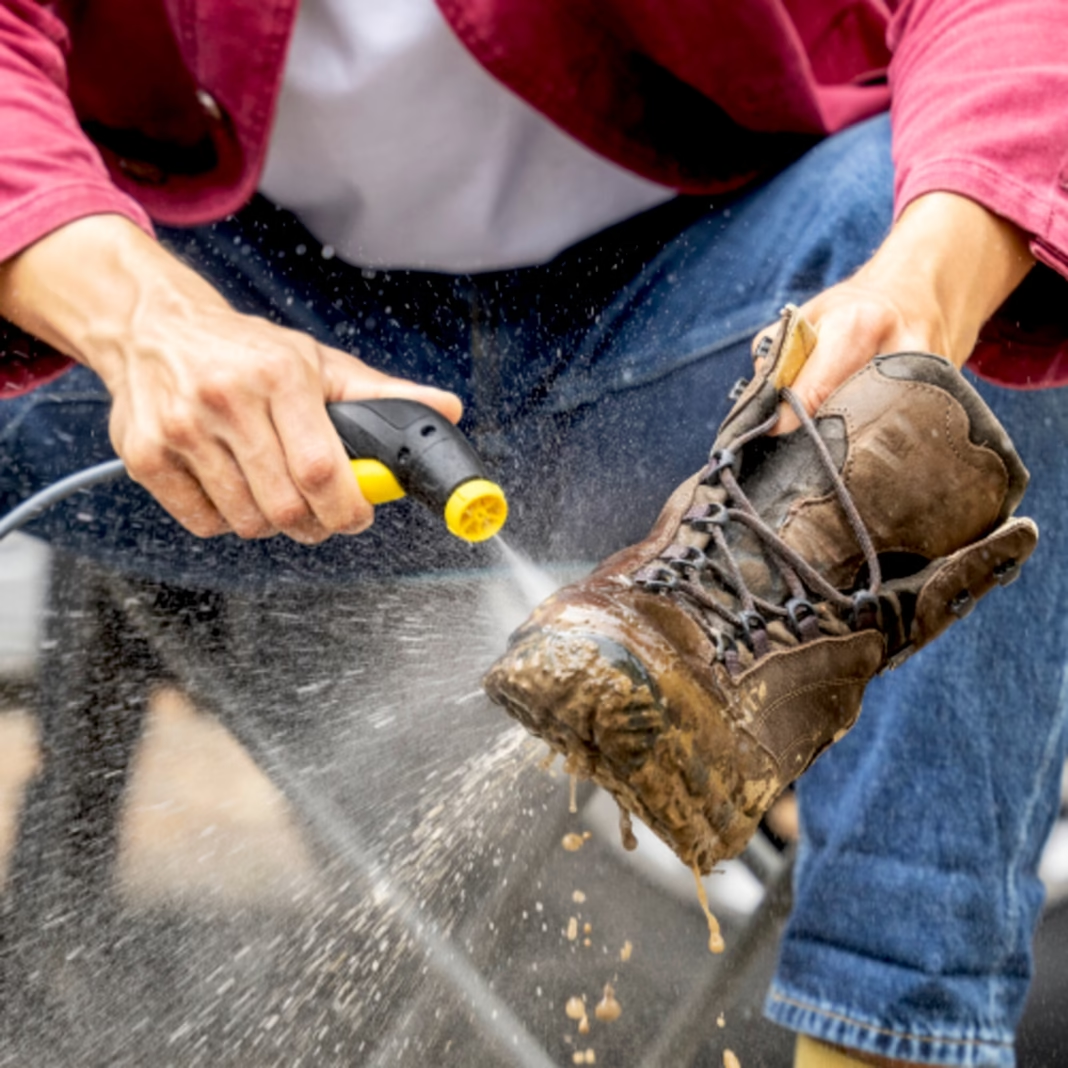 Photo Credit: Kärcher
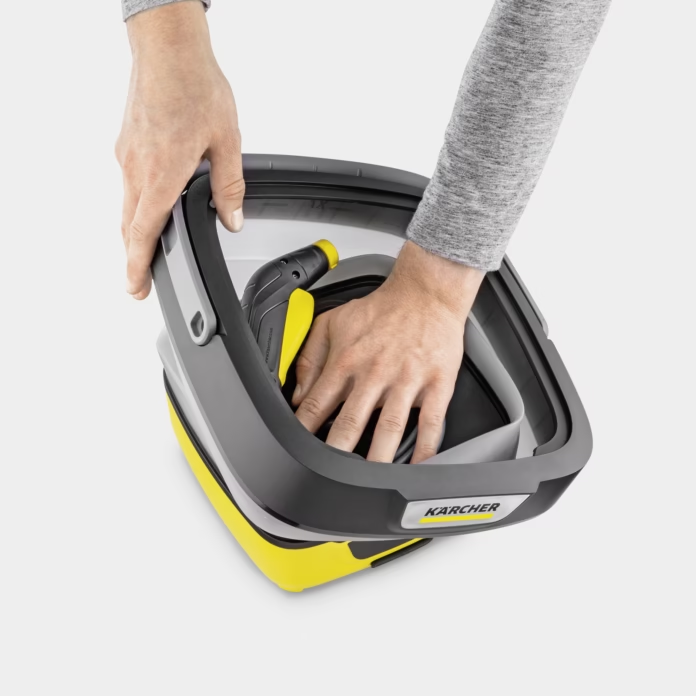
The Kärcher OC 3 Foldable has an eight-litre water tank, a deliberately modest 5-bar spray and an integrated rechargeable battery. Kärcher quotes up to 15 minutes of battery use and USB-C charging. The tank folds down for storage, making the machine more convenient to keep in a cupboard or car than its capacity suggests.
This is a cleaner for removing loose mud, road grit and winter spray, not stripping old grease with brute force. Cyclingnews found it effective for bike cleaning in its independent review, with the gentler jet a particular advantage around sensitive parts. The combination is useful for a road or gravel bike after a wet ride, especially when a mains washer would be excessive.
The important drawback is water transport. The folding tank is not a securely sealed jerry can. Independent reviewers have warned that water can escape when it is moved full, so a rider driving to a race without access to a tap should carry the water separately and fill the cleaner after the ride. Eight litres also adds eight kilograms before accounting for the machine itself.
At the current £109.99 UK offer, it is the most straightforward recommendation for a rider with limited storage who needs a gentle wash rather than heavy-duty cleaning. The ProCyclingUK OC 3 Foldable review goes into more detail on its compact design and the water-carrying limitation.
Worx Hydroshot WG621E: inexpensive, but bring your own water
The Worx Hydroshot WG621E is listed at £89.99 in the UK with a 20V 2.0Ah battery, charger and five-metre intake hose. Its claimed maximum pressure is 24 bar, with five nozzle patterns and a maximum flow of 185 litres per hour. Unlike the Kärcher, the handheld Hydroshot has no built-in tank: the intake hose draws from a bucket, container or suitable clean water source.
That distinction is either the product’s best feature or its biggest inconvenience. If you already carry a sealed water canister in the car, the cleaner itself takes relatively little room and is easy to direct around a bike. If you expected one complete box to lift out and start spraying, there is more to bring. The pressure is stronger than the Kärcher’s, so choose a broad spray pattern and keep the nozzle well away from bearings, seals and electronic connections.
Independent MBR testing of an earlier Hydroshot supports the general merits of a battery-powered, bucket-fed design, but it should not be mistaken for a test of this exact WG621E revision. The current model’s 24-bar specification and supplied accessories are taken from Worx’s own listing. The distinction matters because Hydroshot model numbers and kit contents have changed over time.
For a rider already using Worx PowerShare batteries, the WG621E is particularly appealing. For everybody else, it remains a low-cost way to clean a bike away from a tap, provided a sealed water container is part of the plan. Check the exact model number and whether the advertised kit includes a battery, rather than comparing it with a cheaper body-only version.
Bosch Fontus 18V Gen II: a proper mobile cleaning station
The Bosch Fontus 18V Gen II kit, order number 06008B6171, is listed by Bosch at £316.10 with a 2.5Ah battery and charger. It has a 15-litre tank, wheeled body, telescopic handle, four spray patterns, a four-metre hose and three pressure modes up to 20 bar. It can use its own stored water or connect to a suitable mains water supply.
This makes the Bosch a different proposition to the small Kärcher. The extra tank capacity is useful when several bikes are dirty or when the cleaner is also expected to tackle garden furniture and other household jobs. Wheels and a long handle help once it is on the ground, although the unit is larger to store and its 15 litres of water add considerable weight.
Bosch’s adjustable pressure is useful for moving between a muddy tyre and a more delicate part of the bike. The brush is another practical addition for general cleaning, but the bike still needs careful technique. Earlier independent assessments of the Fontus range support its versatility, though they should not be read as direct head-to-head tests of every current kit or battery configuration.
The price is the difficult part. A buyer who only needs to rinse one road bike after Sunday rides is unlikely to recover much value from the larger machine. Someone cleaning family bikes, a cyclocross bike and muddy outdoor equipment in the same session has a more persuasive reason to pay for the tank and wheeled design. Check the battery and charger listing carefully because the cheaper bare unit is not equivalent to this kit.
Muc-Off Mobile Pressure Washer Starter: the strongest option has a transport problem
 Photo Credit: Muc-Off
The Muc-Off Mobile Pressure Washer Starter Bundle, SKU 21116, costs £250 from the manufacturer. It has an integrated 20-litre tank, a rechargeable 40V battery and a claimed maximum pressure of up to 65 bar. Muc-Off quotes up to 24 minutes of runtime, depending on the selected mode, and includes bike-oriented spray accessories.
There is genuine cleaning capacity here. A large tank, longer hose and more forceful spray make sense for a muddy mountain bike, cyclocross race weekend or several bikes needing attention before they go back into a vehicle. Independent Cyclingnews testing found the cleaning performance convincing, although the greater output means nozzle selection and distance are particularly important around bicycle components.
The serious limitation is the lid. Independent reviews from Cyclingnews and MBR found that the tank is not watertight, and Muc-Off advises against transporting the washer full. That means the most obvious use case, arriving at a muddy ride with twenty litres already inside the cleaner, is not straightforward. You may need to carry water in a separate sealed container and transfer it at the destination.
The filled unit is also heavy, so it suits a van, car park or garage better than a flat with several flights of stairs. For riders who can fill it at the cleaning location, it is the most substantial washer in this group. For someone who must transport water securely and has limited boot space, the extra power is harder to justify. The ProCyclingUK Mobile Pressure Washer review examines that compromise.
How to choose a portable bike washer
First ask where the water will come from
An integrated tank is convenient only if it can be filled where you intend to use it, or if it can be transported without leaking. The Kärcher and Muc-Off need special consideration here. The Worx deliberately separates the cleaner from its water supply, while the Bosch carries a larger tank in a wheeled body. If there is no tap at a trailhead or race venue, a properly sealed canister may be the most important accessory of all.
Do the weight calculation before buying. A litre of water adds approximately a kilogram, so even a light eight-litre cleaner becomes substantial when full. A twenty-litre unit is not something to carry casually up stairs or lift into a car repeatedly. Conversely, a separate water canister lets you divide the load and position the washer where it is most useful.
Pressure should be controlled, not maximised
Higher pressure can remove stubborn mud more quickly, but bicycles have bearings, suspension seals, electrical contacts and areas where forcing water past a seal is unhelpful. Use a broad fan spray, keep sensible distance and avoid aiming a concentrated jet at hubs, bottom brackets, headset bearings, suspension pivots or an e-bike motor housing. The correct technique matters more than the highest bar rating.
A washer is also not a complete drivetrain cleaning system. Rinsing removes grit, but chains and sprockets still need suitable degreasing or cleaning, followed by thorough drying and lubrication. There is little benefit in washing off winter road salt if the bike is then stored wet with a dry, unprotected chain.
Consider the bike, the car and the storage space
For a road bike with light winter spray, the small Kärcher may do everything required. A mountain bike caked in wet clay makes a stronger case for the Muc-Off, while a family with several bicycles could make use of the Bosch’s larger capacity. The Worx is the most adaptable choice for somebody happy to supply their own water and perhaps already owning compatible batteries.
Think about what happens after cleaning too. Wet hoses, muddy nozzles and the washer itself need somewhere to drain and dry. Do not store a battery-powered unit with water trapped in the system where it can freeze. A separate waterproof bag or tray can be more useful than another accessory nozzle.
Which portable bike washer is worth buying?
For most cyclists without an outdoor tap, the Kärcher OC 3 Foldable offers the best balance of low-pressure cleaning, compact storage and price. The Worx Hydroshot WG621E is the value alternative when a separate bucket or water canister is acceptable. The Bosch Fontus 18V Gen II makes sense for households with several cleaning jobs, while the Muc-Off Mobile Pressure Washer has the greatest appeal for riders dealing with substantial mud and able to fill the tank where they use it.
None removes the need to plan for water. That is the main lesson from this category, and it matters more than a claim of 20, 24 or 65 bar. Buy for the conditions at the end of your ride, the way the bike travels home and the space you have to store the equipment. The most useful cleaner is the one you can actually bring out after every wet ride.