A rear light for a November commute has a different job from one used occasionally on a sunny Sunday. It needs to withstand regular rain, stay securely attached to a seatpost and give following traffic a clear indication that a cyclist is there, without making the person riding behind you miserable. The Lezyne Strip Drive Pro 400+ and Cateye ViZ300 approach those requirements differently, despite both being among the brighter conventional rear lights.
The Lezyne costs more, weighs more and advertises a 400-lumen peak. The Cateye offers 300 lumens, a notably compact body and a lower UK selling price. The difference is not simply another 100 lumens. What matters is which output those figures describe, how long the light can sustain a useful setting, whether its mounting strap suits your bike and how comfortable it is to share a club ride with.
The comparison uses the current Strip Drive Pro 400+ and the 2026 USB-C version of the ViZ300. That version detail matters: some published ViZ300 reviews assessed the earlier Micro-USB model. Their observations about light distribution and mounting are useful context, but they do not independently test the new charging connector. ProCyclingUK has not carried out a hands-on head-to-head test of these specific units.
Lezyne Strip Drive Pro 400+ vs Cateye ViZ300 specifications
| Specification | Lezyne Strip Drive Pro 400+ | Cateye ViZ300 (USB-C) |
|---|---|---|
| UK price checked | £43.00 at Tweeks Cycles | £31.99 at Tredz |
| Maximum quoted output | 400 lumens, daytime flash | 300 lumens, daytime flash |
| Constant-light mode | 80 lumens, claimed 5h 30m | 30 lumens, claimed 5h |
| Brightest daytime flash | 400 lumens, claimed 18h | 300 lumens, claimed 10h |
| Maximum claimed battery life | 80h in 5-lumen Femto mode | 45h in 30-lumen flashing mode |
| Number of modes | 7 | 4 |
| Claimed side visibility | 270° | 300° |
| Weight (manufacturer) | 71g | 47g |
| Weather resistance | IPX7 | IPX4 |
| Charging | USB-C | USB-C (2026 model) |
| Mounting | Flexible strap, round and aero seatposts | SP-15 bracket, round and some aero seatposts |
The price difference was £11.01 when the cited UK listings were checked on 5 November 2026. These are retailer prices, not guaranteed permanent discounts. The runtimes above are manufacturer claims in specific modes, not standardised independent test results; in particular, the 80-hour Lezyne figure does not apply when its 400-lumen flash is selected.
Brightness: peak lumens tell only part of the story
Lezyne’s 400-lumen figure belongs to a daytime flashing mode. Its strongest constant mode is rated at 80 lumens. Cateye’s 300-lumen maximum is similarly a daytime flash, while its constant mode delivers 30 lumens. If you are comparing lights for a dark, wet commute, do not assume either light produces its headline figure continuously. The continuous output and pattern of the flashing modes give a more realistic picture of what a driver behind you will see.
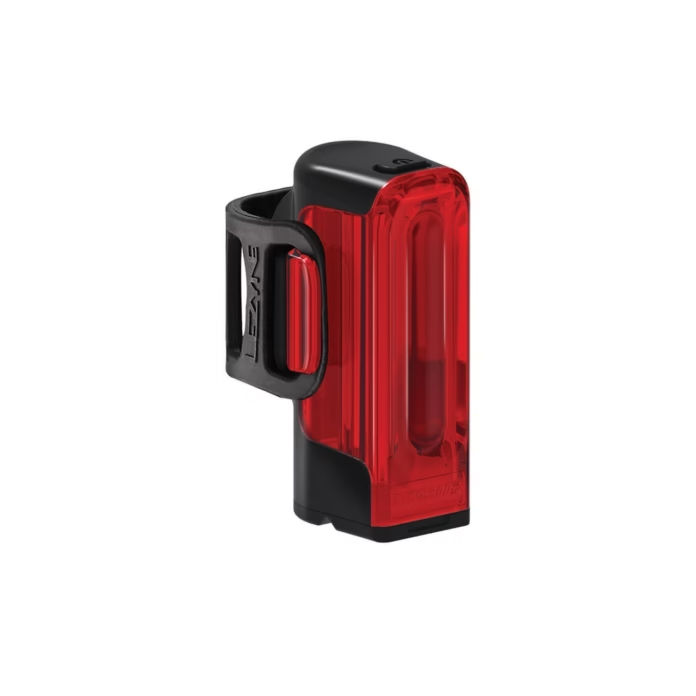
The Strip Drive Pro 400+ uses ten LEDs arranged in two columns, with broad optics and seven modes. BikeRadar’s independent test praised the high output, useful choice of settings and improved optics. Cyclingnews likewise found its daytime flash conspicuous and its output options easy to manage. Both noted that the supplied strap could be short on deep aero seatposts, something worth checking if you use an integrated-looking road-bike frame.
Cateye uses three red LEDs behind its OptiCube lens. Road.cc’s independent test of the earlier ViZ300 was particularly positive about the broad viewing angles and strong daytime visibility. The reviewer found its HyperFlash pattern extremely conspicuous, arguably too aggressive for some situations, and preferred the Group Ride mode when sharing the road with other cyclists. That distinction is relevant to the current light’s intended modes, though the test was not conducted on the 2026 USB-C revision.
A brighter rear light is not necessarily a better neighbour in a club bunch. At close distances, a powerful rapidly flashing light can be uncomfortable for the cyclist sitting directly behind. Choose a steady or lower-output group mode when appropriate, then save the brightest daylight flash for riding alone in strong ambient light. Neither a wide beam nor a high-lumen figure guarantees that a driver has noticed you.
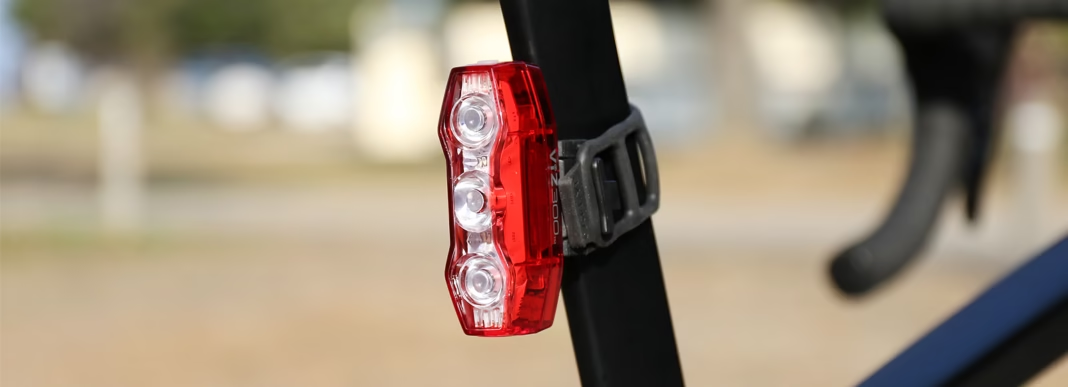 Photo Credit: CatEye
Battery life: Lezyne has the stronger figures in comparable modes
The most interesting figures are not the advertised maximum battery lives. They are the claimed runtimes for settings a cyclist might actually select: Lezyne rates its 400-lumen Day Flash 2 at 18 hours and its 80-lumen Blast constant mode at five and a half hours. Cateye quotes ten hours in 300-lumen Daytime HyperFlash and five hours in its 30-lumen constant setting.
Those are impressive claims on both sides, but the comparison is not like for like. Flash patterns include periods at reduced output and the batteries have different capacities; Lezyne specifies 1,900mAh, while the current Cateye UK product page does not establish a directly comparable capacity figure. A light that briefly reaches 400 lumens during flashes should not be interpreted as consuming the same power as a continuous 400-lumen beam.
Lezyne also quotes 80 hours from its five-lumen Femto mode, whereas Cateye’s 45-hour maximum comes from a 30-lumen flashing setting. It would be misleading to present 80 versus 45 as proof that the Lezyne offers nearly twice the useful illumination. Output, pattern and frequency of charging all matter. For cyclists who want a strong daytime flash for repeated long rides, however, the Lezyne’s claimed 18-hour high-flash endurance is a tangible reason to pay more.
Road testers provide some reassurance about real-world usability. BikeRadar reported reliable performance across testing of the Lezyne, while road.cc found the original ViZ300’s battery estimates broadly useful. These separate tests used different conditions and, in Cateye’s case, an older charging variant. They cannot provide a scientifically controlled ranking of endurance.
Mounts, weight and compatibility with modern road bikes
At a quoted 47g, the ViZ300 is 24g lighter than the 71g Lezyne on their respective manufacturer figures. Neither is particularly burdensome, but the Cateye is a more discreet choice on a lightweight road bike. Its SP-15 fitting accommodates specified round posts and some contemporary truncated aero shapes. The stated mount range is 21.5–32mm in diameter, with a maximum circumference of 130mm. Unusual post profiles should be checked rather than assumed to fit.
Lezyne’s flexible ladder-style strap is designed for both conventional and aero seatposts. It is quick to install and move between bikes, although the strongest consistent criticism in published reviews concerns the strap’s limited length on deeper aero profiles. The issue matters more than the 24g weight gap if the light cannot be mounted firmly and aligned with following traffic.
Neither light should be fitted where clothing, a bikepacking saddle bag or a rear-mounted accessory obscures it. That is especially relevant to winter riders carrying mudguards and luggage. Check the sightline from directly behind and to either side, and make sure the light stays vertical on a tapered post after a few miles of rough roads.
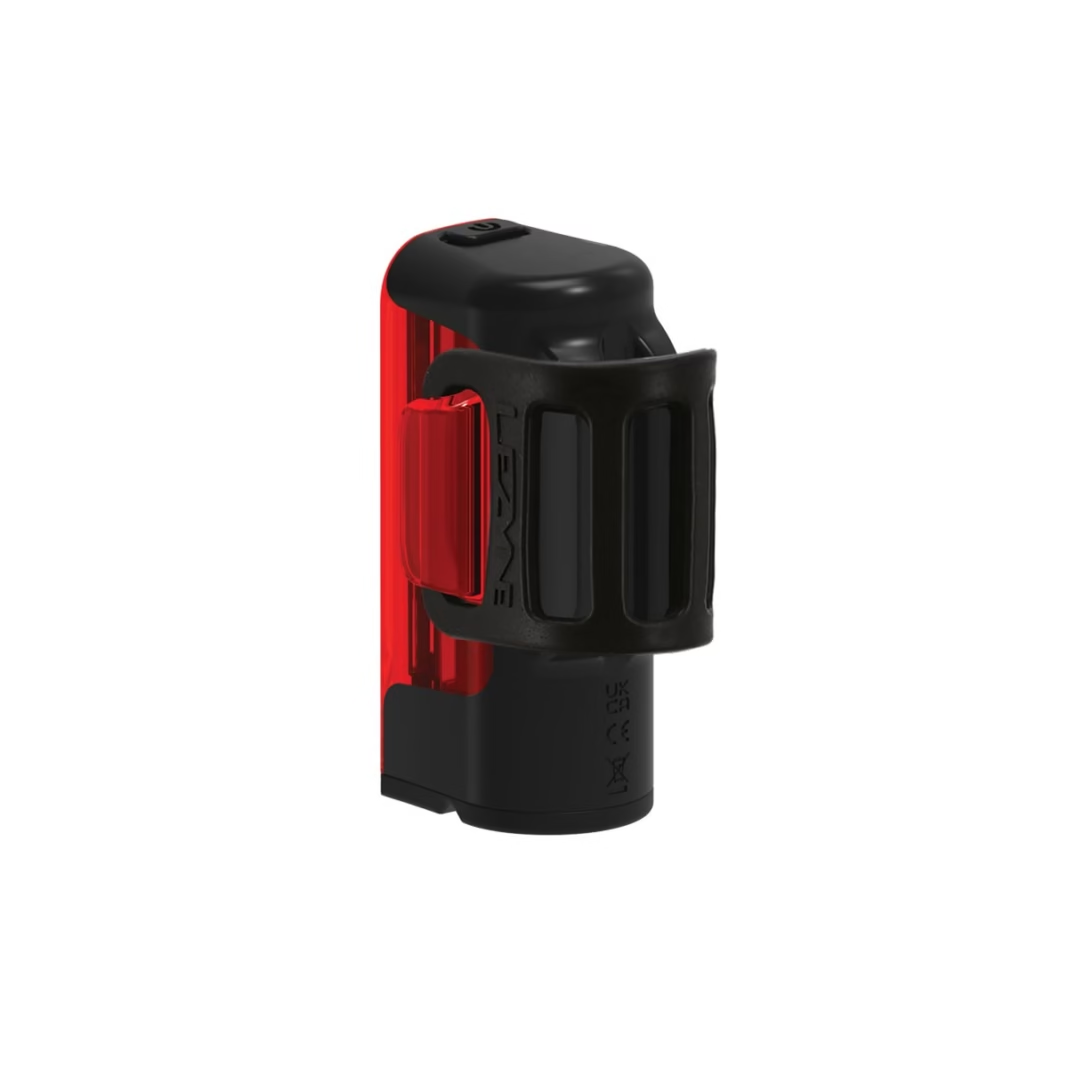 Photo Credit: Lezyne
Rain protection and charging: a clear advantage for Lezyne
The Lezyne is specified to IPX7, reflecting protection against temporary water immersion under the relevant test conditions. Cateye lists IPX4, a rating for splashing water. Both are intended for riding in wet weather, but the higher stated protection level gives the Lezyne more margin for repeated heavy-rain use. Neither number guarantees that a charger socket, damaged seal or ageing product can be neglected indefinitely.
Both current models use USB-C. That matters for riders trying to retire old charging cables, but it is worth checking the exact Cateye product code: the 2026 USB-C ViZ300 is listed as CA475VIZ300C, while older ViZ300 stock uses Micro-USB and is still represented on some retailer and manufacturer pages. The case shape and familiar name can otherwise make an online listing look interchangeable. Do not assume a listing is USB-C unless the specification or exact SKU says so.
Neither model includes a charging cable in the relevant current manufacturer specification. Lezyne uses a weather-protected USB-C arrangement and Cateye quotes around three hours for a full recharge at 0.5A. Before ordering, check the retail package and the connector type; a cheap rear light is less good value if you accidentally receive the older version you did not intend to buy.
Which is more pleasant for commuting and riding in a group?
The ViZ300 offers four straightforward modes: constant, flashing, Group Ride and Daytime HyperFlash. Group Ride is its distinguishing practical feature, intended to remain noticeable without using the full daytime burst when other riders are close. The current USB-C model claims ten hours at 15 lumens in Group Ride mode. An older ViZ300 specification gave a different group output and runtime, so do not copy the original 2021 review’s figures into a comparison of the revised unit.
Lezyne’s seven modes provide finer control. There are constant settings, a pulse, several flash patterns and a low-output endurance option. That flexibility is useful for riders who swap between daytime solo miles, unlit lanes and busy town roads, but only if they are willing to remember which mode is suitable. A simple four-mode light can be more convenient if you regularly make the same journey and have little appetite for cycling through options.
Both devices are rear visibility lights, not forward-facing lamps designed to illuminate potholes. There is also no radar function on either model: they cannot detect approaching vehicles or send alerts to a head unit. Riders seeking traffic detection should consider a compatible radar unit, accepting its greater cost and complexity. See our cycling radar rear lights guide for that separate category.
UK prices and the value of spending an extra £11
The specific price comparison is straightforward. Tweeks Cycles listed the Lezyne Strip Drive Pro 400+ at £43 and in stock, while Tredz listed the Cateye ViZ300 at £31.99 and in stock. The Cateye’s original listed RRP of £39.99 makes it notably cheaper at this discounted price. Prices and product variants can change, particularly as retailers clear older charging-port stock.
At £31.99, the ViZ300 is compelling for a rider wanting a light, broad-visibility rear lamp for everyday commuting and occasional club rides. The extra £11.01 buys the Lezyne’s higher stated daylight-flash output, longer claimed runtime in its strongest flashing mode, additional settings and IPX7 water-resistance rating. Those are meaningful differences rather than features added merely to justify a premium.
Check the exact retailers before purchase: Cateye ViZ300 at Tredz and Lezyne Strip Drive Pro 400+ at Tweeks Cycles. These are direct retailer links, not verified commission-bearing affiliate redirects. For more detail on the premium light alone, read our Lezyne Strip Drive Pro 400+ review.
Lezyne Strip Drive Pro 400+ or Cateye ViZ300: what should you buy?
Choose the Cateye ViZ300 if cost, low weight and a dedicated group-friendly mode are the priorities. Its wide optical coverage, easy operating choices and current £31.99 price make it particularly attractive for commuting and club riding. Make sure you are ordering the USB-C version if that connector is important to you, since older reviews and older stocks can refer to a different charging specification.
Choose the Lezyne Strip Drive Pro 400+ if you regularly ride alone in daylight, want a range of outputs for different conditions or expect to spend a lot of winter miles in heavy rain. Its stronger high-flash battery claim and higher waterproofing rating give the extra cost a practical basis. The only serious physical caveat is the mounting strap on unusually deep aero seatposts.
For a typical UK road cyclist replacing an ageing rear light, both would be defensible purchases. The Cateye is the better low-cost fit for predictable riding, while the Lezyne offers more flexibility and weather protection. Neither replaces thoughtful light positioning, regular charging or a suitable front light. This recommendation uses official specifications and independent published testing, with the USB-C Cateye variant distinguished from the earlier Micro-USB model; ProCyclingUK has not tested the two together.