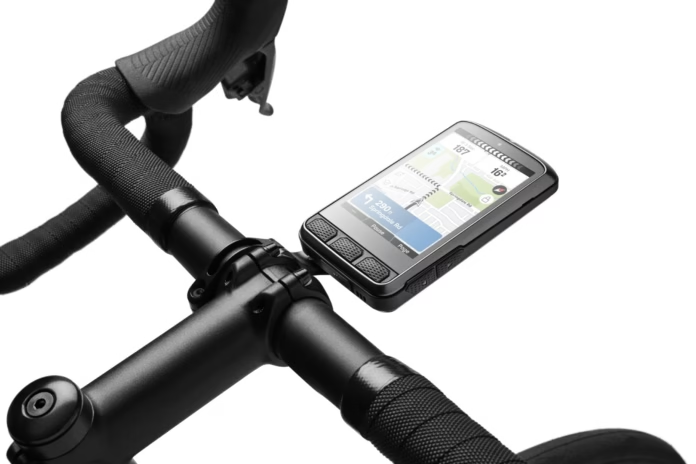
Wahoo’s biggest GPS computer is not automatically its best buy. The ELEMNT ACE brings a 3.8-inch touchscreen, an onboard wind-pressure sensor and a claimed 30-hour battery life, but it is large enough to demand serious cockpit space. The ELEMNT ROAM 3 retains touchscreen maps and navigation in a much smaller body. Wahoo’s November 2026 UK comparison page showed the ACE at £359.99 and the ROAM 3 at £349.99, only £10 apart, although the individual product pages displayed different prices.
A £10 difference makes it tempting to buy the flagship and stop comparing. Yet the ACE weighs nearly twice as much as the ROAM 3 and projects much farther ahead of the handlebar. Its size can complicate mounting on a bike with an integrated cockpit. The less expensive model does not sacrifice fundamental mapping or GPS capability, so the choice depends on how much screen area a cyclist genuinely needs.
This is a research-led comparison using Wahoo’s model-specific documentation and independent published road tests, not a claim that ProCyclingUK tested the computers against each other. Reviewer verdicts reflect different routes, conditions and software versions. The UK prices are snapshots, not guaranteed checkout offers.
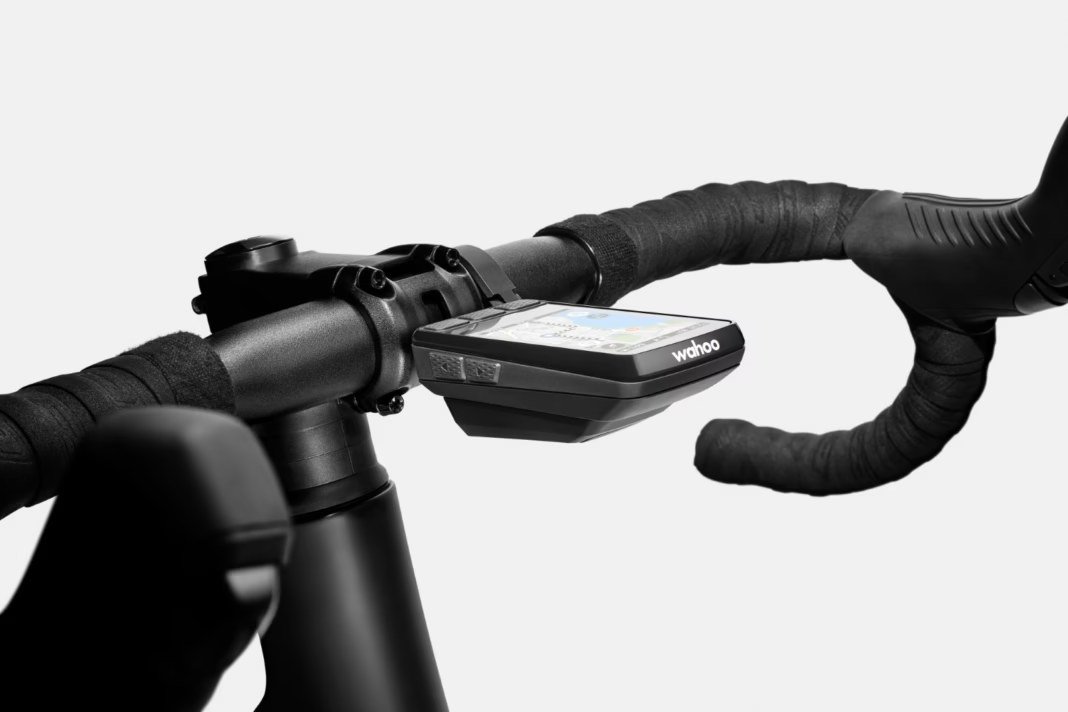 Photo Credit: Wahoo
Wahoo ELEMNT ACE vs ROAM 3 specifications
| Feature | ELEMNT ACE | ELEMNT ROAM 3 |
|---|---|---|
| UK promotional price reference | £359.99 on Wahoo UK comparison listing | £349.99 on Wahoo UK comparison listing |
| Full UK reference price shown by brand | £449.99 on promotional comparison page | £399.99 on promotional comparison page |
| Display | 3.8-inch colour touchscreen | 2.8-inch colour touchscreen |
| Screen resolution | 480 × 720 | 320 × 480 |
| Manufacturer-quoted weight | 208g | 109g |
| Dimensions | 125 × 71 × 20mm | 96 × 53 × 24mm |
| Battery life claim | Up to 30 hours | Up to 25 hours |
| Memory | 64GB | 64GB |
| Satellite reception | Multi-constellation, dual-band GNSS | Multi-constellation, dual-band GNSS |
| Wind-pressure sensor | Yes, with Wahoo Wind Dynamics | No |
| Controls | Touchscreen and buttons | Touchscreen and buttons |
| Audio navigation | Built-in speaker | Built-in speaker |
| Waterproofing | IPX7 | IPX7 |
| Charging | USB-C | USB-C |
The UK comparison listing showed promotional prices of £359.99 for the ACE and £349.99 for the ROAM 3, while the individual product pages showed £449.99 and £399.99 respectively when checked. That inconsistency is worth checking before ordering. The discounted figures are not necessarily the price presented at checkout, and an apparent £10 difference should not be treated as guaranteed stock or a permanent offer. Neither figure here is an affiliate-tracked price.
The ACE’s enormous screen is its real selling point
A 3.8-inch display changes the experience of following a map. There is more room for junction detail, a useful section of the route ahead and the data fields a cyclist wants to see simultaneously. On an unfamiliar gravel ride, a long-distance event or an urban route full of side streets, that extra visible area is easier to appreciate than yet another training metric.
Independent testers have broadly agreed that the ACE is strong on mapping, even when they have disagreed on its overall value. BikeRadar praised the display and map presentation, while Cyclingnews found the navigation compelling despite its misgivings about the size and feature package. Road.cc also identified maps as a strength, but its more critical verdict reflected bugs and weaknesses in the overall execution at the time of testing.
The ROAM 3’s 2.8-inch display is far from small for an ordinary road computer. It has enough space to make navigation practical, and still supports touch gestures, physical buttons and colour mapping. Road.cc’s 2026 test was particularly positive about its route display, waypoint handling and battery performance during long rides. The practical decision is whether you need a bigger map, or simply want a reliably legible one.
Why size and weight could decide the purchase
Wahoo’s ACE product page quotes 208g, against 109g for the ROAM 3. The 99g difference is almost the weight of another ROAM, before mounts are included. The ACE’s long body also moves that mass further forward. This is unlikely to trouble a touring bike with a conventional handlebar, but it matters when using an out-front mount attached to a lightweight or proprietary cockpit.
A wide integrated carbon cockpit often has less spare room than a classic round bar. Wahoo supplies an aluminium out-front mount for the ACE, but compatibility with proprietary computer brackets cannot be assumed. Independent testing has highlighted the ACE’s size and the possibility of the display sitting too close to the bar or stem. Check the actual bracket, clearance and maximum permitted load before buying; a computer that fits the Wahoo quarter-turn interface does not necessarily fit the physical space.
The ROAM 3 is easier to accommodate and less conspicuous on the bike. It is still a relatively substantial computer, but it avoids the ACE’s most extreme proportions. For a performance road bike, a bike with narrow bars or a crowded gravel cockpit, that is a convincing reason to choose the smaller unit even with almost no difference in the sale price.
 Photo Credit: Wahoo
The wind sensor is interesting, but it is not a power meter
The ACE’s headline feature is Wahoo Wind Dynamics, which uses a front-facing pressure sensor to estimate air speed and the relative influence of headwinds, tailwinds and drafting. Wahoo’s support documentation describes Wind Impact as a comparison between the calculated air speed and the bike’s speed, obtained from GPS or a connected speed sensor.
That is an interesting data field for somebody who rides in a group, experiments with position or wants to look back at where the wind was a factor. It is not a direct measurement of aerodynamic drag coefficient, nor does it provide the same information as a calibrated power meter. Riding position, turbulence and conditions can all complicate interpretation. The sensor tells a story about airflow; it does not prove that a new position saved a particular number of watts.
Tester reactions have been mixed. BikeRadar regarded the wind measurements as potentially useful, while Cyclingnews was much less persuaded by their value in everyday use. Unless this is a feature you specifically want to explore, it should be treated as a bonus rather than a decisive reason to buy the ACE.
Battery claims favour ACE, real rides need context
Wahoo quotes up to 30 hours for the ACE and 25 hours for the ROAM 3. Both are strong headline figures, and both depend on display brightness, connected sensors, satellite conditions and how heavily maps and navigation are used. Five extra claimed hours may matter for a rider pushing through an overnight ride, but the model with the longer claim is not guaranteed to last longer in every identical real-world scenario.
The independent evidence is worth separating from the specification sheet. Road.cc’s ROAM 3 review described extensive use on endurance rides and recorded very strong battery performance. Several early ACE reviews were less enthusiastic about endurance and screen brightness than Wahoo’s original claims suggested. These tests were made with different firmware, brightness settings and equipment; they are not laboratory results that can be subtracted to calculate a reliable five-hour advantage.
If you plan to be out for ten or twelve hours with live navigation running, either could plausibly meet the task when properly charged. On a two-day audax without mains access, check reports from riders using the current software and take a sensible charging plan. Battery endurance should be judged by the longest ride you actually intend to complete, not simply the biggest figure printed on the box.
Mapping, controls and app integration
Both models use Wahoo’s modern app-led setup, can take routes from major planning services and offer dual-band positioning. Both have buttons as well as a touchscreen, which is useful with winter gloves or rain on the display. The ACE has the larger map canvas, while the ROAM 3 has a more compact layout that some riders will find easier to interpret at a glance.
Wahoo has changed its app system since the previous-generation ELEMNT computers. Independent reviewers have praised the new route views but also reported occasional app and GPX synchronisation issues. Road.cc particularly liked the ROAM 3’s handling of custom waypoints and points of interest, a practical feature for ultra-distance checkpoints and café stops. Software updates may address some earlier shortcomings, so it would be misleading to present every launch-era bug as a permanent defect.
Neither computer obliges a rider to commit to Wahoo’s own power meter, heart-rate monitor or trainer. Both support standard wireless sensor ecosystems and connect to compatible smart trainers. The right choice is more about physical size, interface and map-reading preferences than being locked out of a particular speed or cadence sensor.
Which is better for commuting, road racing and gravel?
On a commuter bike, the ACE’s big screen may help with unfamiliar journeys but is often more device than is needed. The ROAM 3 is easier to mount and leaves more space for a front light or bar bag. On a fast road bike, the smaller model has the stronger case because of its lower mass and shorter profile. A rider who values an expansive map more than minimal cockpit clutter could still prefer the ACE.
For bikepacking and long gravel routes, the decision is closer. The ACE’s greater map area is genuinely attractive when following complicated turns, and its claimed 30-hour endurance provides an argument in its favour. The ROAM 3 counters with proven strong navigation reviews, excellent long-ride battery reports and fewer mounting headaches. Both can be viable if the rider confirms bracket compatibility and plans power for the entire trip.
Which Wahoo should you buy at UK sale prices?
At a genuine £10 difference, the ACE is attractive for riders whose first priority is a large screen. It also gives them the wind data field and Wahoo’s longer battery claim. But a heavier, bulkier computer is not automatically a better one, and the mixed independent ACE reviews need taking seriously. For many road cyclists, the ROAM 3 is the more balanced package, even if the price advantage is small.
If the ACE rises back towards £449.99 while the ROAM 3 stays closer to £349.99, the recommendation becomes clearer: the larger computer needs to justify a sizeable premium. Conversely, a discounted ACE near the ROAM’s price makes sense for riders who regularly navigate complex routes and have a suitable mounting system.
Wahoo’s UK cycling computer comparison, ELEMNT ACE product page and ELEMNT ROAM 3 product page show the exact product ranges. These are direct, non-affiliate manufacturer links. For a smaller Wahoo, our published BOLT 3 vs ROAM 3 comparison explains the next step down in size, while the Garmin Edge 1050 vs ELEMNT ACE comparison addresses the choice between ecosystems.