Claire Steels has been appointed Advocacy and Communications Lead at The Cyclists’ Alliance, moving into rider representation after bringing her professional racing career to an end in 2026. The former Movistar Team rider will help the independent organisation work on safety, employment conditions, financial security and wellbeing across the women’s peloton.
The Cyclists’ Alliance announced the appointment on Thursday, 12 November. Steels will work alongside its Rider Council and representatives from across cycling, with a remit that combines direct contact with riders, communications and the development of advocacy priorities.
“I’m incredibly excited to step into this new role with The Cyclists’ Alliance,” Steels said. She added that she wanted to build on the organisation’s existing work and contribute to further improvements in women’s professional cycling.
A former WorldTour rider with experience beyond the peloton
Steels began racing professionally in 2020 with Spain’s Sopela Women’s Team, having previously competed in hockey, running and duathlon. She was an age-group duathlon world champion before moving into road cycling and, after three seasons with Sopela, stepped up to Israel Premier Tech Roland for 2023.
That season brought victory at the reVolta one-day race in Spain and top-20 overall finishes in both the Tour de France Femmes avec Zwift and La Vuelta Femenina. Her performances earned her a three-year agreement with Movistar Team covering 2024 to 2026, the final three years of her racing career.
The British rider also has a degree in psychology and sports science from the University of Hull and runs Steels Fitness, a Mallorca-based strength coaching and sports psychology business. That combination of experience as an athlete, coach and business owner should be relevant to a position dealing with pressures that extend well beyond race results.
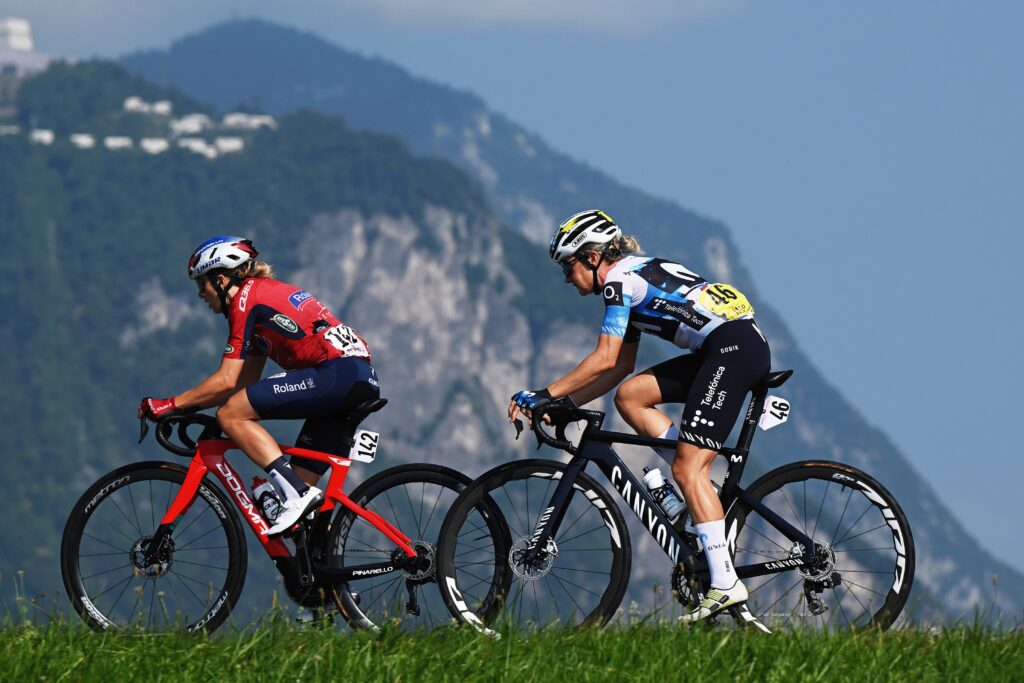 Photo Credit: Getty
Rider pay, welfare and conditions remain priorities
Steels arrives as The Cyclists’ Alliance continues to push for more consistent employment standards across the women’s professional tiers. Its 2026 rider survey highlighted a particularly stark divide at Continental level, where three-quarters of surveyed riders reported receiving no salary. Access to medical care and financial security were also among the concerns.
The organisation has been trying to turn that evidence into more direct advocacy. Its published description of the role includes coordinating the Rider Council, gathering information from riders, developing the annual survey and representing their interests in discussions with cycling’s governing and employment bodies.
The 2026 Rider Council was expanded earlier this year to bring more perspectives into that work. Steels will now be part of the team connecting those riders’ concerns with the wider sport, from national federations and teams to the UCI.
Her move also illustrates one of the less visible career paths available to riders after leaving competition. Rather than stepping away from the sport, Steels will remain involved in decisions that shape how its professional athletes work and are supported.