The miniature electric pump market has split into two quite different products. One is a compact emergency inflator carried on every ride, replacing a CO2 cartridge or an awkward little hand pump. The other is a rechargeable workshop and travel tool, capable of filling several tyres before needing the charger. The SKS EMP and Silca Elettrico Ultimate illustrate the distinction particularly clearly, despite both having digital pressure controls and automatic shut-off.
The SKS is a lighter, less expensive option designed around roadside convenience. Silca charges a considerable premium for greater air-moving capacity, though the extra weight and 100psi ceiling matter. This is a research-led comparison using official product specifications, current UK retailer listings and independent tests from road.cc, BikeRadar, Cycling Weekly and TOUR. It is not a claim that ProCyclingUK has tested the two devices together.
SKS EMP vs Silca Elettrico Ultimate specifications
| Feature | SKS EMP | Silca Elettrico Ultimate |
|---|---|---|
| UK price reference, November 2026 | £74.99 at Wolf Cycles, in stock | £159 manufacturer list; £129.99 Tredz listing |
| Claimed bare weight | 151g | 222g |
| Dimensions | 83 × 33 × 52mm | 81 × 60 × 32mm |
| Maximum pressure | 120psi | 100psi |
| Digital control | Target pressure, auto-stop and last-setting memory | 3–100psi preset gauge and auto-stop |
| Claimed inflation capacity | Up to three 700 × 28c tyres per charge | Equivalent to around nine CO2 cartridges |
| USB-C charging | About 25 minutes | About 25–60 minutes |
| Valve fitting | Reversible Presta/Schrader/Dunlop head and extension hose | Presta fitting; other chucks compatible |
| Main use | Emergency inflation and quick topping-up | Several inflations, workshop and travelling |
These are distinct reference prices, not a like-for-like discount calculation. SKS lists the EMP with a recommended price of £84.99, while Wolf Cycles displayed £74.99 with an active in-stock basket when checked. Silca’s UK manufacturer page listed the Ultimate at £159, while a UK Tredz listing offered it for less. Stock and prices can change, so follow the exact retailer listing rather than a historical promotional claim. Silca also makes an Elettrico Micro; it is a smaller, different pump and must not be confused with the Ultimate.
Why 71 grams can make a real difference
The manufacturer’s 151g SKS figure looks substantially more attractive for a rider who carries every repair item in a jersey pocket. The compact casing has a digital screen and a reversible head, and the included extension hose makes it easier to reach a valve without holding a vibrating motor directly against the wheel. It is a practical approach for a rider who just wants to get a punctured tubeless or tubed tyre back to a rideable pressure.
There is a caveat to quoted weights. Road.cc weighed the SKS unit at approximately 151g bare, but found the mass increased with the silicone sleeve, pump head and hose. Cycling Weekly weighed the Silca Ultimate at around 239g in its real-world test, compared with Silca’s own stated 222g. That means the true carried gap will depend on which accessories are included. It remains fair to say the Silca is considerably more substantial.
The Silca isn’t enormous compared with a traditional track pump, but its wider body and squared-off aluminium casing make it less natural in a jersey pocket. Cycling Weekly’s reviewer preferred keeping it in a tool tub or saddlebag and regarded its real strengths as pre-ride inflation, long trips and group outings. The SKS is a better fit for the minimalist roadside kit, assuming its shorter battery endurance is sufficient.
Maximum pressure does not reveal how quickly a tyre inflates
The EMP’s headline 120psi maximum is higher than Silca’s 100psi. That is relevant to riders who still use narrow, high-pressure tyres, or anyone who wants maximum pressure headroom. Both offer a digital gauge and automatic shut-off, reducing the need to stare at an analogue needle while trying to reach a specific figure. Neither published ceiling implies every tyre will reach that pressure equally quickly.
The Silca reverses the apparent advantage when the question becomes volume and time. In Cycling Weekly’s independent test, the Ultimate inflated a 700 × 30c road tyre in 22 seconds and completed 13 inflations of that test tyre on one charge. The same reviewer reported nine inflations of a 700 × 45c gravel tyre to 35psi. Those measurements provide unusually tangible evidence of what the larger battery and motor can do.
SKS quotes up to three inflations of a 700 × 28c tyre from a full charge. That is a manufacturer claim, made under a particular set of conditions, rather than a directly comparable independent measurement against the Silca’s 30c test. BikeRadar includes the SKS in its updated 2026 electric-pump comparison, and road.cc’s standalone assessment considered it straightforward to use. Neither result should be used to claim an exact head-to-head speed margin that was never measured under identical conditions.
If all you need is a top-up after a slow leak, the SKS’s endurance may be entirely adequate. If you are responsible for several riders’ bikes at an event, repeatedly seating or reinflating tyres at home, or travelling with multiple wheels, the Silca’s capacity can be worth carrying extra weight.
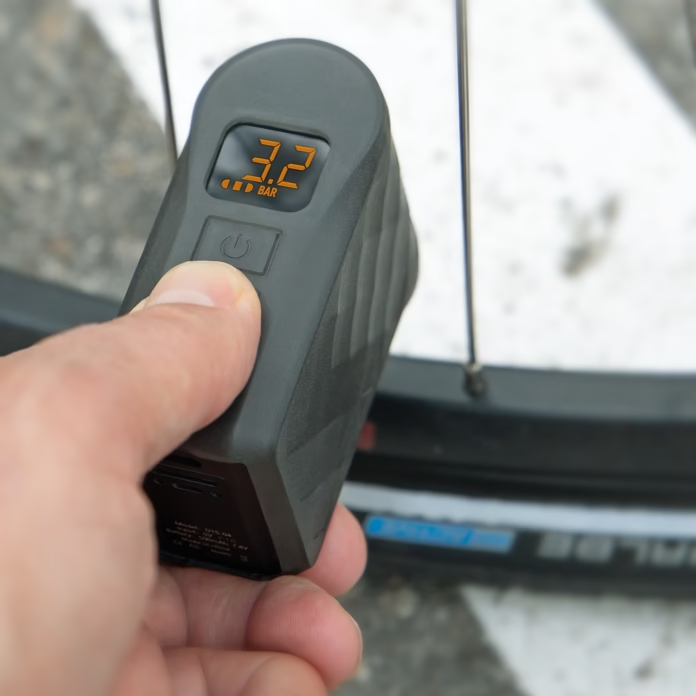
 Photo Credit: SKS Germany
How accurate are the gauges?
Silca specifies a preset range from 3 to 100psi and an accuracy claim of one per cent when used with the hose. The distinction matters: a manufacturer’s accuracy claim describes an intended test arrangement, not a guarantee in every temperature or tyre configuration. Its automatic shut-off is convenient for dialling in the same gravel or road pressure before several sessions.
SKS uses a digital pressure display with a target-setting function and remembers the last pressure selected. The flexibility to change between PSI and bar is helpful for riders following tyre or rim manufacturer guidance expressed in different units. Its maximum 120psi offers more range, but no measurement here independently proves its gauge is more accurate than the Silca.
For tubeless and hookless road rims, the important point is to follow the lower of tyre and rim pressure limits. An electric pump that can reach 120psi is not an invitation to ignore those maximums. A digital auto-stop feature makes mistakes less likely, but it does not replace checking that the entered number is appropriate for the actual wheel and tyre.
Valves, hoses and TPU tubes
The EMP’s reversible head accommodates Presta, Schrader and Dunlop valves. Its package also includes a hose, sleeve, USB charging cable and small storage bag. SKS specifically recommends the extension hose when working with plastic valve stems on TPU inner tubes, because it avoids concentrating the heat and mechanical vibration of the inflator on the stem.
The Silca Ultimate normally connects through its Presta-compatible fitting, with other Silca chucks available for riders using different valves. Cycling Weekly reported that the pump’s hose and valve connection become particularly warm during repeated inflation, and warned against direct use on vulnerable plastic valve stems. That caution is relevant for road riders using lightweight TPU tubes, regardless of how attractive the overall inflation performance looks.
Both devices create noise and heat during a full inflation. Those characteristics are inherent to tiny electric compressors and should not be confused with a mechanical defect. Allow the unit to cool as directed if inflating multiple tyres and check that extensions, adapters and valves are attached securely before starting. For tubeless setups, any attempt to seat a difficult bead also depends heavily on rim and tyre compatibility.
Which is more useful in the workshop?
For maintaining one road bike in a flat or small workshop, either can be a convenient pressure tool. It avoids pumping a track-pump handle repeatedly, and the automatic stop is useful when aiming for the same pressure across both wheels. The SKS’s fast USB-C recharge is attractive if used infrequently and then topped up before a long ride.
The Silca is the stronger workshop proposition when several bikes need attention. TOUR’s 2026 comparison of mini compressors placed the Ultimate at the top for its powerful inflation, a result broadly consistent with Cycling Weekly’s capacity testing. It also performed well as a travel tool, when the need is to inflate a number of tyres after unpacking a bike rather than rescue a single puncture.
Neither is a guaranteed replacement for a dedicated tubeless charging tank. Cycling Weekly’s tester managed to seat one tubeless tyre with the Silca but found it could not reproduce the sudden burst of air from an Airshot for more difficult combinations. Recommending either as a universal tubeless seating solution would oversell it.
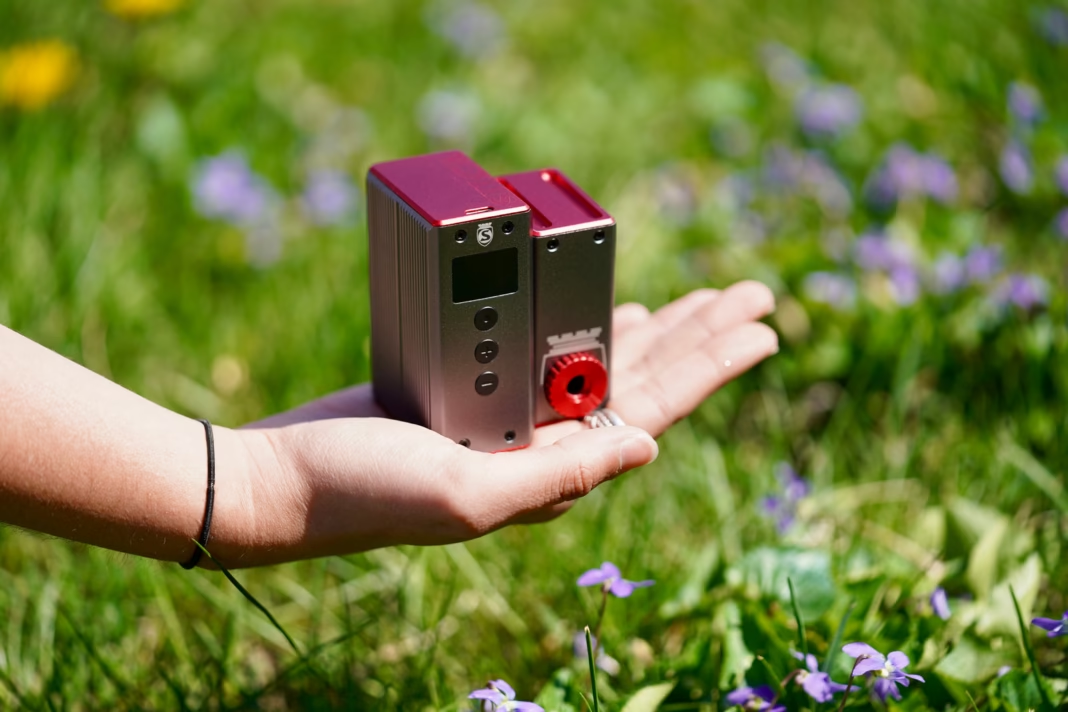 Photo Credit: Silca
Battery management on a winter ride
Rechargeable pumps introduce a new failure mode: a flat battery at the exact moment a puncture occurs. A manual pump will always have the same capability as long as its seals and head function; an electric compressor depends on being charged. Silca’s much greater inflation capacity offers a margin for multiple repairs, but it also occupies more kit space. SKS’s shorter charging time can make topping up before leaving home convenient.
The best approach for either is to store the pump dry, recharge it after use and check it before a long or remote ride. Very low ambient temperatures can affect battery behaviour, and manufacturer inflation counts are not a guarantee in winter conditions. For remote travel, a backup manual pump or another way to inflate a tyre can still be sensible. A tiny electric inflator is convenient; it is not redundancy by itself.
Does the Silca justify paying more?
At the two UK retail reference prices checked, the SKS at £74.99 and Silca at £129.99 create a £55 difference. On the manufacturers’ prices the distance is larger. That difference should be judged against the rider’s expected usage, not only against the number of inflations printed on the packaging.
The Silca’s best arguments are speed, capacity and precise repeated inflation. Independent testing makes those benefits credible, but they come with extra size, weight and a lower maximum pressure. It is the more appealing tool for a mechanic, a multi-bike household, a coach or someone who takes their bike on frequent trips.
The SKS is the more proportionate choice for the rider who already has a track pump at home and needs something useful in an emergency. Its lighter body, reversible valve head, 120psi ceiling and lower price are tangible advantages. It may be all that is needed when the pump lives in a saddlebag and is used only occasionally.
Which electric pump should you buy?
Choose the SKS EMP if roadside portability and value are the priorities. It is the easier unit to carry every day and has enough claimed capacity for typical single-bike puncture scenarios. Road.cc’s positive ease-of-use findings support that practical role, even though its maximum number of inflations should not be confused with an independent battery test under the same conditions as the Silca.
Choose the Silca Elettrico Ultimate if you regularly need to inflate several tyres, want a portable workshop tool, or prioritise inflation speed over saving weight. The independent results are persuasive on those strengths. But it is not the right answer for every cyclist: the cost, bulky shape and 100psi maximum will push some towards the smaller SKS.
For more detail, our SKS EMP review and Silca Elettrico Ultimate review discuss each model individually. Our mini electric bike pump buying guide places them in the wider market. Current products can be checked at Wolf Cycles for the SKS EMP and Silca UK. These are direct, untracked links. This is an independent research-led comparison, not a first-hand ProCyclingUK test.
-
 Photo Credit: Joshua Furman / Wikimedia Commons (CC BY-SA 3.0)
-
 Photo Credit: Hoebele / Wikimedia Commons (CC BY-SA 4.0)
-
 Photo Credit: MFonzatti / Wikimedia Commons (CC BY-SA 4.0)