The UCI Cyclo-cross World Cup began in 1993, long before the current calendar took riders from traditional Belgian circuits to snow, sand and new host cities across Europe. Its first men’s winner was Paul Herygers. Women were added to the World Cup in 2002, and the series gradually developed into one of cyclocross’s principal measures of sustained excellence across a winter.
The competition has been shaped by legends such as Sven Nys, Marianne Vos, Sanne Cant and Mathieu van der Poel, but there is a fundamental distinction between winning a World Cup round, taking the overall World Cup and becoming world champion. Each rewards a different achievement. Understanding that difference is essential when comparing the sport’s champions across more than three decades.
How the Cyclo-cross World Cup began in 1993
The 1993–94 men’s World Cup linked international races into a single UCI classification. Rather than asking who was strongest at one championship, it measured who could produce results repeatedly across different circuits. The opening race in 1993 was won by Belgian Paul Herygers, an early indication of the strength of the discipline in Belgium. The new competition offered another way to establish supremacy over several months.
Major cyclocross events and regional traditions existed long before the World Cup. The World Cup did not invent the discipline, and a rider who won an older Belgian cross had not suddenly achieved a lesser result. What changed was the ability to compare riders across different venues in an organised UCI competition, with results contributing to an overall classification rather than standing alone.
The early overall lists reflected the strength of Belgian, Dutch, Italian and Czech riders. The series encouraged riders to travel to unfamiliar terrain, where a style suited to one muddy Belgian race might be less effective on a faster, colder or sandier course. Becoming the best World Cup rider meant showing form repeatedly, not just producing one outstanding performance.
Women’s participation arrived later, when an elite women’s World Cup was introduced in 2002. That expansion was an important milestone for a discipline whose international structures had long given greater prominence to men’s racing. It also created a separate body of seasonal results, which should not be confused with the women’s elite World Championships, introduced in 2000.
Sven Nys set the men’s benchmark
The numerical benchmark in the men’s World Cup still belongs to Sven Nys. The Belgian secured seven overall classifications and fifty individual race victories, figures recorded by the competition organiser. The distinction between those totals matters: a rider can win several rounds without taking the season title, while a consistently strong rider can win the overall even without dominating every individual event.
Nys excelled across a long period when cyclocross demanded both frequent racing and technical adaptability. He was able to win on heavy mud, difficult climbing courses and faster circuits, repeatedly returning to the front after the demands of a crowded winter schedule. Seven overall titles cannot be explained by one race-winning characteristic or a short period of exceptional form.
Van der Poel offers a useful contrast. Van der Poel’s spectacular technical speed and periods of near-complete dominance have produced extraordinary race-winning sequences, but he has also shaped his calendar around spring road racing and other objectives. Nys’s World Cup record was built through a more sustained commitment to collecting results across entire winters.
This is why a rider’s tally of rainbow jerseys must be kept separate from Nys’s World Cup achievements. The World Cup format and points explainer sets out the season-long competition. Winning the UCI World Championships earns the rainbow jersey at a single annual championship event; it does not automatically make the champion that winter’s World Cup winner.
From Daphny van den Brand and Sanne Cant to Lucinda Brand
The women’s series has a record history of its own. Daphny van den Brand and Sanne Cant each won three overall titles, an achievement that the organiser’s historical archive long highlighted as the women’s record. Those figures remain important to the story of how the elite women’s series grew in stature and depth.
The record changed at Benidorm in January 2026. Brand clinched her fourth overall crown, moving ahead of both predecessors. The UCI and competition organiser confirmed that the result established a new women’s record. An archive that still lists Van den Brand and Cant as joint leaders at three therefore needs to be read in its historical context, rather than treated as the latest definitive standings.
Brand’s titles include 2020–21, 2021–22, 2024–25 and 2025–26. That spread shows both longevity and the importance of returning to top form after periods when other riders were prominent. She has become a model of sustained winter racing: the ability to finish near the front in difficult conditions can be as influential as a spectacular individual attack.
Marianne Vos is central to cyclocross history for a different reason. Her eight elite world championships and success in road racing are among the defining achievements of the modern women’s sport, but those rainbow jerseys are World Championships titles rather than a total of eight World Cup classifications. Our feature on cyclocross riders who succeeded on the road examines why Vos’s wider career should not be reduced to one competition.
Why the World Cup is not the World Championships
The names are close enough to cause confusion, particularly when a race venue has hosted both events. A World Cup is a collection of UCI races contested through the season. The elite overall classification rewards results across the scheduled rounds according to its points rules. The World Championships are staged on a particular weekend, award rainbow jerseys and have their own entry and title history.
This changes how riders approach particular situations. During a World Cup round, a contender may weigh the value of a secure placing against the risk of an attack that could win the race. The points earned remain important for the overall classification. At the World Championships the title is decided by that day’s race, so a rider in contention for the rainbow jersey has different incentives when deciding whether to gamble.
A world champion can choose a selective World Cup programme. Road specialists who make selective winter appearances can win major World Cup races without building enough points for the overall title. Conversely, a rider with consistent results can take the season crown despite losing individual encounters with a rival who has raced less frequently.
Tábor illustrates the issue. It has hosted World Championships in 2001, 2010, 2015 and 2024, as well as separate World Cup events. The Tábor history and past winners guide identifies the different titles at that venue. Combining winners from the two competitions into one table would misrepresent what each result meant.
For readers comparing honours, the simplest rule is to look at the competition label and year. ‘Elite world champion’ means a single rainbow jersey; ‘World Cup overall winner’ means success across a season; and ‘World Cup race winner’ means one victory within that series. All three matter, but they are not interchangeable.
The courses that made the competition memorable
The venues themselves explain much of the World Cup’s sporting variety. Namur is associated with difficult off-camber sections and demanding climbing, Koksijde with deep sand, Hoogerheide with technical speed and Gavere with conditions that can become extremely heavy in winter. These courses create different forms of separation and reward riders who can adapt rather than rely on one preferred surface.
Weather can alter the sporting value of an apparent course characteristic. A race in Val di Sole has brought snow into the World Cup story, requiring choices about grip and handling unlike those of a typical muddy Belgian venue. At other events a dry, fast surface has encouraged aggressive early starts and close finishes. A rider’s technique often determines whether their physical strength can be used efficiently.
The international calendar has also changed. World Cup rounds have been staged outside the traditional heartland, including North America, while later calendars have been shortened or reorganised. A comparison of two riders’ overall titles must therefore consider how many rounds were available, which venues were included and how frequently the strongest opponents competed.
Variety gives the season-long title much of its meaning. A single championship might favour a particular specialist on a particular day. A World Cup champion has to confront a selection of technical demands, weather and rivals across the season. The 2026–27 cyclocross calendar provides a current example of the geographical and competitive spread.
Recent champions and the changing elite field
Iserbyt and Alvarado won the 2023–24 overall titles. It was a reminder that the series could reward consistent performances when other high-profile riders raced selectively. Iserbyt and Alvarado combined technical ability with sustained presence near the front of the classification through the winter.
In 2024–25 Michael Vanthourenhout claimed his first elite men’s overall World Cup title, while Brand took the women’s crown. Their victories reflected different routes to the same achievement. Vanthourenhout built points across the competition, while Brand was especially strong towards its conclusion and won the final race at Hoogerheide.
Dutch riders dominated both elite competitions in 2025–26. Mathieu van der Poel topped the men’s World Cup standings, while Brand retained the women’s title and set her fourth-overall record. The UCI recorded eight individual World Cup wins each for Van der Poel and Brand, a remarkable demonstration of how individual victories can reinforce a season-long lead.
Those three seasons are a useful recent comparison, but they should not be mistaken for a permanent hierarchy. The men’s field includes a new generation led by Thibau Nys and Tibor del Grosso, while riders such as Nieuwenhuis and Vanthourenhout remain capable of forcing difficult races. Among women, Brand’s consistency has been challenged by riders including Casasola, Van Alphen, Alvarado and Bäckstedt.
The broader history shows repeated changes in dominance. The winner of one season’s overall trophy is not necessarily the strongest rider on every surface, and a new rival can emerge rapidly. That is what gives the annual points competition its value beyond a single championship day.
The 2026–27 World Cup begins a different chapter
Ostrava stages the opening round of the 2026–27 World Cup on Friday, 27 November, with elite racing under floodlights at Dolní Vítkovice. It is Ostrava’s first World Cup round, followed two days later by the more familiar Czech venue of Tábor. The contrast between a new course and one with a long international history is an appropriate way to begin another season.
Twelve elite rounds are scheduled in 2026–27, with the overall titles decided after the final event at Hoogerheide in January. The calendar includes Glasgow, returning Great Britain to World Cup hosting, alongside established European venues. The organiser has also unveiled a new leader’s jersey design for the season, the visible symbol of the rider leading the accumulated points competition.
The Ostrava course and World Cup debut guide covers the setting for the opener, while the UK cyclocross TV and streaming guide explains how the events can be followed from Britain. The opening result and jersey cannot decide a twelve-round competition. A long World Cup history shows why collecting strong results across very different winter conditions remains the defining task.
-
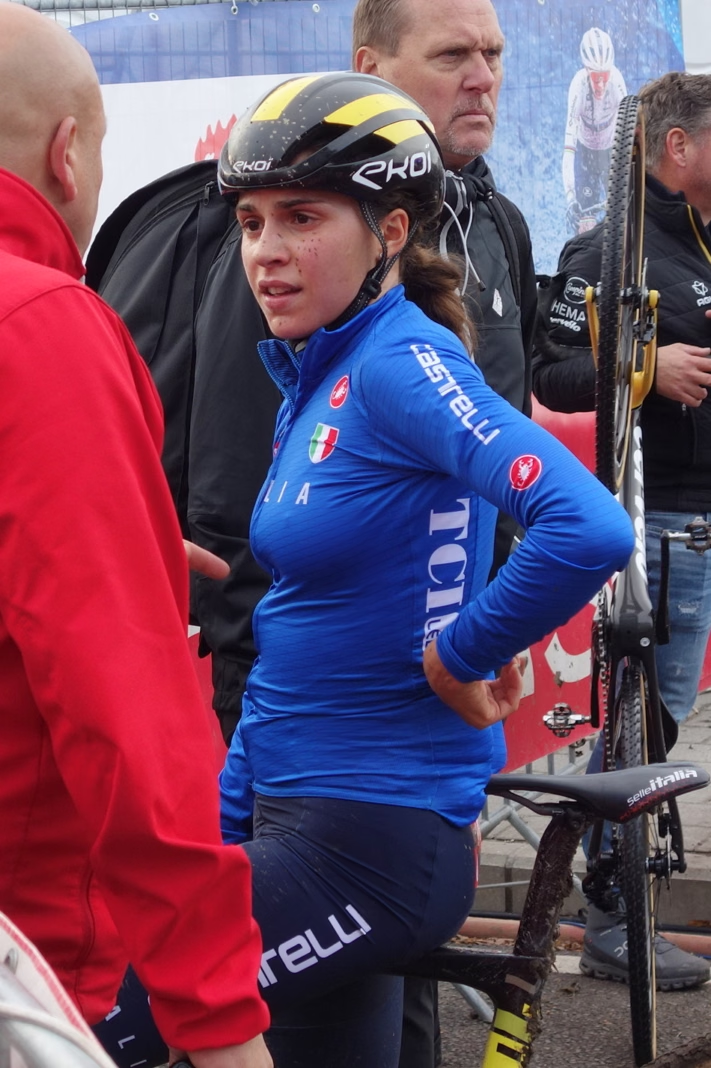
 Photo Credit: Hoebele / Wikimedia Commons (CC BY-SA 4.0)
-
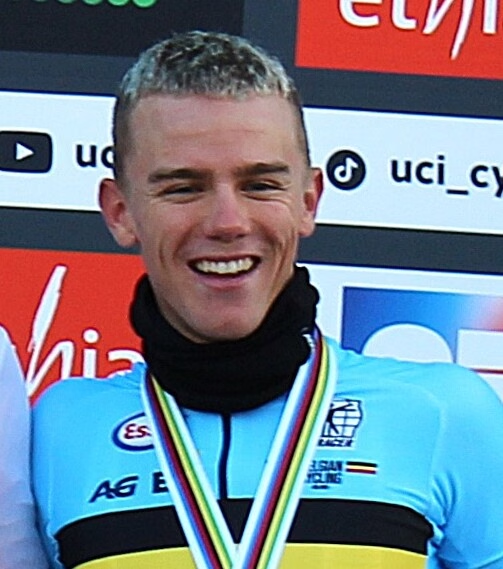
 Photo Credit: MFonzatti / Wikimedia Commons (CC BY-SA 4.0)
-
 Photo Credit: Wahoo