
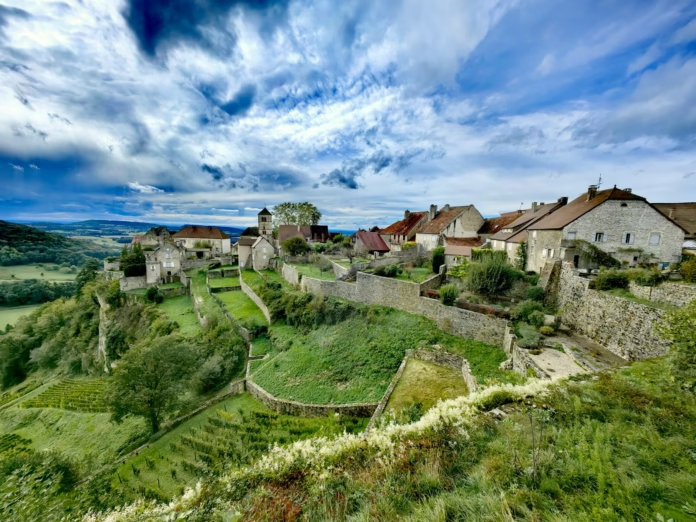
Burgundy is a cycling destination that works best when it is treated as a network rather than a single climb. Around Dijon and Beaune, vineyard roads roll through the Côte de Nuits and Côte de Beaune, while the wider region is tied together by canals, converted railway lines and the Tour de Bourgogne à Vélo. Riders can spend one day chasing elevation through wine villages and the next using a traffic-free voie verte for a flatter recovery ride.
That mixture is the reason Burgundy suits a wider range of cyclists than the French Alps or Pyrenees. Strong road riders can build long loops through the vineyards and low hills, while less experienced companions can use the greenway network without committing to steep climbing. The region rewards route planning, but it does not demand a specialist mountain bike or a week built around one famous summit.
Burgundy cycling at a glance
- Best bases: Beaune for vineyard roads, Dijon for transport and Côte de Nuits access
- Riding style: Rolling road loops, vineyard lanes, canals and greenways
- Bike: Road bike for performance riding; gravel or endurance bike for mixed routes
- Tyres: 28mm to 32mm for road riding; wider if using rougher greenway or canal sections
- Best period: April to June and September to early October
- Signature route: The Voie des Vignes between Dijon, Beaune and Santenay
- Biggest planning issue: Harvest traffic and busy wine-tourism roads in peak periods
- Ideal trip length: Three to five riding days
Beaune is the strongest base for a road-focused trip
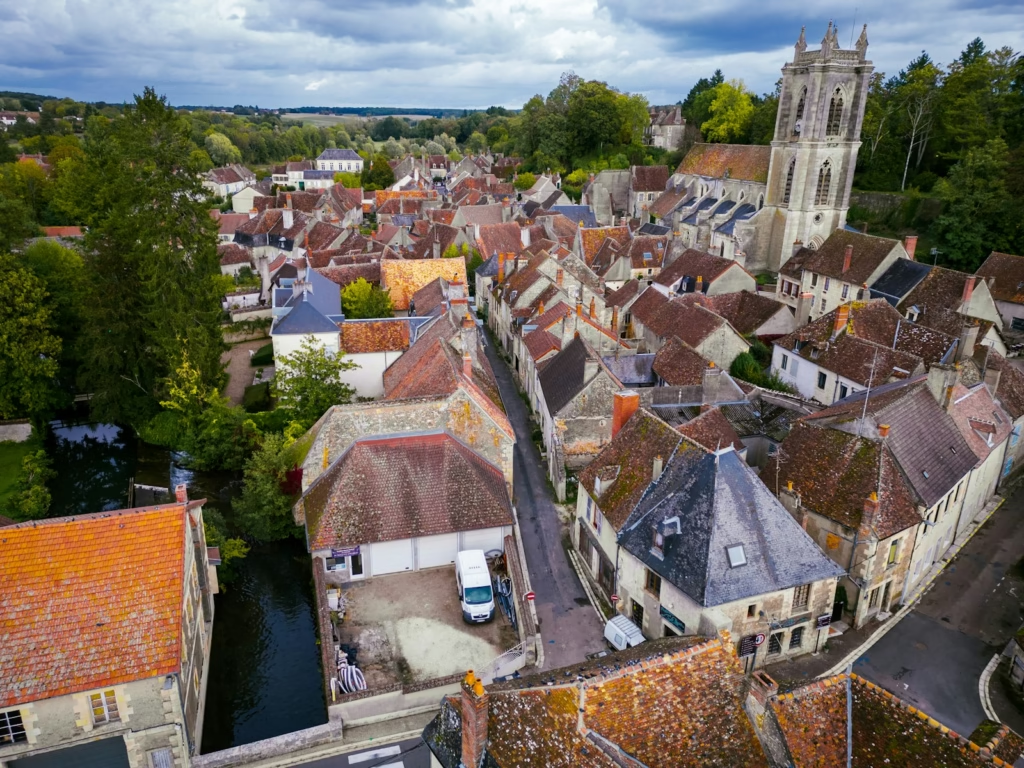
Beaune sits in the middle of the Côte d’Or wine country and gives road cyclists immediate access to some of Burgundy’s best riding. The town is large enough to provide hotels, restaurants, bike shops and rail connections, yet within a few kilometres the roads narrow and begin moving between vineyards and small villages.
South of town, routes through Pommard, Volnay, Meursault, Puligny-Montrachet and Chassagne-Montrachet provide rolling terrain without requiring huge distances. North towards Nuits-Saint-Georges and Gevrey-Chambertin, the Côte de Nuits offers similar riding with more opportunities to build longer loops back through higher ground west of the vineyard strip.
The gradients are usually manageable, but elevation accumulates because the best routes repeatedly leave the valley floor and climb into the hills. A 90km loop can still produce a meaningful training day without containing anything that resembles an Alpine pass. That makes Burgundy particularly good for consecutive riding days.
The Voie des Vignes gives the region a ready-made cycling spine
The Voie des Vignes is one of Burgundy’s most useful cycling routes. The official itinerary links Dijon with Santenay over roughly 72km, passing through the heart of the wine country and Beaune. Tourism authorities present it as an easy two- or three-day leisure ride, but stronger cyclists can use sections of it as connectors inside much larger road loops.
That distinction matters. A dedicated road cyclist may find the full official route too gentle as a standalone challenge, but the infrastructure makes navigation simpler and offers a reliable fallback when traffic or weather makes smaller roads less attractive. It also works well for an easy day after a harder ride in the surrounding hills.
The route passes some of Burgundy’s most recognisable wine villages, so speed is rarely the only point. Busy sections near towns require patience, particularly during tourism season, and riders should expect walkers and slower cyclists on shared-use parts. The benefit is predictability rather than outright performance.
The Tour de Bourgogne à Vélo opens a much bigger network
Burgundy’s wider cycle network is built around the Tour de Bourgogne à Vélo, created by linking canals, old railway lines and existing greenways into a circuit of roughly 660km. Official tourism material divides it into numerous stages and presents it as a week-long or longer touring route rather than one continuous athletic challenge.
For road cyclists based in one town, the value is flexibility. Canal towpaths and greenways can be used to extend or shorten loops without relying on busier roads. The Canal du Centre, Canal de Bourgogne and Saône-side routes also provide flatter alternatives when fatigue begins to accumulate.
Surface quality varies. Some sections are smooth enough for any road bike, while others are more comfortable on 32mm tyres or a gravel setup. Check the intended surface before building a fast road ride around a route simply because it appears as a cycleway on a mapping app.
Dijon gives better transport links and easy access to the Côte de Nuits
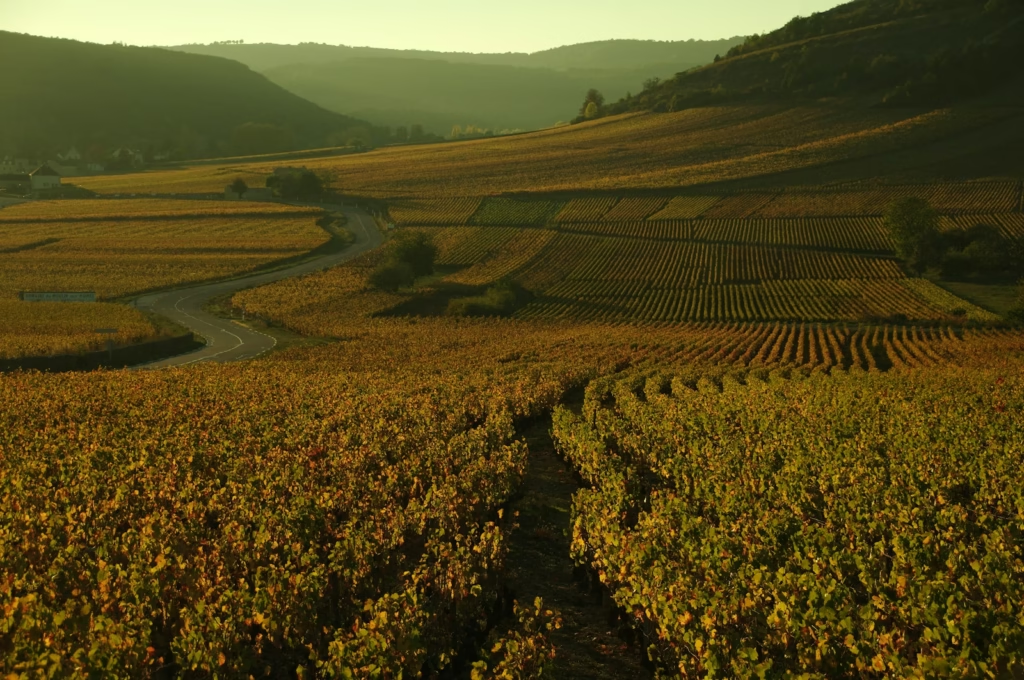
Dijon is the more practical base for riders arriving by train, particularly from Paris, and it works well if the trip combines cycling with a broader city break. From the southern edge of the city, the vineyard belt begins quickly and the route towards Marsannay-la-Côte, Gevrey-Chambertin and Nuits-Saint-Georges creates an obvious first road day.
The trade-off is urban riding. Beaune allows quicker access to quiet roads, while Dijon requires more care when leaving and returning to the city. The difference is not severe, but riders who want to step out of a hotel and be among vineyards within minutes will usually prefer Beaune.
A split stay can work well. Two nights in Dijon give access to the northern wine roads, followed by two or three nights in Beaune for the Côte de Beaune and Santenay. That avoids trying to force every ride into one enormous loop and makes the journey through the region part of the cycling experience. Rail connections between Dijon, Beaune and several smaller towns also give route planning a useful escape option. A point-to-point ride does not always need to become a full return loop, provided bike carriage is checked for the specific service in advance. That flexibility is especially valuable when weather or fatigue changes the plan midway through a trip.
Harvest season changes the roads more than the gradients
Spring is one of the best periods for a cycling trip because temperatures are usually comfortable and the roads are quieter than at the height of summer. April can still be cool and wet, while May and June often provide the strongest balance of long daylight, moderate temperatures and manageable visitor numbers. Vineyard growth also changes the landscape quickly through spring, so a trip in late May feels very different from an early-season visit when the vines are only beginning to fill out.
September is visually attractive and normally excellent for riding, but the grape harvest changes traffic patterns. Tractors, vans and workers move between vineyards and villages, and narrow roads that feel empty at other times can become busy. That is part of Burgundy’s working landscape rather than a reason to avoid the region, but it needs to be included in route planning.
July and August can be hotter and more crowded, particularly around famous wine villages. Early starts help. Winter is possible on milder days but short daylight, wet roads and cold conditions make Burgundy much less dependable as a dedicated cycling destination.
-
 Photo Credit: A.S.O./Billy Ceusters
Road bikes work well, but wider tyres make the trip easier
A conventional road bike is the best option for riders focused on vineyard roads and longer paved loops. There are no sustained high-mountain gradients demanding extreme gearing, but a compact chainset remains sensible because the short climbs arrive repeatedly and can become tiring after several days.
Tyres in the 28–32mm range suit the region well. They provide enough comfort for rougher back roads and allow cautious use of smoother greenway sections without much penalty on tarmac. A pure 25mm race setup is unnecessary unless the trip is built entirely around fast road training. Tubeless tyres can also be useful.
A gravel or endurance bike makes sense for riders who want to use more canal paths and mixed-surface connectors. The point is not that Burgundy requires gravel equipment, but that the wider network becomes easier to exploit when surface choice is less restrictive.
A three-day Burgundy itinerary should mix hard and easy terrain
Day one can run south from Beaune through Pommard, Volnay and Meursault before turning back through higher roads. Keep the distance moderate and use the ride to learn the traffic patterns and surfaces. The constant rolling terrain will usually make the day harder than a flat profile suggests.
Day two should be the largest road loop, heading north towards Nuits-Saint-Georges and the Côte de Nuits, then returning through quieter lanes west of the main vineyard corridor. Riders who want more climbing can extend into the hills rather than staying close to the flatter north-south axis.
Use day three for the Voie des Vignes towards Santenay or a mixed canal-and-vineyard route. That gives tired legs a flatter day without reducing the trip to recovery mileage. Burgundy’s strength is precisely that hard road riding and easy cycling infrastructure sit close together. ProCyclingUK’s cycling travel hub contains more destination guides for planning a wider French or European riding trip.

