
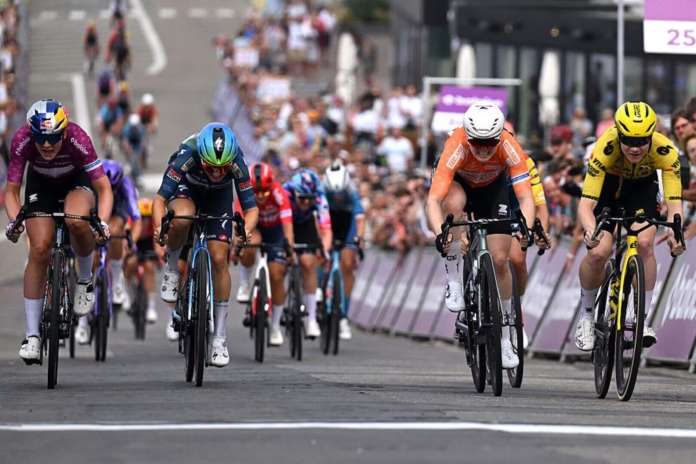
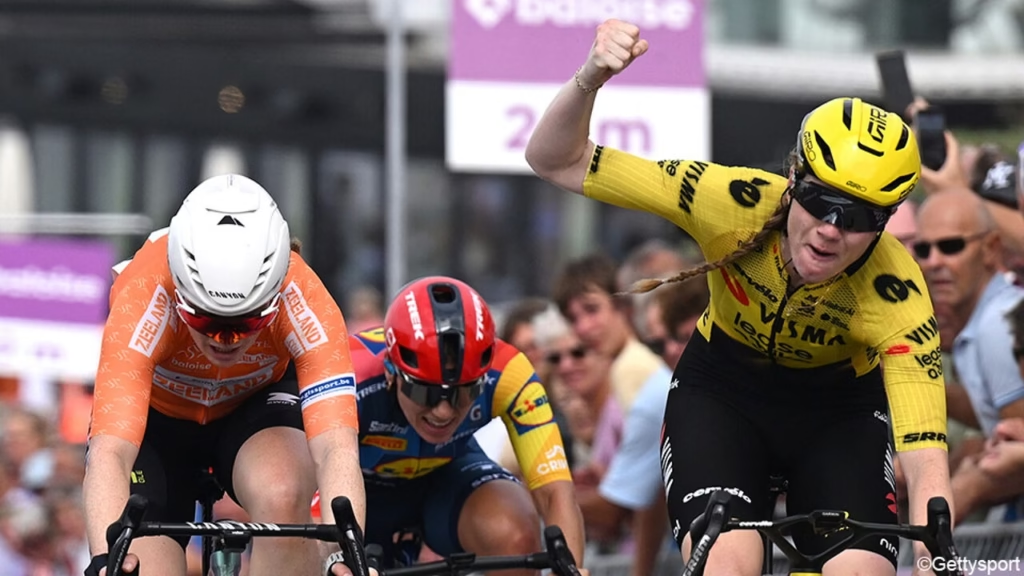
Nienke Veenhoven won stage 1 of the 2026 Baloise Ladies Tour, beating Charlotte Kool in a disrupted bunch sprint on De Wandelaar in Knokke-Heist. The Team Visma | Lease a Bike sprinter timed her finish better than Kool, coming from behind in the final metres to take her second victory of the season.
Kool finished second for Fenix-Premier Tech after opening her sprint early, while Zoe Bäckstedt took third for Canyon SRAM and retained the overall race lead after her prologue victory in IJzendijke. Gladys Verhulst-Wild was fourth for AG Insurance-Soudal, with Clara Copponi fifth for Lidl-Trek.
The sprint came after a chaotic final approach that included late attacks from VolkerWessels, tram tracks in Knokke-Heist and a crash inside the final 2 kilometres that reduced the group and disrupted several lead-outs.
First road stage after Bäckstedt’s prologue win
After Bäckstedt’s emphatic prologue victory on Wednesday evening, the Baloise Ladies Tour moved to the coast for its first road stage. The 112.5-kilometre route from Oostende to Knokke-Heist looked like a sprint day, but the flat profile did not mean it was simple.
The race headed towards the famous finish on De Wandelaar, with local circuits in Knokke-Heist and a finale that included road furniture, tram tracks and a slightly rising finishing stretch. It was the kind of day where the pure sprinters expected a chance, but where positioning and timing mattered as much as speed.
Bäckstedt began the day in the leader’s jersey, while Kool started as one of the most obvious stage favourites after finishing fifth in the opening prologue. Lotte Kopecky was another name to watch, along with Veenhoven, Copponi, Lonneke Uneken and Sandrine Tas.
The expectation was a bunch sprint, but the route still gave teams chances to test the bunch before the finish.
Cobbles and pressure split the bunch
The opening phase was controlled, with no major early breakaway allowed to establish itself. The first notable point in the stage came on the approach to the Oostendse Steenweg, a cobbled sector of around 2 kilometres.
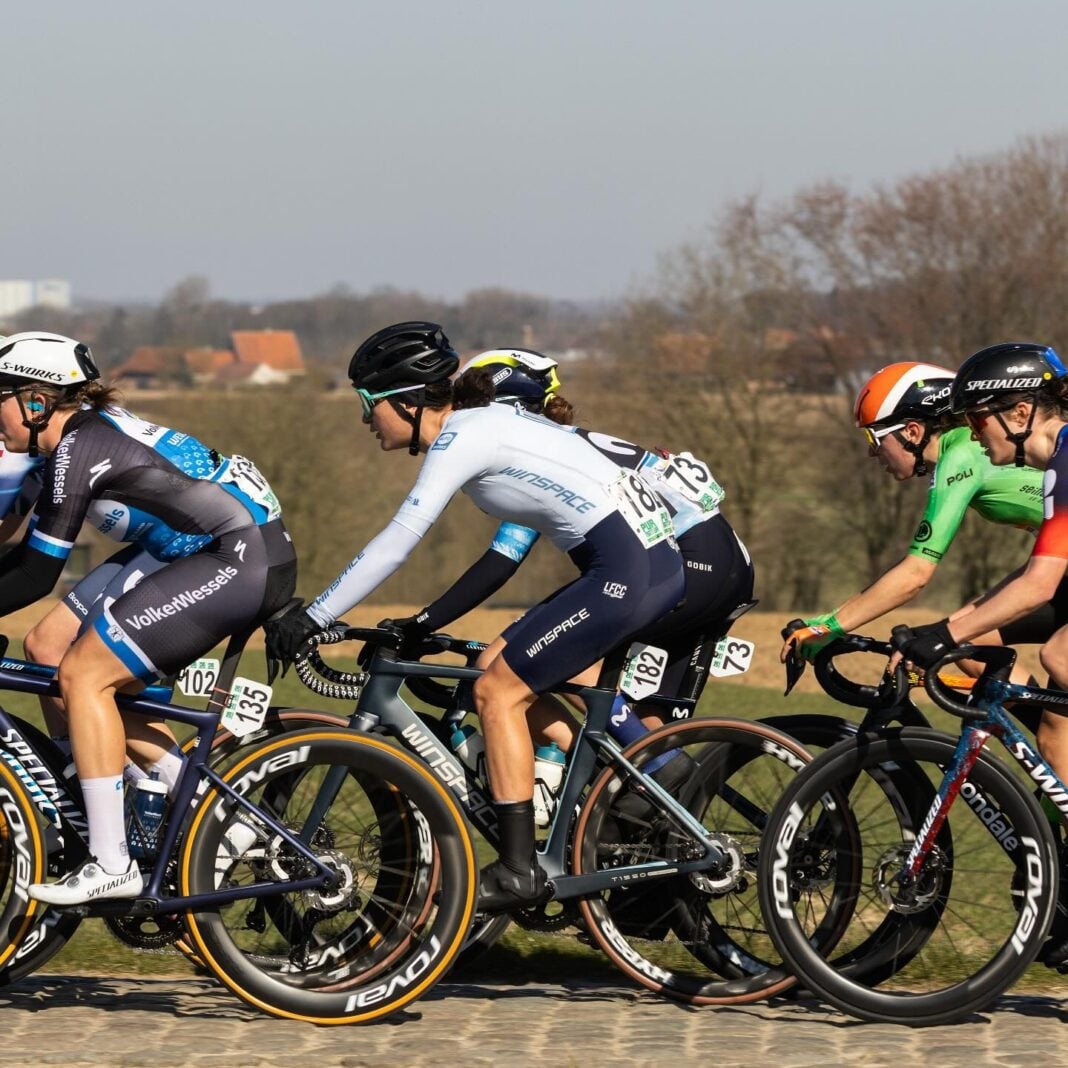
SD Worx-Protime used that section to apply pressure, with Kopecky alert near the front and Bäckstedt quick to respond. The acceleration did not create a decisive front group, but it did cause damage behind. A second peloton formed and briefly found itself chasing at around 20 seconds.
As the race settled again, SD Worx-Protime and AG Insurance-Soudal helped keep the pace high in the front group. The split eventually came back together, but it was the first sign that the stage would not be a completely routine sprint procession.
The riders then moved onto the local circuits in Knokke-Heist, where the first intermediate sprint points were taken by Hélène Hesters ahead of Katrijn De Clerq and Wilson-Haffenden.
Knijnenburg forces the chase
The race’s main late attack came from Anne Knijnenburg of VolkerWessels. With around 25 kilometres remaining, the 24-year-old went solo and quickly built a useful advantage.
Her move was not just a token attack. She pushed her lead out to around 30 seconds and forced the sprinter teams to organise earlier than they might have wanted. The coastal wind added another layer of difficulty, but Knijnenburg kept the move alive into the final lap.
She also took points at the second intermediate sprint before the peloton began to close in. Liv AlUla Jayco helped drive the chase, and the gap began to fall quickly once the sprint teams committed.
Knijnenburg was eventually caught before the 10-kilometre mark, ending a solo effort of around 15 kilometres. It had not been enough to deny the sprinters, but it had made the final more unsettled and gave VolkerWessels a clear presence in the race.
Vollering follows up for VolkerWessels
VolkerWessels did not stop once Knijnenburg was caught. Bodine Vollering immediately attacked, continuing the team’s plan of trying to disrupt the sprint trains rather than waiting passively for a bunch finish.
Her move was short-lived, but it forced another response and added to the feeling that the sprint teams were not fully in control. On a day where many teams had fast options, that kind of late disruption mattered.
By the final kilometres, the expected sprint names were still present. Kool had Fenix-Premier Tech around her, Veenhoven had Team Visma | Lease a Bike support, Lidl-Trek were prominent, and Bäckstedt was still close enough to fight for bonus seconds and protect her overall lead.
The decisive challenge now was not whether a sprint would happen, but who would reach De Wandelaar in position.
Tram-track crash disrupts the finale
The finale became chaotic inside the final 2 kilometres, when a crash hit the bunch around the tram tracks in Knokke-Heist. Several riders went down, with Sandrine Tas among the most notable riders involved.
Tas had been expected to contest the sprint for Lotto Intermarché, but the crash ended her chance of fighting for the stage. It also broke up the sprint trains and left a reduced peloton heading into the final kilometre.
That disruption changed the finish. Rather than a clean, organised drag race between the main lead-out trains, the sprint became more about instinct and timing. Lidl-Trek moved to the front after the crash, trying to control the remaining group, but the major sprinters still had space to launch.
Kool opened her sprint from around 250 metres out and looked to have made the right move. She reached the rising final section first, but the line came just too late for her.
Veenhoven comes from behind
Veenhoven had not had a completely clean run-in. She later admitted that she had lost wheels several times in the finale, but each time she managed to find a teammate again and stay in contention.
“I lost the wheel a few times, but I always found a teammate again,” Veenhoven said. “I had the idea to start the sprint myself, but I was just a little too late. In the end I came from behind with more speed, so I knew it had to work.”
That is exactly how the sprint played out. Kool had gone first, but Veenhoven came from behind with greater speed and passed her in the closing metres.
It was a well-timed sprint rather than a dominant lead-out victory. Veenhoven had to improvise through the chaos, then use the rising finish to carry momentum past Kool before the line.
“The goal was to win a stage, and everything else is a bonus,” she said afterwards. “I’m happy with how it worked out today.”
Kool second as Bäckstedt protects lead
Kool’s second place was another strong result, but also a missed opportunity. She had won on De Wandelaar last year and looked well positioned to repeat that success when she launched, but Veenhoven’s late speed was better.
Bäckstedt’s third place was important in the wider race. The Canyon SRAM rider did not need to win the stage to keep control of the general classification, but finishing on the podium gave her more time bonuses and reinforced her position at the top.
She now leads the overall by 5 seconds ahead of Kool and 8 seconds ahead of Veenhoven. That keeps the race tight, but Bäckstedt has handled the opening two days well: first winning the prologue, then surviving a technical coastal sprint and still placing third.
Fleur Moors finished sixth as the best Belgian rider, while Kopecky ended ninth for the second day in a row. The two-time world champion was present in the race and attentive on the cobbles, but she did not have the finish to challenge for the stage.
-
 Photo Credit: quentinphotographiebe
 -
 Photo Credit: Getty
Visma get the win they targeted
Team Visma | Lease a Bike had made its stage 1 intentions clear after the prologue. Sports director Joppe de Heij had said the team wanted to go for the stage win with Veenhoven, and the Dutch sprinter delivered exactly that.
It was a useful response after the team had missed out on a top prologue result. Katharina Sadnik, Veenhoven and Margaux Vigié had all finished 14 seconds behind Bäckstedt in IJzendijke, leaving the team outside the immediate GC lead fight.
Stage 1 changed the tone. Veenhoven’s victory gives Visma a clear result from the race and also moves her into the early GC picture, even if Bäckstedt remains the rider to beat overall.
It also continues Veenhoven’s strong 2026 sprinting season. She had already won a stage at the Volta a Catalunya Femenina, and this victory came against one of the strongest sprint fields at the Baloise Ladies Tour.
Bäckstedt still in control before Zulte
The Baloise Ladies Tour now heads to stage 2, a 130.4-kilometre race starting and finishing in Zulte. The stage is expected to include several punchy cobbled sections, which could give the race a different shape from the flatter coastal finish in Knokke-Heist.
Bäckstedt remains in purple and still has the strongest opening position, but the gaps are small enough for bonuses, splits and tactical racing to matter. Kool is only 5 seconds down, Veenhoven is 8 seconds back, and Moors remains close after another solid day.
The first road stage was supposed to be a sprint chance, and it was. But it also showed the Baloise Ladies Tour’s usual complications: cobbles, wind, tram tracks, late attacks, crashes and a finish where timing was everything.
Veenhoven judged it best, and Visma got the stage win they had come for.
Baloise Ladies Tour 2026 stage 1 result
| Position | Rider | Team | Time/gap |
|---|---|---|---|
| 1 | Nienke Veenhoven | Visma | Lease a Bike | 2:44:29 |
| 2 | Charlotte Kool | Fenix-Premier Tech | same time |
| 3 | Zoe Bäckstedt | Canyon SRAM | same time |
| 4 | Gladys Verhulst-Wild | AG Insurance-Soudal Team | same time |
| 5 | Clara Copponi | Lidl-Trek | same time |
| 6 | Fleur Moors | Lidl-Trek | same time |
| 7 | Georgia Baker | Liv AlUla Jayco Women’s Continental Team | same time |
| 8 | Linda Zanetti | Uno-X Mobility | same time |
| 9 | Lotte Kopecky | Team SD Worx-Protime | same time |
| 10 | Laura Lizette Sander | Hitec Products-Fluid Control | same time |
Main photo credit: Getty

