If you are new to women’s cycling in 2026, the smartest place to start is not with a Grand Tour. It is with the best one-day races.
That is where the sport is often at its clearest. The strongest riders cannot hide behind a week of racing. Team plans have to work inside a handful of hours. The terrain usually tells a clean story too – cobbles, gravel, short steep climbs, crosswinds, repeated attacks, or one final explosive ascent.
For a new fan, that makes the action easier to follow and the personalities easier to remember. The spring block is especially useful because the Women’s WorldTour calendar bunches so many of the best races together across March and April. Watch that stretch well and you can learn a huge amount about women’s cycling in a matter of weeks.
Not every one-day race is equally good for a beginner, though. Some are brilliant but tactically dense. Some matter enormously inside the sport but can feel a little repetitive if you are still learning the rider types. Others are almost perfect entry points because the route, the visuals and the likely race scenarios all make immediate sense.
This is the real beginner’s answer to the question a lot of newer viewers are asking: what are the best women’s cycling races to watch first in 2026, and why?
If you want the broader calendar around this piece, ProCyclingUK’s women’s cycling race hub is the best place to keep exploring. For the spring specifically, the Beginner’s guide to Paris-Roubaix Femmes 2026 and A complete history of Paris-Roubaix Femmes show how one of the sport’s best gateway races works.
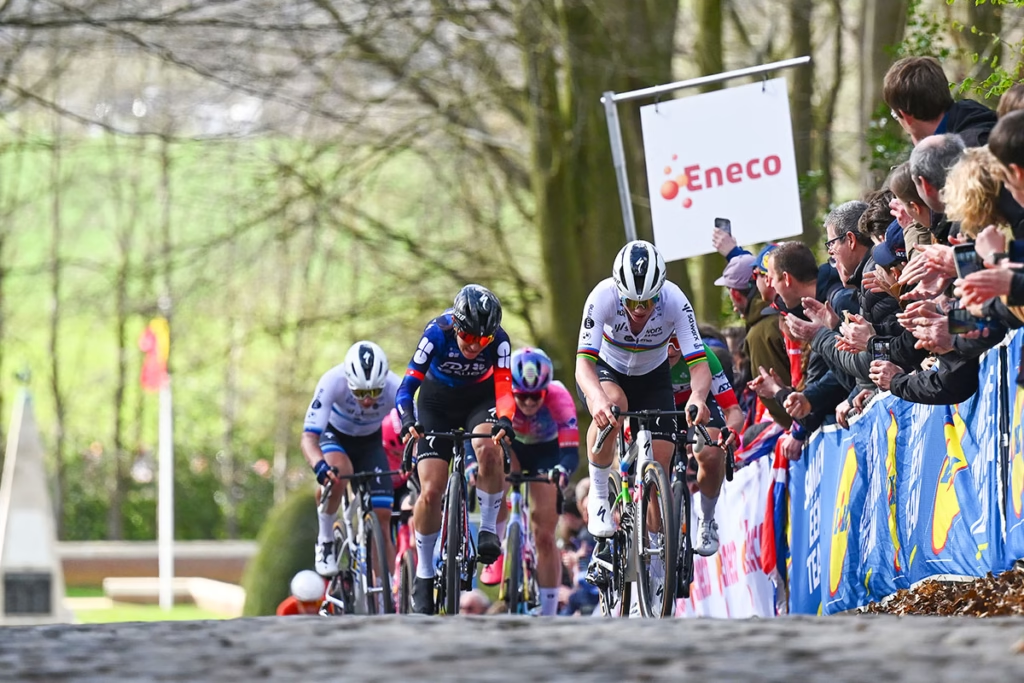 Photo Credit: Getty
Why one-day races are the best place to start in women’s cycling
A one-day race gives you a beginning, middle and end in a single sitting. You do not need to remember time gaps from three days earlier or keep track of several classifications. You can simply watch the race unfold and learn the sport through the roads, the attacks and the riders who keep appearing at the front.
That matters in women’s cycling because the calendar is now broad enough that different races showcase very different kinds of talent. A pure sprinter can dominate one weekend, then disappear when the cobbles or climbs arrive. A rider who looks anonymous in a flat race can suddenly become the key figure once the road tilts upward. The best women’s cycling Classics teach new fans how to read those differences quickly.
They also make the sport easier to follow emotionally. One afternoon, one result, one story. That is a much easier entry point than asking someone brand new to immediately understand a week-long stage race.
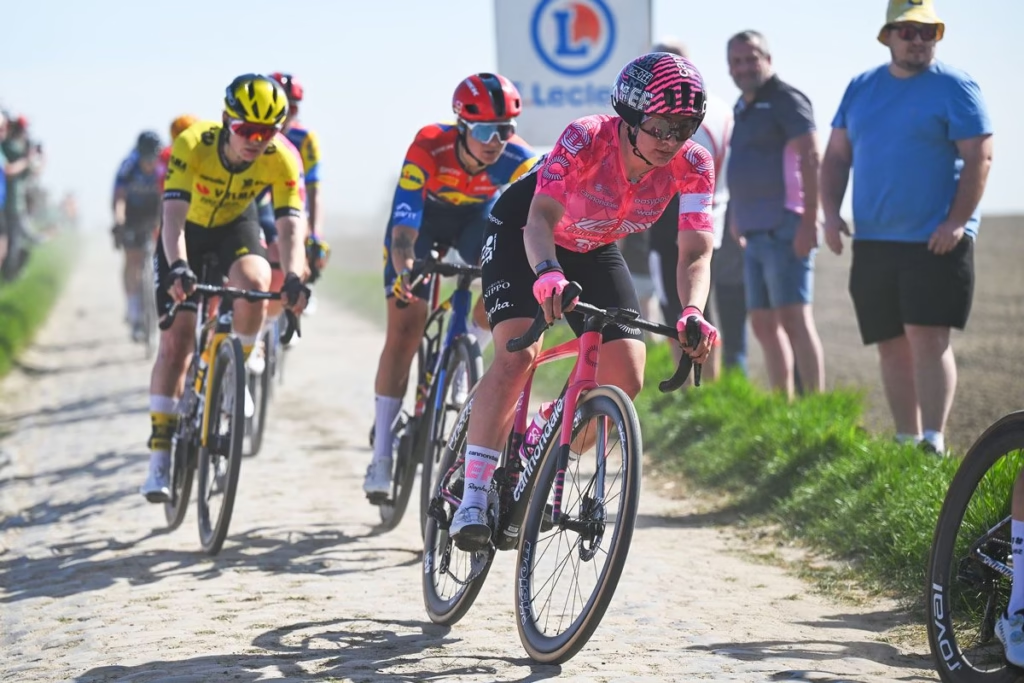 Photo Credit: Getty
Paris-Roubaix Femmes is the best first race for most new fans
If I had to recommend just one race to hook a new viewer, it would usually be Paris-Roubaix Femmes.
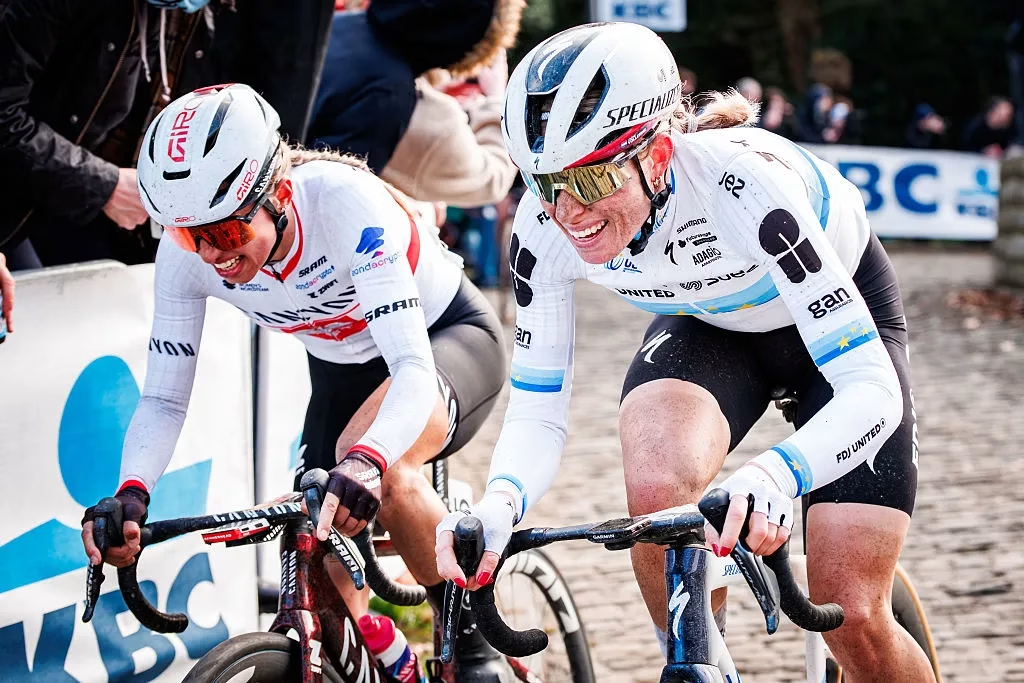
The basic appeal is simple. Cobblestones are obvious. Riders are visibly fighting the road, not just each other. Positioning matters before every sector. Mechanical problems can change everything. A favourite can be perfectly prepared and still lose because she entered a section five wheels too far back, punctured at the wrong moment, or simply did not have the nerve to hold the front when the race exploded.
That is why Paris-Roubaix Femmes works so well for new fans. You do not need deep tactical knowledge to see the drama. You can watch the race and immediately understand the stakes. Smooth tarmac means order. Cobbles mean chaos.
It also tends to create very honest racing. Not necessarily fair racing, because Roubaix is never fair in that sense, but honest racing. The riders who win here usually combine power, handling, resilience and nerve. There is very little hiding place. If a rider looks strong in Paris-Roubaix Femmes, you feel it.
For a new viewer, there is another benefit. The race has a mythology that travels well. Even people who barely follow cycling know Roubaix is supposed to be hard. That reputation is useful because it gives the race weight before a wheel has turned.
For more context, Why Paris-Roubaix Femmes is raced differently from the men’s race is a strong next read once you have watched it.
Strade Bianche Donne is the most beautiful gateway into women’s cycling
Strade Bianche Donne is usually the race I would recommend to someone who is not yet sure they even like road cycling.
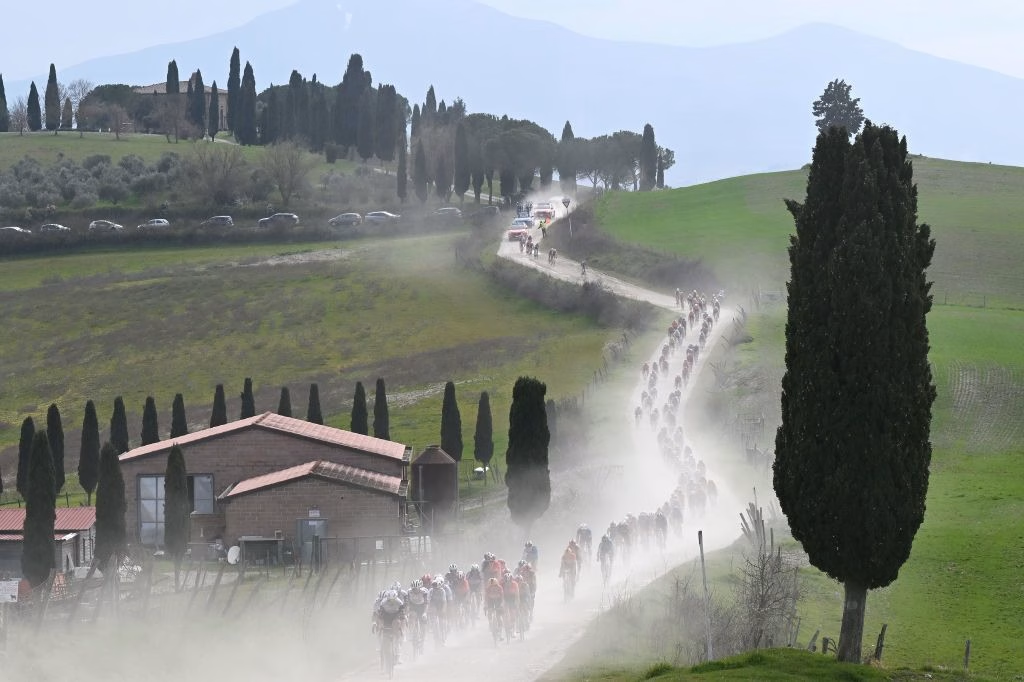
The reason is straightforward. Strade Bianche does not look like every other race. The white gravel roads, dust, steep ramps and the dramatic finish into Siena give it personality almost immediately.
For new fans, that matters more than purists sometimes admit. The first challenge is not understanding every tactic. It is staying emotionally engaged. Strade Bianche makes that easy.
The route also teaches good cycling lessons. You learn quickly that surface changes matter. You see how hard it is to keep team-mates together on narrow roads. You understand why repeated sectors gradually strip away the field, even before the steepest final climbs arrive. The race feels selective without being confusing.
If Paris-Roubaix Femmes is the best lesson in toughness, Strade Bianche Donne is the best lesson in theatre.
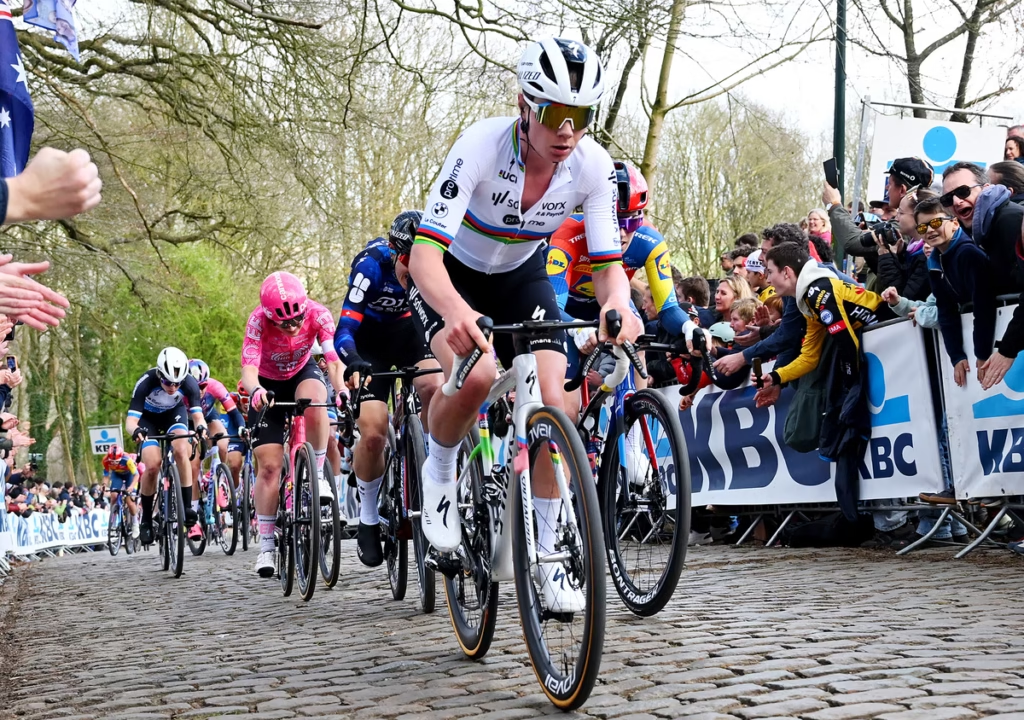 Photo Credit: Getty
Ronde van Vlaanderen is the purest expression of the cobbled Classic
Ronde van Vlaanderen, the Tour of Flanders women’s race, is slightly less instantly accessible than Roubaix, but in some ways it is the purer cycling race.
Roubaix can be wild and destructive. Flanders is brutal but more structured. The steep cobbled climbs create repeated selection points. You can see the race tighten and harden one hill at a time.
That is what makes it such a good next step once a new fan has watched one or two Classics already. You begin to understand that not all hard races are hard in the same way. Roubaix breaks riders through vibration, fear, pressure and attrition. Flanders breaks them through repeated accelerations, positioning fights and the sheer violence of climbs that come one after another.
It is also a race with great tactical clarity. The best riders usually cannot wait forever because the terrain is too selective. At the same time, going too early can be fatal. That tension often produces a very satisfying finale where the strongest riders are visible early but the winner is not always settled until the closing kilometres.
If you want to go deeper, the Tour of Flanders Women 2026 route guide is the obvious companion piece.
 Photo Credit: LaPresse
Milano-Sanremo Donne is brilliant because the tension builds slowly
Milano-Sanremo Donne is not the best race for every new fan, but for some it will be the perfect one. The reason is that Sanremo teaches suspense.
A lot of cycling newcomers assume the best races are the ones with action from hour one. That can be true. But some of the sport’s greatest races are built on anticipation. Sanremo is a race of waiting, watching and then sudden release. The whole day points towards two landmarks, the Cipressa and the Poggio, and the question is simple enough for anyone to grasp: can the attackers get away, or will the fast finishers survive?
That clarity makes the race very beginner-friendly, even though it is tactically subtle. The course is long, but the final sequence is easy to understand. If a rider is dropped on the Cipressa, that matters. If the favourites hesitate on the Poggio, that matters. If a small group comes back together after the descent, the sprinters suddenly return to the picture.
My only caveat is that Milano-Sanremo Donne is better once a new fan has watched at least one more obviously selective race first. Then the contrast becomes part of the attraction.
The best supporting reads here are Milan-Sanremo Women 2026 route guide and Milan-San Remo Donne 2026 tactics: where the race will really be won and how teams can beat Lorena Wiebes.
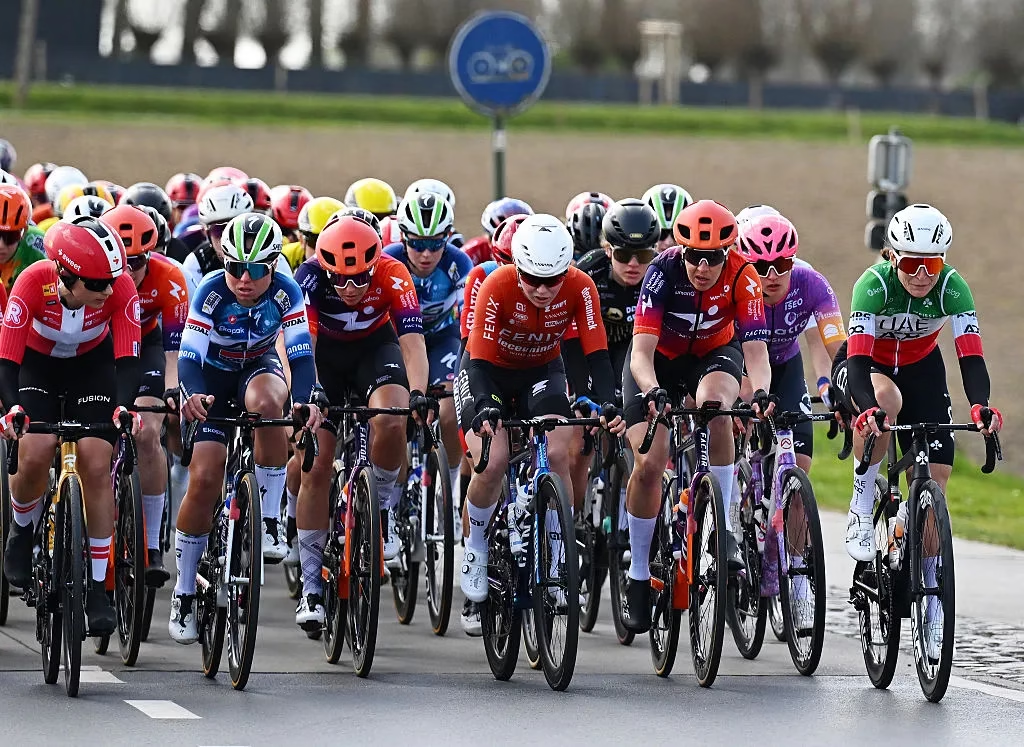
Gent-Wevelgem in Flanders Fields is the best race for learning weather and tactics
Gent-Wevelgem is one of the best races for showing that cycling is not just about route profile. It is about interaction between terrain, wind, team strength and timing.
That is what makes it so useful for beginners. The race can end in different ways. It can favour a strong sprinter who survives the climbs. It can be split apart by crosswinds. It can reward an aggressive small group. It can also become a race where teams misjudge the balance between control and chaos.
That variety is excellent for a new audience because it helps break the habit of thinking every race belongs to one rider type. A good sprinter is only useful if her team gets her to the decisive point in one piece. A Classics specialist is only useful if she attacks at the right moment rather than simply at the hardest section.
I also think Gent-Wevelgem is among the best races for showing team strength in a visible, understandable way. Even new fans can see when a squad is swarming the front, marking moves and forcing others to react.
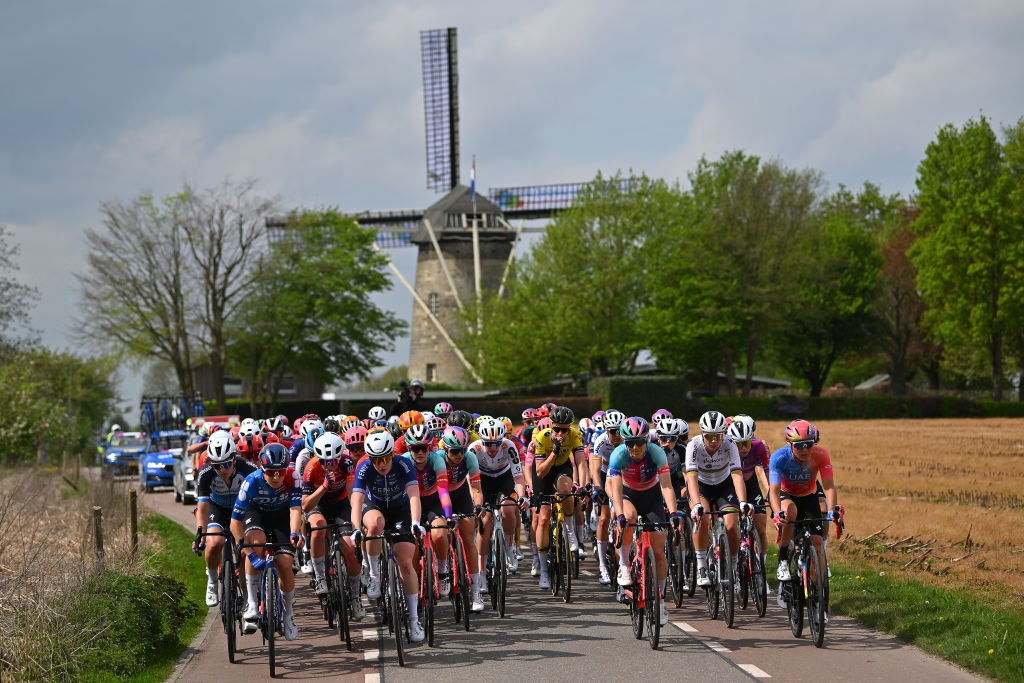
Amstel Gold Race is the most approachable hilly Classic
For a new fan, Amstel Gold Race is a very useful race because it usually feels less intimidating than the Flemish cobbled races while still being selective enough to produce a high-quality finish.
The climbs are numerous rather than monumental. That makes the race dynamic without making it look like an extreme mountain stage.
I would describe Amstel as one of the easiest races for a newcomer to enjoy without prior homework. The roads are rolling, the attacks tend to come in waves, and the finale often leaves space for different rider types. A puncheur can win here. So can a rider from a reduced group. Under the right circumstances, a tactically smart attacker can also slip away.
That openness is a strength. New fans do not always want every race to feel like a foregone conclusion where only three names matter.
The internal next steps here are the Beginner’s guide to Amstel Gold Race Women 2026 and the Amstel Gold Race Women 2026 route guide.
 Photo Credit: Getty
La Flèche Wallonne Féminine is the easiest race to explain in one sentence
Among the major one-day races, La Flèche Wallonne Féminine is probably the simplest to summarise: everything builds toward the Mur de Huy.
That alone makes it valuable for beginners.
Cycling can sometimes overwhelm new viewers with layers of history, route detail and tactical nuance. Flèche cuts through that. Watch the race, understand the final climb, and you have the key to the whole day. That does not mean the event is simplistic, because the lead-in, positioning and energy management still matter enormously. It means the drama has a clear focal point.
The downside is also clear. Compared with Roubaix, Flanders or even Amstel, the race can feel more compressed tactically. So while it is easy to understand, it is not always the richest one-day race to watch from start to finish.
Still, for new fans who want one race that makes them feel smart quickly, Flèche is close to perfect.
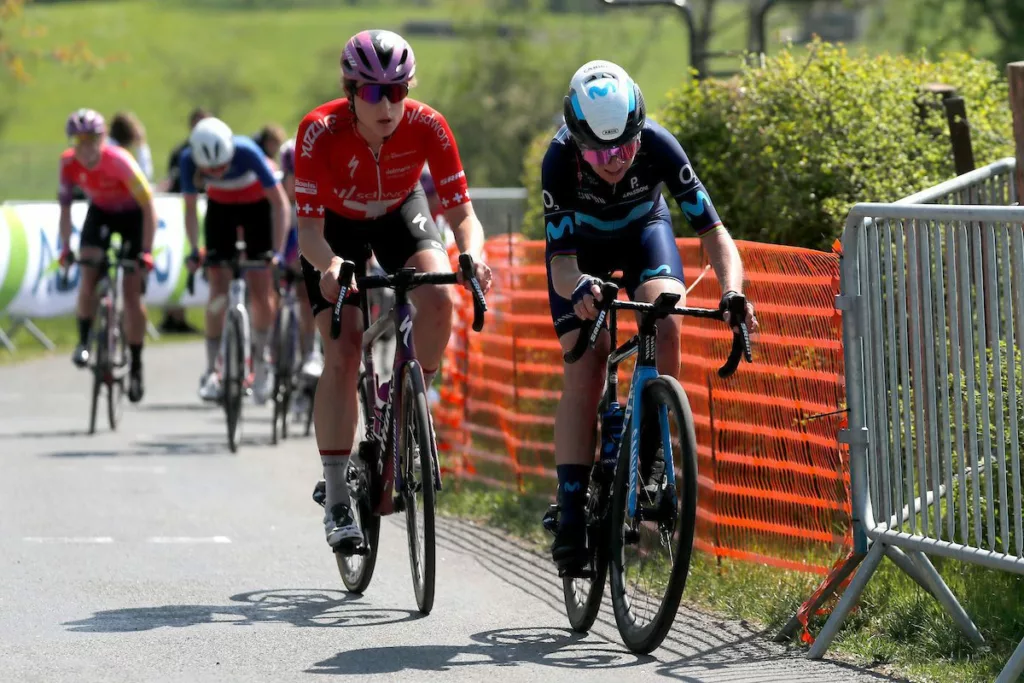
Liège-Bastogne-Liège Femmes is the best race for fans who want depth
I would not put Liège-Bastogne-Liège Femmes first for absolute beginners, but I would strongly recommend it for new fans who have already watched a few Classics and want something more layered.
This is often the race that most rewards patience, endurance and accumulated fatigue rather than one dramatic terrain feature.
That makes it slightly harder for a newcomer to latch onto immediately. There is no single iconic sector like Roubaix, no single amphitheatre-like finale like Huy, and no visual signature as obvious as Strade Bianche’s gravel roads. Instead, Liège asks you to appreciate how repeated climbs wear riders down and expose what is left in the final hour.
But that is exactly why many serious fans love it. Liège often feels like the most complete of the Ardennes-style races. The winner tends to be genuinely elite, not just explosive for a few minutes.
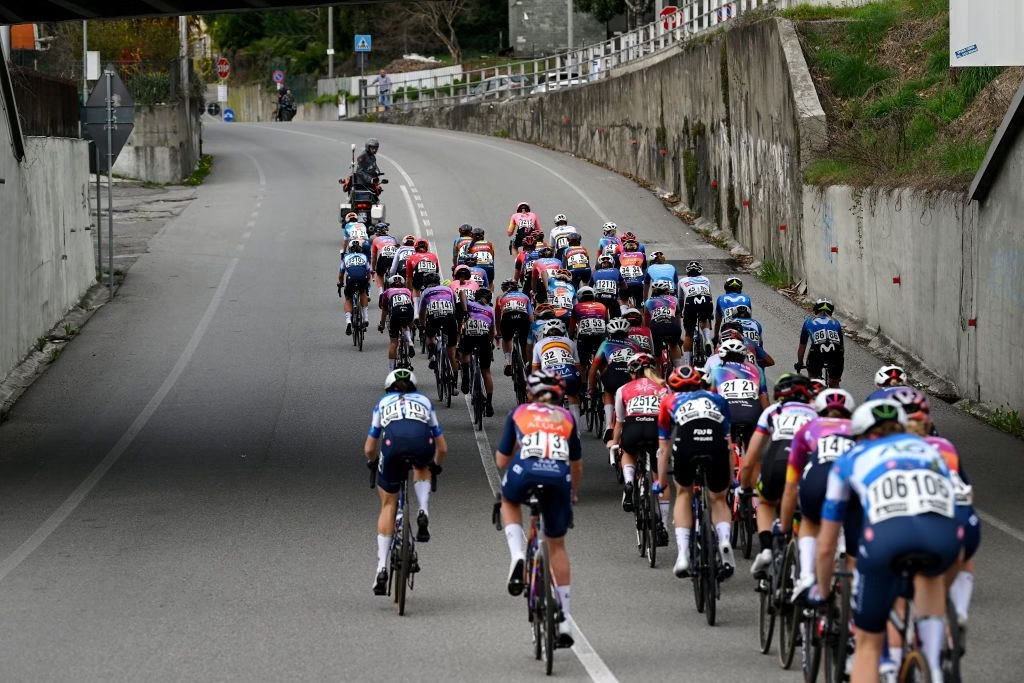
The race I would not overlook: Trofeo Alfredo Binda
Trofeo Alfredo Binda can sometimes be underestimated because it does not carry the same crossover fame as Roubaix, Flanders or Sanremo.
Yet it is a very good race for learning the rhythm of women’s one-day racing. The repeated climbs and circuits make it easier to follow than some sprawling Classics, and the race often draws a field strong enough to function as an early statement of hierarchy.
I would not place it right at the top of a beginner list only because the visual identity is not as instant as Strade Bianche or Roubaix. But it deserves more than a passing mention. If a new fan watches Binda early in spring, they will usually come away with a sharper sense of who the punchy climbers and all-rounders are.
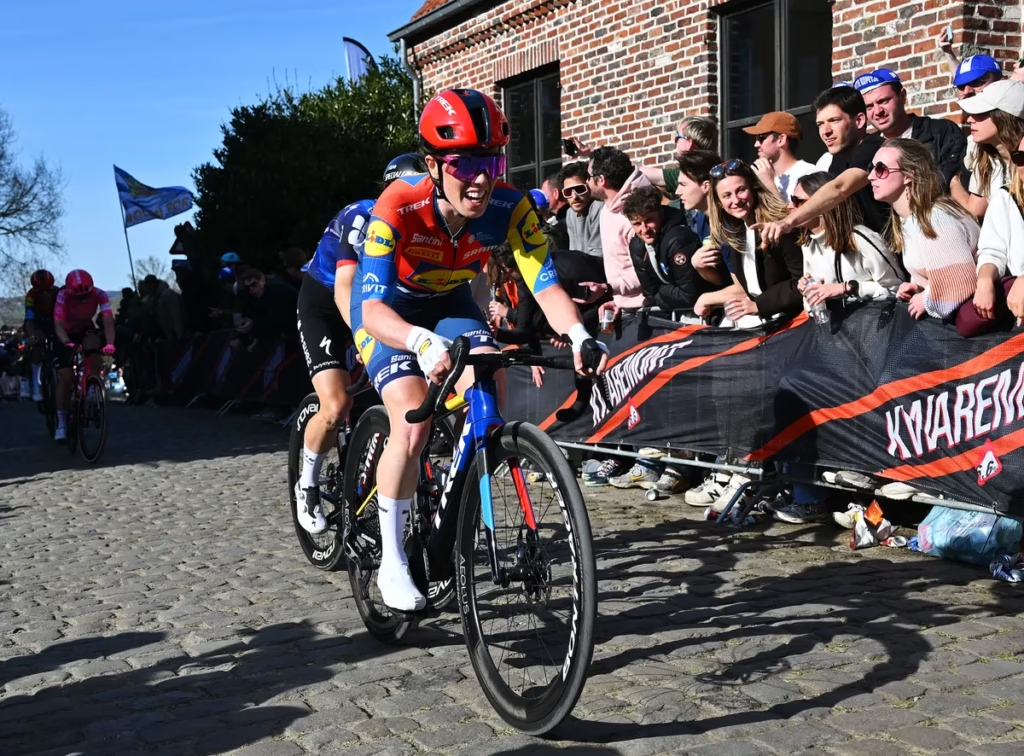
What is the best order to watch women’s cycling Classics as a new fan?
If the goal is not just to watch races, but to understand women’s cycling quickly, this is the order I would suggest.
Start with Strade Bianche Donne. It is beautiful, selective and easy to connect with emotionally. Then watch Milano-Sanremo Donne to understand suspense and race tension. Move on to Gent-Wevelgem and Ronde van Vlaanderen to learn the logic of the northern Classics. Paris-Roubaix Femmes should come next because by then you will appreciate just how brutal its unpredictability really is. Finish the spring with Amstel Gold Race, La Flèche Wallonne Féminine and Liège-Bastogne-Liège Femmes to understand how the sport shifts from cobbles to climbing.
That run of races is one of the strongest reasons spring is such a good entry point into the sport. The calendar is concentrated, the race identities are clear, and the contrasts between events teach new fans very quickly how women’s cycling works.
Which women’s one-day race is actually the best for new fans?
My answer is this.
If you want chaos, jeopardy and unforgettable images, watch Paris-Roubaix Femmes.
If you want beauty, clarity and instant atmosphere, watch Strade Bianche Donne.
If you want the purest cycling race, watch Ronde van Vlaanderen.
If you want a long, tightening spring of suspense, watch Milano-Sanremo Donne.
If you want the most beginner-friendly hilly Classic, watch Amstel Gold Race.
The wider point is that women’s cycling in 2026 does not have just one great entry point. It has a whole run of them. The spring calendar gives new fans a concentrated block of one-day races that all teach something slightly different about the sport. That is one of the strongest arguments for following women’s cycling now rather than waiting for a Grand Tour to come around. The learning curve is quicker, the racing identities are clearer, and the best events are close enough together that a new fan can build real knowledge in a matter of weeks.