
The Bretagne Classic 2026 takes place on Sunday 30 August, with the men’s WorldTour peloton tackling 228.3km around Plouay before three laps of a new finishing circuit featuring the return of the Côte de Ty-Marrec.
The race is scheduled to start at 11:50 CEST / 10:50 BST, with the finish expected at approximately 17:00 CEST / 16:00 BST.
For UK viewers, live coverage on HBO Max is expected to begin at around 14:15 BST, corresponding with the Eurosport/Max international broadcast starting at 15:15 CEST. That should provide roughly the final 90 minutes of racing and, crucially, the decisive circuits around Plouay.
ProCyclingUK’s beginner’s guide to Bretagne Classic 2026 provides a broader introduction to the race, while the full Bretagne Classic 2026 start list has the latest riders due to line up on Sunday.
What time does Bretagne Classic 2026 start?
The Bretagne Classic starts in Plouay at:
11:50 CEST / 10:50 BST
The riders then head out onto the long opening loop before returning to Plouay for the three-lap finale.
The expected finish is around:
17:00 CEST / 16:00 BST
That should be treated as a guide rather than an exact finishing time. Depending on the speed of the race, the riders could arrive a little before or after 16:00 BST.
Bretagne Classic 2026 key UK timings
| Race event | UK time |
|---|---|
| Race start | 10:50 BST |
| Recommended early tune-in | Around 14:00 BST |
| HBO Max live coverage | Around 14:15 BST |
| Final hour | Around 15:00 BST |
| Expected finish | Around 16:00 BST |
For most viewers, 14:15 BST should be the natural point to join.
That gives enough time to understand the breakaway situation and see how the major teams position themselves before the final passages of Ty-Marrec.
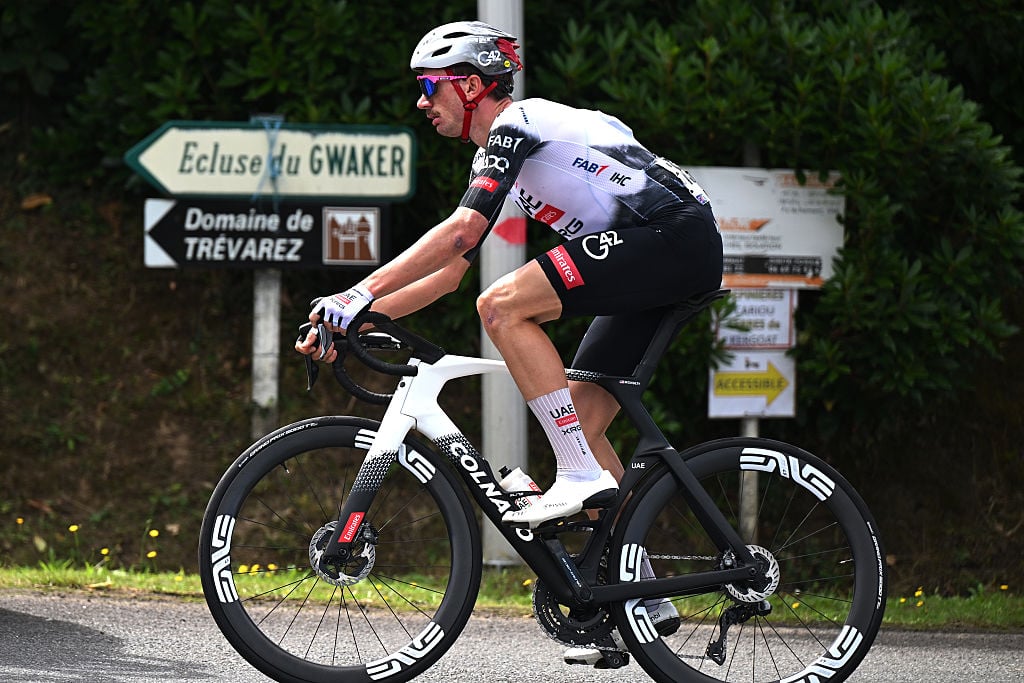
How to watch Bretagne Classic 2026 in the UK
UK viewers can watch Bretagne Classic live through HBO Max, with the international Eurosport/Max broadcast scheduled to begin at 15:15 CEST / 14:15 BST.
HBO Max is now the streaming home for TNT Sports cycling coverage in the UK after replacing Discovery+ earlier in 2026.
There is no need to be watching from the race start to see the most important racing. The television window is timed to cover the point at which the race returns towards Plouay and the final circuits begin to dominate the tactics.
Bretagne Classic 2026 UK viewing details
Date: Sunday 30 August 2026
Race: Bretagne Classic-CIC
Start and finish: Plouay
Distance: 228.3km
Race start: 10:50 BST
Live UK coverage: Around 14:15 BST
Expected finish: Around 16:00 BST
Streaming: HBO Max
Is Bretagne Classic free to watch?
French viewers have free-to-air coverage through France 3, with live television coverage scheduled to begin at 15:10 CEST.
The race is also available through france.tv in France.
Those services should not be treated as guaranteed UK viewing options because online access can be geographically restricted.
For UK viewers, HBO Max remains the straightforward option for live coverage.
Why the television coverage begins late in the race
Bretagne Classic is expected to last more than five hours, but the international television broadcast concentrates heavily on the closing phase.
That should work particularly well for the redesigned 2026 route.
The race covers 228.3km with approximately 3,663 metres of climbing, but much of the decisive difficulty has been concentrated into the final part of the course.
After the long opening loop through Morbihan, the peloton returns towards Plouay for three laps of a 16.6km finishing circuit.
ProCyclingUK’s Bretagne Classic 2026 route guide breaks down how that new structure changes the race compared with the 261.7km edition won by Arnaud De Lie in 2025.
Viewers joining shortly after 14:00 BST should therefore arrive as the tactical significance of the race begins to increase.
The breakaway may already have been established for several hours, but the repeated finishing circuits are where the teams of Jasper Philipsen, Paul Magnier and the major attacking contenders will have to show their hands.

Ty-Marrec is the climb everyone will be watching
The return of the Côte de Ty-Marrec is the defining change to the 2026 Bretagne Classic.
The race is more than 30km shorter than in 2025, but the organisers have concentrated more of the difficulty into the finish by making the riders repeatedly tackle the same Plouay circuit.
Ty-Marrec appears on each of the final three laps.
The climb is not long enough to guarantee that the fastest riders will be dropped, but repeated passages after more than 200km of racing create a very different test.
The first ascent can begin stripping away domestiques.
The second gives teams a genuine opportunity to launch a dangerous long-range move.
By the third, anyone still capable of attacking knows there is almost no road left for the chase to recover.
That accumulated fatigue is what makes the finale so dangerous.
Jasper Philipsen has every reason to want control
Jasper Philipsen is one of the obvious riders the rest of the field will be trying to eliminate before the finish.
The Alpecin-Premier Tech rider arrives after an outstanding Renewi Tour in which he took three stage victories and sealed the overall title in Leuven.
That performance showed again that Philipsen’s current range extends well beyond conventional flat sprints.
The shorter Bretagne Classic route should help him.
Philipsen has repeatedly demonstrated that he can survive short climbs and difficult one-day racing when his team keeps the race sufficiently controlled.
Ty-Marrec changes the equation because rival teams get three separate opportunities to test him.
If Philipsen survives the final passage with the front group, very few riders will want to take him to the line.
Paul Magnier could be even harder to remove
Paul Magnier creates almost the same tactical problem for Soudal Quick-Step.
The Frenchman has combined elite sprint speed with increasingly impressive climbing resistance during 2026.
His victory at the ADAC Cyclassics underlined that progression, while three Giro d’Italia stage victories earlier in the season established him among the strongest young fast finishers in the peloton.
A Bretagne Classic that becomes selective without completely fragmenting may be almost ideal for him.
Magnier can allow more explosive climbers to eliminate some conventional sprinters and still remain in contention himself.
That makes him one of the main reasons teams may need to attack repeatedly rather than rely on one acceleration on the final lap.
The tactical battle between the two fast men and the attackers is analysed in ProCyclingUK’s Bretagne Classic 2026 contenders preview.
Romain Grégoire needs the race to become harder
The opposite logic applies to Romain Grégoire.
Groupama-FDJ United have little incentive to help deliver Philipsen or Magnier comfortably into the final kilometres.
Grégoire is one of the strongest puncheurs in the race and has enough finishing speed to win from a reduced group, but he would still prefer the fastest riders to be removed first.
Ty-Marrec gives him an obvious attacking point.
The more interesting possibility is an attack on the penultimate lap.
If Grégoire, Jan Christen, Benoît Cosnefroy or another major contender can force a strong group away with more than one circuit remaining, the sprint teams suddenly face a much more complicated chase.
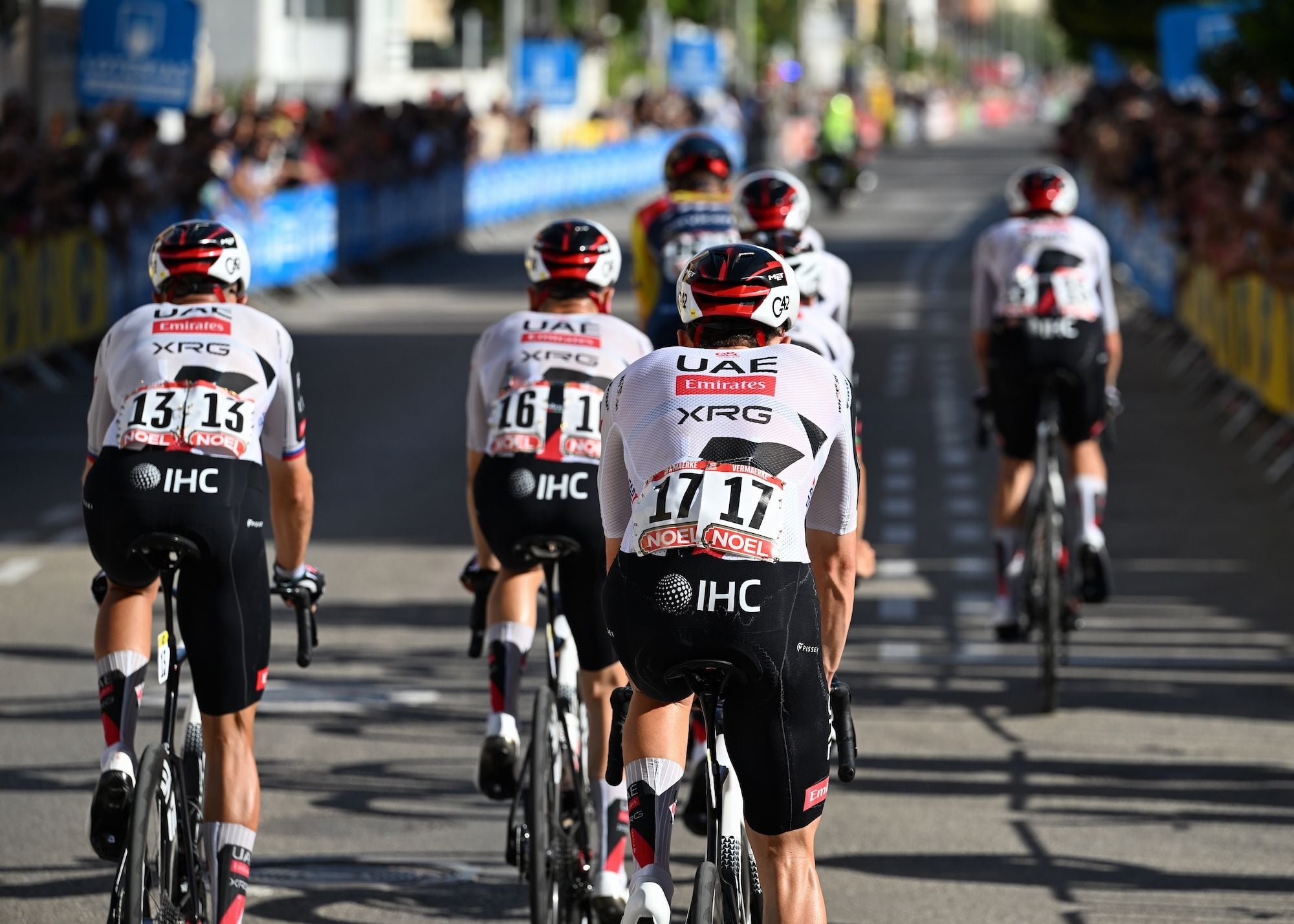
UAE Team Emirates-XRG can attack repeatedly
UAE Team Emirates-XRG may have the strongest collection of attacking options.
Jan Christen, Benoît Cosnefroy and António Morgado all have characteristics suited to the Plouay finale.
That means the team do not need to wait until the final passage of Ty-Marrec.
One rider can attack while the others remain behind.
If the move is caught, another can go.
If rivals hesitate, UAE already have a strong rider ahead.
That numerical strength should become increasingly important during the final hour, particularly if Alpecin-Premier Tech and Soudal Quick-Step begin losing domestiques.
Marc Hirschi has already shown how to win here
Marc Hirschi returns to a race he won in 2024.
His victory came through the sort of aggressive racing that could again prove successful on the redesigned course.
Tudor Pro Cycling Team also have Rick Pluimers as a quicker finishing option, allowing Hirschi to concentrate on following or creating the hardest moves rather than preserving himself for a sprint.
Bretagne Classic has repeatedly rewarded riders who identify the moment when the major teams begin looking at one another.
The race’s long and varied history, including Hirschi’s 2024 victory and De Lie’s win a year later, is covered in ProCyclingUK’s brief history of Bretagne Classic.
With three finishing circuits in 2026, there should be several opportunities for that hesitation to appear.
Michael Matthews remains dangerous if the race comes back together
Michael Matthews represents another variation on the sprint scenario.
He won Bretagne Classic in 2020 and has spent much of his career succeeding in races where enough climbing removes the pure sprinters but still leaves a reduced group together.
Matthews therefore wants more attrition than Philipsen.
He just does not want complete fragmentation.
If Ty-Marrec removes the fastest riders but leaves 20 or 30 contenders together, Matthews could become one of the most dangerous riders in the race.
When should you start watching Bretagne Classic?
There are three useful tune-in points for UK viewers.
14:15 BST is the full live-broadcast option. That should give viewers most of the decisive phase and enough time to understand how the race has developed.
15:00 BST is the best choice if you mainly want the final hour. At that point, the race should already be on or approaching the Plouay circuits and the major tactical moves should be beginning.
15:30 BST is the latest sensible target if you only want the final showdown.
Waiting much later risks missing the attack that decides the race.
Unlike a conventional sprint Classic, Bretagne Classic can be won well before the final kilometre if a strong group creates separation on Ty-Marrec.
What should viewers watch for in the final hour?
The first question is how many team-mates Philipsen and Magnier still have.
If Alpecin-Premier Tech and Soudal Quick-Step reach the finishing circuits with strong numbers, the attackers face a much harder task.
If those teams are already reduced, the race immediately becomes more open.
The second question is whether the first passage of Ty-Marrec is ridden aggressively.
A steady first lap would preserve the faster riders and put more pressure on the final circuit.
A hard first passage begins the process of fatigue much earlier.
The third is UAE Team Emirates-XRG.
If Christen, Cosnefroy and Morgado are all still present deep into the race, they have enough cards to force other teams into repeated chases.

Arnaud De Lie will not defend his title
One rider missing from Sunday’s race is Arnaud De Lie.
The Belgian won the 2025 Bretagne Classic after surviving one of the hardest editions in recent years, but he is not on the provisional 2026 start list.
That guarantees a new winner in Plouay.
The full Bretagne Classic 2026 start list contains 24 teams, with Philipsen, Magnier, Grégoire, Christen, Laurence Pithie, Hirschi, Matthews and Mathias Vacek among the leading contenders.
Bretagne Classic 2026 live viewing schedule
For UK viewers:
10:50 BST: Bretagne Classic starts in Plouay
Around 14:00 BST: Recommended early tune-in point
Around 14:15 BST: HBO Max live coverage begins
Around 15:00 BST: Final hour of racing
Around 15:30 BST: Latest recommended tune-in for the decisive finale
Around 16:00 BST: Expected finish in Plouay
The central question is whether Philipsen and Magnier can survive three passages of Ty-Marrec with enough support left to control the race.
If they can, the fastest riders in the field have an obvious advantage.
If the repeated attacks begin breaking the race apart, Bretagne Classic has enough puncheurs, Classics specialists and former winners to turn the final hour into something far less predictable.