
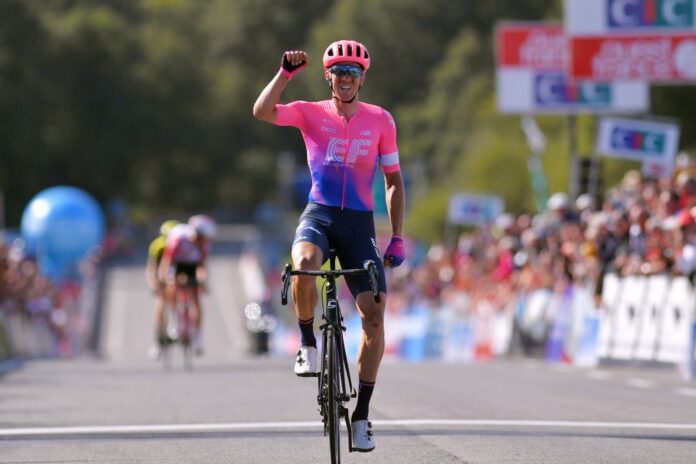
The Bretagne Classic is one of those races whose importance can be easy to underestimate if you are new to professional cycling. It is not one of the five Monuments, it takes place while the Vuelta a España is attracting much of the attention, and Plouay is a small Breton town rather than one of cycling’s great European cities.
Yet this is a UCI WorldTour one-day race, with a history stretching back almost a century and a roll of honour containing Grand Tour winners, Classics specialists, sprinters and some of the strongest all-round riders of their generations.
The 2026 Bretagne Classic CIC takes place on Sunday 30 August, beginning and finishing in Plouay. It forms part of the closing stretch of the 2026 men’s WorldTour calendar, coming a week after the Renewi Tour and during the opening phase of the Vuelta a España.
This year’s race also brings a significant change in character. The route has been shortened compared with recent editions, while the finale brings the peloton back onto repeated circuits around Plouay. Most importantly, the famous Côte de Ty Marrec returns, reconnecting the modern Bretagne Classic with one of the climbs that helped define the old GP de Plouay.
For beginners, that should make the race relatively straightforward to understand. Survive more than 200km of relentless Breton climbing, reach Plouay with something left, then deal with a final circuit where repeated short climbs make controlling the race increasingly difficult.
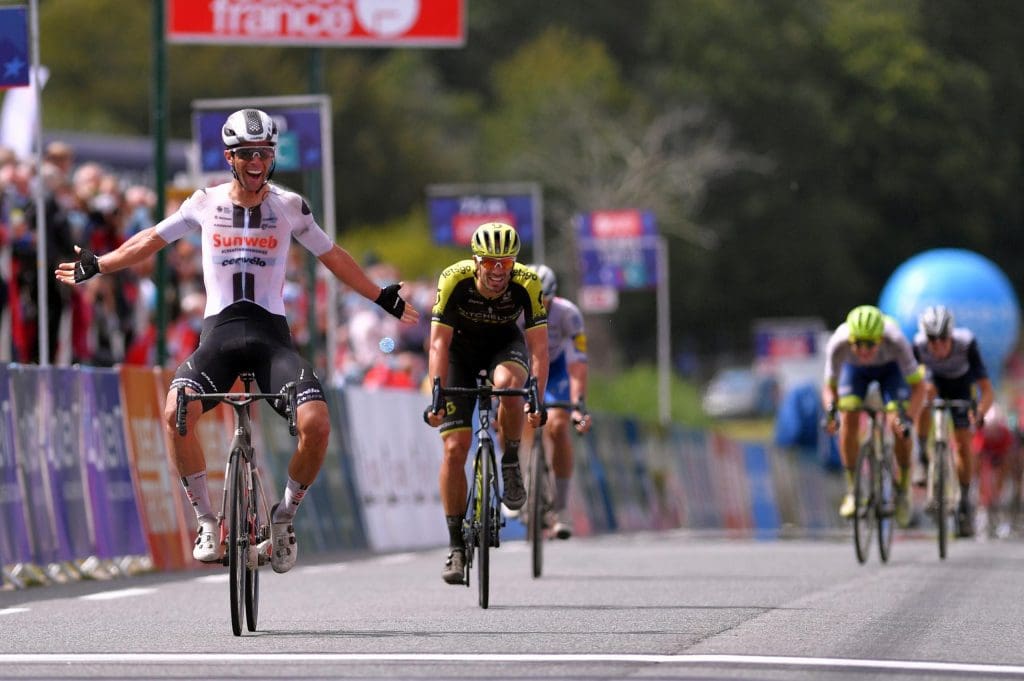
Bretagne Classic 2026 at a glance
| Detail | Bretagne Classic 2026 |
|---|---|
| Date | Sunday 30 August 2026 |
| Country | France |
| Region | Brittany |
| Start | Plouay |
| Finish | Plouay |
| Distance | 228.3km |
| Elevation gain | Around 3,663 metres |
| Final circuit | 16.6km, ridden three times |
| UCI classification | 1.UWT |
| Competition | UCI WorldTour |
| Defending winner | Arnaud De Lie |
| Race type | Hilly one-day Classic |
The 228.3km distance makes the 2026 Bretagne Classic considerably shorter than some recent editions, but there is still more than enough climbing to turn it into a major endurance test.
The difference is where much of the tactical emphasis now sits.
Rather than one extremely long journey followed by a single passage through the decisive roads around Plouay, the riders return to a 16.6km finishing circuit that is tackled three times.
That repetition should give teams far more opportunities to attack.
What is the Bretagne Classic?
The Bretagne Classic is a men’s one-day professional bike race centred on Plouay in Morbihan, western France.
It has gone through several identities during its long history.
For generations it was widely known as the GP de Plouay, before later editions carried the GP Ouest-France name. The Bretagne Classic identity arrived in 2016 as organisers moved away from a race heavily centred on repeated laps of Plouay and began sending the peloton much further across Brittany.
CIC now provides title sponsorship, giving the event its current full name of Bretagne Classic CIC.
These are not separate historical races. Victories in the old GP de Plouay and today’s Bretagne Classic belong to the same lineage.
ProCyclingUK’s men’s cycling race hub places the Bretagne Classic within the wider WorldTour calendar alongside the major stage races and one-day Classics that shape the men’s road season.
Is the Bretagne Classic a Monument?
No.
Professional men’s cycling has five traditional Monuments:
- Milan-San Remo
- Tour of Flanders
- Paris-Roubaix
- Liège-Bastogne-Liège
- Il Lombardia
The Bretagne Classic does not have Monument status.
It does, however, belong to the UCI WorldTour, the highest level of men’s professional road racing.
That places it in the same top-tier calendar as those Monuments, alongside races such as Strade Bianche, Amstel Gold Race, ADAC Cyclassics and the Grand Prix Cycliste de Montréal.
The distinction is mainly about historical prestige rather than whether Bretagne Classic is genuinely a major professional race. WorldTour status ensures the strongest teams are involved and makes victory an important result.
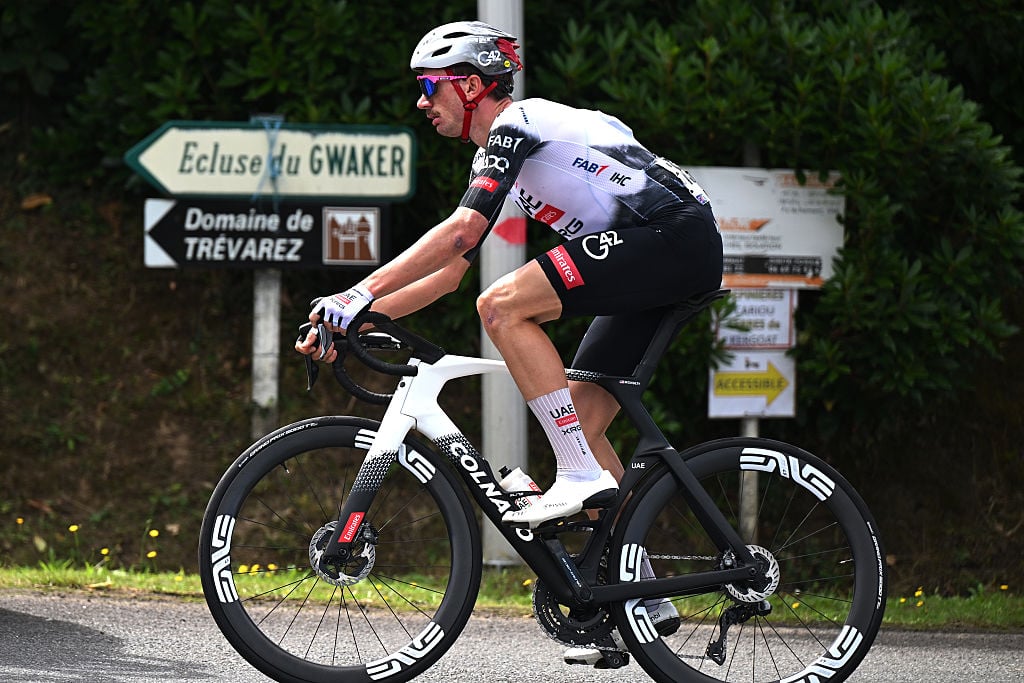
Why is Plouay so important to cycling?
Plouay is unusual.
The town itself is small, but its relationship with elite cycling is enormous.
It has hosted major racing for generations and staged the 2000 UCI Road World Championships, when Romāns Vainšteins won the elite men’s road race.
Plouay also hosts one of the major women’s races on the calendar.
The Beginner’s guide to Classic Lorient Agglomération 2026 explains the women’s side of the Plouay cycling festival and why the same Breton roads have produced such a long-running relationship with professional racing.
That creates an unusual atmosphere around the Bretagne Classic.
This is not simply a professional race arriving in a town on Sunday morning and disappearing that evening. Several days of racing and cycling events build towards the elite men’s finale.
What is different about the 2026 Bretagne Classic route?
Quite a lot.
Recent editions have pushed the distance well beyond 250km, turning the Bretagne Classic into one of the longest non-Monument one-day races on the calendar.
The 2026 version pulls that back.
At 228.3km, the race is more than 30km shorter than the 2025 edition.
That might sound as though organisers have made the race significantly easier.
It is not quite that simple.
The shorter distance is accompanied by a more concentrated finale, with riders completing three laps of a 16.6km circuit around Plouay.
Instead of putting almost all of the emphasis on surviving an enormous day before one final sequence of climbs, the new structure gives teams repeated opportunities to force the selection.
The result could actually be a more explosive race.
Three laps of Plouay could change the tactics
Repeated circuits create a very different tactical problem from a single passage through the finishing roads.
On the first lap, teams can begin applying pressure and learn how their rivals are coping.
On the second, the serious attacks can start.
By the final lap, everybody knows exactly where the dangerous climbs, corners and narrow roads are.
There is also a psychological difference.
If a rider knows there are still another 100km after a climb, there is little reason to attack flat out.
If that same climb appears with 35km remaining, then 18km remaining, then inside the final kilometres, the calculation changes completely.
Teams with multiple riders in the front group can begin attacking one after another, forcing faster rivals to chase repeatedly.
That should make the final hour particularly difficult to control.
The Côte de Ty Marrec is back
The most interesting change is the return of Ty Marrec.
The climb is closely associated with the old GP de Plouay and returns to the men’s elite race after several years away from the decisive route.
Ty Marrec is approximately 1.5km long at around 5%, with steeper ramps reaching roughly 10%.
Those numbers do not sound especially intimidating.
On a Tour de France mountain stage, they would barely register.
After more than 200km of a WorldTour Classic, attacked at high speed with riders already carrying several hours of fatigue, the climb becomes a completely different proposition.
A puncheur can attack.
A team can line out the entire group.
A rider already close to their limit can suddenly lose ten metres.
Ten metres can be enough.
The neighbouring women’s Classic Lorient Agglomération has also repeatedly used Ty Marrec as part of the Plouay finale. The 2025 Classic Lorient Agglomération preview provides a useful look at how short climbs around Plouay become far more selective once accumulated fatigue is taken into account.
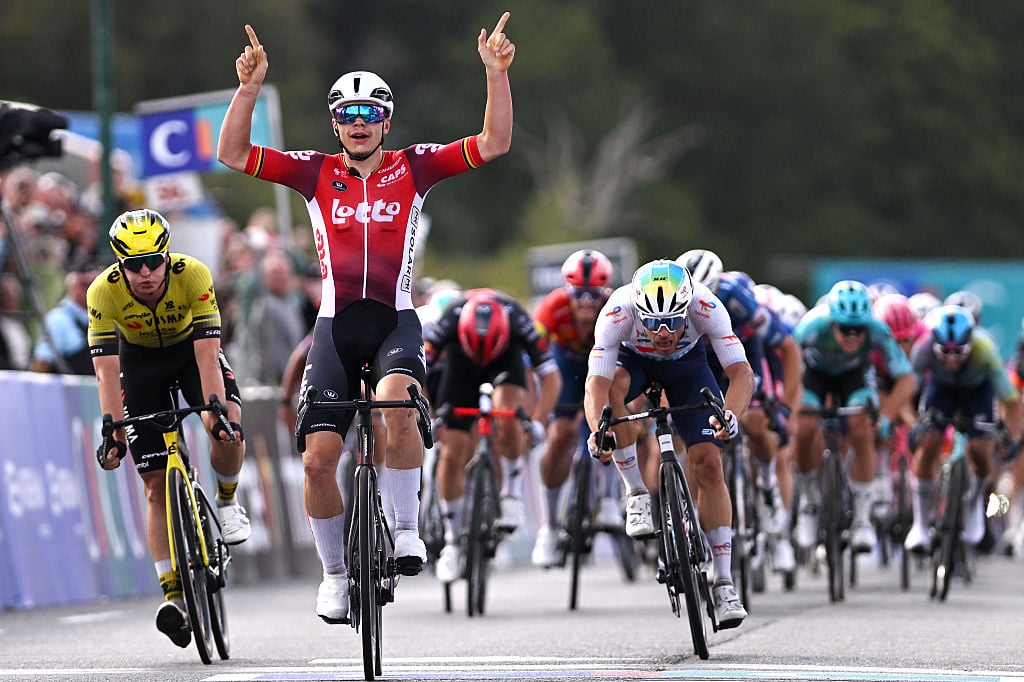
Why Ty Marrec became part of the race’s identity
Before the Bretagne Classic moved towards its longer modern format, Ty Marrec was regularly one of the key places where the GP de Plouay was shaped.
It was rarely difficult enough for a pure climber simply to ride everybody off their wheel.
Instead, it created separation through acceleration.
A group of 50 could become 30.
Thirty could become 15.
Someone could attack over the top and suddenly have ten seconds.
That is important because one-day races are often decided through a process of reduction rather than one enormous attack.
The climb does not necessarily need to produce the winner.
It only needs to remove enough riders or create enough disorder for the winning move to emerge afterwards.
Côte du Lézot and Kerscoulic add to the difficulty
Ty Marrec is not the only obstacle around Plouay.
The Côte du Lézot has long been associated with racing here, while the short and sharper rise at Kerscoulic adds another opportunity to put riders under pressure.
Again, none of these climbs looks particularly frightening when considered individually.
That misses the point.
By the final lap, riders have spent hours climbing, descending, fighting for position and responding to attacks.
A short ramp that would be relatively comfortable at the beginning of the day can suddenly become decisive.
This is the defining characteristic of the Bretagne Classic.
It is a race of accumulation rather than one enormous obstacle.
Why 3,663 metres of climbing is harder than it sounds
The total elevation gain is substantial, but it is not accumulated through one or two major mountains.
Instead, Brittany continually rolls.
A typical sequence might involve a short climb, a descent, a sharp corner, another acceleration and then another rise almost immediately afterwards.
There is little opportunity to settle into the sort of steady rhythm riders might find on a long Alpine ascent.
That favours riders capable of repeatedly producing high power.
It also helps explain why heavier Classics specialists can compete with lighter climbers.
The rider who produces the best watts per kilogram for 40 minutes is not automatically the strongest rider after five hours of repeated accelerations.
What type of rider wins the Bretagne Classic?
The ideal winner is usually a puncheur or durable Classics rider with a strong finish.
They need to be capable of:
- surviving more than 200km of rolling terrain
- responding to repeated attacks
- positioning well on narrow roads
- accelerating on short climbs
- descending confidently
- remaining tactically alert deep into the race
- sprinting from a reduced group if nobody escapes
That description covers a broad range of riders.
And that is precisely what makes Bretagne Classic difficult to predict.
A rider can win by attacking.
Another can win by surviving every attack and sprinting.
Some riders are dangerous because they can do either.
Can a sprinter win Bretagne Classic?
Yes, but usually not a conventional flat-road sprinter.
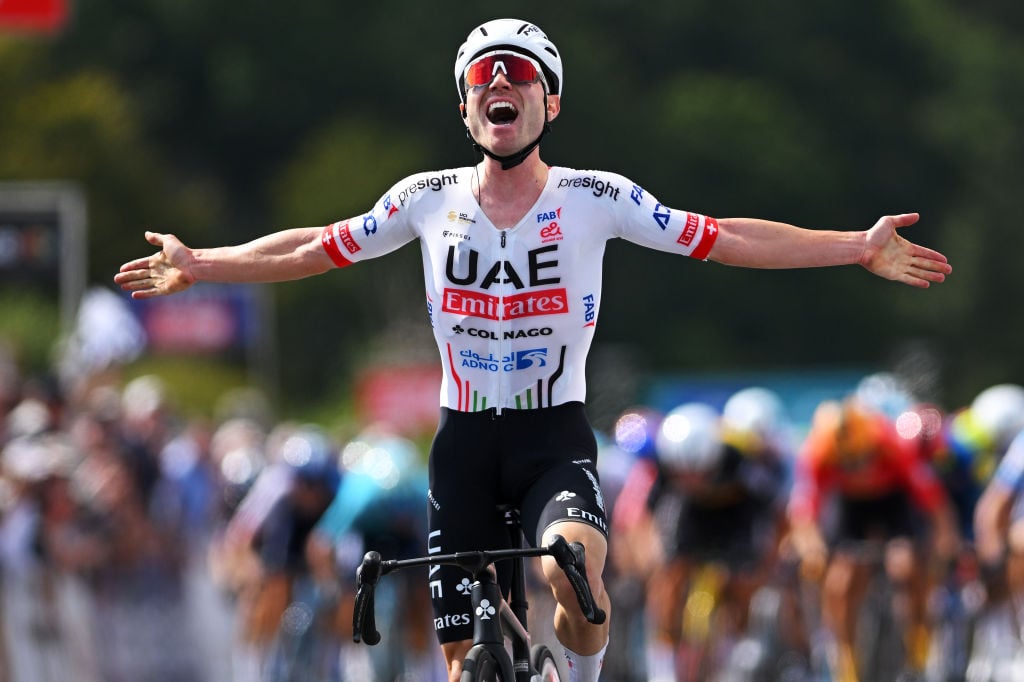
Arnaud De Lie won in 2025, surviving a long and selective race before taking the sprint.
Wout van Aert won in 2022, another clear example of a rider with enough speed to win a sprint but considerably more endurance and climbing ability than a pure fast finisher.
That distinction is important.
Someone who requires a controlled final 50km, a full lead-out train and completely flat roads is unlikely to enjoy Bretagne Classic.
A rider who can climb, position themselves, survive repeated attacks and still sprint after five or six hours is far more dangerous.
It is one reason riders such as De Lie and Van Aert fit the race so naturally.
Attackers have just as much opportunity
Waiting for a sprint comes with an obvious risk.
Somebody may simply ride away.
Marc Hirschi won in 2024 after using the selective finale to escape his rivals rather than allowing the race to reach a conventional sprint.
Valentin Madouas also won a selective 2023 edition.
That creates the central tactical question of Bretagne Classic.
Do the attacking riders make the race hard enough to eliminate the fastest finishers?
Or can the faster riders survive everything and keep enough teammates to control the finale?
The answer can change repeatedly during the final hour.
Recent Bretagne Classic winners
| Year | Winner |
|---|---|
| 2025 | Arnaud De Lie |
| 2024 | Marc Hirschi |
| 2023 | Valentin Madouas |
| 2022 | Wout van Aert |
| 2021 | Benoît Cosnefroy |
| 2020 | Michael Matthews |
Even this short list illustrates how difficult the race is to categorise.
De Lie and Matthews have elite sprint speed.
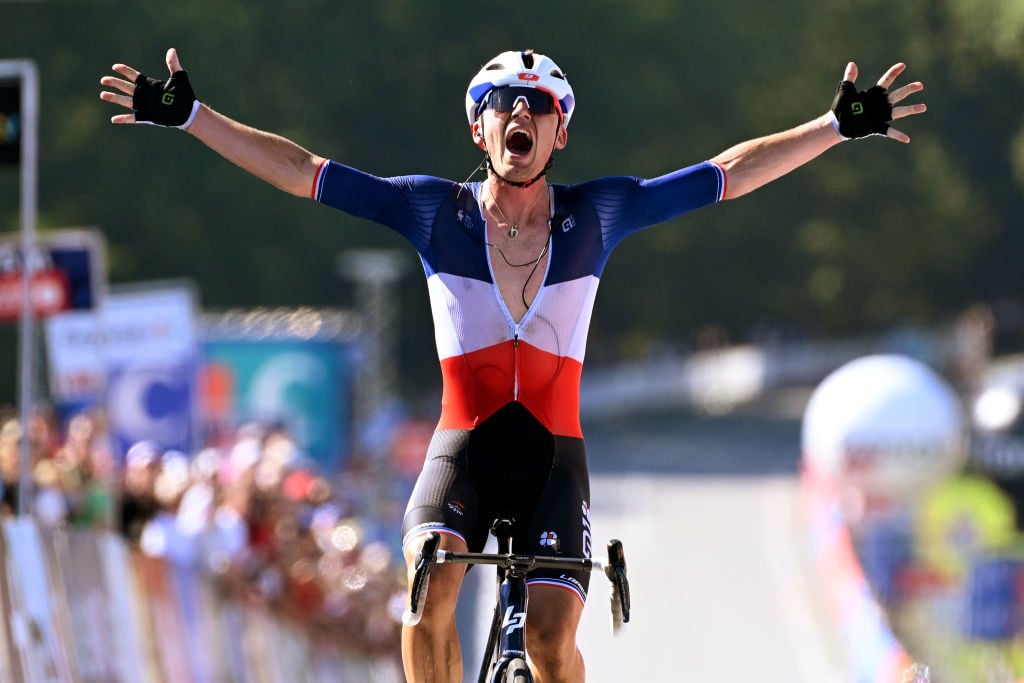
Hirschi and Cosnefroy are natural puncheurs.
Madouas thrives in attritional Classics.
Van Aert can effectively combine all of those characteristics.
There is no single route to victory.
Why the race can look quiet before suddenly exploding
New viewers sometimes find long one-day races confusing because very little seems to happen for several hours.
That is normal.
An early breakaway generally establishes itself while the major teams conserve energy behind.
The important thing is that all those kilometres still count.
Every short climb adds fatigue.
Every acceleration costs energy.
Every positioning battle takes another small amount from the legs.
The peloton can therefore look completely controlled after 150km while riders are already considerably more tired than they appear.
When a stronger team finally increases the speed, those accumulated efforts suddenly become visible.
A rider who comfortably followed an acceleration three hours earlier may no longer be capable of doing it.
That is when the race starts breaking apart.
What should beginners watch before the final circuit?
Do not concentrate only on the rider attacking.
Look at the teams immediately behind.
Imagine five riders go clear and four major teams are represented.
Those four teams now have very little reason to chase.
Suddenly the responsibility falls almost entirely onto the teams who missed the move.
A ten-second gap can become 30 seconds surprisingly quickly.
Also look at how many teammates remain around the favourites.
A leader reaching Plouay with four teammates still alongside them has numerous tactical options.
They can send someone into an attack.
They can chase.
They can increase the pace.
They can protect their leader’s position.
A favourite arriving alone has to solve virtually every tactical problem personally.
How should you watch the three final laps?
The repeated circuit gives beginners a particularly useful framework for following the 2026 finale.
First lap: the pressure begins
Expect teams to increase the speed and begin testing one another.
Some attacks will be genuine, while others may be designed primarily to force rival teams into chasing.
Pay attention to which riders immediately begin struggling on the climbs.
Second lap: serious selections
This is where the race could begin breaking properly.
Teams with several riders remaining can attack repeatedly.
Fast finishers may start losing teammates.
A group going clear here has enough distance to establish a meaningful advantage but not so much that everybody automatically cooperates behind.
Final lap: every move matters
There is no longer time for mistakes.
If a dangerous group escapes, the sprint teams have only a handful of kilometres to bring it back.
If the strongest sprinters survive Ty Marrec and the remaining climbs, the attackers become increasingly desperate.
The tactical balance could change several times within the final 16km.
Why a 20-second gap can be race-winning
A television graphic showing an attacker only 20 seconds ahead can make the gap look insignificant.
Late in a Classic, it can be enormous.
The group behind may consist of only 30 exhausted riders.
Several teams might have somebody ahead.
Nobody may want to sacrifice their own chance by riding flat out for somebody else’s sprinter.
The strongest domestiques may already have been dropped.
At that point the issue is not whether the chasing group is physically capable of closing 20 seconds.
It is whether enough riders are willing to cooperate to do it.
That is why late attacks can succeed even when the advantage never looks comfortable.
How important is the weather?
Potentially very important.
Brittany’s weather can add another layer of difficulty to an already attritional race.
Rain changes grip on descents and narrow roads.
Wind increases the importance of positioning.
Repeated showers make keeping warm and fuelling properly more difficult during a long day.
The effect is cumulative rather than necessarily spectacular.
A wet corner does not decide the race on its own, but dozens of wet corners, short climbs and accelerations can make the final hour significantly harder.
The forecast is therefore worth checking alongside the route when assessing the likely race shape.
How old is the Bretagne Classic?
The race’s recognised professional history dates back to 1931, when François Favé won what was then the Circuit de Plouay.
That long history has produced an unusually broad range of winners.
Sean Kelly won during the 1980s.
Vincenzo Nibali took victory in 2006.
Later generations include Oliver Naesen, Michael Matthews, Wout van Aert, Valentin Madouas, Marc Hirschi and Arnaud De Lie.
That variety tells its own story.
Plouay has never demanded one extremely specific type of rider. Instead, changing routes and tactical circumstances have allowed different generations of Classics riders to find their own solution.
Why did GP de Plouay become Bretagne Classic?
For decades, the race was heavily associated with repeated laps of the roads immediately surrounding Plouay.
That provided a very recognisable event, but it limited how much of Brittany the race actually visited.
The Bretagne Classic identity was introduced in 2016, alongside a move towards a much larger loop through the surrounding region before the finish in Plouay.
That broadened both the route and the geographical identity of the race.
The 2026 format moves slightly back towards its roots.
There is still a substantial opening journey through Brittany, but three finishing circuits mean the traditional roads around Plouay once again have a much greater influence on who wins.
The result is effectively a mixture of the modern Bretagne Classic and the old GP de Plouay.
What are the 4 Jours CIC de Plouay?
Bretagne Classic is the headline men’s race within a much larger programme of cycling around Plouay.
The festival includes several forms and levels of racing, culminating in the elite women’s and men’s events.
The women’s Classic Lorient Agglomération takes place on Saturday 29 August, one day before Bretagne Classic. ProCyclingUK’s brief history of Classic Lorient Agglomération explains how the women’s event developed alongside Plouay’s wider cycling tradition.
That weekend structure helps explain why Plouay has maintained such an important position in French cycling despite its relatively small size.
For several days, cycling effectively takes over the town.
Bretagne Classic and Classic Lorient Agglomération are separate races
The names and shared location can make this confusing for new fans.
The Bretagne Classic CIC is the elite men’s WorldTour race.
The Classic Lorient Agglomération is the elite women’s WorldTour race.
They share Plouay, form part of the same cycling festival and use some of the same roads, but they have separate start lists, distances and results.
They are best understood as two major one-day races held across the same weekend.
-
 Photo Credit: Gaetan Flamme

Five things to watch during Bretagne Classic 2026
If you want to reduce more than 200km of racing to the essential tactical story, concentrate on five things.
1. How much energy the peloton spends controlling the early break.
A strong break containing riders from important teams can force others to work much earlier than planned.
2. Which favourites still have teammates approaching Plouay.
Team depth becomes increasingly valuable once the repeated attacks begin.
3. What happens on the first serious passage of Ty Marrec.
The returning climb should provide an immediate indication of which riders are comfortable and which are beginning to struggle.
4. Whether the fastest riders survive each lap.
Every sprinter dropped changes the tactical incentives for the remaining attackers.
5. Who is actually willing to chase.
Late in a Classic, attacks often succeed not because nobody can catch them, but because nobody wants to spend the energy required.
What makes Bretagne Classic different from other WorldTour Classics?
There are no cobbled sectors like Paris-Roubaix.
There is no single famous finishing wall equivalent to the Mur de Huy.
There are no long Ardennes climbs or Alpine mountains.
Instead, Plouay is about repetition.
Climb.
Descend.
Accelerate.
Fight for position.
Attack.
Recover briefly.
Then do it again.
That helps explain why completely different scenarios can produce the winner. Arnaud De Lie can survive the attrition and sprint. Marc Hirschi can attack before the sprint happens. Wout van Aert can threaten to do either.
The shorter 228.3km route, three finishing circuits and return of Ty Marrec make that tactical uncertainty particularly interesting in 2026.
The simplest way to follow the race is not to wait for one obvious decisive climb.
Instead, watch who remains near the front every time the road rises.
Once the peloton reaches Plouay for those final circuits, the riders who have spent the previous 200km consistently managing those small battles are usually the ones left with a chance of winning the Bretagne Classic.

