
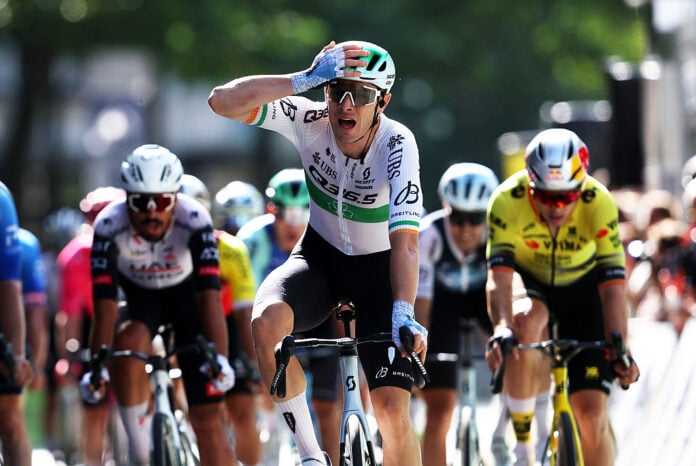
The ADAC Cyclassics has become one of Germany’s most important one-day races by doing something relatively unusual in European cycling: building a modern Classic without a century of inherited prestige behind it.
First held in Hamburg in 1996, the race developed rapidly from a new German event into a fixture at the highest level of professional cycling. By 1998 it had joined the UCI Road World Cup, later moving into the ProTour and then the modern WorldTour, where it remains today.
The title has changed repeatedly as sponsors have come and gone, but the race itself has remained continuous. HEW Cyclassics, Vattenfall Cyclassics, EuroEyes Cyclassics, BEMER Cyclassics and today’s ADAC Cyclassics are all different names for the same Hamburg one-day race.
Its identity has remained recognisable too. Fast roads, a major-city finish and repeated climbs of the short, steep Waseberg have created a race where sprinters are favoured without ever being guaranteed victory.
The race began in Hamburg in 1996
The first edition was held in the summer of 1996 and won by Italian Rossano Brasi.
At 160km, it remains much shorter than the race would become once Hamburg established itself internationally. There was little at that point to suggest a new one-day event in northern Germany would reach cycling’s top tier within only a few seasons.
The Cyclassics did not have the history of the Belgian cobbled races, the Ardennes Classics or the great Italian one-day events. Prestige had to be created through the quality of the field, the status of the calendar and eventually the identity of the route.
That process happened remarkably quickly.
Jan Ullrich gave the young race perfect timing
The decisive early moment came in 1997.
Jan Ullrich had just become the first German rider to win the Tour de France, creating an extraordinary surge of domestic interest in professional cycling. Two weeks after taking yellow in Paris, he won the Cyclassics in Hamburg.
For a race only in its second year, the timing could hardly have been better.
Ullrich’s Tour success pushed cycling into the mainstream in Germany, and the Hamburg race suddenly had a connection to the biggest German sporting story of the summer. Spectators, broadcasters and sponsors were all paying much more attention to road cycling than they had a year earlier.
The Cyclassics became one of the beneficiaries of that boom.
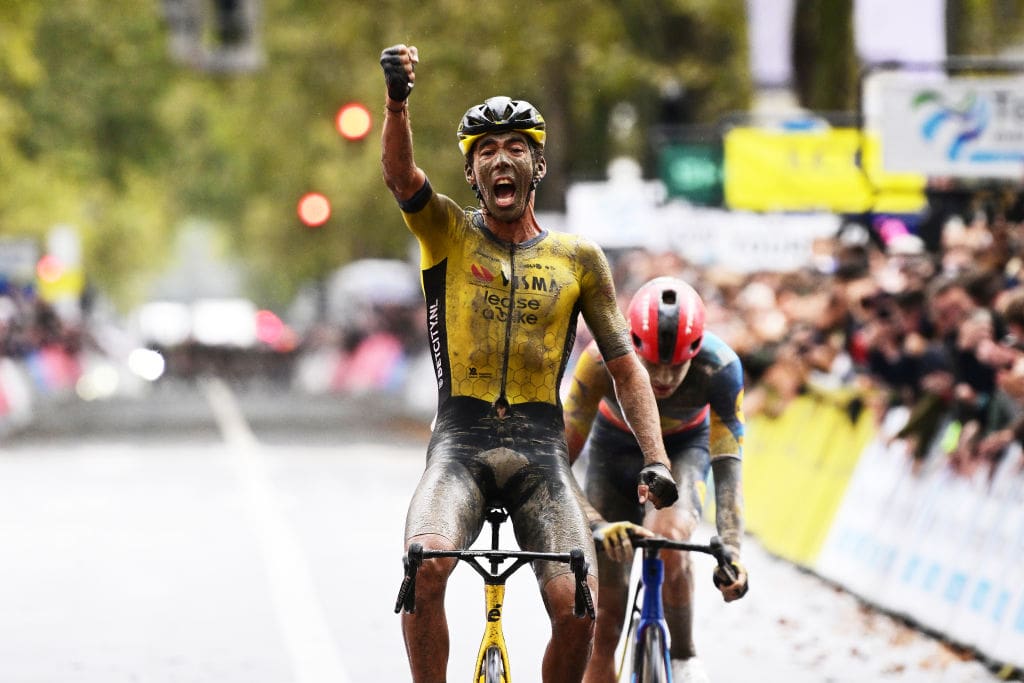
World Cup status arrived in only the third edition
The speed of the race’s rise was extraordinary.
For 1998, only its third running, the Cyclassics joined the UCI Road World Cup, placing it alongside many of the most important one-day races in the sport.
The route was expanded accordingly, moving much closer to the distance expected of a major Classic. Dutch rider Léon van Bon won the first Hamburg edition held as part of the World Cup.
That promotion changed the status of the race permanently.
The Cyclassics was no longer simply a German event attempting to attract international riders. It had become part of the elite one-day calendar, with the strongest teams and riders having a direct sporting reason to race in Hamburg.
For newer fans, our guide to the Men’s WorldTour explains how the modern top-level calendar developed from structures such as the old World Cup and later ProTour.
The HEW years established Hamburg as a genuine Classic
The early race was known as the HEW Cyclassics, after Hamburgische Electricitäts-Werke.
The winners during this period helped turn the new World Cup status into genuine sporting credibility. Mirko Celestino won in 1999, Gabriele Missaglia in 2000 and Erik Zabel gave the German crowd another home victory in 2001.
Then came Johan Museeuw in 2002, Paolo Bettini in 2003 and Stuart O’Grady in 2004.
Museeuw and Bettini were among the defining one-day riders of their generation. Their names on the honours list mattered because they demonstrated that Hamburg was no longer important only because the UCI had placed it in a major series.
Elite Classics riders were winning it.
That is how a young race begins turning calendar status into tradition.
The Waseberg became the defining climb
Hamburg is not a mountain city, so the race needed another feature capable of shaping the finale.
The Waseberg in Blankenese became that feature.
At roughly 700 metres, it is far too short to define the race through sustained climbing. The difficulty comes from its steep gradients, reaching around 16%, and from the repeated passages used late in the race.
That gives the Cyclassics its central tactical tension.
Pure sprinters can survive the Waseberg.
They cannot assume they will.
Classics specialists can attack on it, but the climb is short enough that breaking clear does not guarantee the race is won. The result is often decided by whether the strongest sprint teams can keep enough riders together to control the attacks and organise the chase afterwards.
The Waseberg remains the defining feature of the ADAC Cyclassics 2026 route, where five passages are scheduled before the finish on Mönckebergstraße.
Hamburg survived cycling’s switch from the World Cup to the ProTour
The UCI Road World Cup ended after the 2004 season as professional cycling moved into a new structure.
Hamburg retained its place.
The Cyclassics became part of the inaugural UCI ProTour in 2005, with Filippo Pozzato winning that year’s race.
That continuity mattered. Cycling’s calendar has repeatedly changed shape, and not every event has retained top-level status through each restructuring.
Hamburg did.
The race later became part of the modern UCI WorldTour and remains there in 2026. Its position in the current calendar can be seen in ProCyclingUK’s Men’s Cycling Route Guide Hub, with the 2026 edition scheduled for 16 August between the Tour de Pologne and Renewi Tour.
For a race created in 1996, spending almost its entire mature life at the top level is significant.
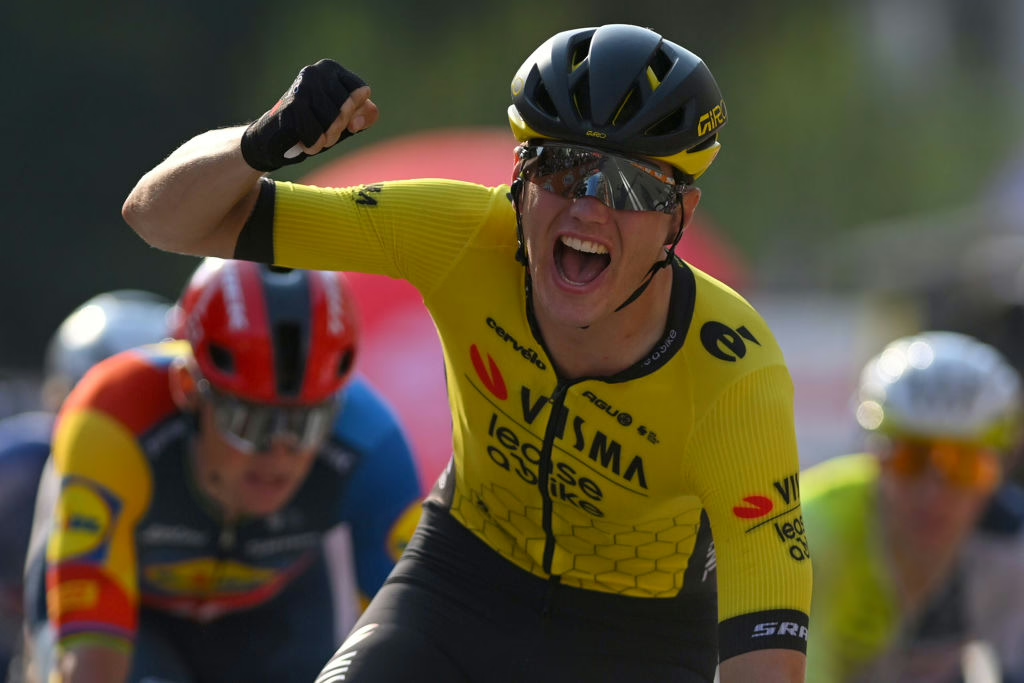
Vattenfall gave the race a new identity in 2006
The first major naming change followed the acquisition of HEW by Swedish energy company Vattenfall.
From 2006, the race became the Vattenfall Cyclassics.
Óscar Freire won the first edition under the new name, followed by Alessandro Ballan in 2007 and Robbie McEwen in 2008.
Those three winners demonstrate the range that has always made Hamburg difficult to categorise.
Freire was an exceptionally versatile fast finisher.
Ballan was a genuine Classics specialist.
McEwen was one of the leading pure sprinters of his era.
All three could win the same race because Hamburg rewards speed without requiring every edition to end the same way.
Tyler Farrar became the first rider to win twice in succession
American sprinter Tyler Farrar won in 2009 and returned to defend the title in 2010.
Until then, every edition had produced a different winner.
Farrar’s back-to-back victories came during the period when he was one of the strongest sprinters in the professional peloton. Hamburg suited him because he could survive enough difficulty to reach the finish before using the speed that made him a Grand Tour stage winner.
His repeat success also showed that the race had developed a recognisable rider profile.
The quickest rider on completely flat roads was not automatically the favourite.
The strongest sprinter who could still produce speed after the Waseberg often was.
The early 2010s became a showcase for durable sprinters
Edvald Boasson Hagen won in 2011 before Arnaud Démare followed in 2012.
John Degenkolb gave Germany another home victory in 2013, Alexander Kristoff won in 2014 and André Greipel took the race in 2015.
That sequence strengthened Hamburg’s reputation as a sprint-friendly Classic, but the type of sprinter matters.
Degenkolb and Kristoff were both accomplished Classics riders capable of performing on much harder terrain than a conventional bunch sprinter. Boasson Hagen offered similar versatility, while Greipel represented the more traditional route of surviving the difficulty before relying on outright finishing speed.
The common factor was durability.
The race could be controlled for a sprint.
The sprinter still had to survive enough racing to reach it.
EuroEyes took over the title in 2016
The Vattenfall era ended after 2015 and the race became the EuroEyes Cyclassics in 2016.
Caleb Ewan won the first edition under the new title.
For anyone looking back through old results, the sponsor changes can make the race appear more fragmented than it really is. The name changed, but the historical line remained continuous.
This is why older references to HEW Cyclassics, Vattenfall Cyclassics or EuroEyes Cyclassics should all be understood as part of the same race now branded as the ADAC Cyclassics.
The current naming history, route and format are covered in our beginner’s guide to ADAC Cyclassics 2026.
Elia Viviani became the race’s most successful rider
The most dominant period by any rider began in 2017.
Elia Viviani won the Cyclassics that year, repeated the victory in 2018 and completed a third consecutive win in 2019.
Nobody else has won the race three times.
Viviani’s run demonstrated how well Hamburg could suit a top-level sprinter capable of surviving repeated short climbing before still producing elite speed at the finish. The Waseberg did not have to eliminate him to matter.
It only had to make everyone else tired enough that the sprint became harder.
His 2019 success would also become the final edition before the race was forced into the longest interruption of its history.
The pandemic stopped the race for two years
The Cyclassics was not held in 2020 or 2021 because of the COVID-19 pandemic.
Those remain the only missing editions since the event was founded.
For a race that had built much of its reputation through continuity, losing two consecutive years was significant. It returned in 2022 not only after a long absence but with another title sponsor.
The post-pandemic edition became the BEMER Cyclassics.
Marco Haller won it, beating Wout van Aert in a small-group sprint after a race that resisted the expected mass-finish scenario.
That was an appropriate way for Hamburg to return.
The sprinters’ Classic had once again found a way not to behave entirely like one.
Pedersen and Kooij showed the two sides of Hamburg
Mads Pedersen won in 2023, providing almost the ideal example of the type of rider the race often rewards.
Pedersen has the speed to win from a reduced group but the strength and durability to survive hard one-day racing first. That combination allows a rider to use the Waseberg as part of the race rather than treating it purely as an obstacle to endure.
Olav Kooij then won in 2024, pulling the event back towards its traditional sprint identity.
The two editions showed both sides of the same race.
Hamburg can reward a Classics rider with a sprint.
It can also reward a specialist sprinter strong enough to survive a Classic.
That overlap is the reason the start list rarely has one obvious rider type.
ADAC began the latest era in 2025
The race entered another phase in 2025 when ADAC became title sponsor and the event moved under the organisational structure of A.S.O.’s German operation.
The professional race also started outside Hamburg for the first time, with Buxtehude in Lower Saxony hosting the departure.
The Waseberg remained central to the finale, while the finish retained the race’s strong connection to Hamburg city centre.
Buxtehude has remained as the professional start for 2026, suggesting that the expanded geographical identity is becoming part of the event rather than a one-off experiment.
The modern format is covered in detail in the ADAC Cyclassics 2026 beginner’s guide.
Rory Townsend produced one of the great Cyclassics upsets
If the new ADAC era was expected to begin with another sprint, Rory Townsend had other ideas.
The Irish champion joined the early breakaway in 2025 and remained ahead across almost the entire 207.4km race. The escape survived the repeated Waseberg passages while attacks behind disrupted the organisation of the sprint teams.
Townsend reached the final kilometre alongside Nelson Oliveira and Johan Jacobs before attacking with roughly 400 metres remaining.
The peloton was arriving rapidly.
It arrived too late.
Townsend held on, with Arnaud De Lie second and Paul Magnier third, producing one of the biggest surprise victories of the 2025 WorldTour season.
The result is a useful reminder of why Hamburg cannot simply be labelled a guaranteed bunch sprint. As the 2026 race guide explains, the route can realistically produce a full sprint, a reduced-group finish or a surviving attack.
The peloton only needs to hesitate once for the third scenario to work.
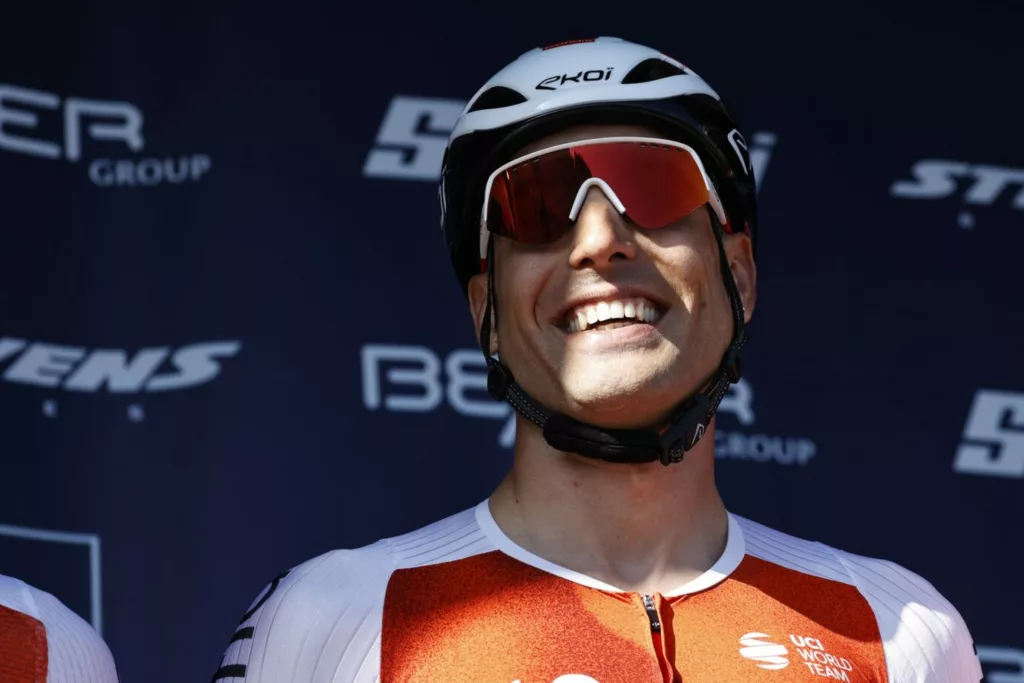
The 2026 race keeps the modern Buxtehude-to-Hamburg format
The 2026 ADAC Cyclassics takes place on Sunday 16 August and covers 206km from Buxtehude to Hamburg.
The professional race again finishes on Mönckebergstraße, while the Waseberg is scheduled five times during the decisive part of the route.
That gives the race the same central question it has posed for years.
Can the sprinters survive the Waseberg with enough teammates left to control the attacks?
If they can, the race can end in one of the fastest finishes of the WorldTour season.
If they cannot, riders with greater one-day strength suddenly have an opportunity.
Our beginner’s guide to ADAC Cyclassics 2026 covers the route, race format, amateur events and rider types suited to the current edition.
Mass participation helped make the Cyclassics bigger than the elite race
Another important part of the event’s success is that the professional race has never existed completely on its own.
The Cyclassics has developed into a wider cycling event involving large mass-participation rides alongside the WorldTour race.
For 2026, the programme includes approximately 60km and 110km amateur routes, giving recreational riders a chance to take part in the same event weekend before the professionals contest the headline race.
That helps distinguish Hamburg from one-day races built solely around elite competition.
The city is not simply hosting a professional peloton passing through.
It becomes a cycling event for the day.
That broader participation has helped the Cyclassics maintain visibility even through periods when German professional cycling itself was less prominent.
Why did Hamburg succeed when many modern races disappeared?
Prestige cannot simply be bought by putting a race on the WorldTour calendar.
Plenty of new events have arrived with large budgets and ambitions before disappearing again.
Hamburg found something more sustainable.
The city provides a recognisable setting and a large potential audience. The race reached international status during Germany’s late-1990s cycling boom, then managed to retain that status when the calendar changed.
Most importantly, it established a repeatable racing identity.
Fans know the Waseberg matters.
Sprinters know they have a chance.
Classics riders know they can attack.
The finish in Hamburg gives the race an urban character quite different from the Flemish or Ardennes Classics.
The race has changed sponsors without losing the basic sporting idea.
That continuity matters much more than the logo above the start line.
It is a modern Classic rather than a Monument in waiting
The Cyclassics cannot compete historically with Milan-San Remo, the Tour of Flanders, Paris-Roubaix, Liège-Bastogne-Liège or Il Lombardia.
It was created decades after those races had already become institutions.
That does not make Hamburg unsuccessful.
Its significance comes from being one of the strongest examples of a modern Classic successfully establishing itself at the highest level.
It went from its first edition to the Road World Cup within two years, survived the switch to the ProTour and WorldTour, endured the collapse of Germany’s initial cycling boom and returned after two cancelled pandemic editions.
The race does not need a century of history to justify its place.
Three decades of continuity at elite level already makes it unusual.
The race outlived Germany’s Ullrich-era cycling boom
Perhaps the clearest demonstration of the Cyclassics’ durability came after the conditions that helped create it disappeared.
Ullrich’s 1997 Tour victory sent German cycling into a period of extraordinary popularity. Zabel, Degenkolb and Greipel later added home wins in Hamburg, while German teams and broadcasters gave the sport major domestic visibility.
That world did not last.
Doping scandals badly damaged professional cycling’s reputation in Germany during the 2000s. Television coverage reduced, teams disappeared and the mainstream popularity of the Ullrich era could not be maintained.
The Cyclassics survived.
That allowed it to become more than a product of one generation.
The race benefited enormously from the German cycling boom.
Its long-term significance comes from continuing after the boom ended.

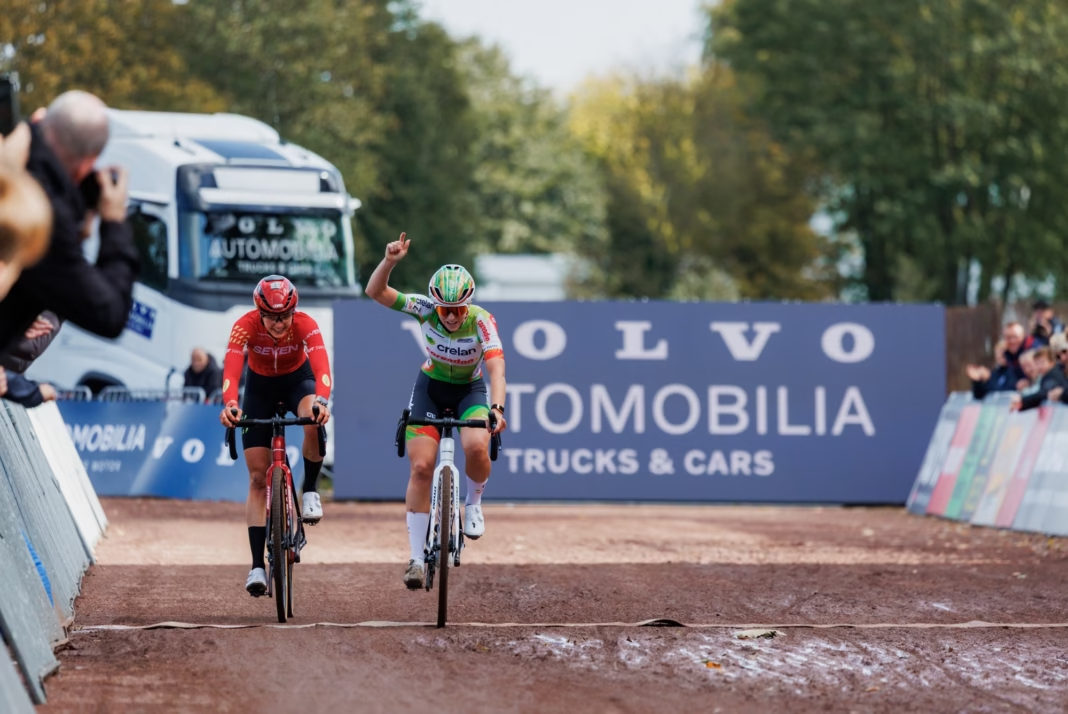
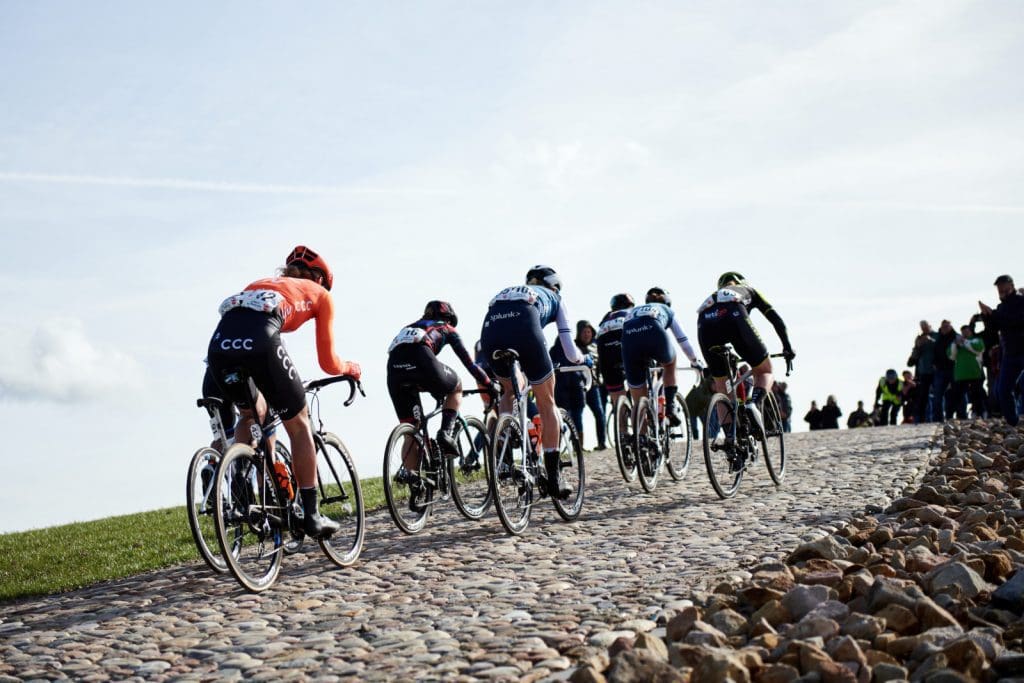
The winners list explains the race better than any label
Calling the ADAC Cyclassics a sprinters’ race is useful, but incomplete.
Its winners include Robbie McEwen, André Greipel, Caleb Ewan, Elia Viviani and Olav Kooij, riders associated strongly with bunch sprinting.
The list also includes Johan Museeuw, Paolo Bettini, Alessandro Ballan, Alexander Kristoff and Mads Pedersen, riders whose one-day strength extended far beyond conventional flat finishes.
Then there are riders such as Jan Ullrich and Rory Townsend, whose victories came through very different race scenarios again.
That variety is the defining feature.
Hamburg usually rewards speed.
It does not always reward the fastest pure sprinter.
ADAC Cyclassics winners
| Year | Winner |
|---|---|
| 1996 | Rossano Brasi |
| 1997 | Jan Ullrich |
| 1998 | Léon van Bon |
| 1999 | Mirko Celestino |
| 2000 | Gabriele Missaglia |
| 2001 | Erik Zabel |
| 2002 | Johan Museeuw |
| 2003 | Paolo Bettini |
| 2004 | Stuart O’Grady |
| 2005 | Filippo Pozzato |
| 2006 | Óscar Freire |
| 2007 | Alessandro Ballan |
| 2008 | Robbie McEwen |
| 2009 | Tyler Farrar |
| 2010 | Tyler Farrar |
| 2011 | Edvald Boasson Hagen |
| 2012 | Arnaud Démare |
| 2013 | John Degenkolb |
| 2014 | Alexander Kristoff |
| 2015 | André Greipel |
| 2016 | Caleb Ewan |
| 2017 | Elia Viviani |
| 2018 | Elia Viviani |
| 2019 | Elia Viviani |
| 2020 | Not held |
| 2021 | Not held |
| 2022 | Marco Haller |
| 2023 | Mads Pedersen |
| 2024 | Olav Kooij |
| 2025 | Rory Townsend |
Viviani remains the record holder with three victories, all taken consecutively from 2017 to 2019. Farrar is the only other rider to have successfully defended the title, winning in 2009 and 2010.
Hamburg has built its own Classic
The Cyclassics did not inherit its prestige.
It created it.
Rossano Brasi won a 160km race in 1996. Ullrich’s victory a year later connected the event to an unprecedented German cycling boom, and by 1998 the race was already part of the Road World Cup.
Since then it has survived changes in title sponsor, calendar structure and German cycling culture. The race moved through the HEW, Vattenfall, EuroEyes and BEMER eras before becoming the ADAC Cyclassics, while Buxtehude has now joined Hamburg itself as part of the modern route.
The Waseberg remains the feature tying those eras together.
Short, steep and repeated late enough to matter, it keeps sprinters interested while giving attackers a reason to believe. That tension has produced winners ranging from McEwen and Viviani to Museeuw, Pedersen and Townsend.
For anyone approaching the race for the first time, the ADAC Cyclassics 2026 guide covers the current version of the event.
The history explains why it is still here.
By European cycling standards, Hamburg remains a young Classic.
After three decades at the highest level, it is no longer a new one.

