
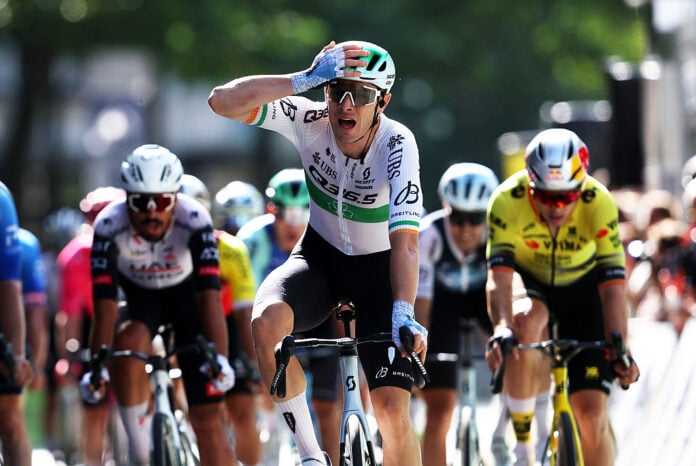
The ADAC Cyclassics returns on Sunday 16 August 2026 as Germany’s biggest men’s one-day race and one of the fastest events on the UCI WorldTour calendar.
The 206km route starts in Buxtehude before travelling through the Hamburg metropolitan region and finishing on Mönckebergstraße in the centre of the city. Its defining feature is the Waseberg, a short but steep climb in Blankenese that the professionals will tackle five times during the finale.
That combination creates a race sitting somewhere between a sprinter’s Classic and a contest for powerful one-day specialists. Pure sprinters can survive and win, but only if they cope with repeated climbs, aggressive racing and the difficult fight for position on Hamburg’s narrow urban roads.
For new viewers, the ADAC Cyclassics is a relatively simple race to understand. It is fast, usually unpredictable and often decided by whether the strongest sprint teams can control attacks over the Waseberg.
ADAC Cyclassics 2026 at a glance
- Date: Sunday 16 August 2026
- Start: Buxtehude
- Finish: Mönckebergstraße, Hamburg
- Distance: 206km
- Race type: Men’s one-day race
- UCI classification: UCI WorldTour
- Key climb: Waseberg
- Waseberg passages: Five
- Likely winner type: Powerful sprinter, puncheur or Classics specialist
- Defending champion: Rory Townsend
- First edition: 1996
The 2026 edition will be the 29th running of the event and forms part of the wider men’s WorldTour calendar.
What is the ADAC Cyclassics?
The ADAC Cyclassics is an annual professional road race held in and around Hamburg in northern Germany.
It is a one-day race, meaning there are no stages or overnight general classification. The first rider across the finish line on Mönckebergstraße wins the event.
The race forms part of the UCI WorldTour, the highest level of men’s professional road cycling. That status means the WorldTeams are required to participate, with additional places available to invited ProTeams.
Although Hamburg is not associated with major mountains, the race is not necessarily an uncomplicated bunch sprint. The repeated Waseberg climbs and fast city-centre finale give attacking riders opportunities to disrupt the sprint teams.
The event is also a large cycling festival. Thousands of amateur riders take part in mass-participation events on closed roads before the professional race reaches Hamburg.
The ADAC Cyclassics sits within a varied programme of one-day Classics and stage races covered in the ProCyclingUK men’s cycling race hub.
When is the ADAC Cyclassics 2026?
The 2026 ADAC Cyclassics takes place on Sunday 16 August.
Its place in the calendar comes after the Tour de France and Tour de France Femmes, but before the Vuelta a España and the main run of late-summer one-day races.
That timing can produce an unusual field.
Some riders arrive with strong form after competing at the Tour, while others use Hamburg to restart their seasons after a quieter July. Sprinters may target the race as one of their most important opportunities of the second half of the year.
The event is also held during the German summer holiday period, helping to create large crowds around Hamburg and especially on the Waseberg.

What does ADAC mean?
ADAC is the Allgemeiner Deutscher Automobil-Club, one of Germany’s largest motoring and mobility organisations.
It became the title sponsor of the Cyclassics from the 2025 edition as part of a wider change to the organisation of the event.
The race has carried several names during its history:
- HEW Cyclassics
- Vattenfall Cyclassics
- EuroEyes Cyclassics
- BEMER Cyclassics
- ADAC Cyclassics
These are different names for the same Hamburg one-day race rather than separate events.
Anyone searching for the Hamburg Cyclassics, BEMER Cyclassics or Vattenfall Cyclassics is therefore looking at earlier versions of what is now called the ADAC Cyclassics.
Where does the 2026 race start?
The professional race starts in Buxtehude, a Hanseatic town in Lower Saxony to the south-west of Hamburg.
Buxtehude hosted the start for the first time in 2025 and has retained that role for the 2026 edition. The peloton will complete a neutralised section through the town before the racing begins on the road towards Hamburg.
The route passes through the districts of Stade and Harburg, including open roads where wind could influence the early racing.
Crosswinds are not guaranteed, but northern Germany’s exposed terrain can make the race more complicated than the elevation profile suggests. A strong wind could encourage teams to form echelons and split the peloton before the Waseberg finale.
Buxtehude also gives the race a clearer point-to-point identity. Earlier editions were more heavily concentrated within Hamburg itself, while the newer format brings more of the surrounding metropolitan region into the professional route.
What is the 2026 ADAC Cyclassics route?
The 2026 professional route covers 206km from Buxtehude to central Hamburg.
The early and middle sections take the riders through the Stade and Harburg districts before the route enters the city. The race shares some roads with the 110km amateur event, including sections around the Altes Land and Port of Hamburg.
One of the route’s visual highlights is the Köhlbrand Bridge, which provides an elevated crossing through Hamburg’s industrial port landscape.
The race then turns towards its traditional western finale around Blankenese. The riders tackle five passages of the Waseberg before returning to the city centre for the finish on Mönckebergstraße.
The Waseberg is approximately 700 metres long and reaches gradients of up to 16%. It is also used for the race’s mountains classification.
The route is not mountainous in the conventional sense. Its difficulty comes from speed, repeated accelerations, positioning and the gradual accumulation of fatigue.
The full route also sits alongside the season’s other major one-day events in the men’s cycling route guide hub.
What is the Waseberg?
The Waseberg is a short, steep road in the Blankenese district of western Hamburg.
It is the signature climb of the ADAC Cyclassics and the point around which most of the race’s tactics are built.
The climb is approximately 700 metres long and reaches gradients of up to 16%. Those numbers may appear modest compared with an Alpine pass, but the Waseberg is tackled at high speed after more than 150km of racing.
A short climb can be especially difficult in a one-day race because riders attack it almost flat out. There is little opportunity to establish a steady tempo, and anyone beginning the climb out of position may already be in difficulty.
The professionals will cross the Waseberg five times in 2026.
Each passage can remove riders from the back of the peloton, reduce the number of domestiques available to the sprinters and provide a launch point for attacks.
The final ascent is particularly important. Riders who create a gap must then decide whether they can cooperate on the fast run back towards central Hamburg, while the sprint teams attempt to reorganise behind.
Is ADAC Cyclassics a sprinters’ race?
It often is, but not always.
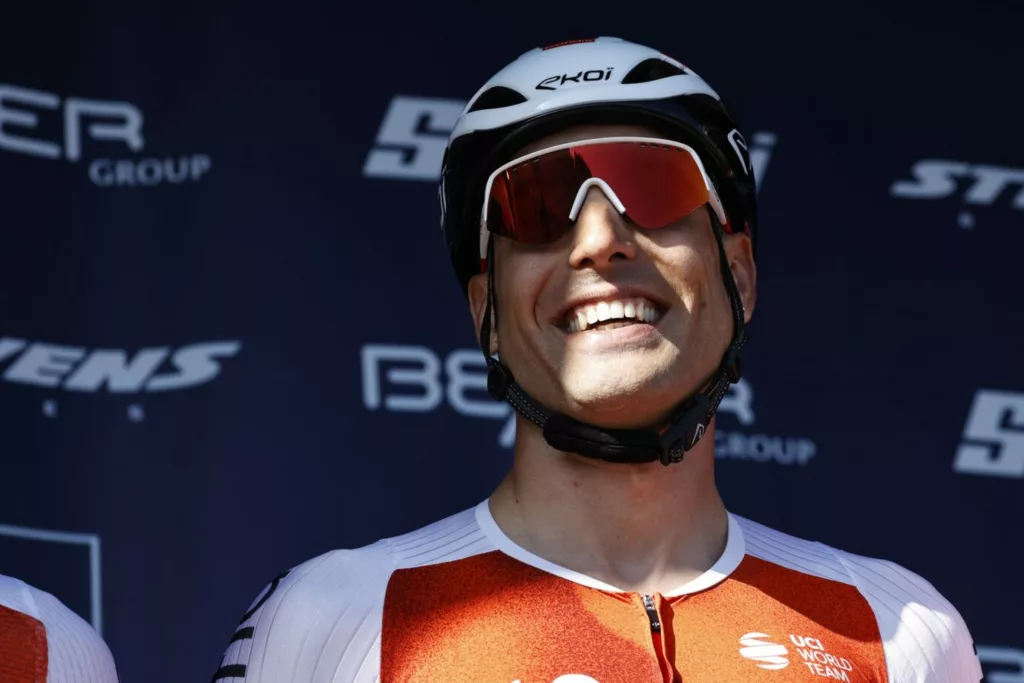
The event has been won by elite sprinters including Robbie McEwen, Arnaud Démare, Caleb Ewan, Elia Viviani and Olav Kooij. Riders such as Erik Zabel, André Greipel and Alexander Kristoff have also succeeded in Hamburg.
However, the Waseberg gives powerful Classics riders and breakaway specialists a realistic chance.
The ideal winner is often a sprinter who can climb well enough to survive repeated short efforts. A rider who depends on a large, organised lead-out may struggle if their teammates are dropped or the race fragments.
Three main scenarios are possible:
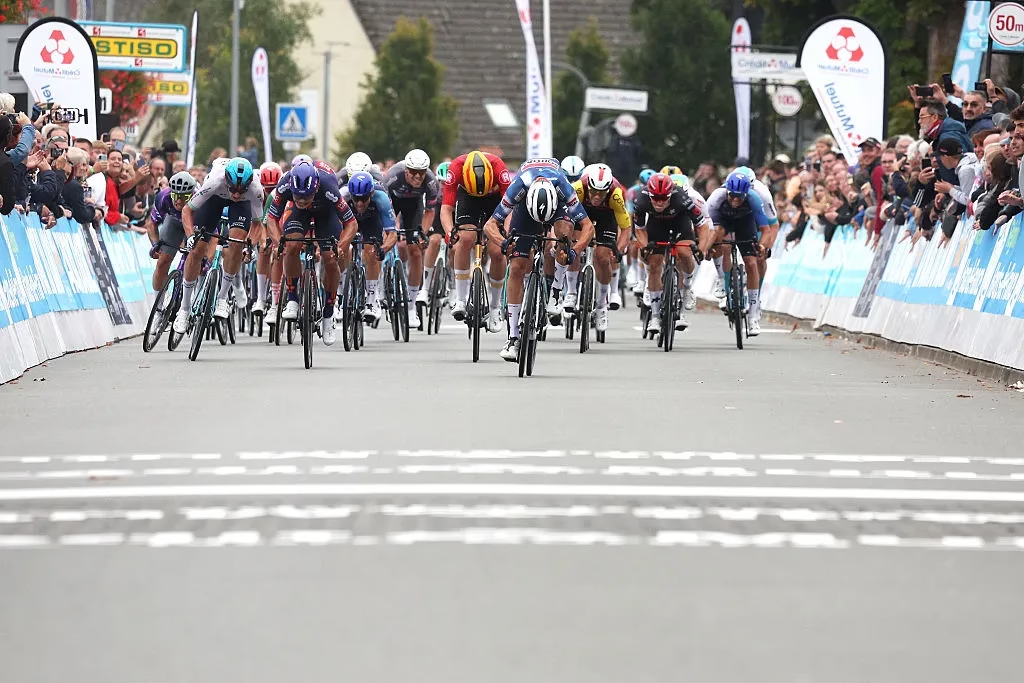
- A full bunch sprint: The sprint teams control the attacks and bring a large peloton onto Mönckebergstraße.
- A reduced sprint: The Waseberg removes the purest sprinters, leaving 30 to 60 riders to contest the finish.
- A late attack or surviving breakaway: A small group escapes and takes advantage of hesitation between the larger teams.
The mechanics of the first scenario are explained in our guide to how a bunch sprint works in cycling.
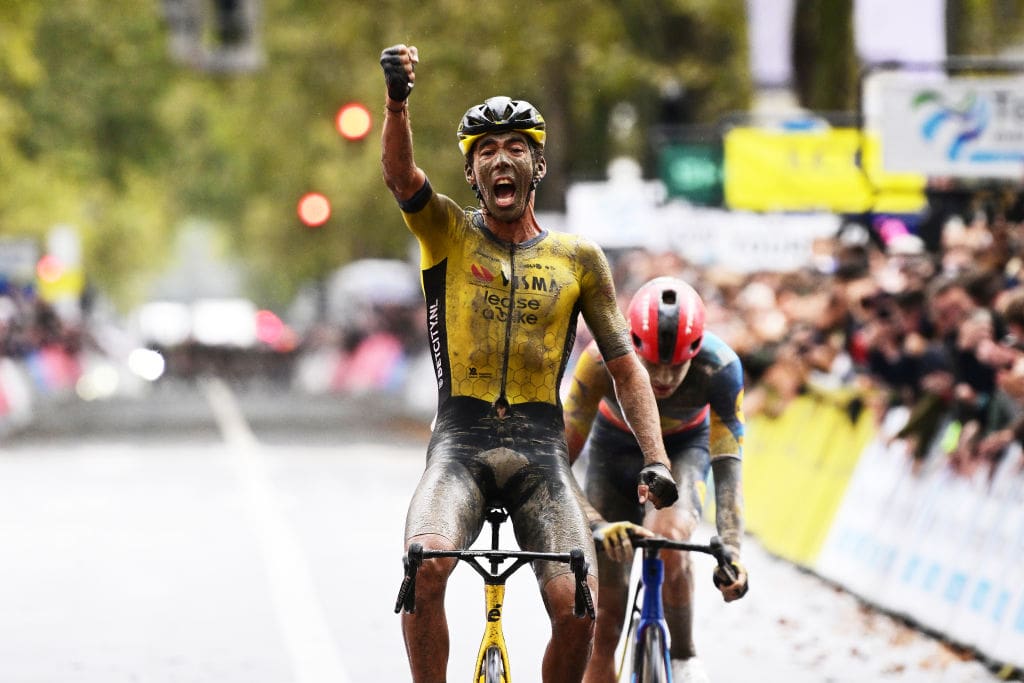
The third outcome occurred in 2025 when Rory Townsend survived from the early breakaway and held off the approaching peloton by a minimal margin.
What happened in the 2025 race?
Rory Townsend produced one of the biggest surprises of the 2025 WorldTour season.
The Irish champion joined the day’s four-rider breakaway and remained in front for almost the entire 207.4km race. The escape still held a narrow advantage after the repeated Waseberg passages, partly because attacks in the peloton disrupted the organised chase.
Townsend reached the final kilometre with Nelson Oliveira and Johan Jacobs. He attacked with around 400 metres remaining and held on as the peloton arrived directly behind him.
Arnaud De Lie finished second and Paul Magnier third, with Jasper Philipsen and Danny van Poppel completing the top five.
The result demonstrated why Hamburg cannot be treated as a guaranteed sprint.
The peloton had the speed to catch the breakaway, but the Waseberg attacks weakened its organisation. A small amount of hesitation was enough for Townsend to complete one of the closest breakaway victories of the season.
Which riders are suited to ADAC Cyclassics?
The race normally favours four overlapping rider types.
Powerful sprinters
These are riders with enough speed to win a large sprint but enough climbing ability to survive the Waseberg.
They do not need to be elite climbers. They must simply cope with repeated short efforts without losing contact or using too much energy.
Classics specialists
Strong one-day riders can use the Waseberg to attack, follow moves and reduce the number of sprinters remaining.
They may not be the fastest riders in a full peloton, but they can win from a smaller group.
Puncheurs
Puncheurs specialise in short, steep climbs and explosive accelerations.
The Waseberg suits them well, although the flat run back into Hamburg can make it difficult to preserve a small advantage.
Our guide to what a puncheur is in cycling explains why these riders are so effective on short, steep climbs and in reduced-group finishes.
Breakaway riders
The 2025 result showed that a committed early break can survive if the chase becomes disorganised.
This remains the least likely outcome on paper, but Hamburg’s fast roads and repeated late attacks can create exactly the hesitation a breakaway needs.
Why does positioning matter so much?
The Waseberg is narrow, steep and approached at high speed.
A rider beginning the climb near the front can respond to attacks and allow themselves to drift backwards slightly without losing contact. Someone entering near the rear may become detached before they have space to move.
Positioning also matters on the urban roads around Hamburg.
Roundabouts, bends, changes in road width and street furniture can stretch the peloton into a long line. Teams may spend significant energy keeping their leaders close to the front even when nobody is attacking.
The sprint teams therefore face two different tasks.
They must protect their leader over the Waseberg while preserving enough riders to control attacks and organise a lead-out later.
A team can successfully keep its sprinter in the race only to discover that nobody remains to bring back the final breakaway.
How important are crosswinds?
Crosswinds are a potential complication rather than a guaranteed feature.
Parts of the route through the Hamburg metropolitan region are relatively exposed. If the wind blows strongly from the side, teams can form diagonal lines called echelons.
Only a limited number of riders can gain shelter within an echelon. Gaps may form behind, splitting the peloton into several groups.
A crosswind split before Hamburg could eliminate sprinters or force their teams to chase before the decisive climbs. That extra effort may become important on the later Waseberg passages.
The forecast and wind direction are therefore worth checking on race morning, even though the route does not cross major mountains.
Similar tactical pressure can shape other exposed northern European races, as explained in our beginner’s guide to the Copenhagen Sprint.
Where does the race finish?
The race finishes on Mönckebergstraße, one of the main shopping streets in central Hamburg.
The finishing area is close to Hamburg City Hall and the Inner Alster, placing the conclusion of the race in one of the busiest and most recognisable parts of the city.
The riders return from the western districts after the final Waseberg passage. The approach is fast, making organisation crucial for both the sprint teams and any small group trying to stay away.
A breakaway reaching the final kilometre with only a few seconds may still survive because the chasing peloton needs enough space and cooperation to reach full speed.
For sprinters, timing is equally important. Launching too early on the finishing straight can leave a rider exposed, while waiting too long risks becoming boxed behind fading competitors.
A brief history of the Hamburg Cyclassics
The race was first held in 1996, when Rossano Brasi won the inaugural edition over 160km.
Its breakthrough came one year later. Jan Ullrich started only two weeks after becoming the first German winner of the Tour de France and won in front of a large home crowd.
That moment helped establish the race during Germany’s late-1990s cycling boom.
The Cyclassics joined the UCI Road World Cup in 1998, replacing Britain’s Wincanton Classic. It later became a founding event of the UCI ProTour, the predecessor of the modern WorldTour.
Its winners demonstrate the variety of riders capable of succeeding in Hamburg.
Johan Museeuw, Paolo Bettini, Óscar Freire, Alessandro Ballan and Filippo Pozzato were major Classics riders. McEwen, Greipel, Ewan and Viviani were predominantly sprinters.
Elia Viviani holds the record for the most victories after winning three consecutive editions between 2017 and 2019.
The race was cancelled in 2020 and 2021 during the COVID-19 pandemic before returning in 2022.
Recent ADAC Cyclassics winners
| Year | Winner |
|---|---|
| 2025 | Rory Townsend |
| 2024 | Olav Kooij |
| 2023 | Mads Pedersen |
| 2022 | Marco Haller |
| 2021 | Not held |
| 2020 | Not held |
| 2019 | Elia Viviani |
| 2018 | Elia Viviani |
| 2017 | Elia Viviani |
The recent results capture the race’s range.
Kooij and Viviani won with sprint speed. Pedersen and Haller are powerful Classics riders. Townsend succeeded from a long breakaway.
That variety is why the final Waseberg passage often matters more than simply identifying the fastest rider on the start list.
Is there an amateur ADAC Cyclassics?
Yes. Mass-participation cycling is a central part of the event.
The 2026 programme includes two amateur distances:
- The Experience: Approximately 60km
- The Challenge: Approximately 110km
The Experience is designed as the more accessible option. It starts between the Inner and Outer Alster before travelling through western Hamburg, the Pinneberg district, Kösterberg and Elbchaussee.
The Challenge starts in HafenCity and shares several elements with the professional course. It includes the Köhlbrand Bridge, parts of the Stade and Harburg districts, Rosengartenstraße and the return through Hamburg’s port.
Both events finish on Mönckebergstraße, giving amateur riders the opportunity to cross the same finish line used by the professionals later in the day.
The amateur events are timed cycling races on closed roads rather than a conventional untimed sportive.
Is ADAC Cyclassics one of cycling’s Monuments?
No.
Cycling’s five Monuments are:
- Milan-San Remo
- Tour of Flanders
- Paris-Roubaix
- Liège-Bastogne-Liège
- Il Lombardia
The ADAC Cyclassics is still a UCI WorldTour one-day race, but it does not have Monument status.
Its history is shorter, having begun in 1996, and the route does not possess the same traditional cobbled sectors, mountain passes or century-old identity associated with the Monuments.
WorldTour status nevertheless places it at the highest organisational level of professional road cycling.
The distinction becomes clearer when comparing Hamburg with races such as the Tour of Flanders or Liège-Bastogne-Liège, which carry Monument status and much longer histories.
Is ADAC Cyclassics a cobbled Classic?
No. The race is not built around cobbled sectors.
Its challenges come from fast roads, urban positioning, possible crosswinds and the Waseberg.
The term “Classic” is often used broadly for an important one-day race. It does not automatically mean that the route contains cobblestones.
Hamburg is therefore very different from the Tour of Flanders or Paris-Roubaix, even though all three are top-level one-day events.
How long does the race take?
A 206km professional race of this type will generally take between four-and-a-half and five hours, depending on the wind, tactical pattern and final average speed.
Hamburg can be particularly fast because much of the route is flat or rolling.
A slow start does not necessarily mean a quiet finale. The speed can increase dramatically as the peloton approaches Hamburg and teams begin fighting for position before the Waseberg circuits.
Official start, broadcast and expected finish times should be confirmed closer to race day through the ProCyclingUK men’s cycling TV guide hub.
What should beginners watch for?
The first important question is whether a strong breakaway forms.
Most early escapes will be controlled, but the 2025 edition showed why the peloton cannot allow a well-balanced group too much freedom.
The next factor is the wind. Splits on the exposed roads could change which riders reach Hamburg in contention.
Once the race arrives in Blankenese, focus on four things:
- Which sprinters remain in the front group?
- How many teammates do they still have?
- Who attacks on the Waseberg?
- Are the chasing teams cooperating?
The final question is whether the race comes back together before Mönckebergstraße.
A five-second gap can be enough if the peloton hesitates. It can also disappear almost instantly when several sprint teams commit to the chase.
What type of race should we expect in 2026?
The five Waseberg passages should make the 2026 edition selective enough to encourage attacks.
The 206km distance is long enough to create fatigue, while the repeated climbs give Classics riders several opportunities to weaken the sprinters.
A reduced sprint remains the most probable outcome. The race has historically favoured fast riders, and a long run from the final climb towards central Hamburg allows organised teams to chase.
However, the 2025 result may influence the tactics.
Sprint teams will be more conscious of giving the early break too much time. Attacking teams may also recognise that repeated moves over the Waseberg can disrupt the chase even when none of those attacks survives individually.
The result could be an aggressive finale in which the race repeatedly splits and reforms before the decisive move.
-
 Photo Credit: Cor Vos

ADAC Cyclassics 2026 frequently asked questions
When is the ADAC Cyclassics 2026?
The race takes place on Sunday 16 August 2026.
Where does the race start?
The professional race starts in Buxtehude, south-west of Hamburg.
Where does it finish?
The finish is on Mönckebergstraße in central Hamburg.
How long is the 2026 race?
The professional route is 206km long.
What is the key climb?
The Waseberg in Blankenese is the defining climb. It is approximately 700 metres long, reaches gradients of up to 16% and will be tackled five times.
Is it a sprinters’ race?
It often ends in a sprint, but the Waseberg can eliminate pure sprinters and create opportunities for puncheurs, Classics riders and breakaways.
Who won in 2025?
Rory Townsend won after surviving from the early breakaway and narrowly holding off the peloton.
Is ADAC Cyclassics a WorldTour race?
Yes. It is part of the men’s UCI WorldTour.
Can amateur cyclists take part?
Yes. The event includes approximately 60km and 110km mass-participation races called The Experience and The Challenge.
Why the ADAC Cyclassics is worth watching
The ADAC Cyclassics does not rely on famous mountains, cobbled sectors or extreme distance.
Its appeal comes from uncertainty.
The route gives sprinters a clear chance without guaranteeing them victory. The Waseberg is difficult enough to encourage attacks but far enough from the finish to create a tactical chase.
The streets of Hamburg add speed, crowds and a distinctive urban backdrop, while the mass-participation races turn the day into one of Germany’s largest cycling events.
For a new viewer, the central tension is easy to follow.
The sprinters need to survive five passages of the Waseberg and control every dangerous move. The attackers only need the chase to fail once.

