
The Ardèche does not have the immediate cycling recognition of the Alps, Pyrenees or nearby Mont Ventoux. That is part of its appeal.
This is a region of deep limestone gorges, volcanic uplands, chestnut forests, vineyards and stone villages connected by roads that seem designed for riding. The climbs are rarely famous enough to attract crowds, yet they are often long, quiet and difficult. Descents twist through wooded valleys. The landscape can change completely during a single ride.
Southern Ardèche offers warm, rugged terrain around Vallon-Pont-d’Arc and the Gorges de l’Ardèche. Further north and west, the roads rise towards Mont Gerbier de Jonc, the Cévennes and the higher reaches of the Massif Central. Between them are hundreds of minor roads where traffic can disappear for long periods.
For riders who want challenging days without spending an entire holiday ticking off famous Tour de France climbs, Ardèche deserves serious consideration. It belongs among the strongest options in any wider cycling trip through France.
Why cycle in Ardèche?
Ardèche provides the ingredients of a major cycling destination without always feeling like one.
There are dramatic roads, substantial climbs and enough route variety for a week or more, but much of the riding remains quieter than better-known parts of southern France. Leave the main visitor centres and it is possible to find narrow lanes passing through forests, vineyards and isolated villages with very little traffic.
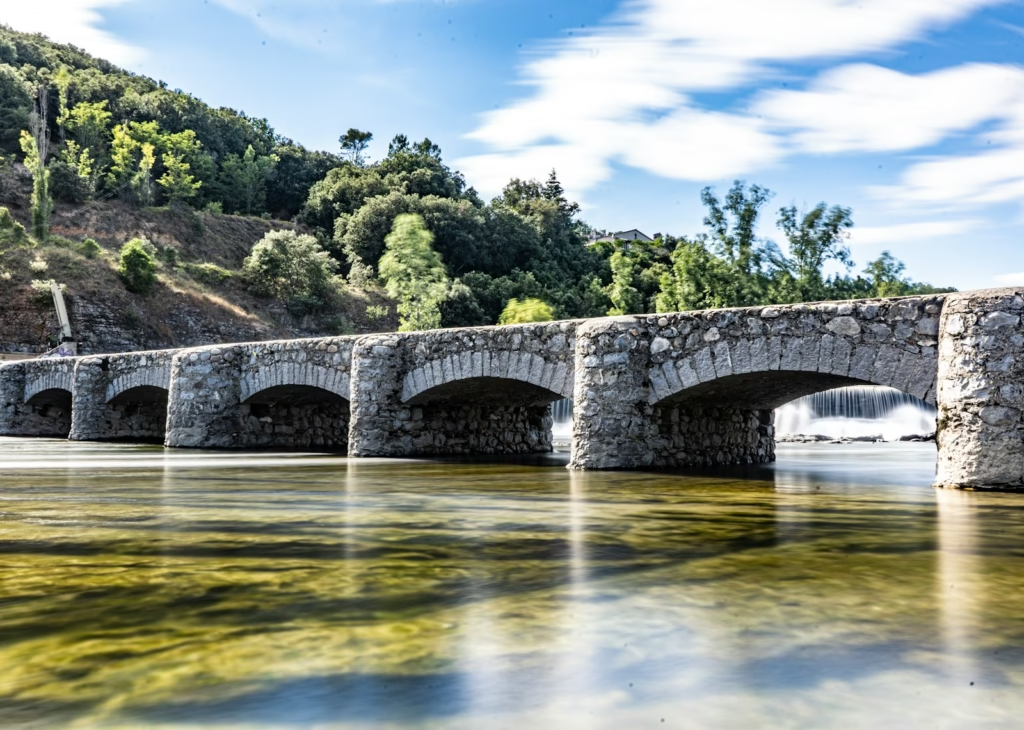
The region also works for different kinds of cycling. Strong road riders can build demanding mountain loops, touring cyclists can connect the valleys over several days, gravel and mountain-bike riders have extensive off-road options, while families can use converted railway lines such as the Via Ardèche and Dolce Via.
What makes Ardèche especially memorable is the contrast. One day can be spent riding beneath limestone cliffs in hot Mediterranean conditions. The next can take you onto exposed plateaux above 1,000 metres, where the air is cooler and the landscape feels closer to the Auvergne than Provence.
The Gorges de l’Ardèche is the headline ride
The panoramic road through the Gorges de l’Ardèche is the obvious starting point.
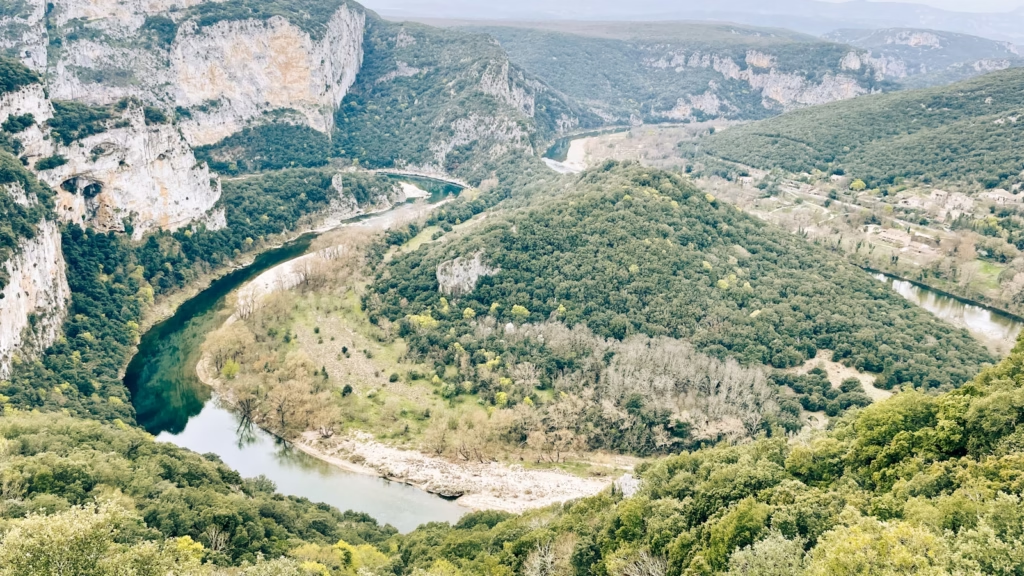
Running between Vallon-Pont-d’Arc and Saint-Martin-d’Ardèche, the route follows the canyon high above the river. It passes a succession of limestone cliffs, wooded slopes and viewpoints, with the road repeatedly climbing and descending rather than following the water at river level.
The tourist route is approximately 29km long and includes 11 official viewpoints. That distance can look modest on a map, but the constant changes in gradient make it considerably harder than a flat 29km road.
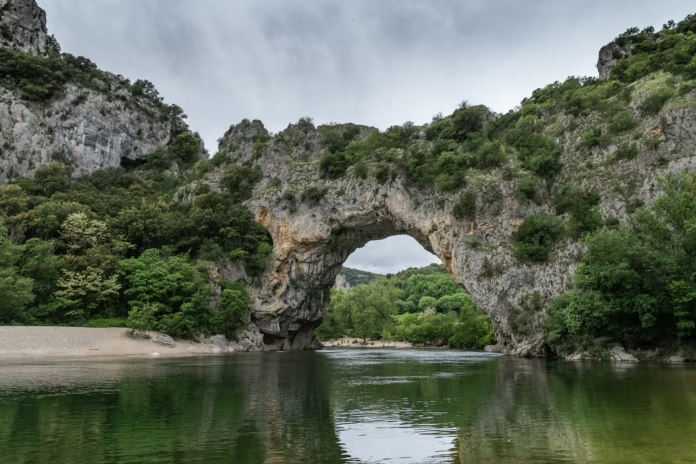
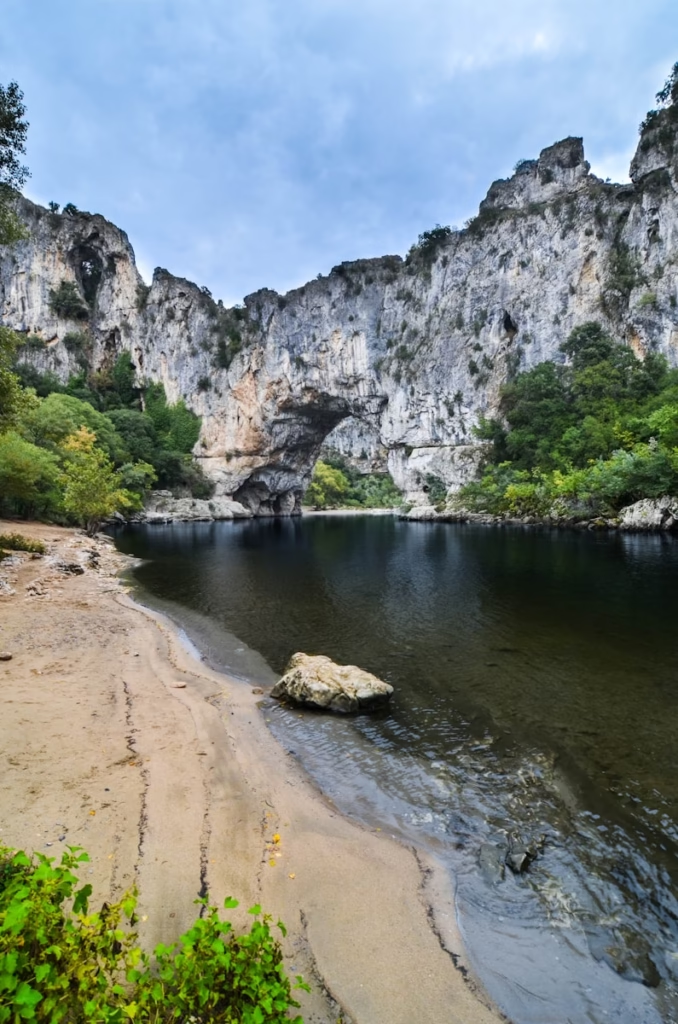
The most famous landmark is the Pont d’Arc, the natural stone arch near Vallon-Pont-d’Arc. It is one of the region’s defining images, although the best cycling comes after the road begins climbing onto the rim of the gorge.
From there, the route becomes a rhythm of short ascents, fast descents and exposed sections overlooking the canyon. Some stretches are cut directly into the rock, while others open onto wide views across the limestone plateau.
It is not a road to rush. The viewpoints are part of the ride, and stopping occasionally makes more sense than attempting to treat the route as a continuous effort.
How hard is the Gorges de l’Ardèche road?
There is no single long climb, but the accumulated elevation adds up.
The repeated rises are often more tiring than one steady ascent because the road rarely settles. Riders accelerate downhill, lose momentum into the next ramp and repeat the process for much of the day.
A return ride between Vallon-Pont-d’Arc and Saint-Martin-d’Ardèche can therefore become a substantial outing, especially in summer heat. Adding nearby villages or a longer approach can easily turn it into a 90km to 120km day.
The road is also popular with drivers, motorcyclists and tourists during peak holiday periods. Riding early in the morning is the best way to experience the gorge with lighter traffic and cooler temperatures.
There is much more than the gorge
The Gorges de l’Ardèche attracts most of the attention, but limiting a cycling trip to the canyon would miss the strongest reason to visit.
Away from the main tourist road, the département is crossed by small, twisting roads linking medieval villages and sparsely populated uplands. The terrain can be relentlessly rolling, with climbs that rarely appear on famous cycling lists but would be considered major ascents almost anywhere in Britain.
The Plateau du Coiron, the Cévennes foothills, the Monts d’Ardèche and the roads around Antraigues-sur-Volane all offer a different type of riding from the southern gorge.
This is where Ardèche feels less like a destination built around one landmark and more like an enormous natural route network.
Mont Gerbier de Jonc and the high Ardèche
Mont Gerbier de Jonc is one of the symbolic landmarks of the northern Ardèche.
The distinctive volcanic peak stands in the Monts d’Ardèche Regional Natural Park, close to the source of the Loire. Roads approach it across open uplands where the terrain, temperature and vegetation are noticeably different from the southern part of the département.
A ride towards Mont Gerbier de Jonc is less about one famous final ascent than the accumulated work required to reach the plateau. Approaches from villages such as Burzet, Saint-Martial, Lachamp-Raphaël and Sainte-Eulalie can include long sections of climbing, exposed roads and repeated elevation changes.
The summit roads rise above 1,300 metres in places. Even during summer, the weather can be cooler and more changeable than in Vallon-Pont-d’Arc.
For a road cyclist, this is one of Ardèche’s greatest strengths. The region does not simply offer hot canyon roads. It also provides high-altitude riding that feels remote, open and distinctly volcanic.
That irregular, repeated climbing is characteristic of the wider Massif Central, where difficulty often comes from the accumulation of ascents rather than one huge summit. The same principle shapes the Tour de France’s racing through the Massif Central.
The Col de la Chavade and Cévennes edge
The Col de la Chavade is another important reference point for riders exploring the western side of Ardèche.
The pass sits at 1,266 metres and connects the upper Ardèche valley with the higher plateaux towards the Massif Central. Depending on the approach, riders can face a long, steady climb rather than the abrupt gradients found on smaller local roads.
From the lower valleys, the ascent reveals how quickly the landscape changes. Chestnut woodland gives way to more open terrain, while the air becomes cooler as the road climbs.
This part of Ardèche rewards riders who enjoy long days rather than single-climb challenges. The best loops often include several passes, remote connecting roads and substantial total elevation.
Mobile reception can become less reliable, villages are further apart and food stops require planning. That isolation is part of the appeal, but it makes self-sufficiency more important.
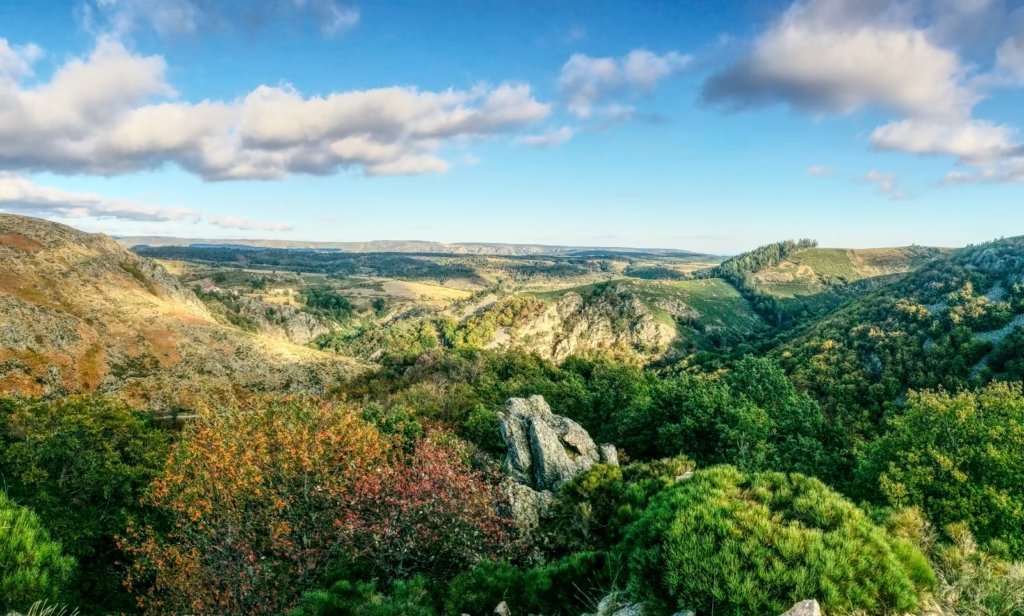
Antraigues-sur-Volane and the roads of the Ardèche Rally
Antraigues-sur-Volane is a strong base or ride destination for anyone wanting classic Ardèche terrain.
The village sits above the confluence of three rivers and is surrounded by steep, wooded hills. Roads radiate towards Vals-les-Bains, Mézilhac, Genestelle and the higher Monts d’Ardèche.
These are roads with a strong motorsport identity as well as cycling appeal. The Rallye Monte-Carlo has used sections in this wider area, and it is easy to understand why. The routes are narrow, technical and packed with corners.
For cyclists, that means climbing through shaded woodland before descending along roads that demand concentration. Surfaces can vary, and blind bends make it important to stay disciplined rather than treating every descent as a closed-road course.
The rewards are considerable. Traffic is often limited, the villages feel untouched by mass tourism and the riding has a natural flow that suits long endurance days.
The Plateau du Coiron offers a different landscape
The Plateau du Coiron rises between the Rhône valley and the Ardèche interior.
Its volcanic landscape is more open and austere than the forested valleys around it. Roads climb towards exposed farmland and high villages before revealing distant views towards the Cévennes and Rhône corridor.
The approaches can be deceptively difficult. Gradients are not always extreme, but the climbs are sustained and shade becomes limited on the plateau.
This is particularly good terrain for riders who want to escape the busier roads of southern Ardèche. Towns such as Aubenas, Privas and Villeneuve-de-Berg can be used to build loops that combine the plateau with lower valleys and historic villages.
The Coiron also illustrates why Ardèche rewards exploratory route planning. A road that appears minor on a map can provide an hour of almost uninterrupted climbing and descending through distinctive terrain.
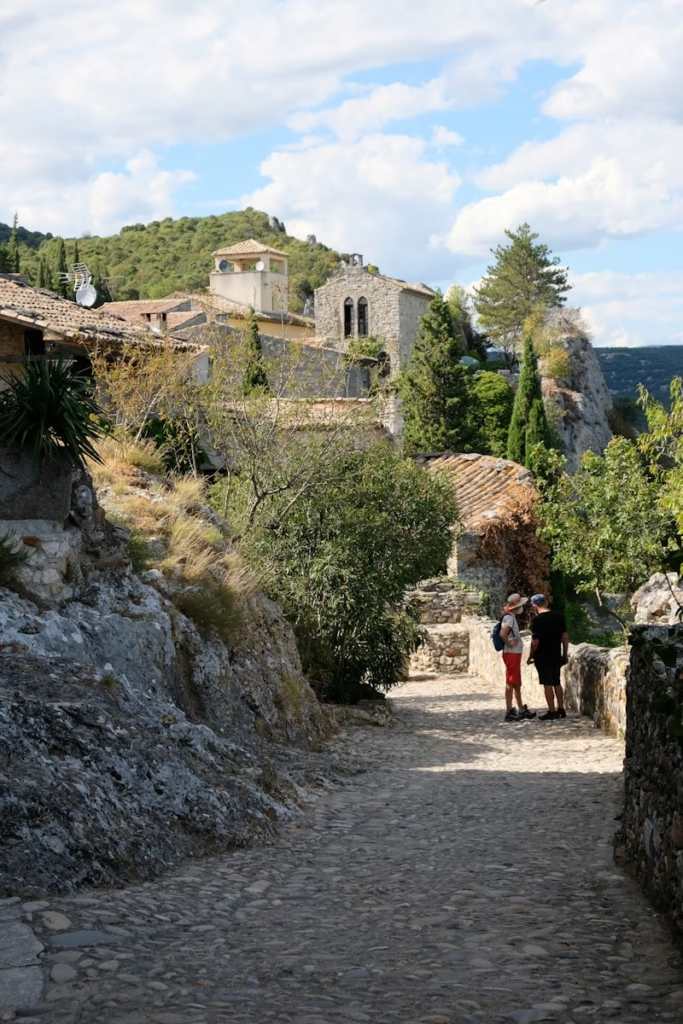
Largentière, Balazuc and the stone villages of southern Ardèche
Not every ride needs to be built around a mountain summit.
The area around Largentière, Balazuc, Vogüé, Ruoms and Joyeuse offers rolling terrain through vineyards, woodland and limestone villages. These roads are often better suited to recovery days or shorter rides, although the constant ramps still make genuinely flat cycling difficult.
Balazuc is perched above the Ardèche River, while Vogüé combines a riverside setting with a tightly packed historic centre. Largentière sits further inland and provides access to hillier roads towards the Cévennes.
The challenge is choosing the right roads between them. Larger routes can carry holiday traffic, while parallel minor roads are usually quieter and more enjoyable.
This is an area where digital route planning should be combined with local knowledge. A narrow road may be beautifully surfaced, rough but rideable, or unsuitable for a road bike. Asking at a bike shop or cyclist-friendly accommodation can prevent unnecessary detours.
Quiet roads are the real luxury
Ardèche’s biggest advantage is not one climb or landmark. It is the density of quiet roads.
In the Alps, riders often share famous passes with coaches, motorhomes, motorcycles and other cyclists. In Ardèche, a similarly demanding climb may have no reputation at all and almost no traffic.
That changes the character of a ride.
There is less pressure to chase a segment time or photograph a summit sign. The experience becomes about finding a rhythm, moving through the landscape and working out what lies beyond the next ridge.
Road width can be narrow, and surfaces are not universally perfect. Fallen branches, loose gravel and agricultural debris are possible, particularly on remote descents. Yet this is usually a worthwhile trade-off for the peace and space.
The département remains sparsely populated away from its main towns and visitor centres. Once a rider leaves the busier valley roads, long stretches can pass without seeing many vehicles.
Riders who enjoy this quieter style of mountain travel may find a similar sense of exploration in destinations such as the Soča Valley, although Ardèche replaces high Alpine drama with warmer, rougher and more irregular terrain.
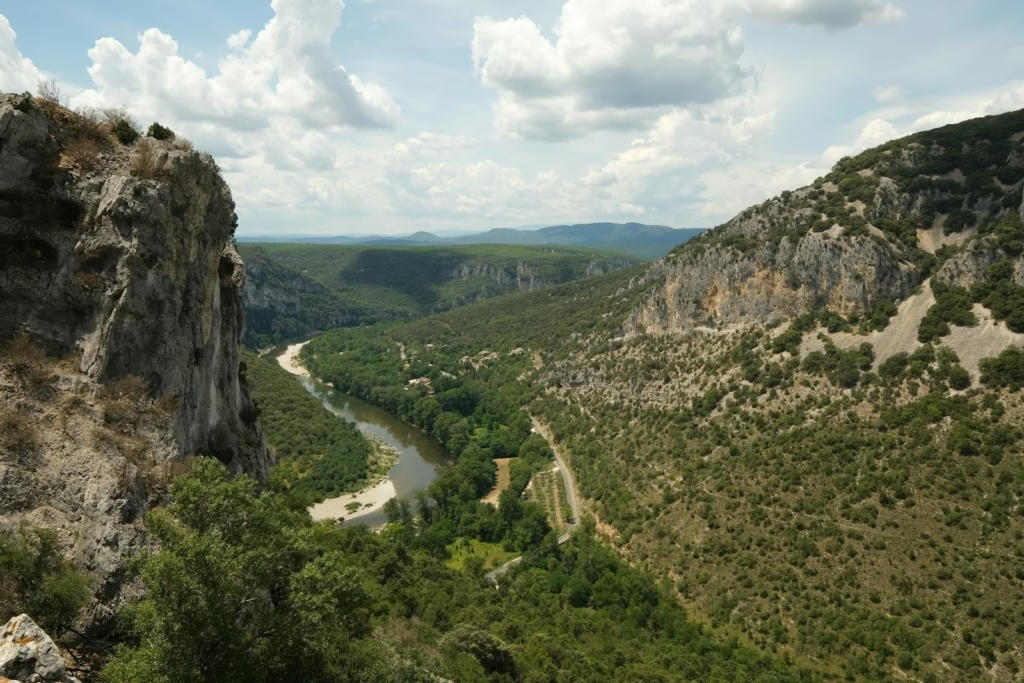
The climbs are harder than their profiles suggest
Ardèche rarely gives riders an easy day.
Even when the route avoids the highest mountains, the roads constantly rise and fall. A planned 80km loop can accumulate 1,500 to 2,000 metres of climbing without including a single major named ascent.
The gradients are also irregular. A road may average 5%, but that figure can hide flatter sections separated by ramps above 10%. Villages are often built on defensible hillsides, ensuring one final steep effort before reaching a café or water fountain.
There is a particular type of fatigue associated with the region. Riders do not simply climb for an hour and descend. They spend the whole day changing effort, braking, accelerating and climbing again.
A compact chainset and a generous cassette are sensible, even for fit riders. Gearing suitable for Alpine passes may still feel too large on Ardèche’s steepest back roads.
Ardèche is suitable for more than road cycling
Road cycling may be the main attraction for performance-focused visitors, but the region also has a strong network for touring, gravel and mountain biking.
The Dolce Via is a 90km route through the Eyrieux valley and surrounding countryside. It largely follows former railway infrastructure and is suitable for hybrid bikes, gravel bikes and touring set-ups rather than pure road racing equipment.
The Via Ardèche uses another former railway line. A developed section between Vogüé and Grospierres provides a flatter, traffic-free option that works particularly well for families or easier recovery rides.
For mountain bikers, the Grande Traversée de l’Ardèche crosses more than 300km between Annonay and Bourg-Saint-Andéol, using sections of the GR4 and GR7.
That variety makes Ardèche practical for mixed groups. A household does not need every rider to share the same ability or preferred surface.
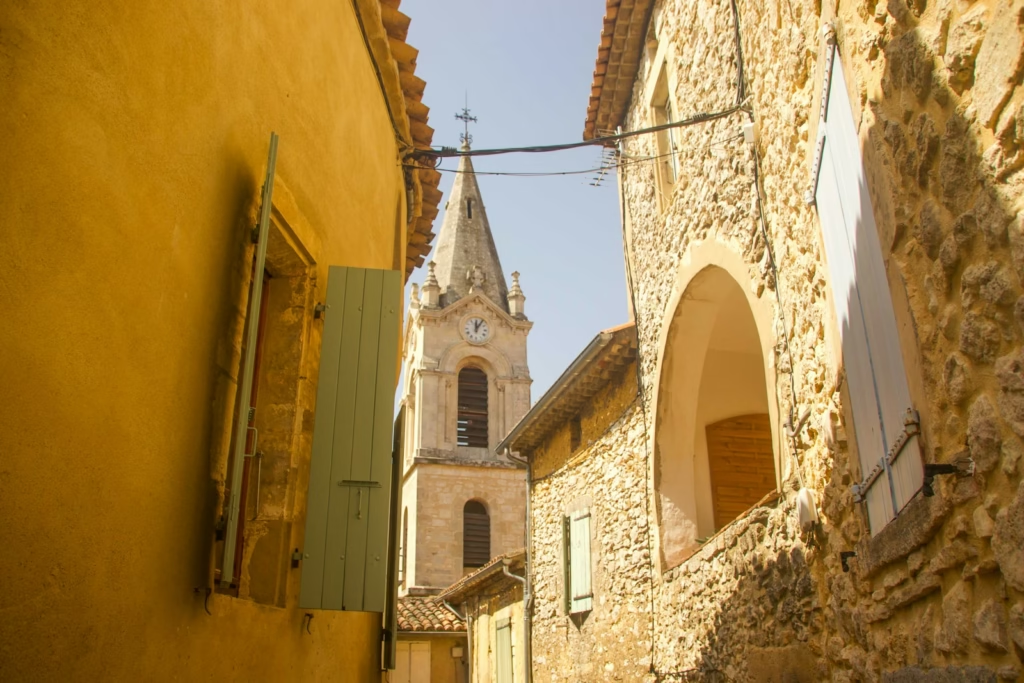
L’Ardéchoise shows how deeply cycling is embedded here
L’Ardéchoise is the region’s defining mass-participation cycling event.
Based around Saint-Félicien, it offers routes of different lengths across the northern Ardèche, using the same remote cols, wooded valleys and volcanic uplands that make the area so appealing for independent riding.
The event has grown into one of France’s largest cycling gatherings, with villages decorating the route and local volunteers supporting riders across multiple days and distances.
Its significance goes beyond one sportive. L’Ardéchoise has helped establish a cycling culture across the region. Many villages understand what visiting riders need, while accommodation providers and tourism offices increasingly offer secure storage, route information and other cycle-friendly services.
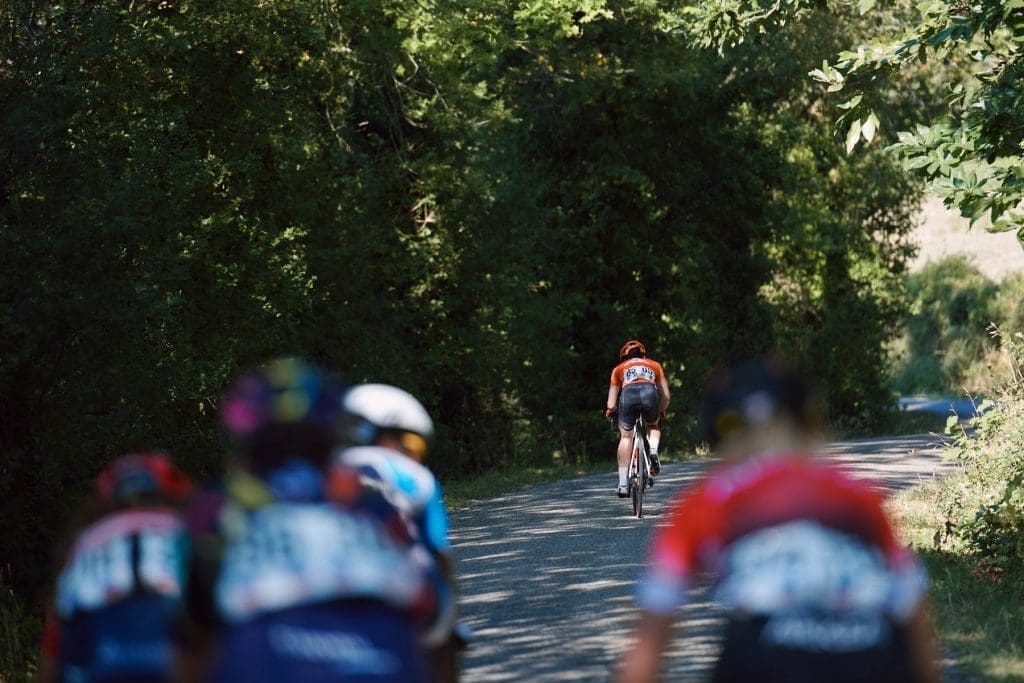
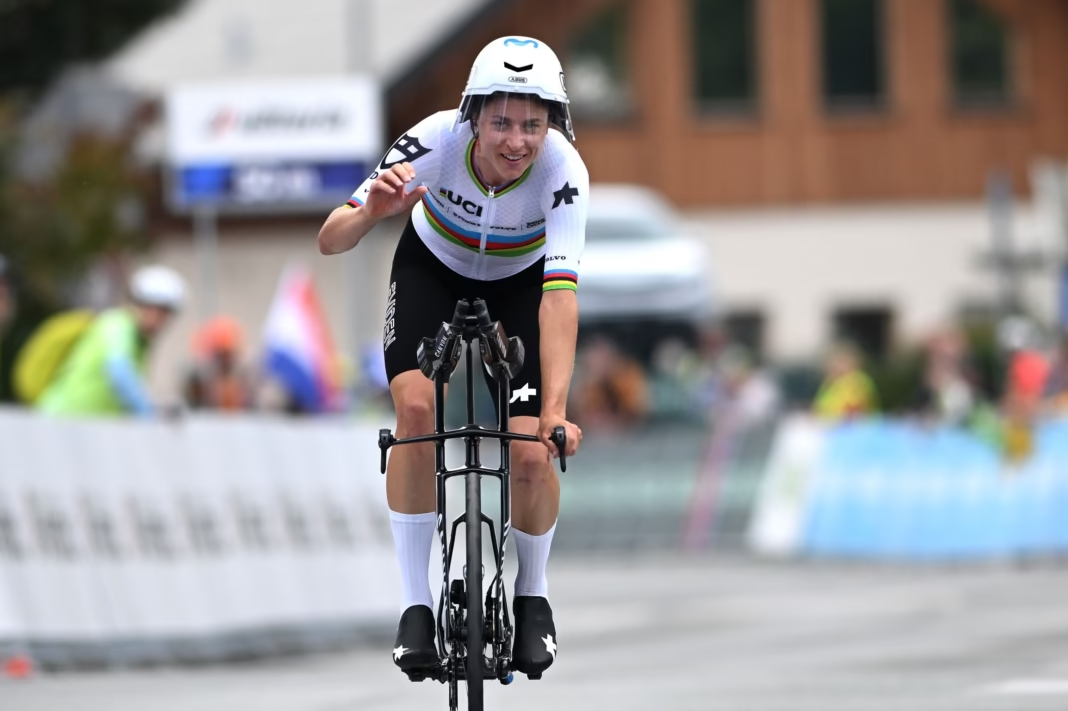
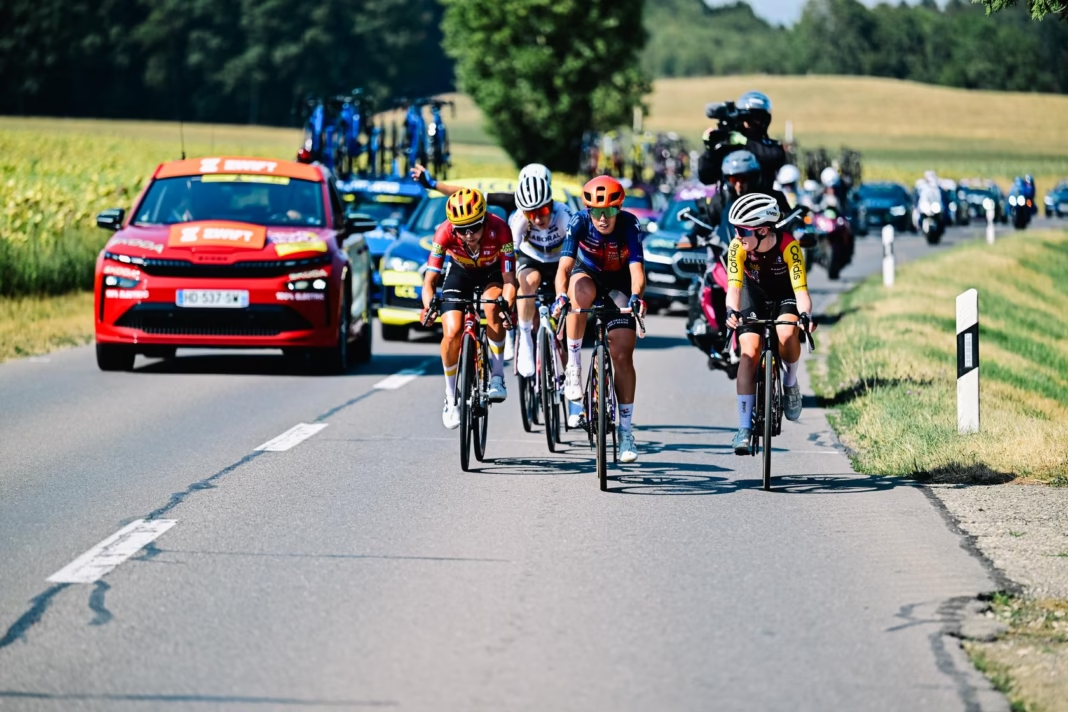
Ardèche also has an important place in women’s professional cycling through the Tour Cycliste Féminin International de l’Ardèche. The race has long used the region’s rolling and mountainous roads, although major changes to the Tour de l’Ardèche from 2026 have reduced it to a shorter three-day format.
The best time to cycle in Ardèche
April and May
Spring can be excellent at lower elevations.
Temperatures are generally more comfortable than midsummer, vegetation is green and tourist traffic is lighter. Higher roads may still be cold, particularly early in the morning, and unsettled weather can affect the uplands.
May is one of the strongest all-round choices, provided riders carry rain protection and check conditions before heading above 1,000 metres.
June
June combines long daylight hours with increasingly reliable warmth.
The higher plateaux should be more accessible, while the most popular holiday areas are not yet at their busiest. L’Ardéchoise usually brings a major concentration of cyclists to the northern part of the département, so accommodation around the event period can become harder to find.
July and August
Summer offers the most reliable conditions but also the greatest challenges.
Temperatures in southern Ardèche can become extremely high. The exposed gorge road and vineyard areas provide limited shade, making early starts essential.
Traffic also increases around Vallon-Pont-d’Arc, Ruoms and the principal visitor sites. The higher Monts d’Ardèche are often a better choice during hot periods because altitude brings cooler conditions.
September
September may be the best month for experienced riders.
The main holiday crowds begin to fall, temperatures are usually less severe and the roads remain accessible. Daylight is shorter than in June, but there is still enough for substantial rides.
Late September can become cooler and more unpredictable at altitude, so route choice should reflect the forecast.
October
Early October can provide quiet roads and attractive autumn colours, particularly around the chestnut forests.
However, conditions become less reliable. Rain, mist and falling temperatures can make remote descents uncomfortable, while shorter daylight reduces the margin for ambitious loops.
Where should cyclists stay?
Vallon-Pont-d’Arc
Vallon-Pont-d’Arc is the obvious base for the gorge and southern limestone country.
It has accommodation, restaurants, bike hire and easy access to the panoramic road. The disadvantage is summer congestion. Riders seeking quiet conditions should stay outside the busiest weeks or begin each ride early.
Aubenas
Aubenas is one of the most flexible bases.
It provides access south towards Vogüé and Balazuc, west towards Largentière and the Cévennes, and north towards Vals-les-Bains and Antraigues-sur-Volane.
The town itself is busy, but it works well for riders wanting several distinct route options.
Vals-les-Bains
Vals-les-Bains offers a quieter alternative close to Aubenas.
It is particularly useful for routes into the Volane valley, Antraigues and the higher Monts d’Ardèche. The surrounding roads begin climbing quickly, so easy recovery rides are less common.
Saint-Félicien
Saint-Félicien is the natural base for exploring L’Ardéchoise country.
The riding is hilly in every direction, with routes towards Lalouvesc, Nozières, Rochepaule and the northern plateaux. This is a strong choice for serious road riders who prioritise quiet climbing over major tourist attractions.
Le Cheylard
Le Cheylard sits in the Eyrieux valley and works well for mixed cycling.
Road riders can climb towards the higher plateaux, while touring and gravel cyclists can access the Dolce Via. Its central location makes it useful for exploring the less-visited heart of Ardèche.
Privas
Privas provides access to the Plateau du Coiron and the eastern side of the département.
It is less convenient for the Gorges de l’Ardèche but better suited to riders seeking quieter roads and routes towards the Rhône valley.
How to reach Ardèche from the UK
Ardèche has no major central railway station, which helps preserve its quiet character but complicates travel.
The most useful rail gateways are usually Valence, Montélimar, Avignon and, depending on the destination, Lyon. From there, visitors may need a regional bus, transfer or hire car.
For northern Ardèche, Valence and Lyon are often the most practical options. Montélimar and Avignon work better for the southern gorge.
Flying into Lyon, Marseille, Montpellier or Geneva can also work, but the final transfer may be lengthy. A car is useful for reaching remote accommodation, although it is not necessary for every day once a good riding base has been chosen.
Travelling with a bike by rail requires checking the rules for each service. Some French high-speed trains require cycle reservations or the bicycle to be bagged, while regional arrangements vary.
What bike should you bring?
A conventional lightweight road bike is suitable for the main paved routes.
Tyres between 28mm and 32mm provide a useful balance of speed, comfort and security. Some minor roads have coarse surfaces, patched sections or gravel washed onto corners, making very narrow tyres less attractive.
Disc brakes are helpful on long and technical descents, particularly in wet conditions, but well-maintained rim brakes remain adequate.
A compact 50/34 chainset with at least a 30 or 32-tooth largest sprocket will suit most riders. Those carrying luggage or exploring the steepest back roads may prefer even lower gearing.
A gravel bike opens up more possibilities, including the Dolce Via, converted railway routes and rougher connectors. It may sacrifice some speed on the major climbs but is arguably the most versatile option for a mixed Ardèche trip.
Water, food and self-sufficiency
Remote riding requires planning.
Village fountains are common but should not be assumed to be operational or drinkable unless marked. Carrying two large bottles is sensible, and a third bottle or hydration pack may be necessary during hot summer rides.
Shops can close for long lunch periods, particularly in smaller communities. Sundays and public holidays create additional uncertainty.
Riders should begin with enough food to complete most of the route rather than relying on finding an open bakery halfway around.
A basic repair kit should include:
- Two inner tubes or suitable tubeless repair equipment
- A pump rather than only a CO₂ cartridge
- Tyre boots
- A chain quick-link
- Basic multitool
- Emergency food
- Lightweight waterproof layer
Long gaps between settlements mean a minor mechanical problem can otherwise become a significant issue.
Descending requires restraint
Ardèche’s descents are entertaining but technically demanding.
Many roads have blind bends, inconsistent surfaces and limited sight lines. Gravel can collect near the edge of the carriageway, while rockfall and fallen branches are possible in the gorges and forests.
Local drivers may know the road well and approach bends quickly. Riders should remain on their side even when the route appears empty.
The greatest hazard is often confidence. A descent may flow beautifully for several kilometres before tightening without warning. Reading the road matters more than chasing speed.
Animals, walkers and agricultural vehicles are also possible on the quietest lanes.
Heat can define the ride
Southern Ardèche can become extremely hot in July and August.
The gorge road reflects heat from exposed limestone, while long sections offer little shade. A ride that feels manageable at 08:00 can become punishing by early afternoon.
Starting shortly after sunrise is often the difference between an enjoyable day and a survival exercise.
Hydration should begin before the ride rather than after thirst develops. Electrolytes are useful during long, hot days, but they do not replace sufficient fluid intake.
Route planning should account for altitude. On the hottest days, travelling north or climbing into the Monts d’Ardèche can produce significantly cooler riding conditions.
A five-day Ardèche cycling plan
Day one: villages and vineyards
Begin with a moderate loop around Vogüé, Balazuc, Largentière and Ruoms.
This introduces the short climbs, stone villages and minor roads without committing to the hardest terrain.
Day two: Gorges de l’Ardèche
Ride from Vallon-Pont-d’Arc towards Saint-Martin-d’Ardèche along the panoramic road.
Start early, stop at selected viewpoints and expect more climbing than the distance suggests.
Day three: recovery on the Via Ardèche
Use the converted railway route for a flatter day.
This can be combined with cafés, swimming or a short additional loop around the southern villages.
Day four: Antraigues and the Monts d’Ardèche
Move towards Aubenas or Vals-les-Bains for a longer climbing day through Antraigues-sur-Volane and the surrounding valleys.
The route can be extended towards Mézilhac or Lachamp-Raphaël depending on fitness and weather.
Day five: Mont Gerbier de Jonc
Finish with a high-altitude ride towards Mont Gerbier de Jonc.
This should be the most demanding day, with long climbing, exposed terrain and a genuine Massif Central atmosphere.
Anyone planning several consecutive days should prepare for the cumulative fatigue rather than judging the trip by individual ride distances. The principles in this guide to training for a first multi-day cycling holiday apply particularly well to Ardèche’s relentless rolling terrain.
Who will enjoy cycling in Ardèche?
Ardèche suits riders who value exploration over prestige.
It is ideal for cyclists who enjoy long, rolling days, technical descents and quiet roads. It also rewards people prepared to plan carefully, carry supplies and accept that the best route may not include a famous summit.
Pure climbers will find enough elevation to create extremely hard days. Touring cyclists can connect the valleys and greenways. Gravel riders can mix railway routes with rougher forest roads.
It is less suitable for anyone wanting guaranteed smooth tarmac, abundant roadside cafés or a collection of instantly recognisable Tour de France passes.
The region asks for a little more independence. In return, it offers a sense of discovery that is increasingly difficult to find in Europe’s most established cycling destinations.
Is Ardèche better than the Alps or Provence?
It depends on the purpose of the trip.
The Alps provide longer and more famous climbs. Provence offers Mont Ventoux, lavender landscapes and a larger tourism infrastructure. Ardèche sits between those experiences without directly copying either.
Its climbs are less monumental but often quieter. Its landscapes are Mediterranean in the south and mountainous in the north. Its roads feel more exploratory and less organised around cycling tourism.
Riders seeking a single iconic challenge may prefer the classic ascent of Mont Ventoux or the famous roads around Bourg d’Oisans and Alpe d’Huez. Ardèche offers something different, with less emphasis on summit names and more on complete days of riding.
For a first cycling holiday in France, the Alps may still hold greater appeal. For a rider who has already visited the major destinations and wants somewhere different, Ardèche may be the more satisfying choice.
-
 Photo Credit: A.S.O./Billy Ceusters

Why Ardèche belongs on your riding list
Ardèche succeeds because it never feels like a destination reduced to one climb.
The gorge is spectacular, but the real value lies in everything around it: the near-empty cols above Antraigues, the volcanic roads around Mont Gerbier de Jonc, the steep village approaches, the shaded valleys and the endless minor lanes that do not appear in race history.
A ride can be beautiful without being famous. It can be difficult without needing a summit photographer or kilometre markers. It can feel remote without requiring an expedition.
That is what Ardèche offers.
It is not simply an alternative to the Alps, Pyrenees or Provence. It is a complete cycling region in its own right, and one that still leaves riders with the feeling they have discovered something for themselves.
Frequently asked questions
Is Ardèche good for road cycling?
Yes. Ardèche has extensive quiet roads, sustained climbs, technical descents and varied landscapes. It is particularly suited to experienced road riders who enjoy hilly routes and independent exploration.
What is the best cycling route in Ardèche?
The panoramic road through the Gorges de l’Ardèche is the best-known route. However, the roads around Mont Gerbier de Jonc, Antraigues-sur-Volane and Saint-Félicien offer stronger options for riders seeking longer climbs and quieter terrain.
Is cycling in Ardèche difficult?
Most road routes are hilly. Even moderate distances can accumulate substantial elevation because the roads repeatedly climb and descend. Flat riding is mainly found on greenways such as the Via Ardèche and Dolce Via.
When is the best time to cycle in Ardèche?
May, June and September provide the best balance of weather, daylight and traffic. July and August can be extremely hot and busy around the main tourist sites.
Is the Gorges de l’Ardèche road safe for cyclists?
It is rideable, but traffic increases during the summer holiday season. An early-morning start provides cooler conditions and quieter roads. Riders should use lights, remain visible and descend cautiously.
Can beginners cycle in Ardèche?
Beginners may find the open roads demanding, but the Via Ardèche and Dolce Via provide gentler traffic-free or low-stress options. Electric bikes also make the hillier terrain more accessible.
Do I need a car in Ardèche?
A car is useful because many of the best riding bases lack direct rail access. Once settled in a suitable town or village, however, most daily rides can begin directly from the accommodation.
What gearing is best for Ardèche?
A compact chainset with a 30 or 32-tooth largest sprocket is a sensible minimum for most riders. Lower gearing may be preferable for loaded touring or the steepest minor roads.
Is Ardèche suitable for gravel cycling?
Yes. Converted railway routes, forest roads and the extensive mountain-bike network make Ardèche well suited to gravel and mixed-surface riding. A gravel bike is one of the most versatile choices for the region.

