
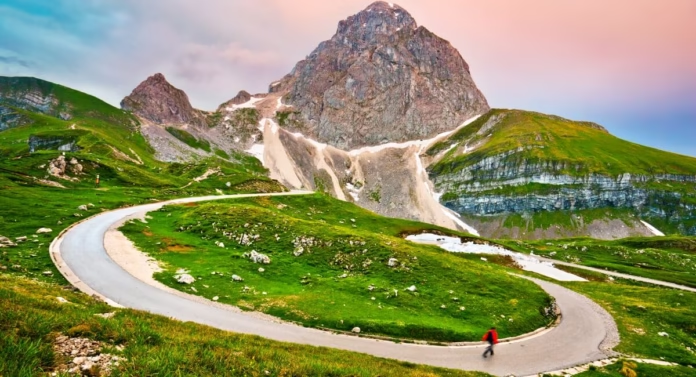
Soča Valley is one of those places that looks almost too polished to be real. The river is turquoise, the mountains rise sharply from the road, the towns are small enough to feel calm, and the riding can change from gentle valley roads to serious Alpine climbing in the space of a few kilometres.
For cyclists, that makes it one of Slovenia’s most interesting destinations. It is not just a scenic place with a few good rides nearby. It is a full cycling base, with road routes, gravel tracks, mountain-bike trails, family-friendly paths, long-distance touring options and some of the most dramatic climbing in the Julian Alps.
Bovec, Kobarid and Tolmin give the valley its main cycling rhythm. Bovec is the adventure base, with high mountains and access towards Vršič, Predil and Mangart. Kobarid brings history, river roads and punchy riding around the Soča and Nadiža valleys. Tolmin sits lower and wider, making it a useful base for easier rides, loops through the central Soča Valley and longer routes towards the south.
Soča Valley deserves a place on your riding list because it offers the rare combination every cycling trip needs: beautiful roads, proper climbs, varied terrain, good bases, strong off-bike appeal and enough route choice to suit more than one type of rider. For more European riding ideas, see our Travel & Riding Abroad hub and our wider guide to cycling in the rest of Europe.
Quick answer: why is Soča Valley good for cycling?
Soča Valley is good for cycling because it combines Alpine scenery, quiet roads, varied climbing, gravel and MTB options, and easy access to some of Slovenia’s best riding. Riders can choose gentle riverside routes, road loops from Bovec, Kobarid and Tolmin, gravel tracks above the valley or big mountain tests towards Vršič, Predil and Mangart.
The official Soča Valley cycling routes page is a useful starting point for route planning, especially if you want to compare road, MTB and family-friendly options.
| Best for | Why Soča Valley works |
|---|---|
| Road cycling | Valley roads, Alpine passes and long climbing days |
| Gravel riding | Forest tracks, high pastures and linking routes between villages |
| Mountain biking | Dedicated MTB routes and access to the Juliana Bike network |
| Touring | Town-to-town riding, guesthouses and compact geography |
| Beginners | Easier riverside routes around Tolmin and Kobarid |
| Climbers | Vršič, Predil, Mangart and high roads around the Julian Alps |
| Scenery | The Soča River, limestone peaks, waterfalls and mountain villages |
Where is Soča Valley?
Soča Valley is in western Slovenia, close to the Italian border and the Julian Alps. The valley follows the Soča River, with Bovec in the upper valley, Kobarid in the central section and Tolmin further south.
That location is part of the appeal. It sits between Alpine Slovenia and the softer western landscape towards Italy. On one ride, you can feel like you are in a high mountain region. On another, you can roll through warmer, quieter roads with vineyards, old villages and river views.
The area is also compact. You do not need to spend hours driving between rides. Base yourself in Bovec, Kobarid or Tolmin and you can build several days of cycling around the same accommodation.
Why cyclists should care about Soča Valley
Soča Valley is not as famous internationally as the Dolomites, Mallorca or the French Alps, but that is part of its strength. It still feels like a discovery for many visiting riders.
The roads are scenic without being overrun. The climbs are hard without always carrying the traffic pressure of the biggest Alpine passes. The towns are small but useful. The river gives every ride a natural reference point. And if you want variety, the area is excellent.
A pure road cyclist can target Vršič, Predil or big valley loops. A gravel rider can use tracks and high roads above Kobarid and Tolmin. A mountain biker can look towards Bovec and the Juliana Bike route. A touring rider can link the valley into a wider Slovenia trip, moving between the Julian Alps, Lake Bled, Bohinj, Nova Gorica or even Italy.
That makes Soča Valley especially good for mixed groups. Not everyone has to want the same thing. One rider can chase a big climbing day, another can ride an easier valley loop, and both can meet back in Kobarid or Bovec for dinner.
It also sits naturally beside other varied European riding bases, such as Girona and the Costa Brava, where the strength is not one single climb but the range of routes you can build from the same base.
Bovec: the high-mountain base
Bovec is the best base if you want drama.
It sits in the upper Soča Valley, surrounded by mountains and close to some of the region’s biggest cycling objectives. The roads north and east lead towards the Trenta Valley and Vršič Pass. The route towards Log pod Mangartom and Predil puts riders into proper Alpine terrain. The Mangart road, when accessible, is one of the most spectacular high-road challenges in Slovenia.
Bovec is also an adventure town, so it has more going on than just cycling. Rafting, kayaking, hiking, canyoning and mountain activities are part of its identity. That makes it a good choice if you are travelling with people who do not want to ride every day.
For cyclists, Bovec works best if you like climbing, views and harder days. It is less suited to riders who want flat recovery roads straight from the door. You can ride easier stretches along the valley, but the strongest reason to stay in Bovec is access to the mountains.
It has something in common with other mountain-first bases such as Briançon and Serre-Chevalier, where the appeal comes from being close to proper Alpine roads rather than needing to drive to the day’s main ride.
Kobarid: the best all-round base
Kobarid may be the best all-round cycling base in Soča Valley.
It is lower than Bovec, warmer in feel and better placed for varied loops. You can ride north towards Bovec and the upper valley, south towards Tolmin, west towards the Nadiža valley or up into the hills for harder climbing and gravel options.
It also has a strong sense of place. Kobarid is known for its First World War history, its museum, its connection to the Battle of Caporetto and its position near the Soča River. That gives the town more depth than simply being somewhere to sleep between rides.
For road cyclists, Kobarid is useful because it lets you decide how hard the day should be. You can ride a gentler loop along the valley, take on a punchier route towards nearby villages or build a longer day with more climbing. For gravel riders, the surrounding terrain gives plenty of scope for mixed-surface exploring.
Kobarid is the right base if you want variety and do not need the full high-Alpine feel every morning.
Tolmin: the easier and more practical base
Tolmin is the best base for riders who want a slightly easier, more practical version of Soča Valley.
It sits lower in the valley, close to the confluence of the Soča and Tolminka rivers. The riding here can still be hilly, but the terrain opens out more than it does around Bovec. That makes Tolmin useful for easier days, mixed-ability groups and riders who want access to both the valley and the routes heading south.
Tolmin also works well for touring. You can link it with Most na Soči, Kobarid, Kanal, the Baška Grapa valley and wider western Slovenia. If Bovec is the dramatic mountain base and Kobarid is the all-rounder, Tolmin is the most practical starting point for riders who want a calmer trip.
It is also a good place to begin if you are not sure how Alpine you want the riding to feel. From Tolmin, you can build confidence before heading higher into the valley.
For riders planning several days away, that practical base matters as much as the climbs themselves. Our guide on how to train for your first multi-day cycling holiday explains why route intensity needs to be spread carefully across a whole trip, not just judged day by day.
The Soča River ride
Every cycling trip to the valley should include at least one ride built around the Soča River.
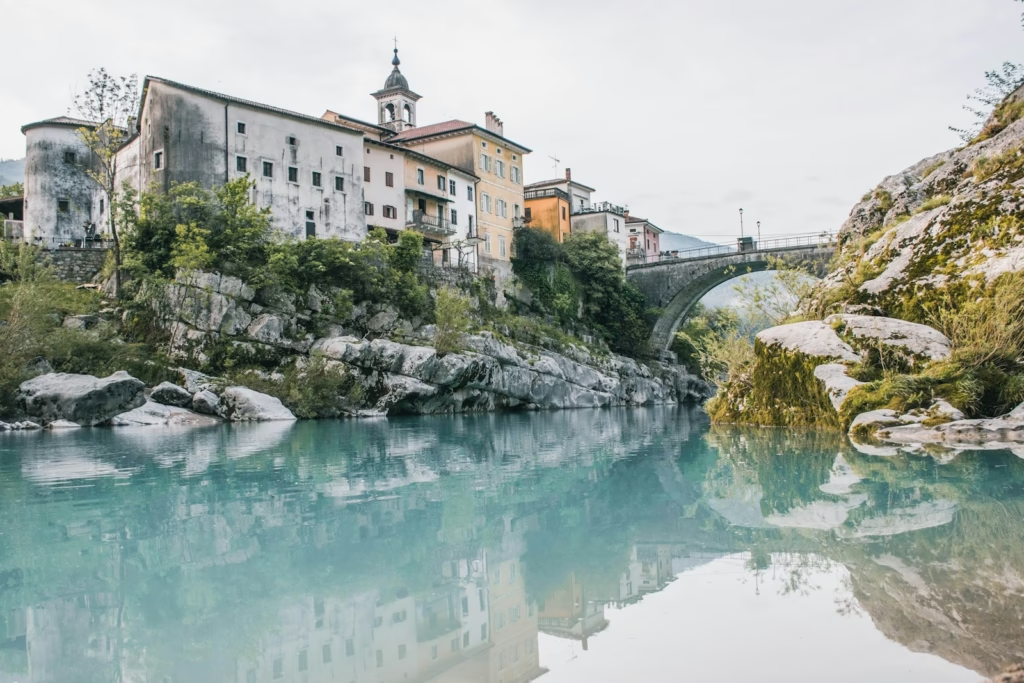
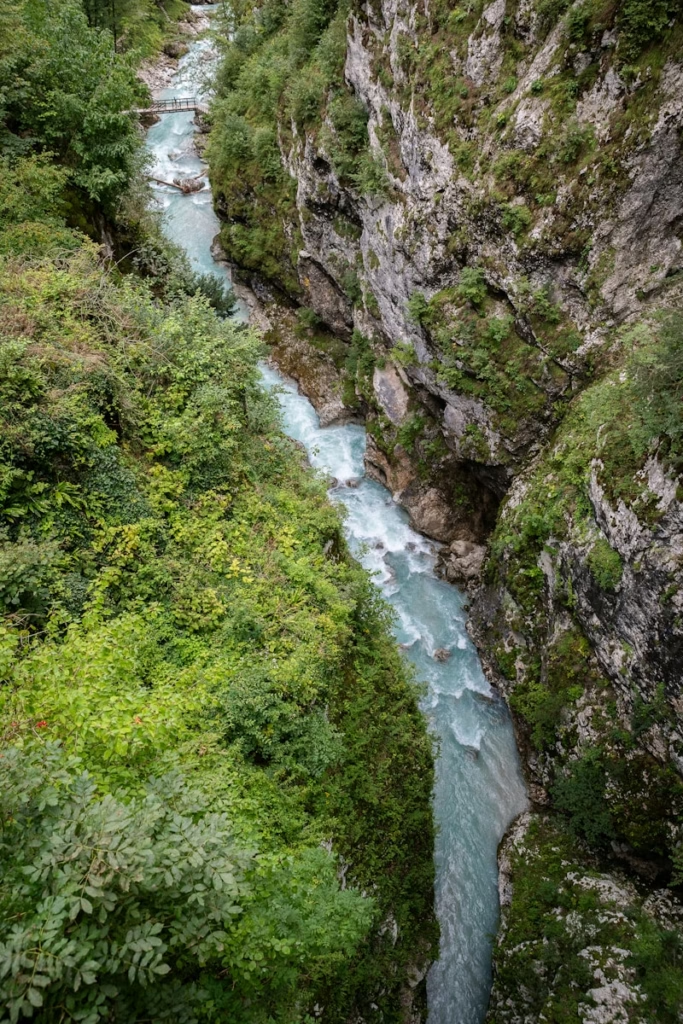
This does not need to be the hardest day of the trip. In fact, it is better if it is not. The river is the valley’s defining feature, and part of the pleasure is taking the time to look at it properly. The colour is famous for a reason: bright turquoise in the right light, running through gorges, gravel beds and narrow sections between steep wooded slopes.
A good first ride is a valley route between Tolmin, Kobarid and Bovec, depending on where you are staying. The exact road choice matters, because some sections use busier regional roads while others can be linked on quieter local roads or mixed surfaces. But the idea is simple: follow the shape of the valley, keep the river close and use the ride to understand the geography.
This is the ride that makes Soča Valley feel different from other cycling destinations. The mountains provide the scale, but the river gives the place its identity.
Vršič Pass: the classic Alpine test
Vršič Pass is one of Slovenia’s great road cycling climbs and an obvious target for strong riders staying in or near the Soča Valley.
From the Soča side, the climb rises through the Trenta Valley towards one of the most famous high roads in Slovenia. It is not just a climb for the numbers. It is a road with atmosphere: tight turns, mountain walls, forested sections and a sense that the valley is closing behind you as you go higher.
For many riders, Vršič is the big road-cycling name in the area. It can be ridden as part of a point-to-point route towards Kranjska Gora or built into a bigger loop if you are planning a serious day. Either way, it should not be underestimated.
The climb is steep enough to demand proper pacing, and the descent needs concentration. Weather can also change quickly in the high mountains, so a calm sunny morning in Bovec does not guarantee a warm top or an easy descent.
Vršič is the ride to do when you want Soča Valley to feel fully Alpine. Riders who enjoy that style of riding may also like our guide to cycling in Alta Badia and the Sella Ronda, another destination where the roads, scenery and climbing history all feed into the same experience.
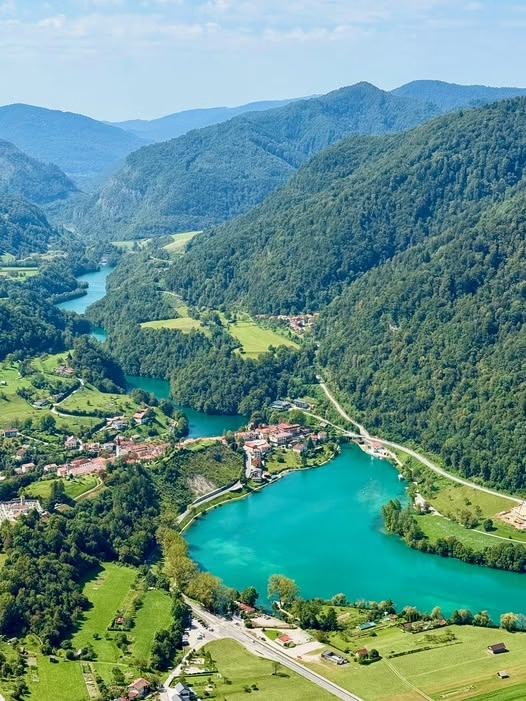
Mangart and Predil: spectacular but check conditions
The Mangart road is one of the most dramatic cycling objectives near the Soča Valley, but it needs careful treatment.
It climbs high into the Julian Alps from the Predil side and is known for its narrow road, tunnels, switchbacks and huge mountain views. When fully accessible, it is one of the most memorable road climbs in Slovenia. But access can change because of snow, rockfall and road damage, and the latest official Mangart Road access update should be checked before planning it as a main objective.
That point is important. Do not build an entire trip around Mangart without checking the latest road status. The climb can still be worth riding even when only partly open, but the top section is not something to assume.
Predil Pass is another strong option in the same broad area, especially for riders linking Slovenia and Italy. It gives the region an international flavour, with the road slipping between Alpine valleys and borderland history.
Together, Mangart and Predil add a tougher edge to a Soča Valley trip. They are not beginner rides. They are for riders who want climbing, views and a proper sense of mountain exposure.
Kobarid to Tolmin: the ideal easier day
Not every ride in Soča Valley needs to be heroic.
The Kobarid to Tolmin corridor is ideal for an easier day, especially if you want to enjoy the landscape without emptying the tank. You can make it as simple or as complicated as you like, depending on the road choice, river crossings and loops you add.
This is a good day for café riding, photography and mixed groups. It also works well after a big climbing day around Bovec or before taking on something harder.
The route gives you a softer version of the valley: river views, villages, side roads, wider scenery and enough gentle climbing to keep it interesting. It is the kind of ride that reminds you cycling trips do not have to be judged only by metres climbed.
For riders who usually chase cols, this can be the reset day that makes the trip better.
Gravel and mountain biking in Soča Valley
Soča Valley is not only a road-cycling destination.
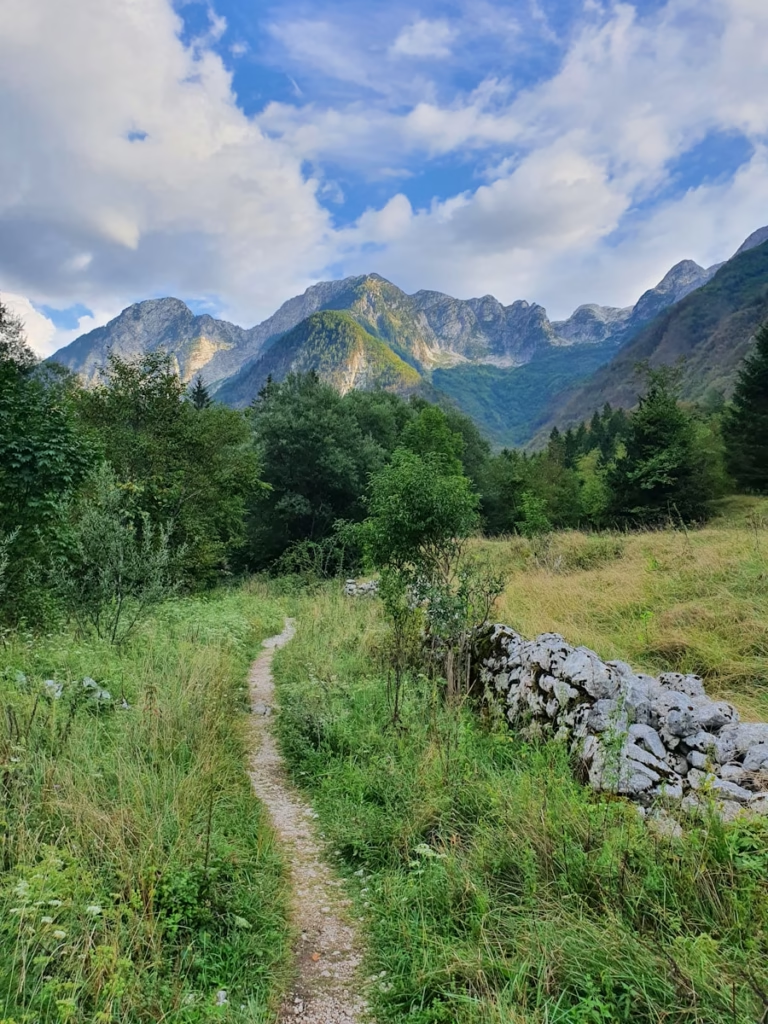
The area has a strong gravel and mountain-bike identity, partly because the landscape is full of tracks, forest roads, old military routes, high pastures and linking trails between villages. The Juliana Bike route is the clearest example, forming a multi-stage loop around the Julian Alps with a serious amount of climbing.
This is where the valley becomes especially useful for riders who like mixed surfaces. You can ride a road bike one day, then switch to gravel or MTB the next. You can stay low and follow river roads, or climb onto rougher terrain with wider views across the mountains.
Gravel riders should plan carefully rather than assuming every track will be smooth. Alpine gravel can mean steep gradients, loose surfaces, rocky sections and occasional hike-a-bike moments. A proper gravel bike with sensible tyres is better than trying to force a road setup onto unsuitable terrain.
Mountain bikers will find Bovec particularly useful, while Kobarid and Tolmin give access to a wider spread of mixed routes.
Who is Soča Valley best for?
Soča Valley is best for riders who want scenery and variety rather than a simple training-camp formula.
It is ideal for:
| Rider type | Why it works |
|---|---|
| Road climbers | Access to Vršič, Predil, Mangart and other Alpine roads |
| Gravel riders | Mixed terrain, tracks, high routes and village links |
| Touring cyclists | Compact towns and natural point-to-point routes |
| Mixed groups | Easy valley rides and harder mountain options nearby |
| Photography-focused riders | River views, gorges, waterfalls, villages and peaks |
| Riders wanting somewhere quieter | Less obvious than the Dolomites or Mallorca |
| Adventure travellers | Cycling combines easily with hiking, rafting and swimming |
It is less ideal if you want perfectly predictable sunshine, huge resort infrastructure or flat training roads. This is a mountain valley. Weather, road conditions and gradients are part of the deal.
For a different kind of mixed European riding base, our guide to the Basque Country around San Sebastián and Bilbao shows how another destination can work through variety, food, weather and atmosphere rather than pure Alpine scale.
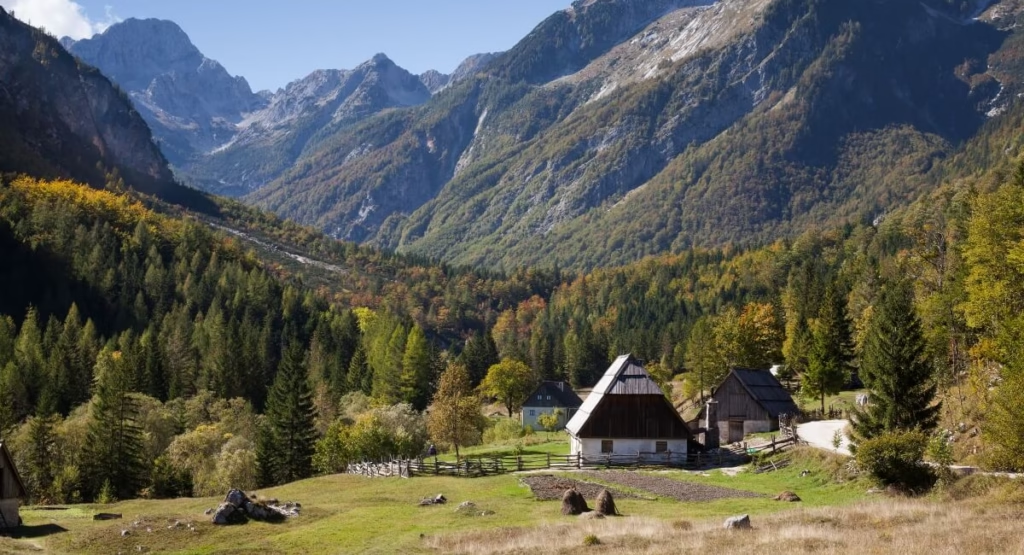
When is the best time to cycle in Soča Valley?
The best time to cycle in Soča Valley is usually late spring to early autumn, with June, September and early October often the most attractive months for riding.
July and August can be beautiful, but they are also busier and warmer. The valley is popular with hikers, paddlers, campers and road-trippers, so the main roads can feel less peaceful in peak summer.
Spring can be excellent lower down, but higher passes may still be affected by snow or closures. Autumn can be superb, with cooler temperatures and quieter roads, but daylight is shorter and mountain weather can become more changeable.
For big climbs, always check conditions. Vršič, Mangart and other high roads are not the same as a low valley loop. A route that looks straightforward on a map can be a different proposition if the weather changes.
That seasonal flexibility is one of the reasons Slovenia works well within a wider European cycling calendar. It can sit between earlier spring riding in places such as Calpe and the Costa Blanca and higher-summer Alpine trips.
How hard is the cycling?
Soča Valley can be as easy or as hard as you make it.
A gentle ride between Tolmin and Kobarid is manageable for many regular cyclists. A multi-day gravel route around the Julian Alps is a serious challenge. A big road ride taking in Vršič or Mangart is hard by any normal standard.
That is one of the valley’s biggest strengths. It does not force one style of riding on everyone. You can plan a relaxed cycling holiday, a climbing camp, a mixed adventure trip or a point-to-point tour.
The difficulty depends on four things: your base, your route choice, your bike and the weather. Stay in Tolmin and choose valley routes, and the riding can be approachable. Stay in Bovec and target high passes every day, and the trip becomes much more demanding.
What bike should you take?
For pure road riding, a road bike with sensible climbing gears is the obvious choice. Compact or semi-compact gearing and a wide cassette will make the steeper climbs much more enjoyable.
For mixed routes, a gravel bike may be the best all-round option. It gives you enough speed on the road but lets you use rougher tracks, river paths and high linking routes without worrying as much about surface changes.
For the Juliana Bike route or proper mountain-bike trails, take a mountain bike. Some routes may be rideable on gravel bikes for strong riders, but that does not mean they are the best tool for the job.
Tyre choice matters. Do not under-tyre the trip just because the photos look smooth. Alpine side roads and mixed tracks can be rough, and even road routes may include broken surfaces or debris after storms.
If you are flying with your own bike, our guide on how to travel with your bike covers cases, packing and airline rules before you commit to taking your normal setup.
Sample three-day Soča Valley cycling trip
A three-day trip gives you enough time to understand the valley without rushing.
| Day | Ride idea | Best base |
|---|---|---|
| Day 1 | Easy valley ride between Kobarid and Tolmin | Kobarid or Tolmin |
| Day 2 | Big road climb towards Vršič, Predil or Mangart if accessible | Bovec |
| Day 3 | Gravel or mixed-surface route above Kobarid or along the river | Kobarid |
This structure works because it balances the trip. The first day helps you settle in. The second gives you the big mountain memory. The third lets you explore without simply repeating the same kind of ride.
Sample week in Soča Valley
A week gives you much more freedom.
| Day | Ride |
|---|---|
| 1 | Arrival spin along the river |
| 2 | Kobarid to Tolmin loop |
| 3 | Bovec and upper valley road ride |
| 4 | Vršič Pass or another major climb |
| 5 | Rest day with hiking, swimming or rafting |
| 6 | Gravel or MTB day |
| 7 | Longer valley loop towards Most na Soči or the Nadiža valley |
This is probably the best way to experience Soča Valley properly. Do not fill every day with a huge ride. The place is too good for that. Leave time for waterfalls, river stops, old villages, food, history and doing very little beside the water.
If you are building a longer cycling holiday, it is worth checking accommodation properly rather than treating it as an afterthought. Our guide to top cycling hotels worldwide explains why bike storage, laundry, breakfast timing and local route knowledge can change the whole feel of a trip.
What to do off the bike
One of the best things about Soča Valley is that the off-bike side is as strong as the riding.
You can visit waterfalls, walk sections of the Soča Trail, explore the Kobarid Museum, swim in river spots where permitted, go rafting or kayaking, hike in the surrounding mountains or simply spend time in small towns after the ride.
This matters for a cycling holiday. Some destinations are brilliant on the bike but dull once the ride is over. Soča Valley is not one of them. It gives you reasons to stay out after the Garmin is switched off.
That also makes it a good destination for couples, friends or groups where not everyone wants to ride the same distance every day.
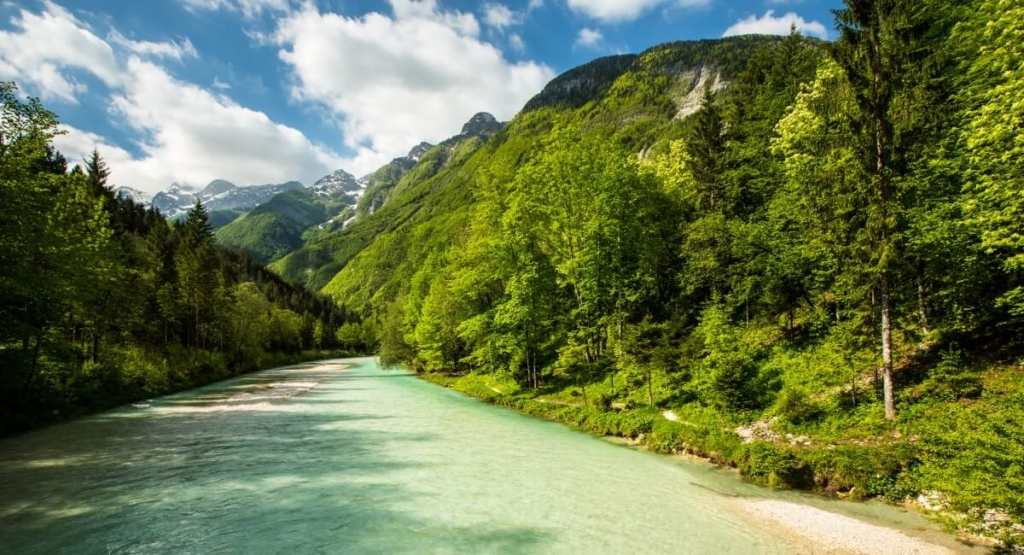
Practical tips for riding in Soča Valley
The main practical tip is to plan the route carefully. Do not assume every road is quiet just because it is scenic. Some valley roads can carry tourist traffic, especially in summer. Use local cycling maps, official route information and recent ride data where possible.
Check high-road conditions before targeting Vršič or Mangart. Weather, snow, rockfall and seasonal closures can all affect plans.
Take climbing gears. Even if you are not chasing the biggest passes, the valley has enough sharp gradients to punish overgeared bikes.
Start early in summer. It keeps you ahead of traffic and heat, and it gives more time for river stops or mechanical delays.
Carry layers. Alpine weather can change quickly, especially when riding from valley floors to high passes. Our guide on what to wear for cycling in British weather is written for UK conditions, but the same principle applies in the mountains: dress for change, not just for the forecast at the café.
Respect mixed-use paths and trails. Soča Valley is popular with walkers, paddlers, drivers, motorcyclists and other cyclists. The best way to keep it enjoyable is to ride with patience.
Fuelling and pacing in Soča Valley
The riding in Soča Valley can tempt you into doing too much too soon. The roads look inviting, the river pulls you onwards and the big climbs are close enough to feel irresistible.
That is exactly why pacing matters. Keep the first day easy, especially if you have travelled from the UK or arrived late. Use the valley roads to settle in before targeting Vršič, Predil or a longer gravel route. On climbing days, eat early and drink regularly because gradients and heat can combine quickly in the valleys.
For longer rides, carry more than you think you need. Mountain weather, road closures, wrong turns and slow gravel can all stretch a planned ride. Our guide on how to fuel your rides gives a useful baseline if you are building towards longer days in the saddle.
Best things about cycling in Soča Valley
The best thing is the variety.
Some cycling destinations are built around one famous climb. Soča Valley is broader than that. The river gives you gentle days. The mountains give you hard days. The gravel gives you adventure. The towns give you bases. The off-bike attractions give the trip balance.
It also looks spectacular without needing perfect weather. Mist in the valley, cloud around the peaks and late-afternoon light on the river can all make ordinary rides feel memorable.
Soča Valley also has a useful sense of scale. It is big enough to fill a week, but not so big that you lose time moving constantly between bases. You can settle in and ride.
What are the downsides?
The biggest downside is that the roads are not always as empty as the photos suggest, especially in peak summer. The valley is popular, and some of the main roads are used by cars, campervans, motorbikes and tourist traffic.
The second issue is weather. This is an Alpine valley, not a guaranteed-sun destination. Rain, storms and cooler conditions can appear, especially higher up.
The third issue is that some dream routes need local checking. Mangart is the obvious example, but it applies more widely. High roads and mountain routes are more vulnerable to closures and damage than lower valley loops.
Finally, Soča Valley may not be the easiest place for riders who want flat, structured training rides. It is better as an adventure and climbing destination than a controlled performance camp.
Is Soča Valley better than the Dolomites or French Alps?
It depends what you want.
The Dolomites have more famous climbs, bigger cycling infrastructure and a stronger global road-cycling identity. The French Alps have Tour de France history, iconic cols and huge route choice. Soča Valley is smaller and quieter.
But that is its advantage. It feels less obvious. It combines Alpine riding with river scenery, Slovenian towns, borderland routes and more variety between road, gravel and MTB.
If your dream trip is to tick off famous climbs, the Dolomites or French Alps may still come first. If you want somewhere beautiful, varied and slightly different, Soča Valley deserves serious consideration.
For a bigger Alpine comparison, see our guide to cycling in the Bernese Oberland and our feature on cycling in the Bavarian Alps.
-
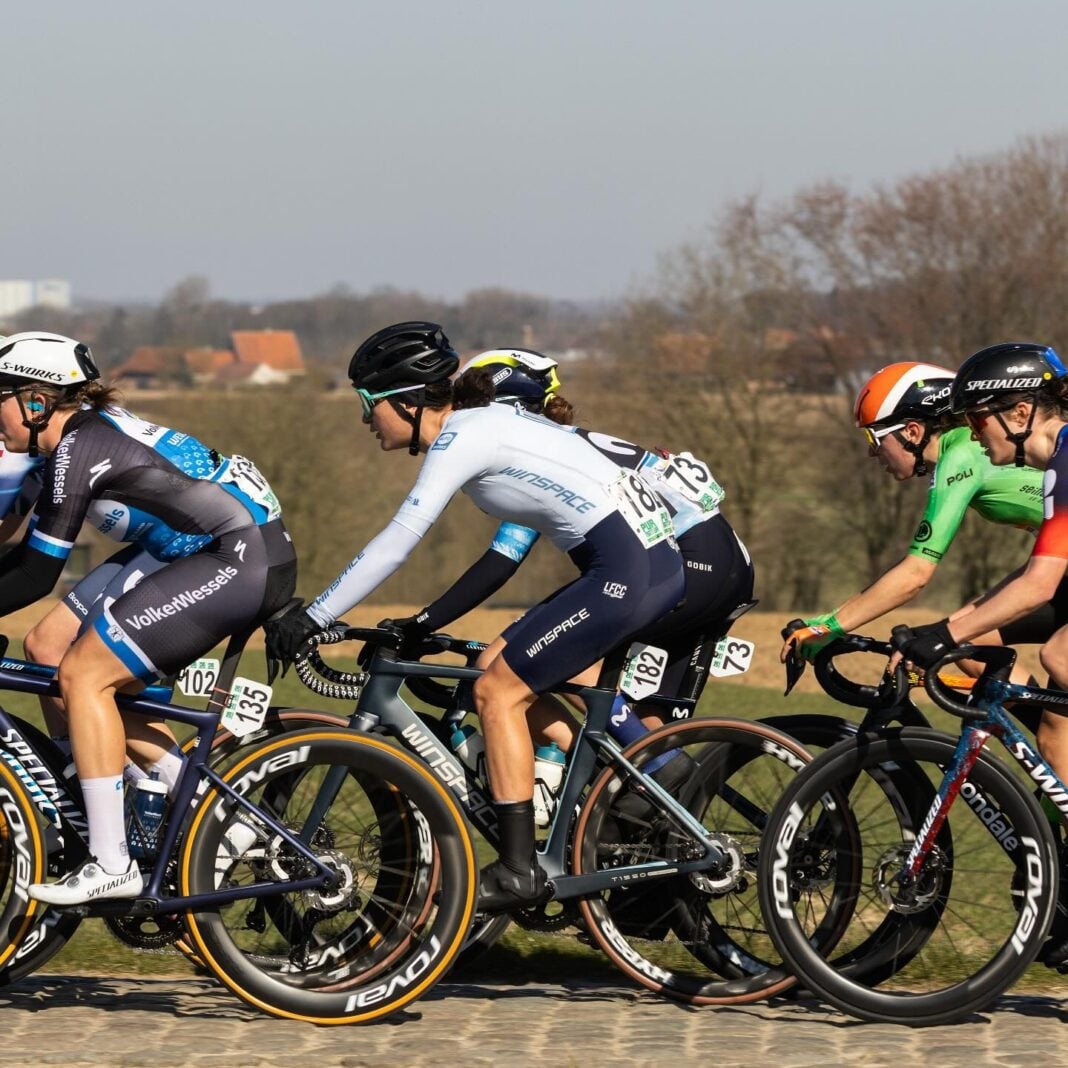
 Photo Credit: quentinphotographiebe
 -
 Photo Credit: Getty


FAQs: cycling in Soča Valley
Is Soča Valley good for road cycling?
Yes. Soča Valley is excellent for road cycling, especially for riders who like scenic valley roads and Alpine climbs. Bovec, Kobarid and Tolmin all work as bases, with harder climbs available towards Vršič, Predil and Mangart.
Is Soča Valley good for gravel cycling?
Yes. The area is strong for gravel and mixed-surface riding, with tracks, high pastures, forest roads and links into the wider Juliana Bike network. A gravel bike is a good choice if you want one bike for both roads and rougher routes.
Where should cyclists stay in Soča Valley?
Bovec is best for high-mountain riding, Kobarid is the best all-round base, and Tolmin is the most practical option for easier valley routes and touring links.
What is the best climb near Soča Valley?
Vršič Pass is the classic road-cycling climb linked to the valley. Mangart is also spectacular, but access can change and riders should check current road conditions before planning it.
Is Soča Valley suitable for beginners?
Yes, if beginners choose the right routes. Easier valley rides around Tolmin, Kobarid and Most na Soči are more suitable than the high Alpine climbs. Newer riders should avoid overcommitting to Vršič or Mangart unless they have trained properly.
When is the best time to cycle in Soča Valley?
June and September are often the best months for cycling, with good conditions and fewer peak-season crowds. July and August are warmer and busier. Spring and autumn can be excellent, but high mountain roads may be affected by snow or weather.
Do you need a car for a Soča Valley cycling trip?
Not always, but a car can help if you want to move between bases or reach specific start points. Riders touring through Slovenia can also build Soča Valley into a longer point-to-point route.
Is Soča Valley good for a cycling holiday?
Yes. It is one of the best Slovenian options for a cycling holiday because it combines riding, scenery, small towns, outdoor activities, history and varied terrain.
Final word
Soča Valley deserves a place on your riding list because it gives cyclists more than one reason to go.
The river alone would make it memorable. The Julian Alps make it dramatic. The climbs make it serious. The gravel and MTB options make it flexible. The towns make it practical. The off-bike side makes it a proper trip rather than just a set of rides.
It is not the easiest cycling destination in Europe, and it is not the most famous. But that is part of the appeal.
For riders who want turquoise water, Alpine roads, quiet villages, hard climbs and a cycling trip that feels different from the obvious choices, Soča Valley is one of Slovenia’s strongest cards.

