Carinthia is one of the easiest places in the Alps to build a cycling holiday around more than climbing. Austria’s southernmost state has proper mountain roads when you want them, but the lakes, broad valleys and long-distance cycle routes mean you can also ride for hours without turning every day into a battle with altitude.
That balance is the main reason the region works so well for mixed trips. A strong road rider can disappear into the hills above Wörthersee or link several lakes into a long day, while a partner who wants gentler riding can stay on the lake and river routes. The same applies within one training week: a hard day can be followed by an easy spin without having to change base.
The two most useful bases are Klagenfurt and Villach. Klagenfurt puts Wörthersee on the doorstep and works well for road riding mixed with flatter leisure routes. Villach is the more flexible choice if you want Faaker See, Ossiacher See, the Drau, the Alpe-Adria route and mountain-bike options within the same trip.
For riders who picture Austria purely as high passes, Carinthia is a useful contrast. Our guides to cycling in Salzburg and the Grossglockner and cycling in Tirol cover the more mountain-heavy end of an Austrian trip. Carinthia gives you more room to choose how hard the week becomes.
Why Carinthia feels different from other Alpine cycling regions
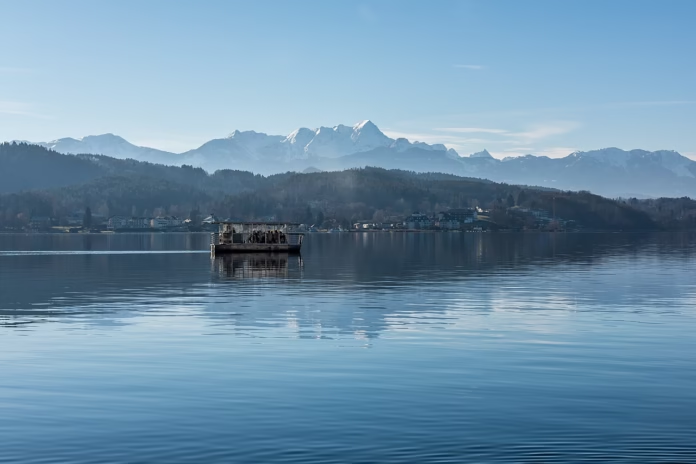
The lakes change the rhythm of the riding. Wörthersee, Ossiacher See and Faaker See create natural low-level corridors through the landscape, while the surrounding hills rise quickly enough that a flat route can become a serious road ride with only a small change of direction. You can spend the morning beside the water, climb for an hour after lunch and still roll back to the same lakeside town.
The Carinthian Lake Loop is the clearest example. It runs for around 400km and links 10 of the region’s lakes, with the full circuit commonly split across eight days. It is useful even if you have no intention of riding the whole thing. Sections around Wörthersee, Faaker See, Ossiacher See and the Drau can be turned into individual day rides without committing to a point-to-point tour.
That makes bike choice less restrictive than it is in many Alpine bases. A road bike is ideal if you want longer loops and steeper roads away from the water. A gravel or trekking bike is better if the lake routes and traffic-free paths are the priority. E-bikes are also thoroughly integrated into the tourism network, with a region-wide hire system allowing bikes to be rented and returned at dozens of locations.
Wörthersee and Klagenfurt: the simplest place to start
For a first Carinthia trip, Wörthersee is difficult to beat. Klagenfurt gives you a proper city at the eastern end of the lake, while Pörtschach and Velden provide smaller resort bases along the shore. The cycling around the water is accessible, but the hills begin almost immediately once you turn inland.
That combination is useful on a road bike. The lake can form the easy opening and closing part of a ride, with the middle of the route sent into the Keutschach area, towards the hills south of Klagenfurt or onto smaller roads above the northern shore. You can create a 60km social ride or a much harder day without changing the basic geography.
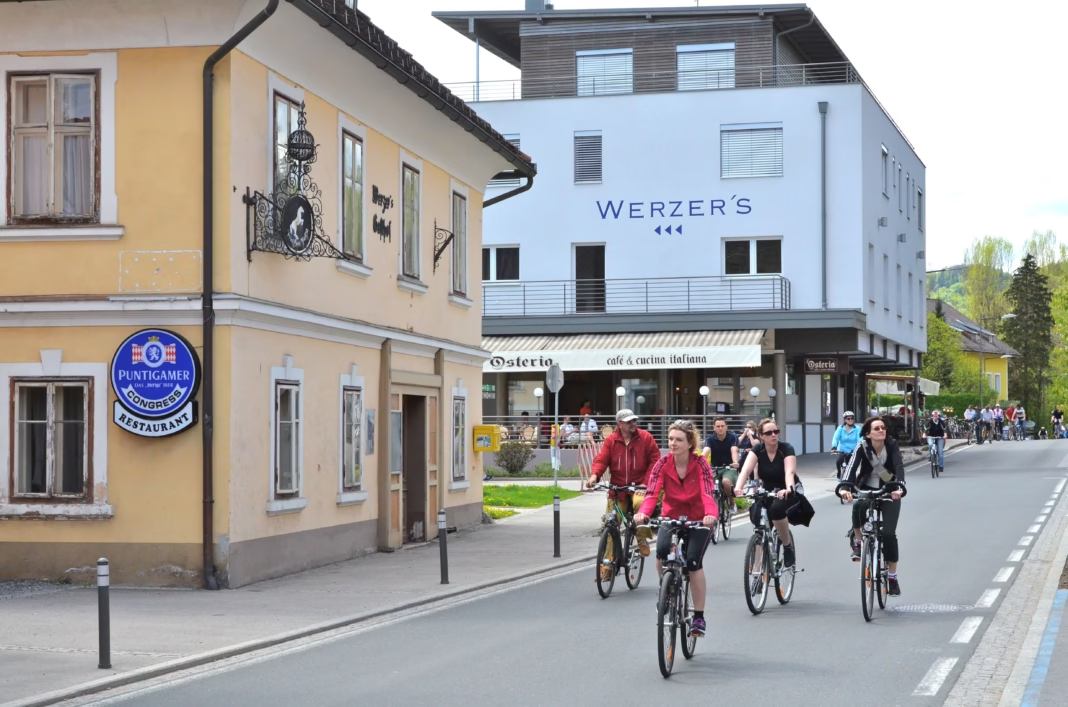
Wörthersee also works for riders who do not want every outing to involve training numbers. There are dedicated cycle sections around the lake and good connections towards the Glan and Drau networks. Carinthia’s annual car-free days around Wörthersee show how embedded cycling is in the area, but the region does not depend on one event to be rideable.
The main caveat is summer traffic. Shore roads can become busy in July and August, particularly around the main resorts. Where there is a separated cycle route it is often the calmer option, while road riders planning harder sessions are better off heading away from the busiest lakeside sections early in the day.
Villach is the best all-round cycling base
Villach is the base I would choose for a week with no single theme. The Drau passes through the city, Ossiacher See sits to the north-east and Faaker See to the south-east. Italy and Slovenia are both close enough to bring a cross-border ride into the conversation, while the Alpe-Adria route gives the area a ready-made long-distance backbone.
Ossiacher See is the obvious recovery-day option. The lake sits beneath Gerlitzen and can be used for a relatively easy circuit, but the same area also gives access to sustained climbing once you leave the shore. A harder road day can link Ossiacher See with Wörthersee across the hills rather than treating each lake as a separate destination.
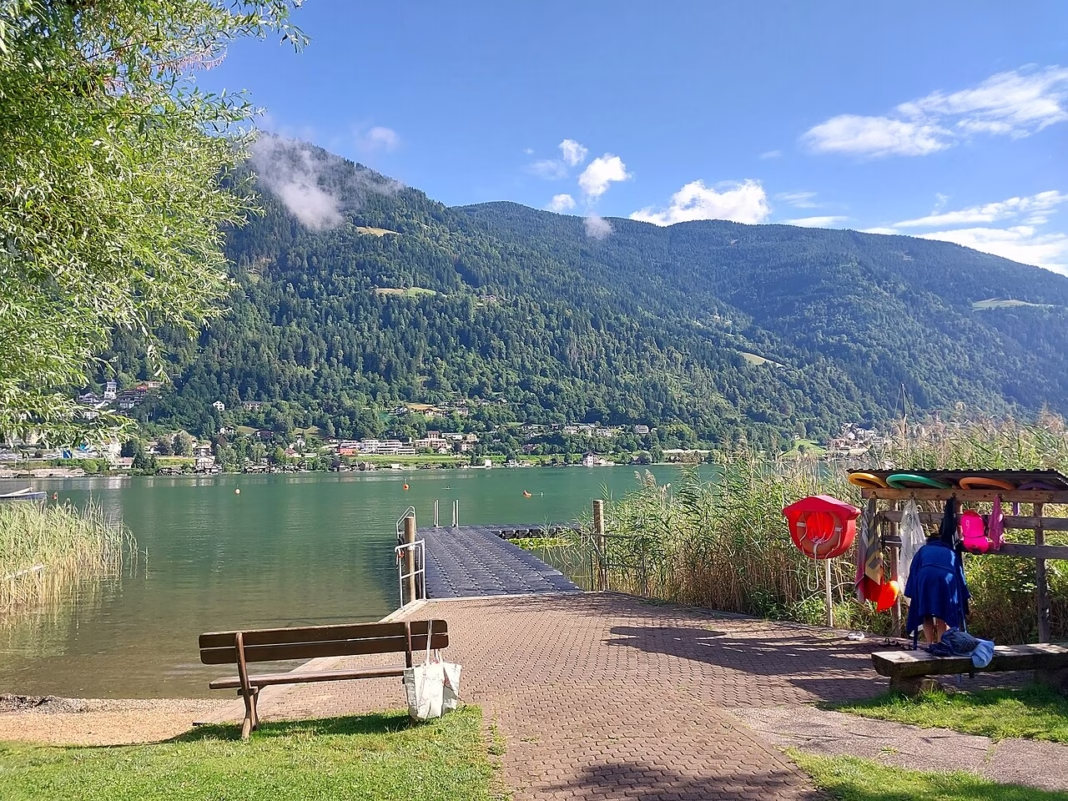
Faaker See has a more dramatic mountain backdrop, with the Karawanks rising towards the Slovenian border. The roads around the lake are not especially severe, but they sit close to much harder terrain and work well as the lower part of a longer road loop.
Villach also makes more sense than Klagenfurt for mountain biking. The lake.bike network around Faaker See and Ossiacher See is built around officially approved trails rather than informal forestry tracks, with 45 marked mountain-bike trails and dedicated trail centres around both lakes. That matters in Austria, where access to forestry roads and trails can be route-specific rather than assumed.
The Drau Cycle Route is the easiest way to add distance
The Drauradweg is one of Austria’s established long-distance cycling routes and one of Carinthia’s most useful assets. The full route runs for 510km in seven stages from Toblach/Dobbiaco in South Tyrol to Varaždin in Croatia, with the largest share passing through Carinthia.
For a visitor based in Villach or further west, the value is not the headline distance. It is the fact that the route follows the Drau through generally flatter terrain and is well signposted in both directions. That makes it ideal for a low-intensity day, a long endurance ride or a point-to-point trip when you do not want to add more climbing.
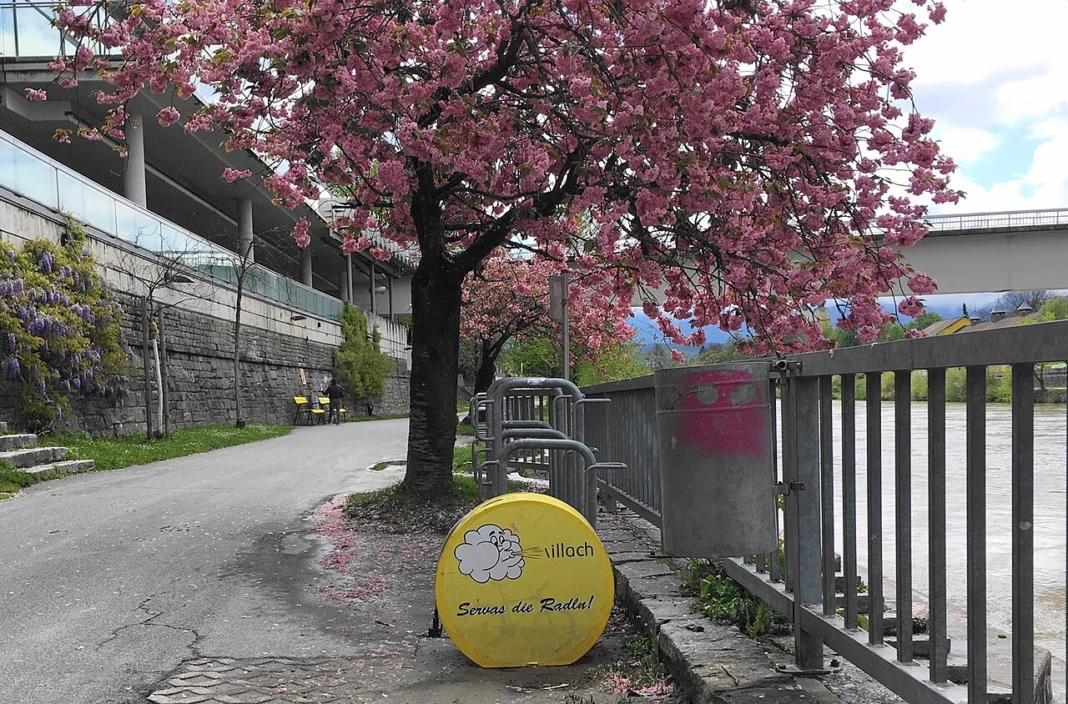
The railway follows much of the Drau corridor, which makes one-way rides unusually practical. You can ride until the weather changes or the legs stop cooperating, then use the train rather than turning the day into an out-and-back. Bicycle spaces and reservation rules vary between services, so that part still needs checking before you build a route around the train.
For mixed groups, the Drau is often the route that keeps the week together. Stronger riders can extend the day by adding climbs or detours, while less experienced cyclists can stay beside the river and still cover a satisfying distance.
The Alpe-Adria route makes Carinthia part of a bigger journey
The Alpe-Adria cycle route runs from Salzburg to the Adriatic and passes through Carinthia on its way into Italy. From Mallnitz, reached through the Tauern rail connection, the route trends south through the region towards Villach and then the border.
That creates a different sort of cycling holiday. Instead of choosing Carinthia as a closed loop, you can use it as the middle of a Salzburg-to-Italy journey. The Carinthian section is especially appealing because much of the direction of travel from Mallnitz towards Italy is downhill or gently descending, even though a loaded touring bike still turns the day into real work.
It also explains why Villach feels so connected. You are not in an isolated Alpine valley. Rail, river and cycle routes all converge there, and Italy and Slovenia feel like logical extensions rather than distant destinations.
Road bike, gravel bike or e-bike?
A road bike is the best choice if the trip is built around long loops, faster riding and climbing away from the lakes. The terrain is varied enough that compact gearing is sensible even when you are not targeting a famous pass. A route that looks gentle on the map can accumulate a surprising amount of climbing once it starts linking villages above the water.
A gravel or trekking bike makes more sense if the Lake Loop, Drau and traffic-free infrastructure are the priority. You gain flexibility on mixed surfaces and lose very little on a holiday where outright speed is not the point. For riders carrying luggage, that is usually the easier compromise.
E-bikes fit the region particularly well. Carinthia’s hire network has roughly 50 rental stations and is designed so bikes can be collected and returned across different parts of the province. That makes them genuinely useful for mixed-ability groups rather than simply an alternative for riders who do not want to pedal hard.
When to ride in Carinthia
Late spring to early autumn is the main window. May and June usually give quieter roads and long daylight, while July and August bring the warmest lake conditions but also the most visitors. September is particularly attractive for road riding because the air is cooler, the resorts are calmer and the high summer traffic has eased.
Altitude still needs respect. Klagenfurt can be warm and dry while a higher road is several degrees colder and sitting under a completely different weather system. If the route climbs well above the lakes, check the forecast for the highest point rather than relying on the temperature at your hotel.
The same applies outside summer. Valley routes may be perfectly rideable while high roads remain affected by snow, storm damage or seasonal closures. Carinthia gives you more low-level options than many Alpine regions, but it does not remove Alpine weather from the equation.
Austrian cycling rules worth knowing
Austria does not have a general helmet law for adult cyclists, although wearing one is the sensible choice. Children under 12 must wear a helmet when riding a conventional bicycle, while riders under 14 must wear one on an e-bike. If you are travelling as a family, that distinction is worth knowing rather than relying on older summaries of the rules.
Bikes used on public roads also need to comply with Austrian equipment requirements, including effective brakes, a bell and the required lighting and reflectors. For visiting road cyclists with a normal modern setup, lights and visibility are the things most likely to require attention.
Mountain-bike access is the bigger trap. A forest road that looks perfect on a mapping app is not automatically open to bikes. Use the official lake.bike network and locally approved routes rather than assuming access, particularly around forestry land.
Klagenfurt or Villach: which base is better?
| Base | Best for | Main riding |
|---|---|---|
| Klagenfurt | First visits, mixed cycling and city access | Wörthersee, lake loops, rolling road rides |
| Pörtschach or Velden | Lakeside holiday with riding built around it | Wörthersee, shorter climbs, leisure routes |
| Villach | Most varied cycling week | Drau, Faaker See, Ossiacher See, Alpe-Adria, MTB |
| Western Carinthia | Riders wanting more mountain terrain | Drau valley, longer climbs, access towards the high Alps |
If you have four days, stay in one place. Klagenfurt is the easier choice for a first trip, while Villach gives you more variety. Moving hotels every night only makes sense if the point of the holiday is the Lake Loop or a longer Alpe-Adria journey.
For a week, the simplest structure is to alternate difficulty. Start with a lake loop, use the second day for a hillier road ride, put a Drau recovery day in the middle and then build towards the hardest ride of the trip. The lakes make that rhythm easy because you do not need to waste a day travelling elsewhere for gentler terrain.
Rail access adds another layer of flexibility. Villach and Klagenfurt are both useful transport hubs, and Carinthia’s station shuttle links participating rail stations with accommodation and hundreds of visitor destinations. It is entirely realistic to plan the trip without a car if your riding is centred on the main lake and river corridors.
Why Carinthia works for a cycling holiday
Carinthia’s strength is not one famous climb. It is the way the riding fits together. Wörthersee gives you accessible lake roads, Villach connects several different cycling networks, the Drau supplies easy distance and the Alpe-Adria route opens the door to a much longer trip.
That makes the region especially good for riders who want an Alpine setting without spending seven straight days climbing at threshold. Hard rides are easy to find, but so are genuine recovery days. For couples and groups with different levels, that may be more useful than having a headline pass outside the hotel door.
Carinthia also fits naturally into a wider European cycling trip. The ProCyclingUK Rest of Europe cycling hub has more regional guides, while Salzburg and Tirol offer a harder Alpine contrast if you want to combine the lakes with several days in the high mountains.
-
 Photo Credit: David Pintens / BELGA MAG/AFP via Getty Images
 -
Photo Credit: BELGA MAG/AFP via Getty Images