
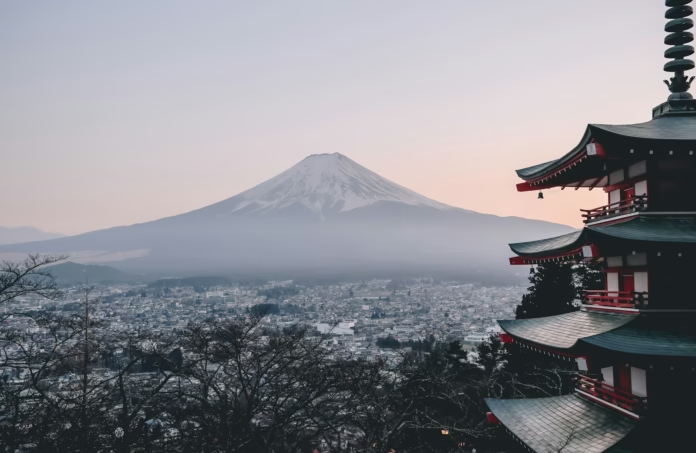
Kyoto is one of those cities where the cycling changes completely depending on which way you point the bike. Stay close to the centre and the riding is urban, flat and stop-start, shaped by a grid of streets and the need to share space with pedestrians, buses and local cyclists. Head north towards Ohara or beyond the suburbs into the Kansai hills and the same trip becomes a climbing holiday, with narrow roads, forested valleys and long stretches where Kyoto feels much farther away than the map suggests.
That contrast makes Kyoto a better cycling base than its crowded tourist image implies. The city works for easy river-path days and short cultural rides, while the surrounding hills provide enough elevation for proper road training. It also fits naturally into a wider Japanese trip because Osaka, Nara and the Keihanshin rail network are close enough to broaden the riding without changing hotels every night.
Kyoto and Kansai cycling at a glance
- Best base: Central Kyoto for transport, with northern districts useful for quicker hill access
- Riding style: River paths, urban linking roads, forest climbs and rolling rural loops
- Bike: Road bike for hill loops; gravel or endurance bike for greater route flexibility
- Tyres: 28mm to 32mm is a practical all-round road choice
- Best period: April to May and October to November
- Hardest feature: Repeated climbing north of the city rather than one famous pass
- Biggest planning issue: Heat, tourism traffic and knowing where bicycle parking is permitted
- Ideal trip length: Four to six riding days
The city itself is flatter than Kyoto’s surrounding geography suggests
Central Kyoto sits in a basin and much of the street grid is relatively flat. That makes the first ride straightforward, particularly along the Kamo River and other riverside corridors where it is possible to move through the city without spending the whole day in traffic. These routes are better for steady sightseeing than hard training, but they are useful for learning how local cycling works before heading into the hills.
Kyoto’s official cycling guidance treats bicycles as vehicles. Riders use the left side of the road, must follow traffic lights and should not assume pavements are available simply because local utility cyclists appear to use them. From April 2026, Japan’s expanded blue-ticket system also applies monetary penalties to a wider range of cycling traffic offences, making it even more important for visitors to understand the rules rather than copy whatever another rider happens to be doing.
Parking is another practical issue. Bicycles left outside designated parking areas can be removed, and Kyoto applies a 3,500 yen retrieval fee. For a visitor stopping at temples or stations, that means route planning needs to include legitimate bicycle parking rather than treating any railing as a convenient lock-up point. Liability insurance is also compulsory in Kyoto Prefecture, including for visitors, so rental arrangements should be checked before setting off.
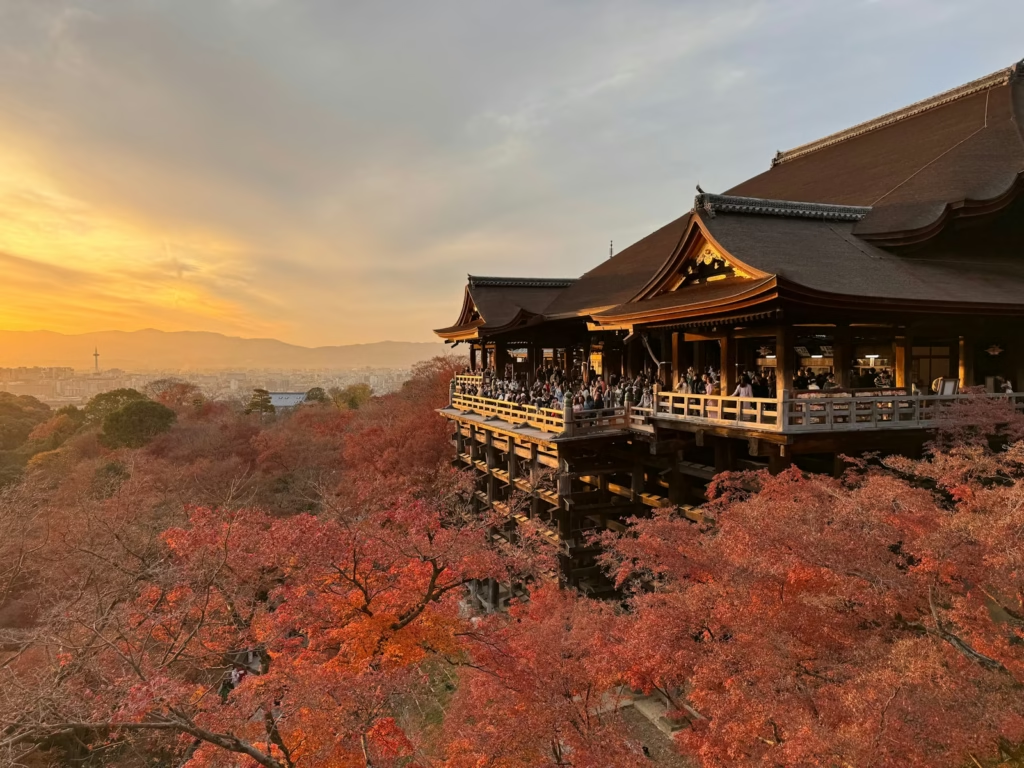
Ohara is the easiest introduction to the northern hills
The official north-Kyoto cycling route is a useful template for riders who want to leave the basin without committing to a huge mountain day. The loop is around 36km and runs through Demachiyanagi, Yase, Ohara and Ichihara before returning towards the city. Tourism guidance describes it as containing many hills and relatively few traffic lights, which is exactly why it works so well as a bridge between city riding and the deeper Kansai countryside.
Ohara sits in a rural valley north-east of the centre and feels considerably quieter than central Kyoto. The road rises gradually, with steeper sections depending on the exact route, and the surrounding forest gives the ride a different rhythm from the urban grid. Strong riders can extend beyond the official loop rather than simply returning once Ohara is reached.
This is the sort of day where gearing matters more than outright distance. A 70km extension through the northern hills can be harder than a flatter 100km ride because the roads repeatedly rise, descend and turn back into forest. A compact chainset and a cassette with a 30- or 32-tooth largest sprocket is sensible for anyone planning several days in succession.
Keihoku and the roads towards Miyama provide the bigger days
Riders looking for a more serious training day should push beyond the familiar tourist belt towards Keihoku and the mountain roads north-west of Kyoto. Here the city finally drops out of the ride. Villages become smaller, traffic falls away and the road network starts to resemble the kind of terrain Japanese domestic racing uses so well: sustained forest climbs, technical descents and narrow valley roads rather than exposed high mountains.
Keihoku is useful because it can anchor several different loops. Routes can return towards Arashiyama, continue farther north towards Miyama or connect across the hills to quieter valleys. None needs to be treated as a fixed sportive course. The strength of the area is the number of ways a rider can combine climbs depending on weather, legs and daylight.
Remote riding deserves more preparation than the urban sections. Carry enough food, save the route offline and check local advisories before heading onto less-used mountain roads or trails. Kyoto authorities have issued bear warnings for some Keihoku trail areas in 2026, which is not a reason to avoid normal road riding but is a reminder that the mountains beyond the city are genuine rural terrain rather than an extension of the tourist centre.
Arashiyama and the Katsura River work better early in the day
West of central Kyoto, the Katsura River gives cyclists another relatively easy corridor towards Arashiyama. The route is flatter than the northern hill roads and can be used as a recovery ride, a warm-up before climbing or a practical way to reach the western edge of the city without fighting through every central junction.
Arashiyama itself is one of Kyoto’s busiest visitor districts, so timing determines whether the ride feels enjoyable or frustrating. Arrive early and the riverside and approach roads can be calm enough to enjoy. Arrive at peak sightseeing time and pedestrians, buses and rental bikes slow everything down. A training ride should use Arashiyama as a gateway rather than an objective that requires lingering in the busiest streets.
From there, stronger riders can continue north and east through the hills, or use the river corridor to return to the city. The official west-Kyoto cycling guidance deliberately combines Katsura River paths with cultural sites such as Kinkakuji and Nishijin, which suits a relaxed day but can also be adapted into a longer loop by ignoring the sightseeing stops and adding elevation.
South Kyoto and Fushimi are better for an easier day
The official southern route is roughly 19km and passes Nishi-Hongwanji, Toji, Fushimi Momoyama and Fushimi Inari. It contains fewer hills than the northern loop but more traffic lights, which makes it poorly suited to uninterrupted training and very useful as a recovery ride or first-day introduction.
Fushimi is worth including because the rivers and canals create a calmer landscape than the central sightseeing districts, even though the area remains urban. A rider can add distance along the rivers without accumulating much fatigue, then return north through the city. That balance is useful on a multi-day trip where every ride does not need to become a mountain session.
Kyoto also sits inside a much larger regional cycling network. Official guidance highlights a roughly 180km cycling route linking Arashiyama through Nara towards Wakayama, giving stronger riders a sense of how easily a city-based trip can become a longer Kansai tour. It is not necessary to ride all 180km to benefit from the network; individual sections can be used to build point-to-point days.
Spring and autumn are the strongest riding seasons
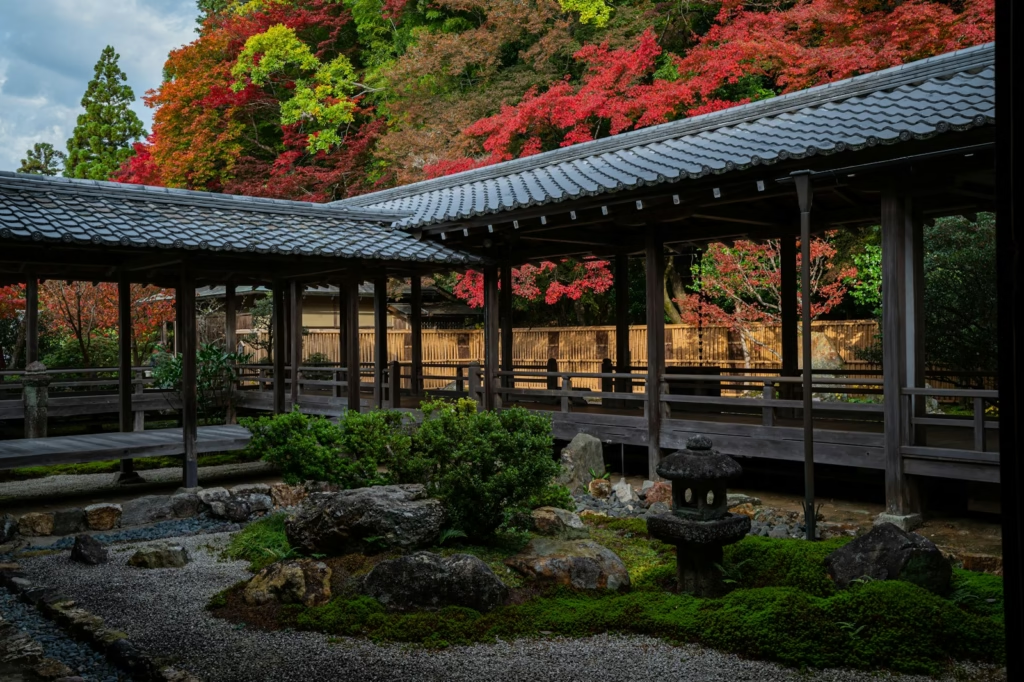
Kyoto’s famous cherry blossom and autumn colour seasons are visually ideal for cycling, but they also bring heavy tourism. The best compromise is often to ride early, use the city only as a departure point and spend the middle of the day in the hills. April and May generally offer comfortable temperatures, although Golden Week at the turn of April into May can increase domestic travel sharply.
October and November are equally strong. Humidity falls, mornings become cooler and the forests north of the city begin to change colour. Later autumn requires warmer layers for long descents because the basin and the mountain roads can feel very different, particularly once the sun drops behind the ridges.
Summer is the difficult season. Kyoto is famously hot and humid, and June also brings the rainy-season pattern before the hottest weeks of July and August. Serious road riding is still possible, but early starts become essential and mountain routes need enough water stops. Winter can be rideable in the basin, while northern roads are much less predictable because of cold, snow and ice.
-
 Photo Credit: David Pintens / BELGA MAG/AFP via Getty Images
 -
Photo Credit: BELGA MAG/AFP via Getty Images



A five-day Kyoto cycling itinerary
Keep day one easy with the Kamo River, central Kyoto and a short southern extension towards Fushimi. Day two can use the official Ohara direction as the first climbing day, extending beyond the 36km template once the traffic and road etiquette feel familiar. Day three should be the biggest ride, heading towards Keihoku and building a longer mountain loop.
Day four works well as a flatter Katsura River and Arashiyama ride, ideally early enough to avoid the busiest tourist period. If the legs are good, add one western climb before returning. Day five can either repeat the northern hills or become a regional day using train connections to begin or finish farther away.
For riders building a longer Japanese cycling holiday, Kyoto combines naturally with a very different experience farther west. ProCyclingUK’s guide to cycling the Shimanami Kaido covers the island-hopping route between Honshu and Shikoku, while the cycling travel hub collects more destination ideas beyond Japan.

