
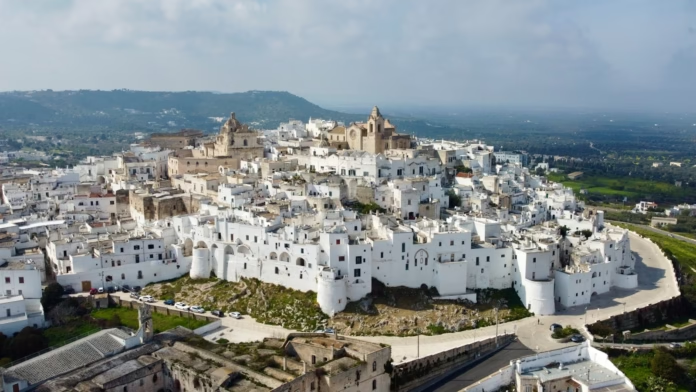
Puglia offers a very different version of cycling in Italy. There are no Alpine passes to tick off and few climbs that need their own pacing strategy. Instead, the riding is built around quiet lanes, olive groves, dry-stone walls, whitewashed towns and long stretches where the road seems to disappear into open countryside.
The two most interesting areas for a cycling trip are the Valle d’Itria and Salento. They are close enough to combine in one holiday but feel noticeably different on the bike. The Valle d’Itria rolls constantly between hilltop towns such as Ostuni, Cisternino, Locorotondo and Martina Franca. Further south, Salento opens out towards two coastlines, with flatter inland roads and a more exposed landscape where wind often provides more resistance than gradient.
Puglia is therefore less about chasing famous climbs and more about putting together good days on the bike. Riders who prefer steady endurance kilometres, café stops and exploring somewhere new will find plenty here.
It also provides a useful contrast to the more familiar climbing destinations covered in our wider Cycling in Italy guide, particularly if the aim is a warm-weather trip outside the main summer season.
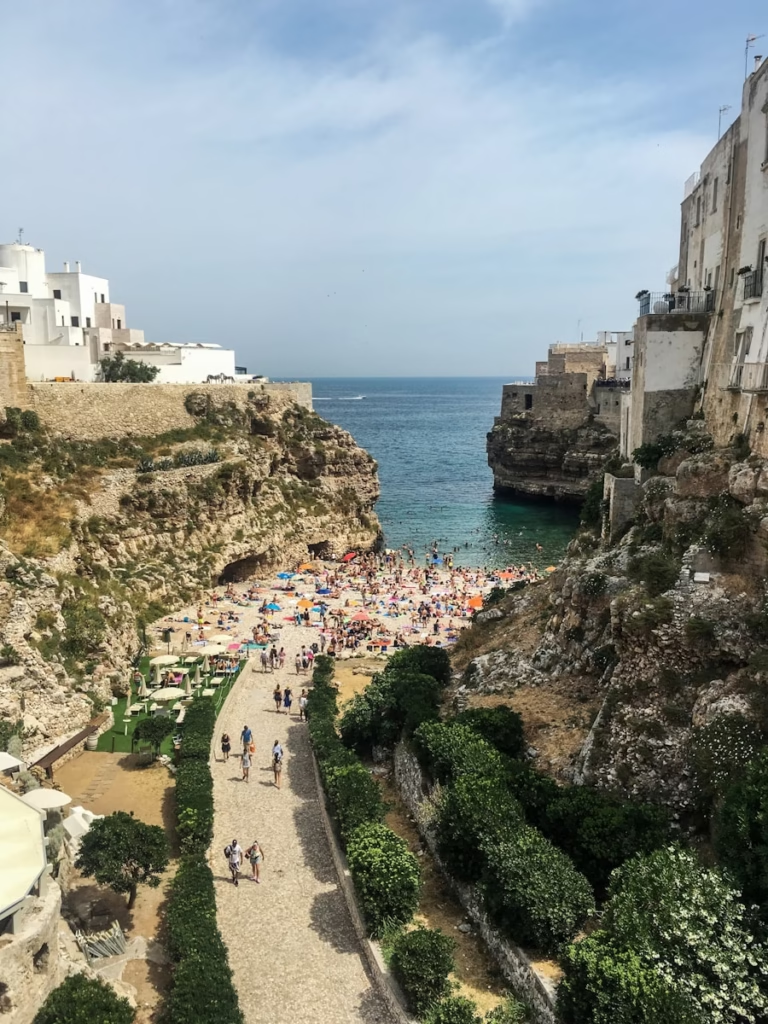
Why Puglia works so well for cycling
The attraction starts with the road network.
Away from the main connecting roads, both the Valle d’Itria and Salento contain an enormous number of smaller lanes running between farms, villages and olive groves. Some are barely wide enough for two cars, which makes them excellent for cycling when the surface is good.
The terrain also encourages exploration.
There is rarely one obvious road that everyone needs to ride. A route can be lengthened or shortened through another village, a coastal section can be added depending on the wind and a missed turning often leads somewhere worth seeing anyway.
That makes Puglia particularly good for riders who enjoy building loops rather than following a prescribed cycling itinerary.
It is also a place where a 70km ride can make more sense than forcing 130km into every day. The towns are part of the attraction, and allowing time for coffee in Cisternino, lunch in Locorotondo or a walk through Lecce makes the trip better rather than less serious.
Valle d’Itria: rolling roads through Puglia’s white towns
The Valle d’Itria is probably the best starting point for a first cycling trip to Puglia.
Ostuni, Cisternino, Locorotondo, Martina Franca and Alberobello form a loose network of towns surrounded by vineyards, olive groves and the region’s distinctive trulli. Between them is a maze of smaller roads where the riding is often much quieter than the better-known parts of northern Italy.
The landscape looks relatively gentle on a map, but it rarely stays flat for long.
Roads repeatedly drop into shallow valleys before climbing back towards settlements built on higher ground. Most ascents are short, but a full day can accumulate a surprising amount of climbing simply through repetition.
It is the sort of terrain where rhythm matters more than outright climbing ability.
Ostuni to Cisternino and Locorotondo
A loop connecting Ostuni, Cisternino and Locorotondo is one of the easiest ways to understand the Valle d’Itria.
Ostuni sits prominently above the surrounding landscape and makes a good base if you want access to both the interior and the Adriatic coast.
Heading inland towards Cisternino brings quieter lanes, dry-stone walls and repeated short rises. The town itself is compact enough to work as a mid-ride stop without turning the break into a major detour.
Locorotondo sits higher again and provides wide views across the valley. The approach can feel considerably tougher than its modest elevation suggests if it arrives late in the ride or into a headwind.
Connecting the three creates a day with enough climbing to feel worthwhile without requiring a major mountain.
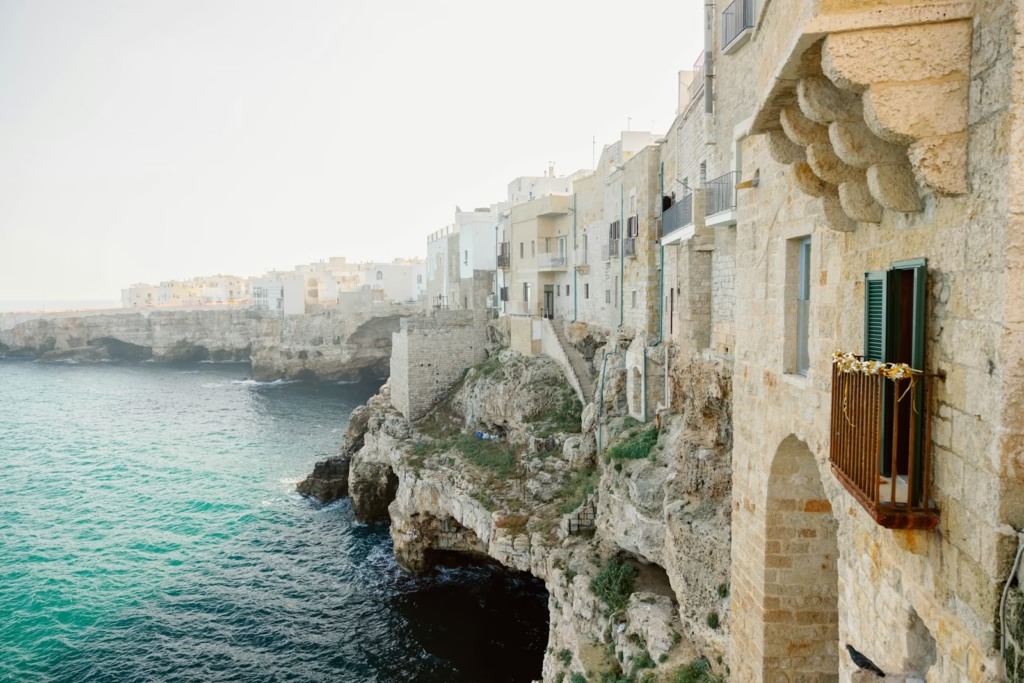
Adding Martina Franca
Martina Franca extends the loop further into the Valle d’Itria and makes sense for stronger riders wanting a longer day.
The roads between Martina Franca, Locorotondo and Cisternino are particularly well suited to cycling because the gradients change constantly without becoming severe for long periods.
There is little benefit in choosing the largest connecting road simply because it is quicker. The smaller lanes are usually where the riding becomes most enjoyable.
A navigation computer with offline mapping is useful here because the road network can become complicated once you start deliberately avoiding the main routes.
Alberobello is worth visiting, but go early
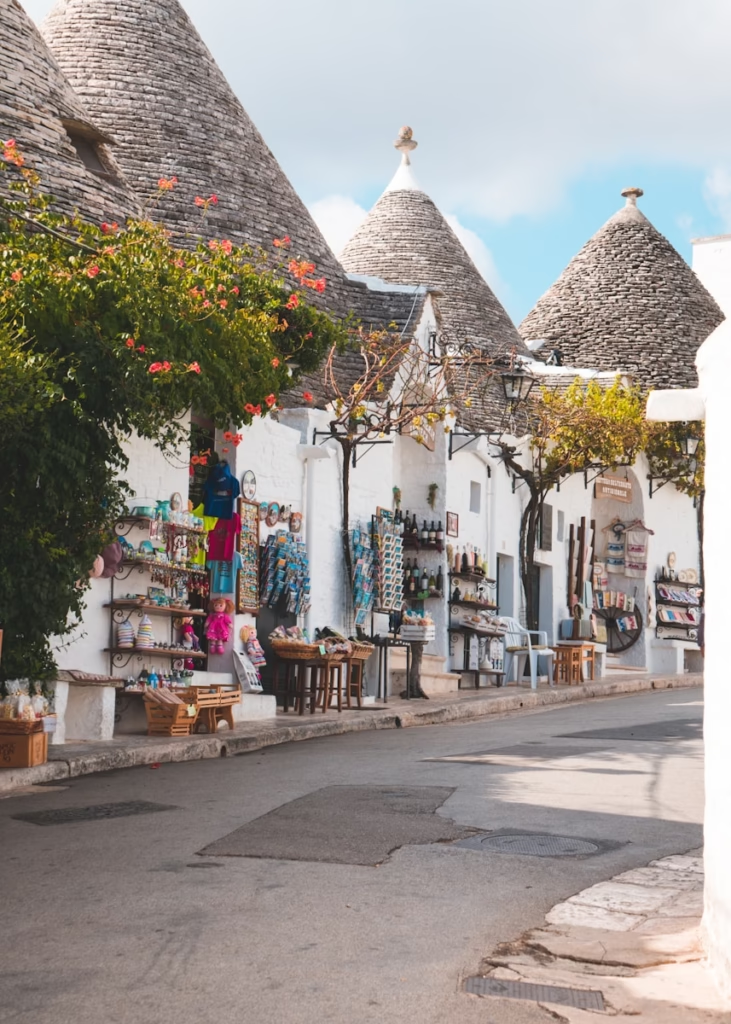
Alberobello is the most famous destination in the Valle d’Itria because of its concentration of trulli houses.
That also makes it one of the busiest.
Arriving early in the morning works particularly well on a bike. The centre is quieter, temperatures are lower and you can leave before the roads become busier with day visitors.
The cycling immediately outside Alberobello is more relaxing than the town itself. Small roads thread through fields containing individual trulli, vineyards and stone walls, and it does not take long to leave the tourist traffic behind.
Ostuni can work as a single cycling base
There is no need to change hotels every night to make Puglia work.
Ostuni is one of the best bases for a Valle d’Itria trip because routes can head inland towards Cisternino and Martina Franca or east towards the Adriatic.
That flexibility matters when the wind changes.
A strong coastal breeze can make an exposed day by the sea much less appealing, while the more sheltered interior roads may remain perfectly rideable.
Cisternino and Locorotondo are quieter alternatives if you would rather stay directly among the inland lanes.
For riders who like this style of rolling Italian countryside more than high mountains, there are obvious similarities with cycling through Chianti and Tuscany, although Puglia feels drier, flatter and generally less busy with visiting cyclists.
Salento offers a different kind of riding
South of Brindisi and Lecce, the land narrows into the Salento peninsula.
The terrain becomes more open and generally flatter, with longer uninterrupted roads running through olive groves and agricultural land.
This is where the wind becomes a much bigger part of route planning.
A 100km ride containing very little climbing can still become difficult if the final 40km are directly into a strong headwind. Checking direction as well as speed before leaving is worthwhile.
Salento also gives riders a choice between the Adriatic and Ionian coasts.
The two sides have noticeably different characters.
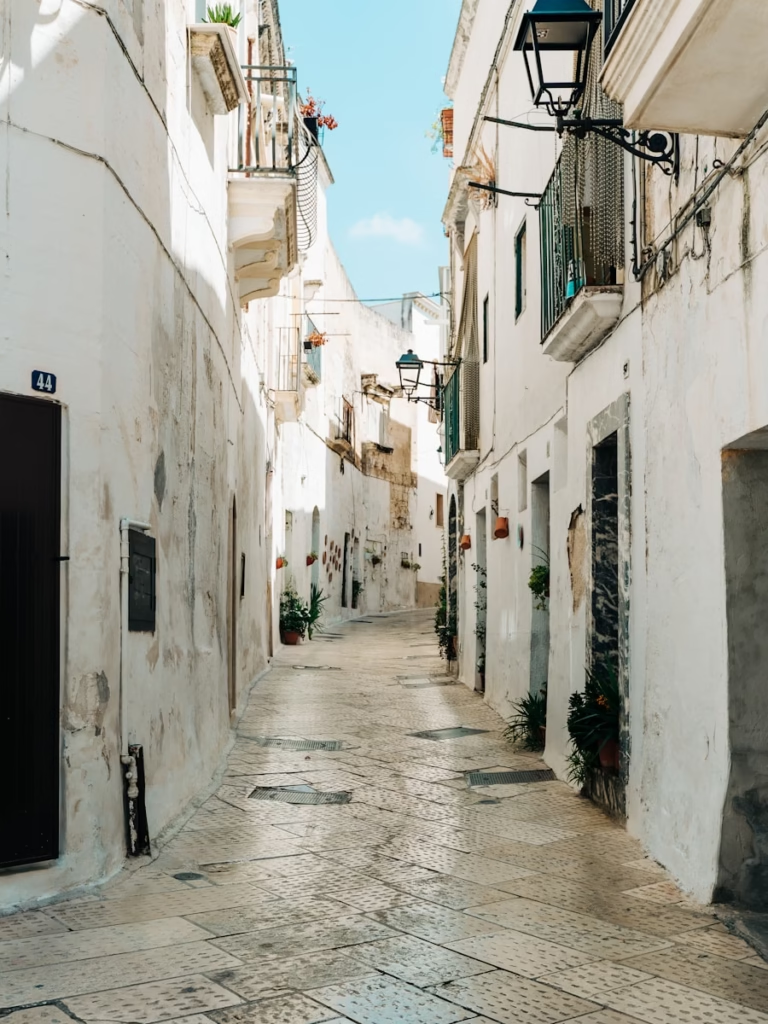
Lecce to Otranto is a natural first Salento ride
Lecce is the easiest base for riders wanting to explore the northern half of Salento without hiring a car.
The city has good rail connections, plenty of accommodation and enough routes leaving in several directions that you can stay for multiple nights without repeating the same roads.
Otranto makes an obvious destination.
The most direct roads are not necessarily the ones worth using on a bike. Quieter inland routes through smaller villages make the journey longer but generally more enjoyable.
Once in Otranto, there is the option to return inland or continue south along the Adriatic.
That second choice produces the better scenery but also introduces more climbing.
Otranto to Santa Cesarea Terme
The Adriatic coast south of Otranto contains some of Salento’s most rewarding road riding.
Unlike the flatter western side of the peninsula, the road repeatedly rises and falls above the coast. None of the climbs are especially long, but there is enough elevation to keep the ride interesting.
Santa Cesarea Terme makes a useful target, either as part of an out-and-back ride from Otranto or incorporated into a larger loop through the interior.
The sea views are excellent, but the road is exposed. A strong wind from the wrong direction can make progress much slower than expected.
During July and August, traffic is another reason to start early.
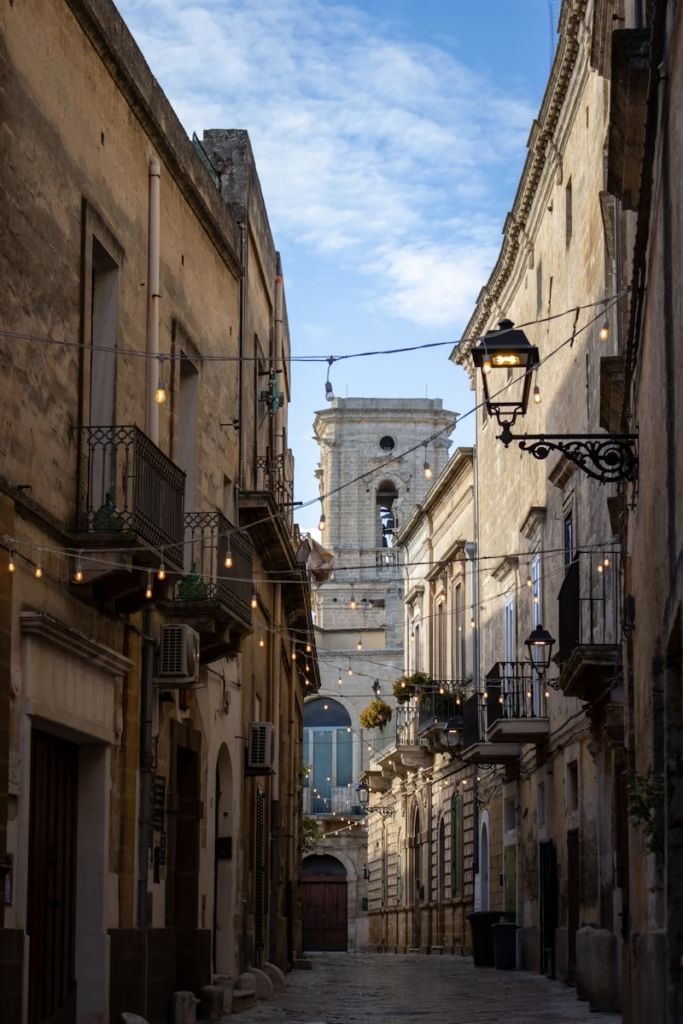
Ride south towards Santa Maria di Leuca
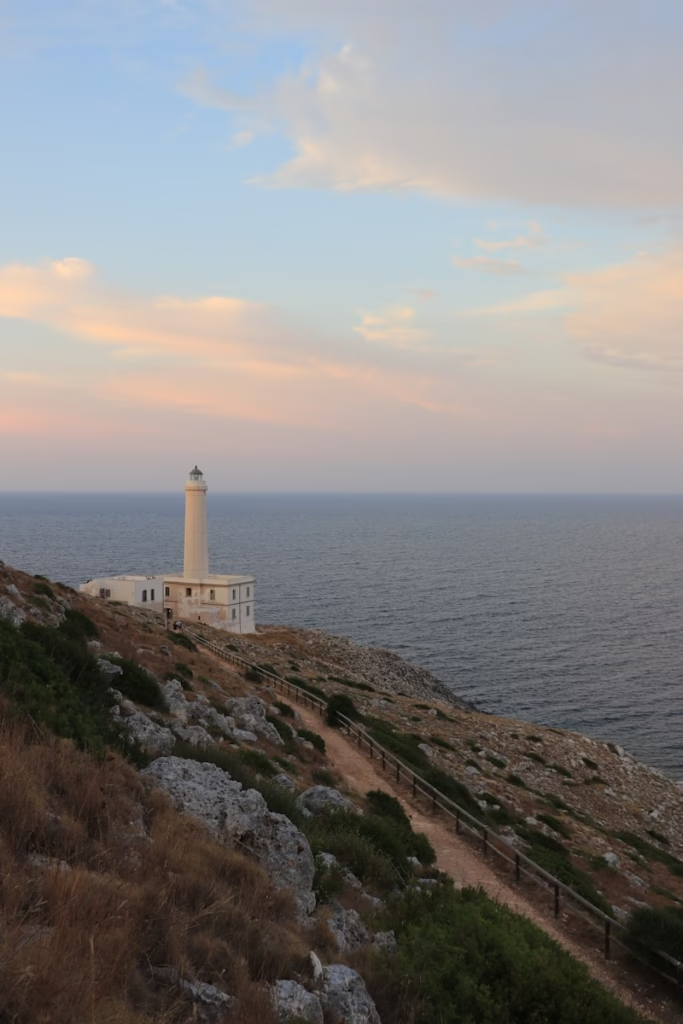
Santa Maria di Leuca sits at the southern tip of Salento and provides a natural destination for a longer ride.
The eastern approach is the more dramatic, following the Adriatic side through a sequence of coastal settlements before reaching Leuca.
The western side towards Gallipoli is generally flatter and feels more open.
That makes a longer point-to-point journey around the tip of the peninsula possible, although the distances quickly add up.
Leuca itself is better treated as part of the journey than as a major cycling challenge. There is no famous summit waiting at the end. The satisfaction comes from reaching the bottom of the peninsula after hours spent moving between coast, farmland and small towns.
The Ionian coast is flatter but not necessarily easier
The western side of Salento has fewer rolling coastal roads than the route south of Otranto.
Areas around Gallipoli, Porto Cesareo and the smaller coastal settlements lend themselves to longer endurance rides, particularly outside the busiest holiday period.
The flatter terrain makes it tempting to plan large distances.
Wind should determine whether that is sensible.
There is very little shelter on parts of the western peninsula, and riding for several hours into a persistent headwind can turn an otherwise straightforward route into one of the hardest days of the trip.
If conditions are unfavourable, heading inland is usually a better answer than stubbornly following the coast.
Puglia suits endurance riding more than climbing holidays
Anyone travelling to Italy specifically to spend a week climbing should look elsewhere.
The Dolomites around Cortina or the Sella Ronda from Alta Badia offer a completely different scale of riding.
Puglia’s strengths lie in repeated rolling roads and long, steady days.
That makes it particularly good for:
- Endurance riding
- Relaxed road cycling holidays
- Bikepacking
- Café-to-café routes
- Riders who prefer quiet lanes to famous climbs
- Mixed cycling and sightseeing trips
- Spring and autumn training miles
Strong riders can still make the days difficult simply by extending the distance.
What Puglia does not require is arranging every route around one unavoidable climb.
Road bike or gravel bike?
A road bike is the obvious choice if the trip is focused on the Valle d’Itria and the paved coastal roads.
The important consideration is tyre width.
Minor roads can be patched, cracked or rough around the edges, so there is little advantage in bringing an aggressive setup with very narrow tyres.
Around 28mm works, but 30mm or 32mm tyres provide more comfort and make it easier to use smaller lanes without worrying quite so much about every broken section of surface.
A gravel bike gives even more flexibility.
Puglia contains a network of farm roads, unsealed tracks and rural connections that can be incorporated into routes if the bike is capable of handling them.
You do not need gravel tyres to enjoy the region, but they increase the number of roads available considerably.
When is the best time to cycle in Puglia?
April to June and September to October are the strongest periods for a cycling trip.
Spring temperatures are generally comfortable for longer rides and the countryside is greener than it becomes later in the year.
May and early June offer a particularly good balance between warm weather and avoiding the peak holiday season.
September is another excellent choice. The most intense summer heat has begun to ease, the sea remains warm and coastal areas gradually become quieter.
October can still work very well, although shorter daylight hours and a greater chance of unsettled weather need to be factored into longer routes.
July and August are possible, but start very early
Puglia gets seriously hot in summer.
That is particularly important in Salento, where shade can be limited on open inland roads.
A summer ride should begin early enough to have the majority of the distance completed before the hottest part of the afternoon.
Carry more water than you think you need.
Smaller shops and cafés can close for part of the afternoon, and a village that looks like an obvious refill point on the map may not provide anything when you arrive.
The coast also becomes much busier in July and August.
Early mornings help with both temperature and traffic, particularly around Otranto, Gallipoli and the popular beach areas.
Wind matters almost as much as temperature
The absence of big mountains makes it easy to underestimate Puglia from an elevation profile.
Wind frequently changes the calculation.
Salento is particularly exposed, but strong winds can influence riding across the region.
Check the forecast before choosing the direction of a loop. If possible, avoid designing a day where the strongest expected headwind arrives during the final hour.
This becomes even more important on long coastal rides.
A steady tailwind can make the first half of a route feel effortless while quietly creating a very unpleasant ride home.
Road surfaces and traffic
Puglia rewards choosing roads carefully.
Major routes between towns can carry fast traffic and are rarely the reason to come here with a bike.
Smaller roads are usually much more enjoyable, but surface quality varies.
Expect patches, cracks, potholes and occasional loose material near the road edge. Agricultural traffic can also leave dirt or stones on rural lanes.
A daytime rear light is worthwhile even when visibility is good.
The approach to larger towns requires more attention, particularly around Lecce, Brindisi and Bari, where traffic levels rise quickly compared with the surrounding countryside.
Once away from those areas, the riding generally becomes much calmer.
Getting to Puglia with a bike
Bari and Brindisi are the main airports for the region.
Bari makes sense for travellers combining northern Puglia with the Valle d’Itria.
Brindisi is particularly convenient for the Valle d’Itria and northern Salento.
Lecce does not have its own major airport but is easily reached from Brindisi and works as one of the strongest bases for exploring Salento.
A hire car makes multi-base trips easier, particularly if travelling with several bikes.
It is not essential.
A trip based around Lecce or a Valle d’Itria town can work with rail connections and carefully planned rides from the accommodation.
Where to stay
For the Valle d’Itria, Ostuni offers the most flexibility.
It has enough restaurants and accommodation for several nights while giving direct access to both the coast and inland routes.
Cisternino and Locorotondo feel smaller and put you closer to the lanes that make the area so enjoyable.
Converted masserie are another good option if the priority is rural riding rather than being within walking distance of restaurants every evening. Check bike-storage arrangements before booking, particularly with more expensive road bikes.
For Salento, Lecce is the easiest all-round base.
Otranto works better if the Adriatic coast is the priority, while Santa Maria di Leuca is useful for riders wanting to explore the southern tip.
Moving accommodation every night is unnecessary unless the trip is specifically designed as a bikepacking journey.
Two bases, one in the Valle d’Itria and another in Salento, are enough for a week.
-
 Photo Credit: quentinphotographiebe
 -
 Photo Credit: Getty

Food is part of the route planning
Stopping properly for food suits the pace of riding in Puglia.
Focaccia barese, panzerotti and fresh fruit work easily as mid-ride food, while cafés provide the usual reliable combination of espresso and something sweet.
Later in the day there is orecchiette, burrata, seafood, grilled vegetables and a huge range of local produce.
There is little reason to rush through the region simply to maximise kilometres.
A 75km loop with two good towns along the way can make a better Puglia ride than a 140km day spent concentrating entirely on the computer.
That is one of the distinctions between riding here and somewhere such as Bormio or the Dolomites.
The destination is rarely one summit.
It is everything passed on the way there.
Puglia deserves more attention from cyclists
Puglia does not have the instant cycling identity of Tuscany, the Dolomites or the Italian Lakes.
That can work in its favour.
You are not following hundreds of other cyclists towards the same climb each morning. Routes can be built around the roads that look interesting, the direction of the wind and whichever town seems like a good place to stop.
The Valle d’Itria provides the more varied terrain, with enough short climbing to stop the riding becoming repetitive. Salento adds longer coastal days, open countryside and a completely different rhythm.
Together they make a strong week-long cycling trip without relying on a single marquee road.
For riders looking beyond Italy’s traditional cycling bases, Puglia belongs alongside places such as Sardinia and Sicily as somewhere worth considering in its own right rather than as an alternative when somewhere better is unavailable.
More routes and destination guides can be found in ProCyclingUK’s Travel and Riding Abroad section.

