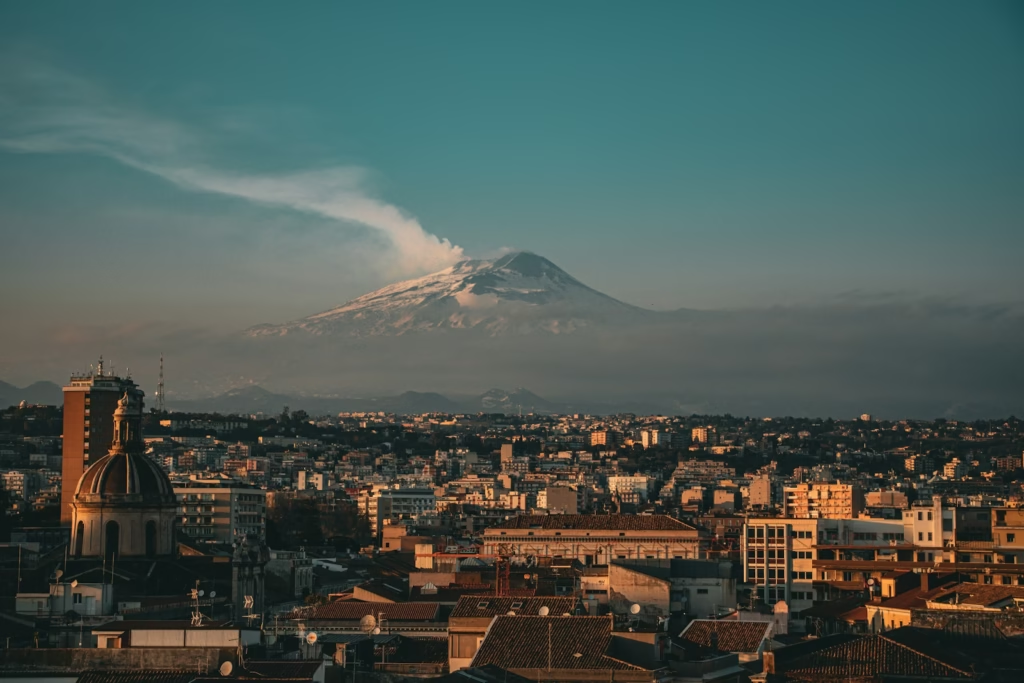
There are mountains that rise from the landscape, and then there is Mount Etna. Sicily’s great volcano does not simply sit above the island. It watches it. From the coast near Catania, from the terraces above Taormina, from the citrus groves and black-stone villages that cling to its lower slopes, Etna is always there: smoky, silent, immense, and slightly unreal.
For cyclists, the Etna region is one of the most distinctive places to ride in Europe. It has the ingredients of a classic cycling destination, with long climbs, warm weather, quiet inland roads, sea views, good food and a strong Giro d’Italia connection. Yet what makes it memorable is not only the climbing. It is the atmosphere. The road changes colour under your tyres. The air shifts from salty coastal warmth to cool pine-scented altitude. The surface moves from village tarmac to lava-lined hairpins. You climb through orchards, chestnut trees, broom, black rock and sudden open spaces where the mountain feels almost lunar.
This is not the polished cycling terrain of Mallorca or the tidy Alpine drama of Switzerland. Cycling in Sicily, especially around Etna, is rougher-edged and more theatrical. It asks for patience. It rewards curiosity. The climbs are long rather than brutally steep, the roads can be uneven, the weather can change quickly, and the volcano gives every ride a sense of scale that is difficult to replicate elsewhere.
For riders who like their cycling with texture, history and a little unpredictability, Etna is exceptional. It also sits naturally within Italy’s wider cycling-travel appeal, from the Alpine seriousness of Bormio and the Stelvio, Gavia and Mortirolo to the quieter high-mountain feel of cycling in Aosta Valley. Etna is not trying to be either of those places. Its power comes from being unmistakably Sicilian.
Cycling in the Etna region at a glance
| Question | Answer |
|---|---|
| Where is the Etna cycling region? | Eastern Sicily, around Mount Etna, Catania, Nicolosi, Zafferana Etnea, Linguaglossa and Taormina. |
| What is the main climb? | Mount Etna, with road-bike approaches to Rifugio Sapienza on the south side and Piano Provenzana on the north side. |
| How hard is cycling on Etna? | Hard. The main paved climbs are long, often around 18-19km, with sustained gradients and more than 1,000 metres of climbing. |
| Is Etna suitable for road bikes? | Yes, the main paved approaches are road-bike friendly, though surfaces can vary and descending needs care. |
| Best base for riding Etna? | Catania, Nicolosi, Zafferana Etnea, Linguaglossa, Taormina or Giardini Naxos, depending on whether you prefer city, coast or mountain access. |
| Best time to cycle Etna? | Spring and autumn are usually the most comfortable. Summer can be very hot at lower altitude, while winter can bring snow high on the volcano. |
| Why is Etna special for cycling? | It combines volcanic landscapes, Giro d’Italia history, long climbs, sea views, Sicilian villages and a unique high-altitude atmosphere. |
Why Etna feels different from other cycling climbs
Most famous cycling climbs have a clear identity. Alpe d’Huez has its numbered bends and Tour de France mythology. Mont Ventoux has its white summit and wind-scoured isolation. The Stelvio has its switchbacks, snow walls and high Alpine theatre. Etna is different because it feels alive.
You do not just climb a mountain. You climb a volcano.
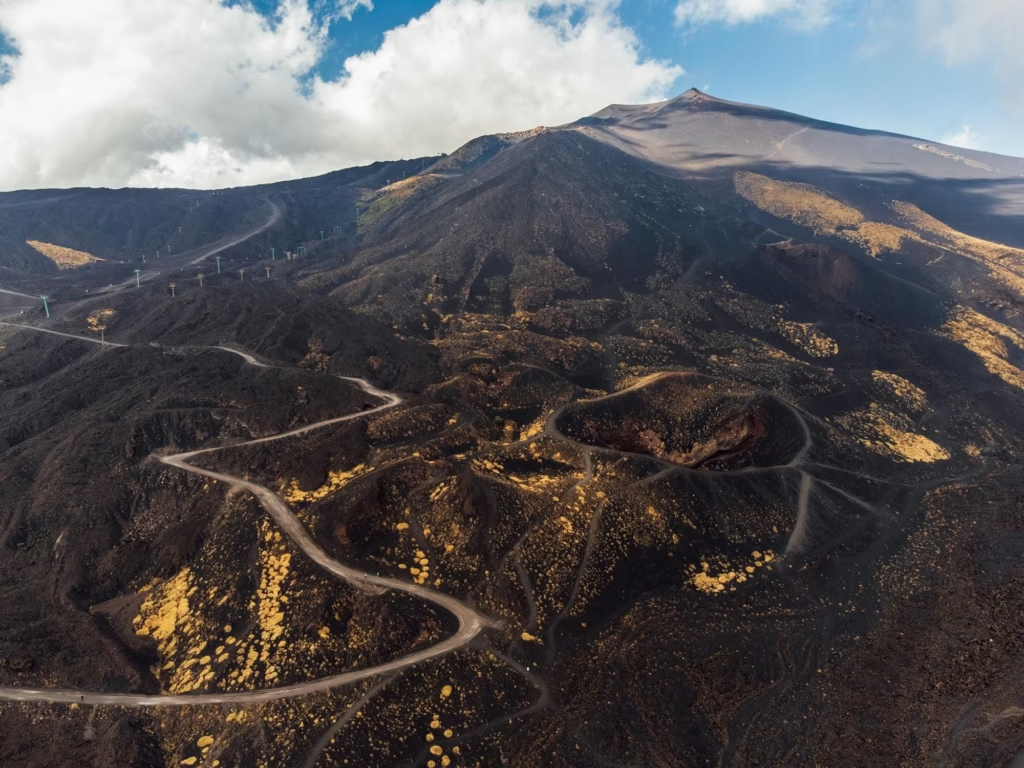
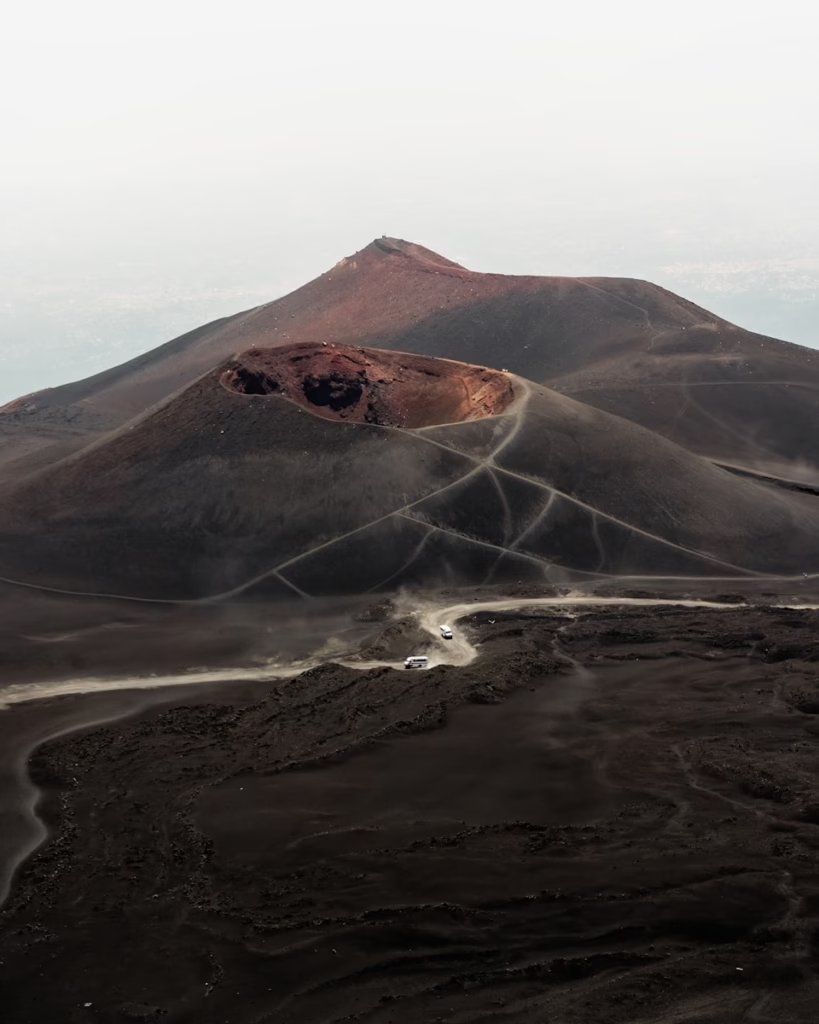
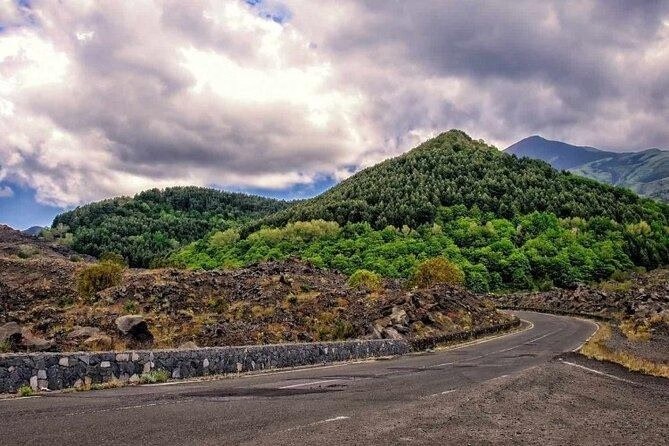
The road surface, the smell of the air and the colour of the land all tell you that. At the bottom, the ride may begin with warm stone walls, roadside cafés, scooters, petrol fumes and the sweet smell of citrus. Then the gradient begins to settle, the villages thin, and the world gradually darkens. Lava rock appears in walls, gardens and old flows beside the road. Trees grow from black ground. The mountain starts to feel less like scenery and more like a force.
On a clear day, the contrast is startling. Behind you, the Ionian Sea flashes blue in the distance. Ahead, the upper slopes of Etna look dry, grey and strange, sometimes with a faint plume above the summit. You can hear your chain, your breathing, the buzz of insects in the lower sections, then later the quiet scratch of tyres on volcanic grit.
The climb is not always beautiful in a soft sense. It can be harsh, exposed and disorientating. That is part of its appeal. Etna’s beauty comes from contrast: sea and summit, fertility and destruction, heat and altitude, villages and emptiness.
It has some of the immersive, place-led appeal found in other great riding regions, such as Asturias and Cantabria around Lagos de Covadonga, but Etna’s atmosphere is more volcanic, more abrupt and more theatrical.
The main Etna climbs for road cyclists
Etna can be climbed from several directions, which is one reason the region works so well for cyclists. You can approach the south side towards Rifugio Sapienza, ride the north side towards Piano Provenzana, or link villages and balcony roads for routes that never quite reach the highest paved points but still give you serious climbing.
The two best-known road-bike targets are Rifugio Sapienza and Piano Provenzana.
Rifugio Sapienza: the classic south-side Etna climb
Rifugio Sapienza is the most familiar Etna cycling destination. Sitting high on the south side of the volcano, it is the place many riders picture when they think of cycling Mount Etna: a high parking area, cable car infrastructure, black lava fields, tourist coaches, a sudden chill in the air and a feeling that the road has climbed out of normal Sicily into another world.
The main south-side approaches can begin from places such as Nicolosi, Pedara, Zafferana Etnea or Ragalna, depending on how you design the ride. The climb is not just a single road with one personality. It changes depending on the line you choose. From Nicolosi, it has a more classic staged feel, rising out of a mountain town and gradually working into the higher volcanic landscape. From Zafferana Etnea, the route has a sterner reputation, with steep early sections and a harder rhythm before it opens up higher on the mountain.
The numbers vary by approach, but the riding experience is consistent: this is a long, sustained climb. It is not usually savage in the way a short wall can be savage, but it slowly removes comfort. The lower kilometres invite you to ride too hard. The middle slopes punish that mistake. Higher up, the landscape becomes more open, the wind more noticeable, and the sense of exposure sharper.
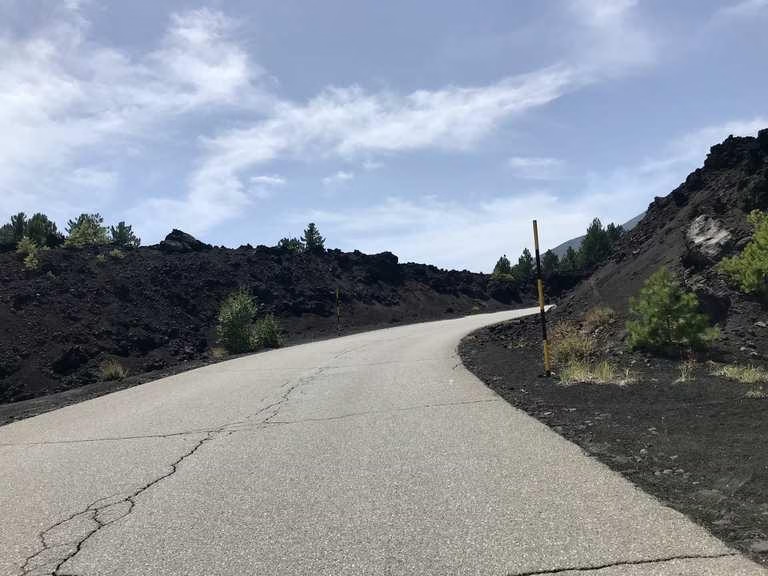
What makes Rifugio Sapienza special is the finish. The final kilometres do not have the neat theatre of an Alpine ski station. They feel more volcanic, more irregular, more Sicilian. You pass dark banks of lava and roadside souvenir stalls. The air can smell dry, dusty and mineral, with a faint trace of sulphur depending on conditions. The light can be glaring. The temperature can drop enough for arm warmers at the top, even if you started the ride in short sleeves near the coast.
It is a climb that feels earned. For riders who want to understand how the Giro has framed the volcano as a cycling destination, the official Giro d’Italia Etna cycling route is a useful reference point.
Piano Provenzana: Etna’s northern face
If Rifugio Sapienza is the more obvious Etna climb, Piano Provenzana is the one many cyclists end up remembering more intensely. The northern approach from Linguaglossa carries a quieter, wilder quality. It has forest, lava, long ramps and a sense of remoteness that builds gradually rather than announcing itself immediately.
From Linguaglossa, the climb to Piano Provenzana is around 18km and averages close to 7 per cent. That makes it a serious road climb in any cycling region. On Etna, it feels bigger because the road moves through several worlds. The lower slopes have village edges and agricultural warmth. Then the climb rises into woodland, where the shade brings relief and the road feels almost Alpine for a while. Later, the lava returns, and with it the volcanic character that defines the mountain.
The gradient is generally manageable, but it rarely gives much away. It is the kind of climb where rhythm matters more than aggression. You settle into the gear, listen to the breath, watch the trees thin, and feel the road gradually pull you higher. On hot days, the shade is a gift. On cooler or windier days, the upper slopes can feel exposed and strangely empty.
Piano Provenzana does not have the same busy tourist feel as Rifugio Sapienza. It can feel more austere, more private, and more like a conversation between rider and mountain. For experienced cyclists, that may make it the most rewarding side of Etna.
Etna and the Giro d’Italia
Etna’s cycling reputation is not only local. The volcano has become one of the Giro d’Italia’s most recognisable southern climbs, usually appearing early in the race when the general classification is still forming and riders are trying to understand their own condition.
That early-Giro position suits Etna perfectly. It rarely decides the whole race, but it reveals things. Who is comfortable? Who is bluffing? Who has arrived undercooked? Who can handle a long, irregular climb before the Giro has fully settled?
The Giro has used different approaches to Etna over the years, which reflects the mountain’s variety. Rifugio Sapienza and Piano Provenzana both offer serious tests, but they ask slightly different questions. The south side can feel more open and theatrical. The north side can feel more controlled, forested and grinding before the upper volcanic terrain arrives.
For amateur riders, that Giro connection adds a quiet thrill. You are not just riding a scenic climb. You are riding roads where professional races have tested form, exposed weakness and offered early-season drama. There is something satisfying about reaching the top slowly, heavily, with salt drying on your jersey, and imagining the speed of a Grand Tour peloton on the same slopes.
Italy’s race geography is full of contrasts, and Etna is one of the best examples of why the Giro can feel so different from the Tour de France. A stage can begin with Mediterranean warmth, then end in a volcanic landscape that feels detached from ordinary road racing. For more on the race’s wider modern route character, our Men’s Giro d’Italia 2026 full route guide shows how Italian Grand Tour terrain can move from coastal roads to hard mountain stages with very little warning.
What are the roads like around Etna?
The Etna region is varied, and that is part of both its charm and its challenge. The main climbs are rideable on a road bike, but Sicily is not a place where every road feels engineered for cycling comfort. Surfaces can be rough in places. Potholes appear. Lava grit can gather near the roadside. Traffic changes dramatically depending on where and when you ride.
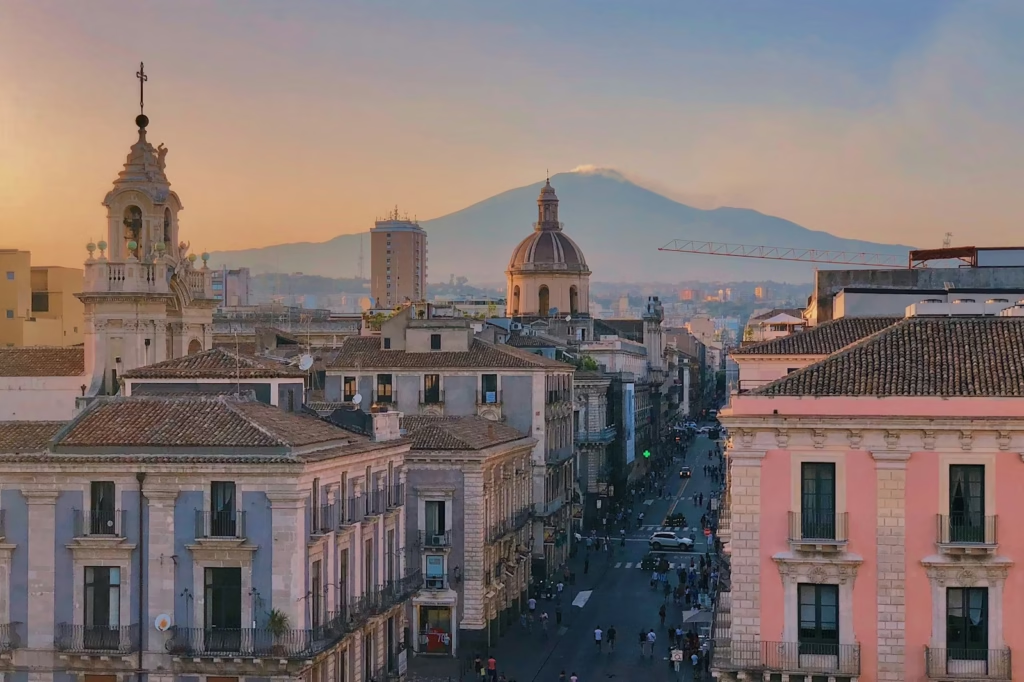
Close to Catania, riding can feel busy and slightly chaotic. The road culture is assertive, scooters are everywhere, and the first kilometres out of the city may not feel relaxing. Once you reach the smaller towns and mountain roads, the mood changes. The pace drops. The views open. The riding becomes more absorbing.
Around Nicolosi, Zafferana Etnea, Pedara and Linguaglossa, you find the kind of roads that make the region special. They twist through black-stone villages, past fruit stalls, churches, terraces, vineyards and lava walls. Some lanes are smooth and inviting. Others are patched and imperfect. Descending requires attention, particularly where the road surface changes from sun-warmed tarmac to shaded, broken or gritty corners.
The reward is atmosphere. Sicily gives you roads that feel lived-in. You smell wood smoke, grilled meat, espresso, damp pine, hot dust and ripening fruit. Dogs bark from behind gates. Church bells carry across valleys. A bar owner may fill your bottles with the kind of casual hospitality that makes a hard ride feel lighter.
This is not a sterile training camp. It is a place with edges.
Where to base yourself for cycling Etna
Choosing a base depends on what kind of cycling trip you want.
Catania is practical. It has the airport, rail connections, bike shops, food, energy and the easiest logistics. It also means dealing with city traffic before reaching quieter roads. For riders who want convenience, nightlife and access to the coast, it works well.
Nicolosi is more cycling-focused for the south side of Etna. It places you close to the climb towards Rifugio Sapienza and gives the trip a mountain-town feel. It is a strong choice if the main goal is to ride Etna properly rather than combine cycling with a wider city break.
Zafferana Etnea has a softer, scenic character, with views, cafés and direct access to one of the harder south-eastern approaches. It suits riders who want a quieter stay with immediate climbing from the door.
Linguaglossa is ideal for the north side and the Piano Provenzana climb. It feels more tucked away and gives access to a beautiful, demanding side of the volcano. It is especially appealing for riders who prefer quieter roads and a less obvious base.
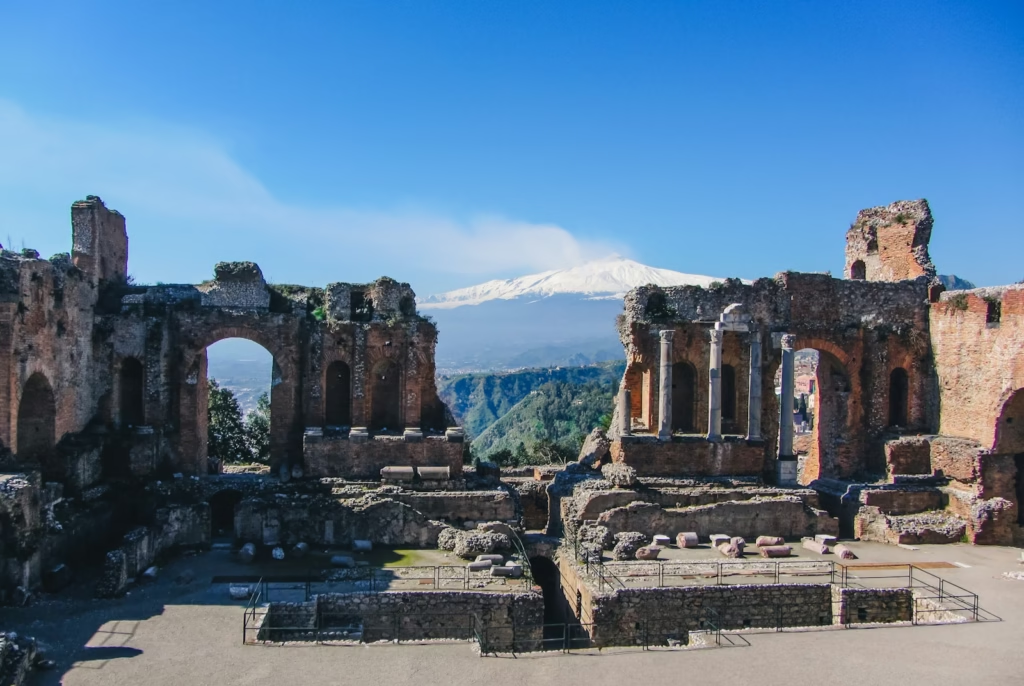
Taormina and Giardini Naxos offer a more coastal version of the trip. They are attractive, lively and visually spectacular, with sea views and access to routes that can link towards Etna. The trade-off is that reaching the main volcano climbs may require longer rides or transfers.
For a broader view of where Sicily fits within the country’s riding options, our cycling in Italy travel hub brings together Italian cycling destinations by region and riding style.
Best bases for cycling in the Etna region
| Base | Best for | Cycling character |
|---|---|---|
| Catania | Logistics, airport access, city stay | Busy at first, practical for mixed travel and cycling |
| Nicolosi | Rifugio Sapienza south-side climb | Direct mountain access and a classic Etna feel |
| Zafferana Etnea | Scenic climbing and quieter stays | Strong climbing routes, views and village atmosphere |
| Linguaglossa | Piano Provenzana and the north side | Quieter, forested, demanding and atmospheric |
| Taormina / Giardini Naxos | Coast, views and holiday feel | Beautiful base, but longer access to the main Etna climbs |
When is the best time to cycle Etna?
Spring and autumn are the best seasons for most road cyclists. April, May, September and October usually offer the most appealing balance of temperature, light and ride comfort. The lower slopes can be warm without being oppressive, while the upper mountain is more likely to be rideable than in winter.
Summer can be beautiful but difficult. The coast and lower slopes can become extremely hot, particularly in July and August. Long climbs in that heat require early starts, careful hydration and realistic pacing. The volcano may be cooler at altitude, but the road to get there can be draining.
Winter is possible lower down, but Etna is a high mountain. Snow, cold temperatures and closed or difficult upper sections can affect the higher roads. The contrast between the coast and the summit area can be dramatic. You can leave a mild seafront and find winter conditions high on the volcano.
For a cycling holiday, autumn may be the most seductive season. The island feels slightly calmer, the light softens, the sea stays warm, and the rides have a less frantic energy. There is still heat in the stone, but the climbs become more forgiving.
How hard is cycling on Etna?
Etna is hard because of length, altitude gain, heat and exposure rather than because every ramp is brutally steep. The main paved climbs generally sit in the long-climb category, often around 18-19km for the key summit approaches, with sustained gradients that require a steady effort.
The difficulty depends heavily on where you start. If you roll from the coast, the total elevation gain can be huge. A ride from Catania, Giardini Naxos or Taormina towards the upper slopes can become a major day out. If you begin in Nicolosi, Zafferana or Linguaglossa, the climb is more contained but still demanding.
The biggest mistake is treating Etna like a normal climb because the average gradient looks manageable. The heat can sap you before the road becomes serious. The lower slopes can feel deceptively easy. The wind higher up can interrupt rhythm. The views can tempt you into repeated stops, which is wonderful for the experience but can make the ride feel more fragmented.
A compact chainset or generous climbing gears are sensible. So is carrying more water than you think you need. Sicily can feel forgiving in the café, then very unforgiving halfway up a volcano with empty bottles.
What makes Etna special beyond the climbing?
The great charm of cycling in the Etna region is that the riding never feels separated from the place. Every climb begins in Sicily before it becomes a cycling effort. You ride past balconies with washing moving in the breeze, old men outside cafés, market crates, painted shutters, stray cats, lemon trees and dark stone walls. The mountain is always present, but it does not erase the island around it.
Food is part of the memory too. After a long ride, even simple things feel heightened: a cold granita, a sharp espresso, a plate of pasta alla Norma, bread with olive oil, pistachio pastries, grilled fish by the coast, an orange eaten with sticky fingers beside the road. Sicily has a way of making recovery feel like a cultural experience rather than just refuelling.
There is also a sensory richness to the riding that stays with you. The heat radiating from black rock. The sudden coolness under pine trees. The smell of dust after a dry wind. The metallic taste of effort on a long ramp. The sound of a freehub on a descent, interrupted by the rough slap of patched tarmac. The sight of the sea appearing far below, brighter than seems reasonable.
Etna is not just a climb to tick off. It is a place to absorb.
Suggested Etna cycling routes
A first trip to the region should include at least one high Etna climb, but the best itinerary mixes volcano days with gentler coastal or inland rides.
A strong opening ride could start from Nicolosi and climb to Rifugio Sapienza, then return carefully by the same route or loop through nearby villages if conditions and confidence allow. This gives the classic south-side experience without overcomplicating the day.
A second major ride could focus on Linguaglossa to Piano Provenzana. This is the quieter, more atmospheric counterpart, and it pairs well with a base near the north or east of the mountain.
A coastal recovery ride from Taormina or Giardini Naxos can add variety. The roads around the coast are not always calm, but the views are superb, and the contrast with Etna’s upper slopes makes the region feel broader than just one mountain.
More ambitious riders can design a full Etna loop, linking villages around the volcano and combining long rolling sections with significant climbing. These rides can be spectacular, but they require good route planning, careful water stops and respect for distance.
Practical tips for cycling around Etna
Etna rewards preparation. The riding is not technically complicated, but conditions can be changeable and the road environment is not always predictable.
Start early in warm weather. The lower slopes can become hot quickly, and the climb is far more enjoyable before the day hardens.
Take layers. Even if the coast is warm, the upper volcano can be cool, windy or damp. A gilet or light jacket can make the descent far more comfortable.
Check the weather at altitude, not just in Catania or Taormina. Conditions on Etna can be very different from the coast.
Use sensible tyres. Wider road tyres can help with rougher surfaces and patched roads.
Descend cautiously. Gravel, lava grit, uneven surfaces and traffic near tourist areas can all make the descent more technical than expected.
Plan water stops. Some sections have long gaps between reliable fountains, cafés or shops.
Do not underestimate the sun. Even when the air feels cooler higher up, exposure can be strong.
If you are combining a ride with a non-cycling visit higher on the volcano, the Funivia dell’Etna site is useful for checking the south-side cable car and excursion context before travelling.
Cycling in Sicily and Etna FAQ
Is Mount Etna good for road cycling?
Yes. Mount Etna is one of the most distinctive road cycling destinations in Italy. The main paved approaches to Rifugio Sapienza and Piano Provenzana offer long climbs, dramatic volcanic scenery and a strong connection to the Giro d’Italia.
How hard is the Etna climb?
Etna is a hard climb because it is long and sustained. The main road-bike approaches are often around 18-19km, with average gradients commonly around 6-8 per cent depending on the side. Heat, wind and altitude can make it feel harder than the numbers suggest.
Can you cycle to the top of Mount Etna?
Road cyclists can ride to high paved points such as Rifugio Sapienza and Piano Provenzana, but not to the volcanic summit crater itself on a normal road bike. The highest areas involve volcanic tracks, hiking terrain and changing access conditions.
What is the best side of Etna to cycle?
The south side to Rifugio Sapienza is the classic and more accessible climb, while the north side to Piano Provenzana is quieter, forested and often more atmospheric. The best choice depends on whether you want the iconic tourist-side experience or a more remote mountain feel.
Where should cyclists stay near Etna?
Nicolosi is ideal for the south-side climb to Rifugio Sapienza. Linguaglossa is best for Piano Provenzana. Zafferana Etnea is scenic and well placed for demanding climbing, while Catania and Taormina offer stronger travel infrastructure and more off-bike options.
When is the best time to cycle in Sicily?
Spring and autumn are usually best for cycling in Sicily. April, May, September and October offer a good balance of warmth, daylight and ride comfort. July and August can be very hot, especially on the lower slopes.
Is cycling in Sicily safe?
Cycling in Sicily can be excellent, but riders need to be alert. City traffic can be busy, road surfaces vary, and descending Etna requires care. The quieter mountain and village roads are often the most enjoyable, especially with well-planned routes.
Why cyclists should ride Etna at least once
Etna is not the easiest cycling destination in Europe, and that is exactly why it stands out. It is not manicured. It is not predictable. It can be hot, rough, windy, exposed and awkward. The roads can make you concentrate. The climb can feel longer than the profile suggests. The volcano can hide in cloud just when you want the perfect view.
But when it works, it is magnificent.
You climb from Sicily into something stranger and older. The sea falls away. The villages shrink. The road cuts through lava and forest. The air cools. The light changes. Every turn seems to reveal another version of the same mountain: fertile, scorched, green, black, welcoming, hostile.
For cycling travellers, that combination is rare. Etna gives you a serious climb, but also a sense of place strong enough to outlast the numbers. You remember the gradients, yes, but you also remember the smell of hot stone, the taste of an espresso before the start, the silence above the trees, the black grit at the roadside, the view back towards the sea, and the feeling that you have ridden somewhere that is still being made.
That is what makes cycling in Sicily’s Etna region special. The road does not just go up. It enters the mountain’s atmosphere.
For more destination inspiration, the wider ProCyclingUK travel section brings together road-cycling guides across Italy, Spain, Switzerland, the UK and beyond.