
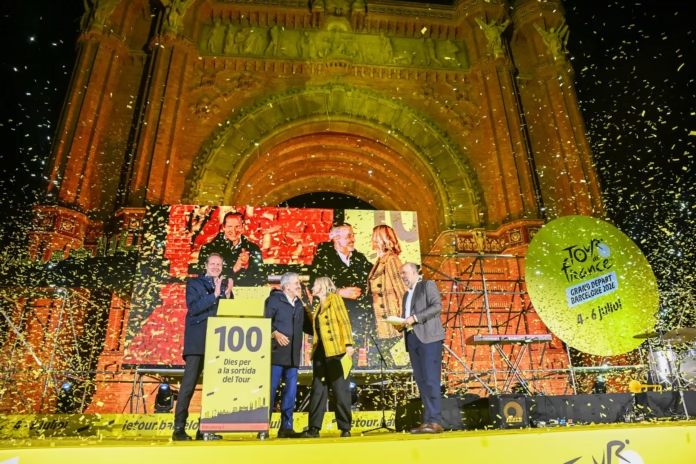
The Tour de France may be rooted in French geography, but it has never been entirely contained by it. From the post-war era onwards, the race has looked beyond its borders to announce itself as more than a national sporting event. The foreign Grand Départ has become one of the Tour’s most effective symbols, part sporting prologue, part civic showcase, part diplomatic gesture between France and its neighbours.
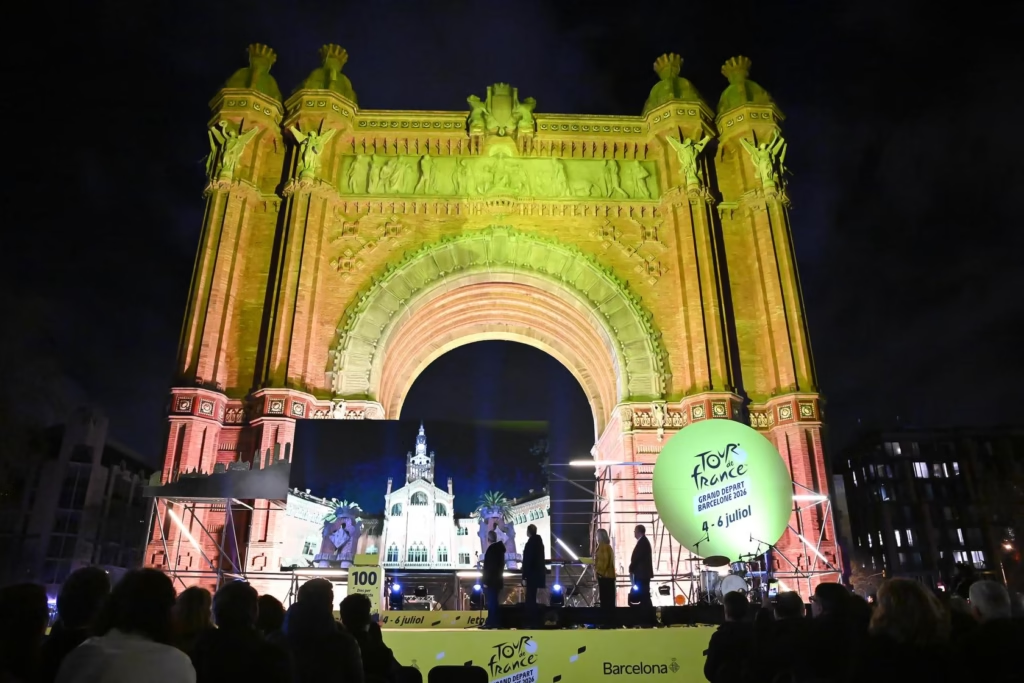
Barcelona’s 2026 Grand Départ continues that tradition. It will be the 27th time the Tour has started outside France and the third Spanish Grand Départ, following San Sebastián in 1992 and Bilbao in 2023. For the full race context, our Tour de France 2026 full route guide explains how the opening days in Catalonia connect to a route that then moves through the Pyrenees, Massif Central, Vosges, Jura and Alps.
The opening weekend also gives the race a distinctly modern shape. The 2026 edition begins with a Barcelona team time-trial on Saturday, 4th July, followed by Tarragona to Barcelona, then Granollers to Les Angles. That is not just a route choice. It places the Tour inside one of Europe’s great sporting cities, ties the race to Catalonia’s cycling culture, and gives the first week immediate sporting consequence. Our Tour de France 2026 Grand Départ guide covers that opening Catalan block in more detail.
The first foreign Grand Départ
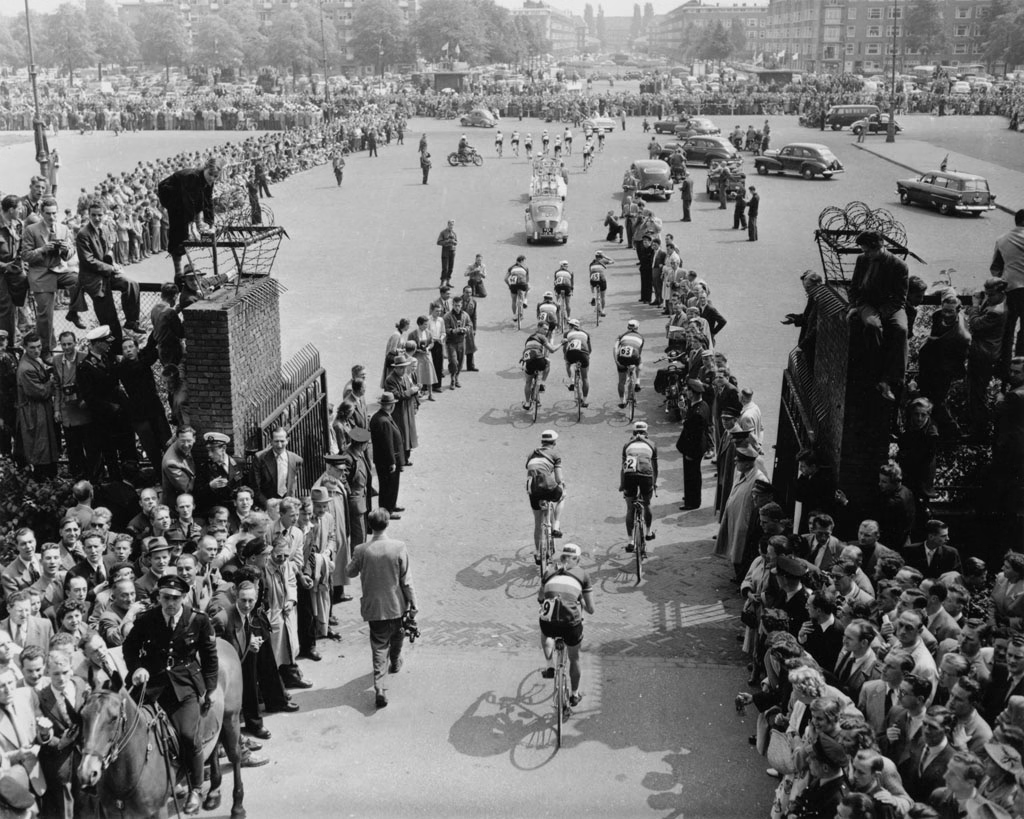
The first Tour de France Grand Départ outside France came in 1954, when Amsterdam hosted the start. It was a landmark moment. The Tour had crossed borders before during its route, but beginning abroad was different. It shifted the race’s identity before a wheel had properly turned, showing that the Tour could carry French sporting prestige into another country while still remaining unmistakably itself.
Amsterdam was a logical first step. The Netherlands had a deep cycling culture, a strong public relationship with the bicycle, and a fan base ready to treat the Tour as something more than a visiting spectacle. It also set a pattern that would become familiar over the following decades: the Tour tended to choose foreign starts that made cultural, sporting or commercial sense.
Belgium followed in 1958 with Brussels. West Germany joined the list in 1965 with Cologne. Each start expanded the Tour’s map without weakening its identity. If anything, these early foreign starts made the race feel bigger. The yellow jersey became something that could be launched abroad, then carried back into France with additional weight.
The Benelux connection
The Netherlands and Belgium have been central to the history of foreign Tour starts. That is no accident. Both countries have enormous cycling audiences, strong professional traditions and landscapes that lend themselves well to the opening days of a Grand Tour.
Dutch starts have often given the Tour a festival atmosphere. Amsterdam in 1954 began the tradition, but later starts in Scheveningen, Leiden, ’s-Hertogenbosch, Rotterdam and Utrecht reinforced the same idea. The Netherlands could provide flat roads, huge roadside crowds and an immediate sense of scale. It also offered the Tour a way to begin with time-trials, sprint stages or crosswind-tinged racing that felt different from a conventional French opening.
Belgium has played a similar role, though with a slightly different flavour. Brussels, Charleroi and Liège brought the Tour into a country where cycling is not simply watched but culturally absorbed. Belgian Grand Départs have often carried echoes of the Classics, with cobbled heritage, punchy roads and crowds who understand the rhythm of racing instinctively.
These starts worked because they did not feel artificial. The Tour was crossing a border, but it was still entering cycling territory.
The Grand Départ becomes a civic event
By the 1980s and 1990s, the foreign Grand Départ had grown into something more sophisticated. It was no longer just a sporting novelty. It became a way for host cities to present themselves to a global audience.
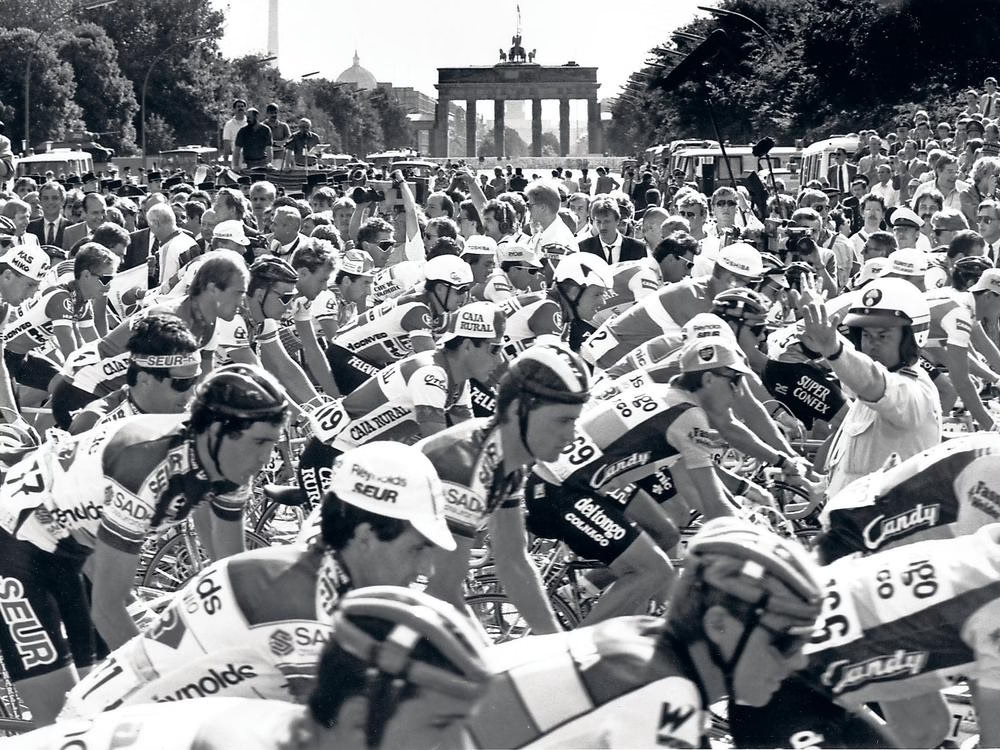
Basel in 1982 gave Switzerland its turn. West Berlin in 1987 carried a very different kind of symbolism, staging the race in a city still defined by Cold War division. Luxembourg City hosted in 1989, then again in 2002, underlining how smaller countries could use the Tour’s scale to place themselves at the centre of European sport for several days.
San Sebastián in 1992 was especially important in the Spanish story. It was the first Spanish Grand Départ, and it came in a year when Spain was already at the centre of global sport through the Barcelona Olympics. The Basque Country brought its own cycling intensity, with steep roads, passionate supporters and a deep connection to the professional peloton.
Dublin in 1998 took the Tour further away from its traditional continental rhythm. It was a bold start, logistically more complex, and remembered partly because it came at the beginning of a deeply turbulent edition. Even so, it showed how far the Tour was willing to travel to turn its opening days into a standalone event.

London, Yorkshire and the British Grand Départs
The United Kingdom has hosted two of the most memorable foreign Grand Départs. London in 2007 gave the Tour a polished, metropolitan launch, with the prologue around the capital providing one of the most visually recognisable starts of the modern era. It was also part of a wider British cycling moment, arriving just before the sport’s major domestic boom.
Yorkshire in 2014 was different again. It was less about a capital city and more about a region presenting itself through landscape, crowds and identity. The scale of public turnout was extraordinary. Roads through Leeds, Harrogate, York, Sheffield and the surrounding countryside became packed corridors of noise and colour.
That Grand Départ helped reshape how many people understood the Tour’s opening weekend. It did not need to rely only on monuments or postcard city shots. A foreign start could succeed through regional enthusiasm, local pride and the feeling that the race had genuinely been embraced rather than simply hosted.
For British cycling, Yorkshire 2014 remains one of the clearest examples of what the Tour can do when the route, public appetite and regional identity align.
The modern era: global polish and local character
In recent years, foreign Grand Départs have become increasingly deliberate. They are not simply awarded to cities with the budget and logistics to cope. They must also give the Tour a narrative.
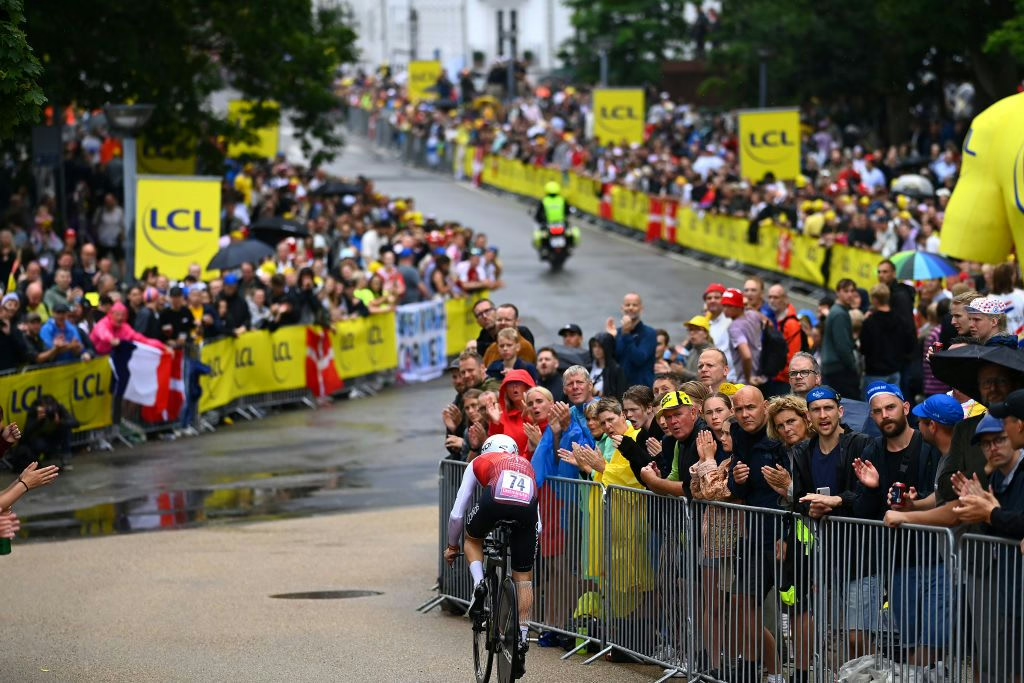
Düsseldorf in 2017 put Germany back at the centre of the Tour’s opening story. Brussels in 2019 celebrated Eddy Merckx and 50 years since his first Tour victory. Copenhagen in 2022 gave the race one of its most visually elegant starts, with Danish crowds, bridges, urban cycling culture and a time-trial that immediately felt like a national celebration.
Bilbao in 2023 returned the Grand Départ to Spain, but with a strongly Basque character. The roads were sharp, technical and hilly, the crowds were immense, and the racing was immediately selective. It was a reminder that a foreign start can shape the sporting tone of the whole first week. This was not ceremonial racing before the race reached France. It mattered from kilometre one.
Florence in 2024 added another layer, as the first Italian Grand Départ in Tour history. That was surprising given Italy’s stature in cycling, but it also made the occasion more powerful. The Tour began in a country with its own Grand Tour, its own champions and its own racing mythology. It was not just borrowing scenery. It was acknowledging another pillar of cycling culture.
Why Barcelona 2026 fits the pattern
Barcelona is a natural host for a modern Grand Départ. It has sporting history, global recognition, strong tourism infrastructure and a landscape that allows the Tour to combine city spectacle with meaningful racing. The 2026 start also taps into the memory of the 1992 Olympics, with Montjuïc offering both sporting symbolism and a testing urban finale.
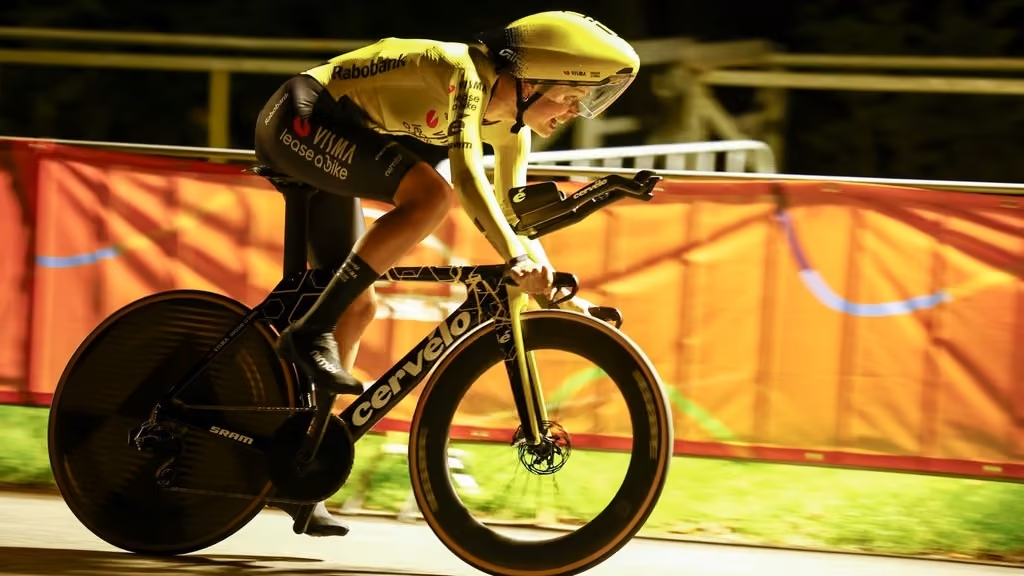
The opening team time-trial gives the race immediate structure. It should create early gaps, reward collective strength and give the general classification contenders something to manage from the first day. Our Tour de France 2026 team time-trial explained feature looks at why that 19.6km opener could shape the yellow jersey contest before the race has even left Spain.
Stage 2 from Tarragona back to Barcelona adds coastal and hilly terrain, while stage 3 takes the race from Granollers towards Les Angles, effectively turning the Grand Départ into a bridge from Catalonia into the mountains and then towards France. For fans planning to be there in person, the practical side is covered in our guide to how to visit the Tour de France 2026 Grand Départ in Barcelona.
That matters because the best foreign starts are not detached from the race that follows. They do not feel like a promotional preface. They create momentum. Barcelona has the tools to do exactly that.
-
 Photo Credit: Cor Vos
A French race with European reach
The Tour de France remains French in its structure, mythology and final destination. Its decisive images are still tied to the Alps, the Pyrenees, the Massif Central, the Champs-Élysées and the long procession of French towns that shape the race each July. Our wider Tour de France hub brings together the route, viewing information, rider guides and race analysis around the 2026 edition.
Yet the foreign Grand Départ has become part of that identity rather than a departure from it. It reflects the Tour’s position as a European sporting institution with global reach. The race begins abroad, absorbs the atmosphere of another country, then carries that energy back into France.
That wider reach also changes how the race is consumed. A foreign Grand Départ is not only about roadside crowds. It is also about a global broadcast audience following the race from the first kilometre, with UK viewing details covered in our guide on how to watch Tour de France 2026 in the UK.
From Amsterdam in 1954 to Barcelona in 2026, the pattern is clear. The Grand Départ abroad works best when it respects both sides of the exchange. The host city gains the Tour’s visibility, prestige and travelling circus. The Tour gains fresh scenery, new crowds and a reminder that its pull extends far beyond the French border.
Barcelona will not be an exception to that history. It will be the latest expression of it.

