
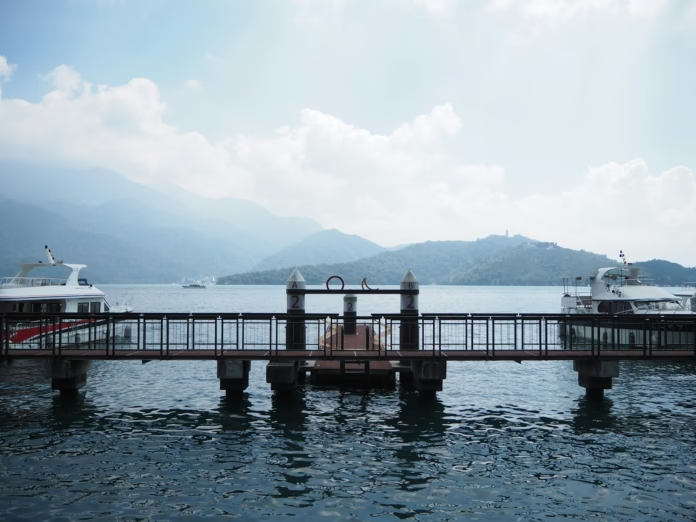
Sun Moon Lake is one of Taiwan’s most recognisable landscapes, but for cyclists its appeal goes beyond the famous photographs of bikes beside the water. The lake provides an accessible introduction to riding in central Taiwan, with dedicated cycle paths, bike hire and plenty of places to stop, while the surrounding roads give stronger riders an immediate route into much more demanding terrain.
That contrast is what makes Sun Moon Lake useful as a cycling base. A visitor can spend a morning riding around the water without turning the holiday into a training camp, while an experienced road cyclist can use the same location as the starting point for longer days through Nantou, Puli and towards the Central Mountain Range.
The important thing is not to confuse those two experiences. The recreational lake network is deliberately accessible. The roads beyond it can become hot, steep, exposed and significantly more remote within a relatively short distance.
For riders looking at Taiwan as part of a wider trip, our Travel & Riding Abroad hub covers more destinations where the bike can become part of the holiday rather than simply a way of training.
Sun Moon Lake cycling at a glance
- Location: Yuchi Township, Nantou County
- Typical full lake circuit: Around 30km, depending on the exact combination of road and cycle-path sections
- Easier option: Shorter out-and-back rides from Shuishe or Xiangshan
- Best starting point for first visits: Shuishe
- Bike choice for the lake: Hybrid, e-bike, endurance bike or road bike
- Best choice for mountain riding: Road bike with low climbing gears
- Terrain: Rolling around the lake, increasingly mountainous beyond it
- Main challenge: Heat, humidity and accumulated climbing rather than the lake loop itself
- Useful wider base: Puli
- Best seasons: Generally spring and autumn, with mountain conditions checked separately
The round-the-lake ride is not one continuous cycle path
The first thing to understand about Sun Moon Lake is that there are several ways of describing the circuit.
Official cycling routes use distances in the mid-20km range for parts of the designated network, while the complete road circuit around the lake is usually closer to 30km once the connecting roads are included. For a visitor planning a proper lap rather than following one specific signed section, roughly 30km is the more useful number to have in mind.
More important than the exact distance is the surface and road environment. The photographs that sell Sun Moon Lake as a cycling destination often show beautifully constructed paths immediately beside or above the water. Those sections exist and are among the highlights of the ride, but they do not form a continuous traffic-free ring around the lake.
A complete circuit combines dedicated cycling infrastructure with sections of ordinary road. There are also places where local restrictions or path design can require riders to dismount, so current signage should take priority over a GPX file or an older route guide.
For recreational riders, none of that should be a reason to avoid the loop. It simply means approaching it as a mixed cycling route rather than imagining a 30km version of a European railway path.
Shuishe is the easiest place to start
For a first visit, Shuishe makes the most practical base.
It is one of the principal visitor centres on the lake, has several bike-hire options and puts riders directly onto some of the most accessible cycling infrastructure. Anyone travelling without their own bike can arrive, hire something appropriate and begin riding without needing another transfer.
It also suits the way the lake is best experienced. Sun Moon Lake is not a circuit that needs to be completed at threshold pace to justify bringing a bike. There are viewpoints, temples, piers and lakeside sections where stopping is part of the attraction.
A stronger cyclist can certainly ride a fast lap, but it is worth separating that from a first sightseeing ride. The roads rise and fall enough to provide some effort, yet the experience is much better if the first circuit is used to learn where the cycle paths begin and end, which roads carry more traffic and where the steeper sections sit.
Starting early has two advantages. The temperature is usually easier to manage and the busiest visitor areas have not yet filled with tour traffic.
Xiangshan shows why the lake became famous with cyclists
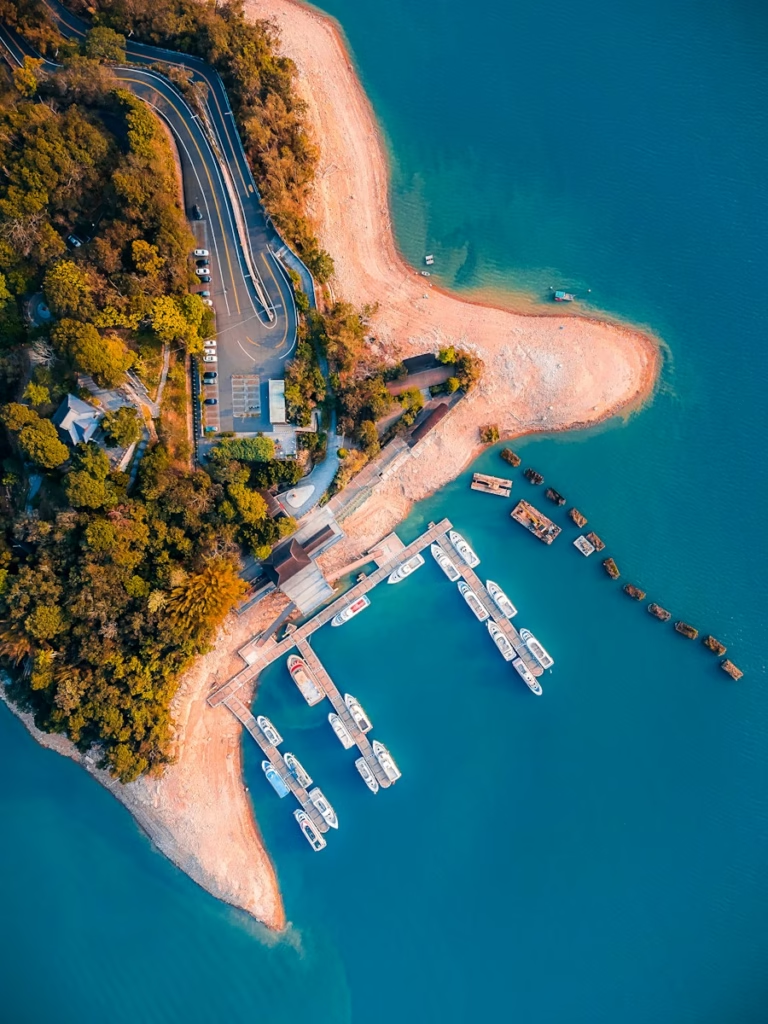
The Xiangshan side of the lake contains some of the infrastructure most closely associated with Sun Moon Lake cycling.
Here the route runs close to the water, with dedicated path sections that make the lake rather than the road the centre of the ride. It is an excellent section for less experienced cyclists, families and anyone using a rental bike.
For road cyclists accustomed to planning every ride around average speed and elevation gain, this is somewhere to resist that instinct.
The point is the setting. Mountain slopes rise directly behind the water, the path moves through wooded sections and the bike allows you to cover far more of the shoreline than you would on foot without being sealed inside a car or coach.
Xiangshan also works well as the turning point for riders who do not want the full circuit. An out-and-back from Shuishe gives plenty of the Sun Moon Lake experience without committing somebody on a casual hire bike to every climb and traffic section around the lake.
That flexibility is one of the biggest strengths of the destination.
Ita Thao and Takrahaz are better ridden slowly
On the eastern side, Ita Thao provides another of the lake’s distinctive cycling sections.
The Ita Thao cycling route runs for approximately 2.6km, connecting the pier area with the ropeway and continuing towards Shuiwatou. Within it is the roughly 600-metre Takrahaz Water Cycling Path, where the route has been constructed close to the lake surface.
It is a short section rather than a destination ride in its own right, but it is one of the places where Sun Moon Lake makes most sense as cycling tourism. The bike is being used to explore rather than simply to accumulate training kilometres.
Ita Thao is also useful for groups with different levels of cycling experience. Rental bikes and e-bikes allow people who would never consider a mountain road ride to share part of the same day with somebody who has brought a road bike to Taiwan.
The stronger rider can extend the route. Everyone else can stop, explore the lakeside or use one of the boat connections.
There is no need for the entire group to ride the same 30km circuit at the same speed.
The lake loop contains more climbing than the photographs suggest
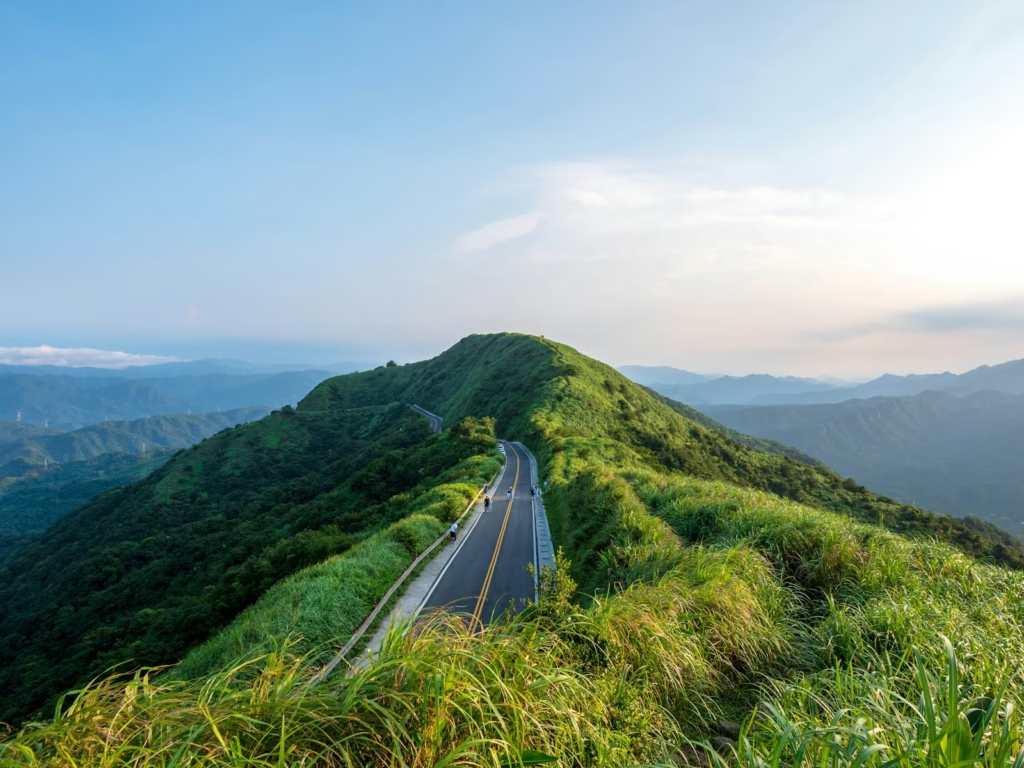
Sun Moon Lake is often presented as an easy cycling destination, which is true compared with the mountains surrounding it but can be misleading if interpreted as completely flat.
The road repeatedly rises away from the water and drops back towards it. None of those climbs is especially long, but they accumulate, and the effort feels very different when the temperature is high and humidity limits cooling.
That matters most for riders using hire bikes.
A comfortable hybrid or e-bike with sensible gearing is more useful than a heavy bike with unnecessarily large gears. For inexperienced riders, there is no disadvantage in stopping before one of the sharper rises or walking for a short section.
A road cyclist will have little difficulty with the individual climbs, but riding the circuit quickly produces a surprisingly lively session. The constant changes in gradient reward repeated accelerations rather than one sustained climbing effort.
It is still the easy day compared with what sits beyond the lake.
Puli is the more useful base for a serious road-cycling stay
Anyone planning several days of proper road riding should consider Puli as well as accommodation directly beside Sun Moon Lake.
The town lies west of the lake in a broad basin surrounded by hills. It has the services needed for a multi-day stay and gives riders several directions in which to build a route rather than committing every ride to the same shoreline roads.
There are established cycling connections between Puli, Yuchi and Sun Moon Lake, although substantial parts are shared with normal traffic. That makes the journey more appropriate for confident road cyclists than somebody expecting continuous segregated infrastructure.
The advantage is flexibility.
One day can include Sun Moon Lake. Another can stay within the rolling roads around Puli. A stronger rider can then begin pushing east towards much larger climbs without having to move accommodation every night.
For a cycling-first holiday, that can be more useful than waking up with the best lake view.
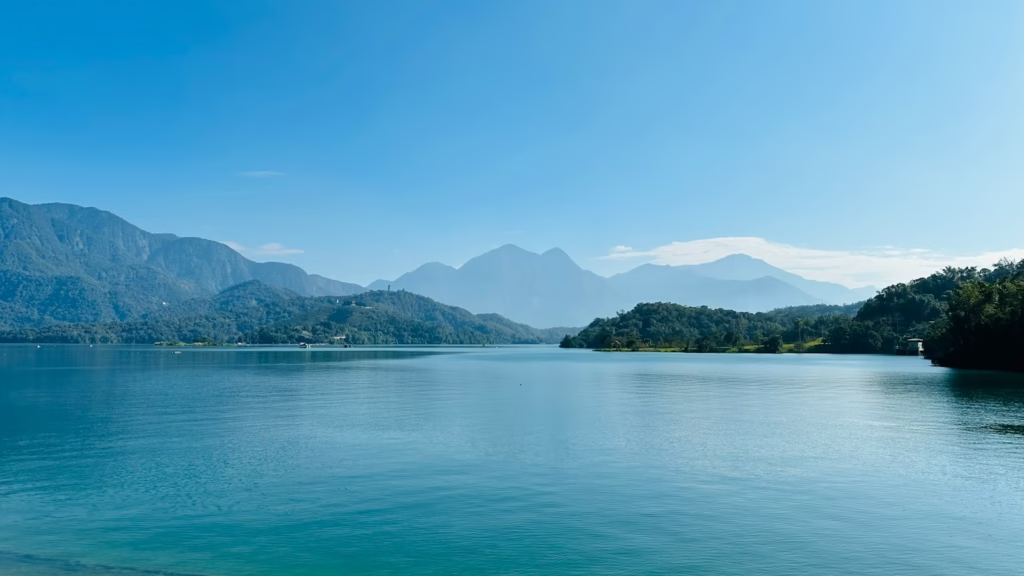
The road towards Taiwan’s high mountains changes the scale completely
Leaving Puli towards the high country is where central Taiwan stops being a recreational cycling destination and becomes serious mountain terrain.
The road towards Qingjing, Hehuanshan and eventually Wuling gains thousands of metres rather than hundreds. Distances that look manageable on a route planner can require most of a day once gradient, altitude, food stops and changing weather are taken into account.
Wuling is the name most international cyclists will recognise. At more than 3,000 metres, it is one of the defining high points of Taiwanese road cycling and the destination of the famous Taiwan KOM Challenge from the opposite side of the mountains.
Our guide to cycling in Taroko Gorge and the Taiwan KOM route covers that extraordinary east-coast approach. Riding towards the same high mountains from Nantou is a different proposition, but the basic warning is identical: once Wuling becomes part of the plan, you are no longer talking about extending the Sun Moon Lake loop by a few kilometres.
It is a major mountain day requiring suitable gearing, reliable weather, enough daylight and a realistic plan for getting home.
Elevation matters more than distance in the central ranges
Route planning in this part of Taiwan should begin with elevation rather than kilometres.
A 70km ride around flatter terrain can be relatively straightforward. A route of similar distance that keeps climbing east from Puli may be dramatically harder, particularly once the road reaches higher altitude.
The vertical scale can also disguise how long riders spend at relatively low speed. A three-hour flat ride provides plenty of airflow. Three hours spent climbing in humid conditions exposes the rider to much more heat while consuming water and carbohydrate at a faster rate.
That is why ambitious automatic route suggestions should be treated cautiously.
Check the elevation profile. Check where shops and water are available. Look at the final 30km rather than just the opening roads. Most importantly, understand whether the route requires descending the same mountain afterwards or whether transport has been arranged at the top.
An experienced cyclist can have an exceptional day in the central ranges. The same route approached casually can become uncomfortable very quickly.
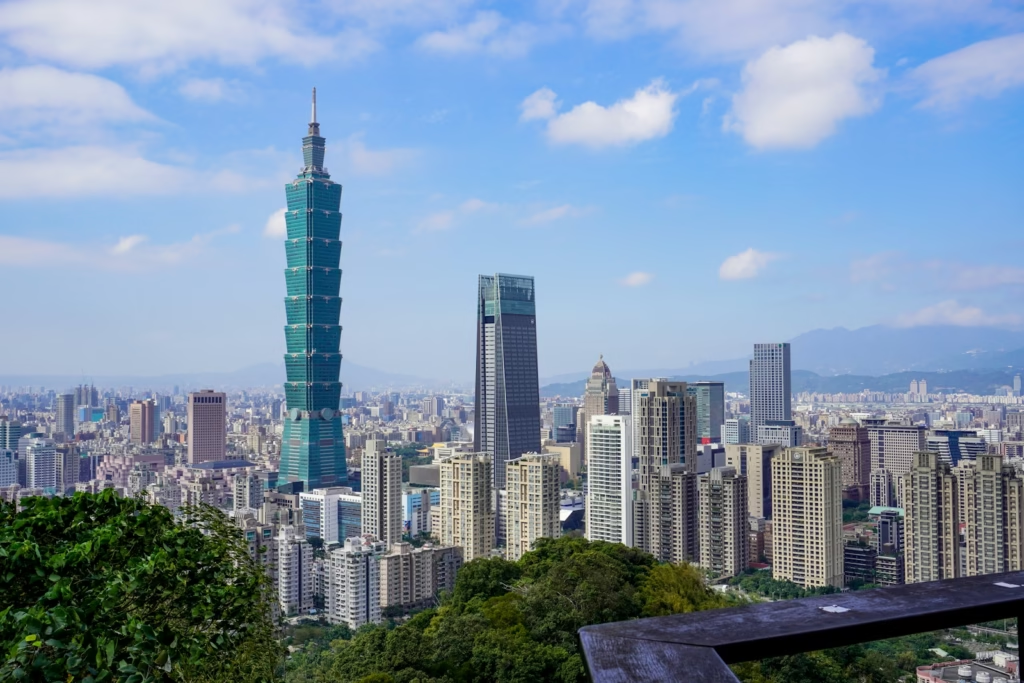
Traffic is part of the Taiwan riding experience
Taiwan has a deep cycling culture and a world-famous bicycle industry, but neither means every road is quiet.
Scooters are part of daily transport, buses serve the major tourist areas and larger roads can carry substantial traffic. Around Sun Moon Lake itself, tourist vehicles add another element, particularly later in the day.
British riders may find the scooter traffic unusual at first because vehicles can occupy spaces in the road differently from what they are used to at home. The sensible response is to ride predictably rather than trying to disappear completely into the gutter.
A bright rear light is worthwhile during the day, particularly when moving between sun and shade. Tunnels and mountain roads make visibility even more important once a route extends beyond the lake.
Early starts again help. They provide cooler conditions, quieter tourist roads and more daylight in reserve if a mountain ride takes longer than expected.
Heat and humidity can decide the difficulty before the mountains do
A rider arriving from Britain can easily focus on the climbs and underestimate the climate.
At lower elevations, warm and humid conditions can make relatively moderate riding feel substantially harder. Sweat rates increase quickly and climbing removes the cooling effect created by higher road speed.
Sun Moon Lake itself provides plenty of opportunities to stop, but a serious ride needs a more deliberate hydration plan.
Taiwan’s convenience stores make this much easier in populated areas. They are useful enough that they can become informal feed stations, providing cold drinks, water, simple food and somewhere to escape the heat briefly.
Do not assume the same availability once the route enters the mountains.
The further a ride moves from Puli and the main settlements, the more important it becomes to identify resupply points beforehand. Carry enough carbohydrate to survive a missed shop rather than planning nutrition around every expected stop being open.
On a long climbing day, eating before you feel hungry is particularly important. By the time appetite disappears in the heat or at altitude, recovering the deficit becomes much harder.
Rain should change the plan rather than simply the clothing
Taiwan’s weather can alter a cycling route quickly.
A lightweight waterproof helps with an ordinary shower, but heavy rain in hilly terrain is a road-safety issue rather than simply a question of staying dry. Painted surfaces, drainage covers, smooth cycle paths and shaded descents can all become considerably more slippery.
Around Sun Moon Lake, the answer can be simple. Slow down, shorten the ride or stop somewhere until the worst weather passes.
The high mountains require a more conservative approach. Rain can combine with falling temperatures, poor visibility, debris and changing road conditions. Landslides and storm damage are genuine considerations on mountain roads in Taiwan, not theoretical warnings added to a tourist guide.
Check road conditions on the morning of any major ride and be prepared to abandon the original plan.
A cycling holiday is not improved by forcing a high-mountain day simply because it appeared in the itinerary.
Spring and autumn are generally the easiest seasons
For a trip built around riding rather than simply sightseeing, spring and autumn usually offer the best balance.
Summer provides long days but can bring substantial heat, humidity and heavy rainfall. That does not make cycling impossible, but early starts and careful hydration become much more important.
Autumn can produce excellent riding conditions, although Taiwan’s tropical weather systems mean forecasts and road information still need attention. Spring is similarly attractive when conditions settle, particularly before the most oppressive summer heat.
Winter can work surprisingly well around Sun Moon Lake and Puli, but altitude changes everything.
A comfortable morning beside the lake does not tell you what conditions will be like thousands of metres higher. Riders heading towards Hehuanshan or Wuling need clothing for the summit and descent rather than dressing solely for the temperature at the hotel.
This is one of the recurring lessons of cycling in Taiwan: short horizontal distances can contain enormous climatic differences.
What bike works best at Sun Moon Lake?
For a sightseeing day around the lake, the best bike is simply one you are comfortable riding.
A hybrid is perfectly adequate. An e-bike can make far more sense for a mixed group. A lightweight road bike is enjoyable but unnecessary unless the lake is being incorporated into a longer training ride.
A dedicated road-cycling trip is different.
If Puli, Qingjing or the higher central ranges are part of the plan, bring a road bike with low enough gearing for sustained climbing. Compact or sub-compact gearing is more useful than pretending a standard race setup will make the trip more authentic.
Tyres around 28-30mm give a good balance between speed, comfort and grip for most road riding. Reliability matters more than saving a few watts, particularly when a ride moves away from the tourist areas.
Carry the equipment to repair ordinary punctures and minor mechanical problems. The fact that Taiwan manufactures much of the world’s cycling equipment does not mean a bike shop will magically appear halfway up an isolated mountain road.
-
 Photo Credit: quentinphotographiebe
 -
 Photo Credit: Getty


A three-day stay can combine three very different rides
The first day should be Sun Moon Lake itself.
Start from Shuishe, use the dedicated cycle-path sections and complete as much of the circuit as suits the group. There is little value in turning the opening ride into a test. Learn the traffic, experience the lake and find out how your body responds to the temperature.
Day two can become the transition into proper road riding. Use Puli or the lake as the starting point for a longer loop through Nantou’s surrounding hills, adding substantially more climbing without committing to the highest mountains.
That intermediate day is useful because it answers several practical questions. How quickly are you drinking? How comfortable is the traffic? Does 1,500 metres of climbing here feel like the same amount at home? Are afternoon storms developing earlier than expected?
Only then would I plan the biggest mountain day.
A route towards the higher Central Mountain Range should be treated as the main physical objective of the trip rather than something added casually after breakfast. Start early, carry proper food, know where resupply is available and have an alternative if the weather or road conditions deteriorate.
That progression gives three days of cycling without asking the same question twice.
Sun Moon Lake works because the serious riding is optional
The strongest reason to include Sun Moon Lake in a Taiwan cycling itinerary is not that the lake circuit itself is one of the world’s great training rides.
It is that the riding can become whatever the trip requires.
A visitor without cycling fitness can hire an e-bike and spend a few hours beside the water. A road cyclist can use the same route as an easy morning before adding the roads around Puli. Someone travelling specifically for climbing can continue east until the wooded hills have become high mountain roads and the scale resembles the Taiwan KOM terrain.
That range is unusual.
Our guide to cycling in the rest of the world places Taiwan among destinations where climate, terrain and local road culture are as important to planning as the headline climb. Sun Moon Lake is perhaps the easiest place on the island to understand why.
The lake gives you an accessible first ride. The central ranges allow you to make every day after it considerably harder.

