
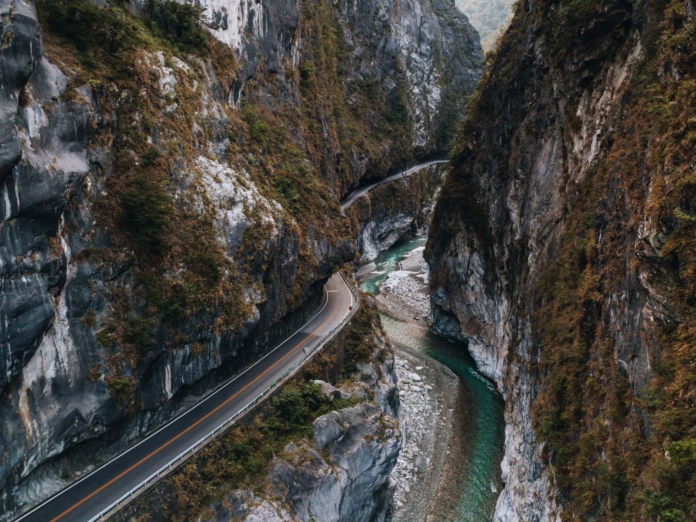
The road into Taroko Gorge does not feel like a normal climb at first. It feels like an entrance.
You leave the Pacific behind near Hualien, with the air still warm and salty, the sea still close enough to taste when the breeze shifts, and the road apparently doing very little to warn you about what is coming. The Taiwan KOM route begins at sea level and ends at Wuling, more than 3,000 metres above the ocean, but its drama is not only in the numbers. It is in the way the landscape changes while you are still turning the pedals.
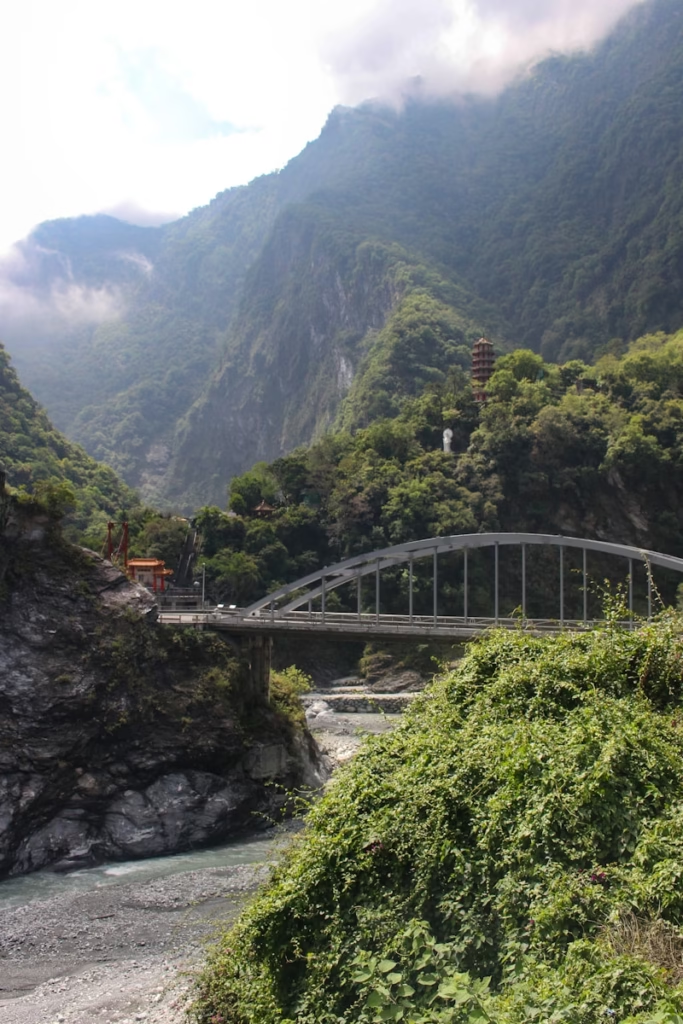
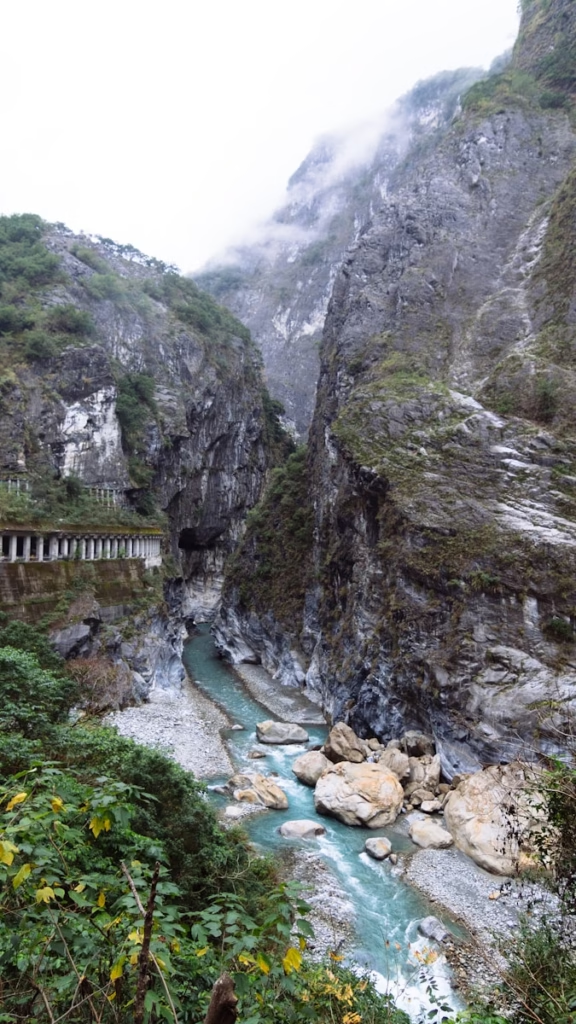
At first, the climb is almost deceptive. The road rolls inland, the gradient still kind enough to let you talk, eat, look around and convince yourself that the day might be manageable. Then the gorge begins to close around you. The river appears below, pale turquoise and restless, cutting through marble and limestone. The cliffs rise suddenly, grey, white and green, their faces streaked with water, moss and shadow. Tunnels cut through the rock. Galleries hang over the road. The sound changes from open coastal traffic to echo, water, tyres and your own breathing bouncing back from the stone.
Taroko Gorge is one of the most spectacular places in the world to ride a bike because it is both beautiful and unsettling. It is not a scenic backdrop placed neatly beside the road. It surrounds the road, presses into it, occasionally swallows it, and reminds you that this is a route built through a landscape still very much alive.
The Taiwan KOM route then takes that atmosphere and turns it into one of cycling’s great endurance tests. From the Pacific coast to Wuling, the road climbs for around 105km, rising to about 3,275m. The first part is dramatic, the middle part is wearing, and the final kilometres are brutally steep. It is a ride where the numbers matter, but the feeling matters more.
For more cycling travel inspiration beyond Europe, see our Travel & Riding Abroad hub and our guide to cycling in the rest of the world, where Taiwan sits alongside other long-haul riding destinations.
What makes Taroko Gorge such a special place to ride?
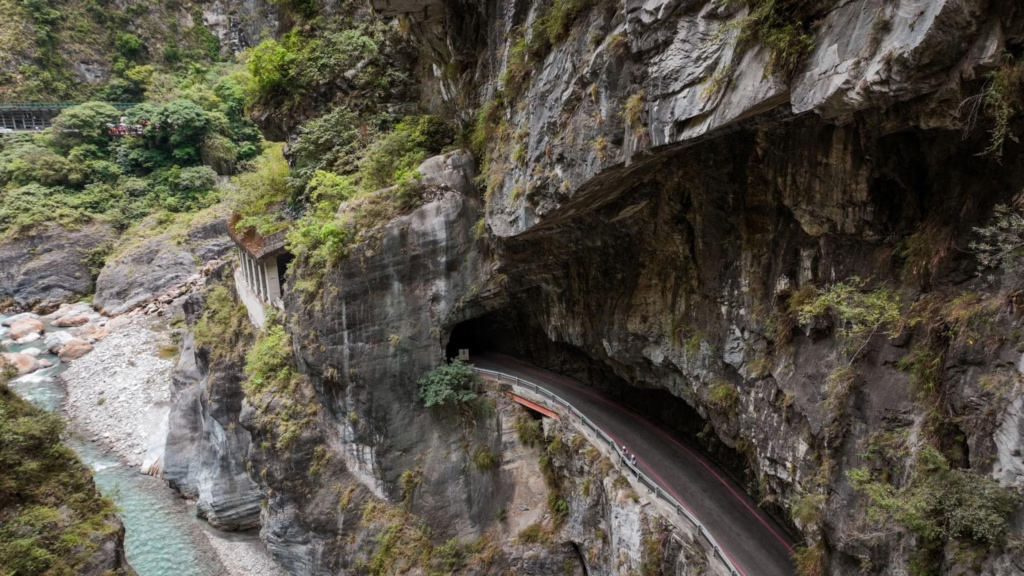
Taroko Gorge is special because very few roads make the rider feel so small so quickly. In many mountain areas, the scale builds gradually. You see the peaks in the distance, climb towards them, and earn the scenery piece by piece. Taroko is different. The vertical world arrives almost immediately.
The road follows the Liwu River inland from Taiwan’s east coast, passing through a canyon of marble walls, steep forest and rock-cut tunnels. The gorge can feel cool even when the coast is humid, with damp air lingering in the shadows and the smell of wet stone rising from the river below. Sunlight appears in fragments, bright on a cliff face or flashing across the road after a tunnel, then vanishing again behind an overhang.
On a bike, this is amplified. You are not sealed inside a car or coach. You hear the water before you see it. You feel the temperature change inside the tunnels. You notice the grit on the road, the damp patches under the cliff, the small stones near the gutter, the way your freehub sounds louder when the gorge narrows.
The colour palette is part of it too. The river is often a glacial blue-green, almost milky in places, cutting through pale rock that looks carved, fractured and polished all at once. Above it, the forest hangs in layers, thick and humid lower down, sharper and thinner as the road climbs higher. On a clear day, the sky appears only in strips between the walls. On a misty day, the gorge becomes almost cinematic, with ridgelines fading into cloud and the road disappearing into grey.
It is beautiful, but it is not gentle. That tension is what makes it memorable.
What is the Taiwan KOM route?
The Taiwan KOM route is one of the world’s most famous cycling climbs, running from sea level on Taiwan’s east coast to Wuling, the highest paved road point in Taiwan. The full challenge is usually described as around 105km, rising to approximately 3,275m.
The race version, the Taiwan KOM Challenge, has become internationally known because it turns a scenic mountain road into a single, relentless test: start by the ocean, climb through Taroko Gorge, keep rising into the Central Mountain Range, and finish at altitude where the air is thin and the gradients become savage.
The route is not a traditional climb in the European sense. It is not 20km at a steady 7 per cent, with a village at the bottom and a col at the top. It is much stranger than that. The early kilometres can feel almost too easy for the amount of climbing ahead. The road then gradually tightens, steepens, relaxes, steepens again, and keeps asking for patience.
That is the trap. Because the first part is manageable, riders can start too hard without realising it. The route flatters you near the coast, then slowly removes your options. By the time the upper slopes arrive, the day has already taken hours from you. Your legs are no longer fresh, your food choices have already mattered, and the final steep ramps arrive when you are least able to absorb them.
The KOM’s reputation is built on that slow escalation. It does not simply climb. It transforms.
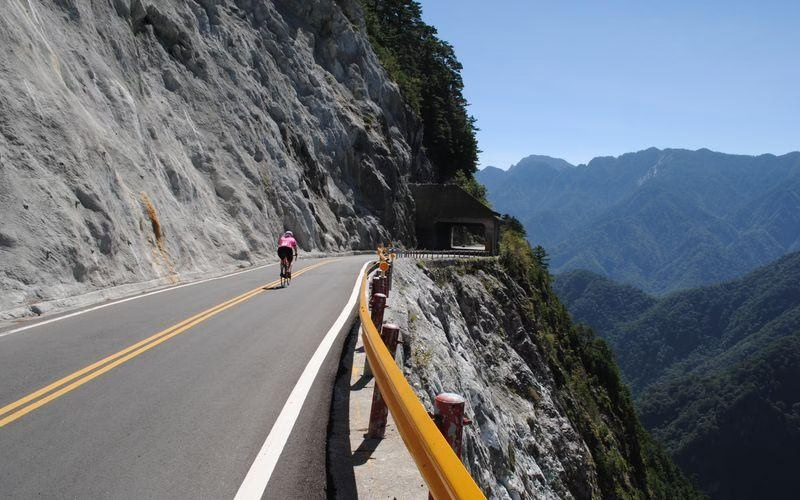
Riding from the Pacific into the mountains
The beginning of the ride is part of its mythology. Starting at sea level gives the route an almost storybook clarity. There is no hidden upland start, no car transfer to a valley already high in the mountains, no gentle rolling departure from a ski town. You begin at the edge of the Pacific and ride inland until the air itself feels different.
Near Hualien, the atmosphere is coastal and humid. The air has weight. It sits on your arms, gathers under the helmet and makes the first effort feel warmer than it should. Scooters buzz past, the road markings are bright, and there is still a sense of urban Taiwan close by: convenience stores, small shops, traffic lights, roadside signs, the smell of breakfast, petrol, incense and hot tarmac.
Then the road starts to pull you away from that world. The buildings thin out. The valley narrows. The sound of traffic is replaced by the river and the echo of vehicles moving through rock galleries. The climb begins without ceremony, but the landscape makes the occasion feel enormous.
The early gradients are not the hardest part of the route, yet they are mentally important. This is where you decide how the rest of the day will feel. Ride too hard here and the upper mountain will punish you. Ride too gently and the distance starts to feel endless. The best rhythm is controlled but not timid, with enough restraint to respect what is still hidden above.
This is also where the senses are most awake. Your legs still feel good enough to let you look around. The walls are close, the road surface changes under the tyres, the river flashes below, and every tunnel feels like a threshold.
The road through Taroko Gorge
The road through Taroko Gorge is not just a way to reach the climb. It is one of the reasons the ride exists in the imagination.
The engineering is extraordinary. The road has been cut into a landscape that does not look as though it wanted a road at all. In places, it runs beneath overhanging rock, through tunnels, along ledges and beside drops where the river is far below. It is a road of compromises, squeezed between cliff and water, movement and danger, beauty and maintenance.
For cyclists, that makes it thrilling but also serious. This is not a place to ride absent-mindedly. The surface can vary, traffic can be confined by the narrow corridor, and rockfall risk is part of the reality of the gorge. Since the 2024 Hualien earthquake and later storm damage, access has been more complicated, with phased openings, traffic controls and repair work affecting parts of the route. Anyone planning to ride here needs to check the latest Taroko National Park access and traffic-control updates before travelling, and treat local controls as part of the ride rather than an inconvenience.
That does not reduce the magic. It sharpens it. Taroko is not a static postcard. It is a living mountain landscape, and the road is constantly negotiating with it.
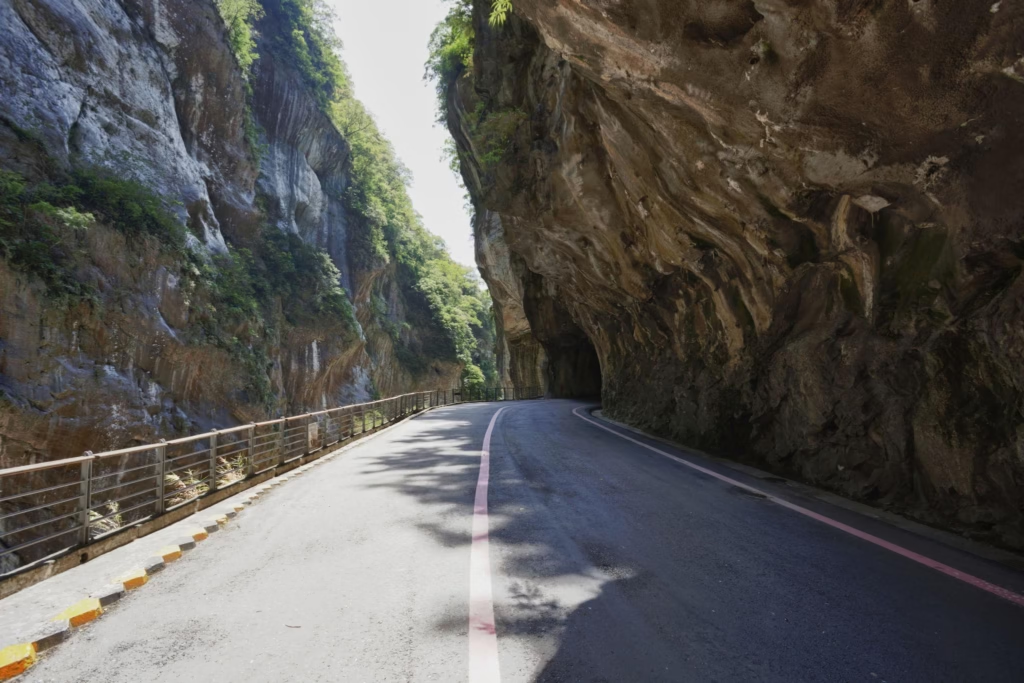
When the gorge is open and rideable, the experience is unforgettable. The lower road carries you through a canyon where the scenery changes every few hundred metres. A tunnel opens into a view of the river. A shadowed wall gives way to a white rock face. Water appears from cracks in the stone. Trees cling to impossible slopes. The sound of a lorry in a tunnel can feel huge, then vanish instantly into open air.
The bike is the perfect speed for it. Fast enough to feel the distance. Slow enough to notice the texture.
The climb beyond the gorge
The most deceptive thing about the Taiwan KOM route is that Taroko Gorge can feel like the whole experience, but it is only the beginning. Once the road has delivered its drama, the climb still has a long way to go.
Beyond the lower gorge, the route climbs deeper into the mountains. The valley opens and closes. Villages and rest points become more important. The air slowly changes. The thick coastal warmth gives way to a cooler mountain feel, though the sun can still be strong and exposed sections can feel harsh.
This middle part is where the KOM becomes less romantic and more practical. You have to eat. You have to drink. You have to manage pace. You have to resist the temptation to chase every rider ahead. The scenery remains huge, but the ride narrows internally. The first hour was about awe. The middle hours are about discipline.
The road is not always brutally steep here, which makes it psychologically difficult. A steady moderate gradient can be harder than a short wall if it lasts long enough. You settle into a rhythm, then the road drags again. You start counting kilometres, then realise the altitude is still climbing slowly. You look up and see more road, more forest, more cloud.
This is where the route tests patience. Strong riders often feel good for a long time, then suddenly discover they have spent too much. The KOM is not won or survived by attacking the early gorge. It is survived by arriving at the final section with something left.
Why the final kilometres are so feared
The Taiwan KOM route’s final kilometres have their own reputation. After so much climbing, the road becomes sharply more severe, with ramps that can feel wildly out of proportion to the fatigue already in the legs.
This is where the ride becomes simple and unpleasant in the way only great climbs can be. Cadence drops. Gears run out. The road tilts up and stays there long enough for every earlier mistake to reappear. The view may be extraordinary, but most riders are no longer looking for scenery. They are looking for the next bend, the next patch of manageable gradient, the next reason not to stop.
At altitude, the effort changes. Breathing becomes more deliberate. The legs still hurt, but the lungs take on a sharper role. The air is cooler, sometimes cold, and the weather can shift quickly. Riders who started in coastal humidity can finish in mist, wind and mountain chill.
That contrast is part of the route’s identity. You begin in sea-level warmth and finish in a high mountain environment that feels like a different country. The climb is not only vertical. It is climatic, sensory and emotional.
The final ramps also give the KOM its purity. A rider can be strong in the gorge, efficient in the middle and still be stripped back completely near Wuling. The route waits until the end to ask its hardest question.
What the road feels like on a bike
The Taiwan KOM route feels different at different speeds and different levels of ambition.
Ride it as a challenge and the road becomes a long negotiation. The early section asks for restraint. The gorge asks for attention. The middle asks for fuelling. The upper slopes ask for stubbornness. Every part of the ride has a job.
Ride it as a scenic cycling journey and it can feel almost overwhelming. Few climbs offer such immediate theatre: ocean, canyon, river, tunnels, cliffs, forest, high mountains. It has the structure of an adventure rather than just a training ride.
The road itself varies in mood. Some sections feel broad enough to relax. Others feel tight, with rock on one side and space dropping away on the other. Tunnels can be cool and loud. Open sections can feel bright and exposed. Traffic can change the experience quickly, especially when larger vehicles pass through narrow parts of the gorge.
There is also the question of surface. This is a high mountain road through a geologically active area, and conditions can change after weather, earthquakes and repair work. Even when the main road is passable, riders should expect the possibility of construction zones, controlled sections, debris, rough patches or traffic releases.
This is not a route to treat casually. That seriousness is part of why it stays with people.
The atmosphere of Taroko Gorge
The atmosphere of Taroko Gorge is hard to separate from sound. It is not silent. It is alive with water, birds, vehicles, dripping rock, wind in the trees and the echo of movement through stone.
On the bike, those sounds become part of the pacing. In tunnels, your breathing grows larger. A passing scooter becomes briefly enormous, then disappears. Outside, the river returns, constant and restless. In humid weather, the gorge can smell green and mineral, with the damp sweetness of vegetation mixed with the colder scent of wet rock.
The visual scale is almost disorienting. You look up and the cliffs rise too quickly. You look down and the river is far below. You look ahead and the road seems to vanish into a dark opening in the mountain. There are moments where the ride feels less like climbing a road and more like moving through a cut in the earth.
It is also a place where the human presence feels fragile. Railings, tunnels, bridges and retaining walls show the effort needed to keep the route open. After the earthquake damage of recent years, that fragility is even more obvious. Taroko is not a manufactured adventure park. It is a dramatic landscape that people are still repairing, managing and respecting.
That atmosphere makes the ride more than a famous climb. It makes it a reminder that some roads are special because they feel unlikely.
How hard is the Taiwan KOM route?
The Taiwan KOM route is extremely hard, but not in a simple way.
The headline numbers are intimidating enough: roughly 105km from sea level to over 3,000m. But the difficulty is not just distance and elevation. It is the pacing challenge, the changing conditions, the altitude, the late steep ramps and the mental load of knowing the hardest section comes after hours of climbing.
The average gradient can be misleading because the route includes gentler sections, flatter parts and a long build-up before the upper mountain. That means the final steep ramps feel much harder than they look in isolation. A short section at a savage gradient is one thing. A savage section after 90km of climbing is another.
Weather can also transform the ride. The coast may be warm and humid, the gorge damp and shaded, the middle slopes exposed, and the summit cold or windy. Clothing choice matters. So does fuelling. So does timing. This is not a climb where you simply ride up, take a photo and roll back down without planning.
For a fit cyclist, it is achievable with preparation. For an unprepared rider, it can be overwhelming. The KOM route rewards patience, low gears, steady fuelling and humility.
Why cyclists travel to Taiwan for this ride
Cyclists travel to Taiwan for this route because it offers something rare: a single road that feels like an entire cycling journey.
Many famous climbs are beautiful, but they sit within a familiar mountain format. Taroko and the Taiwan KOM route are different. The ride begins beside the Pacific, enters one of Asia’s most dramatic gorges, climbs through forested mountains, and finishes at an altitude usually associated with major European passes. It compresses a continent of sensations into one day.
There is also Taiwan’s wider cycling culture. The island is unusually welcoming to cyclists, with a strong road-riding scene, well-known bike industry connections, organised events and a growing reputation among international riders. The Taiwan KOM Challenge has helped turn the route into a bucket-list climb, attracting serious amateurs, former professionals and riders looking for something beyond the usual European icons.
But the appeal is not only athletic. Taiwan adds layers around the ride: night markets, tea, temples, coastal roads, mountain towns, hot springs, convenience stores that become improvised feed zones, and the mixture of urban energy and wild landscape that makes the island so compelling.
The KOM is the headline. Taiwan is the reason to stay longer.
Riding it outside the Taiwan KOM Challenge
Riding the route outside the official Taiwan KOM Challenge requires more caution than simply following a GPX file.
The official race benefits from organisation, road management, support, timing and a controlled environment. A private ride does not. Riders need to check current Taroko Gorge and Provincial Highway 8 access, weather, construction controls, traffic restrictions and safety advice. Since the 2024 earthquake, this has become even more important.
In 2026, parts of Taroko National Park and the connecting roads remain subject to reopening plans, repair work and traffic controls. Some sections may be open only at set times or under specific conditions. Rockfall, landslides and roadworks are not abstract risks here. They are part of the landscape.
The safest approach is to plan with current local information, consider using a reputable local cycling operator or guide, and remain flexible. A route that looks perfect on paper may not be sensible on a given day. Weather, roadworks or control timings can all change the plan.
That does not mean avoiding the area. It means treating the ride with the respect it deserves.
When is the best time to ride Taroko Gorge and the KOM route?
The best time depends on weather, access and personal tolerance for heat, rain and cold.
Autumn is often associated with the Taiwan KOM Challenge and can bring more stable conditions than the peak of summer. The temperatures may still be warm lower down, but the upper mountain can be much cooler, especially in the morning or if cloud rolls in. The contrast between coast and summit remains one of the route’s defining features.
Summer can be hot, humid and exposed, with storm risk and heavy rain affecting mountain roads. Typhoon season can also have a major impact on Taiwan’s east coast and mountain routes. Winter and early spring may bring cooler temperatures, but high-altitude conditions can be changeable.
Whatever the season, the key is to check the latest road status and weather forecast. On this route, “rideable” is not just about fitness. It is about whether the mountain allows it.
What bike and gearing do you need?
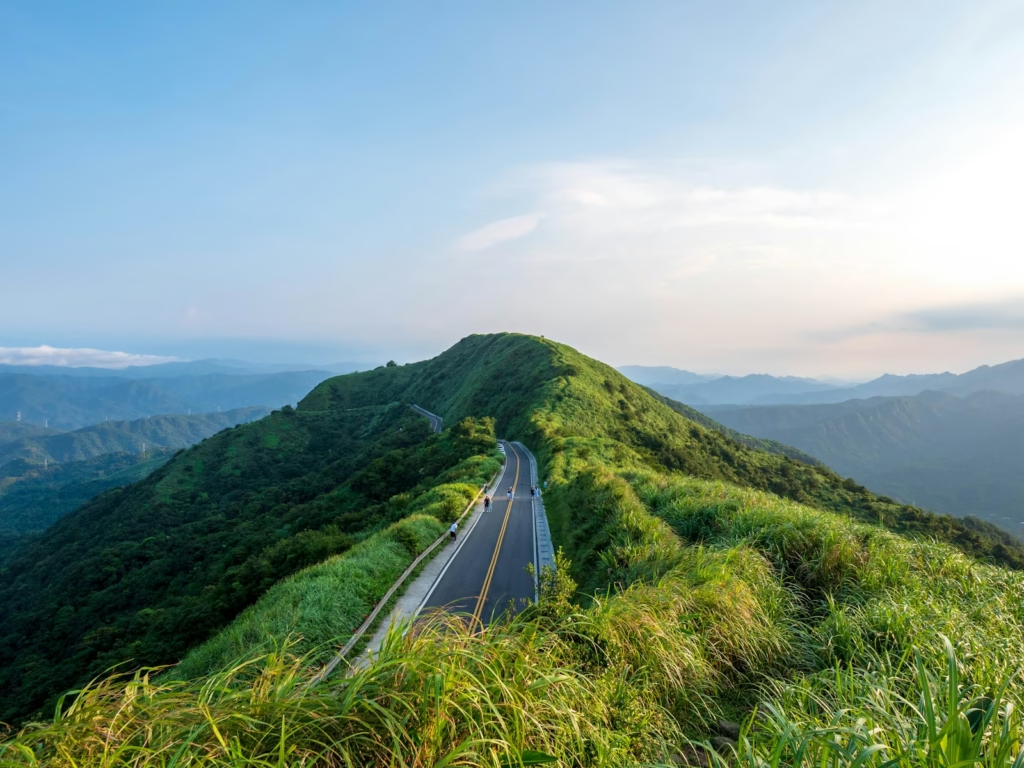
Most riders should use a proper road bike in excellent condition, with low enough gearing for the final ramps.
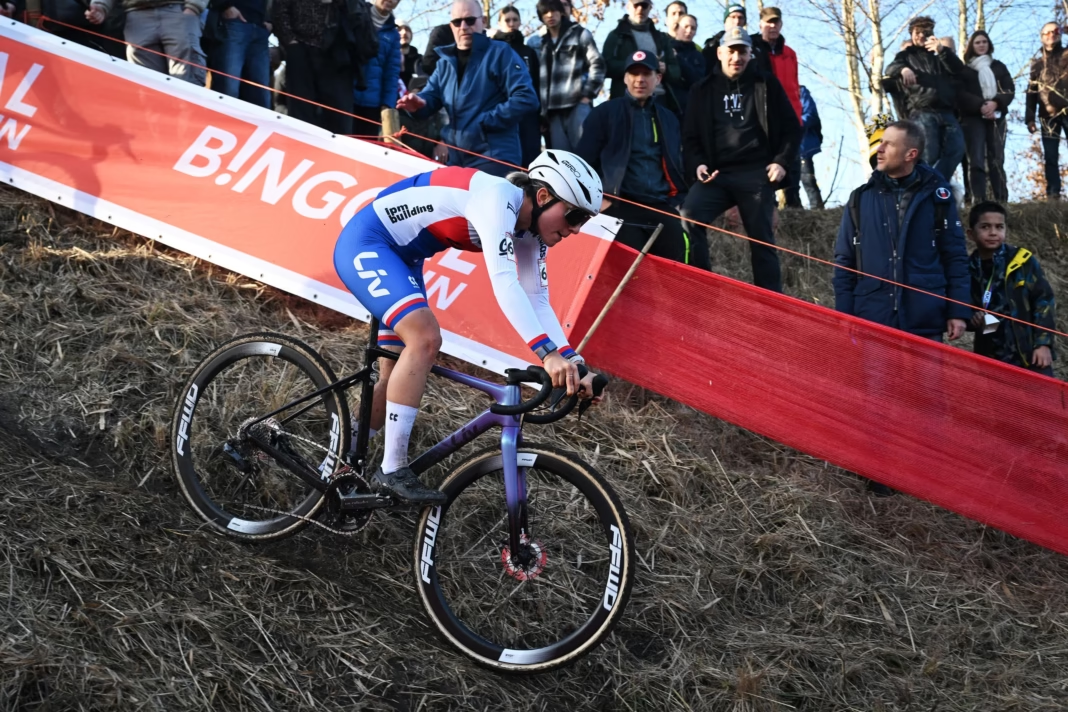
The mistake is looking at the average gradient and thinking standard race gearing will be fine. The problem is the accumulation. By the time the steep upper sections arrive, you may already have hours of climbing in your legs. A compact or semi-compact chainset with a generous climbing cassette is sensible for most riders. There is no shame in easier gears here. The mountain will still be hard.
Brakes and tyres also matter. The descent from high altitude can be long, cold and technical depending on how the ride is organised. Good tyres, reliable braking and careful pressure choices are essential. If the road surface is affected by repair work or debris, comfort and grip become even more important.
Clothing needs to cover a wide range. You may start warm near the coast and finish cold at altitude. A lightweight rain shell or windproof layer, gloves, and something dry for the descent can turn a miserable upper mountain into a manageable one.
The bike should feel boringly reliable. This is not the route for mechanical experiments.
Fuelling and pacing the KOM
The Taiwan KOM route rewards riders who eat early, drink steadily and ignore their ego.
Because the opening section is not immediately savage, it is easy to ride too hard and forget to eat. That is a mistake. By the time hunger or dehydration becomes obvious, the route may already be tilting upwards and the damage may be hard to reverse.
A good pacing strategy is to treat the first half as preparation rather than performance. Keep the effort controlled through the gorge, use flatter moments to eat and drink, and resist chasing riders who are going too quickly. The route becomes more honest later.
Carbohydrate intake matters, but so does hydration. Taiwan’s lower elevations can be humid, and sweat loss can be high even before the climbing feels severe. Electrolytes can be useful, especially on warm days. At altitude, appetite may drop just when the body still needs energy.
The final 10km requires whatever you have saved. If you arrive there empty, the road becomes a slow-motion argument with yourself. If you arrive with fuel in the system and a little restraint left, it is still brutal, but it becomes possible.
-
 Photo Credit: Getty

Practical information for cycling Taroko Gorge and the Taiwan KOM route
Location
Taroko Gorge is in Hualien County on Taiwan’s east coast. The Taiwan KOM route starts near sea level around Hualien and Qixingtan, then climbs inland through Taroko Gorge and up towards Wuling in the Central Mountain Range.
Route
The classic KOM route is around 105km and climbs to about 3,275m at Wuling. It follows the road inland through Taroko Gorge before continuing into the high mountains. The exact event route and access arrangements can vary, so riders should always check official event or local road information before planning.
Current access
Taroko Gorge and the wider Highway 8 corridor have been affected by the 2024 Hualien earthquake and later storm damage. As of 2026, access remains subject to partial openings, traffic controls and repair work. Riders should check Taroko National Park updates, highway conditions and local guidance before travelling.
Difficulty
This is an extremely hard ride. The distance, total elevation, altitude gain, late steep ramps and changing weather make it a serious challenge even for fit cyclists. The average gradient does not fully explain the difficulty because the hardest ramps come after many kilometres of climbing.
Safety
Ride with lights for tunnels, use bright clothing, check traffic controls, carry enough layers for the summit and descent, and avoid the route in bad weather or unstable road conditions. Rockfall and roadworks are real considerations in Taroko Gorge.
When to go
Autumn is often the most appealing period, especially around the organised KOM event, but conditions can vary. Summer can be hot and humid with storm risk. The high mountains can be cold even when the coast is warm.
Support
A guided ride or organised event is strongly recommended for anyone unfamiliar with Taiwan, Taroko road access or high-mountain logistics. The official Taiwan KOM Challenge offers the most structured way to experience the route.
Where to stay
Hualien is the natural base for the lower part of the route and for riders starting near the coast. Accommodation inside or near Taroko may be affected by access and reopening conditions, so check availability carefully. Riders planning the full KOM route should also think about transport back from the high mountains.
Why Taroko and the Taiwan KOM route stay with you
Some climbs are famous because of racing history. Some are famous because of altitude. Some are famous because they look good in photographs. Taroko Gorge and the Taiwan KOM route combine all of that with something harder to define.
It is the feeling of leaving the ocean and riding into stone. It is the echo inside the tunnels, the pale river below, the hot coastal air becoming mountain chill, the way the road keeps climbing long after the scenery has already overwhelmed you. It is the sense that the final summit has been there all day, hidden somewhere above the clouds, waiting until you have used up most of your confidence.
The Taiwan KOM is not just a climb to tick off. It is a route that changes mood, climate and scale as it rises. It begins as travel, becomes spectacle, then turns into endurance. By the time you reach the high road near Wuling, the Pacific feels impossibly far below, even though the whole ride began with the sea still in the air.
That is what makes it special. Taroko Gorge gives the route its wonder. Wuling gives it its cruelty. The road between them gives cyclists one of the most complete climbing experiences in the world.

