
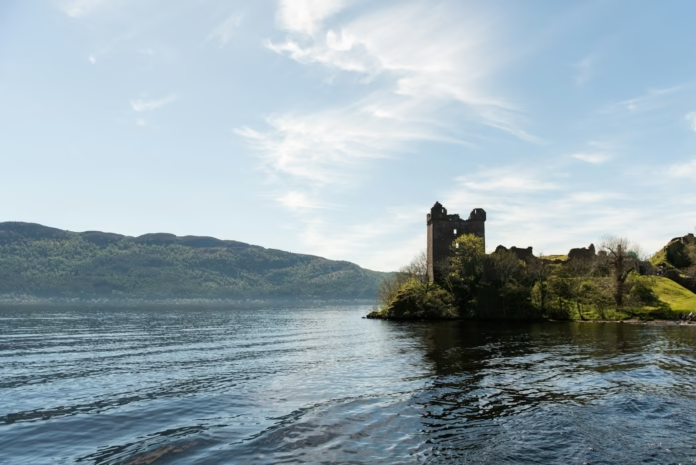
Étape Loch Ness is one of the UK’s most distinctive closed-road sportives, not because it is the longest or the steepest, but because it gives riders something that is increasingly rare: a full loop around one of Britain’s most recognisable landscapes, on traffic-free roads, with one decisive Highland climb placed exactly where tired legs begin to matter.
Starting and finishing in Inverness, the route circles Loch Ness over 66 miles, or 106km, with around 900m of ascent. That makes it far more accessible than the hardest UK climbing sportives, but it is still a serious day out. The road constantly rolls, the weather can be sharp, and the Fort Augustus climb arrives after more than 50km of riding, turning the second half into a test of pacing rather than simple endurance.
For riders looking at the UK sportive calendar, Étape Loch Ness sits in a slightly different category to events such as the Dragon Ride or the Fred Whitton Challenge. It is not as brutally mountainous, but the closed roads, Highland setting and long loop around Loch Ness give it a special appeal. It is a big-event sportive that still feels tied to place.
Étape Loch Ness at a glance
| Detail | Information |
|---|---|
| Event | Étape Loch Ness |
| Location | Inverness and Loch Ness, Scottish Highlands |
| Route distance | 66 miles / 106km |
| Total ascent | Around 900m |
| Road format | Closed-road sportive |
| Start and finish | Inverness |
| Main climb | Fort Augustus to Glendoe summit |
| KOM/QOM climb | 5.2 miles |
| Climb height marker | Climbs to around 1,200ft |
| Steepest gradients | Up to 12 per cent |
| Best for | First closed-road sportive, scenic endurance ride, Highland cycling challenge |
What is Étape Loch Ness?
Étape Loch Ness is a mass-participation closed-road sportive in the Scottish Highlands. Riders start in Inverness, complete a full loop of Loch Ness, then return to the city for the finish. The official event describes it as a 66-mile, or 106km, traffic-free ride around the loch, with a 360-degree route and around 900m of climbing.
That combination makes the event unusual. Many UK sportives are defined mainly by their climbs, distance or difficulty. Étape Loch Ness is defined by its setting. The route is hard enough to feel like a proper target, but its appeal comes from the chance to ride around Loch Ness on closed roads, with the loch, Highland weather and Fort Augustus climb shaping the day.
The official Étape Loch Ness event page is the best place to check the latest entry, date and route information before planning a ride.
What is the Étape Loch Ness route?
The Étape Loch Ness route is a full loop of Loch Ness, beginning in Inverness and heading out along one side of the loch before crossing at Fort Augustus and returning on the other side. It is simple to understand on the map, but more varied on the road than the headline distance suggests.
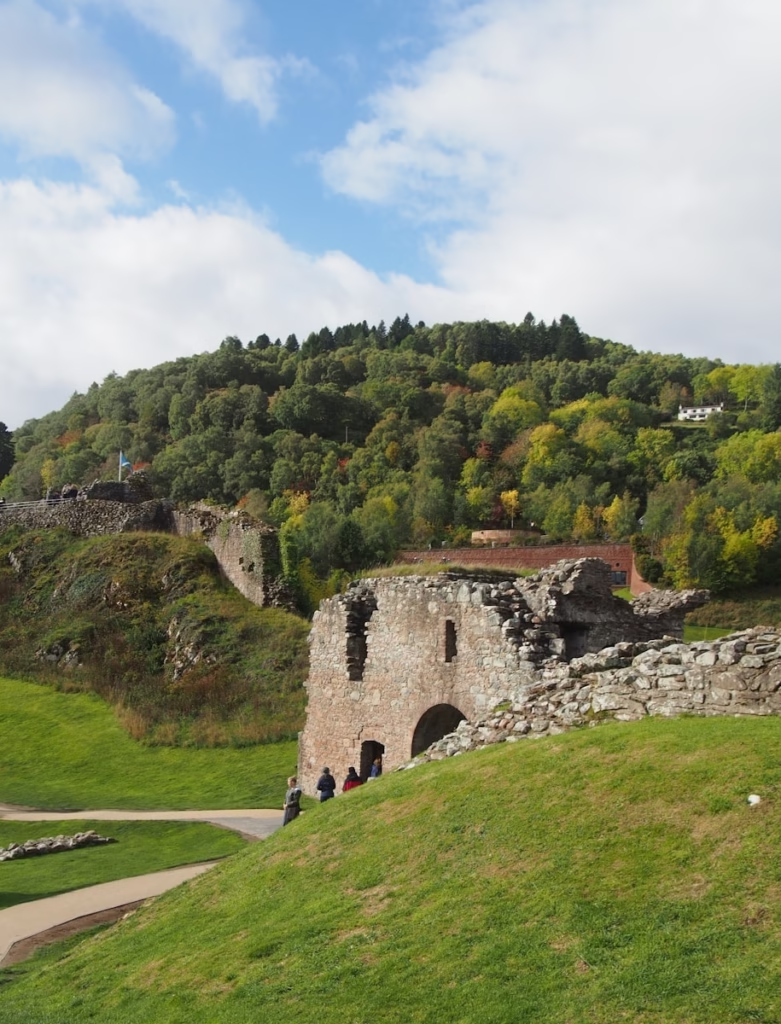
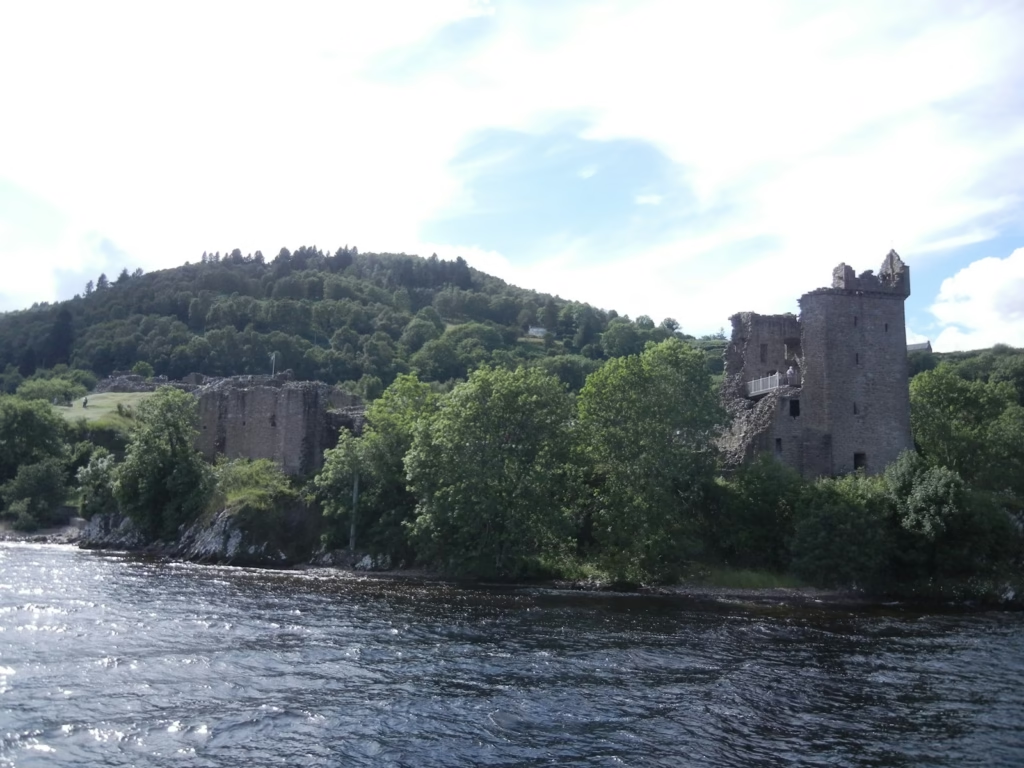
The early part of the route leaves Inverness and follows the lochside roads towards Drumnadrochit and Invermoriston. This section gives riders the famous Loch Ness experience, with woodland, rolling terrain and the sense of moving gradually deeper into the Highlands. Urquhart Castle sits on this side of the loch, adding one of the most recognisable visual landmarks of the day.
The route then reaches Fort Augustus at the south-western end of Loch Ness. This is the psychological turning point of the ride. The first half has already taken plenty of energy, but the hardest sustained climbing is still ahead. As riders leave Fort Augustus, the Fort Augustus to Glendoe summit climb begins, creating the main timed King and Queen of the Mountain section.
After the climb, the route returns towards Inverness on quieter Highland roads through areas such as Whitebridge, Foyers, Inverfarigaig and Dores. This side is one of the best parts of the event. The roads feel more remote, the loch appears and disappears through trees, the gradients keep rolling, and the final approach back towards Inverness can feel longer than expected if the wind is up or the legs have gone.
Why the closed roads matter
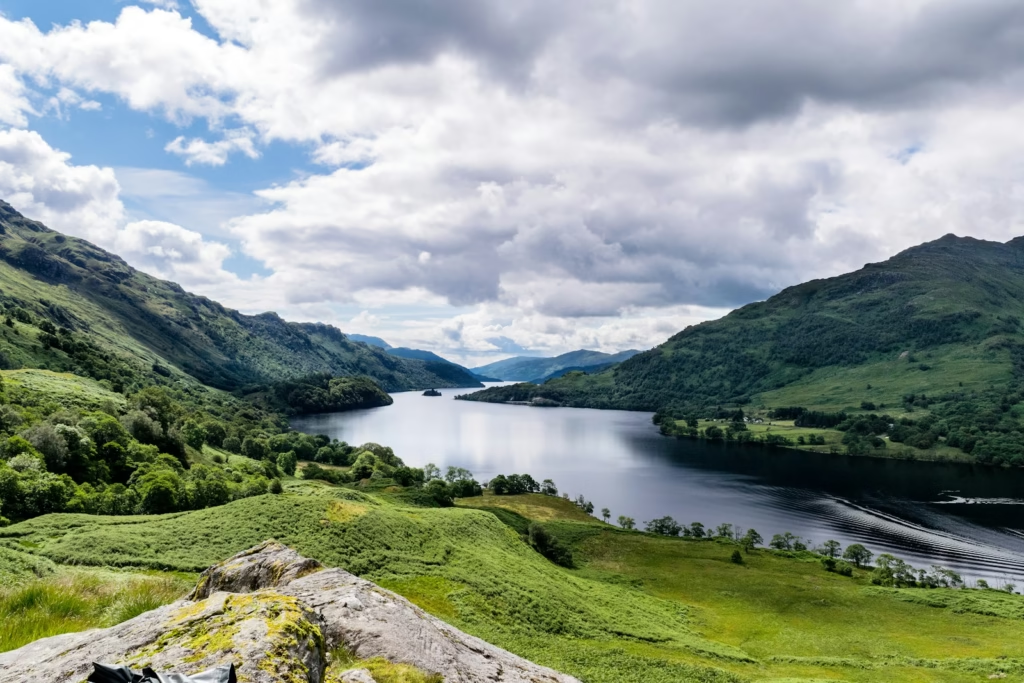
The closed-road element is the defining feature of Étape Loch Ness. Many UK sportives take place on open roads, where riders have to share space with cars, junctions, overtakes and normal traffic rhythm. Étape Loch Ness offers something very different: the chance to ride around Loch Ness on roads reserved for the event.
That changes the experience completely. It allows riders to hold a steadier rhythm, use more of the road where appropriate, descend with greater confidence, and enjoy the scenery without the constant stress of traffic passing close by. On roads that would normally feel very different on a bike, the closure is a major part of the event’s appeal.
It also makes the ride feel more like a continental gran fondo. The start waves, marshals, support stations, timing sections and closed route all give the day a big-event structure. That is one reason Étape Loch Ness works so well for riders stepping up from local sportives. It feels serious and memorable, but the distance and elevation are still manageable with sensible preparation.
The closures also affect residents and spectators around the route. Highland Council’s 2026 road restriction notice confirmed temporary traffic prohibitions and speed restrictions across the event weekend, with restrictions applying from the evening before through to the afternoon of the event day. Anyone travelling locally should check the latest Highland Council road restriction information or event guidance before making plans.
Where does the route go?
The broad route pattern is easy to follow:
| Section | Route character |
|---|---|
| Inverness to Drumnadrochit | Early rolling roads, event atmosphere, lochside riding |
| Drumnadrochit to Invermoriston | Woodland, loch views, steady rhythm |
| Invermoriston to Fort Augustus | Gradual approach to the far end of Loch Ness |
| Fort Augustus to Glendoe summit | Main KOM/QOM climb, sustained effort, steep ramps |
| Glendoe to Whitebridge and Foyers | Highland roads, rolling terrain, recovery mixed with fatigue |
| Foyers to Dores | Scenic riding, testing late-stage kilometres |
| Dores to Inverness | Final run-in, tired legs, return to the event finish |
That loop gives the sportive a natural story. The opening roads help riders settle. The loch draws the route south-west. Fort Augustus marks the beginning of the main test. The return to Inverness asks whether the early pace was sensible.
The Fort Augustus climb explained
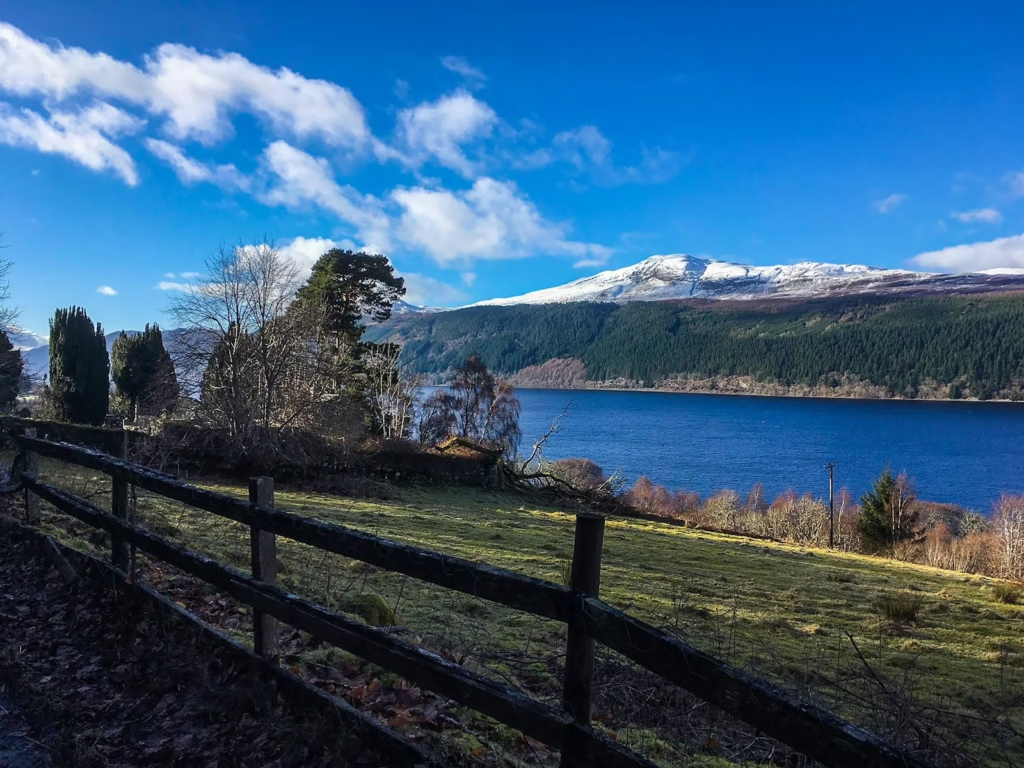
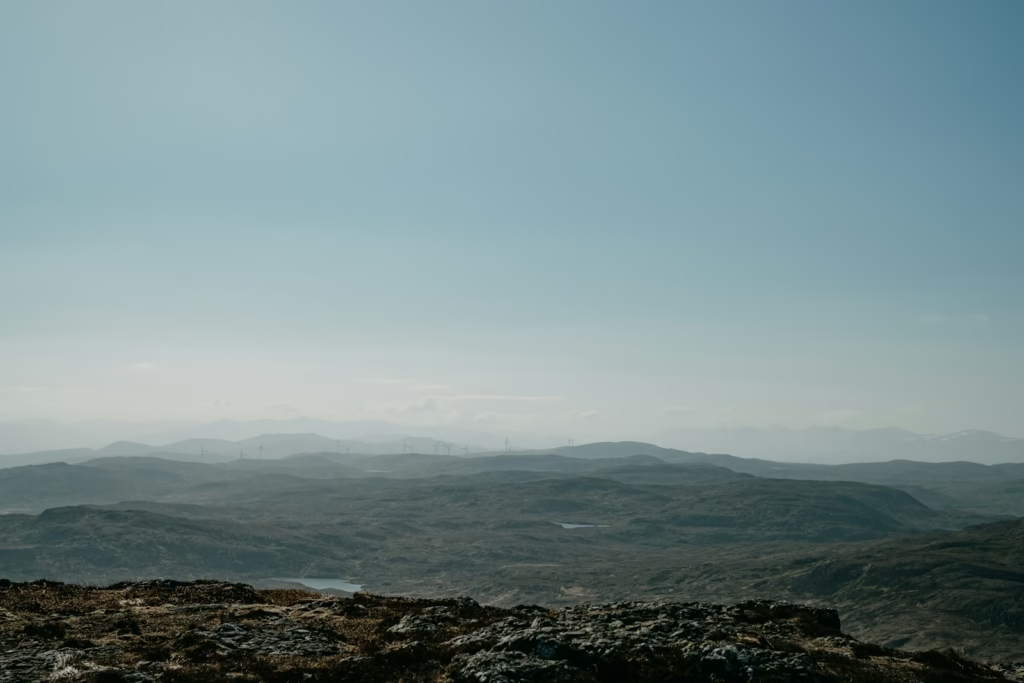
The Fort Augustus climb is the key feature of Étape Loch Ness. It begins after Fort Augustus, once riders have already covered a significant part of the route. The organiser lists the climb to Glendoe summit at 5.2 miles, climbing to around 1,200ft, with the climb broken into three stages.
Those numbers tell part of the story, but not all of it. The climb is hard because of where it comes. By the time riders reach Fort Augustus, they have already completed a large chunk of the route. The early excitement has settled, the bunches have thinned, and the body is beginning to feel the repeated rolling efforts around the loch.
The climb itself is not a single wall. It is a sustained Highland ascent with changing rhythm. Some sections are steady and manageable, while others bite harder. The steep ramps are the moments that catch riders who have pushed too much in the first half. It is very easy to start the climb too enthusiastically, especially with the timing mats and KOM/QOM atmosphere adding adrenaline.
The best approach is to ride the first part under control. Stay seated where possible, keep the cadence smooth, and resist the urge to chase every rider who comes past. The climb is long enough for pacing to matter, but short enough that a well-judged effort can still feel satisfying. It is not a survival climb if managed well. It becomes one if ridden badly.
How hard is Étape Loch Ness?
Étape Loch Ness is a moderate-to-hard sportive rather than an extreme one. The distance is significant, the ascent is meaningful, and the Fort Augustus climb gives the route a clear sting. Yet it is not in the same climbing category as the longest versions of Dragon Ride or the Lake District intensity of the Fred Whitton Challenge.
That makes it a very good target for riders who want a proper event without committing to one of Britain’s most punishing climbing sportives. A well-trained cyclist who is comfortable riding 100km should be able to prepare for it sensibly. A newer rider can also aim for it, provided they build endurance, practise climbing and learn how to fuel over several hours.
The difficulty comes from four main factors:
| Challenge | Why it matters |
|---|---|
| Distance | 106km is long enough to punish poor pacing or poor fuelling |
| Fort Augustus climb | The main ascent arrives after significant early distance |
| Rolling terrain | The route is never just flat cruising around the loch |
| Highland weather | Wind, rain or cold can make the ride feel much harder |
The route is achievable, but it deserves respect.
How to ride the Fort Augustus climb well
The Fort Augustus climb should shape your pacing from the start. The biggest mistake is treating the first half like a fast club ride and then discovering that the main climb has arrived before the legs are ready.
A better approach is to ride the first half of the route smoothly. Use the early miles to find a rhythm, eat before you feel hungry, and avoid burning matches on every rise. There is plenty of time to ride harder later.
On the climb itself, do not panic if the gradient kicks up early. Settle into your lowest comfortable gear and keep the effort controlled. If you are using a heart-rate monitor or power meter, this is the place to trust it. The climb is timed, but the best time usually comes from an even effort rather than a dramatic first kilometre followed by a slow fade.
The upper part is where riders who paced well begin to move through the field. If you still have something left after the steepest ramps, you can increase the effort towards the summit. If not, keep the bike moving, hold your line, and remember that the ride does not end at the top. There is still a long return to Inverness.
What bike and gearing do you need?
A standard road bike is ideal for Étape Loch Ness. The route is paved and designed for road cycling, but comfort matters. The distance, rolling terrain and Highland weather make it worth choosing a set-up you trust rather than chasing the lightest possible configuration.
Sensible gearing is important for the Fort Augustus climb. A compact chainset or modern semi-compact with a generous rear cassette will suit most riders. You do not need alpine gearing, but you do need a low enough gear to stay seated on the steeper ramps without grinding.
Tyre choice should balance speed and resilience. A 28mm road tyre is a good default for many riders, especially if your bike has clearance. It gives a little more comfort and confidence on rougher surfaces without feeling slow. Wider tyres may also help if conditions are wet or if you prefer extra stability on descents.
Bring layers. Even in late April, the Highlands can shift quickly from mild to cold, wet or windy. A packable waterproof or gilet can make a huge difference, especially after the climb or on exposed sections of the return route.
Fuelling and support stations
The official route normally includes several support stations, breaking the route into more manageable sections and giving riders the chance to refill bottles, take on food and deal with minor mechanical problems.
Even so, you should start with two full bottles and enough food to get through the first part comfortably. Do not wait until Fort Augustus to begin eating properly. By then, you are about to hit the hardest climb of the day.
A simple plan works best:
| Point in ride | Fuelling focus |
|---|---|
| Start to Drumnadrochit | Drink early, settle nerves, avoid over-eating |
| Drumnadrochit to Invermoriston | Begin steady carbohydrate intake |
| Invermoriston to Fort Augustus | Eat before the climb, do not arrive empty |
| Fort Augustus climb | Sip if needed, avoid heavy food during the hardest effort |
| Whitebridge onwards | Rebuild energy for the final rolling kilometres |
| Final run to Inverness | Keep drinking and take small energy hits if fading |
A closed-road sportive can feel exciting, but the body still needs ordinary endurance basics: drink, eat, pace, repeat. For riders building towards their first big event, our first sportive checklist is a useful companion piece for kit, fuelling and event-day preparation.
What makes the atmosphere special?
The atmosphere of Étape Loch Ness is built from contrast. There is the organised buzz of Inverness before dawn, with riders moving through the start areas, lights blinking, jackets zipped, nerves hidden behind jokes. Then there is the sudden release onto closed roads, when the bunch begins to flow out of the city and the day opens up.
Loch Ness gives the event its identity. The water is dark, broad and strangely still in places, with the hills rising above it and the road cutting through trees, villages and open stretches. Even riders who are focused on pacing will have moments where the scenery pulls them out of the effort. Urquhart Castle, Fort Augustus, the quieter south-side roads and the return towards Dores all give the event a sense of journey.
There is also a real Highland edge. The weather may be kind, but it rarely feels guaranteed. A cold wind across the loch, a damp descent, low cloud over the hills or a sudden break of sun can change the mood of the ride within minutes. That unpredictability is part of the appeal. Étape Loch Ness does not feel like a generic mass-participation ride. It feels like a Highland sportive with its own personality.
How to train for Étape Loch Ness
Training for Étape Loch Ness should focus on endurance, steady climbing and pacing after fatigue. You do not need to live near mountains, but you do need to be comfortable riding for several hours and producing a controlled effort late in the ride.
The ideal preparation includes regular longer rides building towards 100km, some hill repeats or sustained climbing efforts, and at least one ride where you practise eating and drinking exactly as you plan to on event day.
If you live somewhere flat, use longer tempo efforts into the wind or on rolling roads. The Fort Augustus climb is not only about gradient. It is about holding rhythm when the body is already tired.
Riders looking at other UK events can use Étape Loch Ness as a stepping stone towards harder climbing sportives. It is more demanding than a flat century ride, but less relentless than the Fred Whitton. It also fits well within a broader sportive season, particularly for riders building from spring endurance into summer targets. Our UK sportive guide covers how events like this sit within the wider British calendar, while our best UK sportives to ride in 2026 piece looks at other major targets.
Is Étape Loch Ness good for first-time sportive riders?
Étape Loch Ness can be a good first major sportive, provided the rider prepares properly. The closed roads remove some of the stress associated with open-road events, and the route is not excessively technical. The support stations and event structure also make it feel well-contained.
However, it should not be treated as easy. A 106km route with around 900m of ascent and a timed 5.2-mile climb is a significant challenge for anyone new to longer rides. The key is to arrive with a base of steady endurance, not just enthusiasm.
For a first-timer, the aim should be to finish strongly rather than chase a time. Ride the first half conservatively, use the support stations, save something for the climb and accept that the final 30km may feel harder than the profile suggests.
-
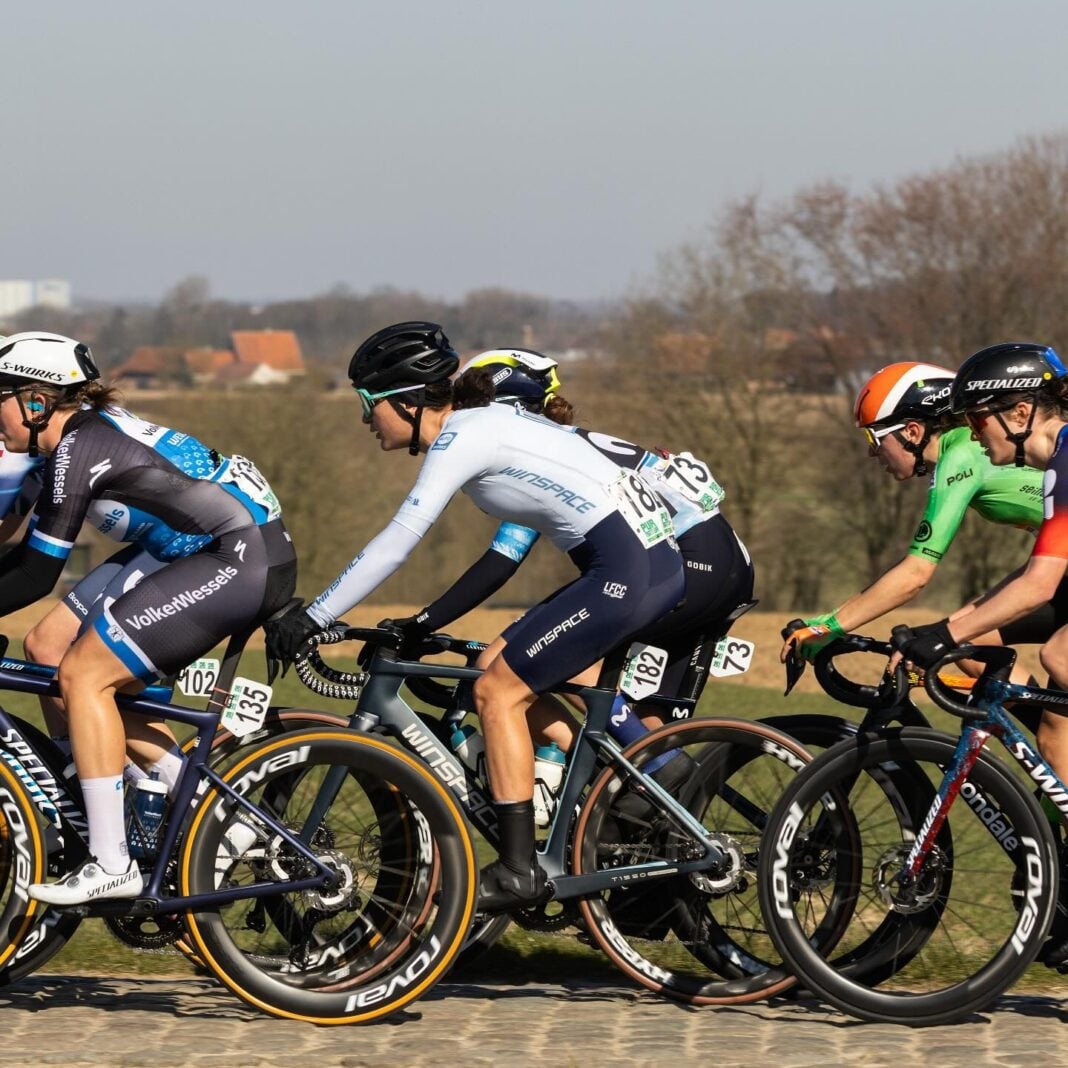
 Photo Credit: quentinphotographiebe
 -
 Photo Credit: Getty

Étape Loch Ness FAQ
How long is Étape Loch Ness?
Étape Loch Ness is 66 miles, or 106km. The route starts and finishes in Inverness and makes a full loop around Loch Ness.
Is Étape Loch Ness on closed roads?
Yes. Étape Loch Ness is a closed-road sportive. Temporary road closures and restrictions are used around the route to allow registered riders to complete the event on traffic-free roads.
How much climbing is in Étape Loch Ness?
The route has around 900m of climbing. Most of the climbing is spread across rolling terrain, but the main feature is the Fort Augustus to Glendoe summit climb.
How hard is the Fort Augustus climb?
The Fort Augustus climb is the hardest section of Étape Loch Ness. The organiser lists the climb to Glendoe summit at 5.2 miles, climbing to around 1,200ft. The key difficulty is that it comes after riders have already completed a large part of the route.
Where does the main climb start?
The main climb starts as riders leave Fort Augustus, around the far end of Loch Ness, before the route climbs towards the Glendoe summit area.
Is Étape Loch Ness suitable for beginners?
It can be suitable for riders attempting their first major sportive, but only with proper preparation. You should be comfortable riding close to 100km, climbing steadily and fuelling over several hours.
What gearing do I need for Étape Loch Ness?
Most riders will be best served by standard road-bike gearing with a sensible climbing cassette. A compact or semi-compact chainset with a generous rear sprocket will make the Fort Augustus climb much more manageable.
Where does Étape Loch Ness start?
Étape Loch Ness starts in Inverness. Riders are normally released in waves from early morning before heading out around Loch Ness.
Why Étape Loch Ness is worth riding
Étape Loch Ness works because it combines the things riders want from a major sportive without becoming inaccessible. It has distance, scenery, closed roads, a proper climb and a strong event atmosphere. It feels like a challenge, but not a punishment.
The Fort Augustus climb gives the day its sporting centre. The loch gives it its identity. Inverness gives it a practical base. The closed roads give it the sense of occasion. Put together, those ingredients make it one of the most appealing sportives in the UK.
It is not the hardest ride in Britain, but it does not need to be. Its appeal is more specific than that. Étape Loch Ness gives riders the chance to move around a famous landscape in a way that is normally impossible, to ride roads that feel transformed by the event, and to test themselves on a climb that arrives at exactly the right moment.
For many riders, that is the mark of a great sportive. Not just the biggest numbers, but a route with a clear memory. Loch Ness gives you that. So does the climb out of Fort Augustus. So does the feeling of rolling back into Inverness with the hardest work behind you, the loch completed, and the Highlands still sitting in the legs.

