
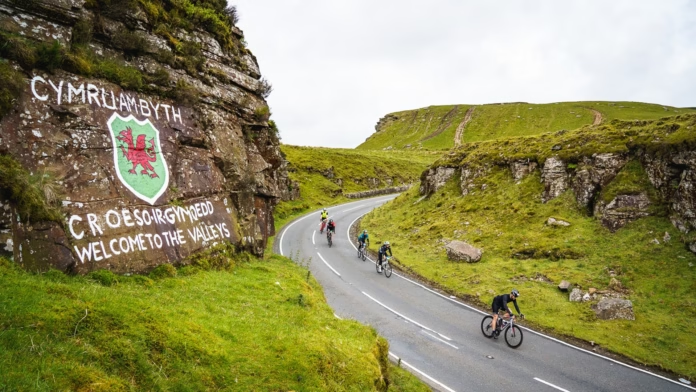
Dragon Ride is one of the UK’s defining sportives. Based at Margam Park near Port Talbot, it sends riders into the Bannau Brycheiniog, or Brecon Beacons, with long climbs, exposed roads and enough elevation to make even the shorter routes feel like a proper day out. It is not just a big sportive by name. It is one of the few British cycling events that genuinely feels like a mountain challenge.
The 2026 edition takes place on Sunday, 14th June, and comes with an important twist. The routes have been reversed for 2026, changing the rhythm of the ride and making familiar climbs feel different for returning riders. Descents from previous years become testing climbs, pacing plans need to be rethought, and Devil’s Elbow returns as a timed King and Queen of the Mountain climb.
There are four route options: the Cymru Classic at 99km, Medio Fondo at 153km, Gran Fondo at 222km and the Dragon Devil at 298km. All 2026 distances have sold out, but the event remains a key reference point for riders planning their training, comparing UK sportives or targeting a future edition.
For the official event information, see the Dragon Ride routes page and the Dragon Ride rider info hub. For a wider view of where Dragon Ride sits in the British sportive calendar, see our UK sportive guide, best UK sportives to ride in 2026 and sportives hub.
What is the Dragon Ride?
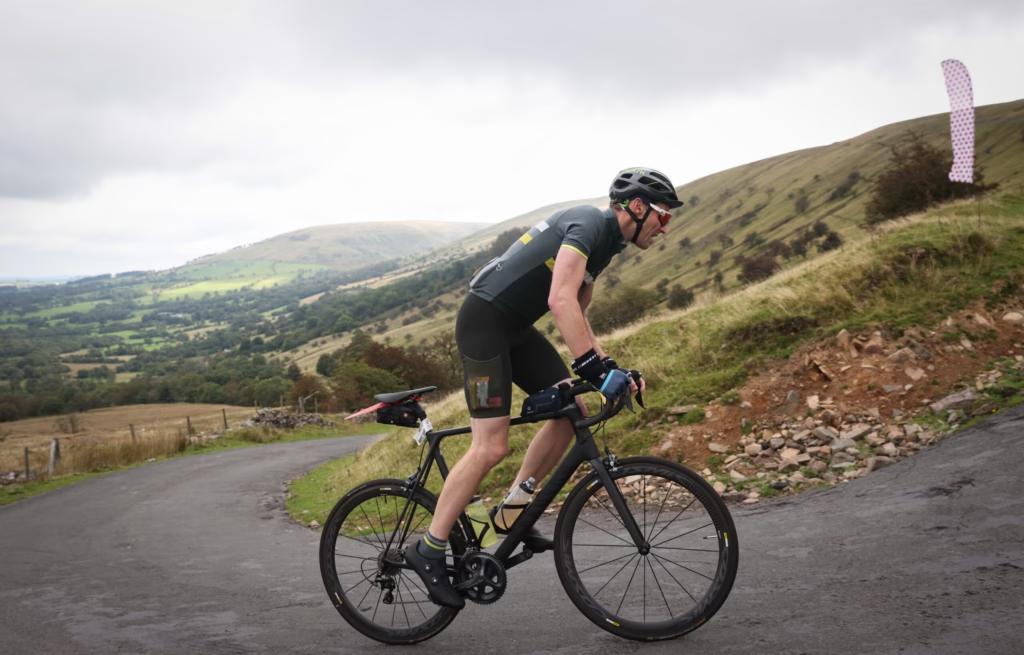
Dragon Ride is a long-running Welsh sportive based from Margam Park near Port Talbot. The event heads into some of the best-known climbing roads in South Wales, including Rhigos, The Bwlch, Devil’s Elbow and, on the longest route, Devil’s Staircase.
The attraction is the mix of distance, climbing and atmosphere. Dragon Ride is not a closed-road city sportive or a gentle countryside loop. It is a day built around climbing, endurance and managing effort over several hours. The scenery is a major part of the appeal, but riders should not confuse scenic with easy.
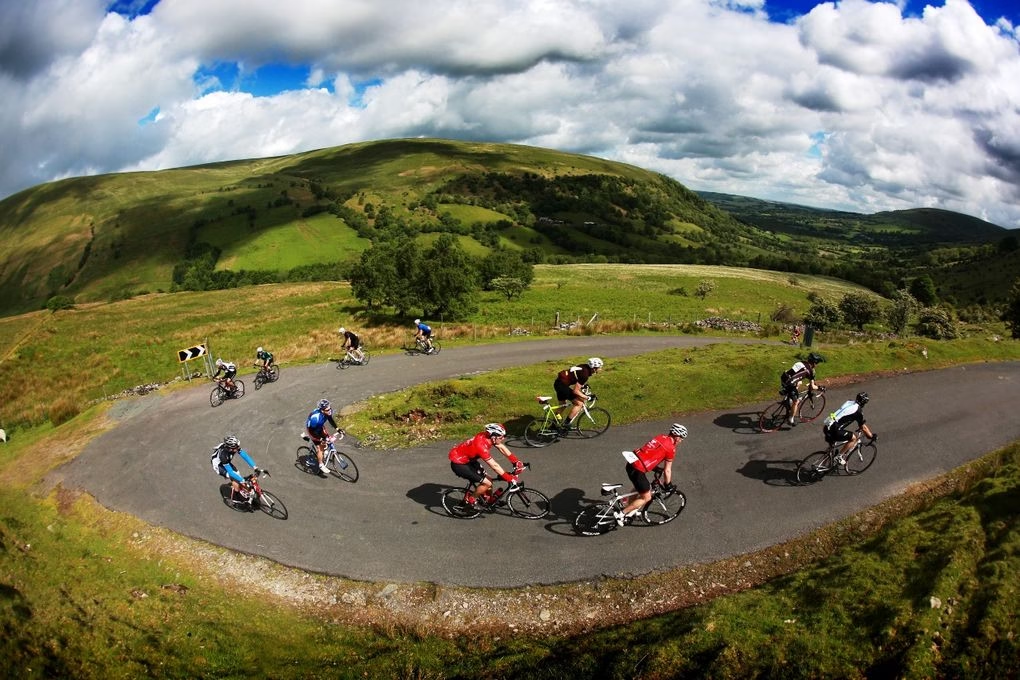
Its reputation comes from the way the route keeps asking questions. There are long climbs, steeper ramps, fast descents, exposed sections and enough cumulative elevation to punish anyone who starts too hard. The Gran Fondo is already a serious undertaking at 222km with 3,583 metres of climbing. The Dragon Devil goes further again, stretching to 298km with 4,504 metres of elevation.
That makes route choice important. The event has something for a wide range of riders, but every distance still deserves respect.
Dragon Ride 2026 date, start and location
Dragon Ride 2026 takes place on Sunday, 14th June.
The event starts and finishes at Margam Park, near Port Talbot in South Wales. This is a practical base because it sits close to the M4, but the route quickly leaves the feel of a major road corridor behind. Once the ride moves towards the Bannau Brycheiniog, the character changes into open hills, long valleys and proper climbing country.
Riders are advised by the organiser to arrive well before their start wave, with 2026 rider information noting that it can take up to 15 minutes to walk from the car park to the event village. That is worth building into the morning plan. Dragon Ride is not the sort of event where you want to arrive late, rush breakfast, queue for toilets and roll to the start already stressed.
Because all 2026 distances have sold out, riders targeting future editions should treat entry as part of the challenge. The event is popular, capacity is limited, and the longest routes can fill quickly.
Dragon Ride 2026 route options
Dragon Ride offers four route distances in 2026:
| Route | Distance | Elevation | Best suited to |
|---|---|---|---|
| Cymru Classic | 99km | 1,324m | First-time Dragon Ride riders and confident sportive beginners |
| Medio Fondo | 153km | 2,332m | Regular riders wanting a serious climbing day |
| Gran Fondo | 222km | 3,583m | Experienced endurance riders and strong club cyclists |
| Dragon Devil | 298km | 4,504m | Very experienced riders targeting a full-day endurance challenge |
The key mistake is thinking the shorter options are easy. The Cymru Classic is still a 99km Welsh sportive with over 1,300 metres of climbing. The Medio Fondo is a full climbing event in its own right. The Gran Fondo would be the headline distance at many other sportives. The Dragon Devil is a separate level of commitment.
For most riders, the Gran Fondo is the classic Dragon Ride challenge. It is long enough, hard enough and prestigious enough to feel like a major goal, without the extreme time demands of the Dragon Devil. The Medio Fondo is the sensible choice for riders who want the Dragon Ride experience but do not want to spend the whole day managing a 200km-plus ride.
The official Dragon Ride routes page has the latest route information, distance breakdowns and event-specific updates.
What is different about the 2026 reversed route?
The 2026 Dragon Ride routes are reversed, which changes more than just direction. Climbs come in a different order, familiar descents become ascents, and pacing strategies from previous years may not transfer cleanly.
For returning riders, that matters. A climb you remember as a fast descent can feel very different when ridden uphill. The psychological landmarks of the ride shift as well. A section that used to signal relief may now become an early test. A climb that used to come late may arrive when the bunch is still finding its rhythm.
The reversal also changes how riders should approach the day. It is harder to rely on memory, and more important to study the route, load the correct GPX file, and know where the main climbs and feed stations sit. Riders who have completed Dragon Ride before should not assume they can ride it on instinct.
The official rider information notes that GPX files are supplied to participants and that the 2026 climbs guide has been created around the reversed routes. That makes the Dragon Ride rider info hub one of the key pages to check before travelling.
Cymru Classic route: 99km with 1,324m of climbing
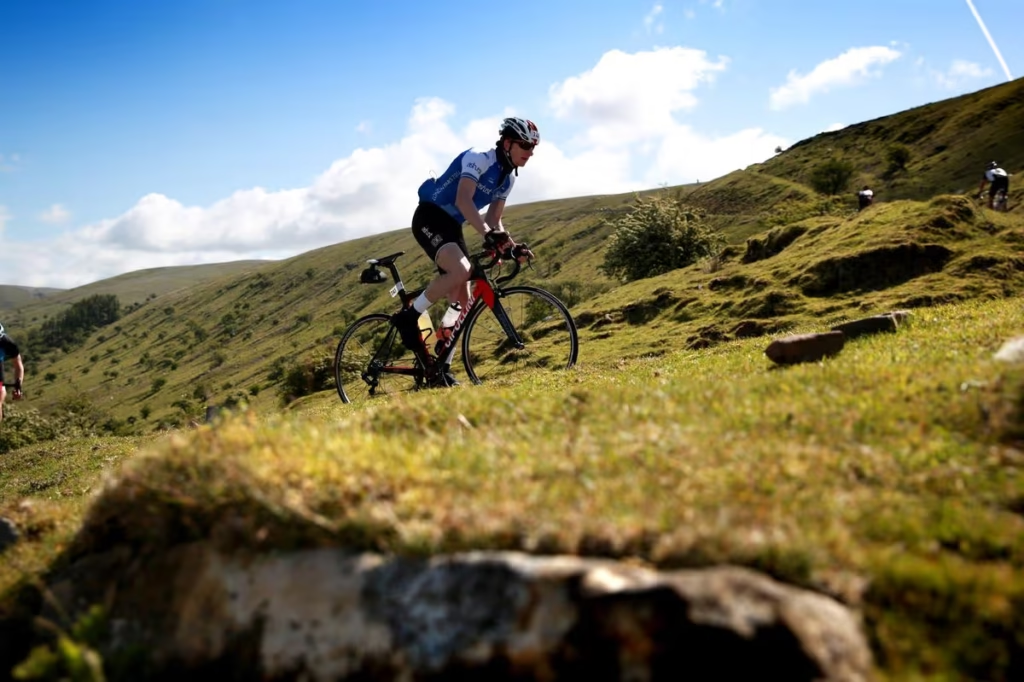
The Cymru Classic is the shortest Dragon Ride option, but it is not a soft ride. At 99km with 1,324 metres of climbing, it sits in the space between an approachable long sportive and a proper Welsh climbing day.
The key climbs are The Bwlch, Rhigos and Cimla Hill. That gives the Cymru Classic a clear identity: enough famous South Wales climbing to feel like Dragon Ride, but without the extended endurance load of the longer routes.
This is the best option for riders stepping up to a major sportive for the first time. It is also a good choice for cyclists who can ride 100km comfortably but are less confident about taking on the Gran Fondo or Medio Fondo.
Training still matters. A flat 100km ride is not the same as a 99km Dragon Ride. Riders need to be comfortable climbing at low cadence, descending in groups, fuelling properly and managing weather changes. But for a first Dragon Ride, the Cymru Classic is the most sensible route.
Best for: first Dragon Ride, confident beginners, riders targeting 100km with proper climbing
Medio Fondo route: 153km with 2,332m of climbing
The Medio Fondo is where Dragon Ride starts to become a serious endurance event. At 153km with 2,332 metres of climbing, it is long enough to punish poor pacing and hard enough to expose riders who have not trained on hills.
The key climbs are Devil’s Elbow, The Bwlch and Rhigos. That makes it a strong route for riders who want the major Dragon Ride feel without committing to the full Gran Fondo distance.
The Medio Fondo is probably the best choice for many regular cyclists. It gives you the event’s central climbs, a big day in South Wales, and a proper finish-line sense of achievement, but it does not demand the same time-on-bike resilience as the 222km Gran Fondo.
That does not make it easy. The distance is long enough that fuelling becomes a major factor. If you eat too little early, the later climbs will feel much harder. If you ride the first half above yourself, the final third can become a slow grind.
Best for: regular riders, first big climbing sportive, cyclists who want the Dragon Ride experience without the longest distances
Gran Fondo route: 222km with 3,583m of climbing
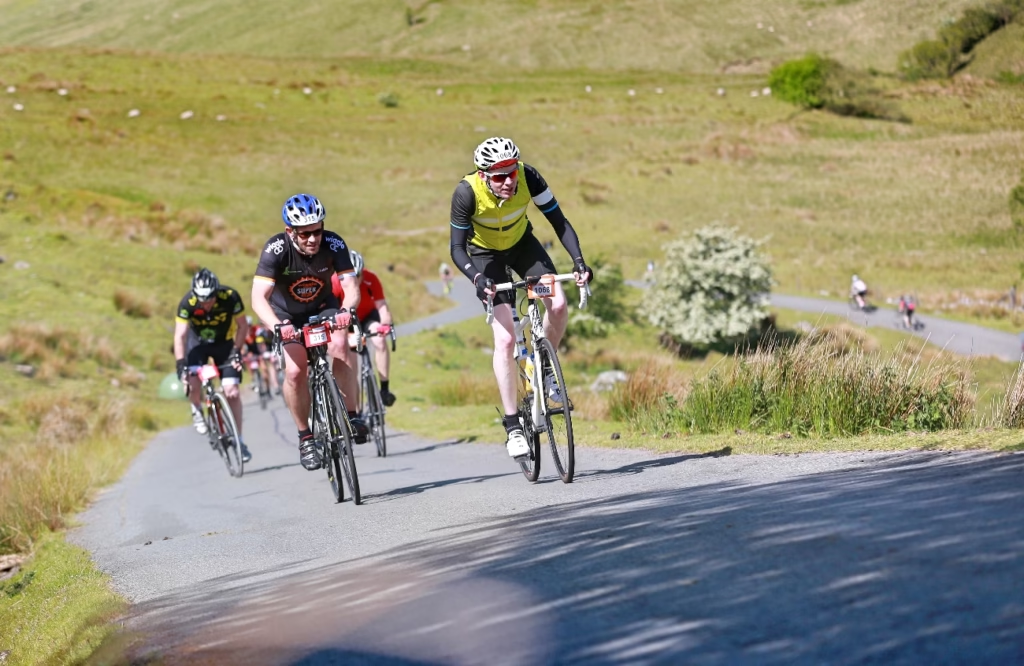
The Gran Fondo is the most popular Dragon Ride route and probably the event’s classic distance. At 222km with 3,583 metres of climbing, it is a major endurance test even for riders who already have plenty of sportive experience.
The key climbs are Black Mountain, Devil’s Elbow and Rhigos. The distance is the real separator. Many riders can train themselves to get over a hard climb. Fewer can do that repeatedly after 150km or more, while still eating, drinking, descending safely and keeping enough concentration to ride well.
This route rewards patience. The early temptation is to ride with the excitement of the event, follow groups that are slightly too quick, and treat the first major climbs as tests of form. That is usually a mistake. The Gran Fondo is long enough that the strongest riders are often those who still feel controlled halfway through.
For anyone targeting the Gran Fondo, training should include several rides over 120km, at least one long ride close to six hours, and regular climbing work. You do not need to replicate the full route in training, but you do need to know how your body responds after four or five hours on rolling and hilly roads.
Best for: experienced sportive riders, strong club cyclists, endurance riders who want the classic Dragon Ride challenge
Dragon Devil route: 298km with 4,504m of climbing
The Dragon Devil is the hardest Dragon Ride route and one of the most demanding sportive challenges in the UK. At 298km with 4,504 metres of climbing, it is not just a longer Gran Fondo. It is a full-day endurance project.
The key climbs are Devil’s Staircase, Rhigos and The Bwlch, but the difficulty is not only in the named climbs. It is in the total load: nearly 300km, long hours in the saddle, repeated elevation, cut-off pressure, weather exposure and the need to keep eating when the ride has moved far beyond normal club-run distance.
This route is for experienced riders only. A rider choosing the Dragon Devil should already know they can ride 200km comfortably and should have experience of long, hilly days where things do not always go perfectly. Mechanical confidence matters too. If you puncture, misjudge clothing or struggle to eat, there is a long way still to ride.
The Dragon Devil is a bucket-list challenge, but it should not be entered because the name sounds exciting. It requires proper preparation, a realistic pacing plan and the humility to ride well within yourself for the first half.
Best for: experienced endurance cyclists, ultra-distance riders, strong climbers, riders who already know they can handle 200km-plus days
Key Dragon Ride climbs
Dragon Ride’s reputation comes from its climbs. The exact combination depends on the route chosen, but the main names are central to the event’s identity.
Devil’s Elbow
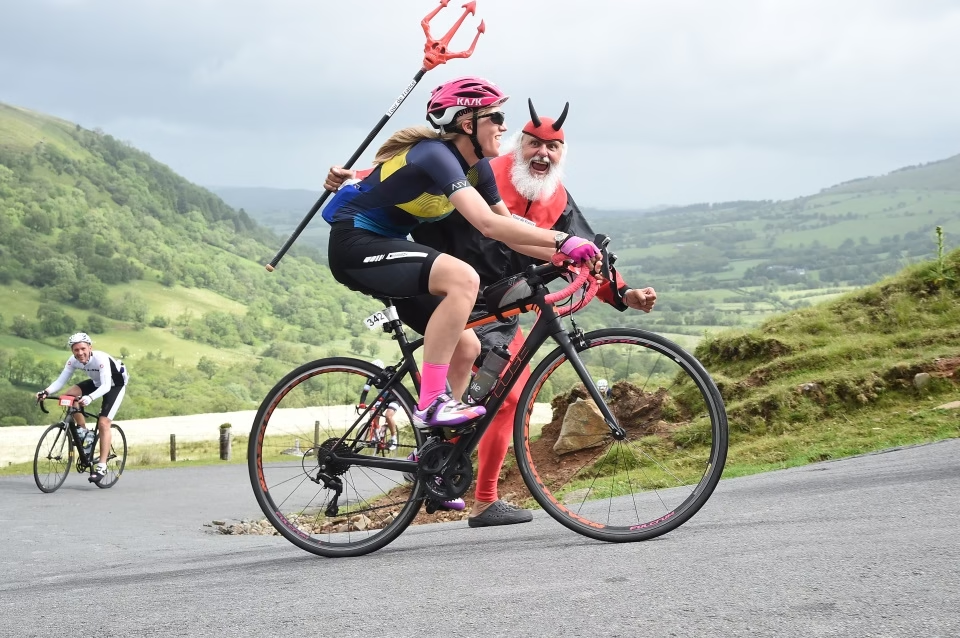
Devil’s Elbow returns in 2026 as the timed King and Queen of the Mountain climb. It is listed at 1.8km with an average gradient of 10.3 per cent, which makes it short, steep and easy to misjudge.
The danger with a climb like Devil’s Elbow is that riders treat it like a test-piece and go too deep. That may be fine if you are targeting the timed segment, but for most riders it needs to be managed within the whole event. On the longer routes, one hard effort can cost far more later than it gains in the moment.
The right approach is to shift early, stay seated where possible, and avoid chasing riders who surge past at the bottom. If you still feel strong near the top, then lift the effort.
Rhigos
Rhigos is one of the best-known climbs in South Wales and appears across the Dragon Ride route set. It is not just a climb in isolation. It is part of the wider landscape that gives Dragon Ride its mountain feel.
For 2026, riders will also be crossing roads linked to the 2027 Tour de France Grand Départ in Wales, with Rhigos forming part of the scenery that the professional peloton will experience. That adds an extra layer of interest, but for sportive riders the job is more immediate: ride it at a sustainable pace and do not let the view distract from the effort.
Rhigos is the kind of climb where rhythm matters. It is not a place to panic. Find a gear you can hold, keep eating and drinking around the climb rather than only on it, and use the descent to recover without switching off.
The Bwlch
The Bwlch is another major Dragon Ride climb and one of the classic South Wales cycling roads. It carries the feel of a proper upland climb, with enough length and exposure to make conditions important.
On a good day, it can be one of the most memorable parts of the ride. On a wet or windy day, it can feel much harder. That is part of the Dragon Ride equation: the climbs are hard on paper, but the weather can change the difficulty dramatically.
Riders should be ready for colder conditions higher up, even in June. A lightweight gilet or packable jacket can be worth far more than its weight if the weather turns.
Black Mountain
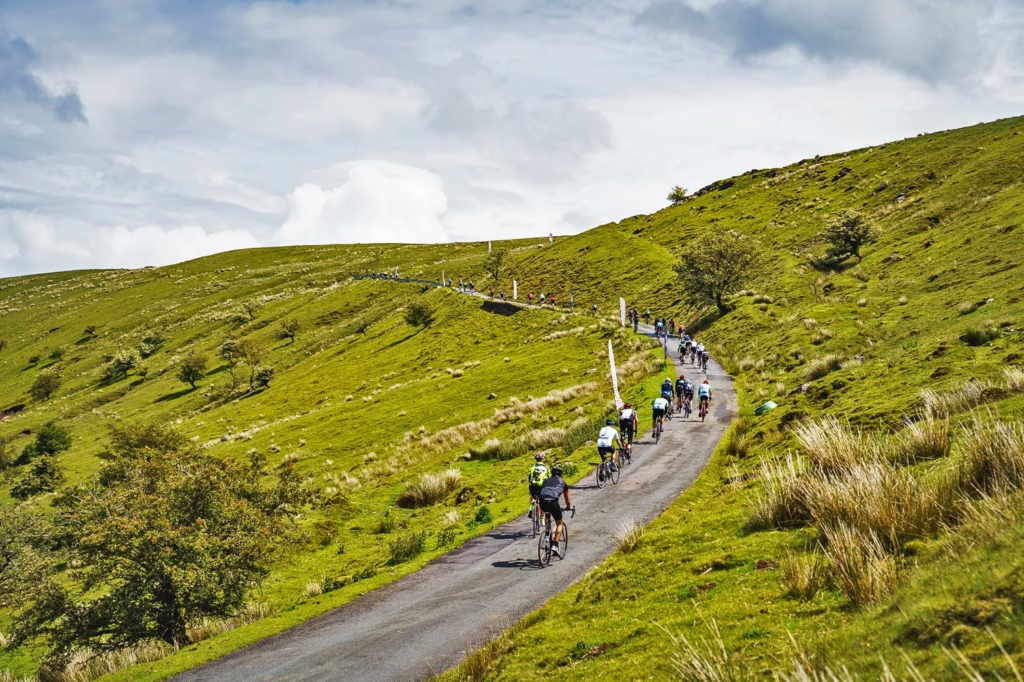
Black Mountain is one of the key climbs on the Gran Fondo route. It is a climb that rewards patience and pacing rather than brute force. By the time riders reach it, the event is already well underway, and the temptation to force the pace can be expensive.
This is where training on longer climbs pays off. Even if you do not have long mountains near home, you can simulate the effort by riding repeated hill reps or sustained low-cadence blocks. The goal is not to sprint up every climb in training. It is to learn how to hold pressure without flooding the legs.
Devil’s Staircase
Devil’s Staircase appears on the Dragon Devil route and is one of the reasons that the longest option sits in a different category. It is steep, famous and unpleasant if you reach it over-geared or underfuelled.
The key is not pride. Use the easiest gear you have, stay smooth and accept that speed is irrelevant. On a climb like Devil’s Staircase, walking because you have blown up is much slower than riding patiently from the bottom.
For Dragon Devil riders, this is a climb to respect, not attack blindly.
How hard is Dragon Ride?
Dragon Ride is hard because it combines climbing with distance. Plenty of UK sportives have hills. Plenty have long routes. Dragon Ride becomes difficult because it keeps combining both across terrain where the weather and road rhythm can make the effort feel heavier than the numbers suggest.
Difficulty by route:
| Route | Difficulty | Why |
|---|---|---|
| Cymru Classic | Moderate to hard | 99km is manageable, but the climbing makes it a proper challenge |
| Medio Fondo | Hard | Long enough for fuelling and pacing mistakes to matter |
| Gran Fondo | Very hard | 222km and over 3,500m of climbing requires strong endurance |
| Dragon Devil | Extremely hard | Nearly 300km with over 4,500m of climbing is a full-day challenge |
For most riders, the Medio Fondo and Gran Fondo are the key decision points. If you can ride 100km comfortably and train consistently, the Medio Fondo is realistic. If you already have several hilly 100-mile rides in your legs, the Gran Fondo becomes a suitable target. If you are unsure whether you can complete the Dragon Devil, that is usually a sign that you should not choose it yet.
The event is also harder because it demands concentration. Long descents, busy groups, feed stops, changing gradients and cut-off times all take mental energy. Dragon Ride is not just about watts per kilo. It is about making good decisions for several hours.

What gearing do you need for Dragon Ride?
Most riders should use compact or semi-compact gearing with a wide-range cassette. A 34-tooth inner chainring with an 11-32 or 11-34 cassette is a sensible setup for many sportive riders, especially on the Medio Fondo, Gran Fondo and Dragon Devil.
The strongest climbers may be comfortable on harder gearing, but Dragon Ride is not the place to prove a point. Low gears protect your legs, especially late in the day. Being able to keep cadence on steep sections is more useful than having a bigger gear for fast roads.
For newer riders, the simple rule is this: if you are debating whether you need an easier gear, you probably do. Steep Welsh climbs after several hours of riding feel very different from short local hills at the start of a training ride.
Disc brakes, good tyres and well-maintained wheels also matter. Descending safely is part of finishing well. Check pads, rotors, tyres, chain and gears before travelling, not on the morning of the event.
How to train for Dragon Ride
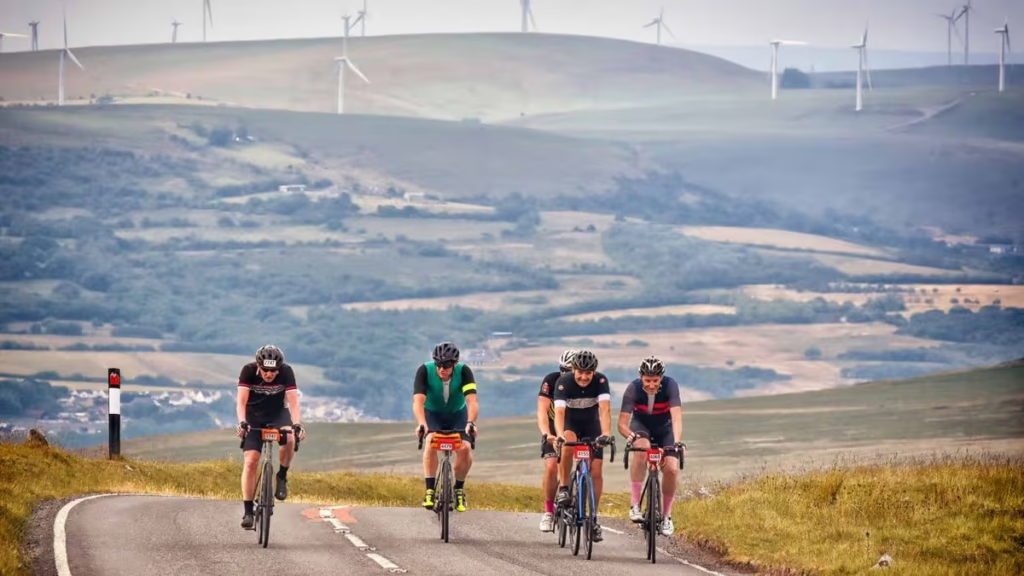
Dragon Ride training should focus on endurance, climbing and repeatability. You are not training for one climb. You are training to climb again and again after hours on the bike.
A good 12-week build should include:
- One long ride each week
- One hill or strength session each week
- One endurance ride at comfortable pace
- One shorter recovery or skills ride
- Regular fuelling practice
- At least one ride in poor weather
- Descending practice if you are not confident downhill
The long ride is the foundation. For the Cymru Classic, build towards 80-100km. For the Medio Fondo, aim to ride 120-140km in training. For the Gran Fondo, you want several rides over 140km and at least one long hilly ride close to six hours. For the Dragon Devil, you need specific long-distance preparation and should already be comfortable beyond 200km.
The hill session does not need to be complicated. Repeated climbs of 5-10 minutes, steady tempo blocks on rolling roads, or low-cadence efforts on moderate gradients can all help. The goal is to build strength without destroying yourself every week.
For riders still building their base, our training plan for your first 100km ride is a useful starting point, while more experienced riders targeting the longer routes should look at our long-distance cycling training guide.
Dragon Ride training by route
Cymru Classic training tips
Cymru Classic riders should focus on being comfortable over 100km with hills. A realistic target is to build to three-hour and four-hour rides, including steady climbing. You do not need extreme volume, but you do need consistency.
Practise eating during rides, even if you think you can complete 100km without much food. Dragon Ride climbing makes fuelling more important, and eating early is easier than rescuing the day later.
If you are still building towards that distance, our training plan for your first 100km ride is a better starting point than trying to jump straight into the longest Dragon Ride options.
Medio Fondo training tips
Medio Fondo riders need more endurance. The route is long enough that a weak training base will show in the final third. Build towards rides of 100-130km, and include hilly routes rather than just flat mileage.
A good weekly pattern is one long weekend ride, one hill session and one steady midweek ride. Add recovery when needed. The goal is to reach the event durable, not exhausted.
This is also the route where many riders discover the difference between being able to ride a distance and being able to fuel it properly. Our guide on how to fuel your rides covers the basics that become important on the longer Dragon Ride routes.
Gran Fondo training tips
Gran Fondo riders need to prepare for time in the saddle. The biggest jump is not only from 153km to 222km. It is the combination of that distance with over 3,500 metres of climbing.
Your training should include long rides where you practise eating every 20-30 minutes, drinking regularly and riding climbs at a pace you can repeat. One big mistake is training hard but never practising event-day fuelling. That leaves riders fit enough to start well, but underprepared to finish strongly.
A Gran Fondo rider should also include back-to-back weekend rides occasionally. A long Saturday followed by an easier Sunday helps build fatigue resistance without needing to replicate the full event distance.
For broader advice on building this kind of endurance, our long-distance cycling training guide is more relevant than a basic 100km plan.
Dragon Devil training tips
Dragon Devil training is closer to ultra-distance preparation. You need to build endurance, climbing strength and comfort with being on the bike for a very long time.
Training should include rides of 180-220km, long hilly days, early starts and fuelling practice under fatigue. You should know what foods you can tolerate after six, eight and ten hours. You should also know how your hands, neck, back and feet respond to long days.
If you are relying on adrenaline to get through the Dragon Devil, the route will probably find you out. The best preparation is boring consistency: long rides, good recovery, tested kit and realistic pacing.
Riders unsure about jumping to this distance should first choose a more manageable event from our best UK sportives to ride in 2026 guide and build towards Dragon Devil later.
How to pace Dragon Ride
The best Dragon Ride pacing strategy is to start easier than you think you need to. That applies to every route, but especially to the Gran Fondo and Dragon Devil.
The event atmosphere can drag riders into overpacing. Groups form, people surge on climbs, and the first hour can feel deceptively easy. The problem is that the route gets heavier later. If you ride the early climbs near threshold, you may pay for it on the final climbs.
A better approach is:
- Ride the first hour calmly
- Keep the early climbs below maximum effort
- Use groups on flatter sections, but do not chase every wheel
- Eat before you feel hungry
- Drink before you feel thirsty
- Use feed stations efficiently, not casually
- Save your hardest effort for the final third
Pacing is not about riding slowly. It is about spending energy where it counts. On Dragon Ride, energy spent too early is almost never repaid.
What to eat and drink during Dragon Ride
Fuelling is one of the biggest factors in whether Dragon Ride feels hard or horrible. The longer routes are too demanding to ride well on instinct alone.
A sensible target for most riders is 60-90g of carbohydrate per hour, depending on what you have practised in training. That can come from bars, gels, bananas, chews, drink mix or normal food. The exact mix is personal, but the routine must be tested before the event.
Do not wait until the first major climb to start eating. Begin in the first 30 minutes and keep the rhythm steady. On climbs, eating can be harder, so use easier sections, descents and feed stops to stay on top of it.
Hydration needs will depend on weather, but riders should plan for regular drinking from the start. Electrolytes can be useful, especially if the day is warm or you sweat heavily.
For newer riders, our guide on how to fuel your rides covers the basic principles. Dragon Ride is exactly the kind of event where those habits matter.
What kit should you take?
Dragon Ride is a June event, but Welsh weather can still change quickly. Riders should prepare for warm valleys, cooler high roads, wind, rain and fast descents.
Useful kit includes:
- Lightweight waterproof or windproof layer
- Gilet
- Arm warmers
- Two spare tubes
- Tyre levers
- Pump or CO2 inflator
- Multi-tool
- Chain quick link
- Tested lights if you are on a long route
- Enough food to avoid relying completely on feed stations
- Fully charged bike computer
- Correct GPX route loaded
The longer your route, the more self-sufficient you need to be. The event has support, feed stations and mechanics, but that should not be your first line of defence. You should be able to fix a puncture, manage clothing changes and keep eating even if a feed station is busy.
Wet roads and exposed descents are realistic possibilities, so our wet-weather riding tips are worth reading before travelling. Newer riders should also check our first sportive checklist before packing.
Is Dragon Ride suitable for beginners?
Dragon Ride can be suitable for beginners, but only if they choose the right route and train properly. The Cymru Classic is the most beginner-friendly option, but it is still a hilly 99km ride. It is not a first ride after buying a bike.
A beginner targeting Dragon Ride should first be comfortable riding 60-80km, then build towards 100km with hills. They should also know how to use gears, descend safely, ride in a group, eat on the bike and deal with small mechanical problems.
The Medio Fondo is a stretch goal for a newer rider with several months of consistent training. The Gran Fondo and Dragon Devil are not beginner routes.
If you are new to the sport, start with our complete beginner’s guide to road cycling and first sportive checklist before choosing a distance. Riders returning to the sport later in life may also find our guide on how to start road cycling at 40 without wrecking yourself useful.
Dragon Ride versus other UK sportives
Dragon Ride sits near the top of the UK sportive difficulty scale. It is not quite the same kind of challenge as the Fred Whitton, which is shorter but brutally concentrated in the Lake District. Dragon Ride is more about long-distance climbing across South Wales, with route options that allow riders to choose how deep into the difficulty they want to go.
Compared with Etape Loch Ness or Etape Caledonia, Dragon Ride is much harder. Those Scottish events have closed-road appeal and strong scenery, but they are more accessible for a wider field. Compared with Dartmoor Classic, Dragon Ride has bigger mountain identity and more climbing weight on the longer routes.
The best comparison is probably with other major climbing sportives such as Fred Whitton, Struggle Dales and Etape du Dales. Dragon Ride belongs in that group, especially for riders choosing the Gran Fondo or Dragon Devil.
For more comparisons, see our guide to the best UK sportives to ride in 2026 and our Fred Whitton Challenge complete guide.
-
 Photo Credit: Canyon SRAM (supplied media release)
 -
 Photo Credit: Park Tool



Common mistakes to avoid
The biggest Dragon Ride mistake is choosing the wrong route. Ambition is good, but pride can make the day miserable. A well-ridden Medio Fondo is better than a survival crawl through a Gran Fondo you were not ready for.
Other common mistakes include:
- Starting too fast
- Riding climbs above sustainable effort
- Ignoring food until the first feed stop
- Carrying too little clothing
- Using untested nutrition
- Using over-ambitious gearing
- Spending too long at feed stations
- Forgetting that descents require concentration
- Not checking the bike properly before travelling
Dragon Ride rewards preparation. It does not need to be feared, but it does need to be respected.
Dragon Ride difficulty verdict
Dragon Ride is one of the best sportives in the UK because it offers a real sense of scale. The event has a strong base at Margam Park, serious South Wales climbing and route options that allow riders to choose anything from a hard 99km challenge to an extreme 298km day.
The Cymru Classic is the best route for riders stepping into the event for the first time. The Medio Fondo is the most balanced option for regular cyclists who want a serious but manageable climbing challenge. The Gran Fondo is the classic Dragon Ride test. The Dragon Devil is a full endurance commitment and should be treated as one of the hardest one-day sportive options in Britain.
The 2026 reversed route adds extra interest. Returning riders cannot simply repeat old pacing plans, and new riders get a version of the event that asks for technical confidence as well as fitness. Devil’s Elbow returning as a timed climb gives the day another focal point, but the real challenge is still the same: ride sensibly, fuel properly, climb patiently and keep enough in reserve for the final hours.
Dragon Ride is hard, but that is why it matters. It is a sportive that forces you to prepare, makes you think while riding, and gives the finish line real weight.

