
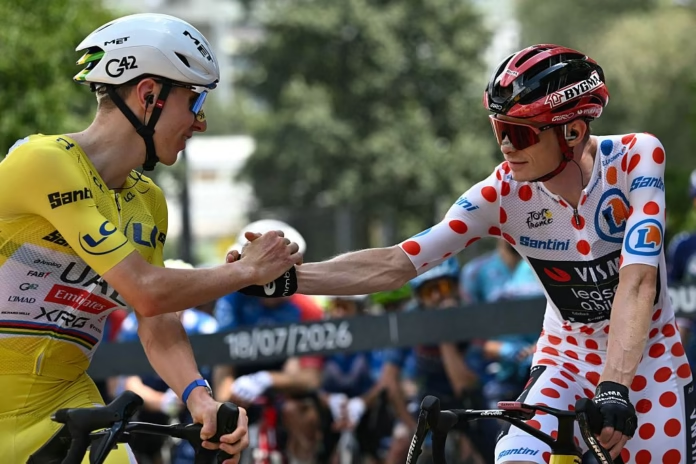
Tadej Pogačar and Jonas Vingegaard were both woken during the night for unannounced anti-doping tests before Stage 15 of the 2026 Tour de France.
Vingegaard said testers arrived at his hotel room at approximately 2am, while Pogačar was tested at around 5am. Both riders supported the need for strict anti-doping controls but criticised the timing after their sleep was disrupted before one of the hardest mountain stages of the race.
Pogačar said he managed only four hours of sleep and could not fall asleep again after the control. Vingegaard also said he had not slept well following the early-hours visit.
The tests were not a punishment, nor did they mean either rider had failed a previous control. They were unannounced checks carried out under anti-doping rules that allow elite athletes to be tested at any time, including during the Tour de France.
The controversy was about when the tests happened rather than whether they should have happened.
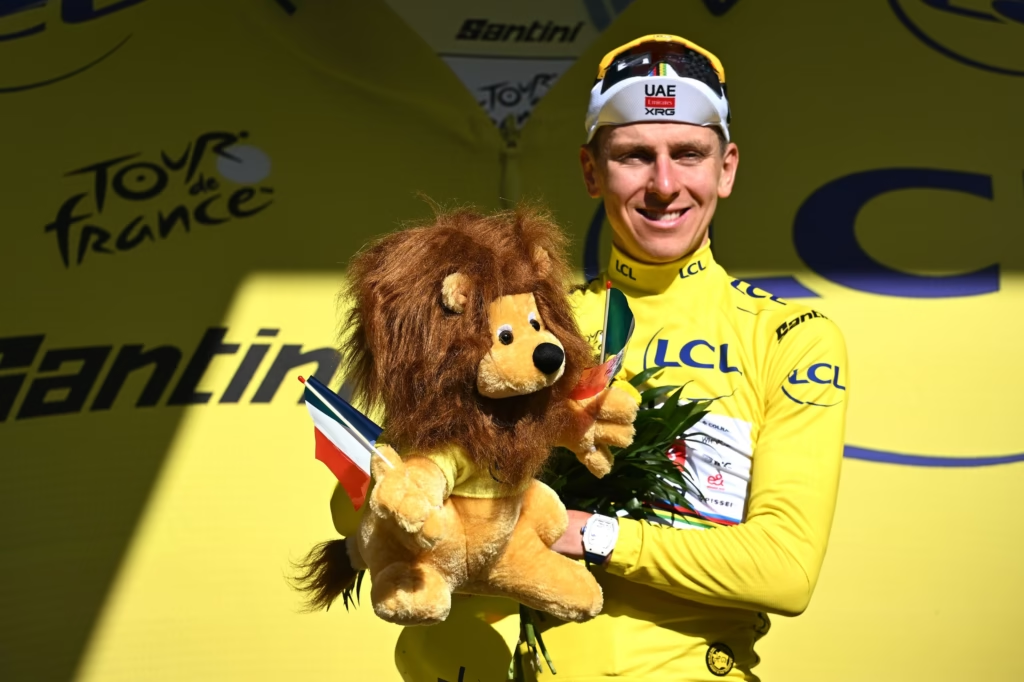 Photo Credit: Getty
Why was Pogačar tested at 5am?
Pogačar was subjected to an unannounced anti-doping control at approximately 5am on the morning of Stage 15.
A UAE Team Emirates-XRG spokesperson confirmed the time of the test. Pogačar later said the visit interrupted his sleep and left him unable to return to bed properly before the 183.9km mountain stage to Plateau de Solaison.
The yellow jersey had won Stage 14 at Le Markstein the previous afternoon and faced another demanding day containing almost 4,000 metres of climbing.
His complaint was therefore not that he had been selected for testing. As the Tour leader and winner of another mountain stage, Pogačar would expect to be tested regularly.
The issue was the decision to conduct the control early enough to affect his recovery before the Stage 15 summit finish at Plateau de Solaison.
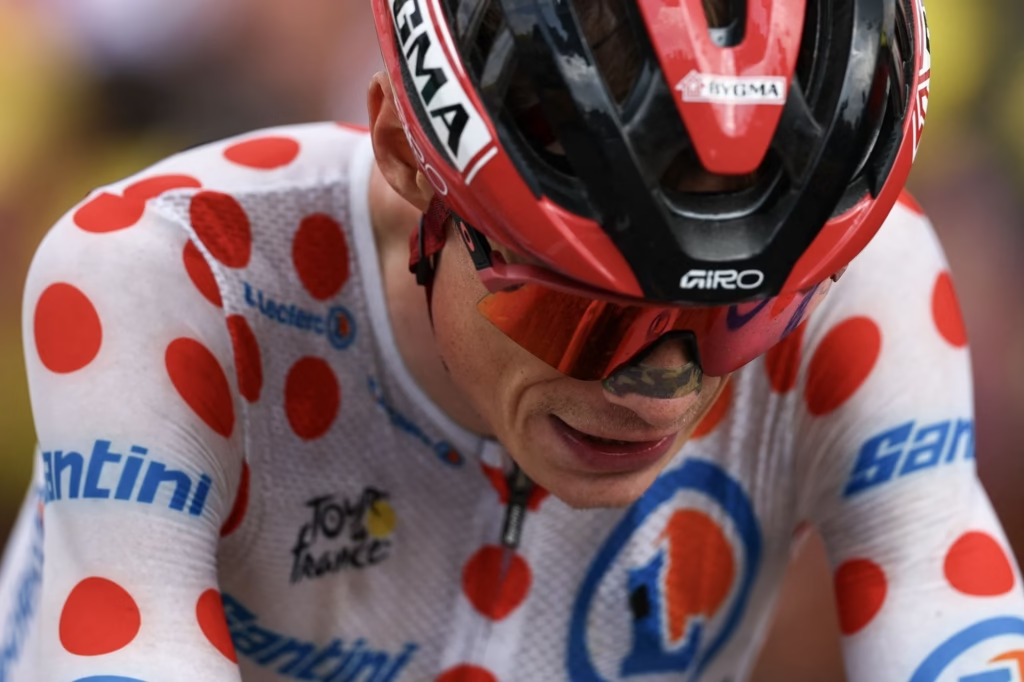 Photo Credit: Getty
Was Vingegaard tested at 2am?
Vingegaard confirmed that anti-doping officials arrived at his hotel room at approximately 2am.
The Danish rider said he supported anti-doping testing but questioned why the control needed to take place in the middle of the night, particularly before a major mountain stage.
Vingegaard began Stage 15 second overall, 4:30 behind Pogačar. The route finished on Plateau de Solaison after the steep Col de la Croisette and represented one of his remaining opportunities to place the yellow jersey under pressure before the final week.
Sleep and recovery are central parts of Grand Tour performance. Interrupting either of the two leading riders at 2am or 5am naturally created concerns about whether the test could influence the sporting contest.
Vingegaard said he still felt physically capable of racing, but admitted that his night had not been ideal.
The timing was especially significant because Vingegaard had already reached the point where simply following Pogačar was no longer enough. Our analysis of what Jonas Vingegaard needs to do to beat Tadej Pogačar explains why recovery and repeated mountain pressure are central to any possible comeback.
Can anti-doping testers wake riders during the night?
Yes. Elite riders can be subjected to unannounced anti-doping controls during competition and outside it.
Anti-doping rules allow athletes to be tested at any time and in any location. Testing can involve blood, urine or both, depending on the objectives of the control.
Night-time controls between 11pm and 6am have been permitted since 2016. Such tests remain unusual, especially during a Grand Tour, but they are allowed within the anti-doping framework.
Unannounced testing is important because advance warning could allow an athlete to alter their behaviour, manipulate a sample or avoid detection.
The ability to conduct a control outside normal waking hours can therefore form part of a targeted testing strategy.
That does not mean testers routinely wake Tour riders every night. Most controls take place after stages, in the morning or during more conventional hours.
The Pogačar and Vingegaard cases attracted attention precisely because tests at 2am and 5am are uncommon.
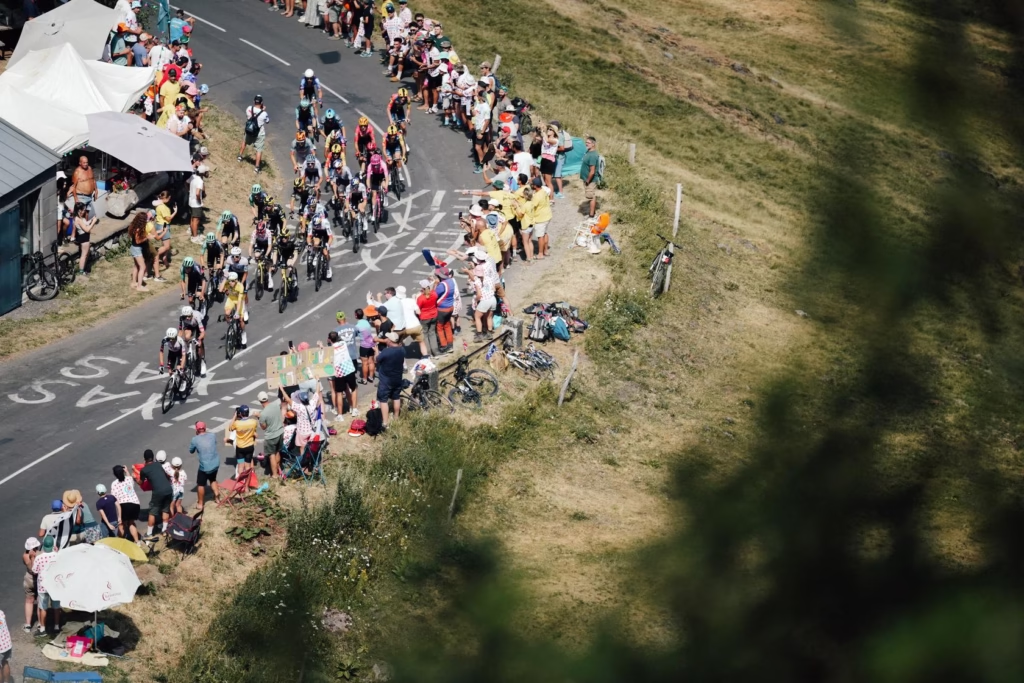 Photo Credit: A.S.O./Thomas Maheux
Why are Tour de France riders tested so often?
The Tour de France is one of the most heavily scrutinised events in world sport.
Cycling’s history of organised doping has created a permanent demand for visible, independent and extensive testing. Leading riders, stage winners and jersey holders can all expect repeated controls during the race.
The consequences of inadequate oversight were demonstrated most dramatically by episodes such as the Festina Affair at the 1998 Tour de France, which exposed the scale of organised doping within professional cycling.
Testing is not limited to riders who win.
Athletes may be selected because of:
- A stage victory or jersey position
- Unusual biological passport data
- Intelligence received by anti-doping authorities
- A targeted testing plan
- Random selection
- A particularly notable performance
Samples can also be stored and retested in future when improved detection methods become available.
The principle is straightforward. A rider should not be able to predict exactly when, where or how often they will be tested.
Does being tested mean Pogačar or Vingegaard was suspected of doping?
Not necessarily.
Being tested is not evidence of wrongdoing. Pogačar and Vingegaard are among the most prominent riders in the sport and are routinely subjected to controls because of their results, ranking and position in the Tour.
The leading riders can expect greater scrutiny than most of the peloton.
Pogačar held the yellow jersey and had just won another mountain stage. Vingegaard was second overall and remained his principal rival. Testing both riders before another decisive stage fits the wider aim of ensuring that the Tour’s most important performances are closely monitored.
Anti-doping organisations do not normally publish the exact reason why a particular rider has been selected for an unannounced test.
It is therefore not possible to conclude that the timing was linked to a specific suspicion.
The two riders were also tested within the wider context of a Tour that had already produced several major Pogačar performances, including his long-range victory over the Tourmalet on Stage 6.
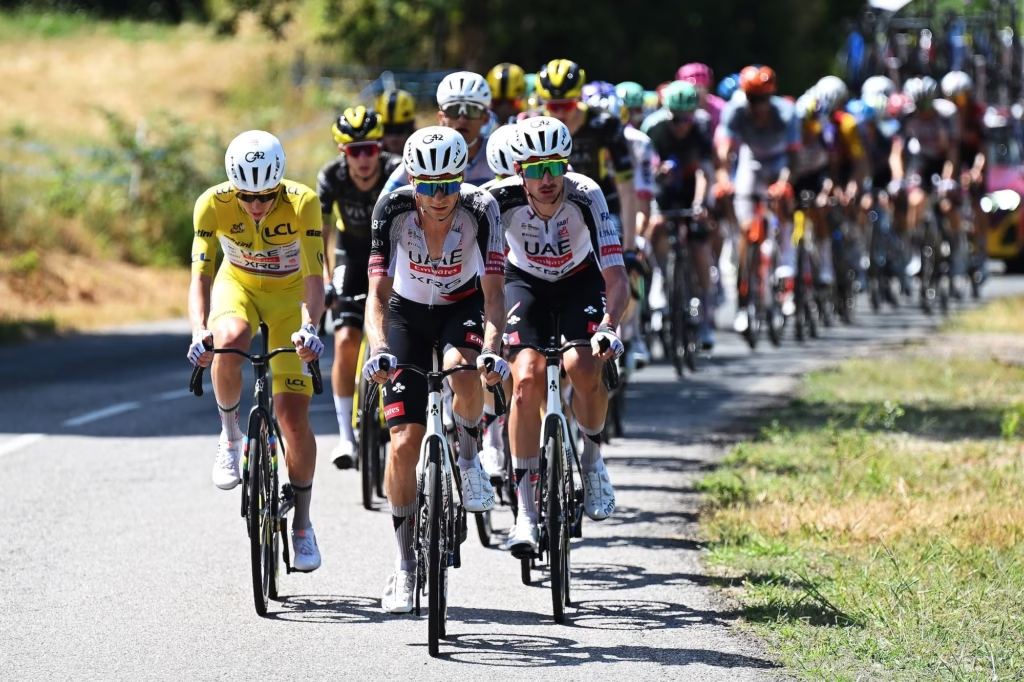
Why test riders during the night?
Night-time testing can make controls less predictable.
Some prohibited substances or methods may have short detection windows, meaning the timing of a sample can matter. Testing only after stages or at the same time every morning could create a pattern that riders or support staff might attempt to exploit.
A surprise control during the night reduces that predictability.
However, anti-doping authorities must also consider proportionality. Waking a rider during a Grand Tour can interfere with sleep, recovery and performance.
That is why the debate is more complicated than simply being for or against testing.
Pogačar and Vingegaard did not argue that they should be exempt from controls. Their criticism was that testing could have been conducted at a time that preserved the integrity of the anti-doping process without disrupting their preparation for Stage 15.
Can a doping control affect Tour de France performance?
The control itself is unlikely to have a meaningful physical effect unless a significant blood sample is taken, and anti-doping blood collection uses carefully controlled volumes.
The greater concern is sleep disruption.
Grand Tour riders compete for three weeks with limited recovery between stages. Sleep supports muscle repair, immune function, cognitive performance and the ability to process fatigue.
Recovery is already complicated by podium ceremonies, media duties, anti-doping controls, transfers and late arrivals at team hotels. Our guide to how Tour de France riders recover between stages explains why even small interruptions can matter across a three-week race.
One poor night does not automatically destroy a rider’s performance. Elite athletes can still race successfully after interrupted sleep, particularly when they have strong recovery systems and carefully managed nutrition.
However, a control at 2am may be more disruptive than one at 5am because it can interrupt deeper parts of the sleep cycle and leave more time before the rider normally wakes.
Vingegaard’s test came only a few hours after he would have gone to bed following Stage 14. Pogačar’s control occurred closer to morning, but he said he was unable to return to sleep.
The potential impact may be small, but on a climb averaging 9%, even a small reduction in recovery can matter.
Was the timing fair?
The answer depends on how anti-doping authorities balance unpredictability with athlete welfare.
Testing both Pogačar and Vingegaard meant neither of the Tour’s leading riders was uniquely disadvantaged. That reduces concerns that the control unfairly targeted one side of the yellow jersey contest.
However, the tests did not occur at the same time.
Vingegaard was reportedly woken at 2am, while Pogačar’s control happened at 5am. The level of disruption may therefore have been different.
There is also a wider question about whether a test designed to protect sporting fairness should itself risk influencing performance.
The authorities need enough freedom to catch anyone attempting to use prohibited substances. Riders also need confidence that testing procedures will not unnecessarily compromise their health or recovery.
Both principles can be valid at the same time.
The issue became particularly sensitive because the tests came before one of the hardest mountain stages of the 2026 Tour de France.
-
 Photo Credit: A.S.O./Gaëtan Flamme
Why did the story become so controversial?
The timing brought together several sensitive subjects.
Pogačar and Vingegaard are the two leading riders of their generation. Their performances are closely analysed, and both have repeatedly said they understand why cycling fans remain sceptical because of the sport’s past.
Anti-doping testing is therefore essential to maintaining confidence in their results.
At the same time, Stage 15 was one of the most important mountain stages of the Tour. Pogačar held a significant lead, while Vingegaard needed to attack if he wanted to revive the yellow jersey contest.
The Stage 15 live viewing guide highlighted the Col de la Croisette and Plateau de Solaison as the decisive points of a stage containing almost 3,950 metres of climbing.
Any factor capable of affecting sleep immediately became part of the sporting story.
The tests also raised a simple question for casual viewers: if riders are required to prioritise recovery, why would officials deliberately wake them during the night?
The answer is that unpredictability is one of the strengths of an anti-doping programme. The criticism is that unpredictability should not become unnecessary disruption.
Why were Pogačar and Vingegaard woken for anti-doping tests?
They were woken because elite riders can be subjected to unannounced anti-doping controls at any time, including during permitted night-time testing hours.
Pogačar was tested at approximately 5am and Vingegaard at around 2am before Stage 15. Neither rider objected to being tested, but both questioned why the controls had to interrupt their sleep before a major mountain stage.
The tests did not indicate that either rider had returned a positive result or was accused of breaking anti-doping rules.
They were part of the extensive scrutiny surrounding the Tour de France and its leading competitors.
The debate is therefore not about whether Pogačar and Vingegaard should face anti-doping controls. They should, and both riders agreed.
The real question is whether the same level of testing could have been achieved without waking the Tour’s two leading riders in the middle of the night.

