
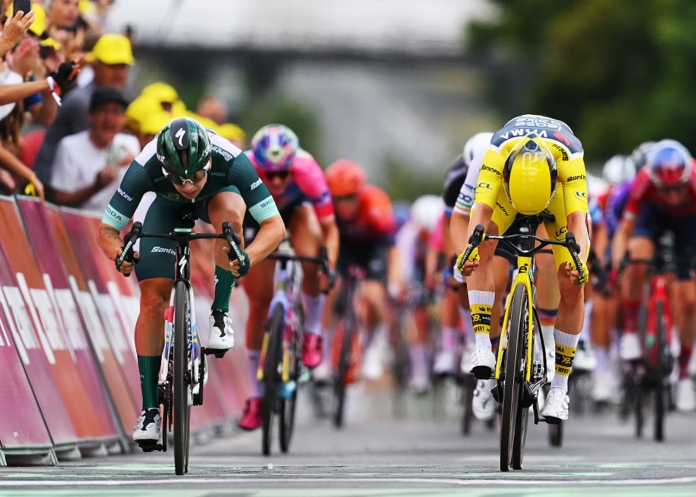
The Tour de France Femmes 2026 gives the sprinters several chances, but very few completely straightforward days.
Across nine stages from Lausanne to Nice, three are officially classified as flat. That sounds generous for the fast finishers, yet the profiles only tell part of the story. Stage 1 in Lausanne contains enough climbing to make a full bunch sprint far from guaranteed, while Stage 8 to Nice comes immediately after Mont Ventoux and over the longest distance of the race.
The clearest opportunity is Stage 2 to Geneva. Beyond that, the route increasingly rewards riders who can sprint after climbing rather than specialists dependent on perfectly flat roads.
That is good news for Lorena Wiebes, who combines the best outright speed in the expected field with enough climbing ability to survive stages that remove other sprinters. Elisa Balsamo should be particularly dangerous when a full peloton reaches the finish, while Marianne Vos, Lotte Kopecky and Kim Le Court-Pienaar become more relevant as the terrain gets harder.
The full stage-by-stage picture is covered in our Tour de France Femmes 2026 route guide.
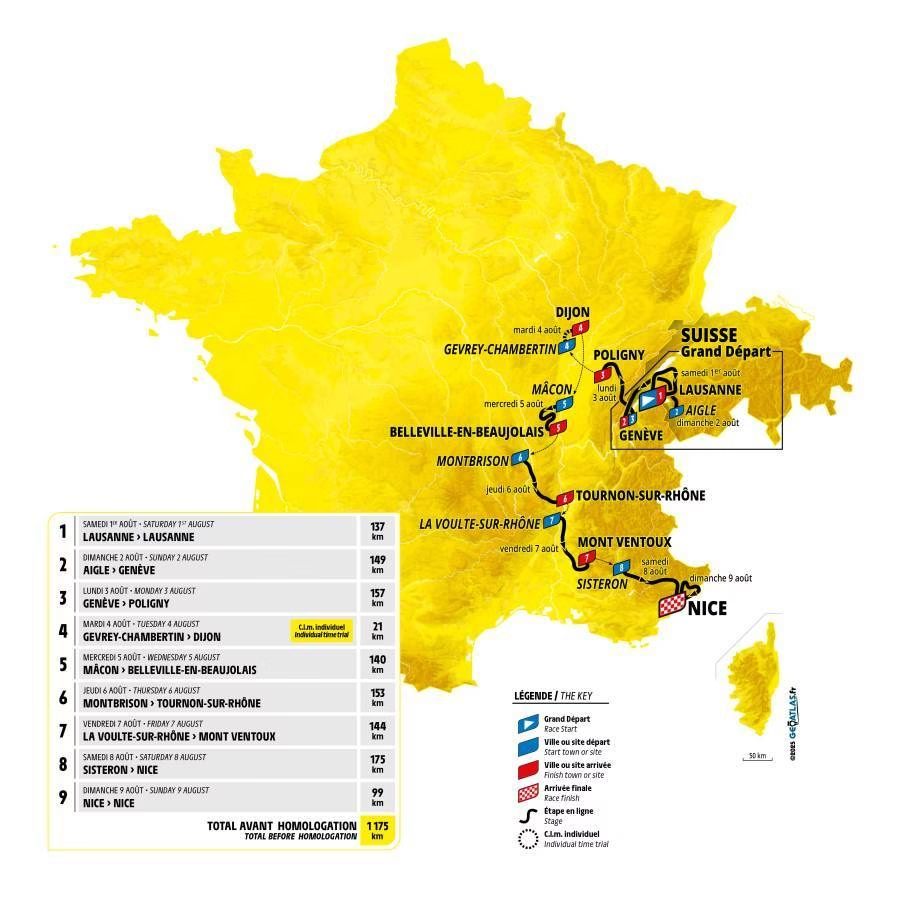
How many sprint stages are there at the Tour de France Femmes 2026?
There are three officially flat stages in the 2026 Tour de France Femmes: Stages 1, 2 and 8.
They are not equal sprint opportunities.
Stage 2 to Geneva is the closest thing to a conventional bunch-sprint day. Stage 1 around Lausanne is officially flat but has a more selective finale, while Stage 8 from Sisteron to Nice comes after Mont Ventoux and covers 175km, making fatigue and breakaways much more significant.
Stages 3, 5 and 6 are officially hilly. Some of them could still produce reduced sprints, but teams should treat those as extra opportunities rather than guaranteed days for the fast finishers.
That distinction matters when assessing the green jersey too. The three flat stages award the largest points haul at the finish, but riders capable of scoring on the harder days can build an advantage beyond the obvious sprint stages. The full scoring system is explained in our Tour de France Femmes 2026 jersey guide.
Stage 1: Lausanne to Lausanne
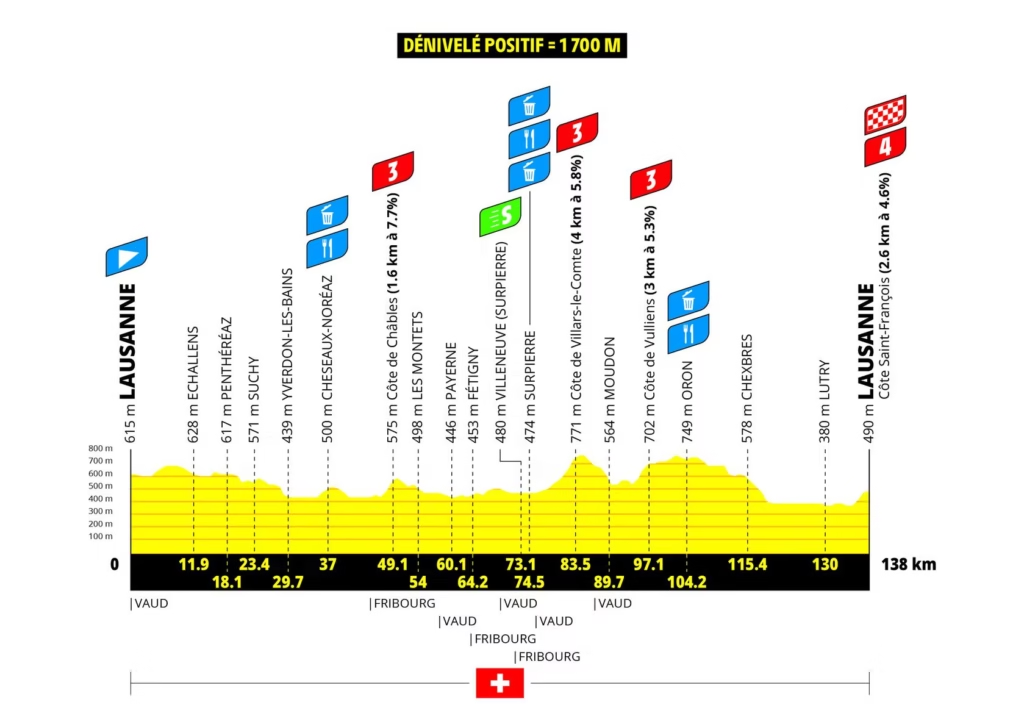
The Tour starts with a stage that immediately tests the definition of a sprinter.
Stage 1 starts and finishes in Lausanne over 137km, but the roads around Lake Geneva are not naturally suited to a completely flat opening day. The late terrain towards Lausanne gives stronger riders an opportunity to put the pure sprinters under pressure before the finish.
A bunch sprint remains possible if the major sprint teams control the race, but this is much less straightforward than Stage 2.
That makes Wiebes especially dangerous. She does not need a perfectly flat stage to remain one of the fastest riders at the finish, which means teams trying to eliminate her may discover that the pace required to do so also removes many of their own sprint options.
Vos and Kopecky become more significant if the race is selective enough to reduce the group without producing major gaps.
The difficulty of the opening weekend is covered in more detail in our Tour de France Femmes 2026 Grand Départ guide.
Stage 1 could also put a sprinter into yellow
The opening sprint has more at stake than a normal stage victory.
There is no existing general classification before Stage 1, so the stage winner has a direct route into the first yellow jersey, particularly with the ten-second finish bonus available.
That gives Wiebes, Balsamo and the other fast finishers a reason to fight for every second rather than thinking only about the stage.
A rider who survives the Lausanne finale and wins can leave the opening day with both a stage victory and a useful GC advantage.
It may be the best chance for a sprinter to wear yellow during the 2026 Tour.
Stage 2: Aigle to Geneva
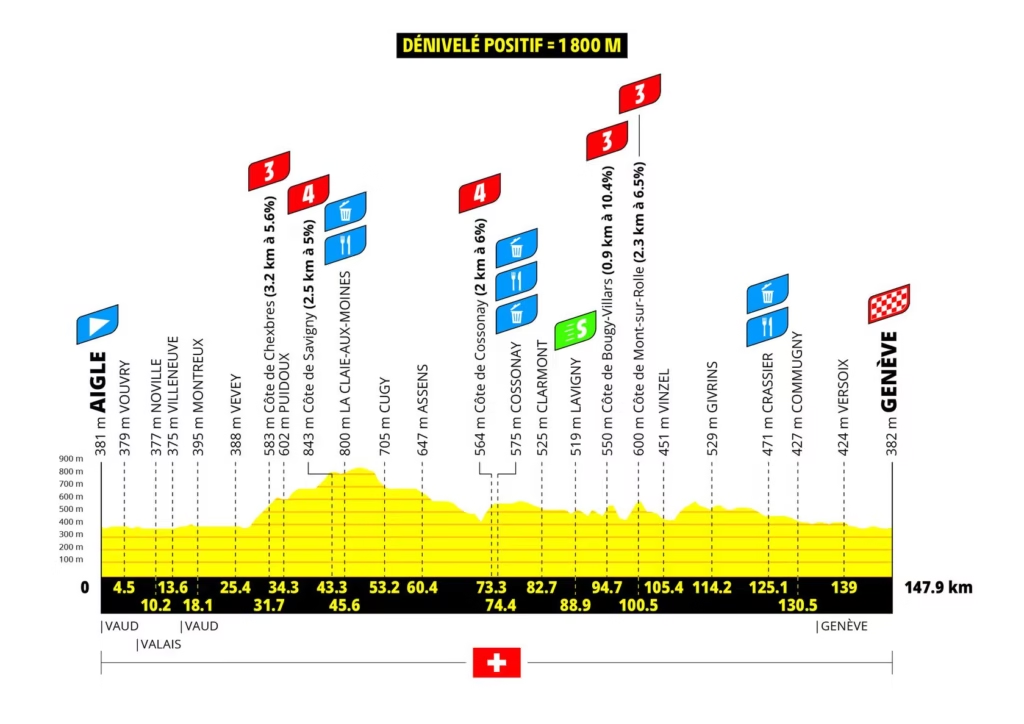
Stage 2 is the one the pure sprinters will have circled first.
The 149km route from Aigle to Geneva is officially flat and offers the clearest opportunity for a full peloton to reach the final kilometres together.
Compared with Lausanne, there are fewer obvious places to make the race selective enough to remove the fastest riders. That should give the sprint teams a relatively conventional task: allow a manageable breakaway to go, control its advantage and then begin the positioning battle on the approach to Geneva.
This is also the day where a full lead-out should matter most.
Balsamo is particularly dangerous in that scenario because Lidl-Trek can build the race around delivering her into a conventional sprint, while Wiebes remains the rider everyone ultimately has to beat.
Our Tour de France Femmes 2026 riders to watch guide ranks Wiebes as the leading sprint favourite, with Balsamo the most obvious challenger from a full bunch.
Why Geneva is the pure sprinters’ best chance
There is a difference between a stage that can finish in a sprint and one where the sprint teams should expect to control the race.
Geneva falls into the second category.
The flatter profile means more domestiques should survive into the finale, which allows teams to build proper lead-outs rather than asking their sprinter to improvise after a hard day.
That matters because modern women’s sprint finishes are increasingly decided long before the final 200 metres. Teams begin fighting for position several kilometres out, keeping the pace high enough that moving forward becomes increasingly difficult.
Our feature on why women’s cycling sprint finishes are getting faster looks at how stronger lead-outs, deeper teams and higher sustained speeds have changed the way these finales develop.
If the 2026 Tour produces one textbook bunch sprint, Geneva is the obvious candidate.
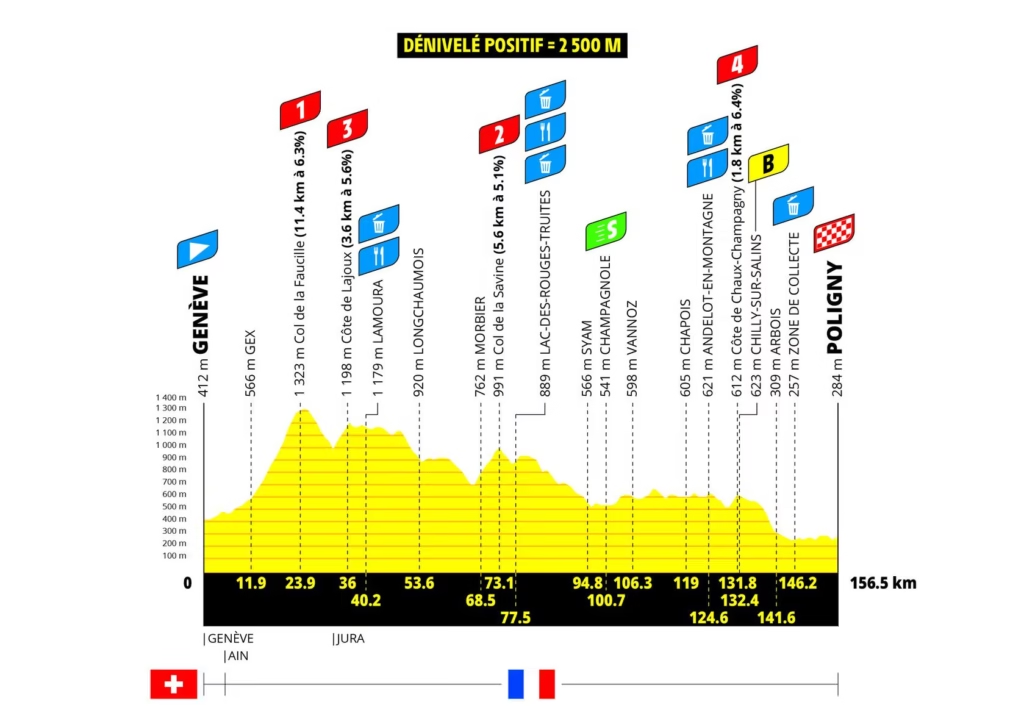
Stage 3: Geneva to Poligny
Stage 3 is where the race starts moving away from conventional sprinting.
The 157km route to Poligny is officially hilly and takes the peloton into the Jura. That gives attackers more opportunities and makes it harder for sprint teams to control the entire stage.
A pure sprinter can survive one manageable climb. The difficulty comes when repeated accelerations begin to accumulate and other teams deliberately make the race hard.
For Wiebes, that still may not be enough to remove her.
She is strong enough over short climbs to remain a realistic stage contender, which is why Stage 3 appears among her potential opportunities in our 2026 riders to watch guide.
The more selective the stage becomes, the more the sprint hierarchy changes. Vos and Kopecky benefit from a harder race, while Balsamo remains a threat if enough of the peloton reforms before the finish.
Could Stage 3 finish in a reduced sprint?
Yes.
A hilly classification does not guarantee that the race breaks apart completely.
If the decisive climbs come far enough from the finish, dropped riders can return. If teams with strong fast finishers commit to the chase, a reduced peloton can reform.
The key question is who survives.
A full bunch sprint in Geneva could contain almost every recognised sprinter. A reduced finish in Poligny may contain Wiebes, Vos, Kopecky and other Classics riders while some of the pure speed specialists have already disappeared.
That can make Wiebes even more difficult to beat. She retains top-end sprint speed after a stage hard enough to reduce the number of riders capable of challenging her.
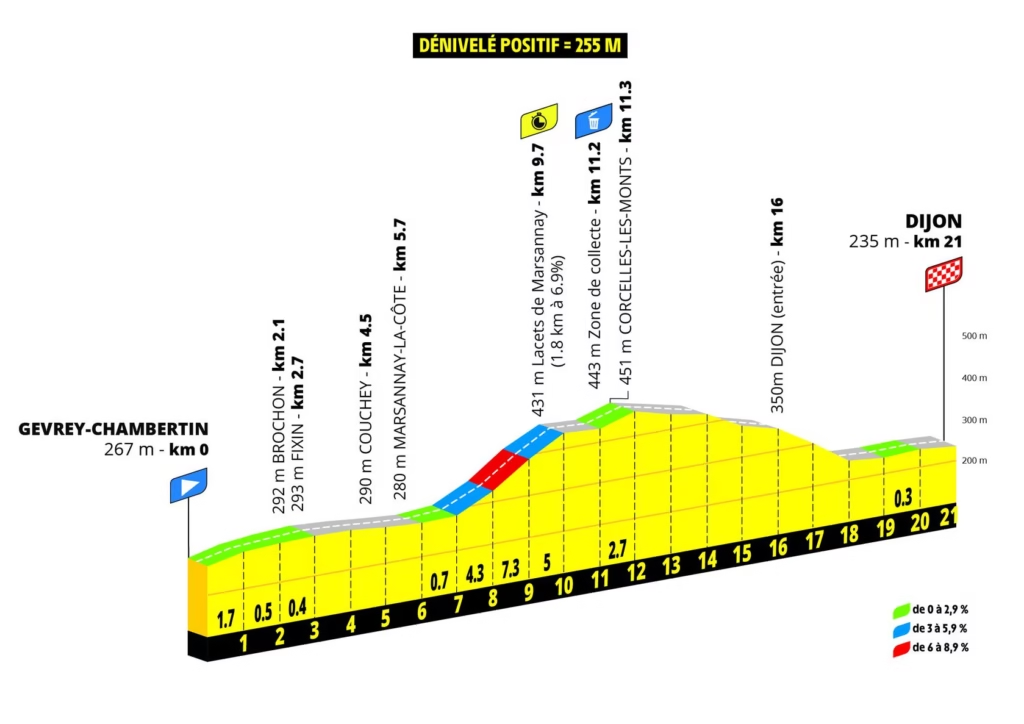
Stage 4: Gevrey-Chambertin to Dijon
Stage 4 offers the sprinters no opportunity at all.
The 21km individual time trial into Dijon is a GC stage where riders compete separately against the clock.
For the fast finishers, the objective is simply to get through the day efficiently while avoiding unnecessary fatigue.
They will not be racing Marlen Reusser, Demi Vollering or the other GC riders for the stage win. Their more important concern is what comes afterwards, with several hilly stages providing possible opportunities for versatile fast finishers before the race reaches Ventoux.
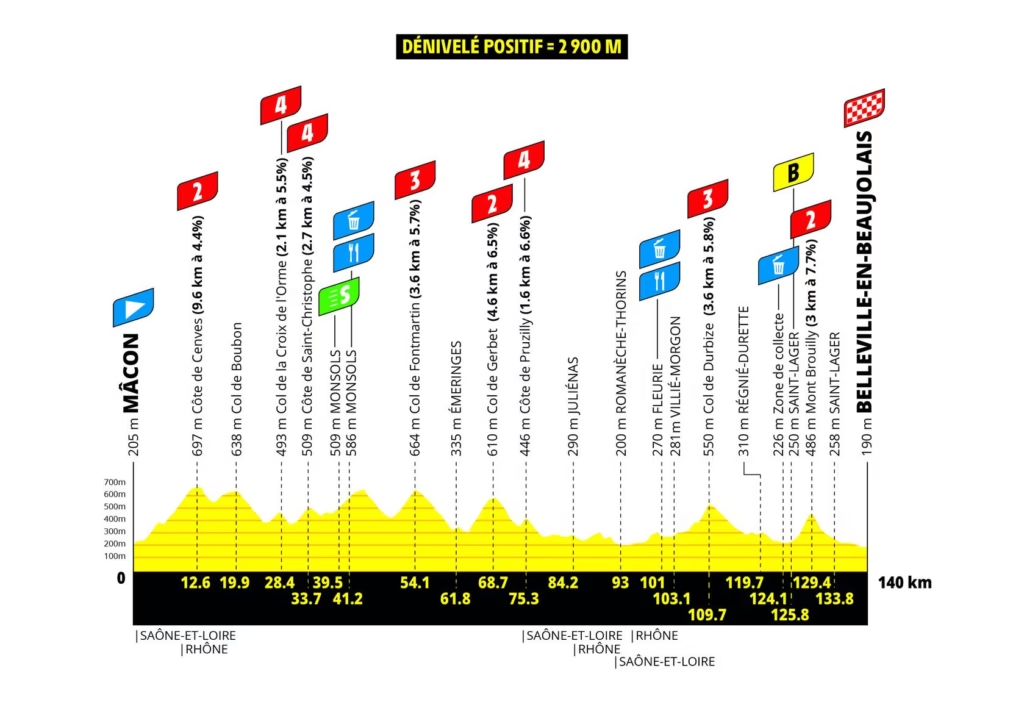
Stage 5: Macon to Belleville-en-Beaujolais
Stage 5 is officially hilly and looks more like an opportunity for puncheurs and breakaway riders than a conventional sprint.
The Beaujolais terrain contains enough repeated climbing to put the heavier sprinters under pressure, particularly if teams with stage ambitions begin attacking early.
The problem is cumulative rather than necessarily one decisive ascent.
Each climb costs energy. Each acceleration gives rival teams another opportunity to increase the pressure. By the time the race reaches the finish, the pure sprinters may either have been dropped or lack the freshness required to produce their normal speed.
That said, this is exactly the sort of stage where the strongest all-round fast finishers can still become relevant.
Stage 5 could suit the tougher sprinters
If the race reaches Belleville-en-Beaujolais with a reduced group rather than a solo attacker or breakaway, Wiebes, Vos and Kopecky become obvious contenders.
Vos in particular benefits when the sprint becomes harder.
A completely flat drag race against Wiebes is not necessarily her best scenario. Add climbing, fatigue and tactical uncertainty and the gap in pure speed becomes less important.
Wiebes has increasingly developed the same strength. She is still the fastest rider in a normal sprint but can also survive enough climbing to remain involved after many rivals disappear.
Stage 5 therefore looks less like a sprint stage and more like a chance for sprinters who can race like Classics riders.
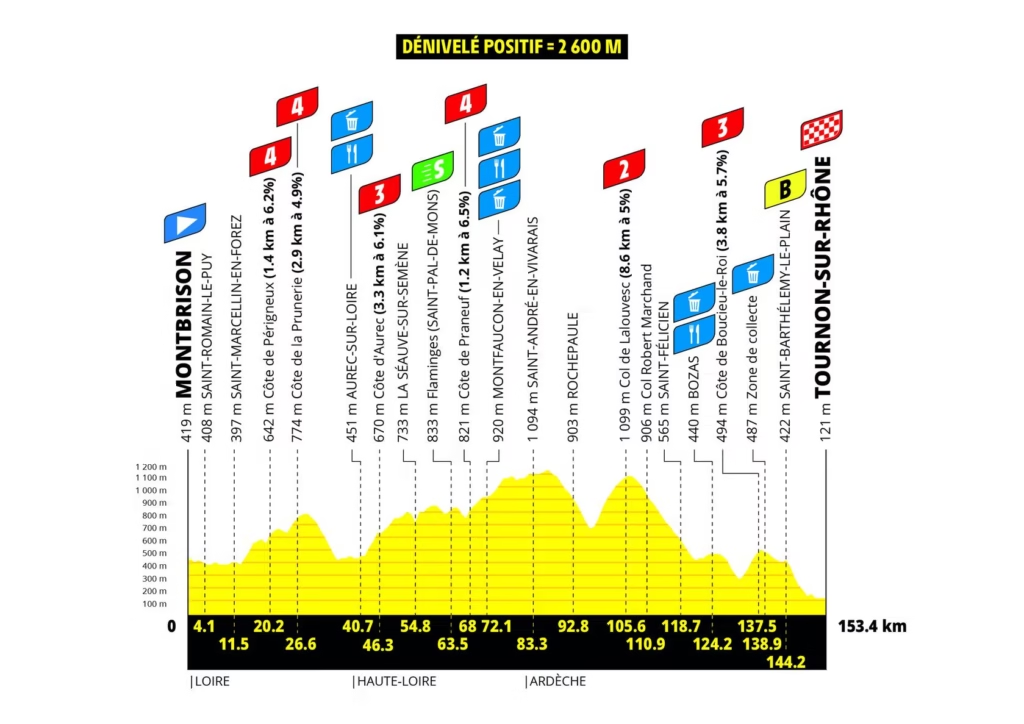
Stage 6: Montbrison to Tournon-sur-Rhône
Stage 6 moves the balance further towards attackers.
The 153km route is officially hilly and sits immediately before the Mont Ventoux summit finish, which creates an unusual tactical situation.
GC teams are unlikely to want to spend unnecessary energy controlling the entire stage when they know Ventoux comes the following day. At the same time, breakaway specialists know their opportunities will become much more limited once the race reaches the high mountains.
That should encourage aggressive racing.
A reduced sprint is still possible if the break is caught and the final climbs fail to create separation, but this is not a stage the pure sprinters can reasonably build their Tour around.
For Wiebes or Vos, it is a bonus opportunity. For more conventional fast finishers, simply remaining with the front group may already be difficult.
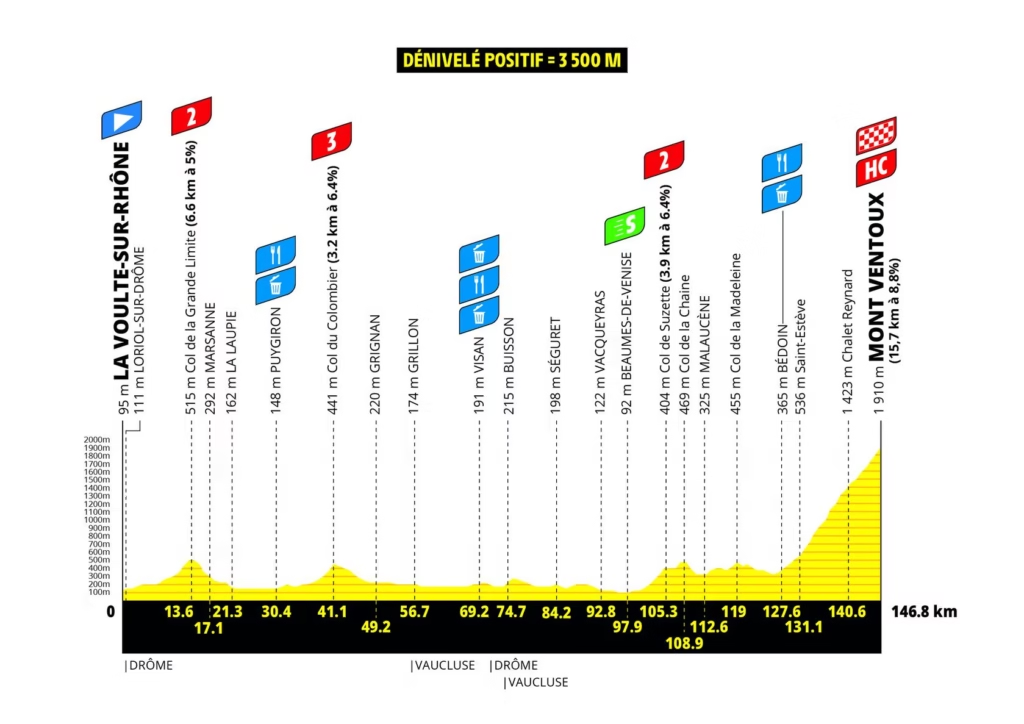
Stage 7 to Mont Ventoux is about survival
Stage 7 is where the sprinters stop thinking about winning entirely.
The 144km stage finishes on Mont Ventoux and should become the biggest single climbing test of the race.
For the sprint specialists, the objective is to reach the summit inside the time limit.
They are likely to form a gruppetto with other non-climbers and pace the ascent according to the calculated cut rather than the riders racing for yellow at the front.
That makes Stage 7 enormously important to the sprint competition despite the fast finishers having almost no chance of winning it.
A rider who misses the time limit cannot start Stage 8.
Our Tour de France Femmes 2026 Mont Ventoux guide explains why the summit finish should be the defining mountain test of the race.
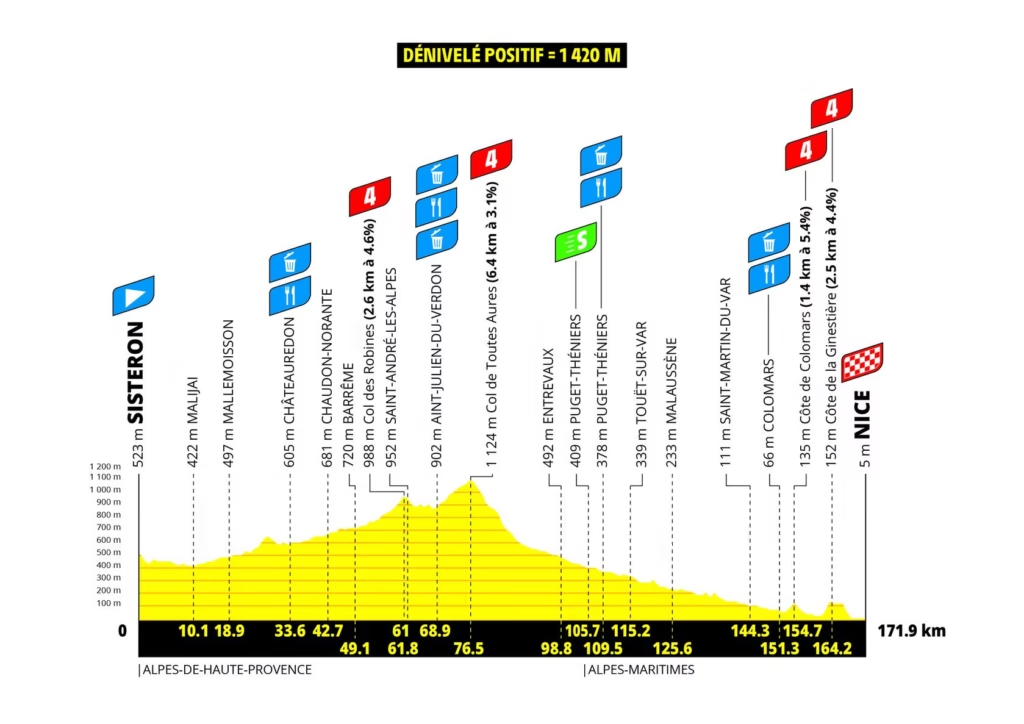
Stage 8: Sisteron to Nice
If the sprinters survive Ventoux, Stage 8 offers the reward.
The 175km route from Sisteron to Nice is officially flat and is the third major sprint opportunity of the race.
It is also the longest stage of the 2026 Tour and comes immediately after the queen stage, which makes it very different from Geneva.
By this point, the peloton will be tired. Sprint trains may have lost riders through crashes, illness or the time limit. GC teams may have little interest in helping chase a breakaway with the final mountain stage around Nice still to come.
On paper, this is a sprint stage.
In practice, the breakaway will believe it has a chance.
If the sprint teams can control the race, though, Nice offers one final opportunity for Wiebes, Balsamo and the surviving fast finishers.
Why the Stage 8 sprint could be chaotic
Late-stage-race sprints often look very different from those in the opening days.
Teams are smaller. Lead-outs are incomplete. Fatigue affects judgement and positioning, and riders who normally disappear from a pure sprint can suddenly find themselves with much more room.
That can favour a team which still has several fresh domestiques even if its sprinter is not theoretically the fastest rider in the race.
It also encourages late attacks.
The fewer sprint teams willing or able to chase, the harder it becomes to bring back a rider who attacks inside the final 10km.
The Tour de France Femmes 2026 route guide gives Stage 8 a sprint certainty of only 6.5/10 despite its flat classification. That captures the problem well: the terrain says sprint, but the position of the stage makes control much less certain.
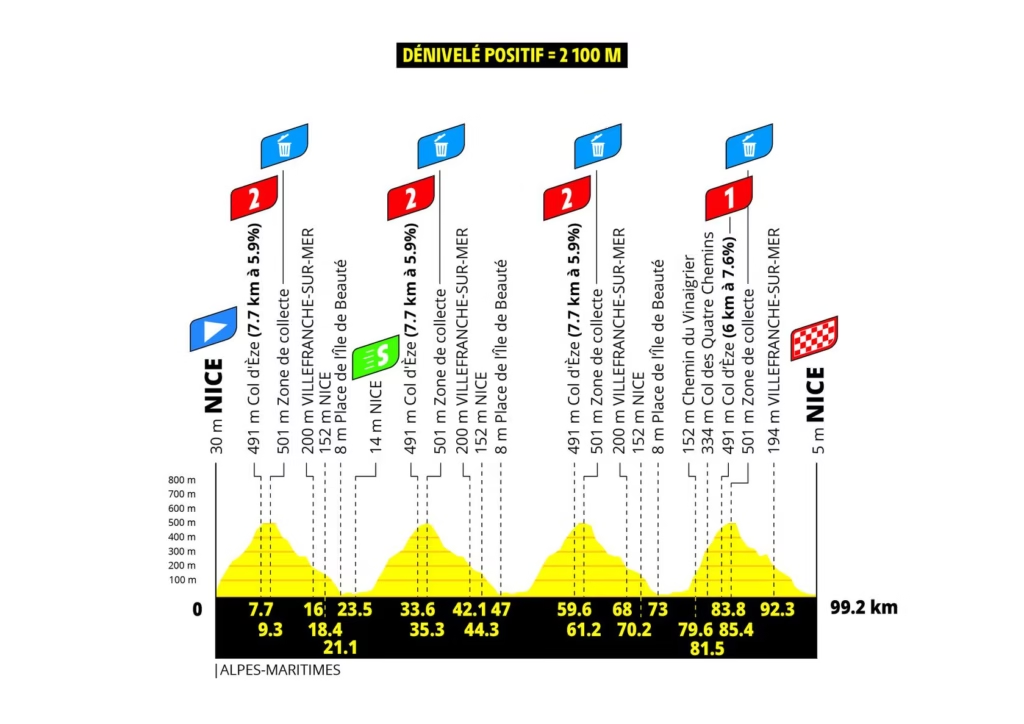 Photo Credit: Getty
Stage 9 is not a ceremonial sprint finish
There is no final Champs-Élysées-style sprint at the 2026 Tour de France Femmes.
Stage 9 starts and finishes in Nice but is officially a mountain stage, with repeated climbing around the Côte d’Azur making it a genuine final GC test.
For the sprinters, the objective returns to survival.
They may still be protecting green or simply trying to complete the Tour, but the stage itself belongs to the climbers, aggressive GC riders and strong descenders.
The final day is deliberately designed to keep the yellow jersey race alive rather than provide one last sprint.
Tour de France Femmes 2026 sprint stages ranked
| Stage | Route | Sprint chance | Likely scenario |
|---|---|---|---|
| 1 | Lausanne to Lausanne | Good | Bunch or reduced sprint |
| 2 | Aigle to Geneva | Very high | Full bunch sprint |
| 3 | Geneva to Poligny | Possible | Reduced sprint or breakaway |
| 4 | Gevrey-Chambertin to Dijon | None | Individual time trial |
| 5 | Macon to Belleville-en-Beaujolais | Possible | Reduced sprint, breakaway or late attack |
| 6 | Montbrison to Tournon-sur-Rhône | Low | Breakaway or attacking finish |
| 7 | La Voulte-sur-Rhône to Mont Ventoux | None | Mountain summit finish |
| 8 | Sisteron to Nice | High | Sprint or breakaway |
| 9 | Nice to Nice | None | Mountain stage |
That gives the pure sprinters two particularly strong opportunities in Stages 2 and 8, while Stage 1 is a realistic third chance for riders who can survive the late difficulty.
Stages 3 and 5 belong to a different category. They are not sprint stages in the conventional sense, but they could reward riders who combine climbing resilience with a fast finish.
 Photo Credit: Getty
Lorena Wiebes has more opportunities than anyone else
Wiebes is the rider for whom the route looks most favourable.
She is the benchmark in a completely flat sprint, but she is also strong enough to remain involved on stages where other fast finishers struggle.
That expands her realistic window considerably.
Stage 1 could suit her if the late terrain reduces the bunch. Stage 2 is an obvious target. Stage 3 remains realistic if the Jura does not become too selective. Stage 5 could bring her into a reduced sprint, while Stage 8 is the final obvious opportunity if she survives Ventoux well.
That range is why she begins as both the leading sprint favourite and the obvious reference point for green.
The wider sprint hierarchy is covered in our Tour de France Femmes 2026 riders to watch.
 Photo Credit: A.S.O./Thomas Maheux
Elisa Balsamo needs the race to stay more controlled
Balsamo is probably the most dangerous direct rival to Wiebes when a large peloton reaches the final kilometre.
That makes Geneva particularly important.
She has the speed, positioning and experience to challenge Wiebes directly, especially when Lidl-Trek can keep enough riders around her to organise the approach.
Balsamo can survive rolling terrain, but the harder the race becomes, the more the balance shifts towards riders such as Vos and Kopecky.
Her best chance therefore comes when the sprint remains recognisable as a sprint.
Stage 2 is the clearest example, with Stage 8 potentially offering another opportunity if Lidl-Trek reaches Nice with enough of its lead-out intact.
 Photo Credit: Getty
Marianne Vos benefits when the sprinters are under pressure
Vos benefits from almost the opposite scenario.
She does not need the race to stay easy.
If short climbs, repeated accelerations and fatigue remove the fastest pure sprinters, her chances improve.
Stages 1, 3 and 5 may therefore offer more interesting opportunities than the conventional Geneva sprint.
Vos also gives Team Visma-Lease a Bike tactical options that pure sprint teams do not have. She can follow moves, attack herself or wait for a reduced sprint depending on how the race develops.
That adaptability is particularly valuable in a Tour with relatively few predictable flat stages.
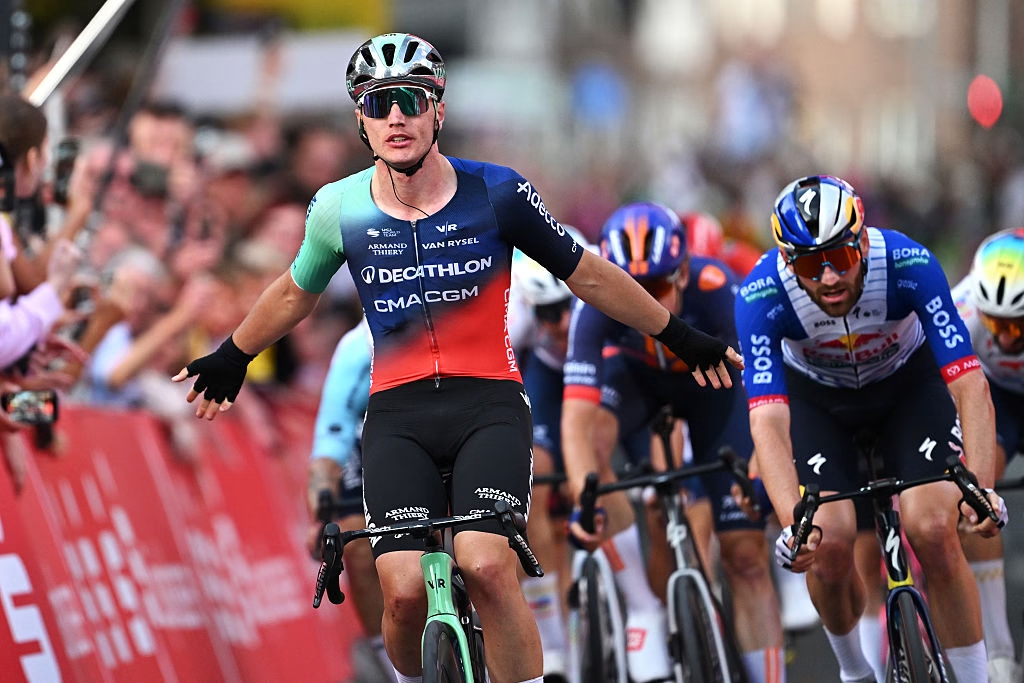


The green jersey changes the value of every sprint
The sprint stages are not just about stage victories.
Flat stages award 50 points to the winner, making Stages 1, 2 and 8 especially important to the green jersey competition. Intermediate sprints add further opportunities throughout the race.
That means riders still have a reason to sprint for fourth or fifth even when the stage victory has gone.
It also rewards versatility.
A rider who wins in Geneva but scores almost nothing on the hilly stages can still be vulnerable to someone collecting points across a wider range of terrain.
That is another reason Wiebes starts with such an advantage on paper. If she can score heavily on the flat days and remain competitive in reduced sprints, her rivals will have fewer places to recover points.
The scoring differences between green and the other classifications are covered in our Tour de France Femmes 2026 jerseys explainer.
The 2026 Tour rewards sprinting after fatigue
The route gives the fast finishers opportunities, but it rarely gives them an easy day.
Geneva is the clearest pure sprint. Lausanne is harder than its flat classification suggests. Poligny and Beaujolais give the stronger fast finishers additional possibilities, while Stage 8 offers one last conventional chance only after the peloton has crossed Mont Ventoux.
That makes the route particularly favourable to versatility.
Raw speed still matters. Wiebes and Balsamo remain the riders everyone will watch when a full bunch reaches the final kilometre.
But the rider who can still produce that speed after climbing, repeated attacks and seven days of accumulated fatigue may end up with considerably more opportunities than the official count of three flat stages suggests.

