

Tadej Pogačar has won the Tour de France four times, collected stages across almost every type of terrain and built one of the most complete palmarès in modern cycling.
He has never won on Alpe d’Huez.
That could change during the Tour de France’s unprecedented pair of consecutive finishes at the resort in 2026.
Pogačar reaches stage 19 with a 4:32 advantage over Remco Evenepoel and is closing in on a fifth Tour victory. The yellow jersey contest is not mathematically finished, but the Slovenian no longer needs to attack. He can follow his closest rival, manage his effort and preserve energy for the following day’s much harder queen stage.
Alpe d’Huez creates a different temptation.
Winning there carries a significance beyond another stage victory. The climb’s 21 hairpins have produced some of the most recognisable images in Tour history, yet many of the race’s greatest overall champions never won at the summit.
Pogačar is already among the most successful Tour riders. Alpe d’Huez remains one of the most conspicuous gaps in his record.
The defining question of stage 19 is therefore not simply whether anyone can take time from him.
It is whether Pogačar can resist trying to add cycling’s most famous summit finish to his palmarès.
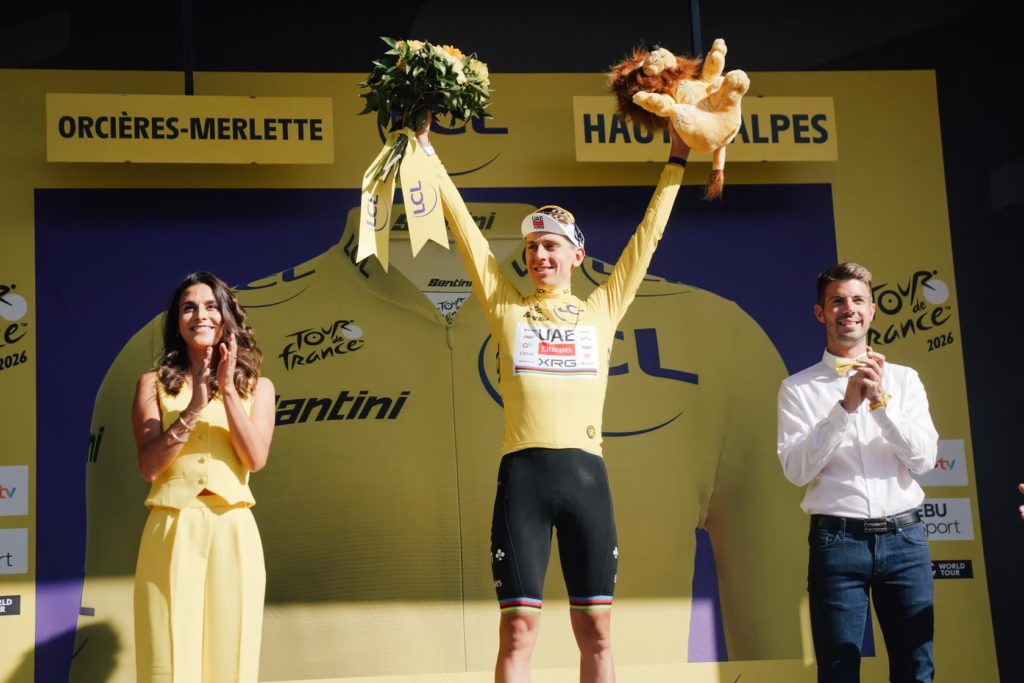 Photo Credit: A.S.O./Thomas Maheux
Has Tadej Pogačar ever won on Alpe d’Huez?
No. Pogačar has never won a Tour de France stage finishing on Alpe d’Huez.
The climb has appeared as a summit finish only once during his Tour career.
That came on stage 12 of the 2022 race, one day after Jonas Vingegaard had taken the yellow jersey from him on the Col du Granon.
Tom Pidcock won from the breakaway after an extraordinary descending performance earlier in the stage. Louis Meintjes finished second and Chris Froome took third, while Pogačar crossed the line fifth alongside Vingegaard.
The Slovenian attacked repeatedly on the final climb but could not separate the yellow jersey. Vingegaard followed every acceleration, beginning a pattern that defined the remainder of that Tour.
Pogačar therefore arrives in 2026 with experience of racing the traditional ascent but without a victory, podium finish or decisive general classification gain there.
The result does not suggest that Alpe d’Huez is a climb he cannot handle.
It shows how rarely the Tour has given him the opportunity.
Why an Alpe d’Huez victory would matter
Pogačar does not need an Alpe d’Huez win to validate his career.
He has won the Tour repeatedly, claimed the Giro d’Italia, become world champion and succeeded across several of cycling’s Monuments. His place among the sport’s greatest riders does not depend on one mountain.
Alpe d’Huez still occupies a particular position within the Tour.
The climb is instantly recognisable to people who do not follow every stage race. Its bends are numbered in descending order and carry the names of previous winners. The vast roadside crowds and exposed upper slopes give the finish a visual identity few climbs can match.
Victory there becomes part of a rider’s public story.
Fausto Coppi’s 1952 success helped establish the summit finish as a central part of Tour design. Carlos Sastre’s attack in 2008 transformed him from podium contender into the eventual winner. Geraint Thomas won in yellow in 2018, becoming the first British rider to take the stage.
Pidcock’s 2022 victory remains the most important road result of his career.
Pogačar already owns wins on the Col du Portet, Grand Colombier, Plateau de Beille, Hautacam and several other major Tour summits. Winning on Alpe d’Huez would add the climb most widely recognised outside specialist cycling audiences.
The wider story is covered in a history of Alpe d’Huez at the Tour de France.
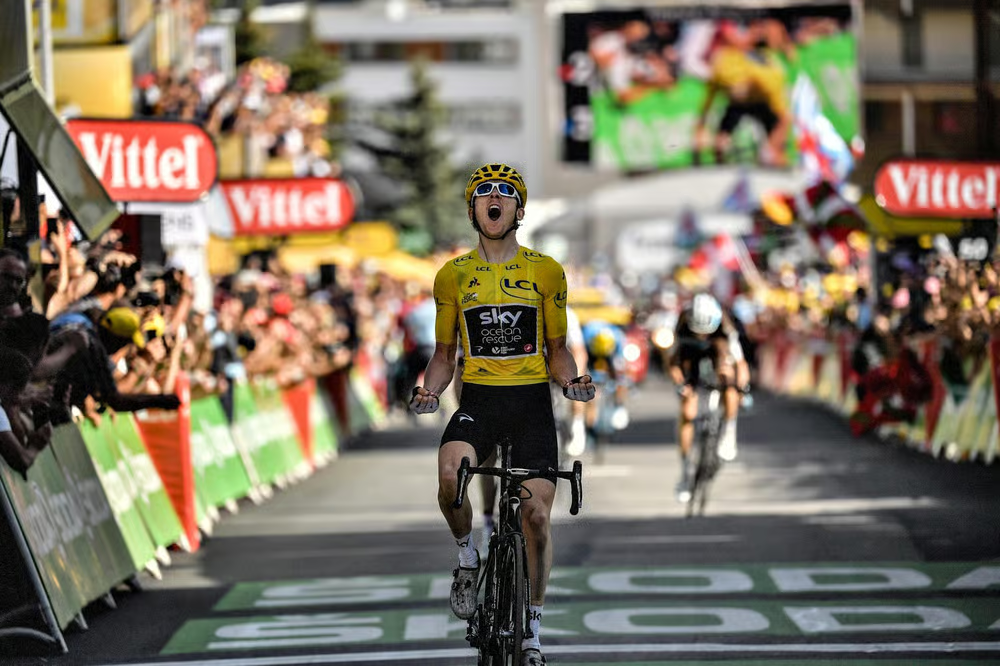
Tour champions have not always conquered Alpe d’Huez
Alpe d’Huez is closely associated with Tour champions, but the summit’s winners list contains relatively few riders who also won the overall race.
Six recognised Tour winners have also won a stage finishing on Alpe d’Huez:
| Rider | Alpe d’Huez victory | Tour de France victory |
|---|---|---|
| Fausto Coppi | 1952 | 1949 and 1952 |
| Joop Zoetemelk | 1976 and 1979 | 1980 |
| Bernard Hinault | 1986 | Five victories between 1978 and 1985 |
| Marco Pantani | 1995 and 1997 | 1998 |
| Carlos Sastre | 2008 | 2008 |
| Geraint Thomas | 2018 | 2018 |
Only Coppi, Sastre and Thomas won on Alpe d’Huez during the same Tour they ultimately won overall.
Zoetemelk’s victories came before his 1980 Tour success. Hinault won the Alpe in 1986 while Greg LeMond went on to take yellow in Paris. Pantani’s two stage victories preceded his 1998 Tour win.
The mountain has therefore been less of a predictable coronation point than its reputation suggests.
Breakaway riders have often succeeded because the yellow jersey contenders concentrated on one another. Climbers who had already lost time could attack without threatening the overall race. Some dominant Tour champions simply did not encounter Alpe d’Huez at the right point in their careers.
Eddy Merckx never won there. Jacques Anquetil never won there. Miguel Induráin never won there. Chris Froome never won there.
Among the four existing five-time Tour champions, Hinault is the only one with an Alpe d’Huez stage victory.
Pogačar could join both groups during the same weekend.
Pogačar is approaching five Tour victories
Pogačar begins stage 19 with a 4:32 advantage over Evenepoel.
If he reaches Paris in yellow, he will join Anquetil, Merckx, Hinault and Induráin as an official five-time winner of the Tour de France.
That achievement is already within reach. The remaining danger is concentrated into two stages finishing at Alpe d’Huez.
Stage 19 is short and explosive, covering 127.9km from Gap. Stage 20 is considerably harder, with around 5,450 metres of climbing across the Croix de Fer, Télégraphe, Galibier, Col de Sarenne and the final ascent to the resort.
Pogačar can therefore become the fifth five-time Tour winner while also becoming only the seventh recognised Tour champion to win on Alpe d’Huez.
The opportunity is unusually neat.
History does not decide how a rider races, but Pogačar understands what prestigious victories add to a palmarès. He has repeatedly targeted major stages even when the general classification did not demand it.
Alpe d’Huez is precisely the kind of missing result likely to appeal to him.
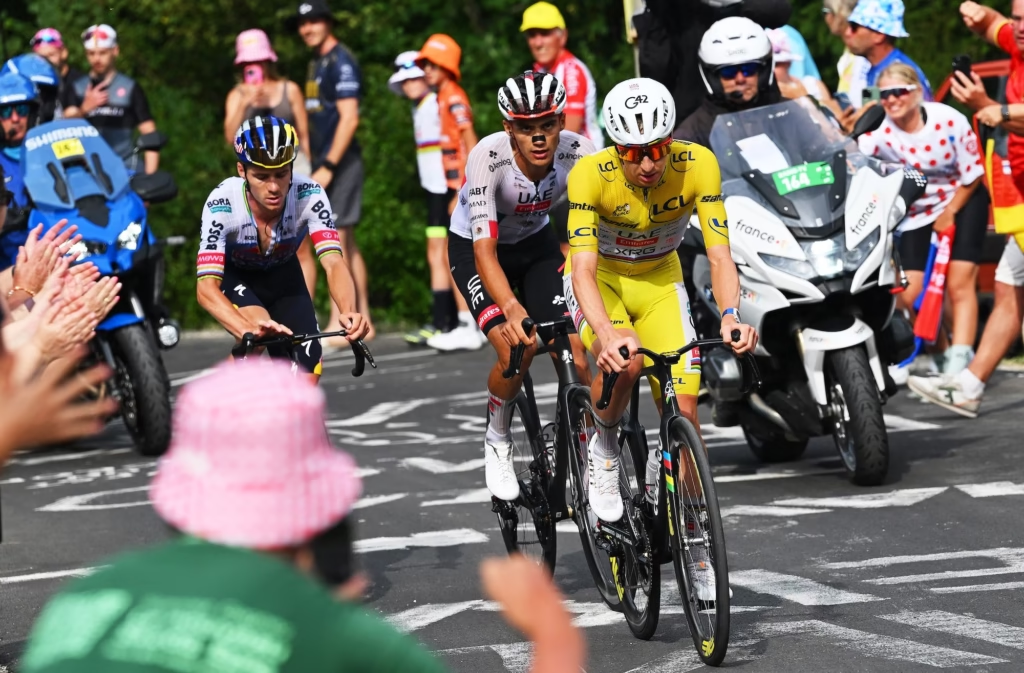 Photo Credit: Getty
Is Pogačar the favourite to win stage 19?
Yes, provided the stage is decided by the general classification group.
The traditional ascent from Bourg-d’Oisans measures 13.7km at 8.1%. Its hardest sustained gradients come near the bottom, where the road rises sharply towards La Garde.
That opening section suits Pogačar.
He can produce a violent acceleration on steep gradients and then maintain enough power to prevent rivals returning. Evenepoel is more comfortable when he can settle into a sustained rhythm, while Isaac del Toro, Paul Seixas, Juan Ayuso and Mattias Skjelmose have not shown they can consistently match Pogačar’s changes of pace.
The biggest obstacle may not be another general classification rider.
It may be the breakaway.
UAE Team Emirates-XRG have no need to control the stage from Gap. Pogačar already possesses a large overall advantage, while Brandon McNulty’s abandonment and illness affecting Adam Yates and Tim Wellens give the team good reasons to conserve its remaining riders.
A strong group could build enough of an advantage to reach Alpe d’Huez with the stage victory still available.
Pogačar may be the fastest climber on the road without becoming the stage winner.
Why UAE may allow the breakaway to win
Chasing the stage would require UAE to spend energy they need more on stage 20.
The opening Col Bayard and Col du Noyer should produce an aggressive fight for the breakaway. Nils Politt, Florian Vermeersch and Wellens may be required to control attacks or monitor rival domestiques.
If UAE then hold the escape close through the central valley, those riders will use energy that cannot be recovered before the queen stage.
Felix Großschartner or Yates might also need to work on the Col d’Ornon, reducing the support available to Pogačar on Alpe d’Huez.
The tactically sensible approach is to allow harmless stage hunters to gain several minutes.
That would remove the need to chase, take the finish bonuses away from the general classification contenders and allow Pogačar to concentrate entirely on Evenepoel.
The consequences of McNulty’s withdrawal are examined in how UAE can protect Pogačar on Alpe d’Huez.
A breakaway victory would make defending yellow easier.
It would also deny Pogačar something he may genuinely want.
UAE must balance logic against Pogačar’s instincts
From a general classification perspective, stage 19 should be conservative.
Pogačar can follow Evenepoel, allow Del Toro to monitor Seixas and save as much energy as possible for the Galibier and Sarenne on stage 20.
From a stage-racing perspective, winning on Alpe d’Huez is an opportunity that may not return for several years.
The climb last appeared in 2022. Before that, the Tour used it in 2018. Its prestige comes partly from not appearing every season.
Pogačar may not receive another chance while at the height of his powers.
UAE do not necessarily need to make the decision at the start. They can allow the breakaway to form, assess its composition and calculate the gap later.
If the escape reaches the Col d’Ornon only three or four minutes ahead, the stage may return naturally through attacks and the high pace of the favourites.
If the advantage is closer to eight minutes, UAE would need to make a deliberate commitment.
The team should not sacrifice stage 20 to chase. Pogačar may still find it difficult to watch an Alpe d’Huez victory disappear when his legs are strong enough to take it.
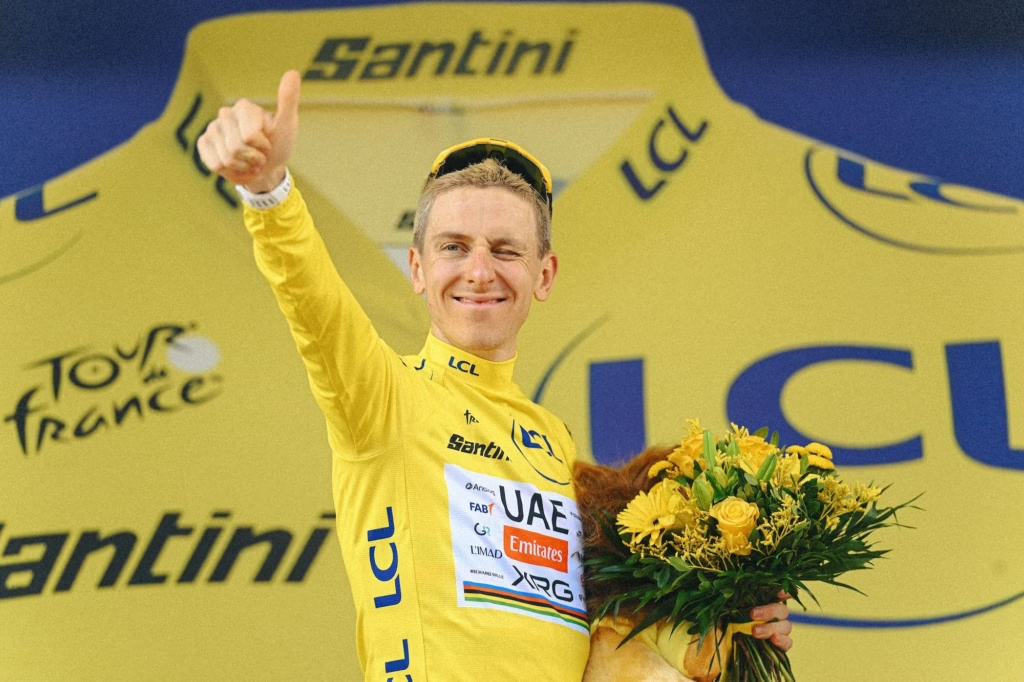
Could Pogačar win without UAE controlling the stage?
Yes.
Other teams have reasons to produce a difficult race.
Red Bull-Bora-Hansgrohe may try to isolate Pogačar and create an opportunity for Evenepoel. Decathlon CMA CGM need Seixas to recover 20 seconds from Del Toro in the fight for third and the white jersey. Lidl-Trek must attack with Ayuso and Skjelmose if either rider is to reach the podium.
The prestige of Alpe d’Huez may also encourage teams without a stage victory to contribute to the chase.
UAE can benefit from that work.
If Red Bull or Lidl-Trek reduce the breakaway’s advantage, Pogačar can remain protected and wait. Once the road reaches Alpe d’Huez, he can decide whether the stage is available without having spent his own team throughout the valley.
That is the ideal scenario for the yellow jersey.
His rivals create the hard race because they need to gain time. Pogačar follows, responds when necessary and discovers that the stage victory has returned within reach.
He can then attack late without having paid the full tactical cost of the chase.
Where would Pogačar attack?
The obvious place is the lower section of Alpe d’Huez.
The steep opening kilometres rise towards La Garde, with long stretches around 10%. Drafting becomes less valuable, and riders arriving from the Col d’Ornon descent must adjust immediately to a sustained climbing effort.
Pogačar could attack there, but doing so would be more aggressive than necessary.
A move near the bottom would leave more than 10km to race. Even if he creates a gap, he must maintain it while exposing himself before the harder stage 20.
The more controlled option is to wait until the middle or upper part of the climb.
The gradient becomes less severe but continues to change around the hairpins. Pogačar can use one of the sharper ramps to accelerate, particularly if Evenepoel has already spent energy attempting to distance the podium contenders.
The stage situation will determine the timing.
If a breakaway rider remains one minute ahead, Pogačar may need to attack earlier. If the escape has been caught and the yellow jersey group remains together, he can wait until the final three kilometres.
The complete route and tactical possibilities are covered in the Tour de France 2026 stage 19 preview.
Evenepoel cannot simply wait for Pogačar
Evenepoel’s strongest chance of winning the stage may involve moving before Pogačar.
The Belgian remains 4:32 behind overall. A final-kilometre sprint is unlikely to suit him against the yellow jersey, while attempting to match repeated accelerations exposes his main relative weakness.
A longer sustained attack could be more effective.
Evenepoel can use Red Bull-Bora-Hansgrohe to increase the pace into the lower slopes, then launch a move designed to establish his own rhythm. Pogačar would have to decide whether to follow immediately or allow the Belgian a small advantage.
The yellow jersey does not need to close every gap.
That creates a route towards the stage for Evenepoel. Pogačar could choose the Tour over the victory and let him ride 20 or 30 seconds ahead without concern.
The problem is Pogačar’s competitive instinct.
If he feels strong, allowing his closest rival to win on Alpe d’Huez may be less appealing than the general classification mathematics suggest.
Evenepoel needs Pogačar to behave conservatively. The history attached to the finish makes that less certain.
His remaining route towards yellow is assessed in can Remco Evenepoel win the Tour de France 2026?.
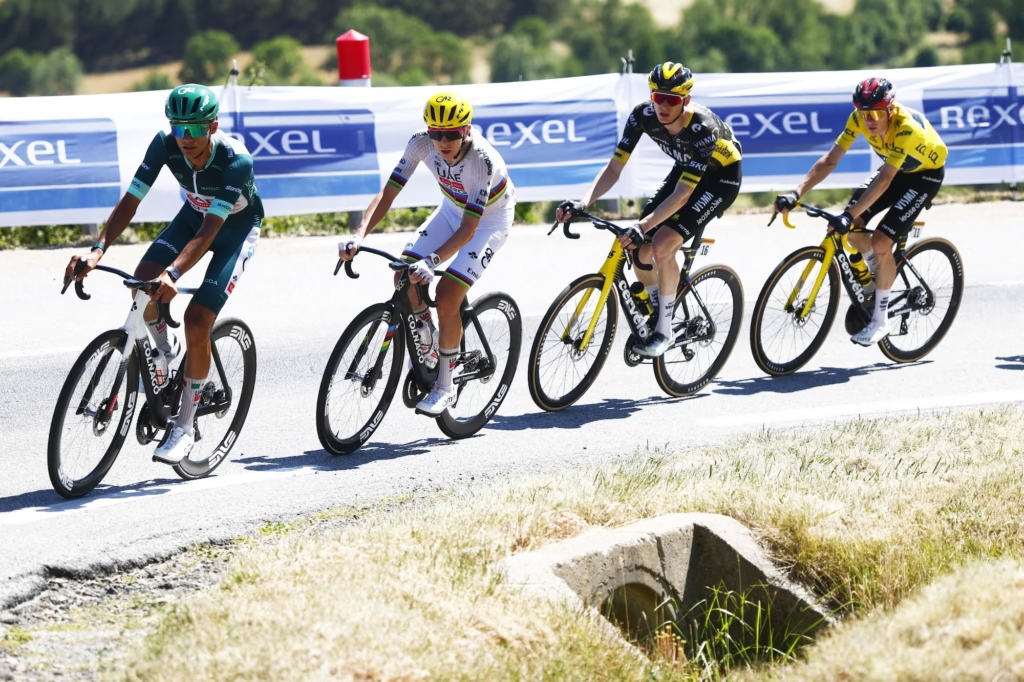
The podium battle could carry Pogačar towards victory
The closest contest in the race is not for yellow.
Del Toro leads Seixas by 20 seconds in the fight for third and the white jersey. Ayuso is another 2:11 behind Seixas, while Skjelmose remains within range of the podium if one rider suffers badly.
Those gaps should create attacks.
Seixas must test Del Toro. Lidl-Trek cannot improve its position by following wheels. Evenepoel may attack to protect second rather than seriously threaten yellow.
Pogačar can use each of those moves.
He does not need to initiate the selection. He can follow the strongest riders, allow the group to shrink and wait until his rivals have spent energy fighting their own battles.
By the final kilometres, the yellow jersey may reach the front without UAE ever taking full control.
That is why Pogačar remains the strongest favourite even if his team initially allows the breakaway to go.
The white jersey and podium contest is examined in Del Toro vs Seixas.
Does stage 20 reduce the chance of a stage 19 attack?
It should.
Stage 20 may be the hardest mountain stage of the Tour. The riders face more than 5,000 metres of climbing before reaching Alpe d’Huez for the second consecutive day.
An unnecessary maximal effort on stage 19 could be punished less than 24 hours later.
Pogačar already leads comfortably. Winning Friday’s stage by 20 seconds would add prestige without materially changing the yellow jersey contest. Losing energy and suffering on the Galibier would create a much larger risk.
UAE should therefore prefer a measured performance on the first visit.
There is another way to view the double finish.
Pogačar has two opportunities to win on Alpe d’Huez rather than one.
He does not need to force stage 19 if the breakaway remains clear. He can preserve energy and target stage 20, where the scale of the route makes a breakaway less certain to survive and the final general classification showdown may bring the favourites together.
The stage 20 approach is different, reaching the resort after the Col de Sarenne rather than simply repeating Friday’s route.
The full challenge is broken down in the Tour de France 2026 queen stage guide.
Stage 19 may still be the better chance
Although stage 20 carries greater weight as the queen stage, stage 19 may be easier for Pogačar to control.
The shorter route should produce a fresher and more explosive final climb. That suits his acceleration.
Stage 20 is more unpredictable. The Galibier and Sarenne can split the race long before the finish. Pogačar could arrive isolated, carrying fatigue or concentrating entirely on protecting yellow.
A breakaway full of elite climbers could also build its advantage earlier.
Stage 19 offers fewer moving parts.
If the escape is within reach at Bourg-d’Oisans, Pogačar knows the final 13.7km should decide everything. He can mark Evenepoel and choose one acceleration.
On stage 20, the race may already have been tactically transformed before the decisive final section begins.
That gives Pogačar a reason not to assume Saturday will provide another straightforward opportunity.
The significance of the repeated finishes is explored in why back-to-back Alpe d’Huez stages could define the Tour de France 2026.
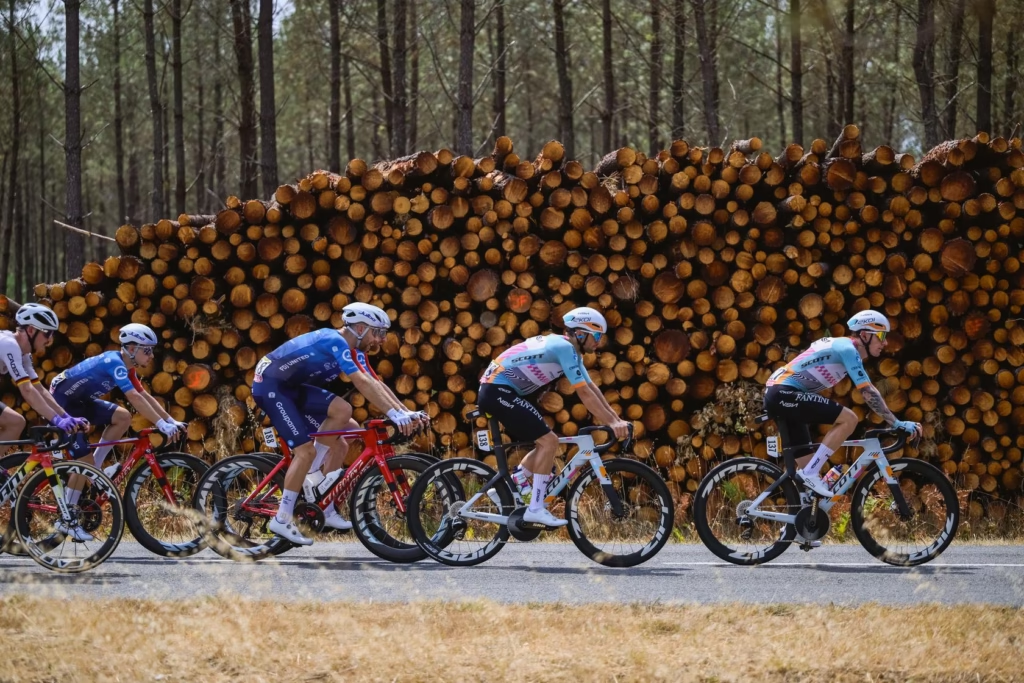 Photo Credit: A.S.O./Charly López
Who can prevent Pogačar winning?
The breakaway
The strongest obstacle is a group gaining enough time through the long middle section.
Richard Carapaz, Valentin Paret-Peintre, Thymen Arensman, Felix Gall or another established climber could survive if they begin Alpe d’Huez with a large advantage.
Carapaz’s stage 18 effort may limit him, while Paret-Peintre will need to spend energy chasing mountains points on the Col Bayard and Col du Noyer.
A break containing both climbers and powerful valley riders would be the hardest to catch.
Remco Evenepoel
Evenepoel remains the clearest direct rival.
He won the stage 16 time trial and has already taken a mountain stage at Plateau de Solaison. His sustained power can create a difficult climbing rhythm, although the steep changes of pace on Alpe d’Huez favour Pogačar.
Paul Seixas
Seixas has the strongest reason to attack.
He needs 20 seconds from Del Toro and can race without carrying the responsibility of the yellow jersey. An early acceleration could create a larger selection than the favourites expect.
Isaac del Toro
Del Toro may be allowed to contest the victory if Pogačar is comfortable and Seixas has been controlled.
That depends on UAE’s priorities. The team could prefer a stage win for its young Mexican while Pogačar follows Evenepoel behind.
Juan Ayuso and Mattias Skjelmose
Lidl-Trek possess two riders capable of attacking in sequence.
Neither is likely to beat Pogačar through a direct final acceleration, but their numerical strength may produce a tactical situation in which one gains freedom.
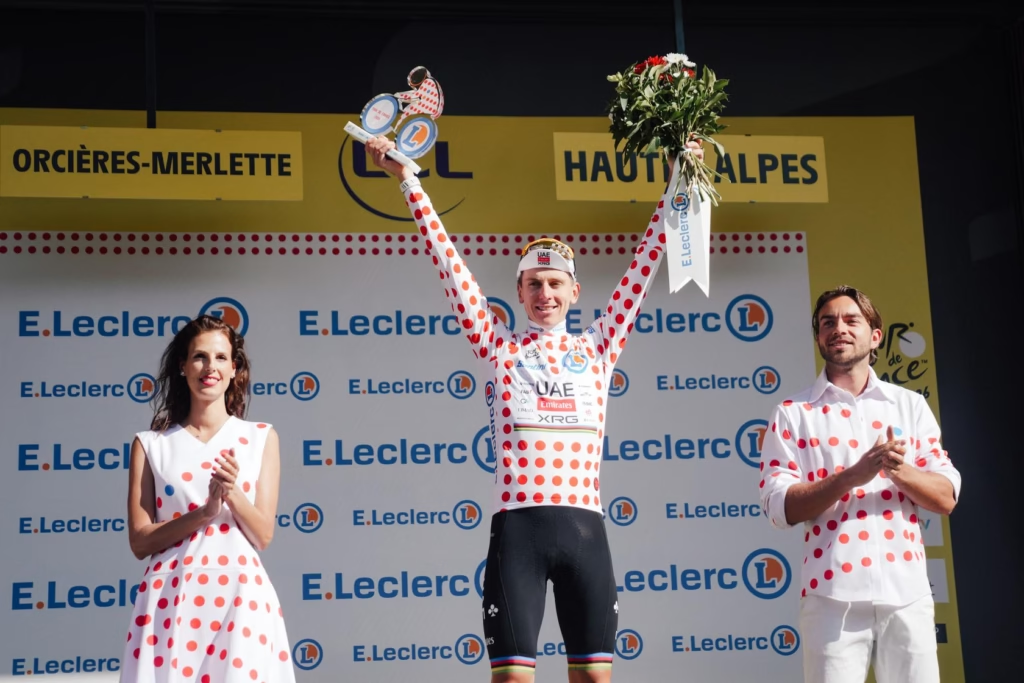
The polka-dot jersey adds another incentive
Pogačar leads the mountains classification by only one point over Paret-Peintre, with Carapaz seven behind.
Alpe d’Huez offers 20 points to the stage winner.
Pogačar is unlikely to chase the victory solely to defend the jersey. Yellow remains the overwhelming priority, and Paret-Peintre can collect points on the earlier climbs without threatening the general classification.
The summit points still increase the value of winning.
A stage victory could add Alpe d’Huez to Pogačar’s palmarès while placing him in a stronger position to secure another polka-dot jersey.
If Paret-Peintre dominates the opening climbs, Pogačar may reach the final ascent knowing that a victory is required to remain close in the classification.
That does not create an obligation. It provides another reason to attack if the stage is available.
The three-way contest is covered in who can catch Pogačar in the Tour de France polka-dot jersey battle?.
What makes Alpe d’Huez different?
Many mountain finishes reward the strongest climber. Alpe d’Huez carries an additional burden of expectation.
Every hairpin has a history. Riders pass signs carrying the names of former winners. The roadside noise is constant, particularly through the lower and middle sections where supporters stand several rows deep.
The climb is difficult without being the hardest used by the Tour.
Its identity comes from the combination of gradient, repetition and spectacle. The road changes direction constantly, forcing riders to accelerate out of bends and re-establish their rhythm. The steep lower section can expose weakness before the climb settles into its famous sequence of hairpins.
The physical and historical character of the ascent is explored in Alpe d’Huez: why the Tour still fears the 21 bends.
For recreational cyclists, it is also one of the most accessible bucket-list climbs in the Alps. Bourg-d’Oisans provides a natural base, while the road remains tied closely to Tour history outside race week.
The experience of riding it is covered in cycling Bourg-d’Oisans and Alpe d’Huez.
-
 Photo Credit: A.S.O./Gaëtan Flamme

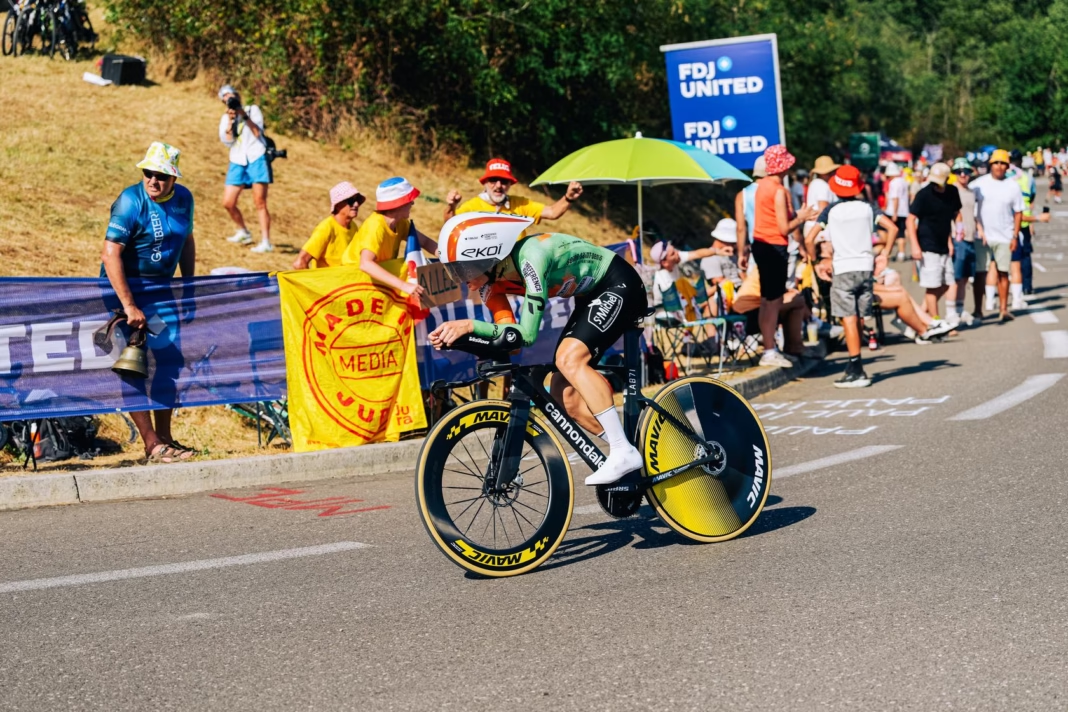
Will Pogačar win on Alpe d’Huez?
Pogačar is the most likely winner if stage 19 comes back together.
He is the strongest climber in the race, the best accelerator among the general classification contenders and motivated by the opportunity to win on a climb missing from his palmarès.
The uncertainty comes from tactics rather than ability.
UAE have little reason to chase a strong breakaway. McNulty has abandoned, Yates and Wellens have been ill, and the much harder stage 20 follows immediately. Preparing a stage victory could create unnecessary risk.
That makes the breakaway close to an equal favourite with Pogačar.
The most plausible outcome is that UAE allow the escape to build an advantage and leave the chasing responsibility to Red Bull-Bora-Hansgrohe, Lidl-Trek and Decathlon CMA CGM.
If those teams bring the leaders within reach, Pogačar should attack.
If they do not, he can defend yellow and preserve energy for a second opportunity on Saturday.
Prediction: Pogačar wins if the gap is below four minutes
The key number will be the breakaway’s advantage at the foot of Alpe d’Huez.
A strong climber with more than five minutes could survive. The general classification group may climb quickly, but Pogačar does not need to conduct a full pursuit from the bottom.
Between three and four minutes places the stage within reach.
The attacks of Seixas, Ayuso or Evenepoel should reduce the gap naturally. Pogačar can then wait until the final kilometres and use one acceleration to catch the remaining breakaway riders.
His history on Alpe d’Huez is currently limited to following Vingegaard home in 2022.
Four years later, he arrives in yellow, on the verge of a fifth Tour victory and with two consecutive opportunities to add the climb to his record.
Pogačar does not need to win on Alpe d’Huez.
That may be exactly why he will try.

