

The Tour Féminin International des Pyrénées 2026 has its strongest identity yet, with the race stepping up to UCI Women’s ProSeries level and bringing together a field built around climbers, developing GC riders and teams looking for a serious mountain test before the biggest summer stage races.
The race runs from Friday, 12th June to Sunday, 14th June, with three stages moving from the Basque coast to Jurançon via the high Pyrenees. The route begins with Saint-Jean-de-Luz to Mourenx, continues with the queen stage from Arrens-Marsous to Bagnères-de-Bigorre over the Col du Tourmalet, and finishes with a punchy final day from Nay to Jurançon.
That makes the start list particularly important. This is not a race where teams can hide behind sprint trains or wait for one final flat finish. The Tourmalet gives the 2026 edition a clear climbing focus, while the shorter format means there is very little room to recover from a bad day. Riders who want to win overall need to be switched on from the opening stage.
For more route detail, see our Tour Féminin International des Pyrénées 2026 full route guide, while newer fans can use our beginner’s guide to Tour Féminin International des Pyrénées 2026 for the wider context of the race. UK live coverage details are also available in our guide on how to watch Tour Féminin International des Pyrénées 2026 in the UK.
Tour Féminin International des Pyrénées 2026 start list
The full embedded start list is below. The line-up can still change before the race begins, with late substitutions possible until teams are fully confirmed.
https://firstcycling.com/race.php?r=16505&y=2026&k=8
What stands out from the 2026 start list?
The 2026 field has a clear split between WorldTour teams, ProTeams and continental squads, giving the race a useful mix of control and opportunity. The bigger teams bring obvious favourites, but the race’s short format and mountain-heavy route also give smaller squads a realistic chance to shape the action.
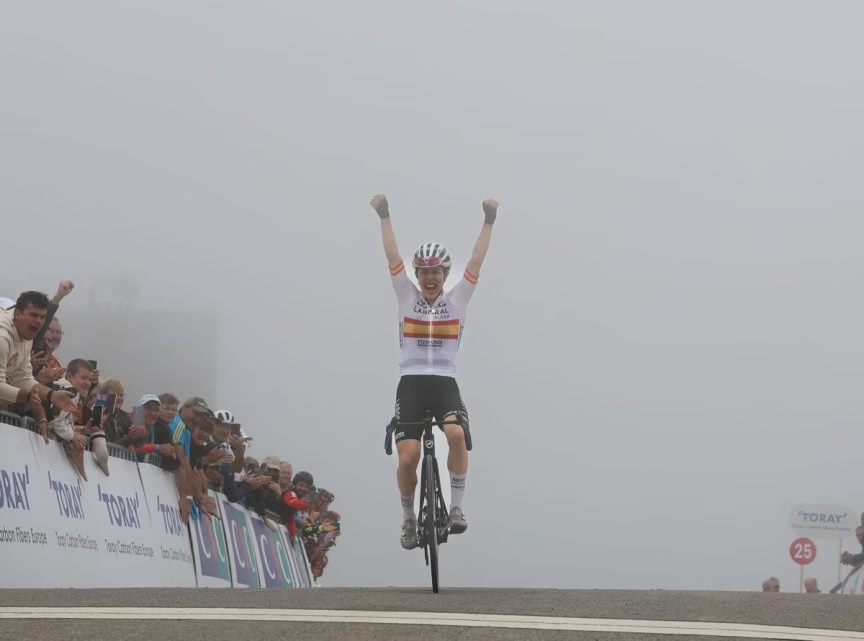
Laboral Kutxa-Fundación Euskadi are one of the first teams to look at. Usoa Ostolaza has become closely linked with this race after her past success in the Pyrenees, and she lines up with Paula Patiño, Idoia Eraso Lasa, Irati Aranguren, Catalina Soto Campos and Vittoria Ruffilli. That is a strong climbing group for a three-day race built around the Tourmalet.
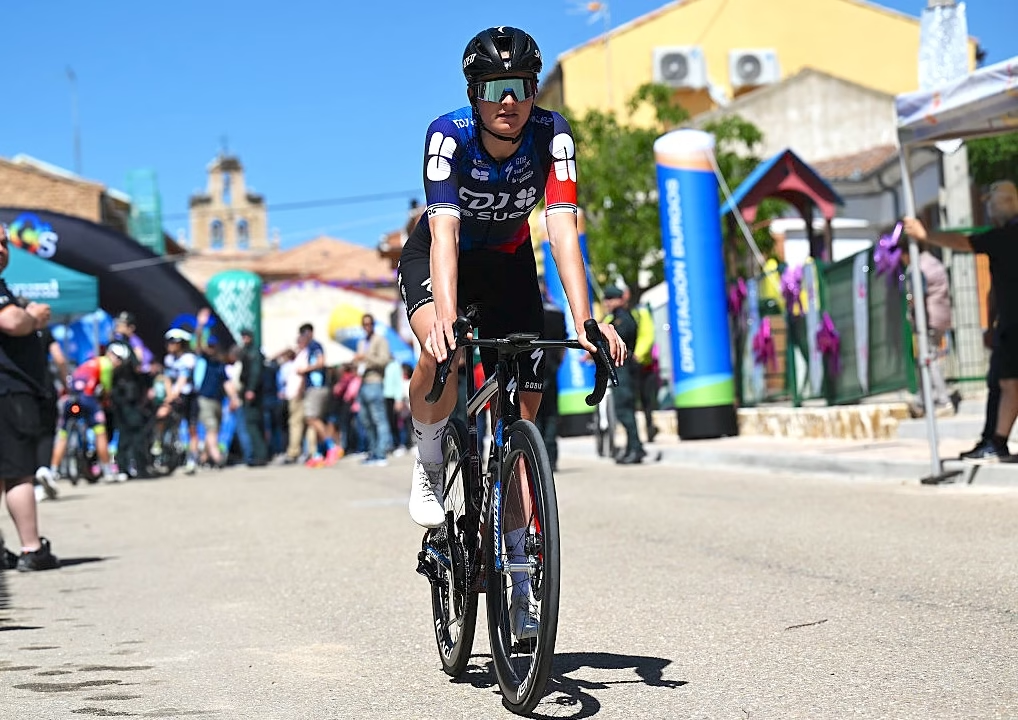
FDJ United – SUEZ also bring a line-up with several ways to influence the race. Juliette Berthet-Labous gives them a clear GC reference, with Sofia Bertizzolo, Léa Curinier, Franziska Koch, Marie Le Net and Eglantine Rayer adding depth across different terrain. The Tourmalet stage should suit Berthet-Labous and Rayer more than the flatter opening day, but the team has enough versatility to race across all three stages.
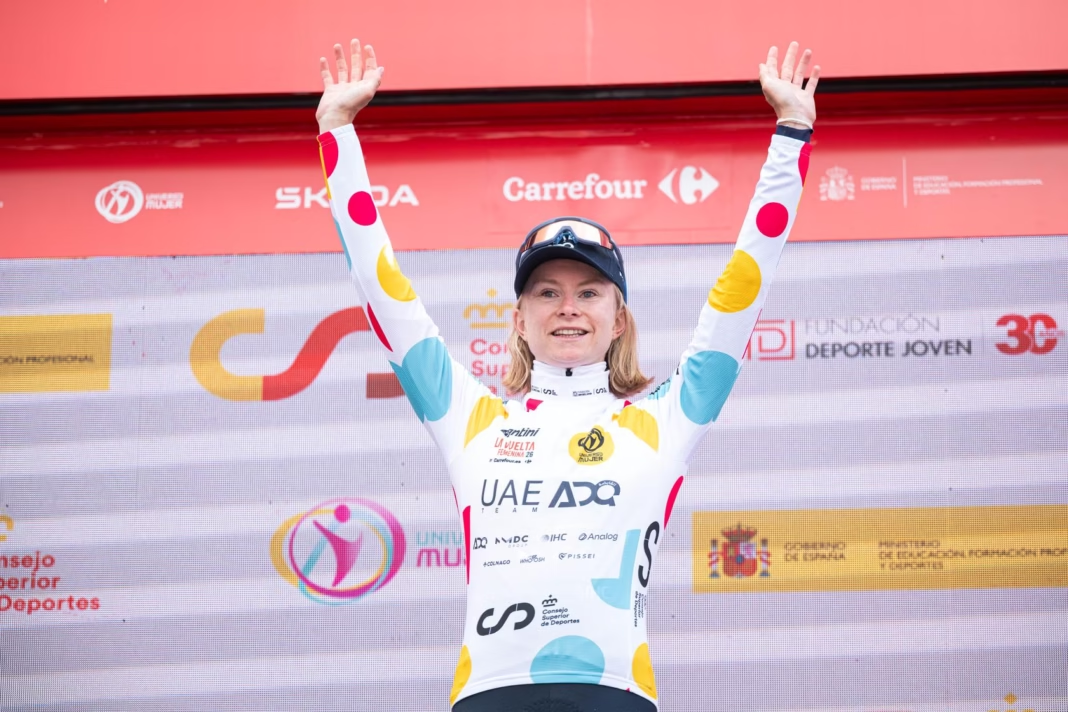
UAE Team ADQ arrive with a particularly interesting group. Paula Blasi, Dominika Wlodarczyk and Federica Venturelli all fit different parts of the race, with Blasi giving the team a major GC card, Wlodarczyk suited to hard rolling and climbing stages, and Venturelli continuing her development in a race where the terrain should test recovery as much as raw talent. Alena Ivanchenko, Milana Ushakova and Giada Silo add further depth to a squad that should be central to the overall battle.
Cofidis Women Team should also be active, with Julie Bego and Ema Comte standing out as riders well suited to this kind of race. Victoire Berteau, Martina Alzini, Hannah Ludwig and Nadia Quagliotto give the team options across the opening day and the harder weekend. Bego in particular looks like one of the riders who can use the ProSeries level to test herself against stronger climbing opposition.
Mayenne Monbana My Pie bring Karolina Perekitko, Alice Coutinho, Justine Gegu, Constance Valentin, Léa Rondel and Fiona Mangan. Perekitko is the obvious name for the mountain stages, while the team’s broader strength could make them dangerous if the race becomes open before the Tourmalet.
VolkerWessels Cycling Team have Eline Jansen on the start list, alongside Maud Rijnbeek, Sophie von Berswordt-Wallrabe, Quinty Schoens, Malou Eisen and Laura Molenaar. Jansen already has recent history in this race and gives the Dutch squad a rider who can handle difficult terrain, while the team’s style often makes them useful in breakaway-heavy races.
Canyon SRAM zondacrypto Generation, Liv AlUla Jayco, Team Amani, Team Abadie-Magnan, Vini Fantini – BePink, Dukla Women Cycling, XDS China Women Team, Tirol Women Cycling and several other continental squads add the development layer that makes this race interesting. The Tour Féminin International des Pyrénées is exactly the sort of event where younger riders can get more responsibility than they would in a WorldTour stage race.

Which teams are on the Tour Féminin International des Pyrénées 2026 start list?
The start list includes Women’s WorldTeams, ProTeams and continental squads, giving the race a broad field across different levels of the women’s peloton.
Teams on the start list include:
- Laboral Kutxa-Fundación Euskadi
- FDJ United – SUEZ
- UAE Team ADQ
- UAE Development Team
- Cofidis Women Team
- Ma Petite Entreprise
- VolkerWessels Cycling Team
- Mayenne Monbana My Pie
- Canyon SRAM zondacrypto Generation
- Liv AlUla Jayco
- Liv AlUla Jayco Continental
- Meridian Bikebug
- Team Amani
- O’Shea Red Chilli Bikes
- Vendée Feminine RVC
- Team Abadie-Magnan
- Minimax WB Cycling Team
- Vini Fantini – BePink
- Wheel Divas Cycling Team
- Eneicat – Be Call
- Dukla Women Cycling
- XDS China Women Team
- Tirol Women Cycling
- VIF Cycling Team
The presence of FDJ United – SUEZ and UAE Team ADQ gives the race WorldTour-level reference points, but the ProTeams may be just as important. Laboral Kutxa-Fundación Euskadi, Cofidis Women Team, Mayenne Monbana My Pie and VolkerWessels Cycling Team all have riders who can target the overall rather than simply chase stage visibility.
Which riders should be watched for GC?
The Tourmalet stage makes the GC picture relatively clear. Climbers and resilient stage racers should be at the centre of the race, especially those who can recover quickly and handle a final punchy day after the queen stage.
Riders to watch for the overall include:
- Usoa Ostolaza
- Paula Blasi
- Juliette Berthet-Labous
- Eglantine Rayer
- Dominika Wlodarczyk
- Federica Venturelli
- Julie Bego
- Ema Comte
- Karolina Perekitko
- Eline Jansen
- Catalina Soto Campos
- Idoia Eraso Lasa
Ostolaza is an obvious benchmark because of her history in the race and her comfort on Pyrenean terrain. Blasi brings a different kind of momentum and gives UAE Team ADQ a genuine winning option. Berthet-Labous should be one of the most established climbers in the field, while Rayer, Venturelli, Bego and Comte add the younger GC angle that makes this race useful as a development marker.
The key will be how the Tourmalet is raced. A team with multiple climbers can make the stage hard from distance, while a rider relying on one decisive attack may prefer to wait until the upper slopes. Because the finish comes in Bagnères-de-Bigorre rather than on the summit, descending and regrouping after the climb could also matter.
-
 Photo Credit: Unipublic/Cxcling/Aritz Arambarri
 -
 Photo Credit: Cor Vos
Which riders could target stage wins?
Stage 1 from Saint-Jean-de-Luz to Mourenx should be the best opportunity for faster finishers and puncheurs, especially if the race comes back together after the rolling roads inland from the Basque coast. The opening stage is not a pure sprint stage, but it is still the most accessible day of the race.
Riders such as Marie Le Net, Sofia Bertizzolo, Victoire Berteau, Martina Alzini, Constance Valentin and Eline Jansen could all find stage opportunities depending on how selective the racing becomes. The first stage may be too difficult for a completely straightforward bunch sprint, but it should still give faster riders their best chance before the Tourmalet changes the race.
Stage 2 is clearly for the climbers. The Col du Tourmalet should define the GC and could decide the race outright if the strongest rider creates a significant gap. Stage 3 from Nay to Jurançon is more open. It could go to a GC rider defending or attacking the overall, but it also gives breakaway riders and puncheurs a final chance if the general classification is controlled.
That variation is why the start list matters. Teams need more than one type of rider. A squad built only for stage 1 may struggle once the road rises, while a team focused only on the Tourmalet could miss opportunities on the opening and closing days.
Why the start list matters for the 2026 race
The Tour Féminin International des Pyrénées is still a young race, but its move to ProSeries level gives the 2026 edition extra weight. It now sits in an important space between the Women’s WorldTour and the smaller international calendar, offering climbing specialists and developing GC riders a proper platform.
That is reflected in the start list. Some riders are here to win overall. Others are here for a stage, a mountain test, or a chance to lead in a way they may not get at the Giro d’Italia Women, Tour de France Femmes or La Vuelta Femenina. The race’s value comes from that mix.
The strongest teams should try to control the Tourmalet stage, but the field is varied enough for surprises. A smaller squad can send riders up the road, force a bigger team to chase, or use the final day to attack if the margins are still close. In a three-day race, one bold move can change everything.
For more background on the event’s development, read our brief history of Tour Féminin International des Pyrénées. The 2026 start list suggests the race has another chance to strengthen its place as one of the most useful climbing-focused stage races in the women’s calendar.

