Vuelta a Burgos Feminas 2026 takes place from Thursday, 21st May to Sunday, 24th May, bringing the Women’s WorldTour back to northern Spain for one of the most important late-spring stage races of the season. Coming after La Vuelta Femenina and Itzulia Women, it forms the final part of a compact Spanish block that has already tested climbing depth, recovery and tactical range.
The start list matters because this is not a race that can be reduced to one summit finish, even if Lagunas de Neila gives the final stage its obvious GC focus. The opening three stages still offer room for sprinters, puncheurs, breakaway riders and teams looking to take control before the race reaches its decisive climb.
That makes the team selection especially important. Some squads will arrive with a protected general classification leader. Others will bring stage hunters, reduced-sprint options or riders looking to carry form out of Itzulia Women. With four stages and no room for a slow start, the race can quickly punish any team that waits too long.

Vuelta a Burgos Feminas 2026 start list
The full Vuelta a Burgos Feminas 2026 start list is below and will update as teams make final changes before and during race week.
Data powered by FirstCycling.com
What kind of riders are on the Vuelta a Burgos Feminas start list?
Vuelta a Burgos Feminas usually attracts a strong mix of general classification riders, climbers, all-rounders and fast finishers who can survive hard terrain. The route is compact, but it is rarely simple. Across four days, riders need to handle positioning, repeated climbs, changing race rhythm and the pressure of a final mountain finish.
The race’s place in the calendar also shapes the start list. Riders coming out of La Vuelta Femenina may use Burgos to confirm stage-race form, while others may arrive fresher after targeting Itzulia Women or the one-day races in between. That makes it a useful form guide before the summer’s bigger objectives, including the Giro d’Italia Women and the Tour de France Femmes.
For climbers, the final stage to Lagunas de Neila is the obvious target. It is the stage most likely to decide the overall, and teams with serious GC ambitions will need to keep their leaders protected until that point. For faster riders, the earlier stages are crucial. They offer chances to win before the pure climbers move to the front of the race.
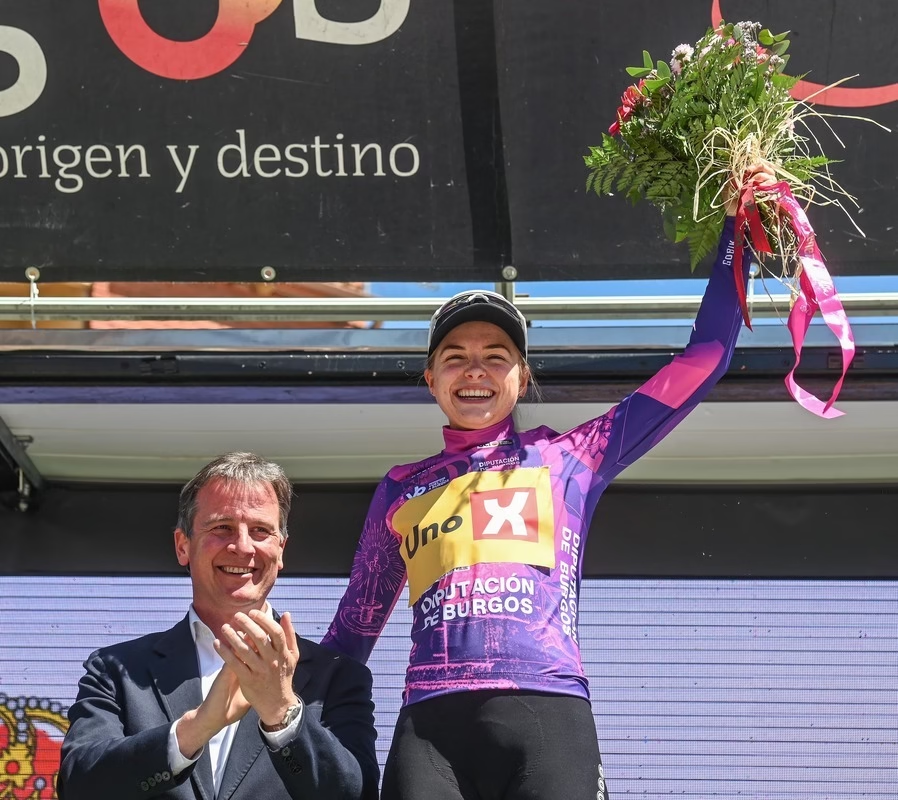 Photo Credit: Vuelta a Burgos
Why the GC teams matter
The general classification should be shaped by the final climb, but it may not begin there. In a four-day race, every second counts. Bonus seconds, small splits and poor positioning can all matter before Lagunas de Neila.
That is why the strongest GC teams need more than one leader. They need climbing support, riders who can manage the chase on rolling roads, and teammates capable of keeping their protected rider safe before the final stage. A single bad moment on stage 1, 2 or 3 can leave a contender chasing before the decisive mountain day has even arrived.
The best teams will look to control the race without overcommitting too early. They need to preserve riders for Lagunas de Neila, but they cannot allow dangerous breakaways or bonus-second threats to reshape the race before then.
Why the sprint and stage-hunting names still matter
Although Vuelta a Burgos Feminas is often remembered for its climbing, the start list is not only about the GC contenders. The earlier stages can suit sprinters who handle rolling roads, punchy finishers and riders willing to attack before the final climb dominates the race narrative.
That makes the race valuable for teams without a pure overall favourite. A rider with a fast finish can target stage 1 or stage 2. A strong all-rounder can look for a reduced sprint or a late move. Breakaway riders may see stage 3 as a chance to disrupt the expected GC pattern before the race turns fully towards Lagunas de Neila.
This is often where Burgos becomes more interesting than a simple route summary suggests. The final climb gives the race its shape, but the first three days can give it its texture.



How the route affects the start list
The 2026 route begins with Burgos to Burgos, then continues with Castrojeriz to Pedrosa de Duero, Busto de Bureba to Medina de Pomar and the final stage from Gumiel de Mercado to Lagunas de Neila.
That balance encourages teams to bring versatile squads. A team built only around a sprinter may struggle once the race turns uphill. A team built only around a climber may miss opportunities in the earlier stages. The strongest line-ups are likely to combine both: riders who can contest reduced finishes, protect a GC leader and still have climbing strength for the final day.
Lagunas de Neila remains the key reference point. It gives the race a clear mountain conclusion and should decide the final podium if the gaps are still close. Any rider starting the race with overall ambitions will need to be measured against that final stage.
Why the Vuelta a Burgos Feminas 2026 start list matters
The Vuelta a Burgos Feminas start list gives an important reading of where the Women’s WorldTour sits after the Spanish racing block. La Vuelta Femenina has already tested the major GC riders over a longer format. Itzulia Women showed which riders could handle repeated Basque climbs, reduced groups and late attacks. Burgos now asks who can put that form together across four days, with a summit finish waiting at the end.
For teams, it is a chance to finish this part of the calendar with a major result. For riders, it can either confirm strong form or rescue a Spanish campaign that has not yet delivered. For fans, it is one of the clearest late-May indicators of which climbers and all-rounders are building towards the bigger summer races.
The start list will be worth watching right up to the final updates. In a race this compact, team selection can decide the tactical direction before the flag has even dropped.