
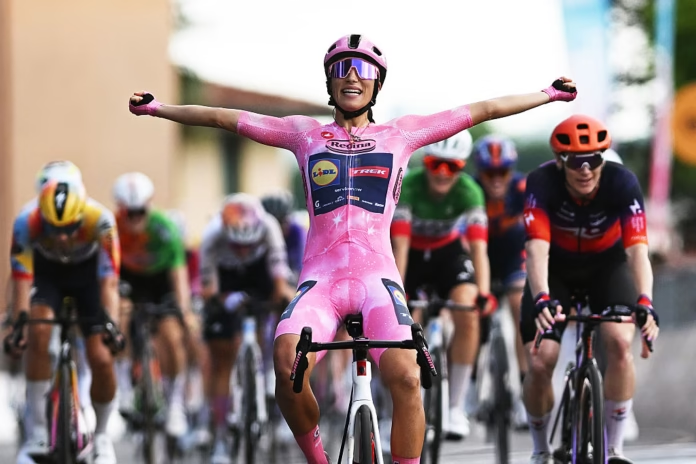
Elisa Balsamo extended her grip on the 2026 Giro d’Italia Women with another sprint victory on stage 3, winning in Buja after a chaotic finale that repeatedly swung between GC attacks, late solo moves and a reduced bunch sprint. The Lidl-Trek rider, already in the maglia rosa after her stage 2 win in Caorle, came through late to catch Lily Williams, who had opened her sprint first and briefly looked capable of springing a surprise.
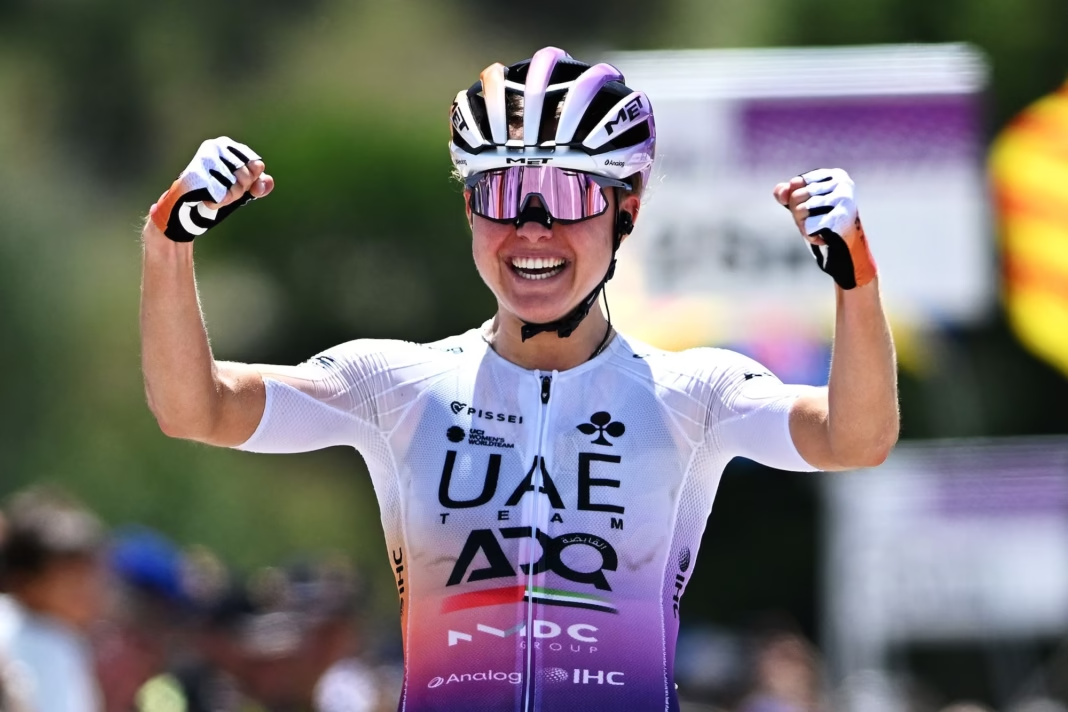
Williams finished second for Human Powered Health after a bold early launch, while Femke Gerritse came from far back to take third for SD Worx-Protime. Elisa Longo Borghini took fourth for UAE Team ADQ after trying to position herself for bonus seconds in the general classification, but she just missed out on the podium places and the time bonuses.
The 156-kilometre stage from Bibione to Buja was always more difficult than the opening two days. It began on the coast, then headed north towards the edge of the Julian Prealps, with Moruzzo and Montenars giving the route enough bite to put the pure sprinters under pressure. A full bunch sprint was unlikely, but a reduced sprint, GC move or late attack all looked possible.
 Photo Credit: RCS
Six riders go clear after a busy start
After almost 9 kilometres of neutralised riding, the race began with repeated attacks. The successful early move formed with Cristina Tonetti, Alison Jackson, Eleonora Deotto, Nienke Veenhoven and Marta Pavesi, before Barbara Guarischi bridged across to make it six at the front.
That composition made the break interesting. Guarischi’s presence gave SD Worx-Protime representation in front, while Veenhoven brought Team Visma | Lease a Bike into the move. Fariba Hashimi and Petra Zsankó tried to chase across, but they were left in no-woman’s land and were eventually brought back by the peloton.
Lidl-Trek took responsibility behind Balsamo, keeping the gap under control rather than allowing the breakaway the sort of large advantage that had shaped the previous day. The leaders still built a useful margin, sitting around 3 minutes clear through the opening half of the stage, but the chase never looked panicked.
At the intermediate sprint at Villa Manin di Passariano, Tonetti took maximum points and the bonus seconds from the break. The peloton followed around 3 minutes later, with Lidl-Trek still setting the rhythm and the weather looking increasingly unsettled as the race moved north.
Jackson takes mountain points as the break splits
The stage began to change on the approach to the climbs. The route had been pan-flat for much of the day, but the road started dragging upwards before the short fourth-category climb at Moruzzo. The gap fell quickly as Canyon SRAM and Lidl-Trek increased the pressure behind.
Moruzzo was only 1 kilometre long at an average of 6.4 per cent, but it came after the bunch had already begun to tighten the chase. There was also a crash in the peloton before the climb, though the riders involved were able to get back up and continue.
Jackson took maximum points at the top, moving level in the early mountains classification picture. Behind, the pressure caused splits in the peloton, while the break itself began to fracture. Tonetti, Jackson and Pavesi pushed on from the original move as the bunch closed to within half a minute.
Deotto, Veenhoven and Guarischi were caught soon afterwards, leaving Tonetti, Jackson and Pavesi as the last three riders ahead. They rebuilt their advantage briefly on the run towards Buja and the finishing loop, but the hardest part of the stage was still to come.
Montenars blows the race open
The final 44-kilometre loop around Buja brought the race onto narrower, more technical roads. The break still had around 50 seconds as it passed through the finish area, but the road towards Tarcento and Montenars sharpened the fight for position in the bunch.
The Montenars climb was the key point of the day. Officially only 2.5 kilometres long, it averaged 7.1 per cent, but the final 1.5 kilometres sat above 10 per cent and included ramps up to 20 per cent. It topped out 21.3 kilometres from the finish, leaving enough distance for riders to return, but enough difficulty to put the sprinters under real pressure.
Tonetti, Jackson and Pavesi were caught just before the climb as the peloton accelerated into position. FDJ United-SUEZ then lifted the pace through Célia Gery, thinning the front of the race and putting several riders into difficulty. Antonia Niedermaier had a problem before the climb and was briefly off the back, needing Canyon SRAM teammates to help her return.
Near the summit, Demi Vollering attacked, with Longo Borghini, Marlen Reusser and Anna van der Breggen able to follow. Van der Breggen led over the top, and for a moment the race had the shape of a GC selection rather than a sprint stage. The group was small, the descent was technical, and the sprinters were distanced.
Balsamo returns as the finale becomes chaotic
The descent into Gemona del Friuli was tight and technical, with hairpins, two tunnels, cobbles through town and another short rise. That made the next section difficult to control, but it also gave dropped riders a chance to come back once the leaders stopped fully committing.
Femke de Vries, Niamh Fisher-Black and Isabella Holmgren were among those who joined the front group after the summit, with more riders gradually returning. Balsamo also made it back, changing the race again. What had briefly looked like a GC-only selection became a reduced peloton, and the possibility of another Balsamo sprint returned.
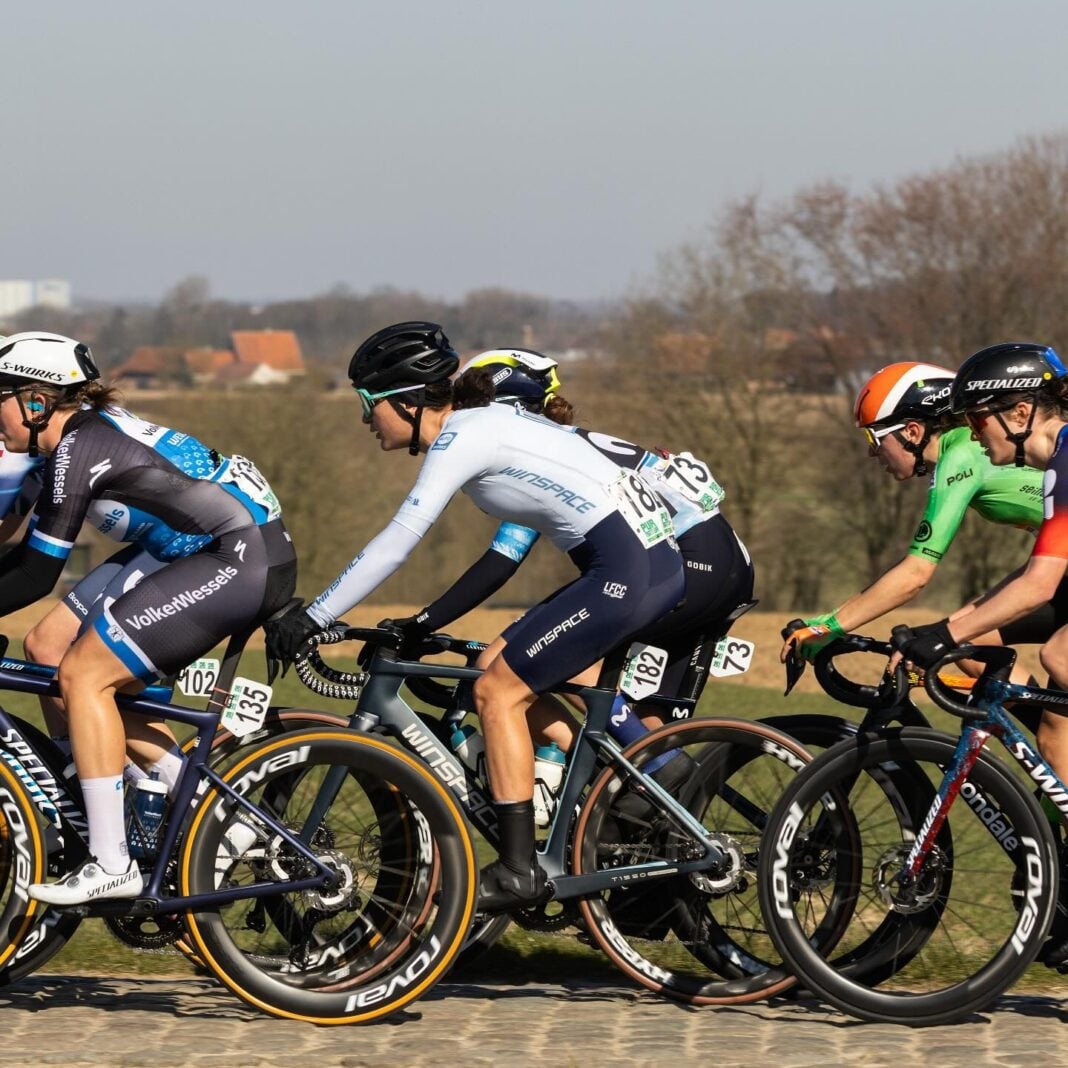
The final 15 kilometres were chaotic. Vollering tried again on one of the small rises in Gemona, but the move did not stick. Pfeiffer Georgi attacked hard, with Lauren Dickson leading the chase before Silvia Persico brought the British rider back. Persico then went again herself, was joined by Nina Buijsman, and the pace repeatedly eased and surged as no team fully committed to controlling the finale.
Aude Biannic attacked for Movistar as the leading group swelled to around 35-40 riders. Rosita Reijnhout also tried for Team Visma | Lease a Bike, but the race still refused to settle.
Haugset almost steals it late
The most dangerous late move came from Sigrid Ytterhus Haugset. The Uno-X Mobility rider attacked inside the final 6 kilometres and quickly built a small but threatening gap. With the chase behind disorganised, she briefly looked capable of taking the first professional win of her career.
FDJ United-SUEZ led the chase, with Liv AlUla Jayco and Lidl-Trek also contributing as the kilometres ticked down. Haugset still had around 10 seconds with 3 kilometres to go, then 5 seconds inside the final 2 kilometres. The catch was far from certain, especially as the final run-in included a railway crossing, roundabouts and a left turn onto the finishing straight.
The final catch came inside the last 550 metres, just after the left turn at the roundabout. Haugset’s attack had stretched the bunch and disrupted the sprint trains, but it also left the reduced peloton charging into the finish without a clean structure.
-
 Photo Credit: quentinphotographiebe
 -
 Photo Credit: Getty
Balsamo catches Williams to win in pink
The sprint opened from a messy position. Williams launched first and committed early, trying to take advantage of the disruption caused by the late chase. For a few seconds, it looked like she might have timed it perfectly, especially with the maglia rosa not immediately on her wheel.
Balsamo, though, had enough speed left after surviving the climbs and the disorganised finale. The Italian came through strongly in the final metres, caught Williams and moved clear to take her second consecutive stage win. It was not as controlled as Caorle, but it was arguably more impressive, because she had survived the Montenars selection, returned after the race split, and still had the sprint to finish it off.
Gerritse came from far back to take third, a strong result after a finale where SD Worx-Protime had been active through Van der Breggen and other GC positioning work. Longo Borghini took fourth after aiming for the bonus seconds, but just missed the podium places and the extra time on offer.
For Balsamo, the win reinforced her position at the top of the race. She began the stage in pink, survived a route that many expected to be just hard enough to unsettle the sprinters, and then beat a reduced front group on a day where the finish had been far from straightforward.
The GC contenders also showed themselves for the first time. Vollering attacked, Longo Borghini followed, Reusser was present, Van der Breggen helped drive the selection, and the race briefly looked as though it might split open before the final 20 kilometres. It did not create major time gaps in the end, but it confirmed that the Giro had moved beyond pure sprint stages.
Stage 3 belonged to Balsamo, but it was shaped by much more than the final sprint. The early break took the race into the hills, Montenars forced the first serious GC selection, Haugset almost stole the day late, and Williams made Balsamo work for the win all the way to the line. The maglia rosa answered all of it.
Giro d’Italia Women 2026 stage 3 result
| Position | Rider | Team | Time/gap |
|---|---|---|---|
| 1 | Elisa Balsamo | Lidl-Trek | 3:43:43 |
| 2 | Lily Williams | Human Powered Health | same time |
| 3 | Femke Gerritse | Team SD Worx-Protime | same time |
| 4 | Elisa Longo Borghini | UAE Team ADQ | same time |
| 5 | Silvia Persico | UAE Team ADQ | same time |
| 6 | Pfeiffer Georgi | Team Picnic PostNL | same time |
| 7 | Millie Couzens | Fenix-Premier Tech | same time |
| 8 | Marlen Reusser | Movistar Team | same time |
| 9 | Célia Gery | FDJ United-SUEZ | same time |
| 10 | Cecilie Uttrup Ludwig | Canyon SRAM | same time |
Main photo credit: Getty

