

Giro d’Italia Women 2026 stage 3 is where the race begins to move away from the sprinters and towards riders who can handle repeated climbing, positioning and a more awkward finale. The route from Bibione to Buja on Monday, 1st June covers 156km and brings around 1,000 metres of elevation gain, with most of the difficulty packed into the second half of the stage.
After two sprint stages, Elisa Balsamo starts in the maglia rosa with two official stage wins and a useful early lead. She won stage 2 in Caorle after being promoted to the stage 1 victory following Lorena Wiebes’ disqualification, and Lidl-Trek now have both a leader’s jersey and longer-term GC options to protect as the terrain becomes more selective.
Stage 3 is not a mountain stage, but it is the first day where the pure sprinters may struggle to control the race. The finishing circuit around Buja, the rolling roads in Friuli and the late climb of Montenars all point towards a reduced group, a late attack or a sprint between riders who can survive a much harder day than the opening weekend offered.
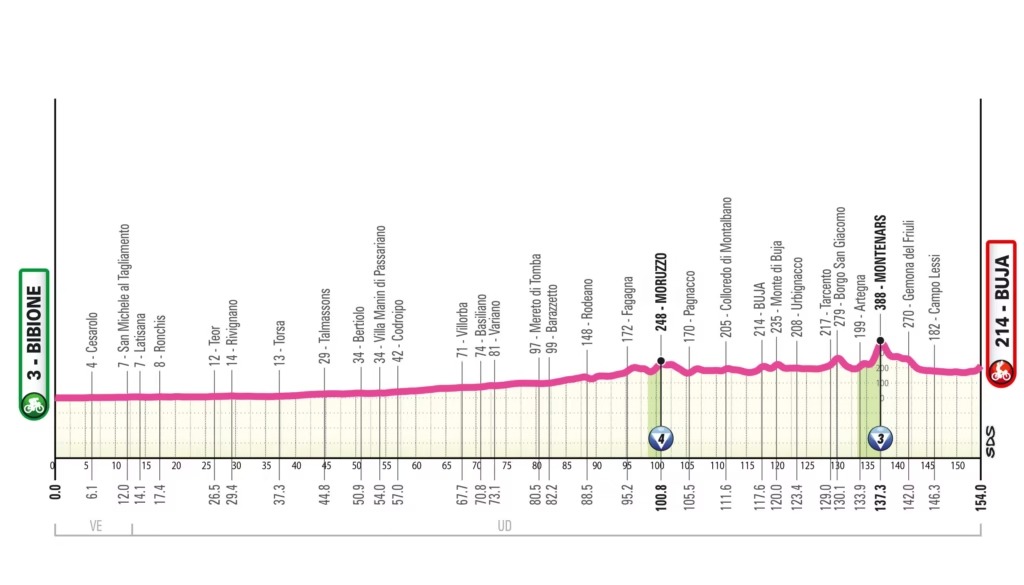
Giro d’Italia Women 2026 stage 3 route
Stage 3 starts in Bibione, on the Adriatic coast, before the race heads inland towards Friuli and a very different type of terrain. The opening part of the stage should be relatively manageable, which may allow a breakaway to establish itself before the route starts to become more demanding.
The stage becomes increasingly rolling as it moves towards Buja. This is where the day starts to change shape. The route is not defined by one huge climb, but by repeated rises, narrow roads, shifting rhythm and the kind of terrain that can gradually strip away the support around the sprinters and GC leaders.
The main late difficulty comes from Montenars, a climb of around 3km that is much harder in its second half. The gradients bite into double figures and the summit comes around 17km from the finish, close enough to make it a genuine launch point. The road after the top is not simply flat either, which means a small group or strong solo rider can still hold an advantage if the bunch hesitates behind.
The finish in Buja comes after a 36.3km finishing circuit, taken once. That gives the final part of the stage a more tactical feel than the opening sprint days. Teams will need to decide whether to control, attack or simply protect their leaders before the uphill time trial to Nevegal on stage 4.
For the wider race picture, ProCyclingUK’s Giro d’Italia Women 2026 full route guide explains how stage 3 fits into the race’s gradual shift from sprint stages to the first major GC tests.
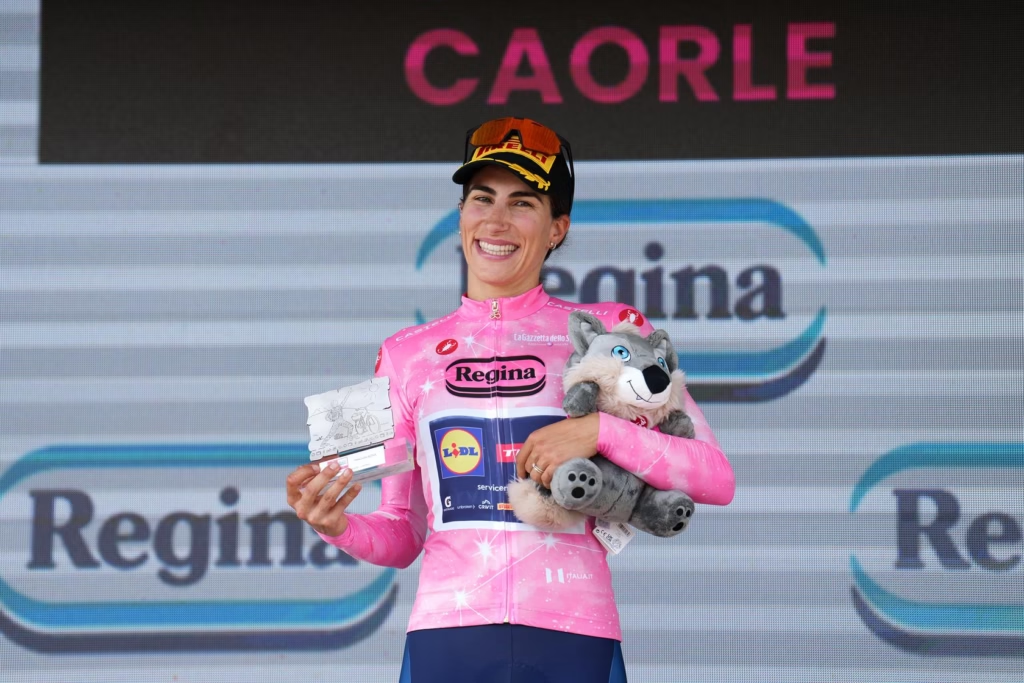 Photo Credit: RCS
What’s on offer on stage 3?
- Stage: Stage 3
- Date: Monday, 1st June
- Route: Bibione to Buja
- Distance: 156km
- Stage type: Hilly / semi-mountain
- Elevation gain: around 1,000 metres
- Key climb: Montenars, around 3km, with steeper gradients in the second half
- Key feature: 36.3km finishing circuit around Buja
- Expected start: around 12:45 BST
- Expected finish: around 16:40-17:00 BST
- UK live coverage: TNT Sports and HBO Max
Why stage 3 changes the tone of the Giro
The first two stages gave the sprint teams a clear target. Stage 3 is less simple. The profile is still manageable compared with the Dolomites or Sestriere, but it creates enough uncertainty to make control much harder.
The timing is important too. Stage 4 is the uphill time trial to Nevegal, so the main GC contenders may be reluctant to spend too much energy on stage 3. That could create space for stage hunters, punchy all-rounders and teams that are not carrying the burden of defending the maglia rosa.
For the sprinters, this is a much more difficult opportunity than Ravenna or Caorle. A rider such as Balsamo can survive a harder race and still sprint, but the pure fast finishers may need a controlled day to stay in contention. If Montenars is raced hard, the final 17km could become too chaotic for a full bunch sprint.
Can Elisa Balsamo defend the maglia rosa?
Balsamo starts stage 3 in a strong position. She leads Lara Gillespie by eight seconds and Chiara Consonni by 12 seconds, with the rest of the main group 20 seconds down after the opening two stages. That advantage has been built through bonus seconds rather than time gaps, but it still gives Lidl-Trek a useful buffer.
The bigger question is how much Lidl-Trek want to control. Balsamo is capable of winning from a reduced group, but the team also have riders with longer-term GC ambitions. Niamh Fisher-Black and Isabella Holmgren should become more important once the race reaches Nevegal and the mountains, so Lidl-Trek may not want to burn through the whole team just to force another sprint.
If Balsamo survives the final climb in the front group, she has every chance of keeping pink. If the race explodes on Montenars and the strongest climbers or puncheurs go clear, the jersey could become vulnerable for the first time.
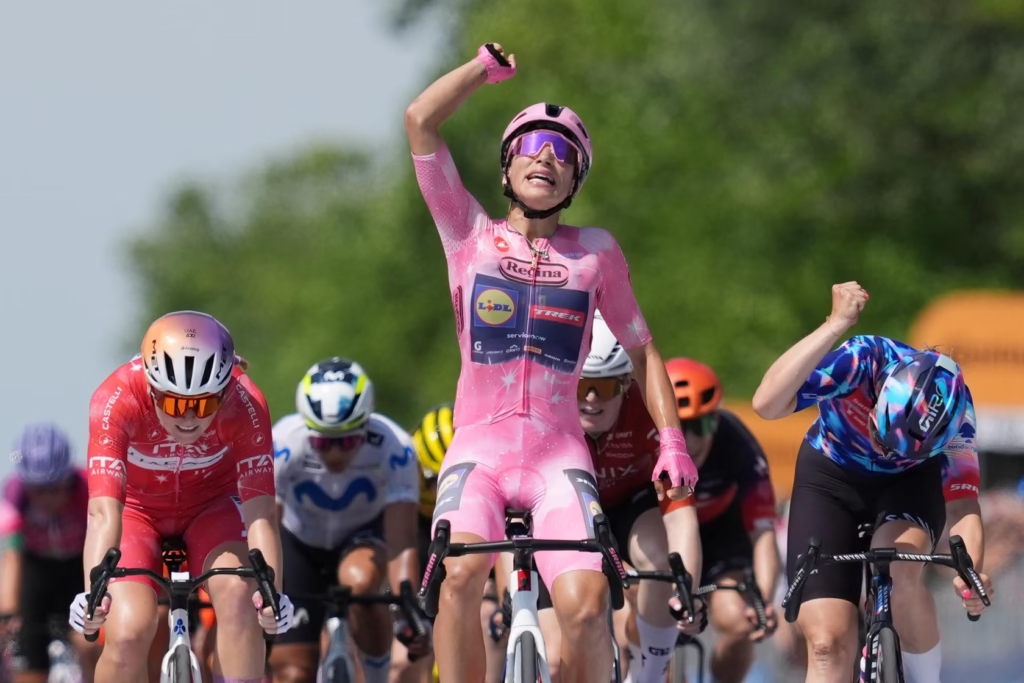 Photo Credit: RCS
Will stage 3 end in a sprint?
A sprint is possible, but it is unlikely to be the same kind of bunch sprint seen on stages 1 and 2. The late climb and rolling run-in should reduce the field, disrupt lead-outs and encourage attacks before the finish.
The most likely sprint scenario is a reduced group. That would suit riders who combine speed with resilience, particularly Balsamo, Consonni, Gillespie and other fast finishers who can handle a harder day. Charlotte Kool and the pure sprint group will need the race to be more controlled if they are to remain in contention.
A late attack is also realistic. Montenars comes close enough to the finish to tempt riders who know they cannot beat the fastest finishers on the line. If a strong group forms over the top and the chase lacks organisation, the stage could go to an attacker rather than a sprinter.
Could the GC favourites move?
The main GC favourites probably will not treat stage 3 as a full-scale overall battle, but they cannot ignore it. The climb of Montenars is steep enough to create splits, and the run to Buja is awkward enough to punish anyone badly positioned over the top.
Demi Vollering, Elisa Longo Borghini, Anna van der Breggen, Marlen Reusser, Niamh Fisher-Black, Antonia Niedermaier, Monica Trinca Colonel, Isabella Holmgren and Urška Žigart should all be focused on staying near the front and avoiding trouble. With the Nevegal time trial coming the next day, this is not the moment to take unnecessary risks, but it is a day where a poorly timed lapse could cost time.
Longo Borghini may be one of the more interesting names if the race becomes aggressive. UAE Team ADQ have Gillespie high on GC after two strong sprint stages, but Longo Borghini is their main overall card. A hard finale could allow her to test rivals without needing a full mountain stage.
-
 Photo Credit: A.S.O./Billy Ceusters
Riders to watch on Giro d’Italia Women stage 3
Elisa Balsamo is the market favourite and that makes sense given how the opening two stages have unfolded. She has the maglia rosa, two official stage wins and the resilience to survive a harder finale than Ravenna or Caorle. If Lidl-Trek can keep the race together over Montenars, she has the sprint to win again from a reduced group.
Demi Vollering is priced close behind and gives the stage a different tactical angle. She is not the obvious sprint pick, but any steep late climb gives her the chance to follow or force a selection. With Nevegal coming the next day, she does not need to attack, but if the race becomes hard on Montenars she is one of the riders most likely to be present.
Célia Gery is one of the more interesting names near the top of the odds. She is already wearing white and has shown enough sharpness in the opening stages to be treated as more than just a young rider classification presence. If the final group is reduced but still contains fast finishers, she could be dangerous.
Elisa Longo Borghini remains a serious threat if the stage is raced aggressively. UAE Team ADQ have Gillespie high on GC after two strong sprint stages, but Longo Borghini is their main overall card. A hard finale could allow her to test rivals without needing a full mountain stage.
Kristen Faulkner is well suited to the kind of stage where the sprint teams hesitate after a late climb. If the favourites mark each other or the reduced group becomes disorganised after Montenars, she has the engine to attack and hold a gap.
Eleonora Gasparrini deserves more attention after appearing high in the odds. A reduced sprint would suit her better than a full bunch finish, and this stage has enough climbing and positioning stress to bring riders with her profile into the frame.
Anna van der Breggen brings the experience to read this kind of stage well. She may not need to make the first move, but if a selective group forms, she should be one of the riders capable of being there.
Marlen Reusser is worth watching because a rolling, tactical stage can suit a rider with her engine. If the race becomes stretched after Montenars, she has the power to drive a group or make the chase uncomfortable.
Lara Gillespie has finished second on both official stage results so far and looks well suited to a finish that may be less controlled than a flat bunch sprint. If the race is reduced but not blown apart, she could be very dangerous again.
Chiara Consonni should also like this kind of stage if she survives the final climb in a good position. Her sprint is sharp enough to win from a smaller group, and the technical nature of the finale should reward timing.
Giro d’Italia Women 2026 stage 3 prediction
Stage 3 should be too hard for a completely straightforward bunch sprint, but the odds suggest the market still expects a fast finisher to survive rather than a pure GC attack to decide the day. That makes Balsamo the logical pick. She has already shown the speed, form and positioning needed across the opening weekend, and the stage is not hard enough to guarantee she is dropped before Buja.
Prediction: Elisa Balsamo
Longo Borghini, Vollering, Faulkner and Reusser all become more dangerous if Montenars is raced hard, but Balsamo has the strongest blend of current form, team support and finishing speed. If she gets over the final climb in the front group, she is the rider the others will have to beat.

