Most professional cycling teams live on sponsorship money. The names on their jerseys and buses are not decoration: they are the principal source of the funds that pay riders, mechanics, coaches and the rest of the operation. Prize money, race fees, merchandise and hospitality help, but they rarely change the overall picture. Cycling has neither a home stadium selling tickets every fortnight nor the routine television-rights distributions that sustain many football clubs.
A team’s budget is therefore not the sum of what its riders have won. It is money and support committed by businesses seeking visibility, sporting association and access to cycling’s audience. Management has to turn those agreements into a season of salaries, travel, equipment and racing, often committing to costs before the next sponsor renewal is certain.
Sponsorship pays for most of the peloton
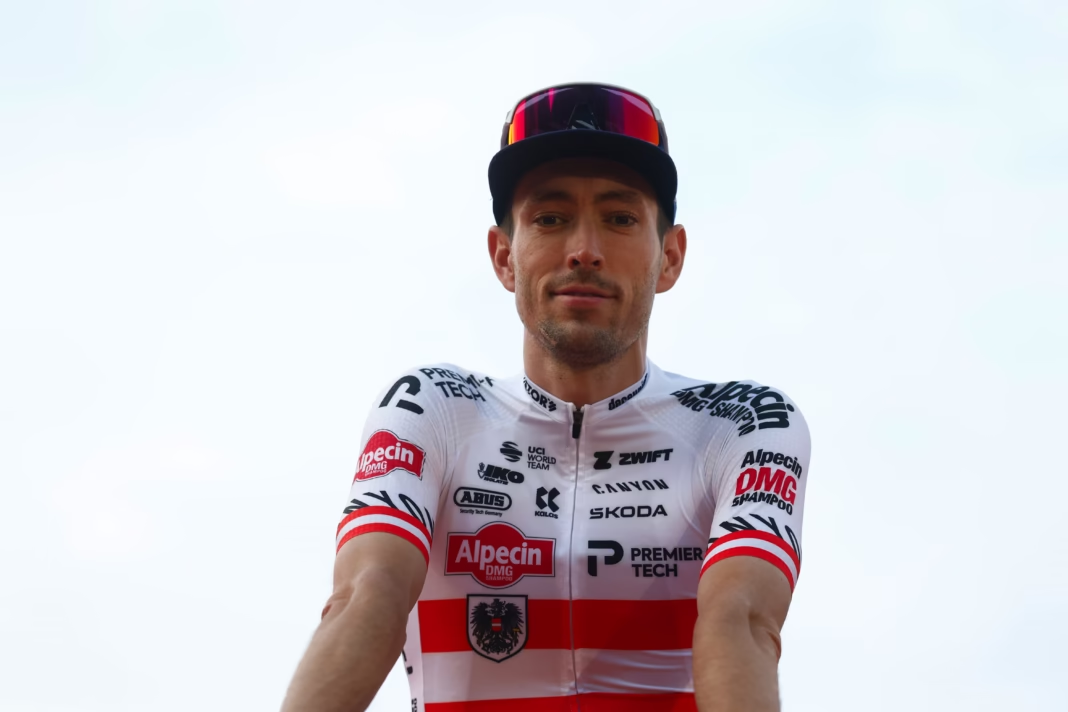
Look at the start list of a major race. Lidl-Trek, UAE Team Emirates-XRG and Team Visma | Lease a Bike put their commercial partners directly into the name printed beside each rider. Those partners receive exposure whenever a result is reported, a jersey appears on television or a team interview circulates online. Naming rights are particularly valuable because they keep working beyond the hours of live racing.
Published estimates suggest that sponsorship accounts for roughly 85 to 90 per cent of the revenue of men’s WorldTour teams overall, although the precise share varies considerably. The distinction between cash and support in kind is important. A bicycle manufacturer might supply frames, wheels and mechanical support, while a vehicle partner provides cars. Those arrangements reduce the team’s operating costs, but the retail value of supplied equipment is not necessarily money available to pay a rider’s salary.
Title sponsors usually make the largest commitments. Smaller partners may pay for specific placements, products, hospitality rights or joint campaigns. Some agreements cover several seasons; others have renewal options or performance clauses. The stability of those contracts is often more important to management than the value of one race victory. A team must employ people and book travel months before a sponsor receives the exposure it expects.
Winning still matters commercially, just not because of the cheque handed over at the finish. A Tour de France stage victory puts a sponsor in front of an enormous audience, and a spell in the yellow jersey can generate days of coverage. Teams can demonstrate that exposure through media-monitoring reports, but the resulting advertising value is an estimate of what comparable exposure might cost, not cash paid by broadcasters into the team’s bank account.
Prize money is real, but it rarely pays the bills
Race organisers award money for stage victories, overall classifications, jerseys and other performances. The 2026 men’s Tour de France had a prize fund of a little over €2.3 million spread across the entire race. The overall winner’s listed prize was €500,000 and a stage win was worth €11,000. Those are significant amounts for individuals, but modest when compared with the annual cost of a top-level squad.
UAE Team Emirates-XRG collected about €833,000 from the 2026 men’s Tour, more than any other squad. That is a substantial sporting payout but still a small part of the annual expenditure of a leading WorldTour team. Most of the other 22 teams earned far less, which is why even the most successful race of the season cannot be the foundation of a team budget.
Nor does the published prize-money table represent income retained entirely by the team’s owners. Riders and staff commonly share winnings under team arrangements. A rider who wins a stage benefits from the work of teammates, mechanics, soigneurs and support staff, so a collective distribution is normal. The detail depends on agreements and can differ between teams and races. Our Tour de France prize-money guide breaks down the race awards themselves.
Race organisers may also pay participation or appearance fees and provide certain logistical support. These payments are not identical across events or squads, and they should not be confused with prize money. A prominent rider or team can make a race more attractive to spectators and broadcasters, giving organisers a reason to negotiate. For smaller teams, invitations to major races may be commercially crucial because they deliver sponsor exposure that would otherwise be difficult to obtain.
Why television money does not work like football
Television rights are a major source of income in many sports, but cycling has a different structure. The biggest events are owned and commercially operated by race organisers. They sell broadcasting packages and race sponsorships, while teams provide the riders who make the spectacle possible. Teams do not generally receive a predictable league-wide distribution of rights income comparable with the payments made to Premier League clubs.
Consider the Tour de France. Its organiser can sell the event to broadcasters and commercial partners, but teams do not receive a large, dependable share of those rights in the way Premier League clubs do. Instead, they sell the exposure created by racing the Tour to their own sponsors. The organiser controls a valuable event; the teams must finance the riders who give it much of its appeal.
This is why proposals to reform cycling’s business model repeatedly return to revenue sharing, a more coordinated calendar and stronger commercial rights for teams. None is a simple fix. Organisers have their own costs and contracts, and even a meaningful redistribution would have to be weighed against rapidly rising team budgets. Our analysis of the financial pressures on the men’s peloton examines those structural arguments in more detail.
Merchandise, hospitality and other smaller income streams
Teams can sell replica jerseys, casual clothing, accessories and memberships to supporters. Some organise corporate rides, sponsor events or hospitality experiences around major races. Others earn income from content partnerships, speaking appearances, licensing or selling used team equipment at the end of the season. These activities can be commercially useful, especially for a squad with a recognisable identity and a loyal following.
The scale is usually much smaller than sponsorship. Accounts discussed publicly for the company behind Team Visma | Lease a Bike showed about €52 million in 2024 revenue, with sponsorship and related support making up the large majority. Marketing and fan-related income was around €1.8 million, while partnerships and events contributed approximately €1.2 million. Race participation, equipment sales and other premiums were smaller lines. That is one team’s reported accounting picture, not a universal formula.
Merchandise can work well for a team with a recognisable star, but cycling lacks football’s enormous replica-shirt market. Fans usually watch races from public roads without paying the team for entry. A rider’s popularity is consequently worth more in a negotiation with a sponsor than it is at a merchandise checkout, although strong fan relationships can still create useful secondary income.
Ownership and financial backing also vary. Some teams have wealthy private owners, foundations or investment structures behind them, and certain partnerships involve public bodies or state-linked organisations. That funding may give management more security than a collection of short commercial contracts, but it does not mean every team is profitable. An owner can cover losses or provide capital without creating a recurring independent source of revenue.
What does a professional cycling team spend its budget on?
The largest cost is people. A WorldTour team pays riders, sporting directors, coaches, mechanics, soigneurs, medical staff, nutrition specialists, performance analysts, communications staff and administrators. Staff travel for much of the year, and several races can be taking place on the same day. The operation extends far beyond the eight riders visible at a Grand Tour start line.
Figures reported for 2026 put the average men’s WorldTour-level operating budget at roughly €33 million, with a median closer to €28 million. The median is useful because a handful of exceptionally wealthy squads pull the average upwards. Those figures describe reported budgets from a UCI financial sample, rather than an audited list of every team’s accounts. The detailed comparison is in our 2026 WorldTour team budget guide.
Personnel expenditure can account for around three-quarters of a men’s top-tier team’s costs. Beyond salaries come hotels, flights, buses, service vehicles, training camps, insurance, licensing, medical support, performance technology and equipment that sponsors do not supply. A single team can run programmes in several countries simultaneously, with separate race and training groups. The calendar leaves little room for the sort of lean operation that might work for a small local sports club.
Money also buys flexibility. A wealthy squad can field leaders at overlapping races, maintain specialist support staff and absorb a run of injuries. A smaller operation must make sharper choices about its calendar and recruitment. That can reduce the exposure it offers sponsors, just when it needs to persuade those same companies to increase their backing.
The women’s peloton has a different financial scale
Women’s professional cycling uses the same basic model, with sponsors underwriting most team budgets, but the amounts are substantially lower. Reporting on the 2026 season put the average budget of a top-tier women’s squad at approximately €5.7 million. That is a significant increase on earlier years, yet still far below the men’s WorldTour average. The gap affects salaries, staffing, equipment provision, development opportunities and the ability to build a programme around several major races.
Professionalisation has brought stronger employment requirements and a clearer team structure. The UCI’s women’s ProTeam tier, introduced for 2025, includes minimum salary, staffing, insurance and financial guarantee obligations. These protections matter, but they do not remove the divide between the best-funded WorldTeams and smaller squads. The Cyclists’ Alliance survey of Continental riders illustrates how uneven employment conditions remain below the top level.
Race prize money is not a substitute for a secure team contract in the women’s peloton either. The Tour de France Femmes offers a smaller total purse than the men’s Tour, and most teams cannot base their finances on finishing positions. For riders and staff, dependable sponsorship is what supports wages and year-round preparation. Our Tour de France Femmes prize-money breakdown shows the separate race awards.
Greater visibility has made women’s teams more attractive to sponsors, but growth also brings rising expectations and costs. A sponsor can now associate with major televised races and a calendar with stronger international recognition. The commercial challenge is turning that visibility into multi-year contracts, rather than relying on short bursts of attention around the Tour de France Femmes.
Why a lost sponsor can end a team
The dependence on sponsors explains why established squads sometimes disappear despite strong results. A team’s commitments continue when a backer decides not to renew: riders still have contracts, staff still need paying and the following season’s equipment and travel have to be arranged. Replacing a title sponsor can mean finding several million euros in a short window, often while rivals are already signing riders and securing their own budgets.
Arkéa-B&B Hotels was a recent example of the risk. The French operation failed to secure the funding needed to continue into 2026 after its main sponsors withdrew. The loss affected more than the riders on television; it threatened the jobs and development pathways supported by the wider structure. Similar pressures are visible in smaller men’s and women’s teams, where a single commercial agreement can determine whether a licence application is viable.
The UCI’s licensing system examines financial and organisational requirements as well as sporting results. Teams must demonstrate that they can meet obligations, not simply that they have collected enough ranking points. Our guide to WorldTour promotion and relegation explains how those criteria interact. Financial security and competitive success are related, but they are not interchangeable.
Every winter brings the same calculation. Signing a star may attract a new sponsor, but it also adds a salary commitment. A development programme can produce future winners more cheaply, yet its return may take several seasons. Teams survive by turning sporting performances into reliable contracts, not by assuming the next stage victory will balance the accounts.
-
 Photo Credit: Alpecin-Premier Tech (official team announcement)
-
 Photo Credit: Cateye