
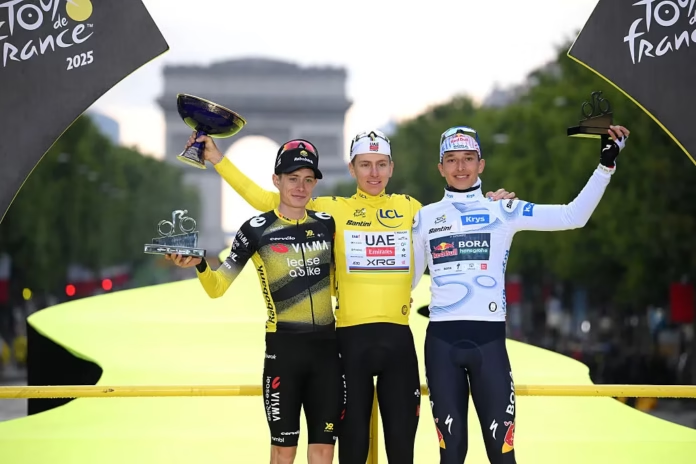
The Tour de France 2026 will award around €2.3 million in prize money across the three weeks of racing, with the overall winner of the yellow jersey receiving €500,000. That is the biggest single prize in the race, but it is only one part of the Tour’s wider prize structure.
Money is awarded for stage results, final classifications, daily jersey leads, intermediate sprints, mountain points, team performances, combativity awards and special bonuses. A rider can earn money without winning the Tour, and a team can build a large prize total through stage wins, jersey days, breakaways and collective consistency.
The headline number is clear: winning the Tour de France is worth €500,000 in official prize money. But in practice, that money is usually not kept by one rider. Tour prize money is traditionally pooled within a team and shared among riders and staff, reflecting the fact that even the biggest individual victory is built on team work.
The official Tour de France sporting stakes page confirms around €2.3 million will be awarded to teams and riders in 2026, including €500,000 for the final overall winner. A detailed 2026 Tour de France prize-money breakdown lists €2,302,800 in direct prizes and bonuses across the race.
The 2026 race starts in Barcelona and finishes in Paris after 21 stages, with a team time-trial, an individual time-trial, 8 mountain stages and 5 summit finishes. That route shape matters because the prize opportunities are spread across every kind of stage. Sprinters, climbers, GC riders, breakaway specialists, young riders and teams all have different ways to earn.
For the wider context of the race, see our Tour de France 2026 full route guide and our beginner’s guide to Men’s Tour de France 2026.
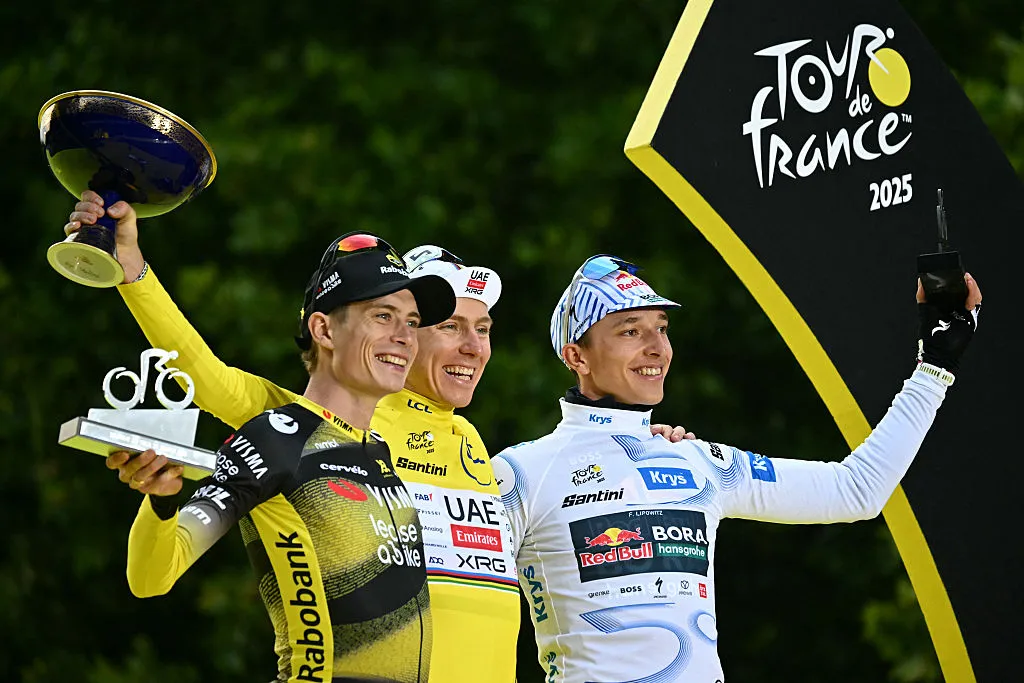 Photo Credit: Getty
Tour de France 2026 prize money at a glance
| Prize area | Total prize money |
|---|---|
| Stage classification | €601,650 |
| General classification | €1,138,800 |
| Points classification | €128,000 |
| Mountains classification | €114,050 |
| Youth classification | €66,500 |
| Team classification | €178,800 |
| Combativity classification | €56,000 |
| Special bonus prizes | €19,000 |
| Total direct prizes and bonuses | €2,302,800 |
The total rises further once additional union tax and cyclist retraining contributions are included, but the direct prize and bonus pool available across the race is €2,302,800.
How much does the Tour de France winner get?
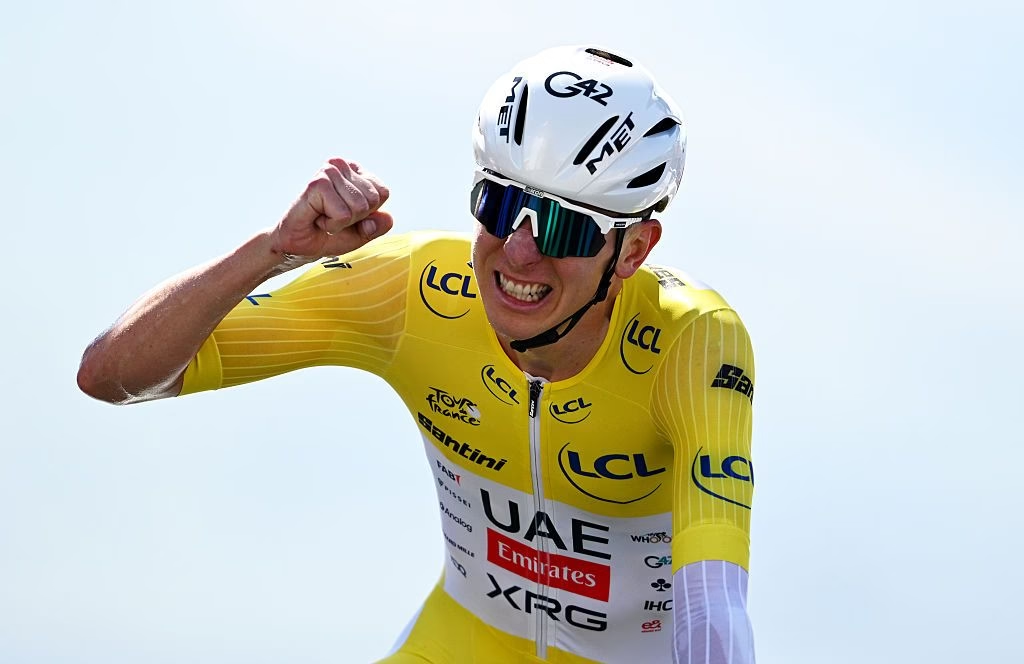
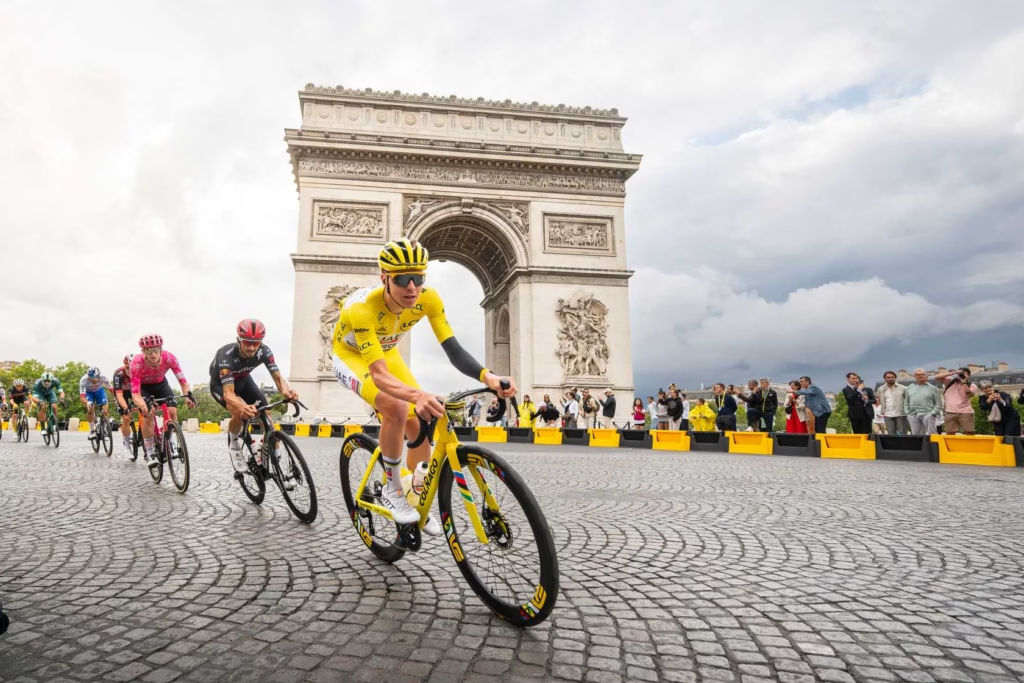
The winner of the 2026 Tour de France will receive €500,000 for finishing first in the final general classification. That is the biggest individual prize in the race and by far the largest amount attached to any single result.
Final general classification prize money
| Final GC position | Prize money |
|---|---|
| 1st | €500,000 |
| 2nd | €200,000 |
| 3rd | €100,000 |
| 4th | €70,000 |
| 5th | €50,000 |
| 6th | €25,000 |
| 7th | €11,500 |
| 8th | €7,800 |
| 9th | €4,500 |
| 10th | €3,800 |
| 11th | €3,000 |
| 12th | €2,700 |
| 13th | €2,500 |
| 14th | €2,100 |
| 15th | €2,000 |
| 16th | €1,500 |
| 17th | €1,300 |
| 18th | €1,200 |
| 19th | €1,100 |
| 20th to 160th | €1,000 |
The final general classification is the race’s main prize structure. The top five receive the largest rewards, while every rider finishing from 20th to 160th earns €1,000.
That is important because simply finishing the Tour has value. A rider who spends three weeks working for others, loses time in the mountains and finishes far down the standings still earns a Paris finisher’s prize if they complete the race.
The GC money also shows how much the Tour is weighted towards the yellow jersey. First place receives €500,000, more than twice the €200,000 awarded to second and five times the €100,000 awarded to third. For more on the riders chasing that top prize, see our Tour de France 2026 GC favourites ranked and our guide to Tour de France 2026 dark horses for the general classification.
How much does the yellow jersey wearer get each day?
The rider wearing the yellow jersey receives €500 per stage from stage 2 through stage 21. Across the race, that creates an extra €10,000 in daily yellow jersey payments.
That is separate from the final general classification prize. A rider can therefore earn money by wearing yellow early, even if they do not win the Tour overall.
This matters most in the first week. A rider who takes yellow in the opening team time-trial or an early stage can collect daily jersey payments while also giving the team publicity. The yellow jersey’s financial value is small compared with sponsorship exposure, but it is still part of the Tour’s official prize structure.
The 2026 race begins with a 19.6km team time-trial in Barcelona, which means the first yellow jersey will be won in a very specific team-based format. Our Tour de France 2026 team time-trial explained guide breaks down how that opening stage works, while our feature on how the stage 1 team time-trial could change the Tour de France 2026 explains why early GC gaps could appear immediately.
How much does a Tour de France stage winner get?
A stage win at the 2026 Tour de France is worth €11,000. Prize money is awarded to the top 20 riders on each stage, with €28,650 paid out per day.
Across 21 stages, the stage classification prize fund totals €601,650.
 Photo Credit: Getty
Tour de France 2026 stage prize money
| Stage position | Prize money |
|---|---|
| 1st | €11,000 |
| 2nd | €5,500 |
| 3rd | €2,800 |
| 4th | €1,500 |
| 5th | €830 |
| 6th | €780 |
| 7th | €730 |
| 8th | €670 |
| 9th | €650 |
| 10th | €600 |
| 11th | €540 |
| 12th | €470 |
| 13th | €440 |
| 14th | €340 |
| 15th | €300 |
| 16th | €300 |
| 17th | €300 |
| 18th | €300 |
| 19th | €300 |
| 20th | €300 |
This is why stage wins remain so important even for teams without a realistic GC contender. A sprint team, breakaway team or opportunistic squad can earn prize money and attention by targeting the right days.
The 2026 route has 7 flat stages, 4 hilly stages and 8 mountain stages, which means stage-win opportunities should be spread across different rider types. Sprinters will look at the flatter days, climbers at the summit finishes, and attacking riders at the hilly and transitional stages.
Our Tour de France 2026 route’s best days for sprinters and Tour de France 2026 breakaway stages ranked guides explain where those stage-win chances are most likely to come. For a wider look at opportunistic riders, see our Tour de France 2026 stage hunters to watch.
How much can sprinters win?
Sprinters can earn money through stage wins, stage placings, the points classification, intermediate sprints and daily green jersey payments.
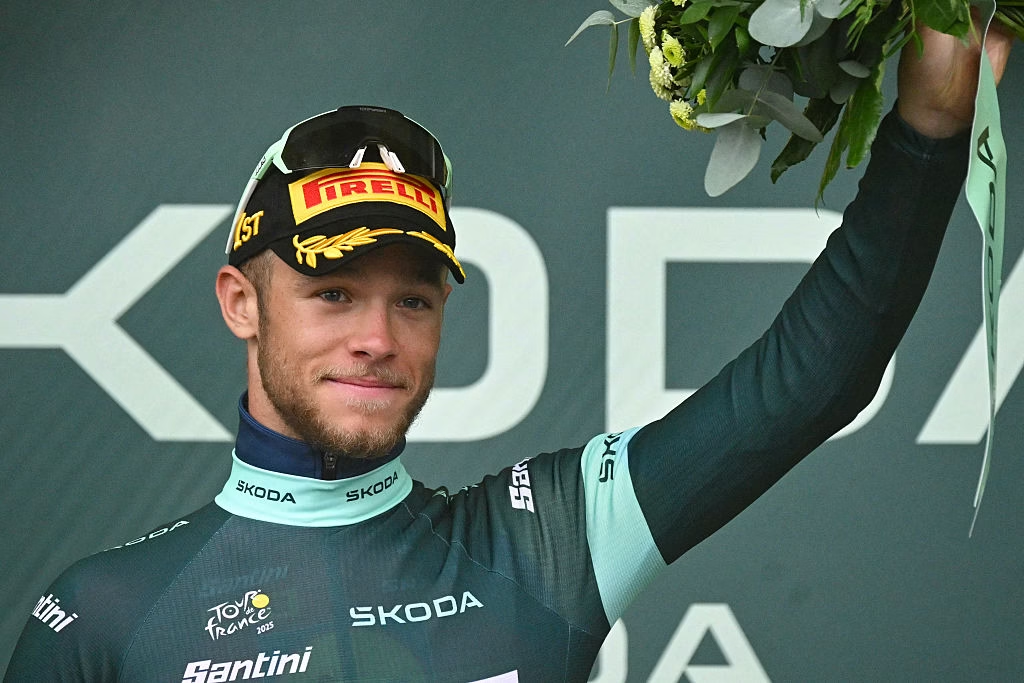
The biggest green jersey prize comes at the end of the race. The winner of the final points classification receives €25,000, with €65,000 shared among the top eight.
Final points classification prize money
| Final points classification position | Prize money |
|---|---|
| 1st | €25,000 |
| 2nd | €15,000 |
| 3rd | €10,000 |
| 4th | €4,000 |
| 5th | €3,500 |
| 6th | €3,000 |
| 7th | €2,500 |
| 8th | €2,000 |
There is also money available during the race. The daily green jersey wearer receives €300 per stage from stage 2 through stage 21, adding up to €6,000 across the race. Intermediate sprints are also paid, with €1,500 for first, €1,000 for second and €500 for third.
Across the final standings, daily jersey payments and intermediate sprints, the 2026 points classification prize fund totals €128,000.
That does not include stage-win money. A sprinter who wins multiple stages and finishes high in the green jersey competition can therefore build a much larger total than the €25,000 headline prize suggests.
The 2026 green jersey race will also be shaped by changes to the points structure, with the flat stages given more weight. For more on the riders likely to target it, see our Tour de France 2026 sprinters guide and our feature on Jonathan Milan at the Tour de France 2026.
How much can climbers win?
Climbers can earn prize money through stage wins, mountain points, the final mountains classification and daily polka-dot jersey payments.
The winner of the final mountains classification receives €25,000. The top eight riders share €65,000, using the same final prize scale as the points classification.
 Photo Credit: Getty
Final mountains classification prize money
| Final mountains classification position | Prize money |
|---|---|
| 1st | €25,000 |
| 2nd | €15,000 |
| 3rd | €10,000 |
| 4th | €4,000 |
| 5th | €3,500 |
| 6th | €3,000 |
| 7th | €2,500 |
| 8th | €2,000 |
The daily polka-dot jersey wearer receives €300 per stage from stage 2 through stage 21, creating a possible €6,000 in daily jersey money. There is also prize money at categorised climbs.
Mountain climb prize money
| Climb category | Prize money |
|---|---|
| Hors catégorie | €800 for 1st, €450 for 2nd, €300 for 3rd |
| Category 1 | €650 for 1st, €400 for 2nd, €150 for 3rd |
| Category 2 | €500 for 1st, €250 for 2nd |
| Category 3 | €300 for 1st |
| Category 4 | €200 for 1st |
Across the final standings, daily jersey payments and climb prizes, the mountains classification prize fund totals €114,050.
The 2026 Tour should give climbers plenty to chase, with 8 mountain stages and 5 summit finishes. Our Tour de France 2026 climbers guide explains who could target the polka-dot jersey, while our Tour de France 2026 summit finishes guide identifies the uphill finishes where mountain points and GC time may overlap.
How much does the white jersey winner get?
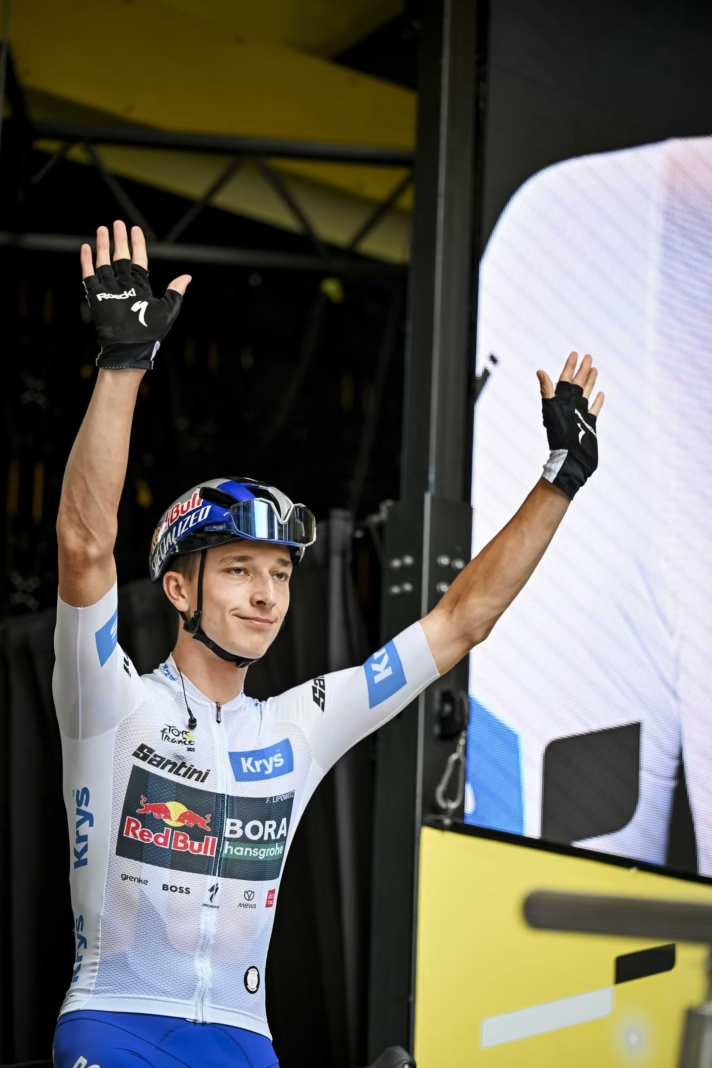
The winner of the youth classification receives €20,000. The white jersey is awarded to the best young rider on general classification, with the top four sharing €50,000.
Final youth classification prize money
| Final youth classification position | Prize money |
|---|---|
| 1st | €20,000 |
| 2nd | €15,000 |
| 3rd | €10,000 |
| 4th | €5,000 |
The best young rider on each stage receives €500, and the daily white jersey wearer receives €300 from stage 2 through stage 21. Together with the final standings, the youth classification prize fund totals €66,500.
This can be a meaningful competition for emerging GC riders. A rider may not yet be ready to win the Tour outright, but a strong white jersey challenge can bring prize money, visibility and proof that they can handle three weeks at the highest level.
The 2026 race has several young riders who could become major storylines. Our Tour de France 2026 young riders to watch guide looks at the names most likely to shape that competition, while our Tour de France 2026 jerseys explained guide breaks down how the white jersey fits alongside yellow, green and polka-dot.
How much does the best team win?
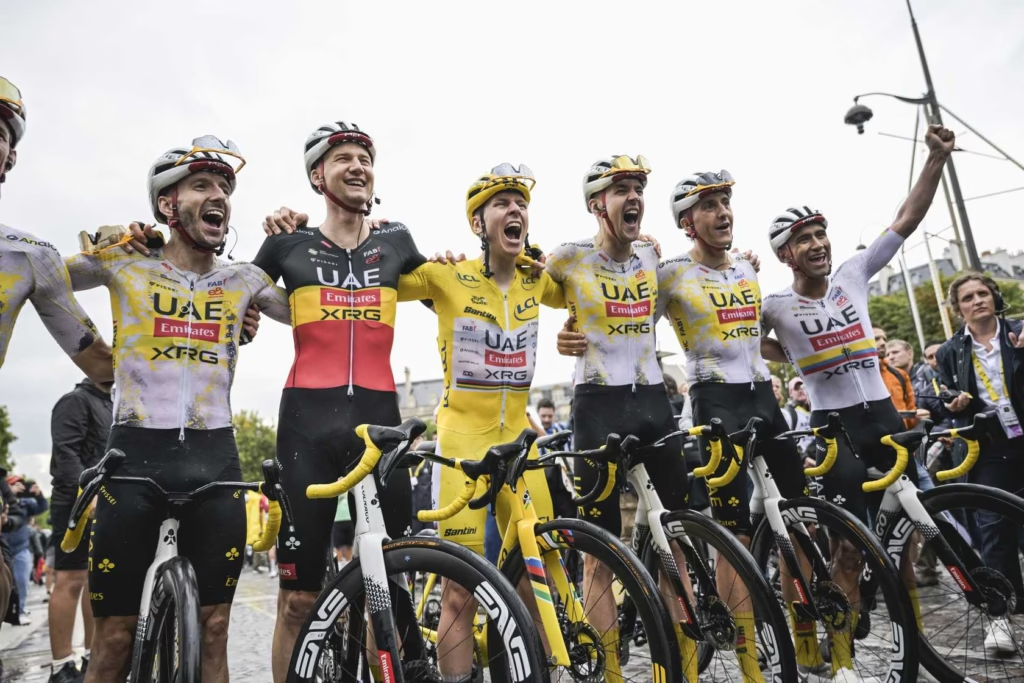
The winning team in the final team classification receives €50,000. The top five teams share €120,000, and the best team on each stage receives €2,800.
Across the final team standings and daily team prizes, the team classification prize fund totals €178,800.
Tour de France 2026 team classification prize money
| Team classification position | Prize money |
|---|---|
| 1st | €50,000 |
| 2nd | €30,000 |
| 3rd | €20,000 |
| 4th | €12,000 |
| 5th | €8,000 |
| Daily best team | €2,800 |
The team classification is calculated by adding together the times of each team’s three best riders on each stage. It rewards depth as much as star power. A team with multiple strong climbers and consistent GC support riders can score well even if it does not win yellow.
This is also why squad construction matters. A Tour team is not just one leader and seven helpers. It needs enough strength to protect a GC rider, survive mountain days, support sprints, chase breakaways and manage bad luck.
Our Tour de France 2026 team-by-team guide looks at how each squad may approach the race, while our guide to Tour de France 2026 domestiques who could decide the race explains why support riders can be just as important as leaders.
How much is the combativity award worth?
The daily combativity award is worth €2,000. It is given to the rider judged to have animated the stage, usually through attacking, breakaway riding or aggressive racing.
In 2026, the daily combativity prize is available on 18 stages, excluding the two time-trials and the final stage. That creates a €36,000 daily combativity fund.
At the end of the race, the Super Combatif award is worth €20,000. This goes to the rider judged to have been the most combative across the whole Tour.
That brings the total combativity prize fund to €56,000.
This is a significant prize area for breakaway riders. A rider may not win the stage, but a long-range attack can still earn a daily combativity award, television time and team value. Our Tour de France 2026 stage hunters to watch guide highlights the type of riders who could make this competition relevant.
What special bonus prizes are available?
The Tour de France also awards special bonus prizes worth a combined €19,000 in 2026.
The first rider over the Col du Tourmalet on stage 6 will receive the €5,000 Souvenir Jacques Goddet. The first rider over the Col du Galibier on stage 20 will receive the €5,000 Souvenir Henri Desgrange.
There is also a Best Teammate prize worth €9,000 in total. A jury selects the best teammate at the end of each of the first two weeks and after stage 20, with each winner receiving €2,000. The overall Best Teammate of the Tour receives an additional €3,000.
These prizes are not as large as the yellow jersey award, but they matter because they recognise different kinds of achievement. The Tour is not only about the rider who wins in Paris. It also rewards iconic climbs, attacking intent and selfless work.
Stage 20 should be especially important because the Galibier and Alpe d’Huez sit at the heart of the queen stage. Our Tour de France 2026 queen stage guide explains why that day could decide both prize money and the yellow jersey.
Do riders keep all the prize money?
Usually, no. Tour de France prize money is traditionally pooled within the team and shared among riders and staff.
That tradition reflects the way cycling works. A stage winner may cross the line first, but teammates may have spent the day chasing the breakaway, controlling the peloton, delivering bottles, positioning the sprinter or protecting the GC leader. Mechanics, soigneurs, directors and other staff also contribute to the result.
The exact distribution depends on the team, but it is common for riders and staff to share prize money rather than one rider keeping everything personally.
That means the €500,000 awarded to the Tour winner should not be viewed as a direct personal payday in the same way as prize money in tennis or golf. It is the official prize attached to the result, before internal team sharing and taxation.
Why Tour de France prize money is smaller than many people expect
Tour de France prize money can look surprisingly modest compared with the size of the race. The Tour is one of the biggest annual sporting events in the world, yet its total direct prize pool is around €2.3 million.
That is partly because cycling’s economics work differently from many individual sports. The leading riders earn most of their money through salaries, bonuses, endorsements and sponsorship arrangements, not direct race prize money.
For the biggest names, winning the Tour is financially valuable far beyond the official €500,000. It strengthens contract value, sponsor visibility, team status and long-term marketability. For lower-paid riders, domestiques and staff, the prize pool can still be meaningful, especially when shared across the team.
So the official prize list matters, but it does not tell the whole financial story of the Tour. For more general context on the sport’s pay structure, see our guide to how much pro cyclists earn.
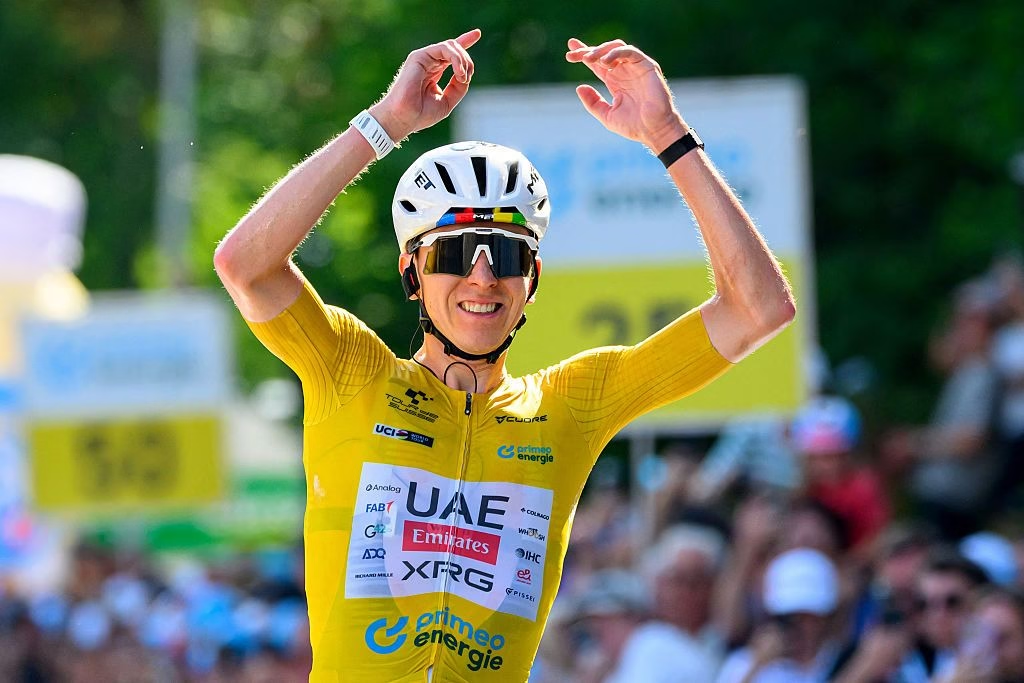 Photo Credit: Getty
Who can earn the most at the 2026 Tour de France?
The biggest earner is usually the overall winner, especially if they also win stages or wear yellow for many days. A dominant GC rider can combine the €500,000 final prize with stage wins, daily yellow jersey payments and possibly mountain points.
A sprinter can also build a significant total by winning stages and the green jersey. A rider who wins three stages, finishes high in the points classification and collects intermediate sprint prizes can earn far more than the final green jersey prize alone suggests.
A climber targeting the polka-dot jersey can earn through summit prizes, mountain classification money, combativity awards and breakaway stage results. The total may not reach yellow jersey levels, but it can be valuable.
Teams can also accumulate prize money steadily. A squad with a GC podium, stage wins, several jersey days and a strong team classification can leave the Tour with a large collective total even if it does not win yellow.
How prize money links to race tactics
Prize money rarely decides tactics by itself, but it can reinforce existing goals.
A team without a GC contender may chase stage wins because they bring visibility and prize money. A breakaway rider may target intermediate sprints, mountain points or combativity awards if the stage win becomes unlikely. A team with several strong climbers may care about the team classification if it becomes realistic.
The Tour is still driven mostly by prestige, sporting goals and sponsor exposure. A stage win at the Tour is worth more to a team than €11,000 because of the publicity that comes with it. But the prize money system helps reward the many layers of racing that happen below the yellow jersey battle.
That is why the Tour’s prize structure is spread so widely. It pays the winner, but it also pays the riders who animate stages, survive to Paris, wear jerseys, win sprints, collect mountain points and make the race harder to control.
-
 Photo Credit: Gaetan Flamme
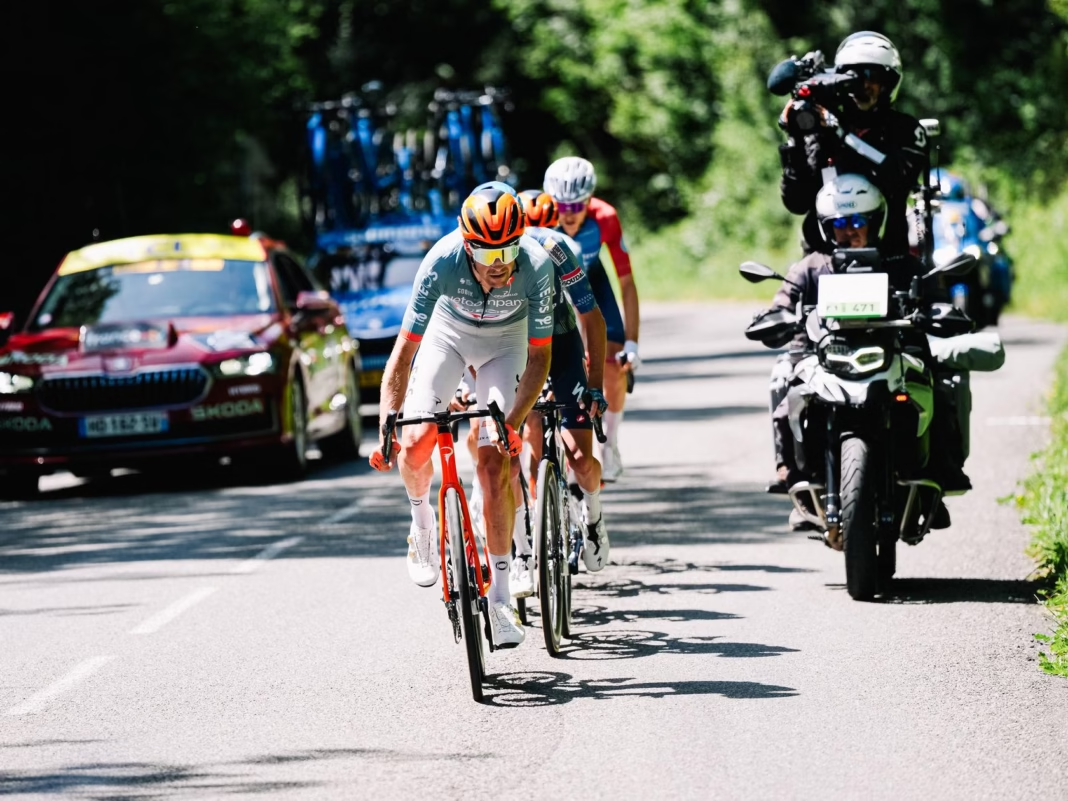
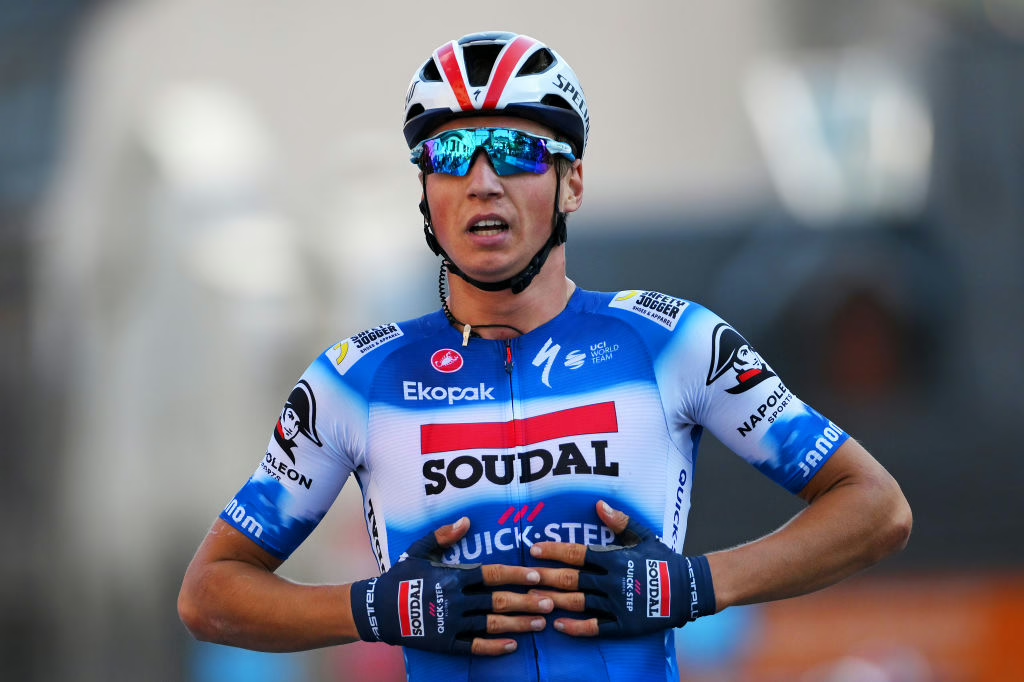
Tour de France 2026 prize money FAQ
How much prize money is there at the 2026 Tour de France?
The 2026 Tour de France has €2,302,800 in direct prize money and bonuses, spread across stage results, classifications, jersey leads, team prizes, combativity awards and special bonuses.
How much does the Tour de France winner get in 2026?
The winner of the final general classification receives €500,000.
How much does a Tour de France stage winner get?
A stage winner receives €11,000. The top 20 riders on each stage receive prize money.
How much does the green jersey winner get?
The final points classification winner receives €25,000. The top eight in the final points standings share €65,000, with more money available through daily jersey payments and intermediate sprints.
How much does the polka-dot jersey winner get?
The final mountains classification winner receives €25,000. Riders can also earn money at categorised climbs and through daily polka-dot jersey payments.
How much does the white jersey winner get?
The final youth classification winner receives €20,000. The top four young riders in the final standings share €50,000.
How much does the best team win?
The winning team in the final team classification receives €50,000. The top five teams share €120,000, with daily team prizes also available.
Do Tour de France riders keep their prize money?
Usually, prize money is pooled within the team and shared among riders and staff. The exact split depends on the team.
Why the Tour de France prize money matters
Tour de France prize money is not the main reason riders want to win the race. The Tour is bigger than its prize list. Yellow means history, status, contract value, sponsor attention and a place in cycling’s most important story.
But the money still matters because it shows how many races are happening inside the Tour. The yellow jersey battle has the biggest prize, but sprinters, climbers, young riders, breakaway specialists, domestiques and whole teams all have ways to earn.
That is what makes the Tour’s prize structure interesting. It rewards winning, but it also rewards survival, consistency, aggression and teamwork. The rider in yellow may take the headline money, but the full prize list reflects the full race.
By the time the Tour reaches Paris, the financial table usually tells its own story: who controlled the race, who animated it, who kept winning stages, who wore the jerseys, and which teams turned three weeks of effort into results.
For more 2026 race build-up, route guides and explainers, visit our Tour de France hub.

