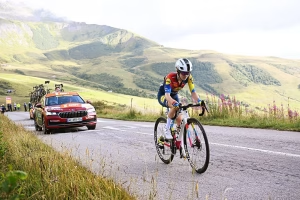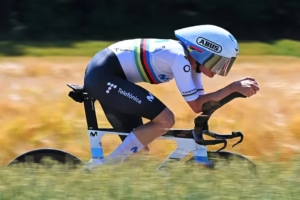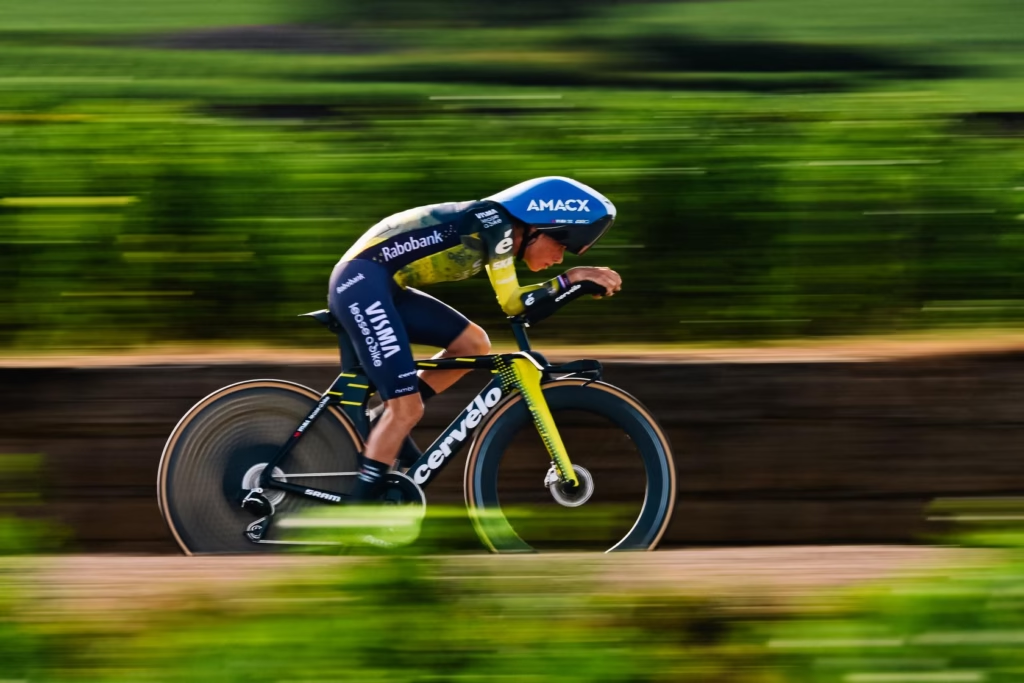
Pauline Ferrand-Prévot’s Tour de France Femmes title defence is in serious difficulty after the Dijon time trial, but the hardest terrain still gives her a credible route back into the race.
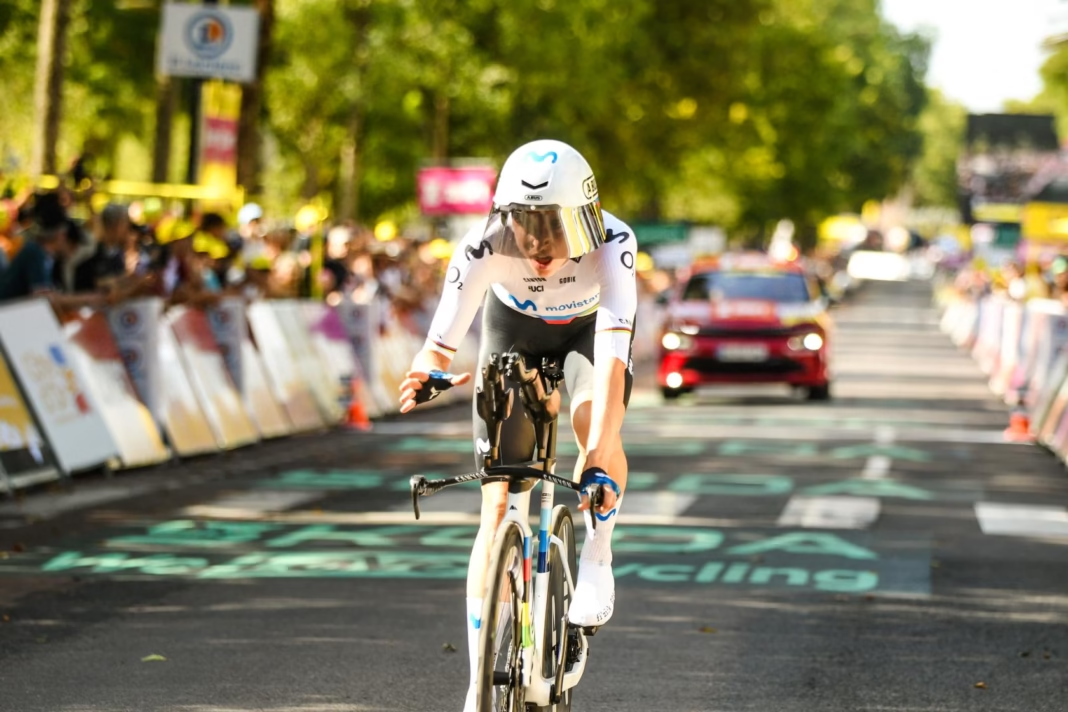
The defending champion lost 2 minutes 13 seconds to Marlen Reusser on Stage 4 and now sits 14th overall, 2 minutes 14 seconds behind the yellow jersey. She is exactly two minutes behind Demi Vollering, with 12 riders positioned between her and the race lead.
That deficit cannot be recovered through bonus seconds or one late acceleration. Ferrand-Prévot needs to make Mont Ventoux and the final weekend significantly harder than Reusser and Vollering would prefer.
Her performance on the Col de la Madeleine during the 2025 Tour shows why the race cannot yet be declared over. Ferrand-Prévot gained 3 minutes 18 seconds on Vollering in a single stage, despite beginning the day only 26 seconds behind the yellow jersey. She then added another 28 seconds on the final stage into Châtel.
A repeat of the Madeleine performance would not merely recover the current deficit. It would put Ferrand-Prévot ahead of both Reusser and Vollering.
The problem is that expecting the most dominant climbing ride of the 2025 race to happen again is not the same as proving it can.
“I quite like this scenario of having to go after them rather than being the favourite,” Ferrand-Prévot said after the time trial.
She now has no other choice.
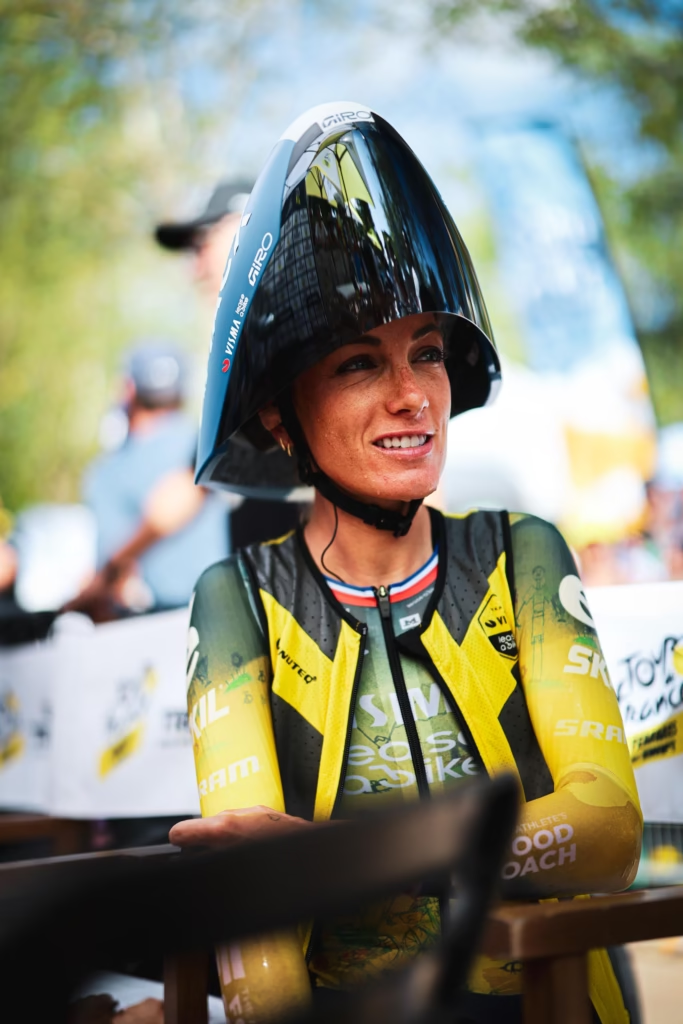 Photo Credit: A.S.O./Aurélien Vialatte
What the Stage 4 deficit means
Ferrand-Prévot begins Stage 5 at 2:14 from Reusser and two minutes behind Vollering.
The complete position is covered in the GC and jersey standings after Tour de France Femmes Stage 4, but the central problem is larger than one time gap.
Ferrand-Prévot must recover time from two riders with different strengths.
Reusser is the rider in yellow and the strongest time triallist in the race, but she has also developed into a stage-race contender capable of defending advantages in the mountains. Vollering sits only 14 seconds behind her and remains one of the most consistent high-mountain riders in the peloton.
Ferrand-Prévot therefore cannot simply expose Reusser and expect yellow to fall into her hands. Any attack that distances the Swiss rider may carry Vollering away with it.
She also has to move past Cédrine Kerbaol, Sigrid Ytterhus Haugset, Elisa Longo Borghini, Kasia Niewiadoma-Phinney, Paula Blasi, Anna van der Breggen and the rest of the riders currently between her and the leading pair.
The time can be recovered. The traffic in front makes the task more complicated.
What Ferrand-Prévot gained on the climbs in 2025
The clearest evidence for a comeback comes from the final two stages of the 2025 Tour.
Ferrand-Prévot began Stage 8 second overall, 26 seconds behind Kim Le Court-Pienaar. She attacked on the Col de la Madeleine, dropped Sarah Gigante with around eight kilometres remaining and continued alone to the summit at Saint-François-Longchamp.
She won the stage by 1 minute 45 seconds from Gigante and 3 minutes 18 seconds from Vollering.
That one climb completely transformed the race. Ferrand-Prévot went from second overall to yellow with a lead of 2:37 over Gigante and 3:18 over Vollering.
The full performance is covered in our report on Ferrand-Prévot conquering the Col de la Madeleine and taking yellow.
She then defended aggressively on Stage 9 rather than simply following. Ferrand-Prévot stayed with the other favourites over the Col de Joux Plane before attacking on the final climb into Châtel.
She won the stage by 28 seconds from Vollering, extending her final overall advantage to 3 minutes 42 seconds.
Across those two mountain stages, Ferrand-Prévot gained a combined 3 minutes 46 seconds on Vollering.
That is the most relevant comparison for the current race. She now needs two minutes from Vollering and 2:14 from Reusser. Her 2025 climbing gains exceeded both deficits.

The comparison is encouraging, but not predictive
The 2025 numbers prove what Ferrand-Prévot is capable of. They do not prove she will reproduce them on Mont Ventoux.
The Madeleine performance came at the end of a race in which she had arrived at the decisive climb with excellent form, strong team support and a manageable GC position. Once Gigante attacked, Ferrand-Prévot was able to follow before committing to a sustained effort that none of the other favourites could match.
The race then fragmented behind her. Vollering was not simply beaten in one acceleration. She was placed under pressure for much of the climb and gradually lost more than three minutes.
Ventoux creates the possibility of the same type of separation, but the context is different.
Ferrand-Prévot’s Dijon time trial suggests her current condition may not match the level she reached during the final weekend of 2025. A poor time trial does not automatically mean poor climbing form, particularly when nerves and pressure affected her preparation, but losing 2:13 cannot be dismissed as irrelevant.
Reusser and Vollering also begin the mountain stages in stronger tactical positions than Ferrand-Prévot’s main rivals held last year.
The defending champion has shown she can recover the time. She still has to show that the 2026 version of her can reproduce the performance.
What could she realistically gain on Mont Ventoux?
The Stage 7 finish uses the Bédoin side of Mont Ventoux, with the decisive 15.7km averaging 8.8%.
That is long and steep enough to produce differences measured in minutes rather than seconds. It is also more consistent than the short climbs of Stages 5 and 6, reducing the value of positioning and increasing the importance of sustained climbing power.
A realistic range depends entirely on the condition of the three central riders.
If Ferrand-Prévot matches Reusser and Vollering
She gains nothing and the title defence is effectively reduced to a fight for the lower podium positions.
If Ferrand-Prévot is clearly stronger
A gain of 45 seconds to 1 minute 15 seconds is plausible without either rival completely collapsing. That would not put her into yellow, but it would bring the race back within reach before the final two stages.
If she reproduces something close to the 2025 Madeleine ride
Ferrand-Prévot could recover two minutes or more from Reusser and Vollering.
Her 3:18 gain on Vollering in 2025 demonstrates that such a margin is physically possible on a long final climb. Ventoux is demanding enough for one rider’s superiority to become decisive if the attack begins early and the chase breaks apart.
If Reusser struggles but Vollering does not
Ferrand-Prévot may move ahead of yellow without becoming the new race leader.
This is the most complicated scenario tactically. She could gain two minutes on Reusser but still remain behind Vollering if the FDJ United-Suez leader follows or limits the damage more successfully.
The complete climbing demands are covered in the Tour de France Femmes 2026 Mont Ventoux guide.
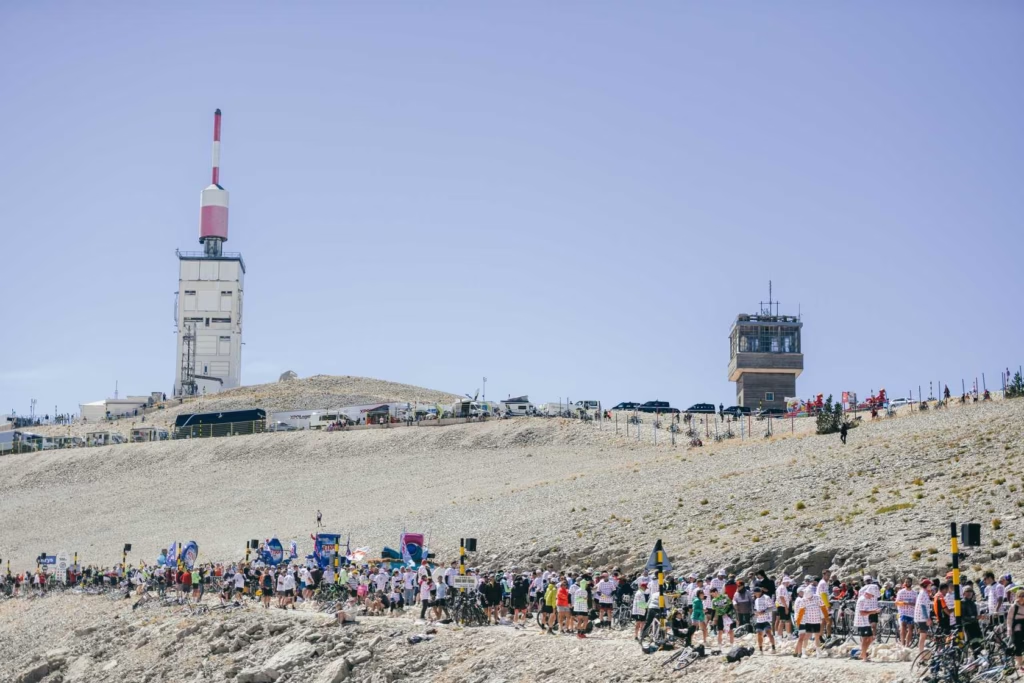
Two minutes on Ventoux is possible, but it requires an early commitment
Ferrand-Prévot cannot expect to recover two minutes by waiting until the final three kilometres.
A late attack might earn a stage victory and 20 or 30 seconds. The current deficit requires a fundamentally different race.
The forest section above Saint-Estève is where the gradient becomes consistently severe. If Visma can isolate Reusser before that point, Ferrand-Prévot can begin applying pressure while more than half the climb remains.
A sustained high tempo may be more effective than repeated explosive attacks. Reusser is strongest when she can settle into an even rhythm. Constant changes of pace could prevent her from using that strength, but they would also risk helping Vollering.
Ferrand-Prévot’s ideal move would therefore come after Visma have already forced FDJ and Movistar to spend riders.
The defending champion then needs to turn Ventoux into an individual climbing test resembling the upper Madeleine, not a controlled group contest decided near the summit.
Vollering may be the harder rider to dislodge
Reusser holds yellow, but Vollering is the greater long-term obstacle.
The FDJ United-Suez leader begins only 14 seconds behind Reusser and has two minutes over Ferrand-Prévot. She is also likely to be among the strongest riders on Ventoux.
Ferrand-Prévot’s 2025 performance provides encouragement because Vollering was the rider who lost 3:18 on the Madeleine. It also provides a warning.
Vollering will understand exactly how the previous race was lost. She is unlikely to allow Ferrand-Prévot’s move to develop unchecked if she has the strength to follow.
FDJ United-Suez can also race differently from the teams chasing in 2025. Vollering does not need to close every attack immediately while Reusser remains in yellow. She can allow Movistar to carry part of the responsibility and respond only when Ferrand-Prévot becomes a direct threat.
The challenge for Visma is making Reusser and Vollering race against each other before Ferrand-Prévot commits.
If Ferrand-Prévot simply attacks with both behind her, she risks providing Vollering with the perfect bridge to yellow.
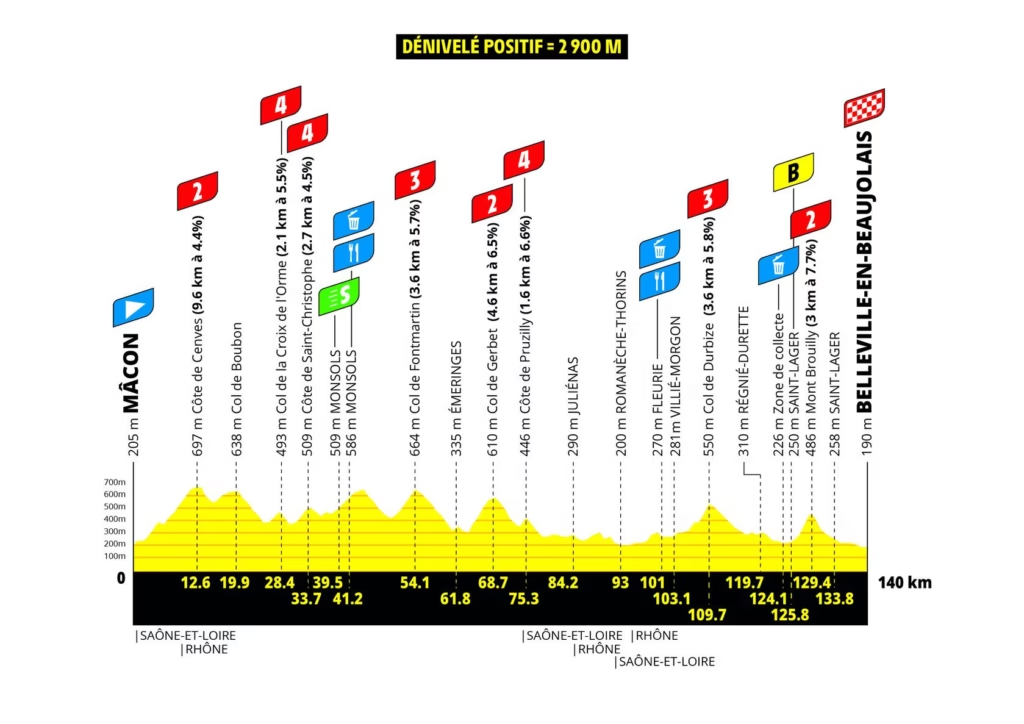
Stage 5 is about creating pressure, not recovering two minutes
The route to Belleville-en-Beaujolais is unlikely to decide whether Ferrand-Prévot can win the Tour.
Mont Brouilly is only 3km long, and the 10.6km run to the finish makes substantial GC separation difficult. The stage is more likely to be decided by a breakaway, as explored in the Tour de France Femmes 2026 Stage 5 preview.
Visma can still use the day productively.
Femke de Vries sits tenth overall at 1:47, placing her closer to Reusser than Ferrand-Prévot. Sending her into a dangerous move would force Movistar to calculate whether they can afford to let the gap grow.
Marion Bunel offers another climbing option, while Lieke Nooijen, Daniek Hengeveld and Sarah van Dam can make the opening kilometres difficult. Marianne Vos gives the team a legitimate stage-winning card if the race comes back together.
Visma’s aim should be making Movistar work without asking Ferrand-Prévot to spend energy chasing a handful of seconds.
The Tour will not be won on Mont Brouilly. It can still be made less comfortable for Reusser there.
Visma must race with several threats
A two-minute comeback cannot be built around one rider attacking from the favourites’ group.
Visma need riders ahead of Ferrand-Prévot before the decisive moments.
De Vries is the most obvious tactical card because of her GC position. Movistar cannot allow her several minutes without placing Reusser’s yellow jersey at risk.
Bunel can be used differently. Her climbing ability makes her suitable for a breakaway or an attack before Ferrand-Prévot’s own move on Ventoux. If she survives deep into the final climb, she can become a bridge rather than simply a domestique riding tempo.
Nooijen can contribute on the approach and flatter roads, while Vos creates a separate reason for other teams to chase.
The objective is to deny Movistar and FDJ one simple question.
If every move clearly exists only to prepare Ferrand-Prévot’s attack, it becomes easier to control. If Visma can threaten the stage, GC and breakaway simultaneously, Reusser and Vollering must make decisions before Ferrand-Prévot exposes her own condition.
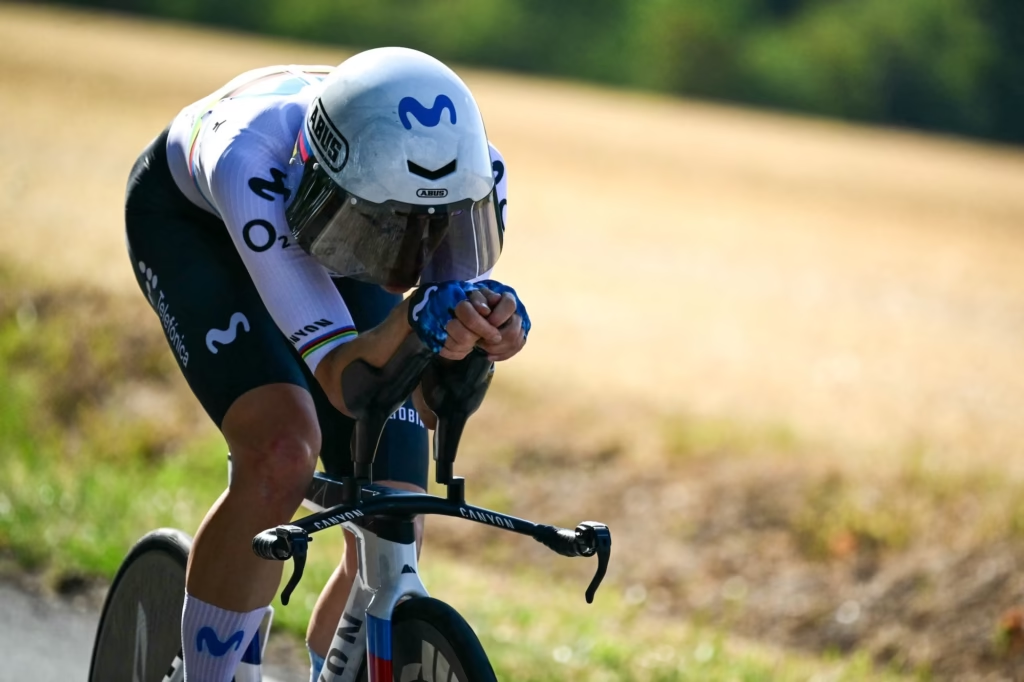 Photo Credit: Getty
Reusser’s best defence is to remove the stage from the favourites
Movistar’s ideal response is allowing a non-threatening breakaway to take the stage victories and bonuses before Ventoux.
That reduces Ferrand-Prévot’s opportunities to collect small gains and allows Reusser to focus entirely on the general classification.
Liane Lippert gives Movistar an attacking option of their own. Placing her in the break can discourage other teams from chasing and ensure the yellow jersey squad have representation ahead.
The problem arises if De Vries or Bunel joins the same move.
Movistar may then be forced to control a stage they would otherwise prefer to concede. Every rider used before Ventoux reduces the support available when the gradients become severe.
Ferrand-Prévot’s comeback depends partly on creating that kind of expenditure before she attacks.
The final weekend means Ventoux does not need to finish the job
Ferrand-Prévot does not necessarily need to recover the full 2:14 on Stage 7.
Taking back around a minute would bring the race within reach before the final weekend. Stage 8 from Sisteron to Nice is another mountain stage, while Stage 9 contains repeated climbing around the Col d’Èze.
In 2025, Ferrand-Prévot showed that she could continue attacking after taking yellow. Her final-stage victory gained another 28 seconds on Vollering after the major work had already been completed on the Madeleine.
A similar sequence remains possible in 2026.
Ventoux can reduce the deficit. The stages around Nice can complete the comeback if Reusser or Vollering begin to weaken under accumulated pressure.
The remaining opportunities are laid out in the Tour de France Femmes 2026 route guide.
-
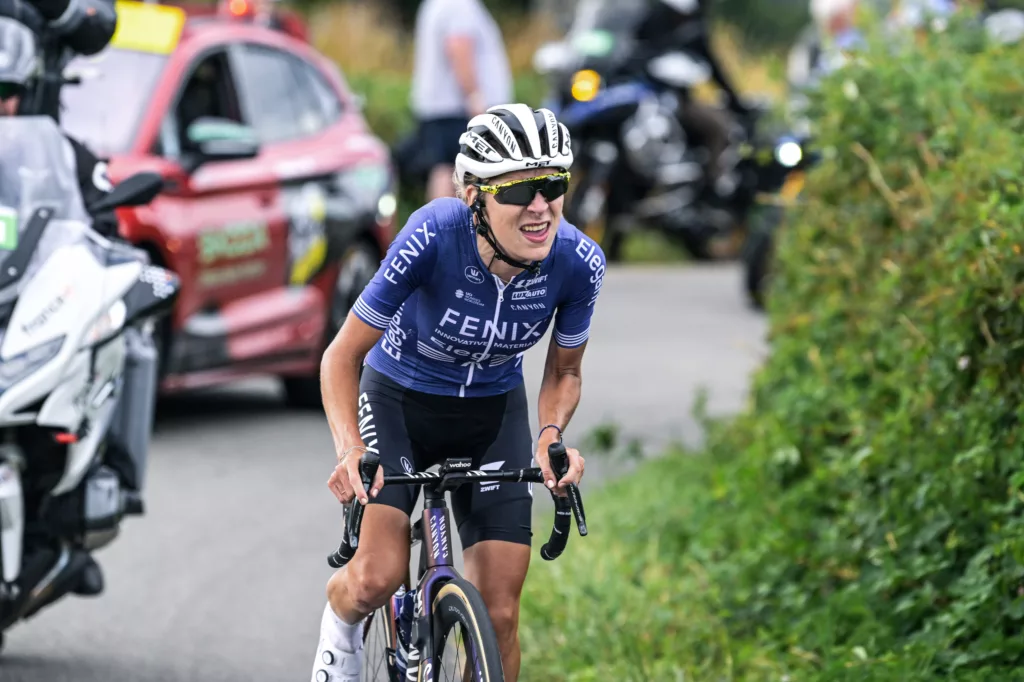 Photo Credit: ASO-Charly Lopez
What would keep the title defence alive?
Ferrand-Prévot’s immediate objective is reaching Ventoux without losing more time.
On the mountain itself, the following outcomes would mean very different things:
Gain less than 30 seconds: The title defence would remain mathematically alive but require a major collapse or tactical reversal during the final weekend.
Gain around one minute: Ferrand-Prévot would return to genuine contention, especially if the time came from both Reusser and Vollering.
Gain between 1:30 and two minutes: The race would be almost completely reset before Nice.
Repeat the 3:18 gained on Vollering in 2025: Ferrand-Prévot would move ahead of Vollering and recover the full deficit to Reusser, even before accounting for possible stage bonuses.
That last scenario is not the expected outcome. It is the reason the race cannot yet be written off.
Ferrand-Prévot has already produced a Tour mountain performance comfortably large enough to overturn her current deficit.
Is Ferrand-Prévot’s title defence over?
No, but the conditions required for a successful defence have become narrow.
Ferrand-Prévot needs to arrive at Ventoux in exceptional climbing form. Visma must weaken Movistar before the final climb, create tactical options ahead and prevent Vollering from simply using the defending champion’s attack to take yellow herself.
She then needs to recover at least a meaningful part of the two-minute deficit before the race reaches Nice.
The 2025 Tour provides the clearest reason for belief. Ferrand-Prévot took 3:18 from Vollering on the Col de la Madeleine stage and another 28 seconds on the final day. Her combined mountain-stage gain was almost twice the deficit she now faces.
That does not make the comeback likely. It makes it possible.
Dijon removed Ferrand-Prévot’s margin for caution. The remaining stages now suit the scenario she says she prefers: no responsibility to defend, no reason to wait and no route back to yellow without attacking the riders ahead.