
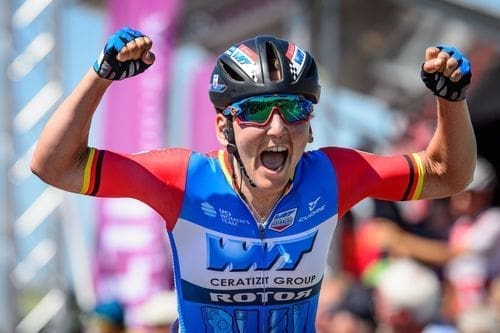
Lisa Brennauer was one of those riders whose value could be understood in several different ways at once. She was a world-class time triallist, a rider with the power to shape team pursuits and team time trials, a dependable one-day racer, and an athlete who could move between disciplines without ever looking like she was visiting them temporarily. That range made her unusual. It also made her one of the most important German riders of her era.
Some careers are easy to summarise because they are built around one obvious strength. Brennauer’s was not like that. She won world titles, wore the rainbow jersey, took major road results, collected national titles, succeeded on the track and became a central figure in Germany’s long return to prominence in women’s cycling. Her story is not only one of results. It is one of adaptability, persistence and the quiet authority that comes from being good in more than one part of the sport for a very long time.
That matters historically because Brennauer belonged to a generation that helped give German women’s cycling a stronger and more consistent international presence again. She was not alone in that, but she was one of the clearest expressions of it. When she retired at the end of 2022, she left behind one of the most complete careers of the modern period, not because she dominated every year, but because she stayed relevant, versatile and successful across so many different forms of racing.
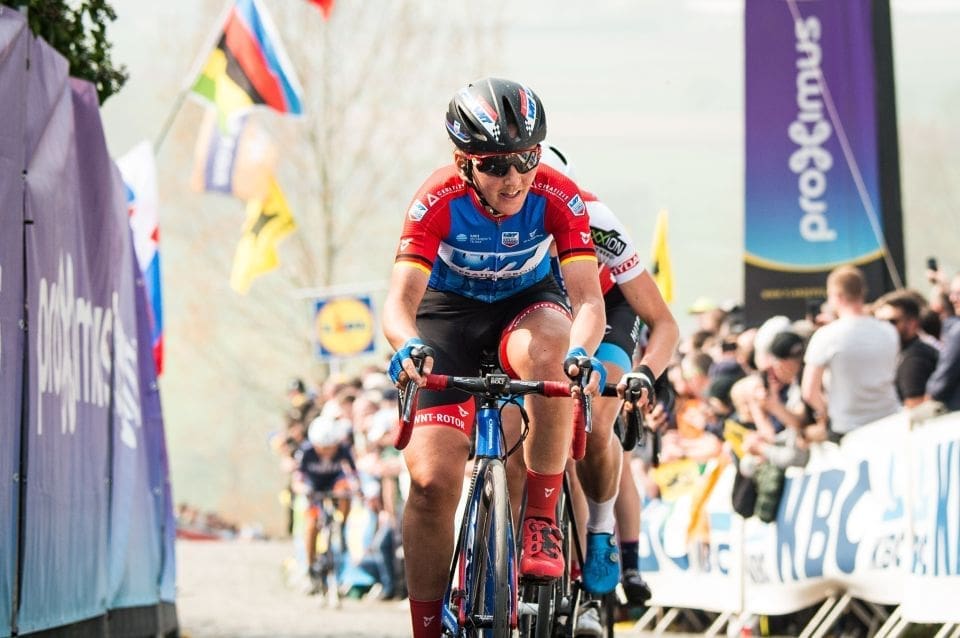
An early path built on more than one discipline
Brennauer was born in Kempten im Allgäu in Bavaria in 1988, and that southern German background matters because it placed her within one of the key areas of the country’s cycling culture. From early on, she developed not simply as a road rider, but as an athlete comfortable in several disciplines. That broad base would shape the whole rest of her career.
She did not emerge as a rider whose identity was immediately fixed. Instead, she built herself through track racing, time trials and road competition, learning how to turn strength, pacing and technical focus into an advantage across different formats. That made her development slightly different from the more linear careers of pure climbers or pure sprinters. Brennauer’s route to the top level came through accumulation, not simplicity.
That is one reason her later success feels so coherent. The rider who would become a world time trial champion and Olympic team pursuit medallist did not invent those qualities suddenly in her late twenties or thirties. They were present much earlier, already forming the shape of a rider who could make precision and sustained power look natural.
The road world title changed everything
The biggest early turning point in Brennauer’s career came in 2014, when she won the women’s road race at the UCI Road World Championships in Ponferrada. That result remains the most famous single-day victory of her road career, and for good reason. Winning a world title on the road changes the way a rider is seen immediately. It moves them from being a strong professional into a rider who has reached one of the sport’s defining heights.
What made the win especially interesting was that it did not come from a career built around obvious Monument-style dominance. Brennauer was already respected, but the rainbow jersey gave her a different scale. It showed that she could convert her intelligence, toughness and finishing ability into the biggest one-day prize on the road.
Historically, that title also mattered for German cycling. It gave the country another women’s road world champion and strengthened the sense that Germany was again producing riders capable of winning at the very highest level. Brennauer became part of a lineage rather than simply an isolated success story.
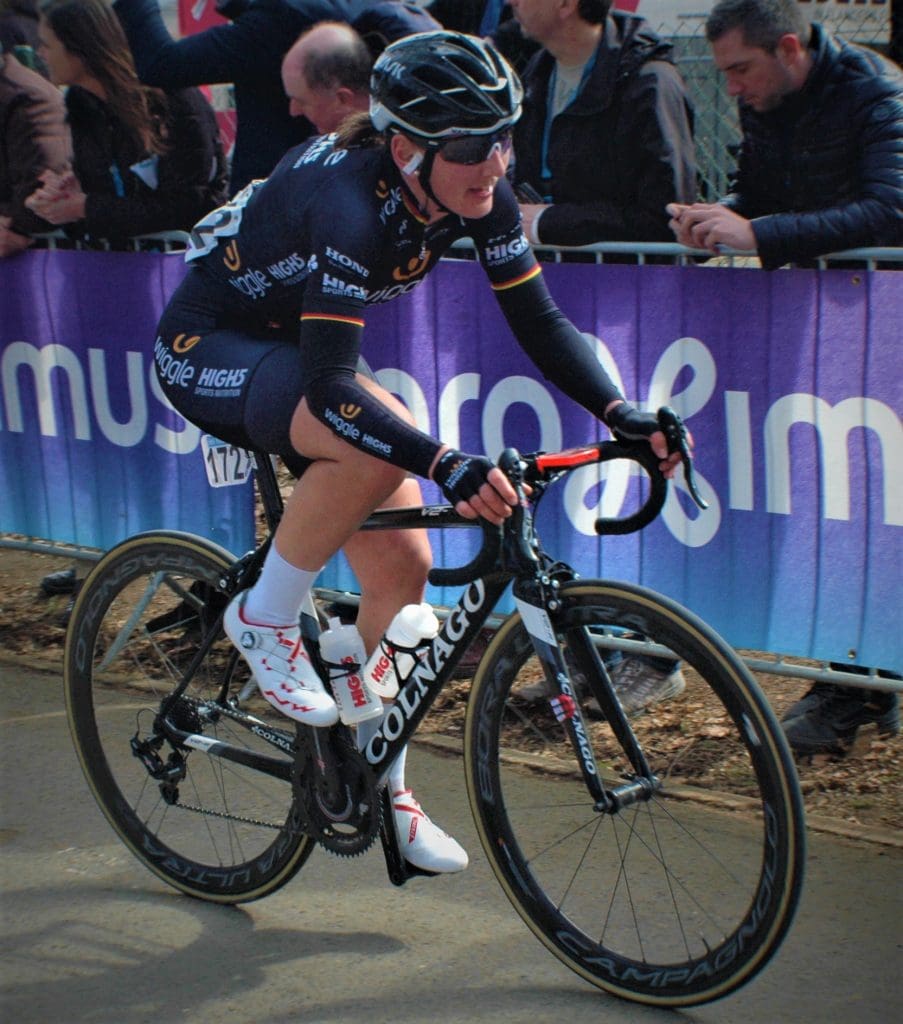
Time trialling was her truest road identity
If the road world title was the single brightest road-race moment, time trialling was probably Brennauer’s truest individual identity on the road. This was where her gifts made the most immediate sense. She had the engine, the patience, the positional control and the calmness to turn a race against the clock into something almost architectural. Brennauer did not ride time trials as a specialist borrowing from the road. She rode them as someone who understood exactly what the discipline demanded.
Her palmarès here was deep. She won the world time trial title in 2014, took multiple European titles, won numerous German national time trial championships and spent years as one of the most dependable names whenever the course tilted towards sustained power rather than explosive chaos. That consistency is a major part of her legacy. Plenty of riders produce one exceptional time trial season. Brennauer remained relevant in the discipline for years.
It is also worth noting how well time trialling suited her broader sporting character. Brennauer always seemed like a rider who valued process. She had the kind of measured, technical mindset that helped her in events where pacing, control and exact judgement mattered as much as raw wattage. That is why her time trial success never felt accidental or temporary. It felt like the most natural extension of who she was as an athlete.
The team time trial era suited her perfectly
There may not have been a better era for a rider like Brennauer than the period when team time trials carried major status in women’s road cycling. These events rewarded precisely the qualities she brought best: pacing, discipline, collective rhythm and the ability to sustain high speed without wasting energy or disrupting structure.
Brennauer won multiple world titles in the team time trial, across different trade team structures, and that matters because it shows how well her individual strengths translated into collective excellence. Some strong time triallists are too individual in style to fit perfectly into a team line. Brennauer was the opposite. She understood how to be powerful and precise inside a shared rhythm.
That made her enormously valuable to some of the strongest squads of the period. Teams knew what they were getting with Brennauer: reliability, technical skill and the kind of measured strength that holds a line together rather than merely adding to it. In the team time trial era, that was a major currency.
Even beyond the titles themselves, this is an important part of how she should be remembered. Brennauer was not just a rider who could win alone. She was a rider who could make teams stronger in one of the most demanding and specialised forms of road racing.
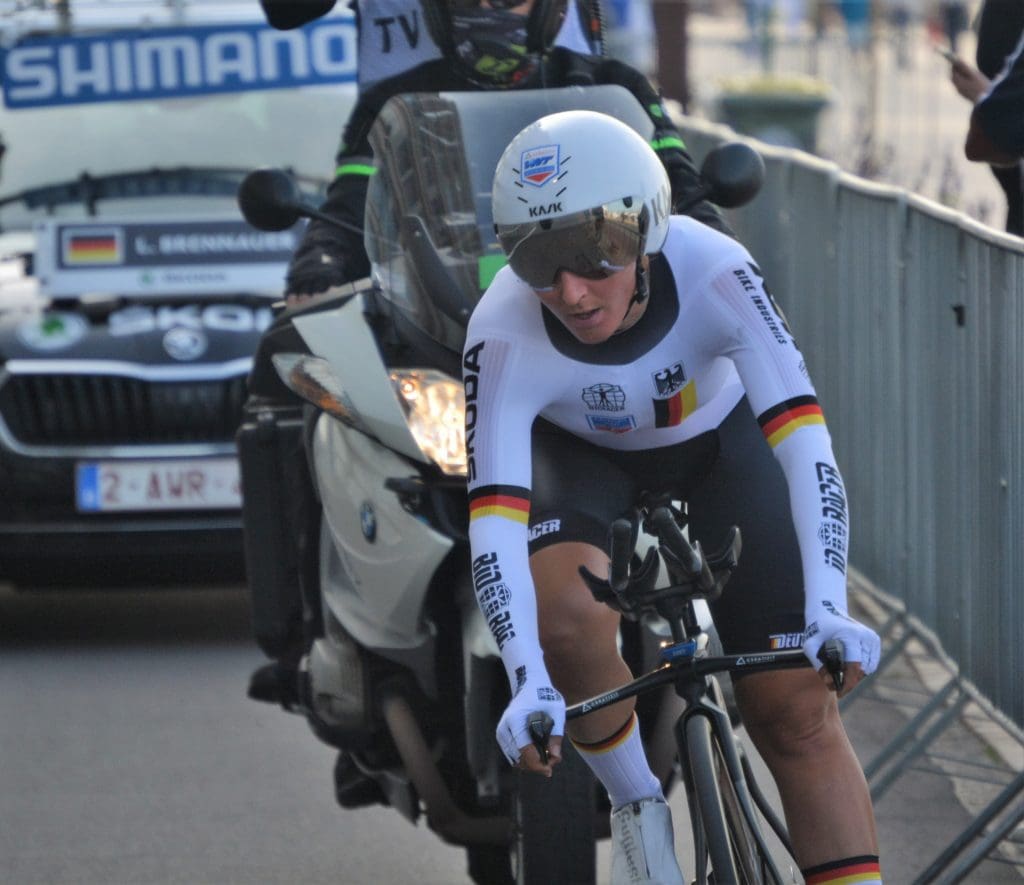
Track success made the career bigger, not separate
Some road riders treat the track as a second life or seasonal detour. Brennauer’s track career feels more integrated than that. Her success in the team pursuit, especially later in her career, did not sit awkwardly beside her road identity. It made perfect sense. The same qualities that defined her best time trials – pacing, concentration, measured effort and technical consistency – also made her valuable on the velodrome.
This became especially visible in the final phase of her career, when she was part of Germany’s team pursuit set-up that won Olympic gold in Tokyo and World Championship titles. That achievement alone would define many athletes’ careers. For Brennauer, it arrived as part of a broader legacy already rich with road results.
That is one reason the end of her career felt so satisfying from a historical perspective. She did not finish as a rider fading out of relevance. She finished as part of one of German cycling’s greatest collective modern achievements. The Tokyo Olympic team pursuit gold, in particular, gave her career a final major peak that connected perfectly with everything that had come before it.
Germany’s modern strength ran through riders like Brennauer
It is difficult to understand German women’s cycling in the 2010s and early 2020s without Brennauer. She was not the only important rider, but she was one of the key anchors. Alongside riders such as Judith Arndt before her and later teammates and contemporaries like Lisa Klein and others in the German system, Brennauer helped give the country a steady presence at the top level.
That presence mattered because it was not based on one narrow niche. Germany could look to Brennauer in time trials, in team events, on the track and in one-day road racing. She represented strength across the structure of the sport rather than inside only one results column. For younger German riders, that kind of model is powerful. It suggests not only that success is possible, but that there are several ways to build it.
Her career also came during a period when women’s cycling itself was becoming more professional, more visible and more globally structured. Brennauer helped bridge different versions of the sport, from an earlier era of less stable visibility into the more developed Women’s WorldTour and Olympic-track environment of the early 2020s.

She was more than a specialist
One of the easiest mistakes in assessing Brennauer’s career is to flatten her into a pure time trial specialist. That would be understandable, because the discipline suited her so well and gave her so many of her defining results. But it would still miss too much.
She was also a rider who could survive and finish hard road races, who could read team scenarios intelligently, and who could be relied upon in major championships. The 2014 road world title prevents any attempt to reduce her to a single cycling function, but even beyond that title her broader results show a rider with far more road craft than the specialist label sometimes suggests.
That matters for how her career should be valued. Brennauer was not great because she could do one thing very well. She was great because she could do several demanding things at world-class level and remain relevant across them for years.
Late-career success gave the story extra weight
Although Brennauer’s most famous individual road titles came earlier, the later part of her career still mattered greatly because it proved how durable her qualities were. Athletes whose careers are built on precision and sustained power can sometimes age very well if they retain the discipline to match those gifts. Brennauer did exactly that.
Her later track success, culminating in Olympic gold and world titles, gave the whole story a different shape. It prevented her career from being remembered mainly as the rainbow-jersey years of the mid-2010s. Instead, it stretched the narrative forward and gave it a richer ending. She did not simply remain present. She remained major.
That is one reason her retirement felt like the close of a significant chapter rather than the end of a respected veteran’s time in the peloton. Brennauer left the sport with her status reinforced, not simply preserved.
-
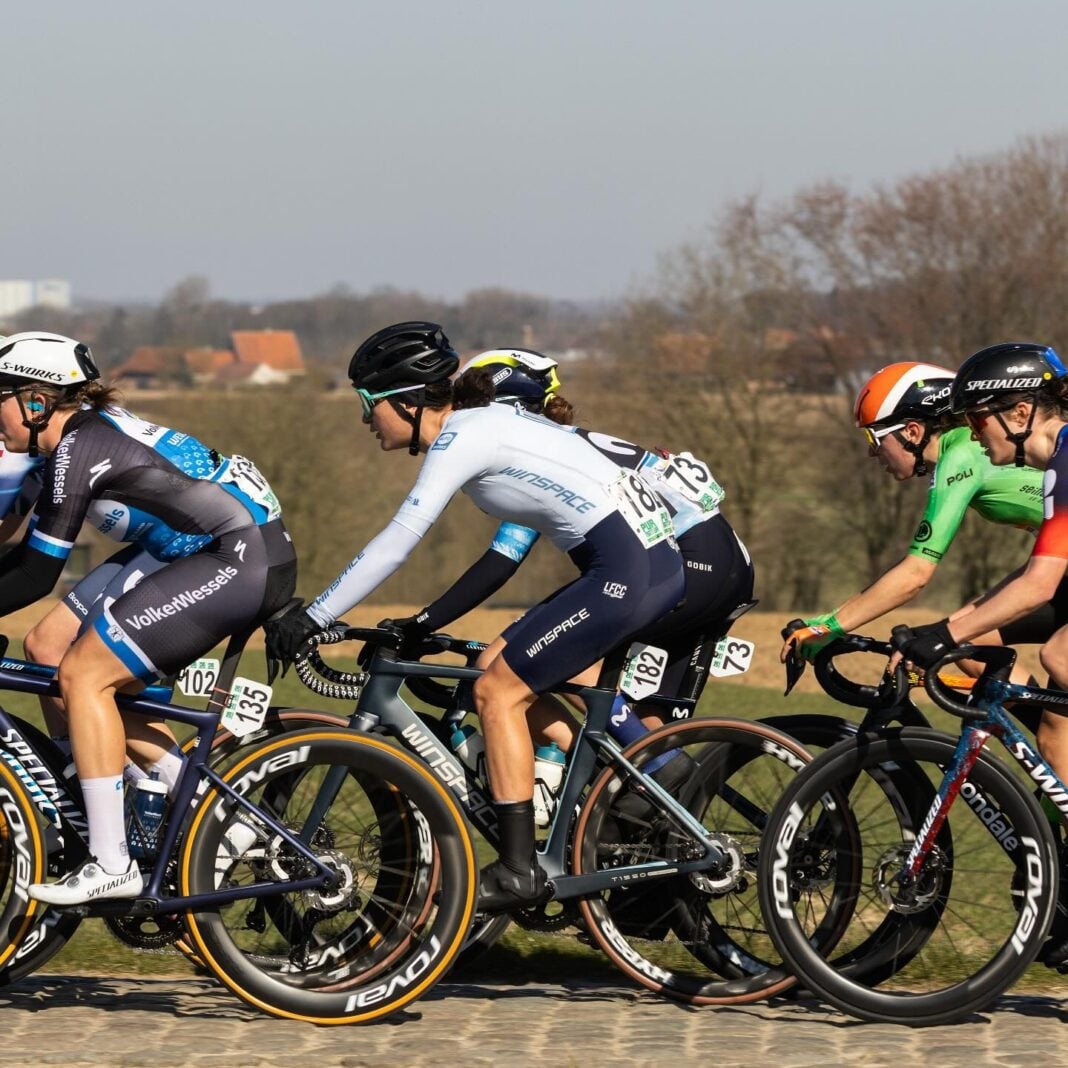
 Photo Credit: quentinphotographiebe
 -
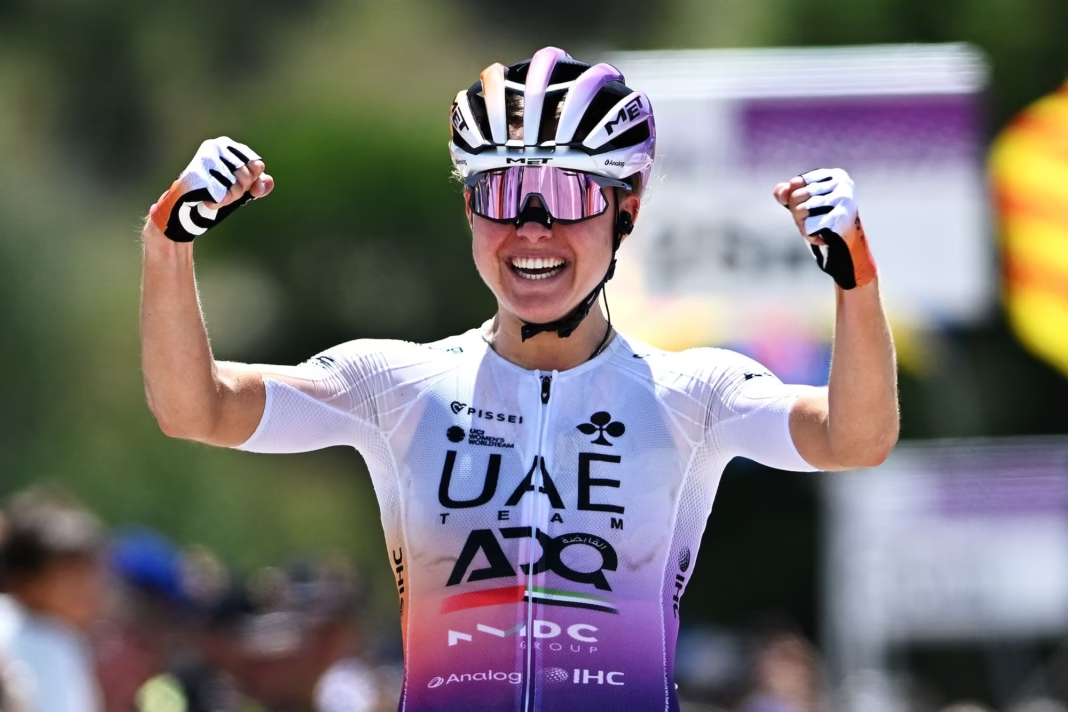
 Photo Credit: Getty
How Lisa Brennauer should be remembered
Lisa Brennauer should be remembered as one of Germany’s most complete modern cyclists. A road world champion, world time trial champion, multiple team time trial world champion, Olympic gold medallist and one of the most consistently valuable riders of her generation, she built a career that was both broad and precise.
She should also be remembered as a rider whose strengths travelled well between disciplines. The road, the time trial bike and the velodrome all made sense for her, because the core qualities stayed the same: power, control, reliability and a rare ability to turn technical focus into results.
Most of all, Brennauer belongs in the category of riders whose importance exceeds any single title. The rainbow jersey matters. The Olympic gold matters. The national and European titles matter. But the larger legacy sits in the consistency of the whole thing, and in the way she helped define what a high-level German career in modern women’s cycling could look like.
She was not the loudest rider of her era, nor the most mythologised. But she was one of its most dependable champions, and one of the clearest examples of how versatility, intelligence and sustained excellence can produce a career that stays important long after the final result has been recorded.
That makes her a natural companion piece in the wider history of riders who helped define the modern women’s peloton, alongside champions such as Annemiek van Vleuten, Marianne Vos and Anna van der Breggen.
In the end, that may be the clearest reading of her career. Lisa Brennauer did not build greatness through one overwhelming trait. She built it through range, discipline and years of doing difficult things extremely well.

