
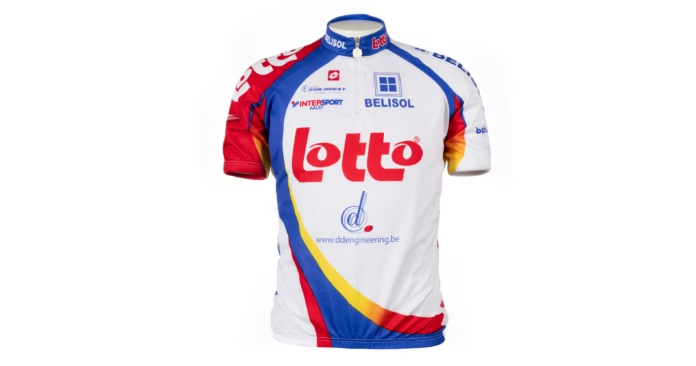
Lotto Belisol Ladies was one name in a much longer Belgian women’s team story. The structure began in 2006, changed title sponsors and naming conventions repeatedly, and survived through periods when many comparable squads disappeared altogether. Between 2012 and 2014, the Lotto-Belisol identity became particularly recognisable because the team combined established Belgian riders, international climbers and one of the strongest emerging sprinters in the country.
The team was never a single dominant superteam. Its importance came from continuity and opportunity. Riders including Jolien D’Hoore, Ashleigh Moolman, Emma Pooley, Liesbet De Vocht and Joëlle Numainville passed through a structure that could win national titles, Giro d’Italia stages and major one-day races while also giving younger Belgian riders a stable professional route into the international peloton.
The project began before the Lotto-Belisol name existed
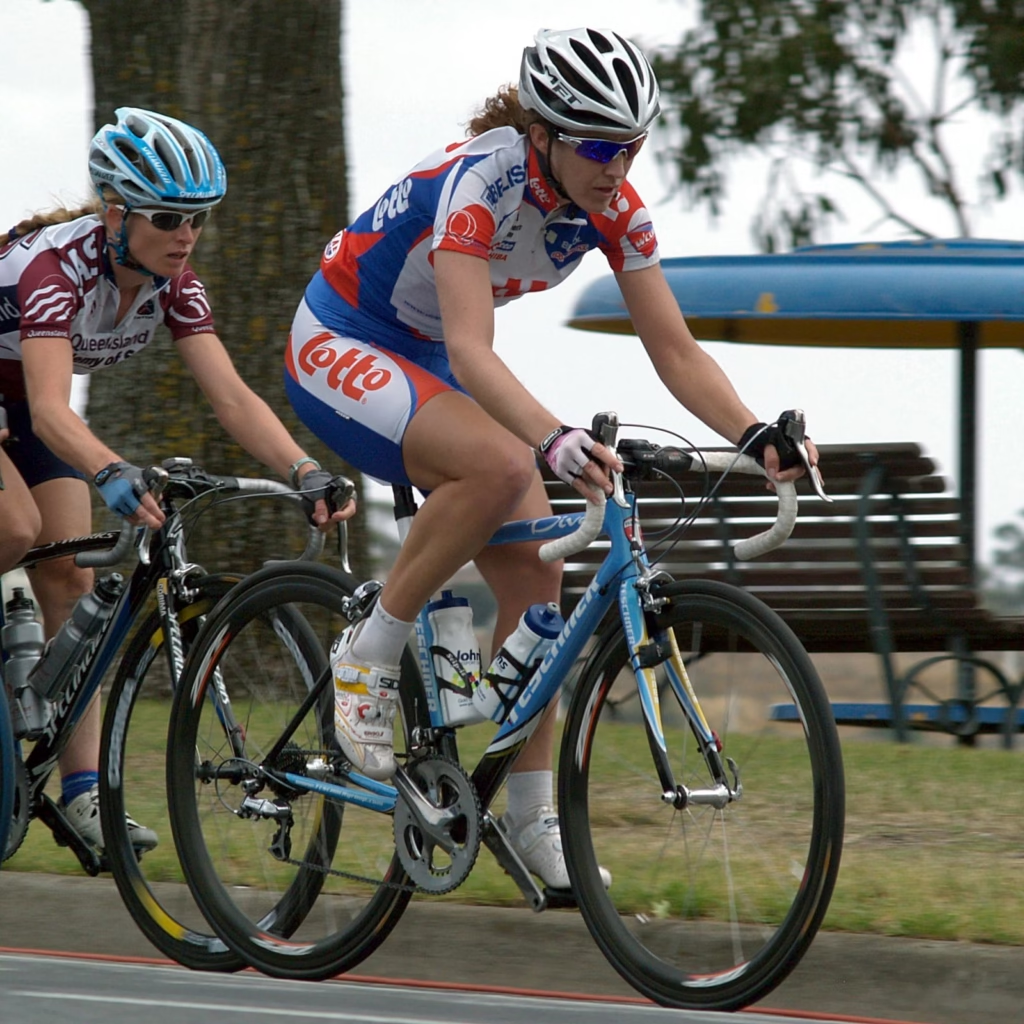
The women’s squad was founded in 2006 and initially raced as Lotto-Belisol Ladiesteam. Its relationship with Belgium’s national lottery sponsor gave it a level of continuity that was unusual in women’s cycling at the time. The exact title changed as co-sponsors came and went, but the Lotto identity remained central.
The naming history reflects how women’s teams operated in that era. The squad became Lotto-Honda in 2010, Lotto Ladies Team in 2011 and Lotto-Belisol Ladies from 2012 through 2014. Later versions included Lotto-Soudal Ladies and Lotto Dstny Ladies, with the structure eventually continuing into the modern Lotto women’s programme.
That continuity matters because team histories are easily distorted by sponsor names. A rider moving from Lotto-Belisol Ladies to Lotto-Soudal Ladies did not necessarily change organisation in the way the new name might suggest. The underlying Belgian project evolved rather than restarting from zero each time.
 Photo Credit: Thomas Bresson
The Belgian core gave Lotto a clear domestic purpose
The team consistently provided a professional home for Belgian riders at a time when the country’s women’s scene did not have the depth of WorldTour-level structures it has today. National championships, local one-day races and the spring Classics therefore carried particular importance.
Liesbet De Vocht was one of the experienced riders who connected different phases of the team. She had ridden for the structure early in its existence, returned later and brought the sort of Classics experience that younger teammates could use. Her role was not simply measured by wins; she was also expected to help develop riders who were still learning positioning and race management at the highest level.
Jolien D’Hoore became the clearest example of that pathway working. She grew from a promising Belgian sprinter into a rider capable of winning international races and national titles, eventually becoming one of the defining fast finishers of her generation. ProCyclingUK’s profile of Jolien D’Hoore covers the broader career that followed.
Ashleigh Moolman gave the team climbing ambition
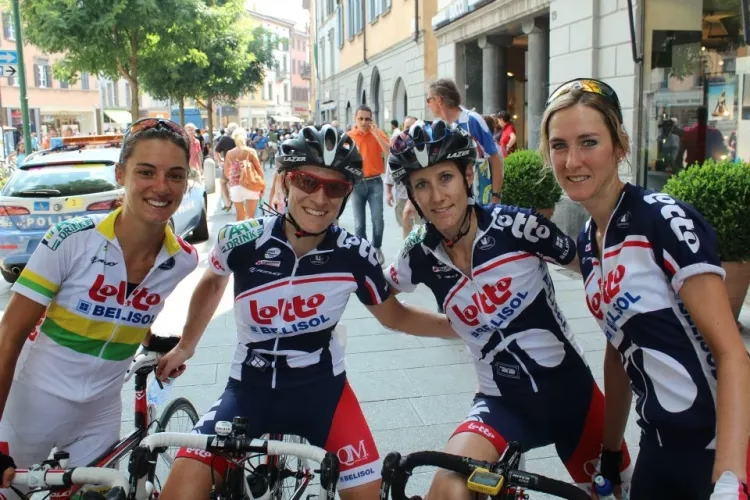
Ashleigh Moolman brought a different dimension. The South African emerged as one of the strongest climbers outside the biggest established teams and produced major results while riding for Lotto-Belisol.
Her 2013 season was especially important. Moolman won the Boels Rental Hills Classic and finished third at La Flèche Wallonne Féminine, becoming the first South African woman to stand on a World Cup podium. Those results gave the team credibility in races that could not be won through sprint strength alone.
Moolman’s presence also showed the squad’s international reach. Although Belgian development was central to the project, Lotto-Belisol was not a closed national team. Recruiting riders capable of competing in the Ardennes and stage races strengthened the whole roster and gave domestic riders experienced teammates to learn from.
When Moolman left for Hitec Products after 2013, the team lost its clearest general-classification and climbing leader. The response in 2014 was not to replace her with a direct copy, but to use a broader mix of sprinting and stage-hunting strengths.
 Photo Credit: Flowizm
2014 became the high point of the Lotto-Belisol years
The 2014 season produced one of the strongest collective years in the team’s history. Lotto-Belisol Ladies recorded 15 victories, won the Belgian road title and took three stages of the Giro Rosa. The spread of results showed a squad capable of winning in several different ways.
D’Hoore was central. She became Belgian road champion, won the Flanders Diamond Tour and took two stages of the inaugural BeNe Ladies Tour, where she also finished second overall. Those results confirmed that she had moved beyond national promise and could beat international fields consistently.
Emma Pooley supplied the climbing results. In what became the final road season of her first professional career, the British rider won three stages of the Giro Rosa and secured the mountains classification. Her victories came on terrain completely different from D’Hoore’s sprint opportunities and gave the team a strong presence in the most important stage race on the women’s calendar.
Pooley’s short spell is a useful example of how women’s teams often operated. A rider with world-class ability could join for a limited period, immediately transform the team’s options in major races and then retire or move on. Lotto-Belisol benefited enormously from having one of the best climbers and time triallists of the era during that Giro.
Numainville and De Vocht added depth beyond the headline winners
Canadian Joëlle Numainville joined during 2014, adding another fast and versatile one-day rider. Her arrival reinforced the team’s ability to compete in reduced sprints and Classics rather than relying entirely on D’Hoore.
De Vocht remained valuable in the spring and finished seventh at the Tour of Flanders that year. Results like that matter in team history because they show the difference between a squad with one star and a roster capable of keeping several riders relevant across the calendar.
The balance was particularly useful in Belgian races. A strong local team needs riders who understand narrow roads, repeated accelerations and the positioning battles that define the spring. Lotto-Belisol’s domestic core meant those events were never treated as secondary obligations.
 Photo Credit: Brecht Steenhouwer
The team evolved as women’s cycling became more professional
After 2014, the Lotto name continued but the wider women’s peloton was changing quickly. Larger commercial teams increased budgets, support staff and race programmes. The Women’s WorldTour launched in 2016 and gradually created a clearer separation between the biggest international structures and long-running UCI teams operating with more limited resources.
Lotto-Soudal Ladies remained part of the professional peloton through that transition. The team did not become one of the dominant WorldTour projects, but its survival preserved a Belgian pathway while the country’s women’s racing scene expanded around it.
That distinction matters when assessing the Lotto-Belisol years retrospectively. The team should not be judged against the staffing and budgets of modern Women’s WorldTour squads. Its value was partly that it existed consistently before those standards were normal and gave riders a professional environment from which to develop.
-
 Photo Credit: Getty
 -
 Photo Credit: Getty
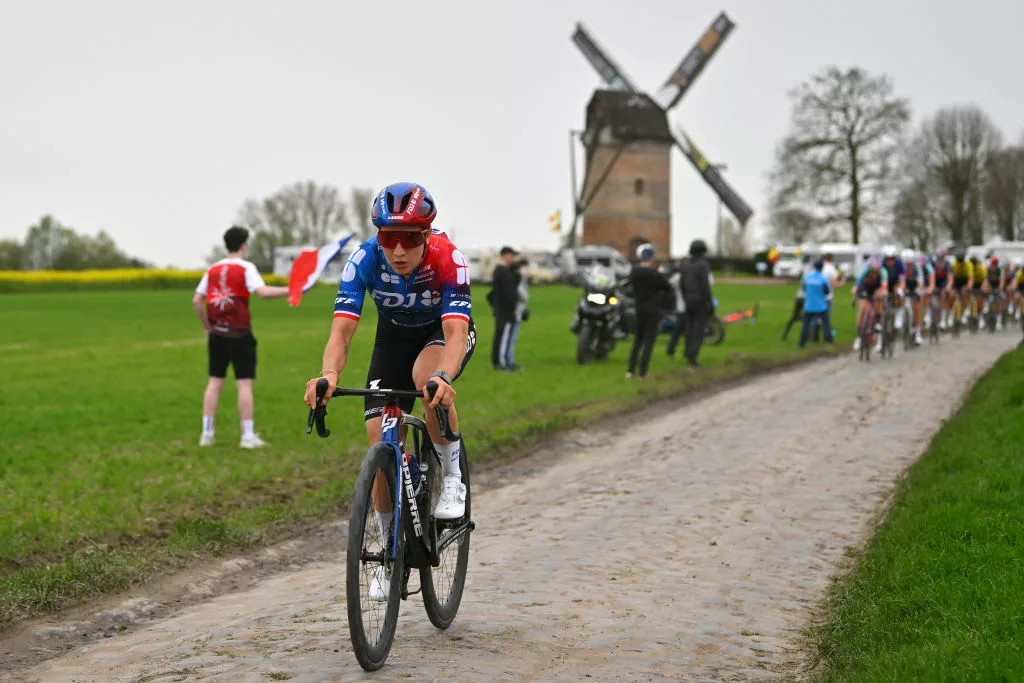
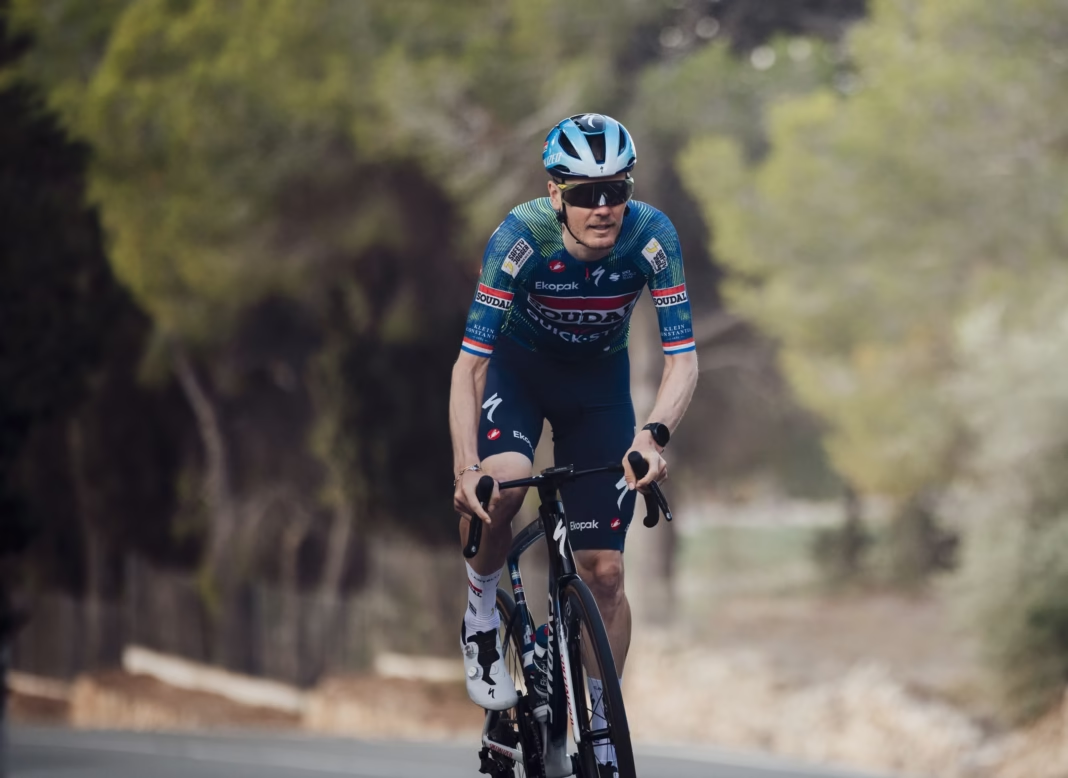
Its legacy is clearer in the riders than in the trophy count
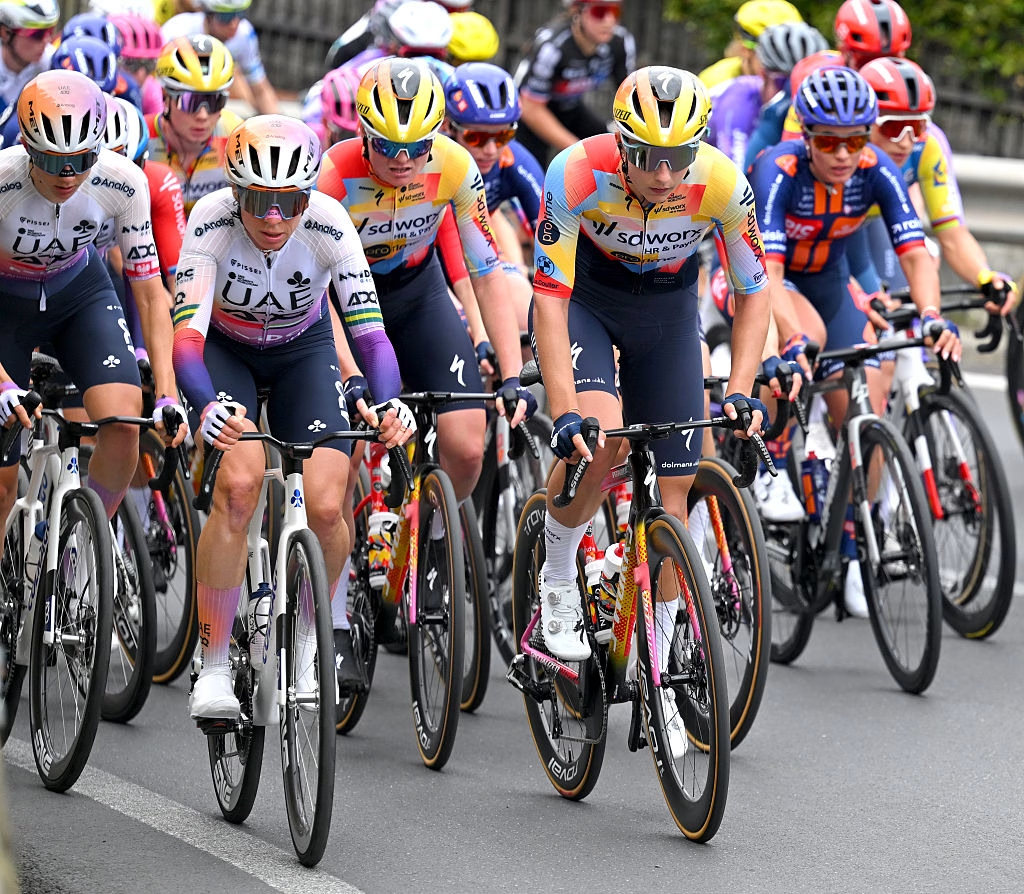
The team’s biggest results are easy to list: Moolman’s Flèche Wallonne podium, D’Hoore’s national title and international wins, Pooley’s three Giro Rosa stages and the steady accumulation of Belgian results. The longer legacy sits in the careers that continued afterwards.
D’Hoore became an Olympic medallist and major Classics winner. Moolman developed into one of the most durable climbers of her generation. Pooley already had a world title before joining and used Lotto-Belisol for one final run of mountain victories. Their trajectories were different, but the team gave each of them a useful platform at a specific point.
The broader Lotto lineage also remained visible long after the Belisol name disappeared. Sponsor changes altered the jersey, but the idea of a Belgian women’s team tied to the national lottery survived. That kind of institutional memory is rare in a sport where squads can disappear completely when one commercial agreement ends.
The team also illustrates how quickly the meaning of a professional contract changed across this period. In the late 2000s and early 2010s, riders regularly combined elite racing with fewer staff, smaller support structures and less security than today’s leading teams provide. A long-running sponsor-backed squad therefore offered value beyond its results: it gave riders continuity in a peloton where the disappearance of one team could otherwise remove an entire season’s opportunity.
That context makes the later growth of Belgian women’s cycling easier to understand. Belgium now produces more international professionals and supports a deeper racing ecosystem, but Lotto’s women’s structure was present before that depth existed. It did not create the modern scene alone, yet it helped ensure there was a visible domestic team through the years when the pathway was far narrower.
Lotto Belisol Ladies therefore belongs in the history of modern Belgian women’s cycling as a bridge rather than a dynasty. It connected the smaller professional structures of the 2000s with the more organised international peloton that followed, produced significant winners and kept a domestic route open while the sport around it changed rapidly.

