
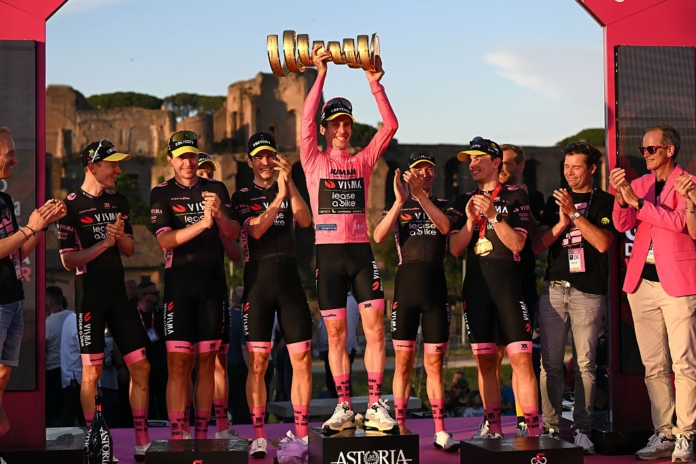
The men’s Giro d’Italia 2026 brings together 23 teams and 184 riders for the first men’s Grand Tour of the season, with a route that should reward climbing depth, time-trial strength and the ability to stay calm through three complicated weeks.
The race begins in Bulgaria on Friday, 8th May and finishes in Rome on Sunday, 31st May. Between those two points, the peloton faces more than 3,400km of racing, 49,150 metres of climbing, seven summit finishes and a 40.2km individual time trial on Stage 10. That mix gives the race a clear GC shape, but it also leaves space for sprinters, breakaway riders and stage hunters to make a major impact.
Jonas Vingegaard starts as the headline favourite, but the men’s Giro is rarely straightforward. Jai Hindley, Egan Bernal, Adam Yates, Ben O’Connor, Santiago Buitrago, Felix Gall, Giulio Ciccone and several others all have credible ways into the race if the route becomes harder to control than expected.
For a stage-by-stage breakdown of the course, our men’s Giro d’Italia 2026 full route guide covers all 21 stages, while our Giro d’Italia 2026 contenders preview looks more closely at the riders chasing the maglia rosa. The confirmed line-up is also available in our full start list for Men’s Giro d’Italia 2026.
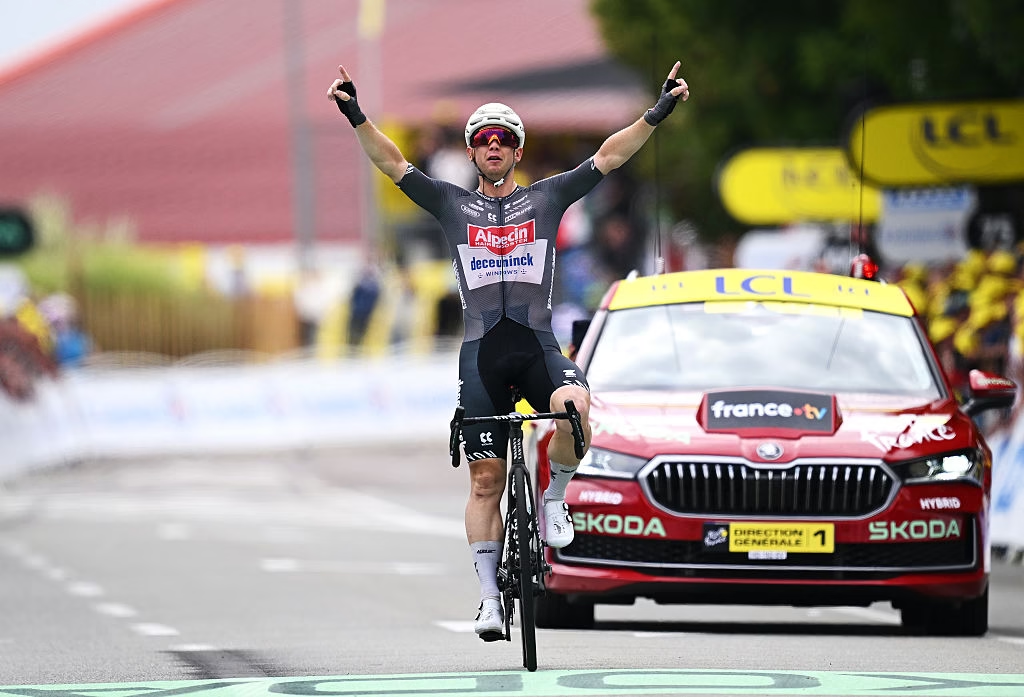 Photo Credit: Getty
Alpecin-Premier Tech
Alpecin-Premier Tech arrive with Kaden Groves as one of the key sprint contenders in the race. He already has Giro stage-winning pedigree and gives the team a strong route to success on the flatter and rolling days. Groves is especially valuable because he can handle tougher sprint finishes better than many pure fast men, which could matter on a route where the sprint stages are not all completely simple.
The wider squad looks built around supporting that stage-winning ambition rather than mounting a GC challenge. Tobias Bayer, Francesco Busatto, Edward Planckaert and Jensen Plowright give the team useful depth for positioning, chasing and surviving hectic finales. If Groves is well placed in the first week, Alpecin-Premier Tech could leave the race with a stage win before the mountain-heavy final phase takes over.
Bahrain Victorious
Bahrain Victorious have one of the more balanced line-ups in the race, with Santiago Buitrago and Damiano Caruso giving them two different ways to approach the GC. Buitrago has the sharper attacking profile and has already won two Giro stages, while Caruso brings proven three-week durability, podium pedigree and the experience to manage the race if it becomes attritional.
The team also carries stage-racing depth around them. Alec Segaert is one to watch against the clock, while Edoardo Zambanini and Robert Stannard can be useful on difficult transition days. Bahrain do not need to control the Giro from the front every day. Their best route may be to stay close, use Buitrago aggressively when the race opens, and allow Caruso to keep a steadier GC line.
Bardiani CSF 7 Saber
Bardiani CSF 7 Saber will be one of the teams most expected to animate breakaways. That is always part of their Giro identity, but it matters even more in a route with several medium-mountain and transitional stages where the main GC teams may not want to chase all day.
Filippo Magli, Martin Marcellusi, Manuele Tarozzi and Luca Paletti give the team riders who can target the right kind of move. A stage win would be the obvious dream, but visibility will also matter. On days where the sprint teams are tired or the GC teams are saving energy, Bardiani should be one of the first teams trying to put riders up the road.

Decathlon CMA CGM Team
Decathlon CMA CGM Team have a clear GC leader in Felix Gall. The Austrian should enjoy the hardest climbing days, particularly once the race reaches the final mountain block. His challenge will be limiting losses in the long Stage 10 time trial and avoiding problems in the flatter, more nervous first half of the race.
The support structure is useful without being overwhelming. Johannes Staune-Mittet adds another climbing option, while Gregor Mühlberger brings mountain experience. Tobias Lund Andresen and Tord Gudmestad give the team faster options for sprint and reduced-sprint days, but Gall is the rider who defines their overall race. If he reaches the third week still close, he can become a serious podium disruptor.
EF Education-EasyPost
EF Education-EasyPost arrive without Richard Carapaz, which changes their race completely. Rather than building around a single podium contender, they look more likely to chase stages through attacking racing, opportunism and riders who can handle varied terrain.
That may suit the shape of the Giro. A race with medium-mountain days, awkward transitions and several stages between sprint and GC terrain gives EF room to be creative. They are unlikely to control the race for long stretches, but that is not really their strength here. Their Giro will be judged on whether they can get into the right breakaways and turn one of those days into a win.
Groupama-FDJ United
Groupama-FDJ United look like a team built more for stage opportunities than a deep GC push. That can be a useful position in this Giro, because the race has enough difficult terrain to reward riders who time their efforts well rather than those trying to sit in the top 10 every day.
Their best chances should come in breakaways and rolling stages where the bigger teams are watching each other. The key will be choosing the right days. A Grand Tour can quickly become exhausting if a team chases every opportunity, but if Groupama-FDJ United place riders into the right moves, there are stages where they can become more than background actors.

Lidl-Trek
Lidl-Trek have one of the clearest dual objectives in the race. Jonathan Milan gives them one of the strongest sprint cards in the peloton, while Giulio Ciccone gives them an Italian climbing option with stage-winning pedigree and a possible top-10 route if the race breaks his way.
Milan will be the priority on sprint days. With Max Walscheid, Simone Consonni and Tim Torn Teutenberg around him, Lidl-Trek have one of the most obvious lead-out structures in the race. Ciccone’s role is more flexible. He could push for GC if the time trial goes well, but if he loses ground, he immediately becomes one of the most dangerous mountain stage hunters in the race.
Lotto Intermarché
Lotto Intermarché bring two different points of interest: Arnaud De Lie for sprints and reduced finishes, and Lennert Van Eetvelt for the GC and climbing days. That gives the team a wider range than a pure sprint squad, but it also means they will need to manage resources carefully.
De Lie could be a major threat on stages that are too hard for some of the pure sprinters but not hard enough for the climbers. Van Eetvelt is one of the more interesting younger GC riders in the race. If he handles the rhythm of three weeks and avoids time trial damage, he can push towards the top 10. The team’s best Giro may come from combining those two objectives rather than choosing too early.
Movistar Team
Movistar arrive with Enric Mas as their main GC leader and a useful climbing group around him. Juan Pedro López, Einer Rubio and Javier Romo give the team options for mountain support and stage hunting, while Rubio’s Giro record makes him particularly valuable if the race becomes more open.
Mas will be judged against the podium rather than simply the top 10, but the Stage 10 time trial is the obvious danger. If he concedes too much there, he will have to attack in the mountains. That is where Movistar’s depth could matter. Rubio and López can give the team tactical cover, especially on stages where a satellite rider up the road could help Mas later.
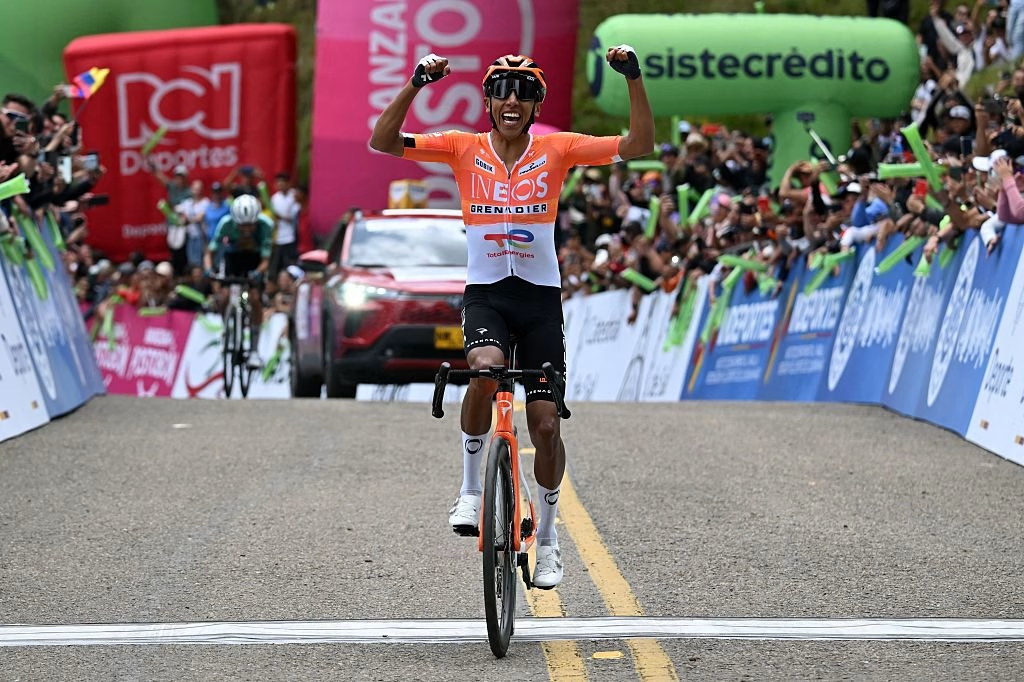
Netcompany Ineos Cycling Team
Netcompany Ineos Cycling Team have one of the strongest all-round Giro squads. Egan Bernal gives them a former winner with emotional and sporting weight, while Thymen Arensman brings consistency, climbing depth and previous Giro top-10 pedigree. Jack Haig adds Grand Tour experience, and Filippo Ganna gives them one of the most important riders in the race for the Stage 10 time trial.
This team’s strength is optionality. If Bernal is close to his best, he can be a genuine podium contender. If he struggles, Arensman can become more than a support rider. Ganna and Magnus Sheffield also give them power for flatter and lumpy stages. INEOS may not be the dominant force of past Giro eras, but this is still a squad with enough quality to shape the race.
NSN Cycling Team
NSN Cycling Team will likely be judged on stage opportunities, visibility and how well they use the days where the GC teams are willing to let a breakaway go. They are not among the obvious teams for the overall, so their race needs to be built around timing and ambition.
The Giro often rewards teams who recognise their level clearly. If NSN Cycling Team spend the race trying to follow the favourites, they may disappear. If they race aggressively on the right terrain, especially medium-mountain and transitional stages, they can put themselves into the television picture and potentially turn one day into a result.
Pinarello-Q36.5 Pro Cycling Team
Pinarello-Q36.5 Pro Cycling Team are one of the invited squads with a real opportunity to make the race their own. The Giro often gives ProTeams space to attack, particularly in the first half before the GC battle becomes more locked down.
Their likely route is through breakaways, but not only for visibility. On a route with rolling stages, medium mountains and difficult transition days, a well-placed move can survive if the bigger teams hesitate. The team will need to be active without wasting energy. The best ProTeam performances at the Giro often come from patience as much as aggression.
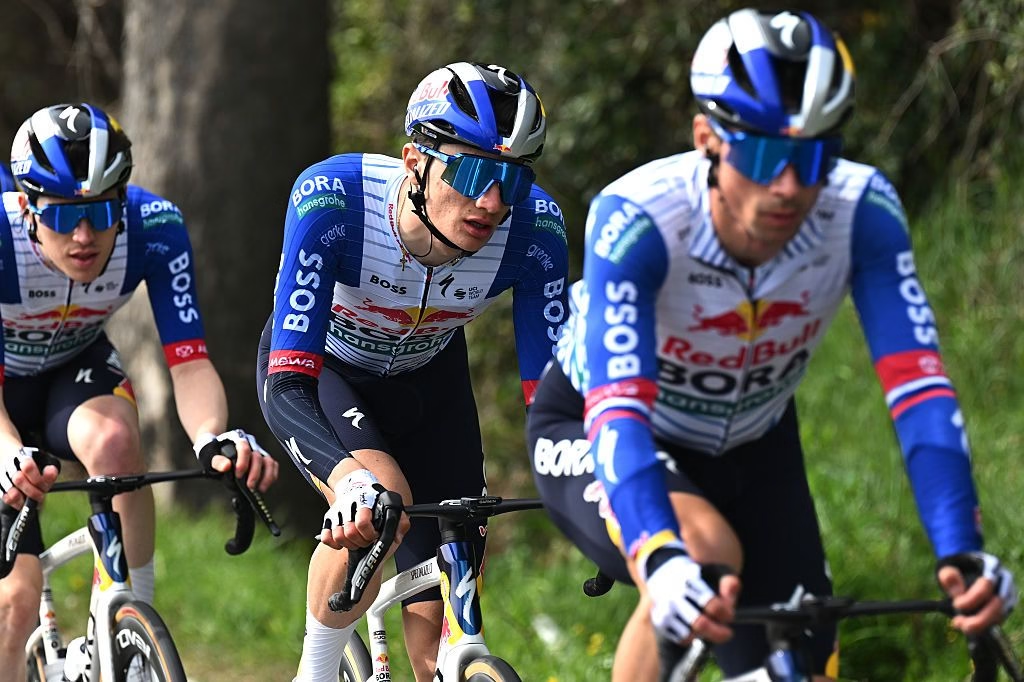
Red Bull-Bora-Hansgrohe
Red Bull-Bora-Hansgrohe have one of the deepest GC groups in the race. Jai Hindley is the proven Giro winner, Aleksandr Vlasov gives them another established Grand Tour option, and Giulio Pellizzari brings Italian climbing talent with clear upside. That makes them one of the few teams with enough depth to challenge Team Visma | Lease a Bike tactically.
Their biggest question is leadership balance. Hindley has the record and the experience, but Pellizzari could become a major story if he climbs with the best on home roads. Vlasov gives them stability. Against Vingegaard, they may need to race with movement rather than simply waiting for the final climb. This team is one of the most capable of creating that kind of pressure.
Soudal Quick-Step
Soudal Quick-Step bring Paul Magnier as one of the sprint names worth watching, especially if the finishes become fast but slightly reduced. He is not the only fast rider in the field, but he gives the team a clear stage-winning path on days where the pure bunch sprint still survives.
The team’s wider Giro should also include breakaway ambitions. Soudal Quick-Step are rarely at their best when anonymous, and this route offers stages where aggressive racing can pay off. The key will be managing Magnier’s sprint opportunities while still giving other riders freedom when the terrain becomes too hard for the fast men.
Team Jayco AlUla
Team Jayco AlUla have a proven Grand Tour leader in Ben O’Connor. He is one of the riders who can climb into podium contention through consistency rather than one spectacular attack. The route should suit him if he limits time trial losses and reaches the high mountains still in range.
The team also has a useful supporting cast. Koen Bouwman and Andrea Vendrame both have Giro stage wins, while Alan Hatherly adds climbing strength. Pascal Ackermann gives them a sprint option, but O’Connor is the centre of the project. Jayco’s best route is a controlled, efficient Giro where O’Connor keeps surviving and others gradually fall away.
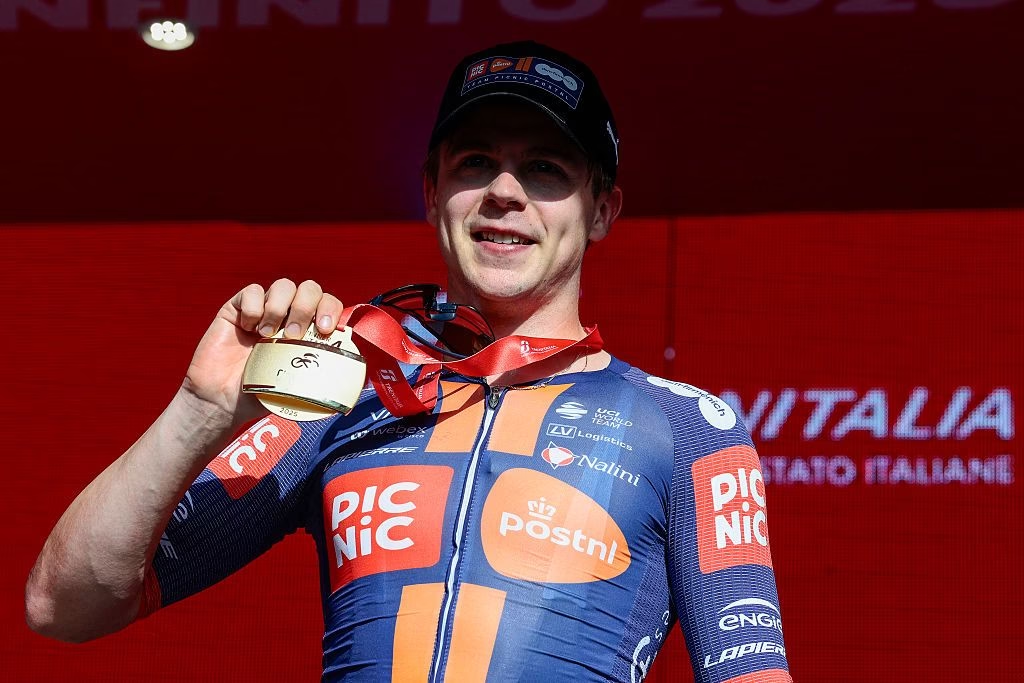
Team Picnic PostNL
Team Picnic PostNL have a strong sprint and stage-hunting identity at this Giro. Casper van Uden gives them a fast option for bunch finishes, while the wider squad can look for opportunities on transitional terrain and days where the breakaway has a chance.
Their race will depend heavily on execution. In a sprint field that includes Milan, Groves, De Lie, Groenewegen, Magnier and others, positioning will be everything. Van Uden has the speed to be involved, but he will need the team to keep him close enough to the front when the race becomes chaotic. If they get that right, a podium finish on a sprint stage is realistic, and a win is not out of reach.
Team Polti VisitMalta
Team Polti VisitMalta should be one of the most visible Italian ProTeams in the race. The Giro gives them a platform that matters, and the expectation will be that they attack early, often and intelligently. Breakaways are not a secondary aim here. They are the point of the race.
Their best days should come on hilly and medium-mountain stages where the sprint teams cannot control easily and the GC teams do not want full responsibility. A stage win would be a huge result, but the team can also make the race by forcing bigger squads to react. For Polti, a passive Giro would be a missed opportunity.
Team Visma | Lease a Bike
Team Visma | Lease a Bike start with the clearest favourite in Jonas Vingegaard and one of the strongest support structures in the race. Sepp Kuss, Wilco Kelderman, Davide Piganzoli and Bart Lemmen give the team climbing depth, while the overall approach should be built around control.
Vingegaard’s Giro debut is the central storyline of the race. If he reaches the high mountains in good condition, the route gives him repeated chances to make the difference. The challenge for Visma is that the Giro is rarely as controllable as it looks on paper. Weather, crashes, transition stages and Italian racing chaos can all disrupt a plan. Still, if the race becomes a straight climbing contest, this is the team everyone else must solve.
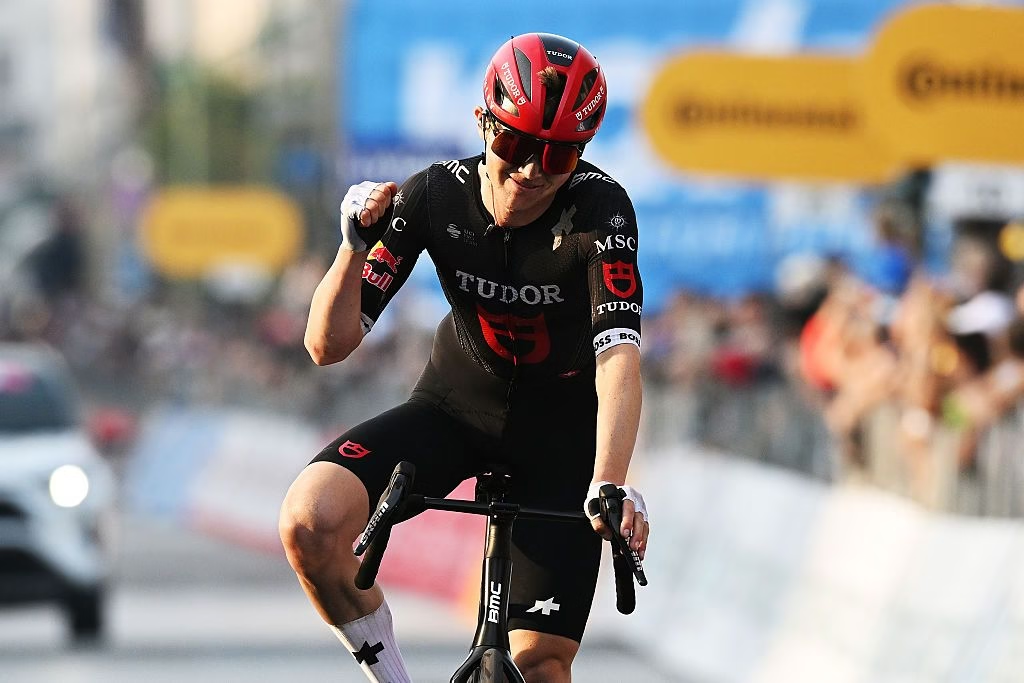 Photo Credit: Getty
Tudor Pro Cycling Team
Tudor Pro Cycling Team bring Michael Storer as a genuine GC outsider and mountain stage threat. Storer has previous Giro top-10 pedigree and the climbing profile to be dangerous if the favourites start watching each other too closely.
That makes Tudor one of the more interesting ProTeam presences in the race. They are not here just to chase exposure from early breakaways. Storer gives them a rider who can influence the overall shape of the Giro, particularly if he stays close through the time trial and early summit finishes. Even if the podium is a long shot, a top-10 and a mountain stage win are realistic ambitions.
UAE Team Emirates XRG
UAE Team Emirates XRG look built to make the race hard. Adam Yates is the GC leader, but the support around him gives the team several ways to apply pressure. Jay Vine brings climbing and time trial strength, Marc Soler gives them attacking range, and Jan Christen and Igor Arrieta add depth for selective stages.
Their best Giro is probably an aggressive one. If the race becomes controlled entirely by Visma, Yates may need to find time through movement rather than waiting for the final kilometre. Vine and Soler make that possible. Jhonatan Narvaez also gives UAE a rider who can win from medium-mountain or rolling stages, so the team should be visible even on days where the GC is quiet.
Unibet Rose Rockets
Unibet Rose Rockets are one of the teams with the most to gain from visibility. As an invited team, their Giro will be judged by how often they get into the race and whether they can turn breakaway presence into something more concrete.
The route gives them chances. The flatter stages will be difficult because the sprint teams are strong, but the medium-mountain days, lumpy transitions and tired third-week stages could open the door. They will need to be brave but selective. A team in their position cannot afford to miss every move, but it also cannot burn through riders without purpose.
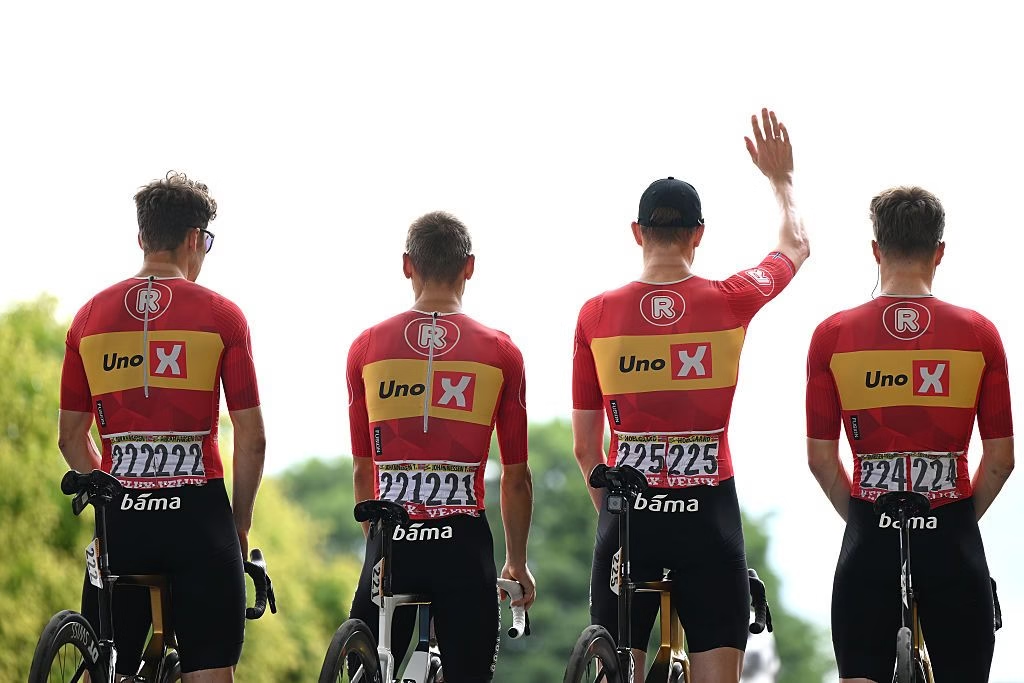
Uno-X Mobility
Uno-X Mobility bring a squad that should be active in breakaways and difficult mid-race stages. They may not have one of the headline GC favourites, but they have the kind of structure that can be awkward for bigger teams if they commit early to the right move.
The team’s Giro is likely to be built around stage opportunities, especially on days where the profile discourages a full sprint but does not force the GC teams into all-out control. If Uno-X Mobility can place riders into those breakaways, they can have a meaningful race. Their best opportunity may come on days where hesitation behind gives a committed move a chance.
XDS Astana Team
XDS Astana Team should be another squad looking for stages rather than overall control. Wout Poels brings Grand Tour experience and climbing quality, while Christian Scaroni has the profile to be active on hilly and medium-mountain terrain. Those are exactly the days where Astana can make the most sense.
The team’s challenge is consistency. They will not be expected to control sprint stages or dictate the high mountains, but they can still shape the race through breakaways and late attacks. Scaroni in particular should be watched on rolling days, while Poels remains the kind of experienced rider who can read a mountain stage well if given freedom.
-
 Photo Credit: A.S.O./Gaëtan Flamme
What the team list tells us about the Giro
The men’s Giro d’Italia 2026 has a clear favourite, but the team list suggests a more complicated race than a simple Visma procession. Team Visma | Lease a Bike have the strongest central leader in Vingegaard, but Red Bull-Bora-Hansgrohe, UAE Team Emirates XRG, Netcompany Ineos Cycling Team and Team Jayco AlUla all bring enough depth to make the mountain stages tactical.
The sprint field is also strong. Lidl-Trek, Alpecin-Premier Tech, Team Picnic PostNL, Soudal Quick-Step, Team Jayco AlUla and Lotto Intermarché all have riders capable of winning fast finishes. That should make the first half of the race more controlled on paper, but the route still has enough awkward terrain to give breakaway teams hope.
The ProTeams add an important layer. Bardiani CSF 7 Saber, Team Polti VisitMalta, Tudor Pro Cycling Team, Pinarello-Q36.5 Pro Cycling Team and Unibet Rose Rockets all need to be visible, and Tudor in particular have a rider capable of doing more than chasing television time.
That mix is what gives the Giro its texture. The race may be built around Vingegaard and the maglia rosa, but the story will not belong to the GC favourites alone. Sprinters, climbers, breakaway specialists and ambitious ProTeams all have routes into the race. The question is which teams read those opportunities best once the road begins to decide.

