

The Tour de Suisse 2026 reaches Bad Ragaz on Friday, 19th June, with the race still trying to settle after a brutal opening in Sondrio and a punchy second stage in Locarno. Stage 3 is not as obviously decisive as the opening day or the final mountain stage, but it may be one of the most tactically awkward days of the week.
Bad Ragaz to Bad Ragaz covers 157.9km with 2,690m of climbing. It is officially listed as a hilly stage with a 3/5 difficulty rating, and the key feature is Schwägalp, which comes far enough from the finish to create a genuine dilemma. If the sprinters are dropped there, they have time to return. If the strongest teams race it hard enough, the stage could be gone before the flat run back to Bad Ragaz.
That makes stage 3 different from the first two days. It is not a pure GC test, but it is also not a straightforward sprint stage. The route asks whether the fast finishers can survive the climbing, whether their teams have enough riders left to chase afterwards, and whether a strong breakaway can use the terrain to take the race away from the peloton.
For wider race context, see our Men’s Tour de Suisse 2026 full route guide, the full start list for Men’s Tour de Suisse 2026, our Men’s Tour de Suisse 2026 team-by-team guide and our Men’s Tour de Suisse 2026 stage 2 live viewing and start time update.

Tour de Suisse 2026 stage 3 route
Stage 3 starts and finishes in Bad Ragaz, with 157.9km and 2,690m of climbing. The numbers make it harder than a normal sprint day, but the shape of the route makes the tactical question more complicated than the raw profile.
Shortly after the start, the riders tackle St. Luzisteig. It is not the decisive climb of the day, but it gives the stage an immediate upward rhythm and should help shape the early breakaway. From there, the route passes through the Principality of Liechtenstein before heading towards the Appenzell region.
The main obstacle is Schwägalp. That is where the race should become clearest. If the peloton rides the climb at a controlled pace, the sprinters and heavier classics riders may survive or chase back. If the climbers and puncheurs force the pressure, the stage could split long before the finish.
After the descent towards Altstätten, the route becomes flat all the way back to Bad Ragaz. That gives dropped riders a realistic chance of returning, but only if enough teammates survive with them. It also gives attackers a difficult problem: any move over Schwägalp needs cooperation on the flat roads that follow.
That balance makes stage 3 one of the most interesting days of the race. The key point comes well before the finish, but the stage may not be decided until the final kilometres.
Why stage 3 matters
Stage 3 matters because it is the closest thing the men’s race has to a sprint opportunity before the time-trial and the queen stage. Stage 1 was too hard and too selective. Stage 2 brought more punchy terrain around Locarno. Stage 4 is the 23.8km individual time-trial in Aarburg, and stage 5 is the mountain stage in Villars-sur-Ollon.
That leaves Bad Ragaz as the one day where sprinters and fast classics riders can look at the route with some optimism. The problem is that they have to survive Schwägalp first.
The GC teams may also see stage 3 as a day to manage energy. Tadej Pogačar’s stage 1 dominance already put the race into a clear hierarchy, and the time-trial and final mountain stage still offer obvious chances for more separation. UAE Team Emirates-XRG do not need to make stage 3 hard from the start, but they cannot allow a dangerous move too much freedom.
For riders who lost time early, stage 3 may be an opportunity. A breakaway can work if the composition is right. A late split can matter if a GC rider is badly positioned. A stage that looks less decisive on paper can still alter the race if one team misreads the chase.
What kind of rider can win in Bad Ragaz?
Stage 3 can be won by three different types of rider: a sprinter who survives the climbing, a classics-style finisher who handles Schwägalp better than the pure fast men, or a breakaway rider who gets over the main climb with enough help to stay clear.
The pure sprint scenario depends on control. The fast riders need the climb raced steadily, not brutally. They then need teammates to organise the chase after the descent, because the flat run back to Bad Ragaz gives the peloton time to repair the damage. If the bunch regroups, this is probably the best sprint chance of the week.
The classics scenario is more interesting. Riders such as Mathieu van der Poel, Tom Pidcock, Marc Hirschi, Romain Grégoire and Thibau Nys should all prefer a stage that is hard enough to drop some pure sprinters but not so hard that it becomes a pure climbing day. If the front group is reduced over Schwägalp and the fastest sprinters are missing, those riders become serious contenders.
The breakaway route also looks realistic. Because the decisive climb comes well before the finish, a strong group can build a useful buffer and then use the flat roads to hold off a disorganised chase. If the sprint teams are short on numbers after two hard opening stages, the break may have more chance than usual.
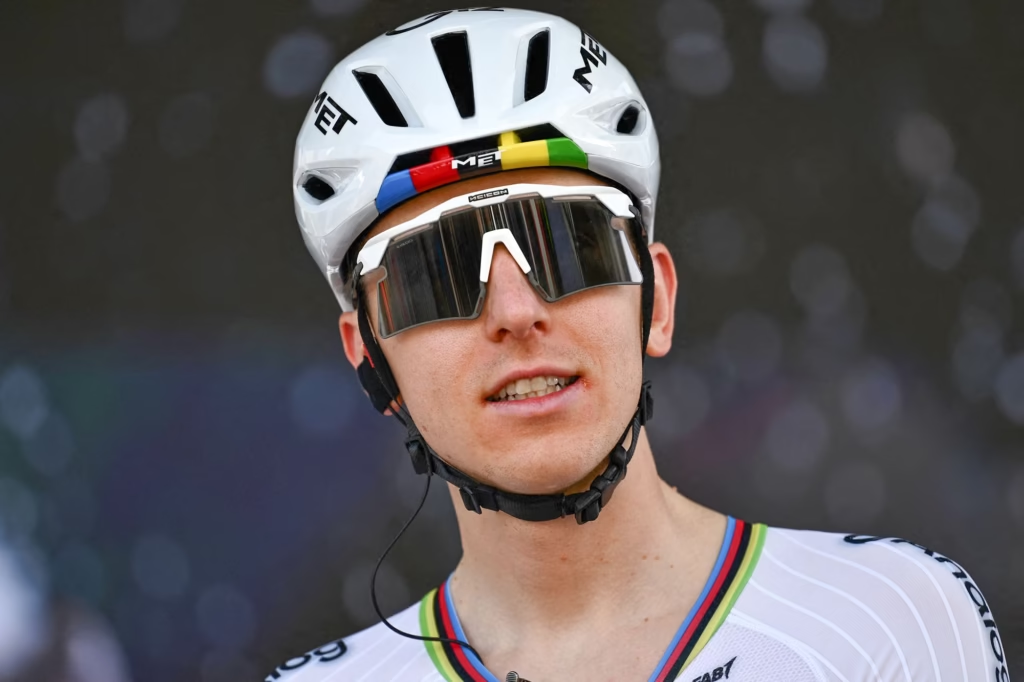
Tadej Pogačar
Tadej Pogačar remains the central figure in the race even on a stage that should not necessarily require him to attack. His long-range stage 1 move in Sondrio changed the tone of the whole Tour de Suisse, putting UAE Team Emirates-XRG into control and forcing everyone else to decide whether they are chasing the overall or looking for stage opportunities.
Stage 3 is probably not a day where Pogačar needs to spend energy. The time-trial in Aarburg and the Villars-sur-Ollon mountain stage are more obvious places to tighten his grip on the race. But his presence still affects everything. If he follows a move over Schwägalp, it becomes a GC threat. If UAE control the pace, the race may become more manageable for the sprinters.
The key for Pogačar is staying safe and avoiding wasted effort. A nervous sprint finish after a long chase is not where a race leader wants to take unnecessary risks, so UAE’s ideal stage may be controlled rather than aggressive. Let others chase if possible, keep the yellow jersey out of trouble and arrive at the time-trial with the race still under control.
Mathieu van der Poel
Mathieu van der Poel looks like one of the most obvious stage 3 contenders. The route is not easy, but it may be exactly the kind of day that suits him if the pure sprinters are put under pressure and the race regroups on the flat run to Bad Ragaz.
Van der Poel has enough power to survive the hilly middle section if the pace is not extreme, and enough finishing speed to win from a reduced group. The challenge is whether Alpecin-Premier Tech can keep the stage together in the right way. If Schwägalp is raced too hard, he may be forced into a chase. If it is controlled, he becomes one of the strongest finishers left.
The flat run after the main climb is helpful for him. Even if he loses contact briefly, there may be time to return. If he gets over with the front group, he could be difficult to beat.
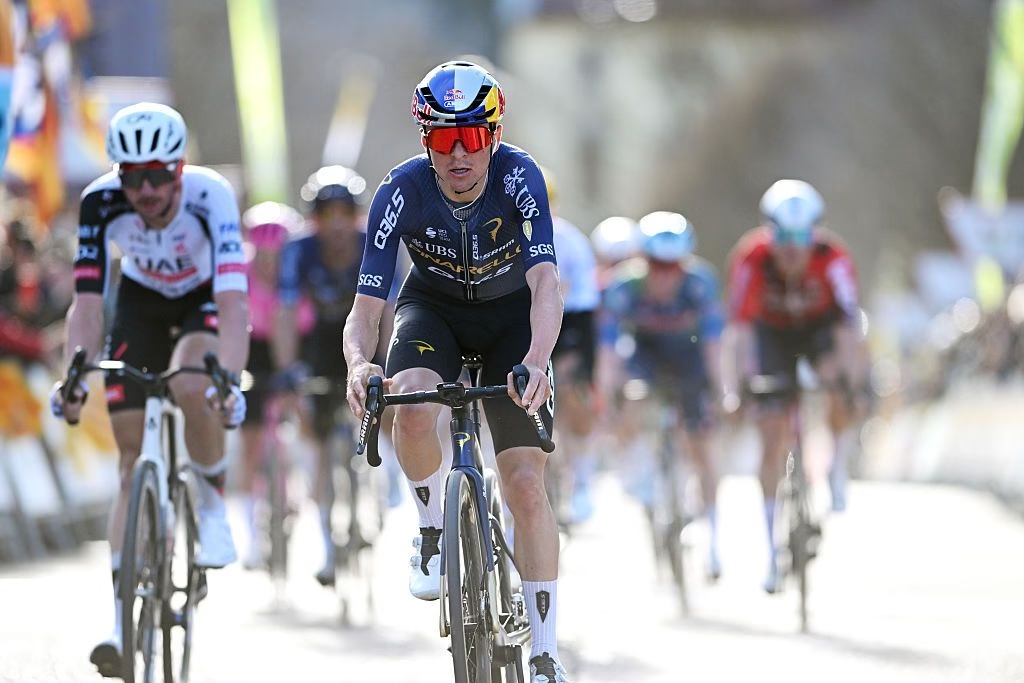
Tom Pidcock
Tom Pidcock is another rider who should like the tactical nature of stage 3. He does not need a pure sprint stage, and he does not need a full mountain stage either. He needs selective terrain, technical racing and a finale where positioning and timing matter.
Schwägalp gives Pidcock a platform. If he attacks or follows a strong move there, the race can become complicated for the sprint teams. If he waits, he still has the punch to be dangerous from a smaller group.
Pinarello-Q36.5 may also view this as one of the better chances to race proactively. Waiting for Pogačar to dominate the time-trial or mountain stage is unlikely to produce much. Stage 3 offers a chance to use timing and aggression rather than pure climbing strength.
Marc Hirschi
Marc Hirschi is one of the cleanest fits for the stage. Tudor Pro Cycling Team have a rider who can climb, descend, attack and finish from a reduced group, and stage 3 should give him several ways to win.
If the race becomes selective over Schwägalp, Hirschi can be in the front group. If a late attack goes on the flat run back to Bad Ragaz, he has the tactical sense to follow. If the group comes back together without the pure sprinters, his finish becomes a major weapon.
The difficulty is that he will be closely watched. On a day that suits punchy Swiss riders and classics-style finishers, Hirschi is an obvious name. That may make it harder for him to get freedom, but it also underlines why he should be central to the stage.
Romain Grégoire
Romain Grégoire is another rider who should see Bad Ragaz as an opportunity. Groupama-FDJ United already had him active on the Locarno stage, and this route again gives him terrain where he can turn aggression into a result.
The appeal for Grégoire is that stage 3 is not a simple sprint stage. If the route were completely flat, he would likely be waiting behind faster specialists. If it were a full mountain stage, the pure climbers would have the advantage. Bad Ragaz sits between those worlds, and that is where he can be dangerous.
He can win from a reduced group, but he may be even more threatening if he attacks after the main selection. The long flat run to the finish means timing will be crucial, yet it also means a small group with cooperation can survive if the peloton hesitates.
Thibau Nys
Thibau Nys is a strong contender if stage 3 becomes selective but not brutal. Lidl-Trek should look at this as a possible stage-winning day, especially if the race drops some pure sprinters but leaves a group large enough for a punchy finish.
Nys has the explosive finish for reduced groups and the climbing ability to survive the harder middle section. His chances depend on how Schwägalp is raced. If the pace is controlled, more sprinters may survive. If it becomes too hard, he may need to spend too much just staying in contention. The ideal scenario is a stage that removes the pure speed but still keeps enough riders together for a tactical sprint.
That is possible here. The flat road back to Bad Ragaz could turn Nys into one of the most dangerous riders left if Lidl-Trek manage the chase properly.
Primož Roglič
Primož Roglič is unlikely to see stage 3 as his main opportunity, but he still needs to stay alert. The route is awkward enough to create splits, and the descent and flat run back to Bad Ragaz could become stressful if the race is stretched.
Red Bull-BORA-hansgrohe may choose to keep Roglič protected rather than chase the stage. The bigger tests are still ahead, especially the Aarburg time-trial and Villars-sur-Ollon. But Roglič has the finishing instinct to matter if the front group is small and the race becomes messy late.
The more important point is positioning. Roglič cannot afford to be caught behind if the race splits over Schwägalp. A day that looks like a stage-hunter opportunity can still become dangerous for GC riders if they are not in the right place at the key moment.
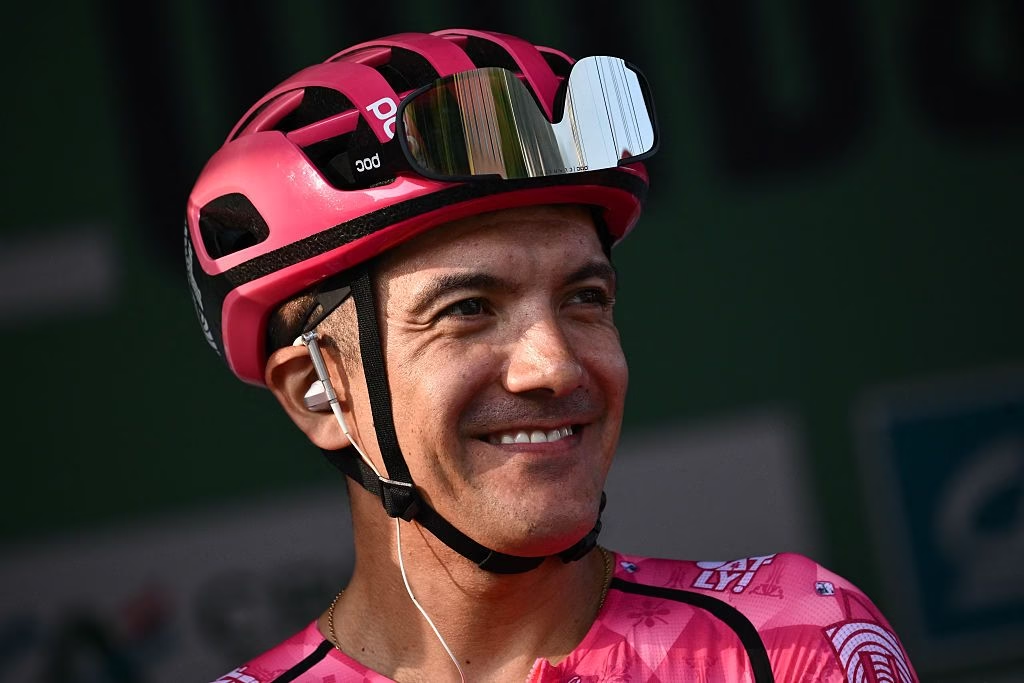
Richard Carapaz
Richard Carapaz remains one of the riders most likely to make stage 3 uncomfortable if the race becomes open. He has already shown form in the opening stage, and EF Education-EasyPost may not want to simply wait for Pogačar to dictate the rest of the race.
Schwägalp gives Carapaz a possible launchpad, but the flat run to the finish makes a solo move difficult unless the race behind becomes disorganised. His better role may be to follow dangerous attacks, force UAE to work and keep himself close before the time-trial and mountain stage.
Carapaz is also a rider who can turn a tactical stage into a GC problem. If he gets into the right group, the chase behind has to respond. That alone makes him worth watching.
Other riders to watch
Antonio Tiberi should be watched if the stage becomes harder than expected. Bahrain Victorious also had Afonso Eulálio involved in the Locarno breakaway, and that kind of aggressive approach could be repeated if the team wants options beyond pure GC defence.
Ilan Van Wilder gives Soudal-QuickStep a strong all-round card for a stage with climbing, flat roads and tactical uncertainty. He may not be the fastest in a reduced sprint, but he can be useful if a strong group forms over Schwägalp.
Enric Mas and Nairo Quintana are more likely to ride defensively, but Movistar cannot afford to be asleep on a day where the race can split early and regroup late. Max Poole and Jan Hirt are also more likely to think about the overall than the stage win, but both need to stay positioned before the key climb.
Jasper Philipsen, Arnaud De Lie and Matthew Brennan are the sprint-related names who make the stage interesting if they start and survive the climbing. The route is difficult for them, but the flat return to Bad Ragaz gives them a route back into contention if their teams can chase effectively.
-
 Photo Credit: A.S.O./Gaëtan Flamme
Race tactics
Stage 3 is likely to be defined by the tension between the breakaway, the sprinters and the GC teams.
The breakaway should be strong because plenty of riders will see this as a chance. The route is too hard for every sprinter to feel comfortable, but not hard enough to guarantee a GC battle. That gives attackers a clear incentive to get ahead before the race reaches Schwägalp.
The sprint teams have the opposite problem. This may be their best chance of the week, but they cannot simply control the race from the start unless they are confident their fast riders can survive. Chasing all day only makes sense if the sprinter is still there after the main climb.
UAE Team Emirates-XRG may not want to take full responsibility. With Pogačar in control, they can keep the race safe without chasing for every sprint team. If the break is not dangerous on GC, they may allow others to decide whether a bunch finish is worth the effort.
That could make the final 60km fascinating. If sprinters are dropped on Schwägalp, their teams will need to chase across the flat roads back to Bad Ragaz. If a strong group goes over the climb with the right mix of riders, the peloton may struggle to organise. If everything comes back together, the finish could still be a rare sprint in a race that has otherwise been built around hilly and mountain terrain.
Prediction
Stage 3 is the best chance for a sprint at the 2026 Tour de Suisse, but the route is awkward enough to make that far from certain. Schwägalp should decide who gets to contest the finish, even though the finish itself comes much later in Bad Ragaz.
The most likely outcome is a reduced group, with some of the sprinters returning after the climb but not all of them. That makes Mathieu van der Poel a strong favourite. He has the power to survive, the speed to finish and the tactical range to handle a messy finale.
Marc Hirschi and Thibau Nys both look like excellent fits if the race becomes more selective and the pure sprinters are missing. Tom Pidcock and Romain Grégoire are also dangerous if the stage becomes tactical rather than controlled.
A breakaway win remains realistic, especially if the sprint teams hesitate after two hard opening days. But if the race comes back together, Van der Poel looks like the rider with the best blend of climbing resistance, power and finishing speed.

