
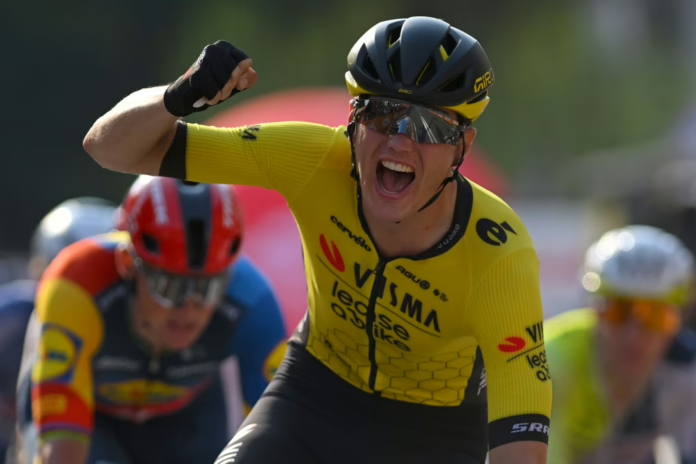
The 2026 ADAC Cyclassics brings together an unusually deep group of sprinters and Classics riders, with the five late ascents of the Waseberg creating enough difficulty to stop Sunday’s race from being treated as a straightforward dash to Mönckebergstraße.
Olav Kooij returns as the 2024 winner, Jonathan Milan was second that year, while Arnaud De Lie and Paul Magnier finished second and third behind Rory Townsend in 2025. Kaden Groves, Biniam Girmay, Michael Matthews and Søren Wærenskjold add further riders who become increasingly dangerous if repeated climbing reduces the peloton before Hamburg.
Townsend is back too, now with Unibet Rose Rockets after producing one of the biggest upsets in the race’s history last season. Our brief history of the ADAC Cyclassics looks at that victory alongside the race’s development since its first edition in 1996.
There are also some significant absences. Jasper Philipsen, Tim Merlier, Mads Pedersen and Wout van Aert are not on the current start list, removing several riders who would normally feature prominently among the favourites. The result is a more open hierarchy headed by contenders whose strengths fit Hamburg in very different ways.
The full course is covered in our ADAC Cyclassics 2026 route guide, with the decisive question revolving around whether five passages of the short, steep Waseberg can remove enough sprint support to make the closing kilometres difficult to control.
ADAC Cyclassics 2026 favourites at a glance
| Rider | Team | Why he can win |
|---|---|---|
| Olav Kooij | Decathlon CMA CGM Team | Former winner, elite sprint and strong on selective terrain |
| Jonathan Milan | Lidl-Trek | Probably the highest outright sprint speed in the field |
| Arnaud De Lie | Lotto-Intermarché | Second in 2025 and ideally suited to a hard sprint |
| Paul Magnier | Soudal Quick-Step | Third in 2025 and stronger again during 2026 |
| Kaden Groves | Alpecin-Premier Tech | More durable than most pure sprinters |
| Biniam Girmay | NSN Cycling Team | Excellent reduced sprint and strong Classics support |
| Søren Wærenskjold | Uno-X Mobility | Huge power and now proven against the best sprinters |
| Michael Matthews | Team Jayco-AlUla | Benefits if the Waseberg removes the pure fast men |
| Pavel Bittner | Team Picnic PostNL | Quick enough to sprint and durable enough for a hard finale |
| Laurence Pithie | Red Bull-BORA-hansgrohe | Dangerous if the race becomes substantially more selective |
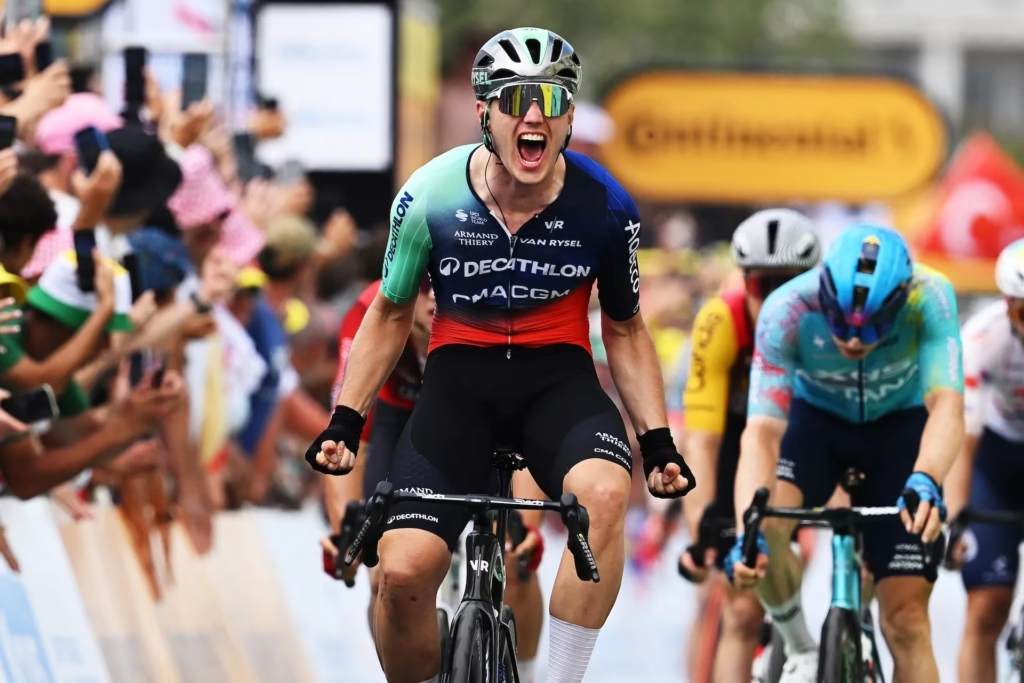 Photo Credit: Getty
Olav Kooij has already proved he can win in Hamburg
Olav Kooij is probably the most complete favourite for the 2026 ADAC Cyclassics.
There are riders with more outright speed in a completely clean sprint and stronger Classics specialists if the race breaks apart, but Kooij occupies the useful middle ground between those two scenarios. He has already demonstrated that he can survive the Hamburg finale and still beat the strongest sprinters, winning the 2024 edition ahead of Milan.
Kooij has taken another step since then. His first Tour de France stage victory arrived this summer when he won the reduced Stage 5 sprint in Pau, adding another major result to a palmarès already built around repeatedly converting opportunities when races become slightly harder than a conventional sprint.
Decathlon CMA CGM have also given him an excellent team for this particular race. Cees Bol and Robbe Ghys supply sprint support, while Oliver Naesen, Stan Dewulf and Daan Hoole should remain useful deep into a fast and aggressive finale.
Kooij does not need the easiest possible version of Hamburg. He simply needs the Waseberg not to turn the race into something substantially harder.
Jonathan Milan is the rider everyone wants to isolate
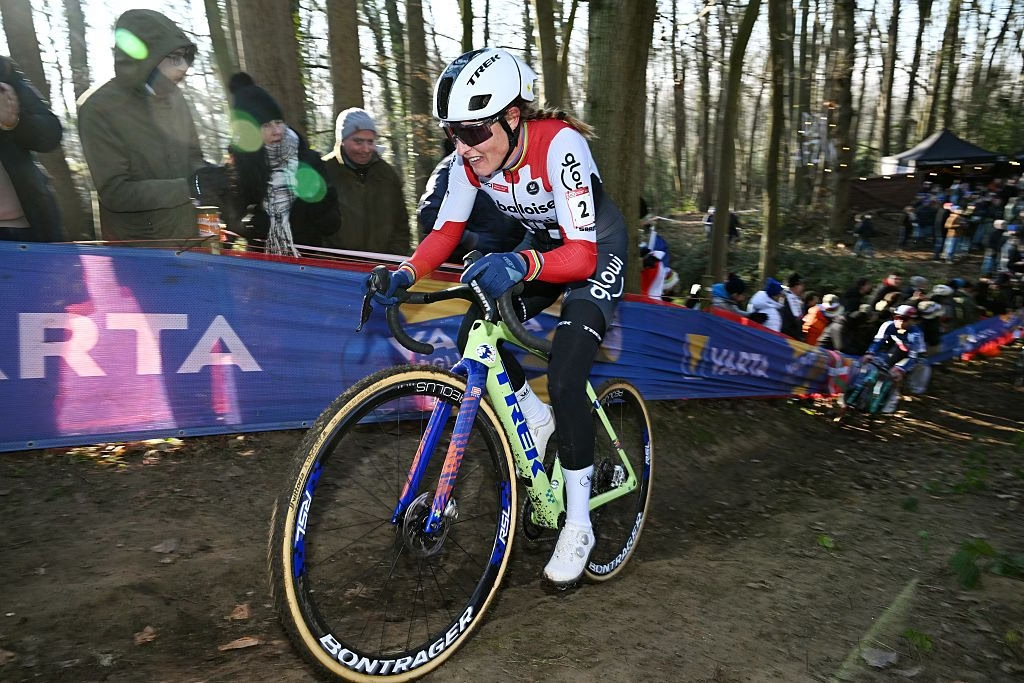
If the race reaches Mönckebergstraße with a reasonable-sized group and Jonathan Milan still has Simone Consonni available, Lidl-Trek will have every reason to feel confident.
Milan’s size means every violent acceleration on the Waseberg carries a cost, but his second place here in 2024 showed that the climb itself is not automatically too difficult for him. The greater threat is repeated attacking afterwards, particularly if Lidl-Trek are forced to use the riders who would normally form Milan’s lead-out simply to keep the race together.
The Italian has continued to establish himself as one of the benchmark sprinters in the men’s peloton, with ProCyclingUK looking at his broader qualities in our Jonathan Milan Tour de France 2026 profile.
Lidl-Trek’s selection is built to protect him. Consonni is the crucial final lead-out rider, Edward Theuns and Max Walscheid add substantial power, while Søren Kragh Andersen and Andrea Bagioli can cover dangerous moves without immediately sacrificing the sprint train.
The rest of the field know the equation. If Milan reaches the final kilometre relatively fresh and properly positioned, he may simply be the fastest rider in Hamburg. Their job is to ensure that does not happen.
Arnaud De Lie may have the ideal profile for this race
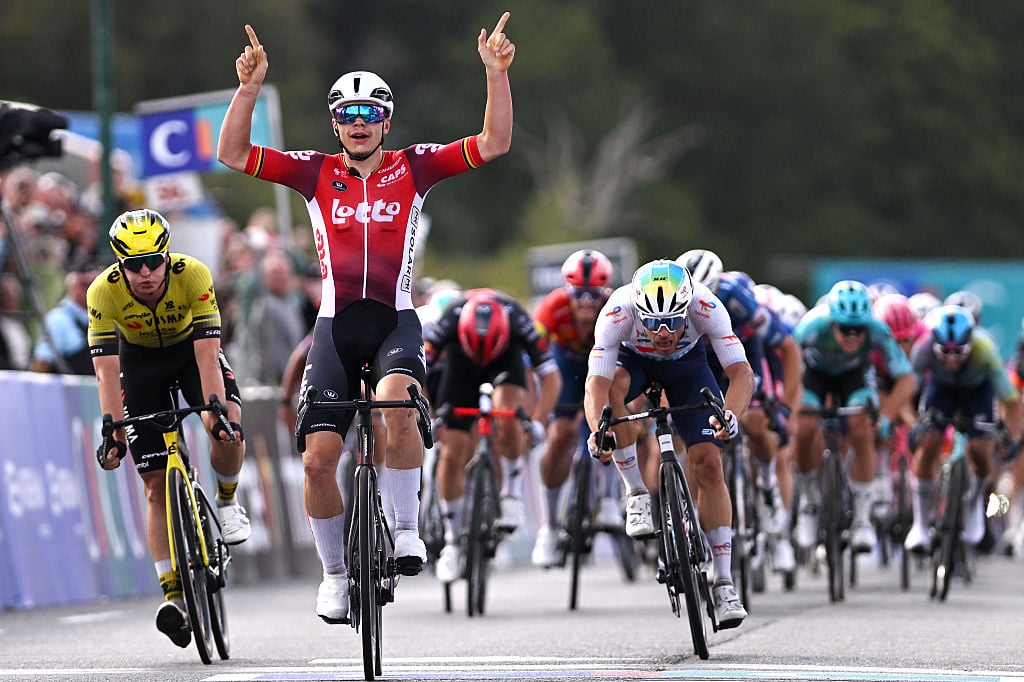
There is a strong argument that Arnaud De Lie is the rider whose characteristics best match the ADAC Cyclassics.
He does not have Milan’s pure acceleration, but he is considerably less dependent on a pristine sprint. Short climbs, physical racing, repeated accelerations and smaller groups generally improve his chances relative to the fastest pure finishers.
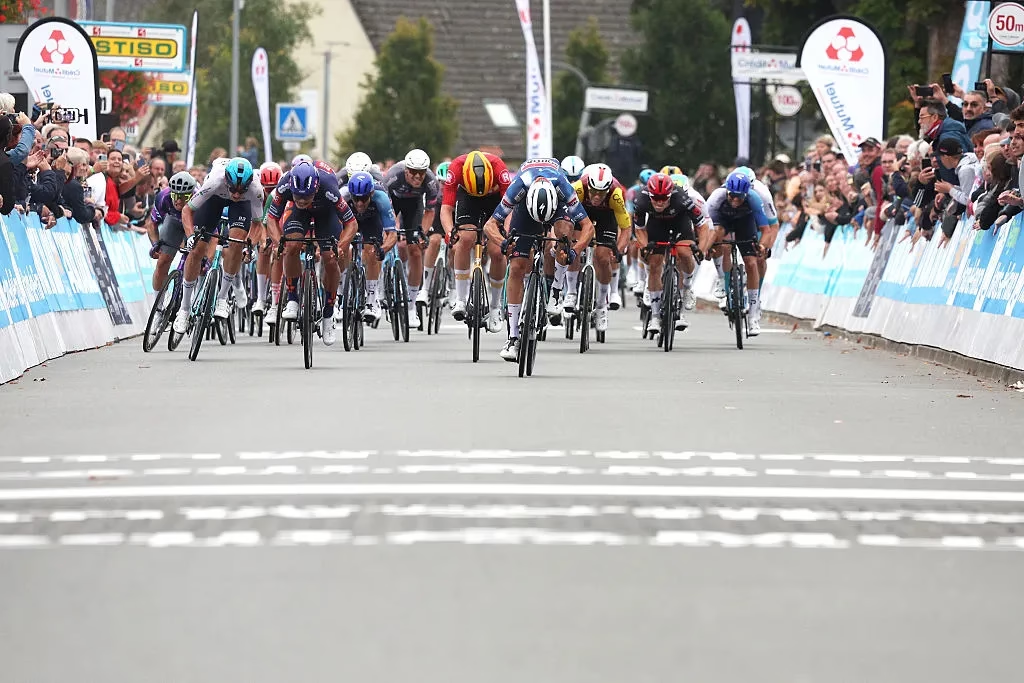
Last year’s race demonstrated that perfectly. De Lie was the quickest rider behind Townsend, taking second after the peloton came agonisingly close to catching the surviving breakaway rider.
His major question is form. De Lie’s Tour de France was disrupted before the race had properly started by a stomach problem, with ProCyclingUK covering his difficult opening weekend after illness affected his preparation and his subsequent exit following the Stage 3 time-cut battle.
If he has rebuilt properly since leaving the Tour, Hamburg represents an excellent opportunity to restart the second half of his season.
Jasper De Buyst remains an important finishing ally, while Huub Artz, Jonas Rutsch and Taco van der Hoorn give Lotto-Intermarché riders who can become involved before the sprint. At full strength, De Lie can win whether 70 riders arrive together or only 20 do.
Paul Magnier looks stronger than when he finished third in 2025
Paul Magnier finished third in Hamburg last season and returns as a considerably more established WorldTour sprinter.
His Giro d’Italia provided the clearest evidence of that progression. Magnier collected three stage victories and showed that his speed remains dangerous after difficult finales, particularly when he won Stage 18 in Pieve di Soligo after surviving the late Muro di Ca’ del Poggio.
That is particularly relevant to Hamburg. Magnier does not need the Waseberg neutralised. He simply needs to remain on the correct side of whatever selection it produces.
Soudal Quick-Step also have arguably the strongest Classics support of any sprint team. Jasper Stuyven, Yves Lampaert and Dries Van Gestel can all follow attacks, while Fabio Van den Bossche provides additional support for the finishing phase.
The presence of Stuyven is especially useful. If he enters a dangerous move, Quick-Step have no immediate reason to chase while Magnier remains protected behind.
Third last year already demonstrated that the race suits him. His performances in 2026 suggest he now has a better chance of turning that podium into victory.
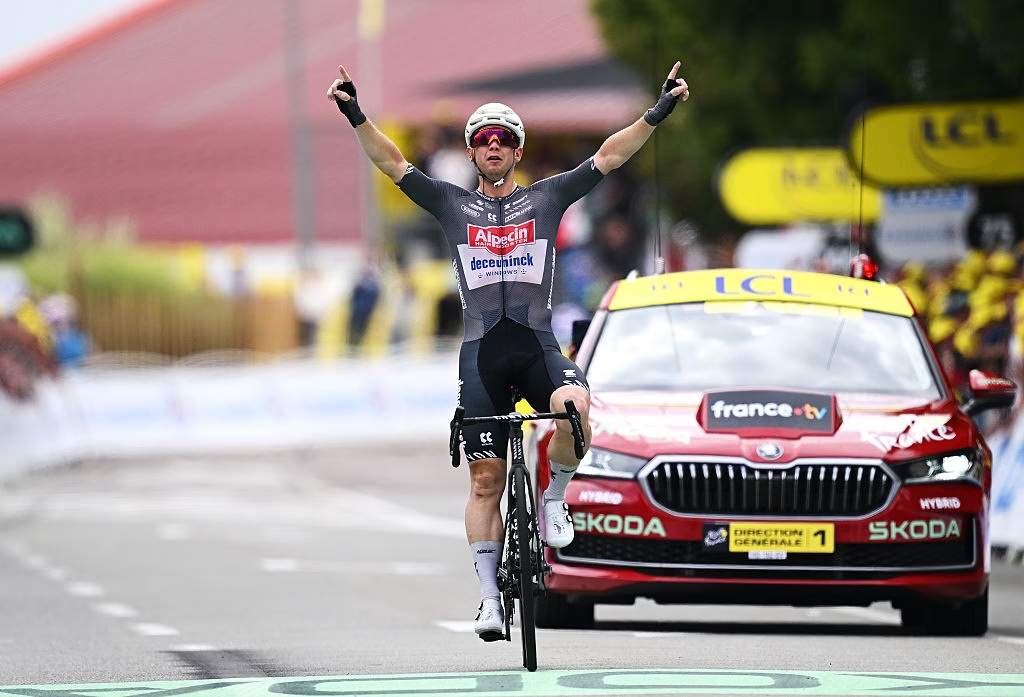 Photo Credit: Getty
Kaden Groves will not mind if the race gets messy
If Milan wants the Waseberg ridden hard but controlled, Kaden Groves should be comfortable if the finale becomes considerably less organised.
Groves has sufficient speed to win from a sizeable group but is more resilient than many conventional sprinters. His extraordinary solo victory from the breakaway on Stage 20 of the 2025 Tour de France demonstrated the breadth of a rider who can win through far more than a conventional lead-out.
Alpecin-Premier Tech do not have Jasper Philipsen on the start list, removing any uncertainty over who receives priority in Hamburg. Groves should be their clear finishing option.
Tibor Del Grosso gives them an interesting attacking alternative, while Jensen Plowright and Henri Uhlig add speed around Groves.
The harder the final hour becomes without the race completely fragmenting, the more attractive his chances look.
Biniam Girmay should welcome an attritional finale
Biniam Girmay is another contender who does not need the sprint teams to make the race easy.
Girmay finished third in Hamburg in 2024 and remains one of the best riders in the field at combining Classics resilience with a high-level sprint. His move to NSN Cycling Team added another major leader to the team’s 2026 project, covered in ProCyclingUK’s piece on Biniam Girmay signing a three-year deal with NSN.
The Tour de France did not produce a victory for Girmay this summer, but he remained consistently around the front of the sprints and took third in Bordeaux behind Tim Merlier and Wærenskjold.
NSN’s team is particularly well designed for Hamburg. Lewis Askey, Matis Louvel, Jake Stewart and Tom Van Asbroeck are all comfortable in aggressive one-day racing, meaning the squad can contribute to making the race harder rather than spending the afternoon trying to suppress every attack.
A reduced sprint with some of the pure fast men missing would be close to Girmay’s ideal scenario.
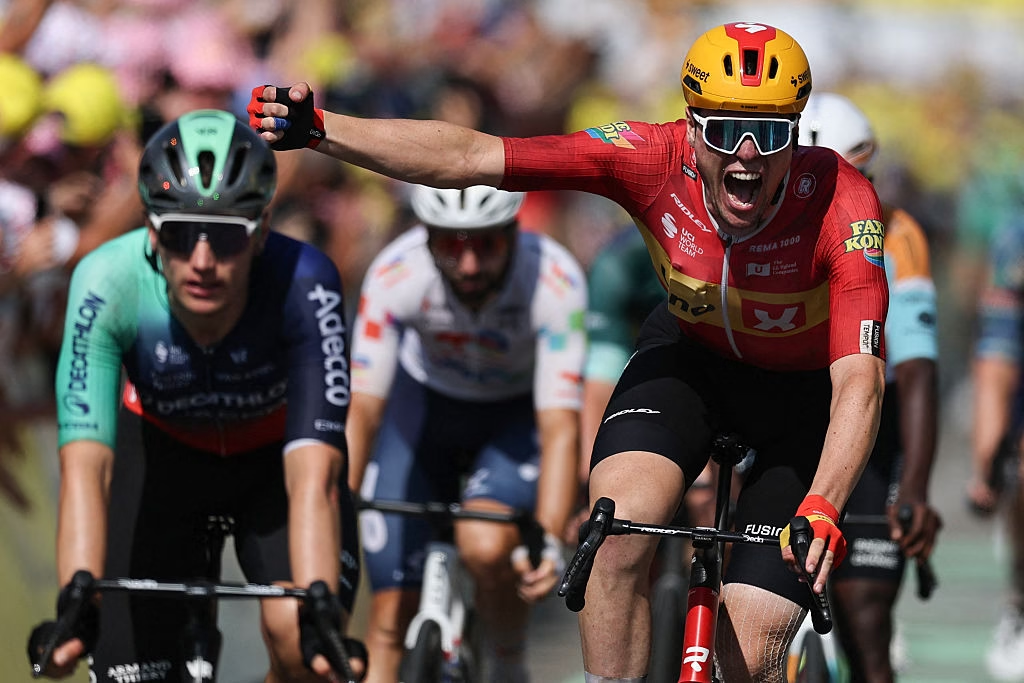
Søren Wærenskjold has already beaten Kooij this summer
Søren Wærenskjold has moved beyond outsider status after his Tour de France breakthrough.
The Norwegian won Stage 11 in Nevers, launching early and holding off Kooij and Jasper Philipsen at the end of an extraordinarily fast stage.
That result demonstrated why Wærenskjold is dangerous in Hamburg. He is not a conventional lightweight sprinter who relies entirely on a perfect lead-out. His enormous power becomes particularly valuable when races are fast, exposed and difficult to control.
Uno-X Mobility also have Jonas Abrahamsen and Markus Hoelgaard available to attack, meaning Wærenskjold can remain protected rather than carrying the team’s ambitions alone.
His size means five Waseberg passages are hardly ideal, but if he remains in the front group, the Tour showed that he has enough speed to beat the biggest names.
Michael Matthews needs a genuinely hard final hour
The equation for Michael Matthews is almost the opposite of Milan’s.
Jayco-AlUla need the race to hurt.
Matthews still has a strong sprint, but taking on Milan, Kooij, De Lie and Magnier after a relatively controlled 205km would leave him facing several riders with greater outright speed. The more selective the Waseberg becomes, the more valuable his durability is.
Matthews will remain with Jayco beyond this season after extending his contract through 2027, and Hamburg is exactly the sort of one-day race where the Australian can still challenge the younger generation.
Dries De Bondt and Davide De Pretto give Jayco riders who can make the finale difficult, while Luka Mezgec remains a valuable final support option if Matthews reaches Hamburg in the front group.
A 20 or 30-rider finish is considerably more attractive to Matthews than a full bunch sprint.
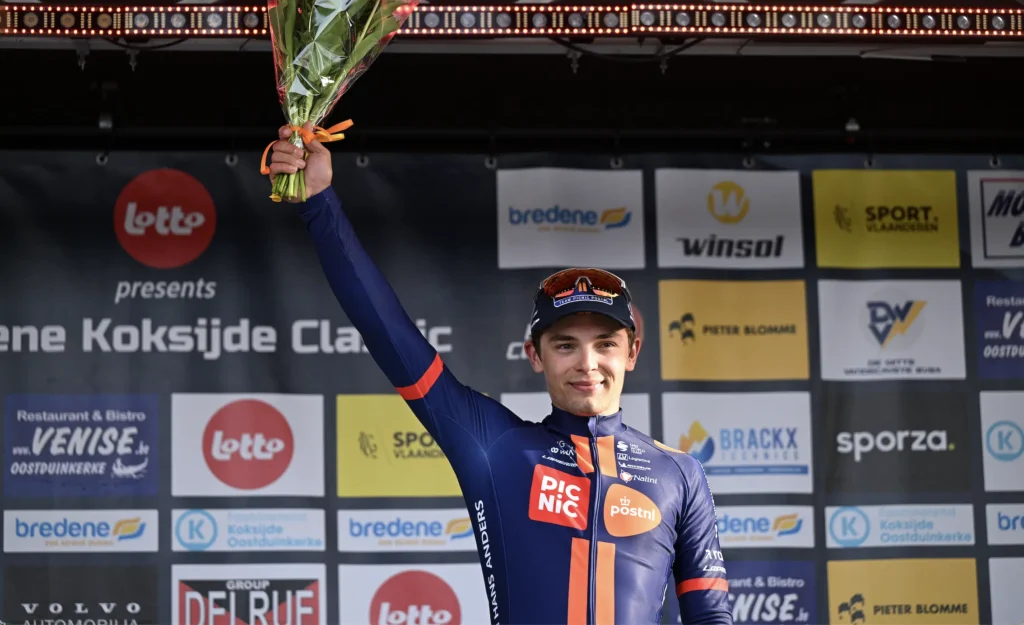
Pavel Bittner has the profile to surprise
Pavel Bittner is one of the less obvious names with a genuine chance of finishing very high.
The Picnic PostNL rider combines enough speed to contest major sprints with the ability to survive more difficult terrain than a pure finisher. That makes the repeated Waseberg ascents potentially beneficial if they remove some of the faster riders.
Bittner’s future beyond 2026 is already settled, with the Czech rider joining Pinarello-Q36.5 on a two-year contract from 2027.
Picnic PostNL also have Fabio Jakobsen on the start list, creating an interesting tactical choice. If Jakobsen survives comfortably, he remains the quickest option. If the race becomes harder, Bittner and Nils Eekhoff should increasingly become the riders to protect.
A podium would still be a major result, but the route gives Bittner a realistic path towards one.
Laurence Pithie gives Red Bull freedom to attack
Red Bull-BORA-hansgrohe arrive without an obvious top-tier pure sprinter, which should make them one of the teams most interested in disrupting the race.
Danny van Poppel and Arne Marit offer finishing speed, but Laurence Pithie arguably becomes their most interesting option if the final Waseberg passages produce a genuine selection.
Pithie has enough Classics ability to survive hard racing and enough speed to remain dangerous from a reduced group. Gianni Vermeersch and Gianni Moscon give Red Bull further strength for an attritional finale.
Waiting patiently for Milan and Kooij would make little tactical sense. Red Bull’s best chance comes from making the final hour substantially more difficult than the major sprint teams want.
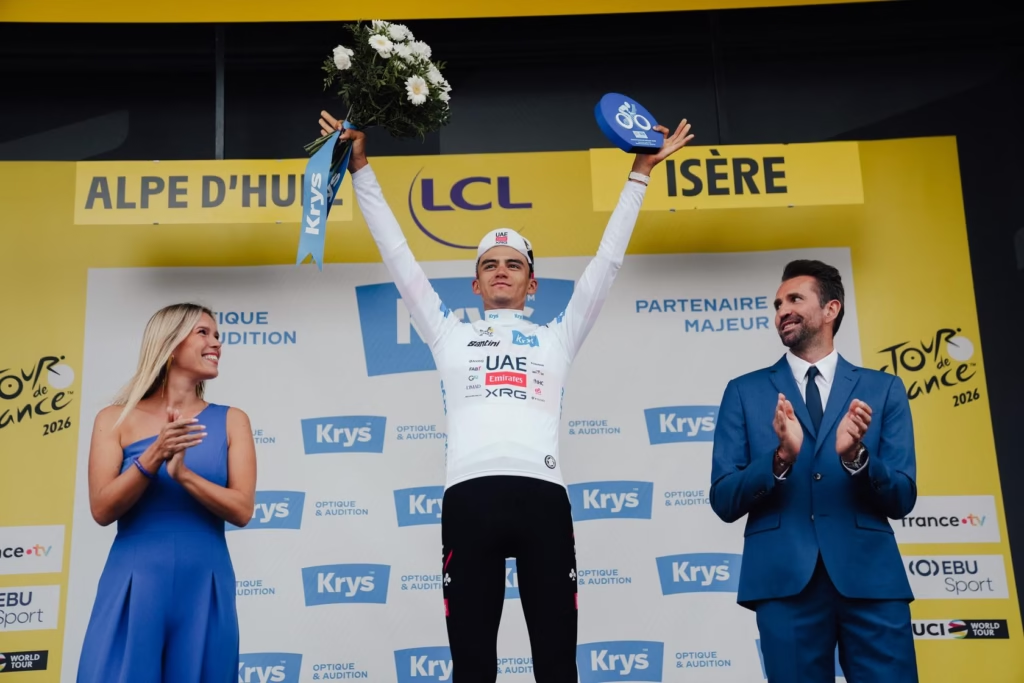 Photo Credit: A.S.O./Thomas Maheux
UAE Team Emirates-XRG can reshape the whole race
UAE Team Emirates-XRG may not have one of the five clearest individual favourites, but they could have more influence over the outcome than almost anyone.
Isaac del Toro, Jhonatan Narváez, António Morgado, Florian Vermeersch, Filippo Baroncini and Benoît Cosnefroy give UAE an extraordinary collection of riders capable of attacking before the sprint becomes inevitable. Sebastián Molano remains available if the race subsequently comes back together.
There is virtually no incentive for UAE to race passively.
Del Toro and Narváez can accelerate on the Waseberg, Morgado and Vermeersch have the power to attack afterwards, and every move forces Lidl-Trek, Decathlon, Lotto-Intermarché or Quick-Step to decide whether they are prepared to chase.
Even unsuccessful attacks could help UAE by stripping teammates away from Milan, Kooij and the other favourites.
Their problem is identifying one rider to predict as a winner. Their strength is that they do not need to.
Groenewegen, Bennett and Bauhaus want the climbs controlled
There is another group of riders whose chances rise sharply if the Waseberg proves less damaging than expected.
Dylan Groenewegen remains one of the fastest pure sprinters on the start list. Unibet Rose Rockets also have Elmar Reinders for the finish, but five late climbs represent an obvious obstacle. If Groenewegen reaches Mönckebergstraße comfortably inside the front group, nobody will want to face him in a clean sprint.
Sam Bennett faces a similar calculation with Pinarello-Q36.5. His team also includes Matteo Moschetti and Fred Wright, giving them alternatives if Bennett is unable to survive the hardest racing.
Phil Bauhaus carries much of the German sprint interest for Bahrain Victorious. Nikias Arndt offers important finishing support, while Matej Mohorič gives Bahrain the option to attack rather than make every decision around Bauhaus.
All three have enough speed to win the race. The question is whether they can still access that speed after five Waseberg passages.
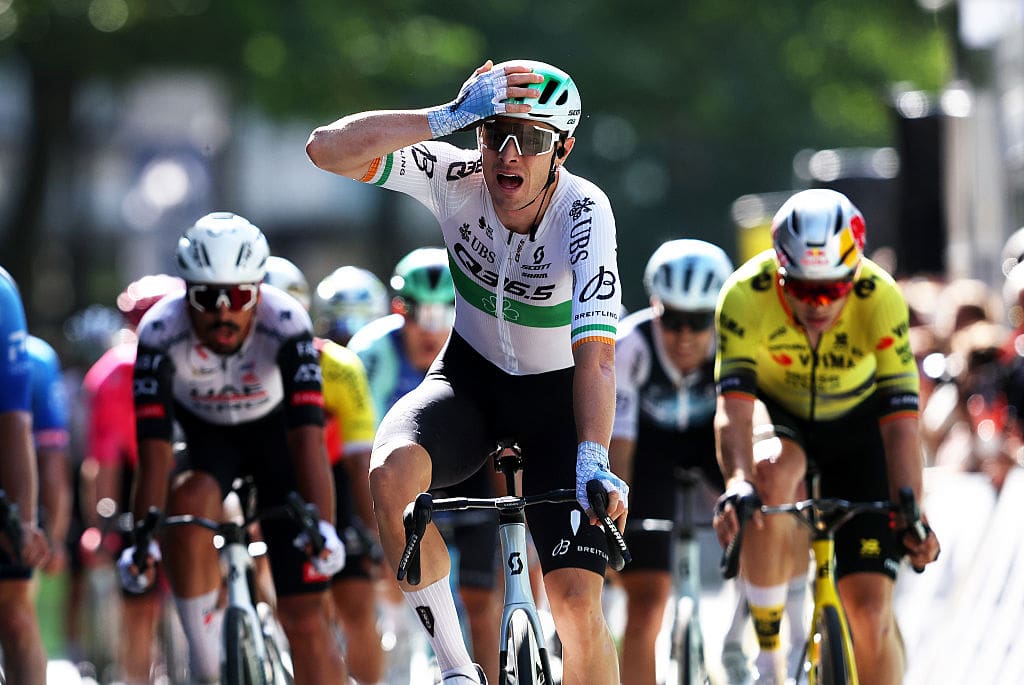
Rory Townsend will not be underestimated again
And then there is the defending champion.
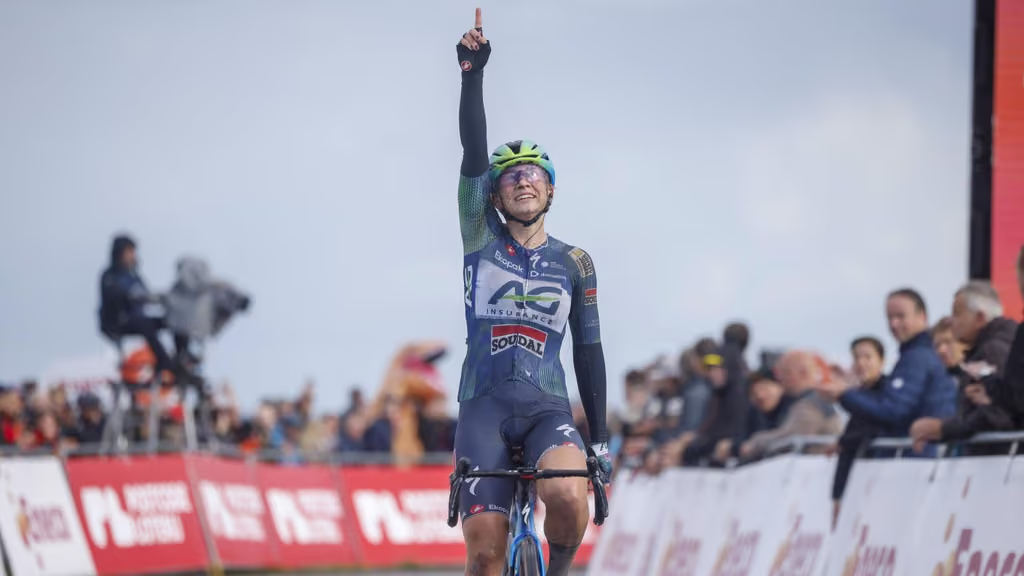
Rory Townsend won the 2025 ADAC Cyclassics from the early breakaway, somehow remaining ahead as De Lie, Magnier and the rest of the sprinting field closed rapidly behind him in Hamburg.
It was one of the great opportunistic victories in the race’s history and is covered in more detail in ProCyclingUK’s history of the ADAC Cyclassics.
Repeating it will be much harder.
Townsend now has a WorldTour Classic victory beside his name and will not be treated as an anonymous presence if he moves into the early break again. Unibet Rose Rockets do not need to rely solely on the same strategy either, with Groenewegen available for a bunch sprint and Lukáš Kubiš particularly interesting if the race becomes more selective.
Townsend remains a contender because he has already proved that the supposedly unlikely scenario can work. He is simply unlikely to receive the same freedom twice.
-
 Photo Credit: Cor Vos
Trentin leads a strong group of experienced outsiders
The historical record also points towards several riders who deserve consideration beyond the obvious favourites.
Matteo Trentin has nine previous starts and four top-10 finishes, making him one of the most experienced Hamburg contenders in the field. Tudor Pro Cycling Team also have Luca Mozzato for a faster finish, allowing Trentin to attack without carrying the entire team’s hopes into the sprint.
John Degenkolb has four previous starts, including a victory and another podium, although Picnic PostNL have younger sprinting options around him. Danny van Poppel has nine appearances and three top-10 finishes, while Marco Haller has started ten times and previously reached the podium.
Matis Louvel, Fred Wright, Jasper Stuyven, Jenthe Biermans, Milan Fretin, Orluis Aular, Luca Mozzato, Davide Ballerini and Filippo Fiorelli sit in a similar outsider group. None needs to be the fastest rider in a full peloton if the final hour creates the right sort of selection.
That depth is one reason control will be difficult. There are far more teams with an interest in attacking Milan and Kooij than there are teams prepared to help deliver them to Mönckebergstraße.
ADAC Cyclassics 2026 prediction
The strongest overall case belongs to Olav Kooij.
He has already won in Hamburg, has demonstrated major sprinting form in 2026 and arrives with a Decathlon CMA CGM team particularly well equipped for keeping him positioned through the Waseberg before rebuilding around him for the finish.
De Lie is the rider most likely to benefit if the race becomes significantly harder, while Milan remains the man nobody wants to carry into a clean sprint. Magnier’s 2026 progression makes him difficult to leave off the podium conversation, with Girmay only marginally behind.
| Prediction | Rider | Team |
|---|---|---|
| 1st | Olav Kooij | Decathlon CMA CGM Team |
| 2nd | Arnaud De Lie | Lotto-Intermarché |
| 3rd | Jonathan Milan | Lidl-Trek |
| 4th | Paul Magnier | Soudal Quick-Step |
| 5th | Biniam Girmay | NSN Cycling Team |
The central question is not whether the Waseberg is difficult enough to split the race by itself. It is what happens immediately afterwards.
If UAE Team Emirates-XRG, Red Bull-BORA-hansgrohe, Jayco-AlUla and the other attack-minded teams hesitate, Kooij and Milan should have the advantage once the race reorganises. If they keep attacking and force the major sprint teams to burn through their remaining support, De Lie, Magnier, Groves and Girmay move much closer to the centre of the race.
For readers new to the event, our Beginner’s guide to the ADAC Cyclassics 2026 explains why Hamburg can produce everything from a large bunch sprint to a late attacking victory.

