
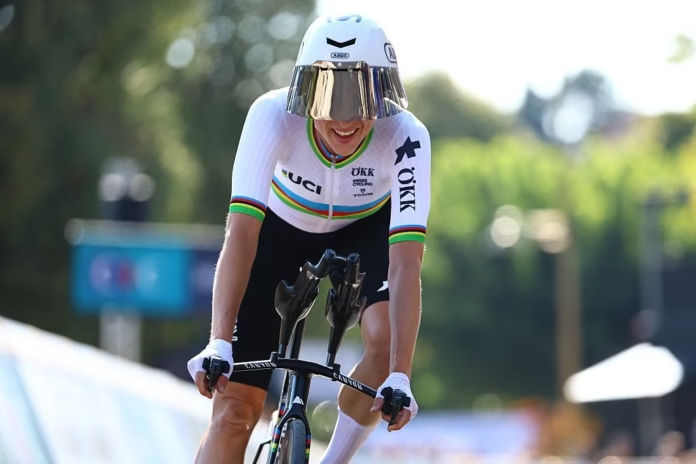
The Men’s Tour de Suisse 2026 reaches its most controlled test on Saturday, 20th June, with a 23.8km individual time-trial in Aarburg. After three road stages that have already shaped the general classification, stage 4 removes most of the tactical noise and leaves the strongest riders against the clock to make their move.
Tadej Pogačar still controls the race after his extraordinary long-range win in Sondrio and two more days of GC management, but the time-trial changes the tone. This is not a stage where a breakaway can be allowed to drift clear, as happened in Locarno and again in Bad Ragaz. It is not a day for hiding in the wheels either. Every rider has to manage the same 23.8km route, the same corners, the same pacing decisions and the same pressure before the final mountain stage in Villars-sur-Ollon.
The stage should favour time-trial specialists, but the wider GC context is impossible to ignore. Aarburg comes with one day left, and that final day is the queen stage, with 151.1km and more than 4,200m of climbing around Villars-sur-Ollon. The riders who lose time here will be forced to attack on Sunday. The riders who gain time here may be able to defend.
For wider race context, see our Men’s Tour de Suisse 2026 full route guide, the full start list for Men’s Tour de Suisse 2026 and our Men’s Tour de Suisse 2026 team-by-team guide.

Men’s Tour de Suisse 2026 stage 4 route
Stage 4 starts and finishes in Aarburg, with the riders covering 23.8km and 270m of elevation. It is officially listed as a time-trial stage with a difficulty rating of 2/5, but that should not make it seem insignificant. In a five-day race, a nearly 24km individual time-trial can completely reshape the podium.
The course is not a mountain time-trial. It is a fast specialist route, with limited elevation change and enough corners to reward riders who can handle their bike cleanly while staying aero. That balance matters. Pure power will be decisive, but technical rhythm and pacing can also make a difference.
The strongest riders will need to avoid overcommitting in the opening kilometres. A course like this can tempt riders into chasing speed too early, especially if the first split looks close. The better approach should be a controlled build: settle quickly, hold position, carry speed through the corners and finish strongly.
Aarburg’s setting also gives the stage a distinct visual identity. The town sits on the Aare, overlooked by its fortress, but the riders will have little time to take that in. This is a day for tunnel vision, power numbers and clean execution.
Why stage 4 matters
Stage 4 matters because the race has already been stretched, but not settled.
Pogačar’s stage 1 performance gave him a commanding early lead after a long solo attack from Sondrio. Stage 2 in Locarno went to Romain Grégoire from the breakaway, with the GC group allowing another non-GC battle to decide the stage. Stage 3 in Bad Ragaz followed a similar pattern in stormy conditions, with Jhonatan Narváez beating Xandro Meurisse after a long move that only just survived the chase.
That means the race enters stage 4 with a clear leader, but still with important questions behind him. Richard Carapaz, Andrea Bagioli, Tom Pidcock, Primož Roglič, Aleksandr Vlasov, Lennert Van Eetvelt and others all have different incentives before the final mountain day. Some need to defend position. Some need to gain time. Some may already be thinking about how much energy they can afford to spend before Villars-sur-Ollon.
The time-trial also changes the pressure on UAE Team Emirates-XRG. Pogačar does not need to win the stage to stay in control, but a strong ride could put the race almost beyond reach before Sunday. If he extends his advantage, the final mountain stage becomes less about whether he can be beaten and more about how far the gaps behind him can move.
For the riders behind, Aarburg is a sorting stage. It will separate the genuine podium contenders from those who need a major final-day gamble.
What kind of rider can win in Aarburg?
Stage 4 should favour a rider with a strong time-trial position, sustained power and the ability to stay smooth through a fast but not entirely straightforward course.
The route is long enough for specialists to create real gaps. It is not a short prologue where explosive riders can bluff their way into contention. Over 23.8km, pacing quality and aerodynamic efficiency should decide the stage.
The ideal winner is likely to be a rider who can combine threshold power with technical tidiness. The corners are not expected to make the route overly technical, but they are still important. Riders who lose momentum repeatedly will have to spend energy accelerating back up to speed.
That brings several names into the picture. Pogačar is the race leader and an obvious favourite because his current form is exceptional. Roglič remains dangerous in a time-trial of this length. Pidcock has the technical skill and punch to produce a strong ride, even if pure flat power may not make him the outright favourite. Bagioli and Carapaz will need strong performances to stay high on GC, while UAE also have riders capable of setting benchmarks before Pogačar starts.
The stage is also a chance for time-trial specialists lower down the overall to chase a result. Not every strong rider in Aarburg will be thinking only about GC.
Tadej Pogačar
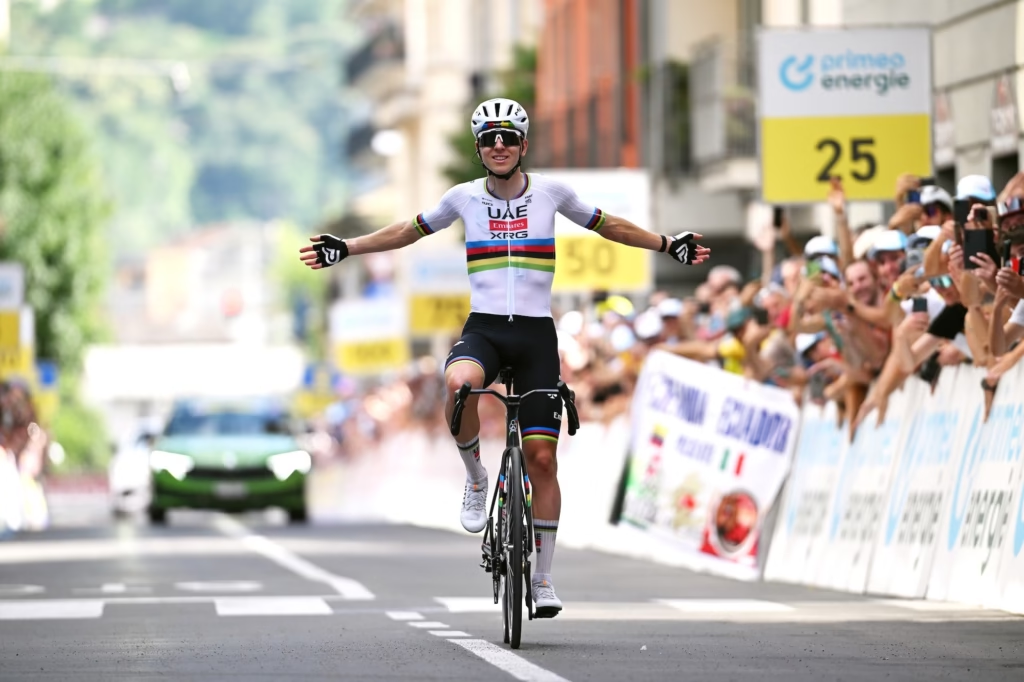
Tadej Pogačar is the obvious reference point, even on a specialist time-trial day. His race has already been defined by his stage 1 attack, but Aarburg gives him a different kind of opportunity. Instead of using aggression and climbing force, he can use precision and controlled power.
The time-trial does not need to be spectacular for him to strengthen his position. A steady top-level performance would be enough to keep the race firmly in his hands before Villars-sur-Ollon. If he wins or takes time from every major rival, the final mountain stage becomes a defence of an already dominant lead.
Pogačar’s biggest advantage is that he can ride this stage without desperation. He does not need to chase unrealistic split times or take excessive risks. The race is already in his favour. His job is to stay efficient, avoid mistakes and make sure no rival finds unexpected momentum before the final day.
That calmness can make him even more dangerous. Riders chasing time may overextend. Pogačar can ride the course at his own level and still put others under pressure.
Primož Roglič
Primož Roglič has a strong case for this stage. He may not have looked like the overwhelming GC force of earlier seasons at every point in 2026, but a 23.8km time-trial still gives him a route into the race.
Aarburg suits his skillset more than the chaotic road stages have. Roglič is usually at his best when the effort is measured, repeatable and controlled. He does not need the race to explode around him. He needs a clean course, a good position and a chance to apply his power without interruption.
The bigger question is what he is riding for. If the overall gap to Pogačar is already too large, Roglič may treat stage 4 as a stage opportunity and a form test rather than a full GC rescue mission. If he still sees a podium chance, the time-trial becomes crucial.
Red Bull-BORA-hansgrohe also have reasons to target the day. A strong Roglič ride would give the team a result after a race where Pogačar’s dominance has shaped the overall narrative. He may not be the favourite to overturn the yellow jersey, but he is one of the riders most capable of winning the stage.
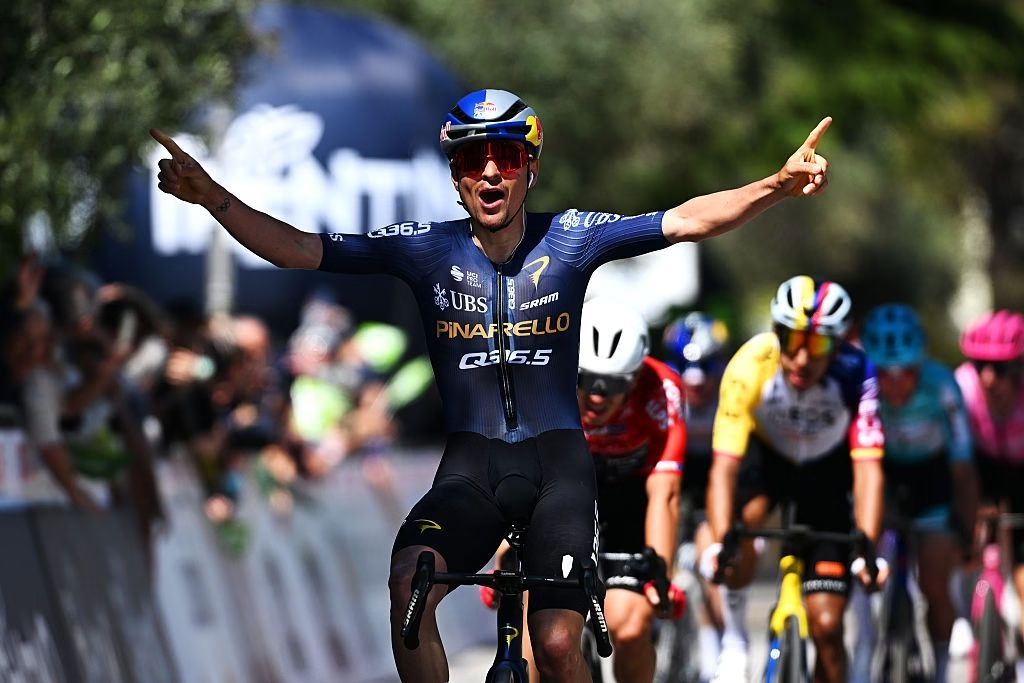 Photo Credit: Getty
Tom Pidcock
Tom Pidcock is one of the more intriguing names for Aarburg. He is not the most obvious time-trial favourite in a pure power sense, but the course has enough corners and rhythm changes to make technical skill relevant.
Pidcock’s challenge is to balance aggression with control. On a course like this, he can gain time through handling and acceleration, but he cannot afford to lose too much on the longer sustained sections. The stage asks for a full time-trial ride rather than just a technically brilliant one.
His GC position also matters. Pidcock is not likely to beat Pogačar purely through a time-trial, but Aarburg can help him set up the final mountain stage. A strong ride puts him in a better place before Villars-sur-Ollon. A poor one leaves him needing a much more ambitious Sunday.
This is the kind of stage where Pidcock can exceed expectations if everything aligns. It is also the kind where the time gaps can expose whether he has the sustained power needed for a podium push.
Richard Carapaz
Richard Carapaz has been closest to Pogačar since the opening stage, but Aarburg is not the kind of day that naturally tilts in his favour. That makes it one of the most important stages of his race.
Carapaz does not need to win the time-trial. He needs to limit damage. If he loses heavily, the final day becomes a chase from too far back. If he stays close enough, Villars-sur-Ollon gives him a terrain profile where he can still race aggressively.
The problem is that nearly 24km against the clock leaves little room for bluffing. Carapaz is a better rider when the race is unstable, when the gradients bite and when tactical instinct matters. Aarburg is more mechanical. It rewards position, power and pacing.
That does not mean he cannot ride well. Experienced GC riders often know how to manage these stages, even when the format does not fully suit them. But compared with Pogačar, Roglič and some of the stronger time-trial names, Carapaz is likely to be defending rather than attacking.
Andrea Bagioli
Andrea Bagioli’s strong position after the opening stage gives him something meaningful to defend. The question is how well he can handle a time-trial of this length.
Bagioli is not a pure specialist against the clock, but he is a powerful, versatile rider who can produce strong efforts on rolling terrain. The stage may not suit him as naturally as a punchy road finish, yet it gives him a chance to show whether his GC position can survive a controlled test.
For Lidl-Trek, the aim will be to keep him in the overall conversation before Villars-sur-Ollon. A solid time-trial does not have to move him forward dramatically. It just has to prevent the kind of time loss that would turn Sunday into damage limitation.
Bagioli’s ride could be one of the more revealing of the day. If he holds his place, he becomes a serious podium contender. If he slips back, the opening-stage result begins to look more like a high point than the start of a GC campaign.
 Photo Credit: A.S.O./Billy Ceusters
Aleksandr Vlasov
Aleksandr Vlasov is another Red Bull-BORA-hansgrohe rider with a route into the stage. If Roglič is the more obvious headline name, Vlasov gives the team another rider who can ride a disciplined time-trial and keep pressure on the overall standings.
Vlasov’s strength is his ability to stay close across different types of terrain. He may not have the raw time-trial ceiling of the best specialists, but he is rarely a rider to dismiss in this kind of stage-race context. If he paces well, he can move past riders who are stronger climbers but weaker against the clock.
The key is whether Red Bull-BORA-hansgrohe use the day to chase the stage or to protect multiple GC options before Sunday. Vlasov can be useful in both roles. A strong time-trial also gives the team tactical flexibility for the queen stage.
If Roglič and Vlasov both ride well, Red Bull could still influence the final day even if Pogačar remains in control.
Mauro Schmid
Mauro Schmid is a rider who should be watched in Aarburg because the course rewards more than pure GC climbing. He has the power, technical ability and Swiss motivation to make stage 4 a target.
Schmid’s profile fits a fast, rolling time-trial better than a high-mountain showdown. He can handle rhythm changes, produce strong sustained efforts and use technical sections well. On a course with few elevation changes but enough corners to create differences, that makes him a credible outside stage contender.
The question is whether he can match the deeper time-trial specialists across the full distance. At 23.8km, the stage is long enough that small inefficiencies build quickly. But if he rides cleanly, he could be one of the riders who sets an early benchmark and forces the GC contenders to respond.
For a home rider, Aarburg also offers a clear chance to make a statement before the race moves to the final mountain stage.
Brandon McNulty
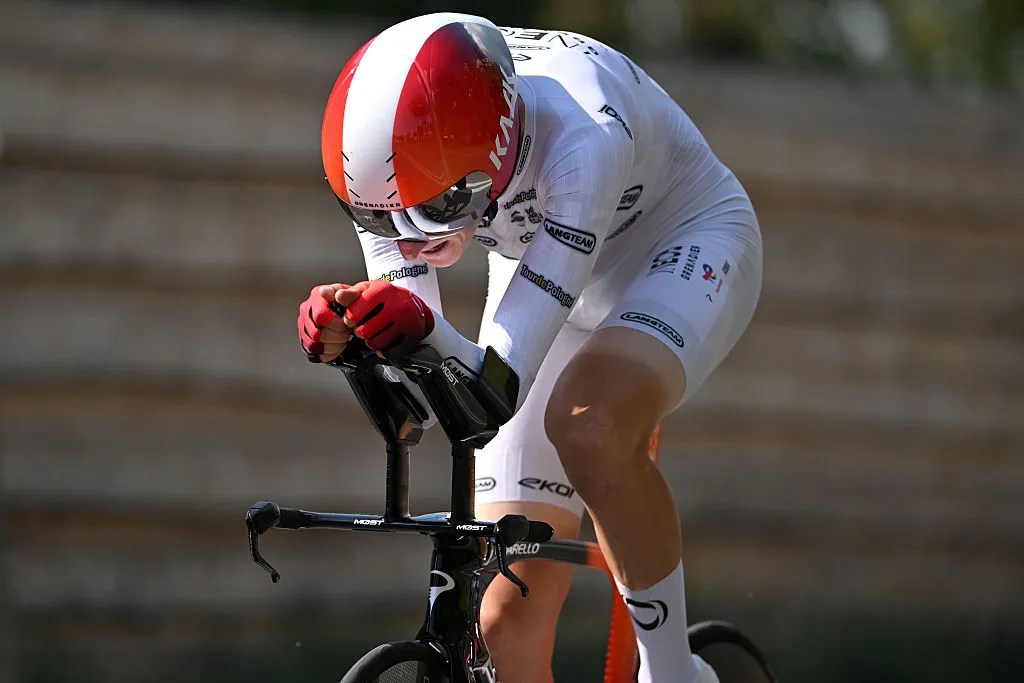
Brandon McNulty is one of the strongest time-trial options outside the obvious GC names. He has already been important to UAE Team Emirates-XRG in this race, particularly in setting up Pogačar’s stage 1 move, and stage 4 gives him a chance to produce a result in his own right.
McNulty’s strengths match this course well. He can hold power, ride efficiently and avoid the kind of pacing errors that punish riders over this distance. He may also be able to provide UAE with useful information before Pogačar’s ride if he starts earlier.
The tactical question is how much freedom he has. UAE’s priority is protecting and extending Pogačar’s lead, but McNulty does not have to compromise that to ride a strong time-trial. If anything, a high placing from McNulty would underline just how much control UAE have over the race.
He is one of the most plausible stage podium outsiders if the main GC riders do not dominate every slot.
Other riders to watch
There are several riders who could use Aarburg to produce a stage result even if they are not central to the GC story.
Stefan Bissegger would be an obvious name on a Swiss time-trial stage if fully dialled in, given his strength against the clock. Stefan Küng is another kind of rider who would normally suit a course like this, though the exact start list and team priorities will shape how much stage ambition he carries. Riders with strong aero positions and one-day power can be more dangerous here than their GC placing suggests.
Jay Vine, Finn Fisher-Black, Jan Christen, Maximilian Schachmann and Mattias Skjelmose all have reasons to take the time-trial seriously, depending on their form and role after the first three stages. Some will be trying to protect GC positions, while others may see Aarburg as a cleaner stage opportunity than the road stages.
The stage may also reward riders who start before the final GC wave. If conditions change, or if early benchmarks prove hard to beat, a strong ride from outside the top 10 could remain competitive for longer than expected.

Race tactics
Time-trials are often described as simple, but stage 4 still has tactical layers.
Pacing is the first. Riders need to avoid going too deep in the opening section, especially with the final mountain stage still to come. A rider chasing a stage win may be willing to empty the tank. A GC contender has to think about Sunday as well.
Risk is the second. The course is not overly technical, but it contains enough corners to reward confidence. Taking every turn aggressively can gain seconds. Overdoing it can cost far more. This is especially relevant for riders who need time and may be tempted to ride above the safe line.
Weather could also matter. Stage 3 was affected by rain and storms, and changing conditions on a time-trial day can make comparisons difficult. If the road is wet, technical confidence becomes even more important. If conditions are dry and stable, pure power should come further forward.
The order of starters will shape the drama. Early specialists can set the reference time, but the GC picture will only become clear once the final riders are on course. Pogačar will not need to chase a wild performance. His ride will be judged by what he does to the rivals behind him.
Prediction
Stage 4 looks like a Pogačar opportunity, but not necessarily a guaranteed Pogačar stage win. His form is so strong that he has to be treated as the favourite, and the route is long enough for his all-round time-trial ability to make a difference. He also has the advantage of riding from a position of control rather than desperation.
Roglič is the most obvious threat if he has the legs and motivation to target the stage fully. A 23.8km time-trial suits him far better than the messier road stages, and it gives Red Bull-BORA-hansgrohe a clear chance to hit back.
McNulty is a strong podium option, particularly if UAE allow him to ride for the stage. Pidcock, Vlasov, Schmid and Bagioli all have different cases, but each needs something specific to go right. Carapaz will likely be more focused on defending time than winning the stage.
The most likely outcome is that Pogačar strengthens his overall lead, even if the stage fight stays close. If he wins, the race may be nearly sealed before Villars-sur-Ollon. If Roglič or McNulty beat him but he still gains on Carapaz and the rest, the GC result will still feel like a Pogačar success.

